The Merchant Who Could Not Lose His Fortune
He sailed to bankrupt himself on purpose. Providence filled every box, and the road kept every stone he threw away.
Table of Contents
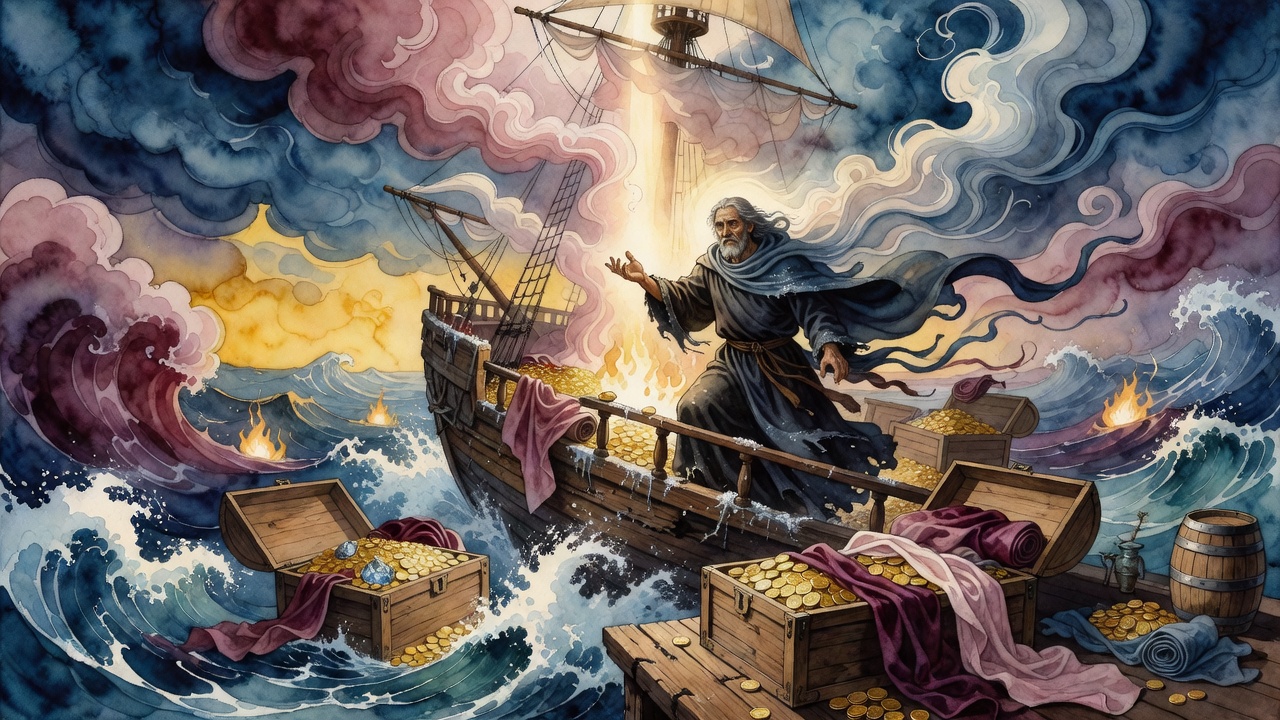
He stacked dates until the hold groaned and told the deckhands he meant to go bankrupt on purpose. No storm. No thief. His own hand on the tiller, aimed straight at ruin.
 Click for full size
"If I want to lose what I own," he said on the quay, loud enough for the porters to hear, "nobody can stop me." A neighbor only shook his head and wiped date sugar from his fingers. "No one fights Providence and wins." The merchant laughed, a short bark that did not convince even himself, and cast off for the very country where dates grow thick as grass, planning to sell cheap and come home empty.
Dates Sold at a Loss That Multiplied
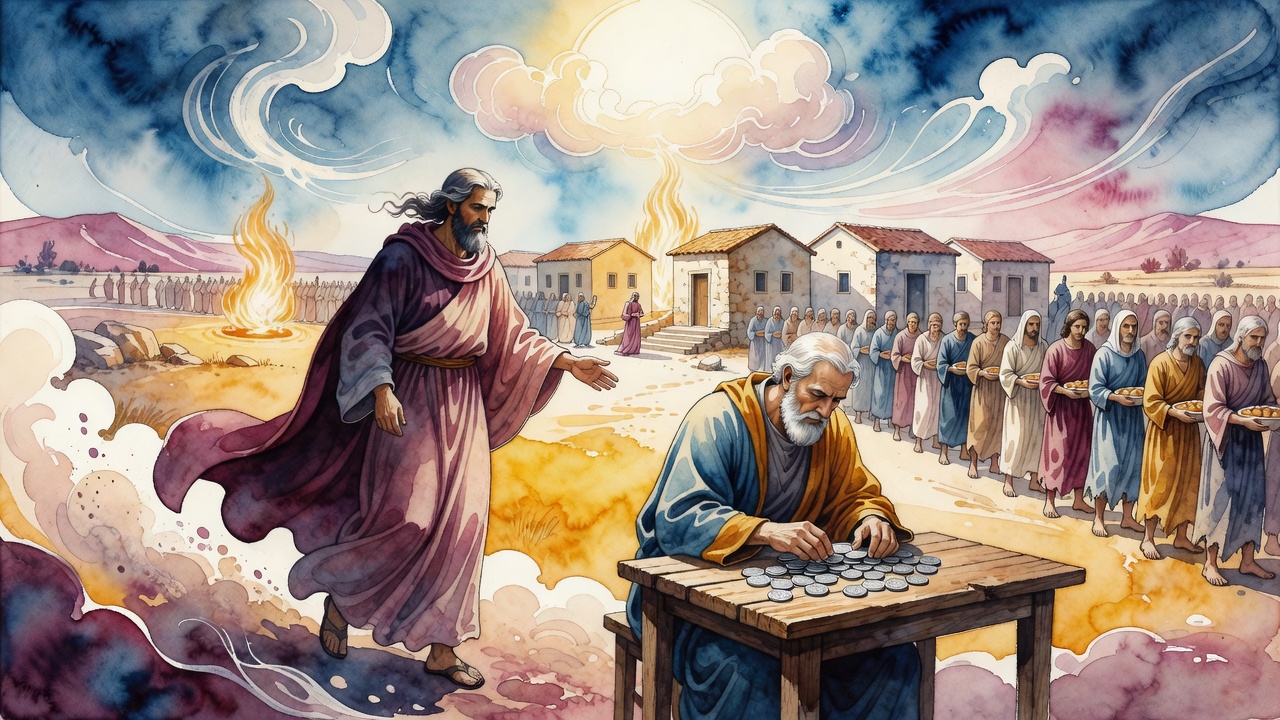
He sold at random in the foreign market, almost throwing the fruit away, and stuffed the coins into a sealed box so he would not count them and grow careful. At night he slept on the lid like a man guarding the opposite of treasure. When he broke the seal at the journey's end, the silver was double what he had paid. He sat on the empty sacks and felt heat rise under his collar. Chance, he told himself. One lucky market day. The sea has moods.
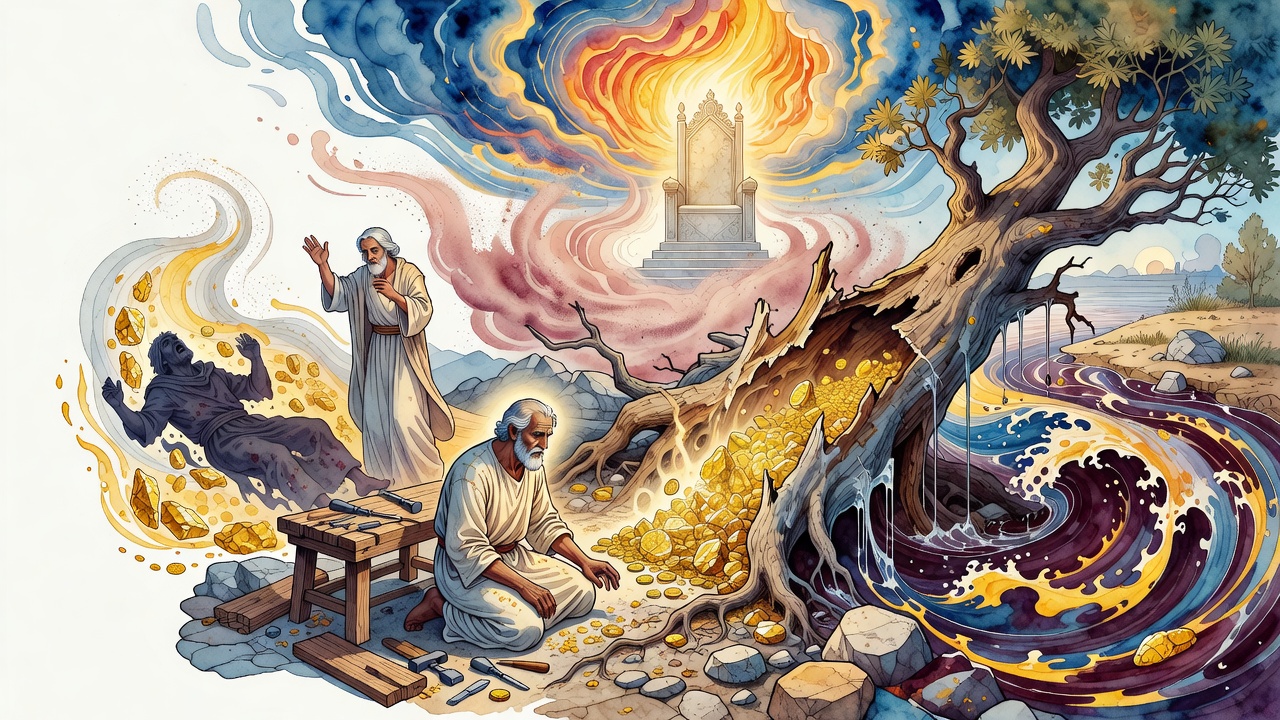
He loaded dates again and steered for the same ports. This time he demanded peppercorn in exchange, spice he knew was dear there and cheap at home, so the trade itself would bleed him. He wanted the numbers to hurt. The first sack he opened held a pearl, dropped in when some merchant filled the bags, pale and heavy in his palm. The pearl was worth twice the cargo. He closed his fist around it until the skin whitened and the edges of the pearl bit his life line.
A third voyage. He bought grain and poured it open into the hold, ready to dump profit into the sea if need be, ready to watch rats grow fat on his pride. War locked the harbors for six months. The crew cursed. He almost smiled. Plague and locusts ruined the harvests at home while he waited offshore like a man hoping for failure. When peace opened the routes, his grain sold for a fortune. He walked the deck at night, salt in his beard, and finally said the words out loud to the dark water: he would stop trying to beat the ledger God kept.
Stones Thrown Onto a Road That Stayed His
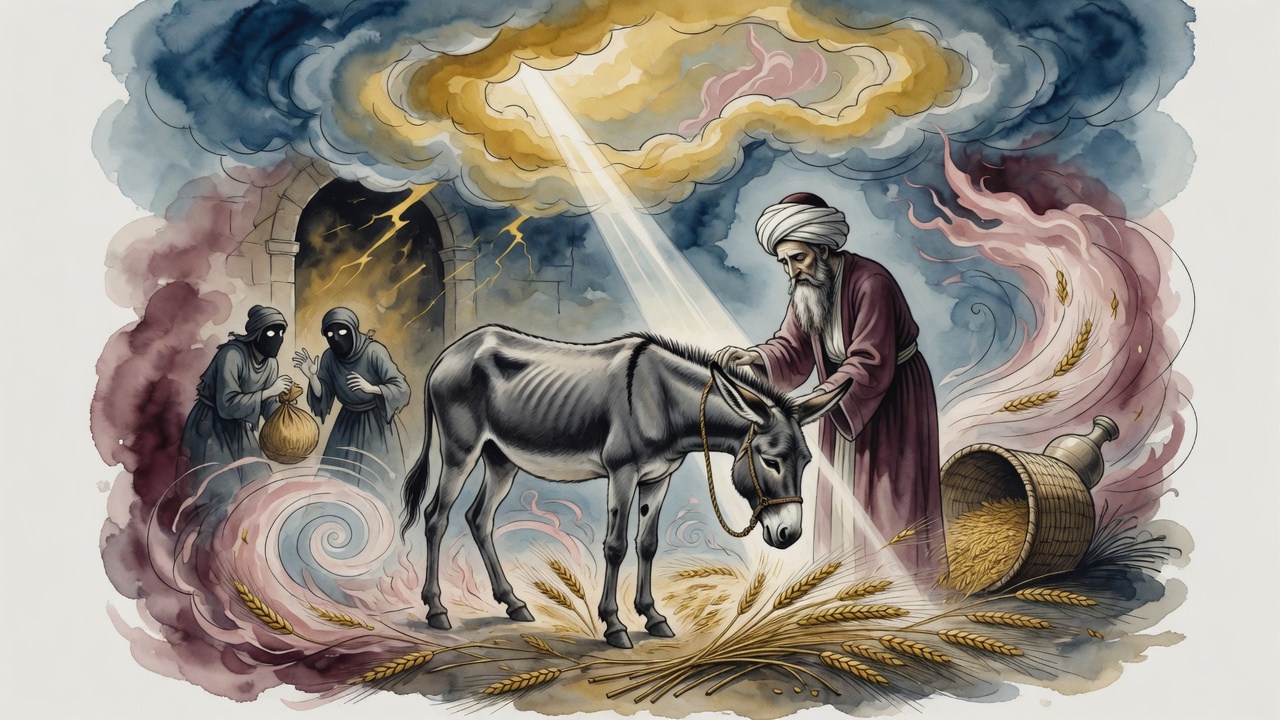
Another man cleared a field under a white sun. He did not stack the stones on his own land where they would take space from seed. One by one he flung them onto the public road so his plot would look clean and his back would ache less. A chasid walking past called out, "Friend, you are taking stones from a place that is not truly yours and throwing them into a place that is." The worker laughed and wiped sweat with a sleeve. "This field is mine. The road belongs to nobody."
The chasid said no more. He walked on. The worker kept throwing. Years later hard times forced a sale. The field changed hands with a signature and a price that still tasted bitter. One afternoon the former owner found himself walking that same public road he had once pelted. Dusk thickened. His foot caught. He stumbled again. Again. He cursed the unseen obstructions, and when he bent to examine them he recognized the very stones by shape and scar. The field that had seemed permanent was gone. The road he had treated as ownerless still belonged to him, because he still had to walk it, and every stone he had thrown waited for his ankle like a debt with interest.
The Rock in the Middle of the Crossroads
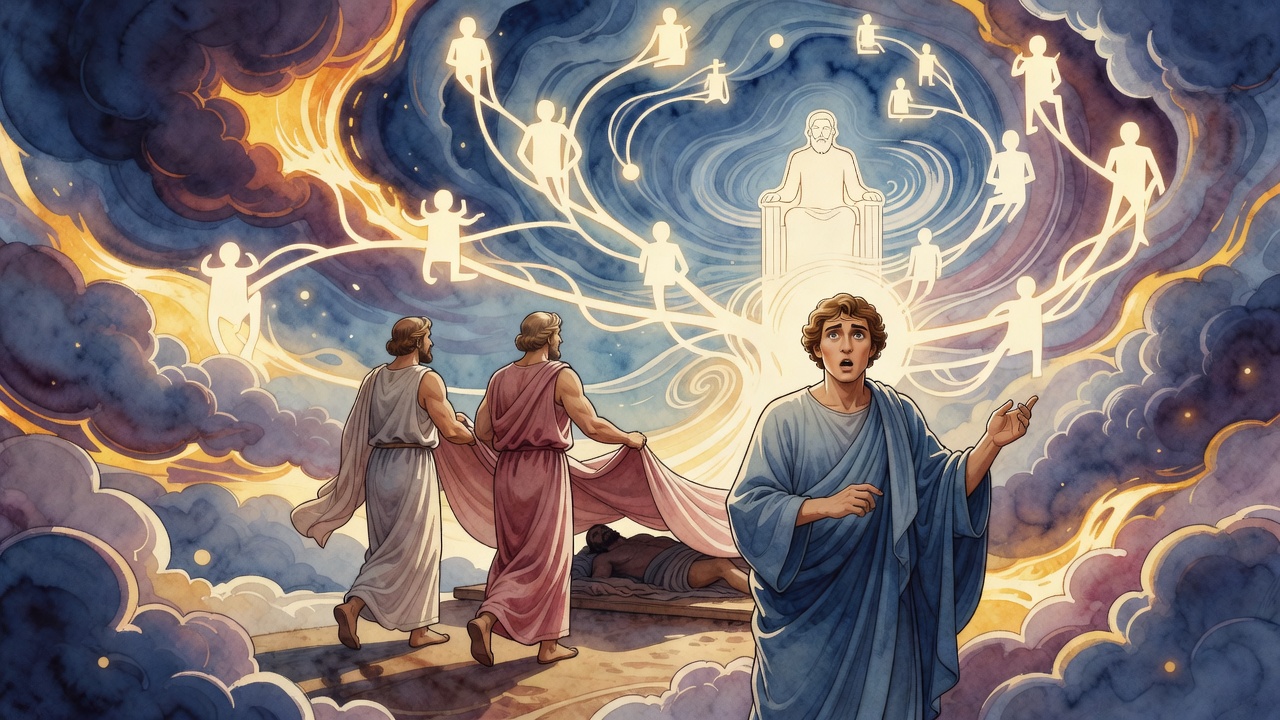
A tall rock sits in a crossroads where four paths meet. Travelers trip over it day after day, carts chip it, children kick it and limp away. The king does not haul it away in one pull with a team of oxen. He tells the people to chip at it a little at a time, and when the hour comes he will lift it out of the world entirely. That rock is the evil impulse. It trips the whole world, and the instruction is the same: wear it down bit by bit, and the King will finish what human hands only begin.
A person commits something grave, something that might deserve death from Heaven if the account were settled in one stroke. The account is not settled in one stroke. An ox dies in the stall. A hen goes missing from the yard. A jug shatters on a stone floor. A finger stubs on a doorframe and bleeds more than it should. Small losses, each a partial payment, because a piece of a life can stand in for the whole. The reckoning, like the chiseling, comes in fragments until the last detail is found.
What the Road and the Hold Still Held
The merchant wanted ruin and found enrichment stacked against his will. The field man wanted a clean private plot and found a public road full of his own carelessness. The rock does not vanish because a traveler curses it once on a bad morning. Providence is not a soft story told to quiet children. It is a grip that will not open because a man announced on a quay that he was free of it.
He can pour dates into a foreign market and seal the box without counting. He can hurl stones into the common path and laugh at the pious. He can swear the next trip will empty him and wait for war like a friend. The box still fills. The road still keeps every stone. The impulse still waits under the next footfall, chipped down only by the patient work of a day, then another day, until the King finishes the work and the crossroads lies open for those who kept striking the rock when no one applauded.
← All myths