The Thief Who Asked the King to Plant a Seed
The vizier backed away from the seed. The treasurer found words for his books. The king named a necklace kept from his father.
Table of Contents
 Click for full size
The Road to the Rope
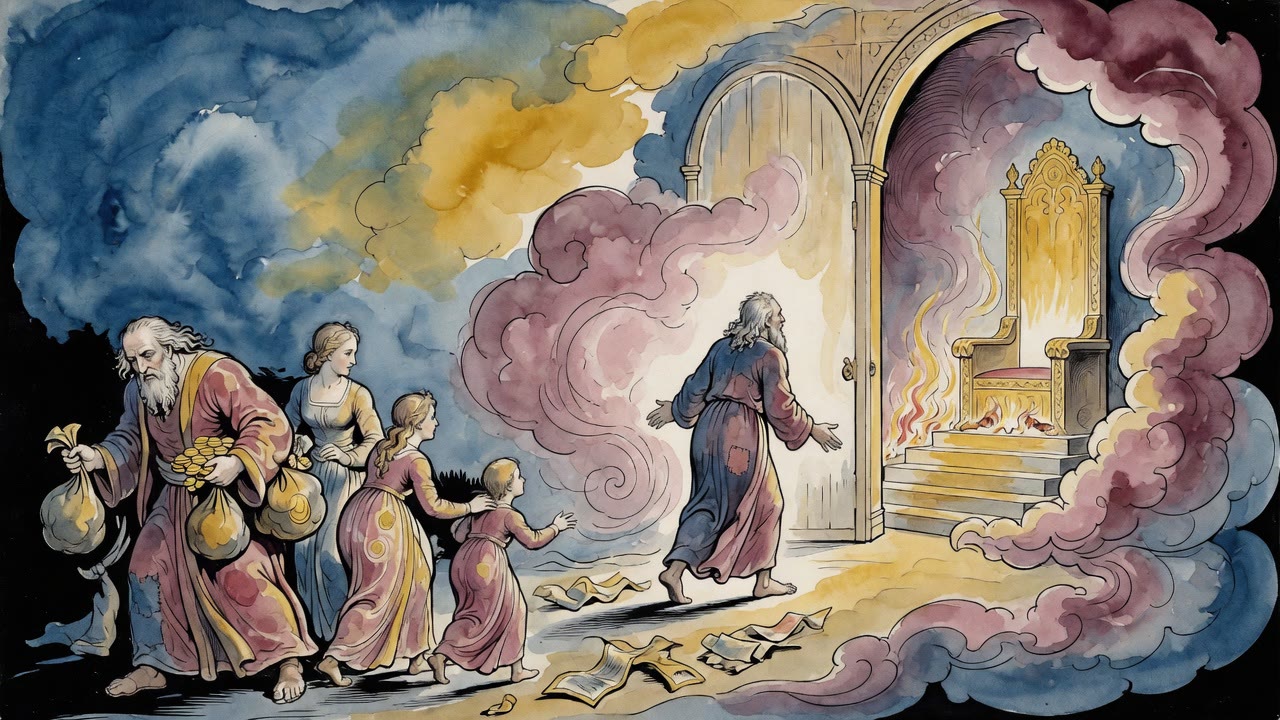
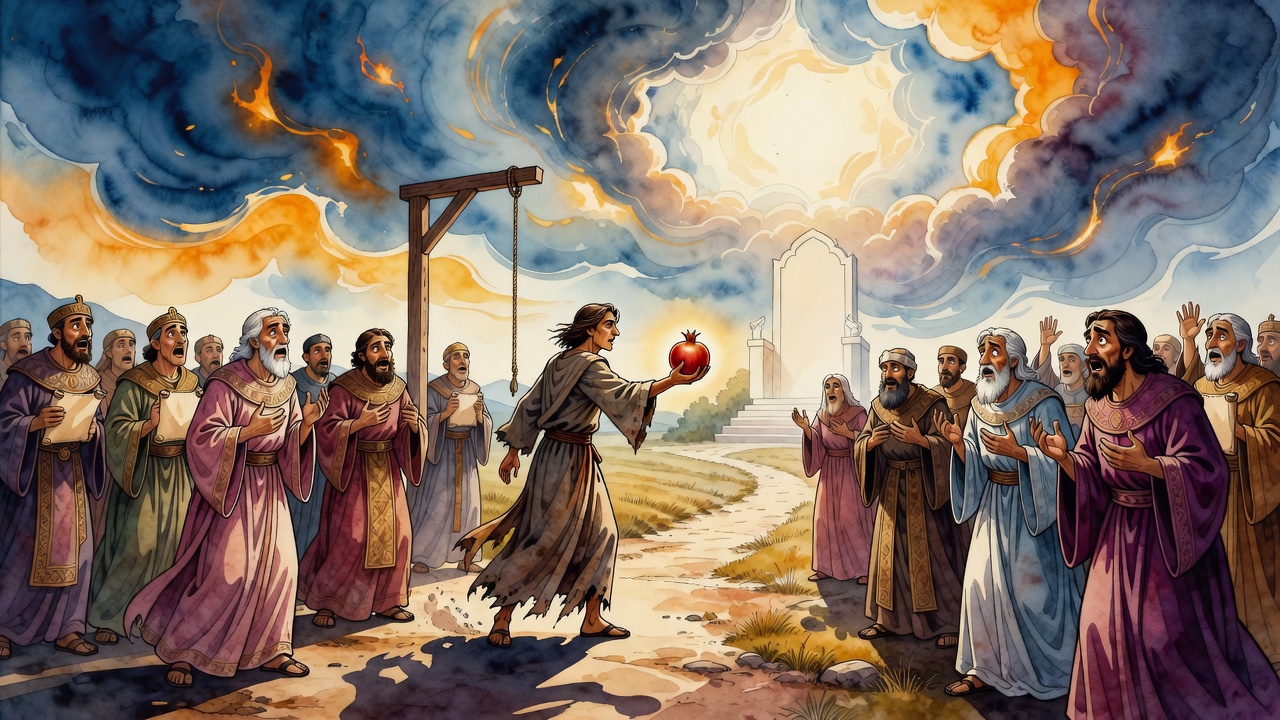
They marched him toward the gallows with dirt still on his hands. The king's order had already chosen the ending. Rope. A crowd. Hunger still in the thief's story if anyone had cared to ask. At the last bend he spoke to the governor with the only coin left to a condemned man: a secret.
"My father taught me," he said. "Plant a pomegranate seed, and by that teaching it will grow and bear fruit overnight. Kill me, and the secret dies with the body you are about to waste."
Curiosity can outrank punishment for one night. They dragged him before the king instead of the rope. Courtiers leaned in. The condemned man became, for a few hours, the most interesting object in the palace.
Who May Put the Seed in the Ground
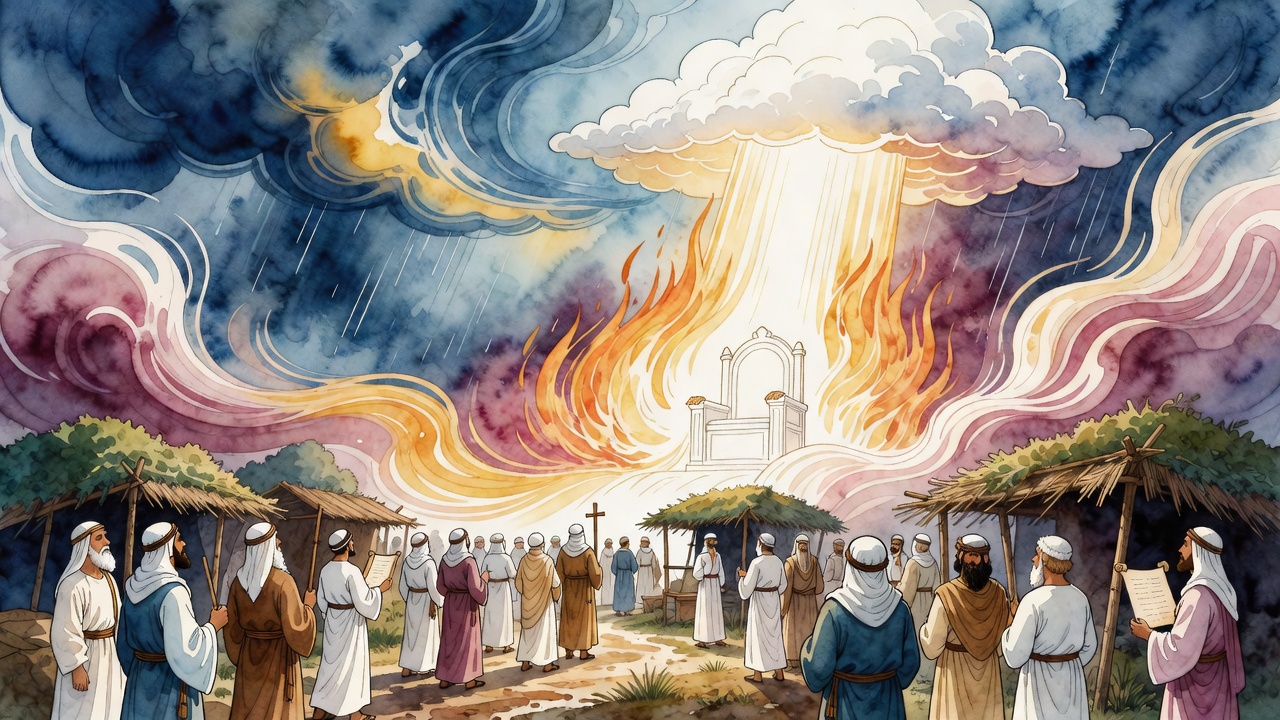
Morning gathered the high officers around a dug hole in the palace garden. The thief held the seed between finger and thumb. He set the rule that turned a demonstration into a trial.
"This seed may be planted only by a man who has never stolen or taken what was not his. I am a thief. I cannot do it."
The sentence sounded humble. It was a net. He turned to the vizier. The vizier went pale under his rank and admitted that in younger days he had kept something not his. The treasurer cleared his throat and said that with such large sums he might have entered too much or too little, which is a soft way to say the books had been friendly to his hands.
Even the king owned that he had kept a necklace of his father's, a small theft dressed as impatience over an inheritance. One by one the pure hands failed a test they had never expected to take in public. The hole in the garden stayed empty. The seed never touched soil.
The King Named the Necklace
The thief looked at the circle of power.
"You are mighty and want nothing, and none of you can plant the seed, while I who stole a little because I was starving am to be hanged."
Silence sat on the garden like heat. Then the king, pleased by the ruse and stung by the mirror, pardoned him. The gallows lost a customer. The court gained a story it would rather not retell at banquets. No fruit appeared overnight. None had to. The seed had already done the only work required of it.
He walked out with his neck still his. Behind him, officers who had sentenced a hungry man found they could not pick up a pip.
Drought and a Pair of Scales
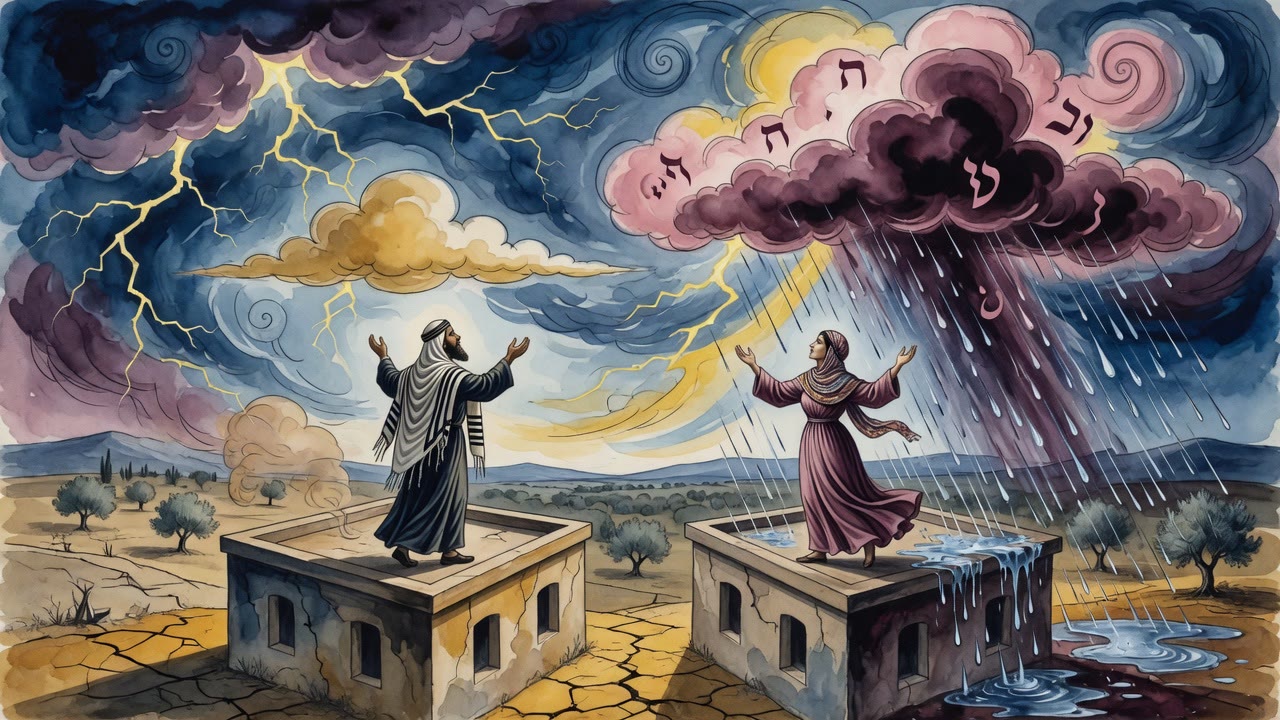
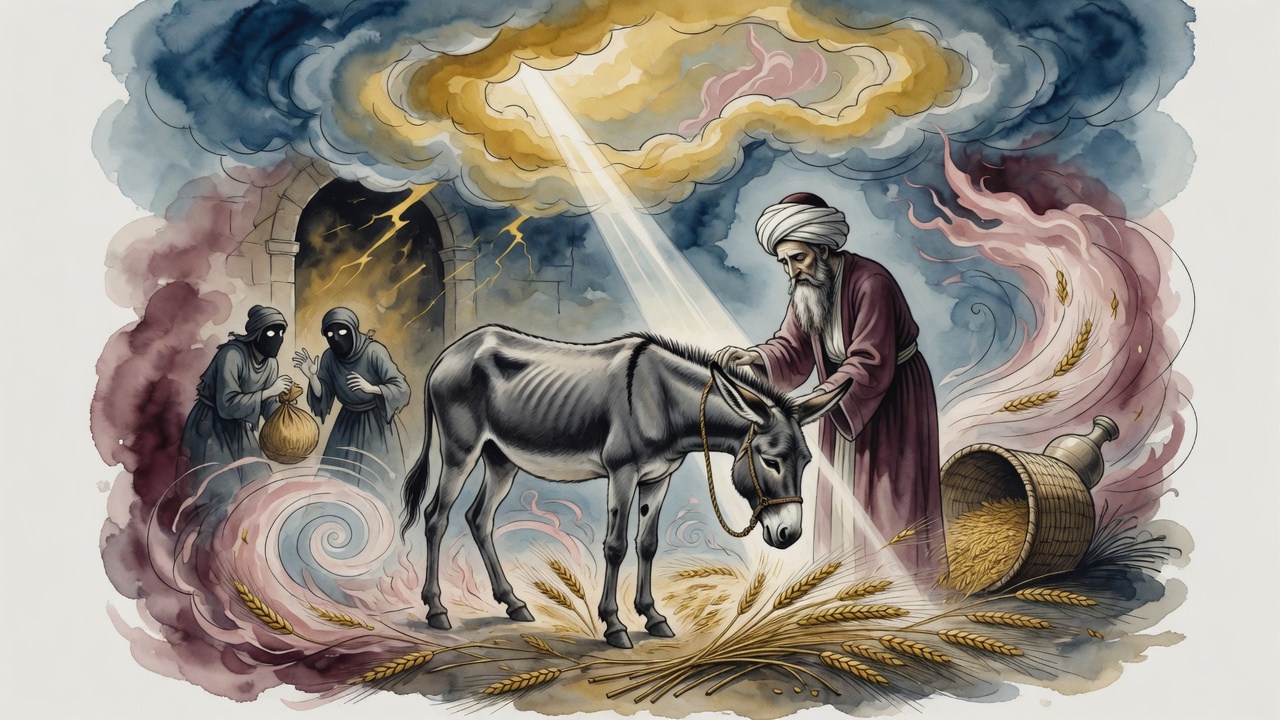
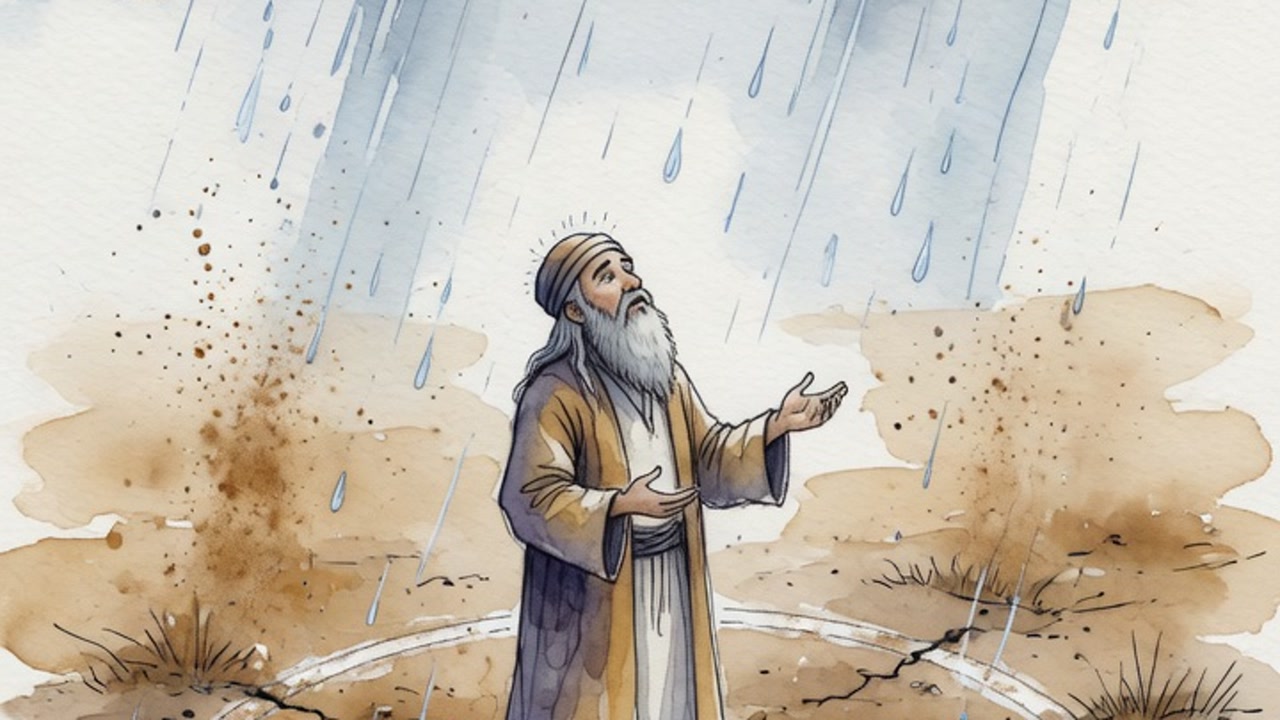
In another season the land cracked. Wells showed mud. Animals stood with ribs like harp strings. A rabbi received word from heaven: do not rely on your own standing. Go to a certain merchant and ask him to pray for rain.
The rabbi flushed. The man looked unlearned, a trader with calluses and no reputation for argument. Still he went, because the instruction had not left room for pride. Dust of the road clung to a scholar's hem.
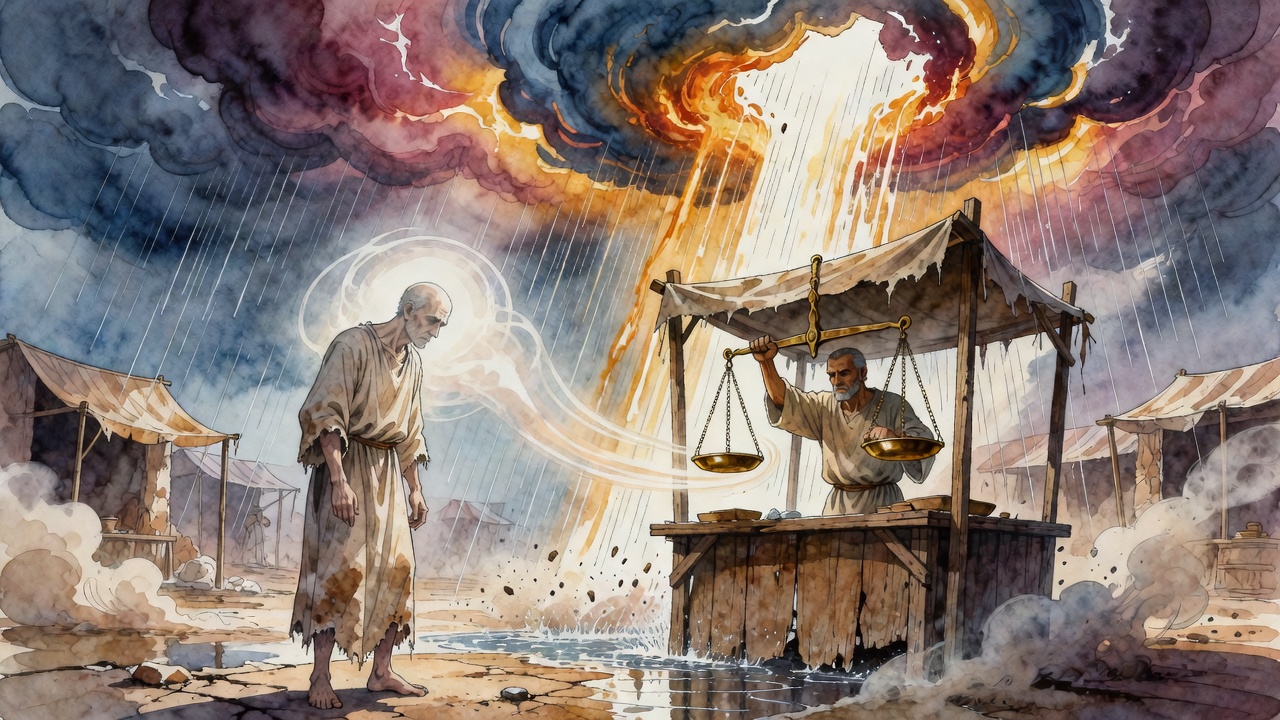
The merchant thought he was being mocked. Who asks a shopkeeper to open the sky? Then he saw the rabbi was serious. He brought out his scales, the tools of daily trade, and swore upon them before the Divine Name.
"If I have ever cheated the balance, let fire consume me. If I have kept the scales true, let rain fall."
Rain fell in torrents. The first drops raised dust into a brief fog. Then the ground drank. Then people shouted without dignity. The rabbi stood in the wet and learned what heaven had already known: the upper court reads a hand that weighs, not a title that studies.
Hands That Tell on Themselves
The thief exposed hidden thefts with a seed that never needed to sprout. The merchant opened the sky with scales that had never lied. One scene was comedy at the edge of death. The other was quiet power in a dry season. Station did not equal purity. Learning did not equal leverage above.
A starving theft can be smaller than a royal necklace kept back. A shopkeeper's even balance can outweigh a scholar's name. The stories do not bless crime. They refuse to bless rank.
The king had to step down a rung to see his own court. The rabbi had to step down a rung to find the man the drought required. The seed stayed in the tale without soil. The scales stayed in the tale with water already on them. Tell the truth about what your hands have done, or the ground and the sky will tell it for you.
← All myths