Samson Grew Under a Blessing No One Could See
Neighbors saw a child who still needed help with a cup. Heaven was filling a frame that would one day tear gates from walls.
Table of Contents
The boy reached for the cup with both hands. Manoah's wife set her fingers over his so the milk would not run. Neighbors saw a child. They did not see what God was pouring into him while he lengthened.
 Click for full size
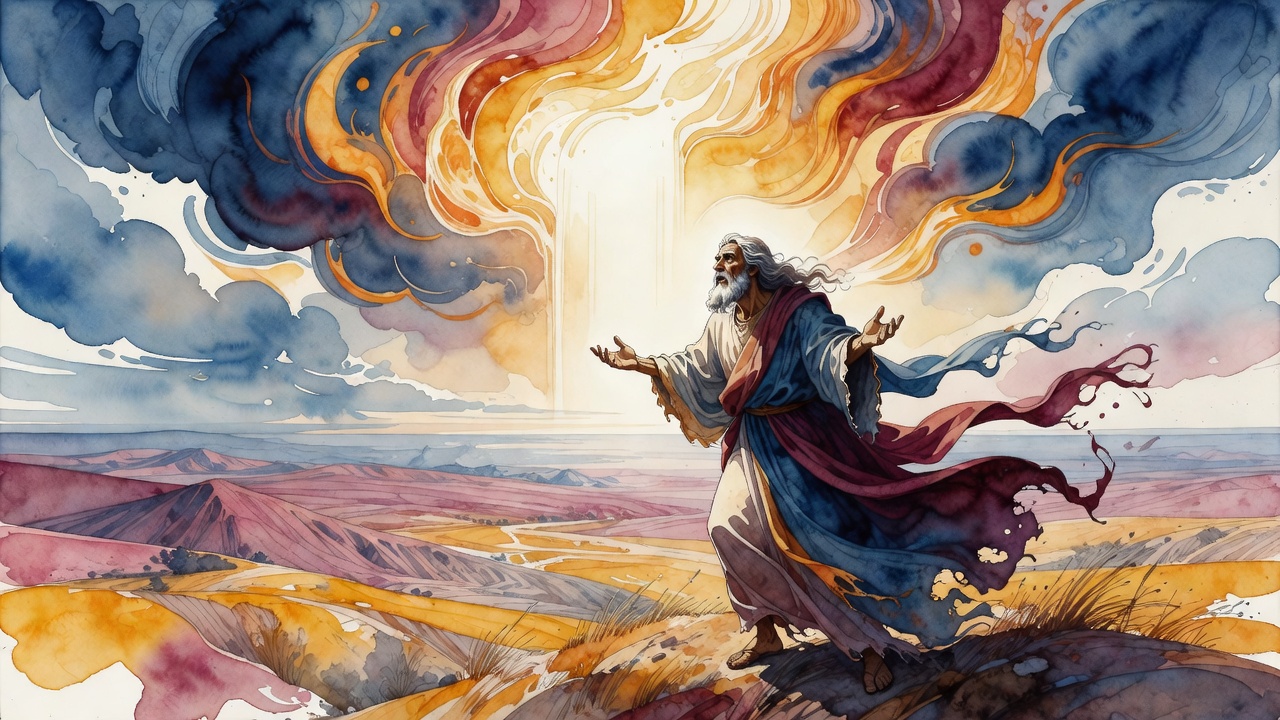
Samson grew, and the Lord blessed him (Judges 13:24). No angel came back to name the gift. No list of muscles. The blessing arrived the way bone arrives under skin, quiet, and already at work.
The Blessing Sat in the Flesh
Rav, speaking through Rav Yehudah, would not leave that short verse empty. He said the blessing was bodily from the first day it landed. It sat in the boy's frame. It sat in the organ that would make sons. His seed ran like a stream that does not dry.
The household had already heard the angel's terms. No razor. A life set apart. A deliverer for Israel against Philistine rule. What they could not measure at the table was the quiet filling inside him. Force gathered at the pace of ordinary years.
A neighbor passed and saw a boy who still needed a hand on the cup. Heaven was forging a weapon at the speed of growth. The blessing was not a halo. It was capacity, stacked in bone and blood while he learned to walk.
When the Spirit of the Lord later began to stir him in Mahaneh-dan, between Zorah and Eshtaol (Judges 13:25), the stirring had somewhere to land. The vessel had been filling since the days he could not lift a beam.
Seed and Skin Stay Off the Plate
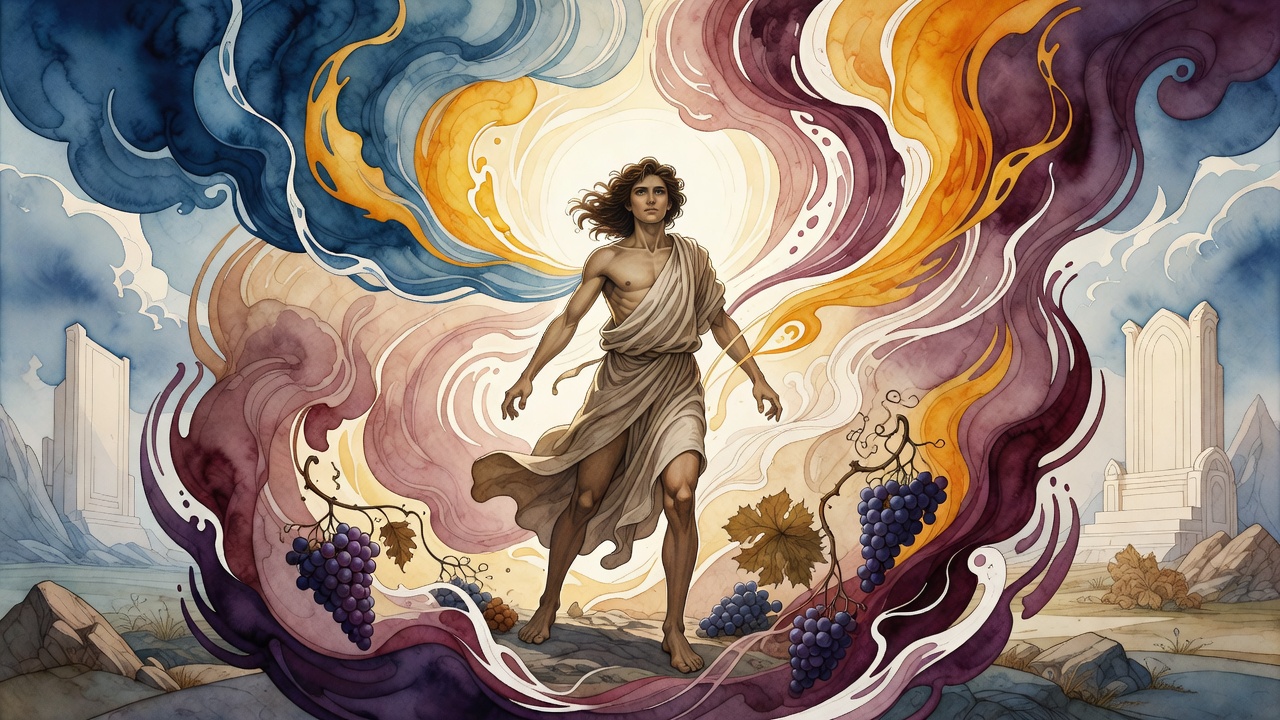
A woman from the next slope brought a cluster of grapes as a kindness. Manoah's wife took it before it reached the boy's mouth. She split a grape with her thumb. Seeds. Skin. Pulp. She set the whole of it aside.
"Not these," she said. "Not even these."
The nazir (נזיר), the one set apart, may not eat from the vine from seeds to skin (Numbers 6:4). Not only wine. Not only fruit pulled fresh from the cluster. The ban reaches the dry and the moist, the kernel and the peel. Leaves and tendrils stay outside the ban. Fruit and the waste of fruit do not. Holiness here is a diet of refusals, not a mood.
She ate none of the cluster at his table. The house kept the border so his mouth would not have to invent it later. Hair uncut. Cup watched. A body marked for God while Philistine cities watched the roads.
If a grown nazir later mixed seed and skin until they made an olive-bulk, the court would count forty lashes. Samson was not yet a man in court. He was a child whose plate already carried the whole vow. The Torah is not playing with partial bans. If the separation is real, it is total within its domain.
The Spirit Found a Vessel Already Full
The years ran. He lengthened. The hair thickened. The grape stayed off the plate. Then the Spirit began to knock around inside him in the camp of Dan, in that strip of hill country between Zorah and Eshtaol, and the boy who had needed help with a cup stood up as something else.
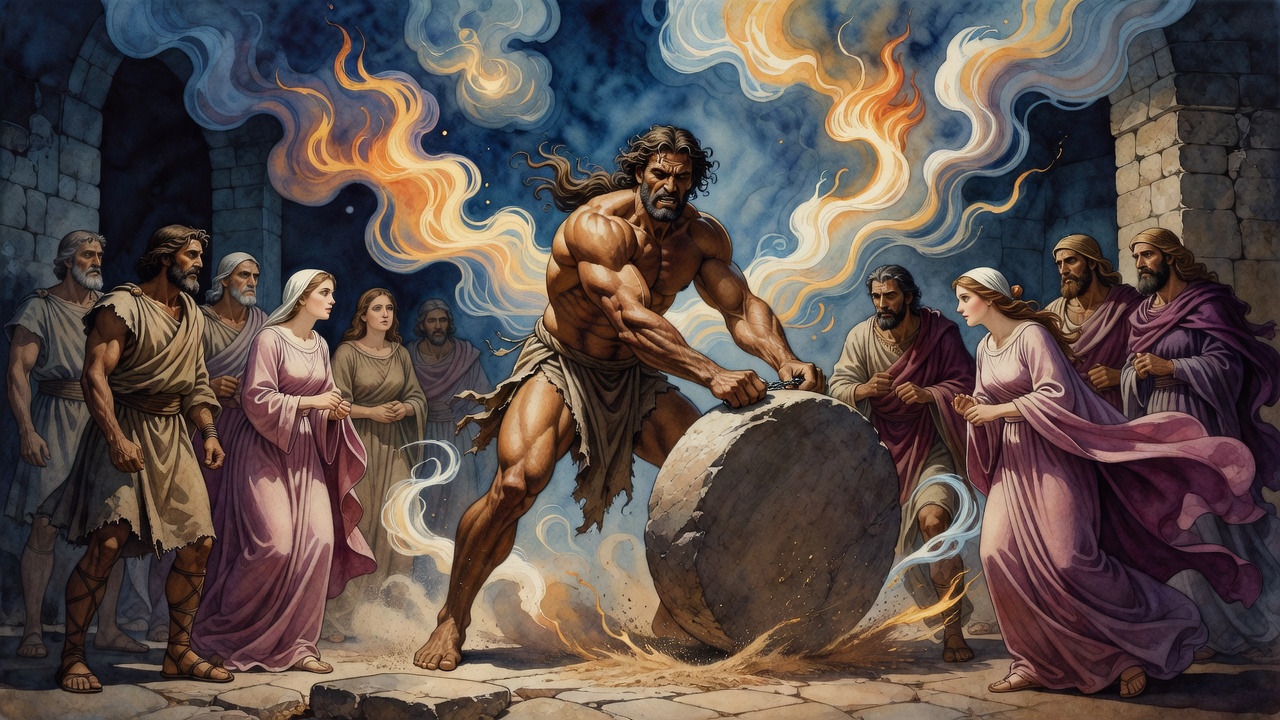
He did not wake one morning and find strength like a coat left on a peg. The feats that would tear gates from walls were the unfolding of a blessing already seated in a child's flesh. God had promised a deliverer. God had also formed the deliverer, quietly, while Manoah asked for instructions his wife had already received.
Israel under Philistine pressure needed more than a clever judge. It needed a one-man breach. The blessing made the breach possible. The nazirite law made the breach holy in origin, even when the man who carried it was not always holy in conduct.
The Hair Kept the Secret Until Night
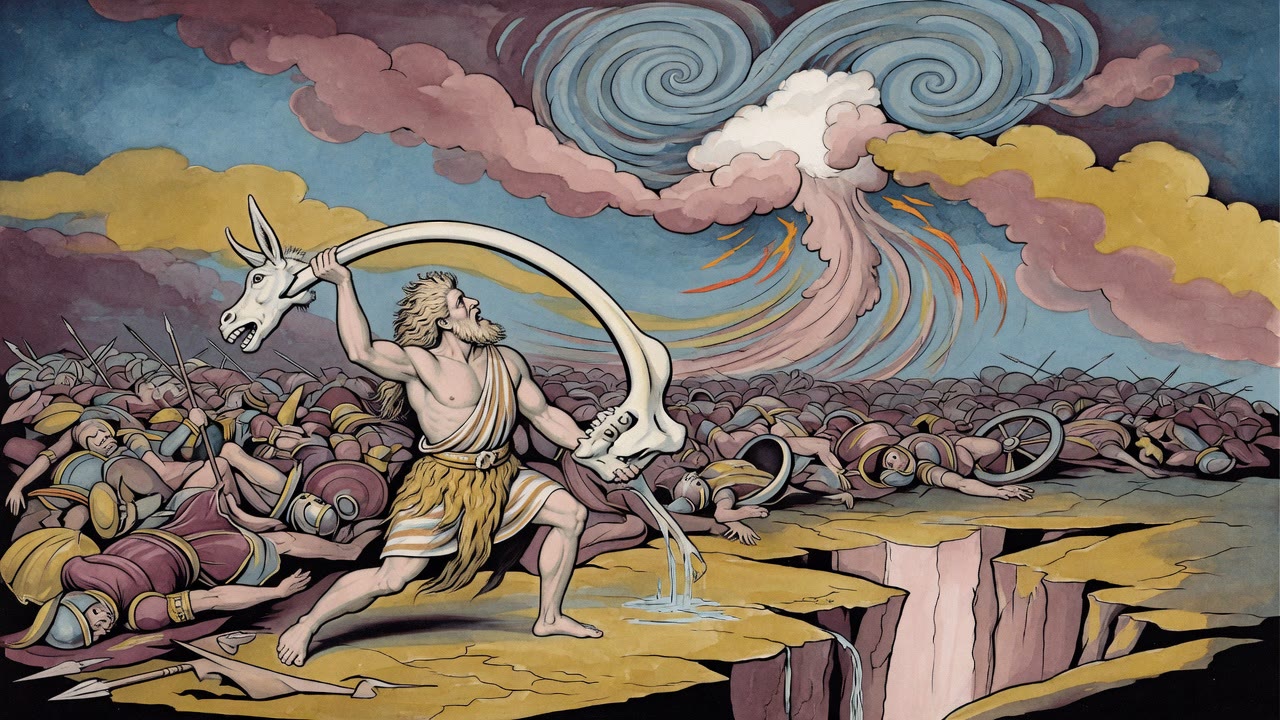
The same body later walked into rooms it should have left shut. Strength does not aim itself. The boy blessed in secret became the man who could kill with a jawbone and still not govern his own wanting.
That tension was already in the childhood verse. God formed him. He would still have to choose, again and again, whether the nazirite frame was a cage or a calling. Delilah's scissors would find the one outer sign the blessing had always worn on the skull.
Until that night, the blessing and the ban grew together. More force. Same hair. Same untasted grape. When he finally pulled a temple down on himself and on his enemies, the strength that bent the pillars was the same strength that had been accumulating while he still spilled milk.
The blessing had been patient. The man had not always been. Nazirite seed and skin can look like small religion next to collapsed stone. They are how a life stays aimed when force is abundant and wisdom is scarce.
He grew. The Lord blessed him. Everything after is written in muscle, vineyard, and ruin.
← All myths