Shoshana Lifted Her Eyes While They Pressed Her Head
Two elders ambushed Shoshana in the vineyard, then unveiled her before the crowd and set their hands on her head for death. She looked only at the sky.
Table of Contents
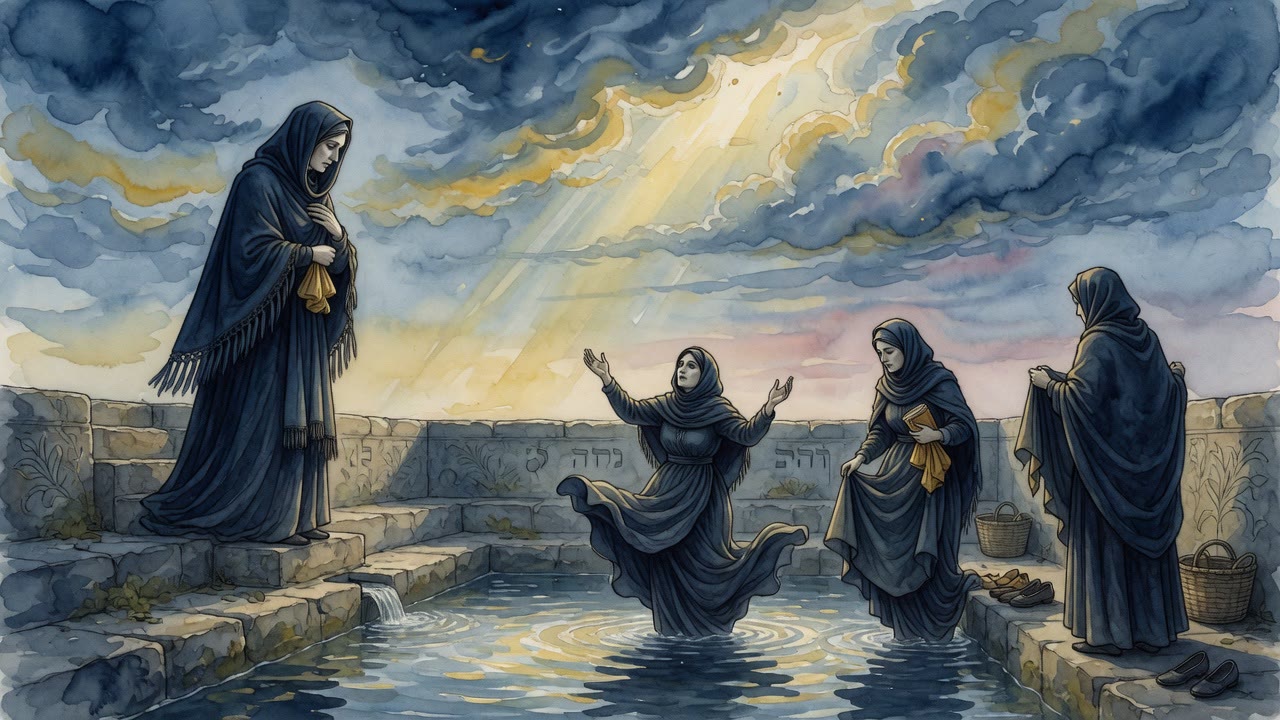
The heat pressed on the sealed vineyard. Shoshana sent her maids for oil and a pitcher and told them to shut the gate until she finished washing. The girls obeyed. They closed the door of the flock and left her alone among the leaves.
 Click for full size
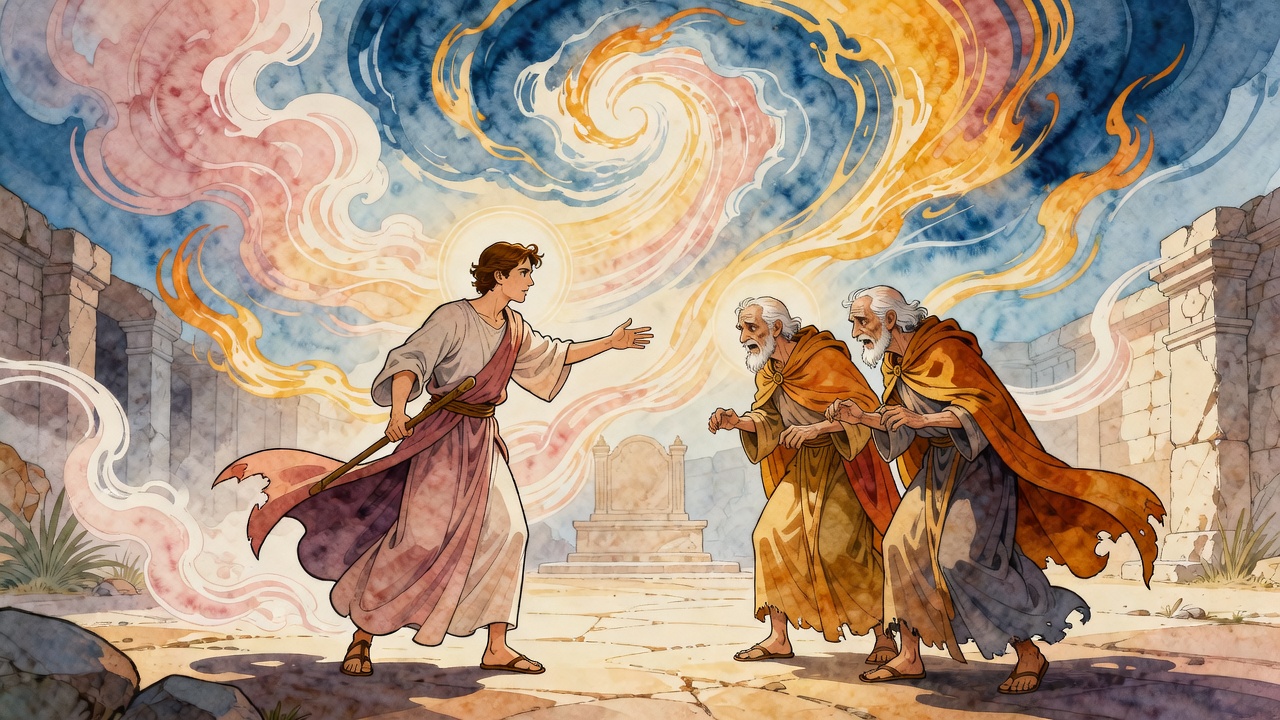
Two old men rose from the brush where they had been waiting.
The Gate Closed Behind the Maids
They had watched her every day from the door of the garden. They had pretended to go home for the midday meal, then doubled back, each man alone, and found each other in the same shadow. Once they confessed the same hunger, they stopped hiding it. They set a time. They chose the hour when the house emptied and the heat drove people indoors.
Now the vineyard was locked. No one stood between them and her. They ran at Shoshana and spoke the bargain they had rehearsed. The place is sealed, they said. No eye will see. Come with us.
She stepped back. Her mouth went dry. The oil jar sat forgotten on the stone.
If she yielded, she died before God. If she refused, their mouths would kill her in the court. Two deaths, one clean and one filthy, stood in the same row of vines. She measured them in a single breath.
"It is better for me to fall into your hands without sin," she said, "than to sin before God."
Then she raised her voice and cried out.
Two Deaths in One Vineyard
The elders shouted over her. Their noise was the noise of witnesses, not of lovers. When the people of the house heard the cry, they ran to the vineyard to see what was happening. Footsteps hammered the path. Faces crowded the gate. What they found was not a stranger's body on the ground, but two respected judges already shaping a report.
They said they had caught her with a young man. They said the man had fled when they tried to hold him. They said she would not name him. The story was simple, and it fit the law of two witnesses. The maidservants who knew her from birth heard the charge and burned with shame. No such word had been spoken over her since the day she was born.
Shoshana stood among the vines with dust on her ankles and no answer that could help her. Truth without a second witness was only a woman's voice. Their lie with two mouths was already half a verdict.
Night came. The house of Jehoiakim, her husband, prepared for a public morning.
The Summons at Jehoiakim's House
The next day the people gathered at Jehoiakim's house. The two elders came with the crowd and laid false charges so that the assembly would sentence her to death. They said, "Send for Shoshana, the daughter of Hilkiah, the wife of Jehoiakim, to come to us."
They brought her. She came with her parents, her children, and her whole family. She was soft to look at, delightful in the way beauty is dangerous when judges are corrupt. The wicked men ordered the veil lifted from her face so they could enjoy her beauty while they destroyed her name.
The cloth came away. Air touched her cheeks in front of the whole community. Acquaintances who had eaten at her table wept with a heavy weeping. Parents who had raised her in the fear of the Lord watched the law turn into a weapon.
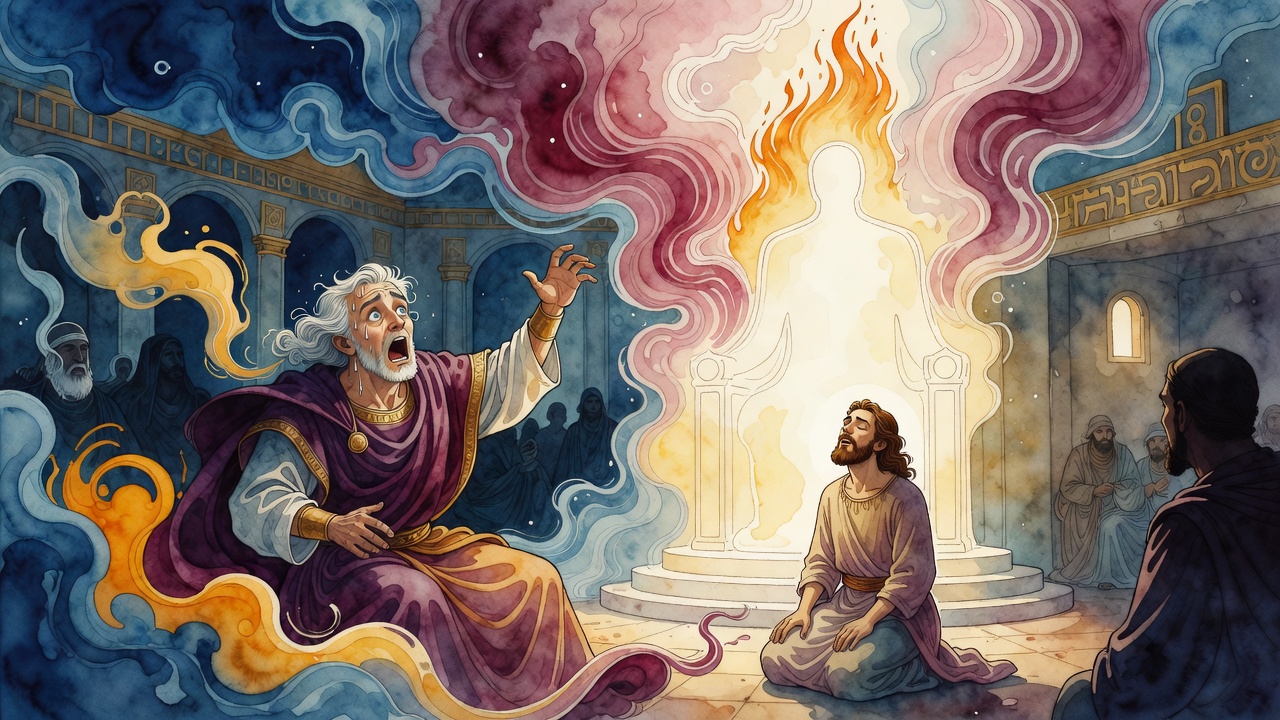
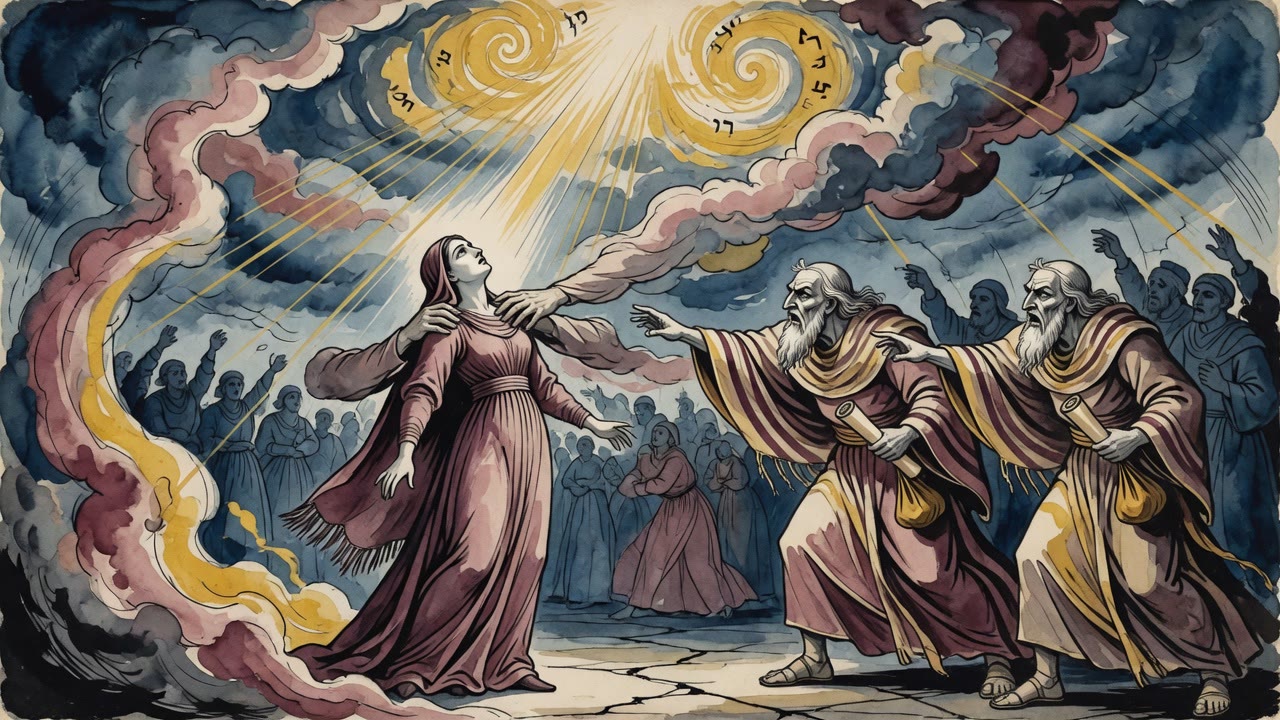
The elders rose among the people. They placed their hands upon her head.
Hands on Her Head
That touch was not a blessing. It marked her for the sentence. Weight settled on her scalp, two palms that had lusted in secret now claiming the right of judgment in public. The courtyard held its breath. A lily name, Shoshana, stood under the hands of men who had tried to pluck her in private and now meant to cut her down under oath.
She wept with a bitter heart. Then she lifted her eyes to the sky, because her heart trusted in God when every earthly bench had already closed against her.
She did not plead with the elders. She did not bargain with the crowd. She spoke upward, to the One who knows what is hidden before it is born. She told heaven that the mouths on her were empty of truth, that she was going to die for a charge that had never lived in her body. The people heard a condemned woman. Heaven heard a witness.
The judges accepted the elders' story. The death penalty moved from talk to order. The assembly began to lead her out.
The Crowd Turned Back
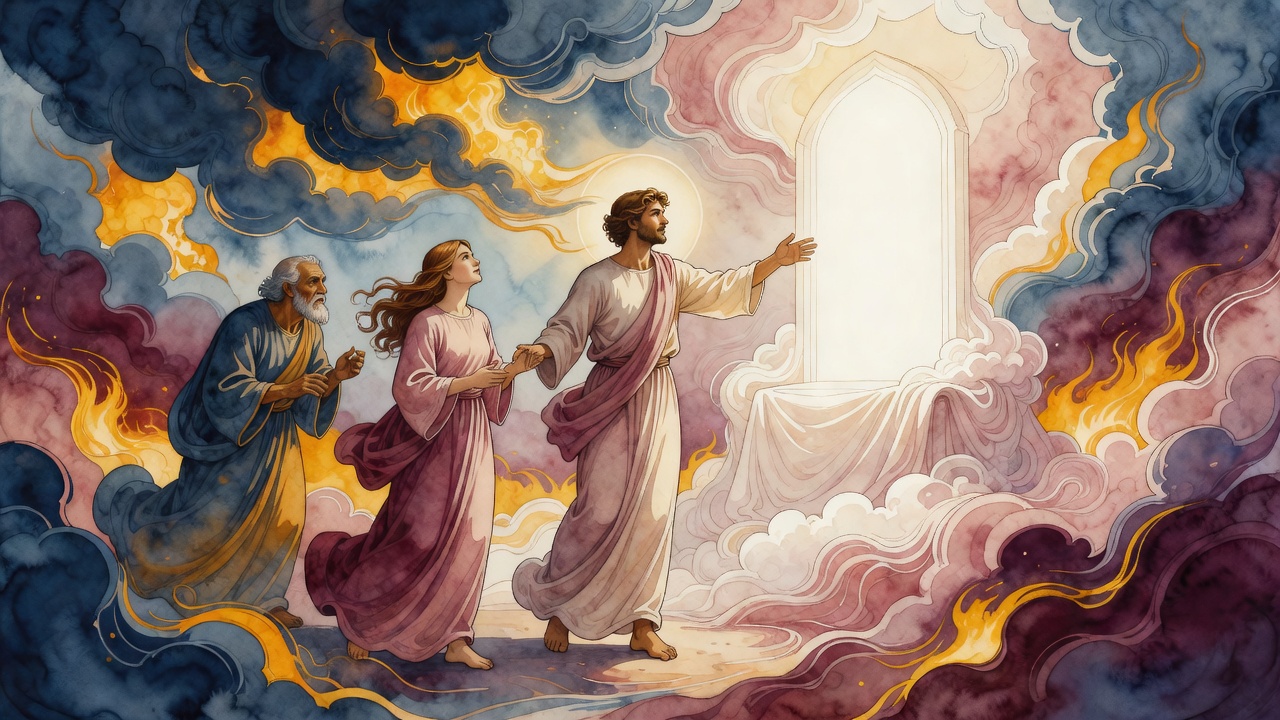
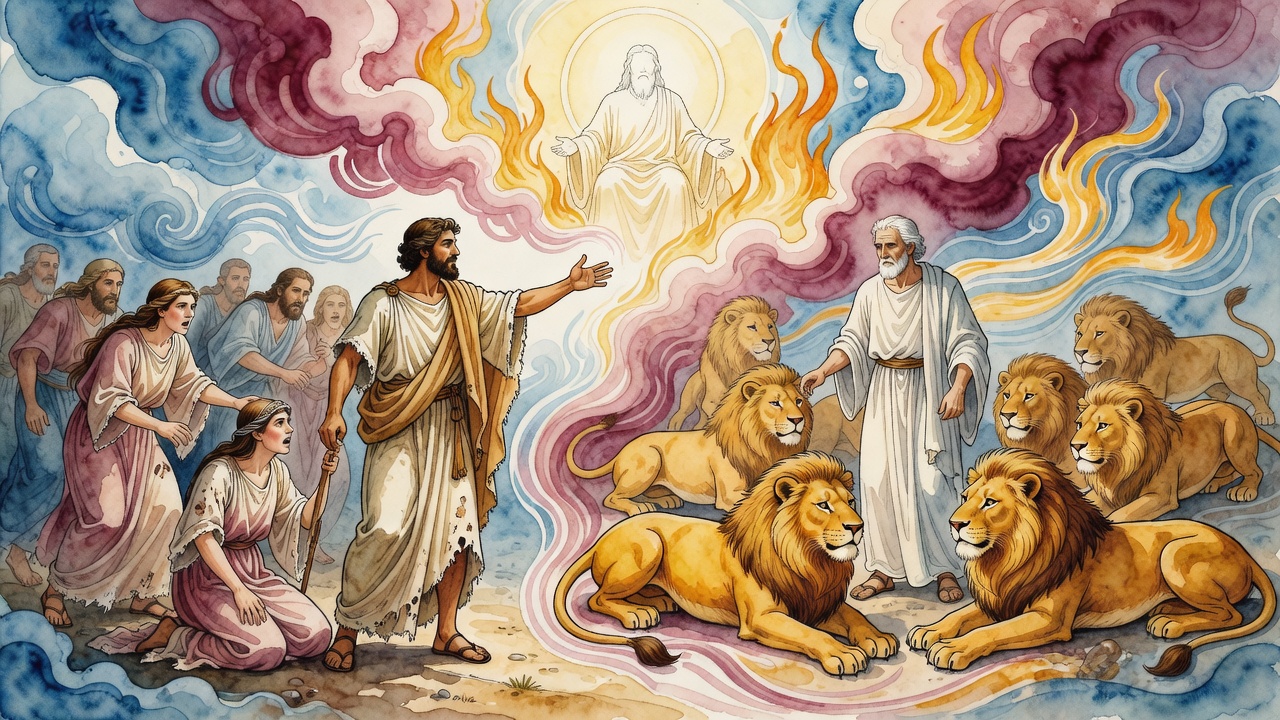
She was almost gone when a young voice cut the procession. God raised the spirit of a youth named Daniel. He stood among the people and said they had acted like fools, condemning an Israelite woman without searching the matter. Return to the court, he said. See that these men have lied.
The crowd hurried back. Daniel separated the two elders and questioned each man alone. Under which tree did you see them? One named a mastic tree. The other named an evergreen oak. The answers could not share one garden. The lie cracked in the open air.
The assembly reversed the sentence. The law that had almost crushed Shoshana turned on the men who had forged it. She walked out of the courtyard with her veil gone and her name restored, the sky still the first place she had looked when hands pressed her head for death.
In Babylon, under judges who kept the forms of the Torah while their eyes hunted a woman in a locked vineyard, one cry and one upward glance held until a second witness finally arrived.
← All myths