Parshat Chukat5 min read

Sihon Took Moav So Israel Could Enter Heshbon

Moses offered to buy every drop of water his people drank. Sihon refused and formed his line, and his own soldiers died of thirst in the Arnon.

Curated by Arthur · Told by Maggid ·
Table of Contents
  1. Moses Offered to Pay for the Water
  2. The Emorites Ran for Their Own Walls
  3. They Died of Thirst in the River
  4. Og Came to Help a Dead Man

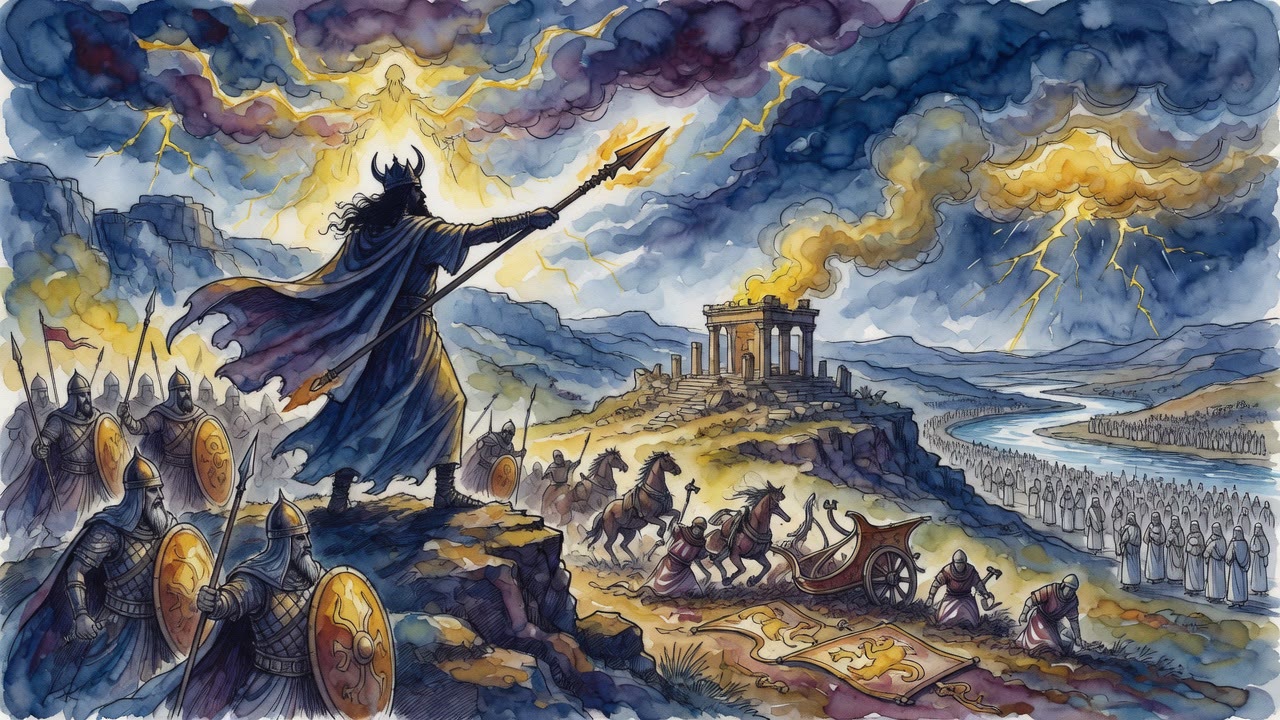
Sihon the Emorite paid a diviner to burn a kingdom for him, and it worked.
Sihon Took Moav So Israel Could Enter Heshbon Click for full size

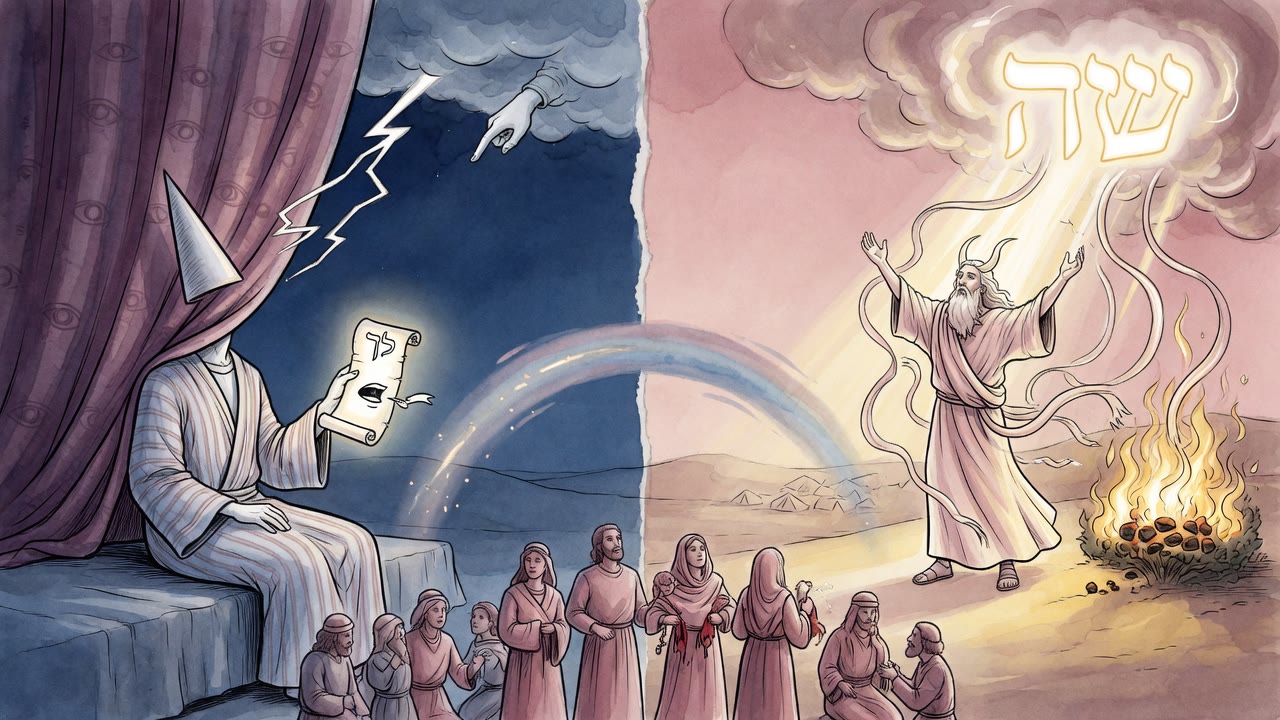
He wanted Heshbon, and Heshbon was Moav's. So he hired Bilam and Bilam's father to curse the Moavites, and the two of them opened their mouths against Ar of Moav and against the lords of the high places above the Arnon. Fire went out of Heshbon. It took Ar. It took the high places. Woe to you, Moav, the hired men said, and Moav was handed over.

Afterwards the singers made a song out of it that people were still repeating years later. Come to Heshbon. Let the city of Sihon be built and established.

Moses Offered to Pay for the Water

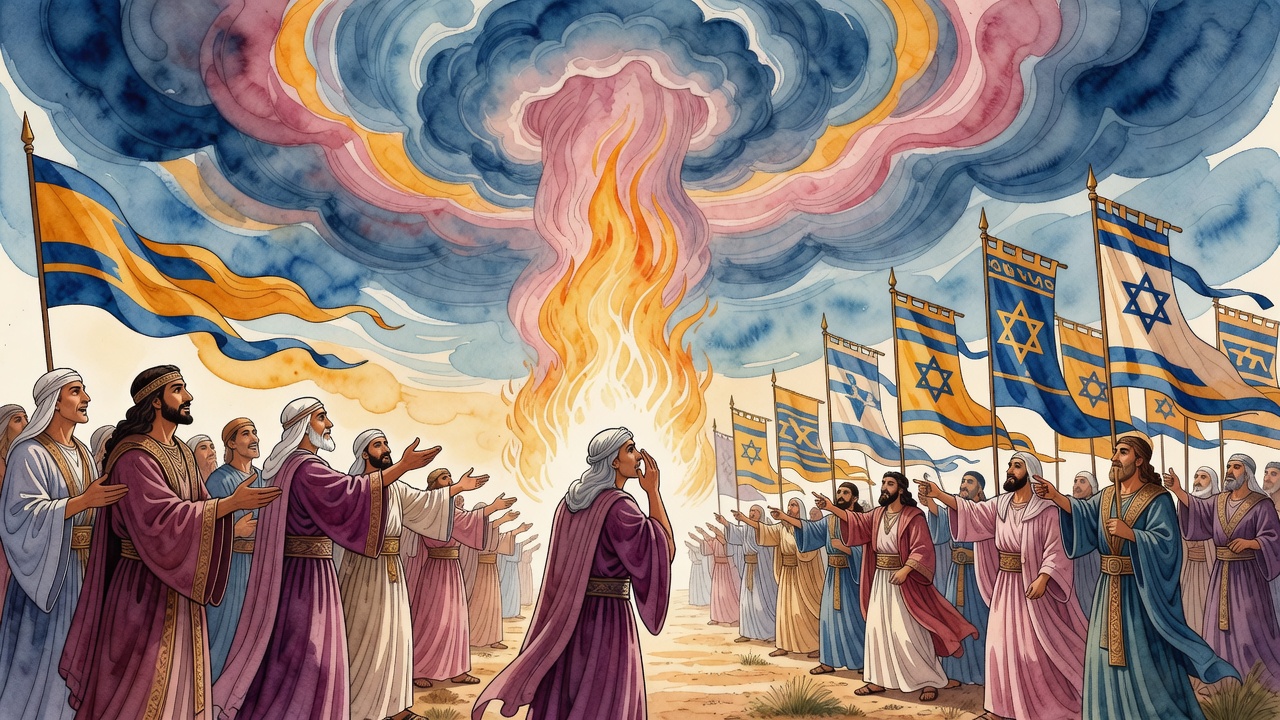
Israel came up to the Arnon out of thirty days of mourning for Aaron, and Moses sent messengers across to the Emorite king with terms that gave away almost everything.

Let the army walk through. Name any security you want for it. Nothing of yours will be touched, not the land, not the people in it. We will buy our provisions at whatever price suits you. If you want to sell us the water we drink, we will pay for the water.

Sihon sent them back with nothing and put his army into line along the river to stop the crossing.

The Emorites Ran for Their Own Walls

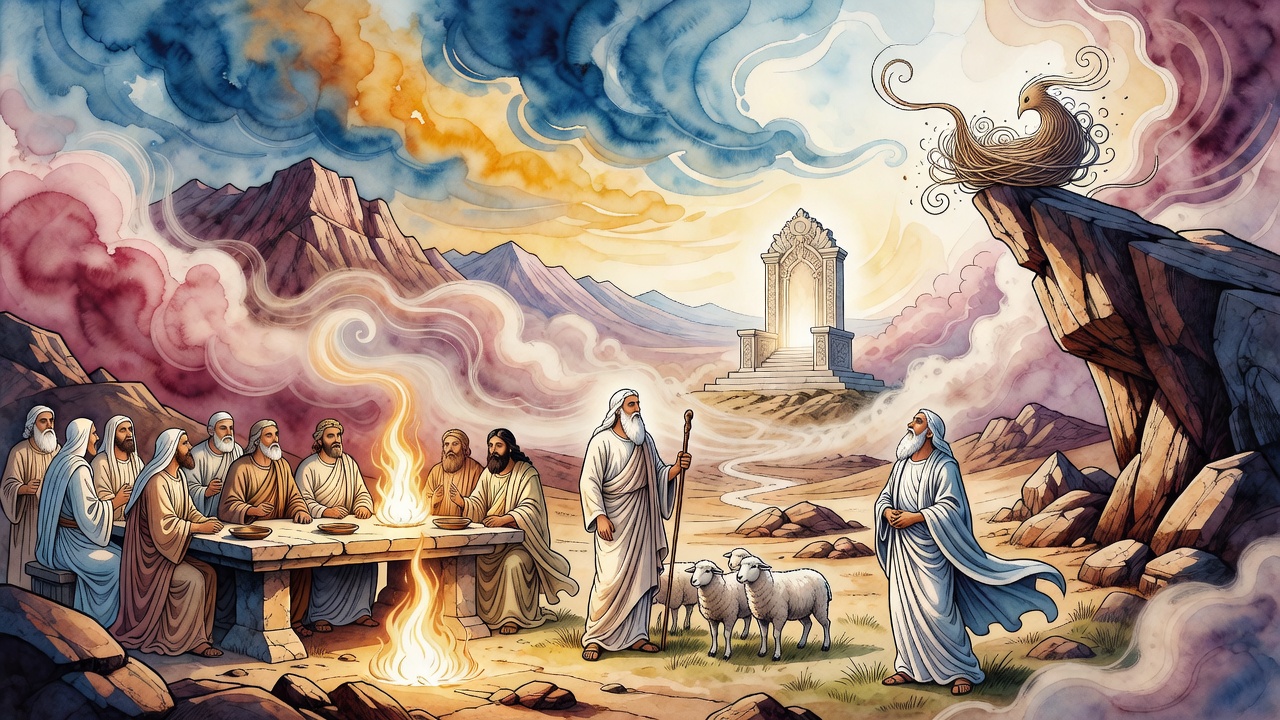
Moses asked God whether he was permitted to fight. He was told yes, and given the victory in advance, and he went to the men and told them the pleasure was theirs now, God had allowed it. They had been waiting years for a sentence like that. They armed and went that day.

Sihon on the field was not the man who had burned Ar of Moav. His soldiers, who had looked brave enough while they were forming up, could not take the first shock and broke, and ran, and told themselves that running was the better plan because their cities had strong walls.

The walls did them no good. The Hebrews came after them the moment the line bent. They carried almost no armour, which made them fast, and they were good with a sling and better with a dart, and the men who got too far ahead to be caught on foot were brought down at a distance instead.

They Died of Thirst in the River

It was high summer. The wounded who got clear of the fighting suffered more from thirst than from anything the Hebrews had done to them, and thirst walked them straight down to the water.

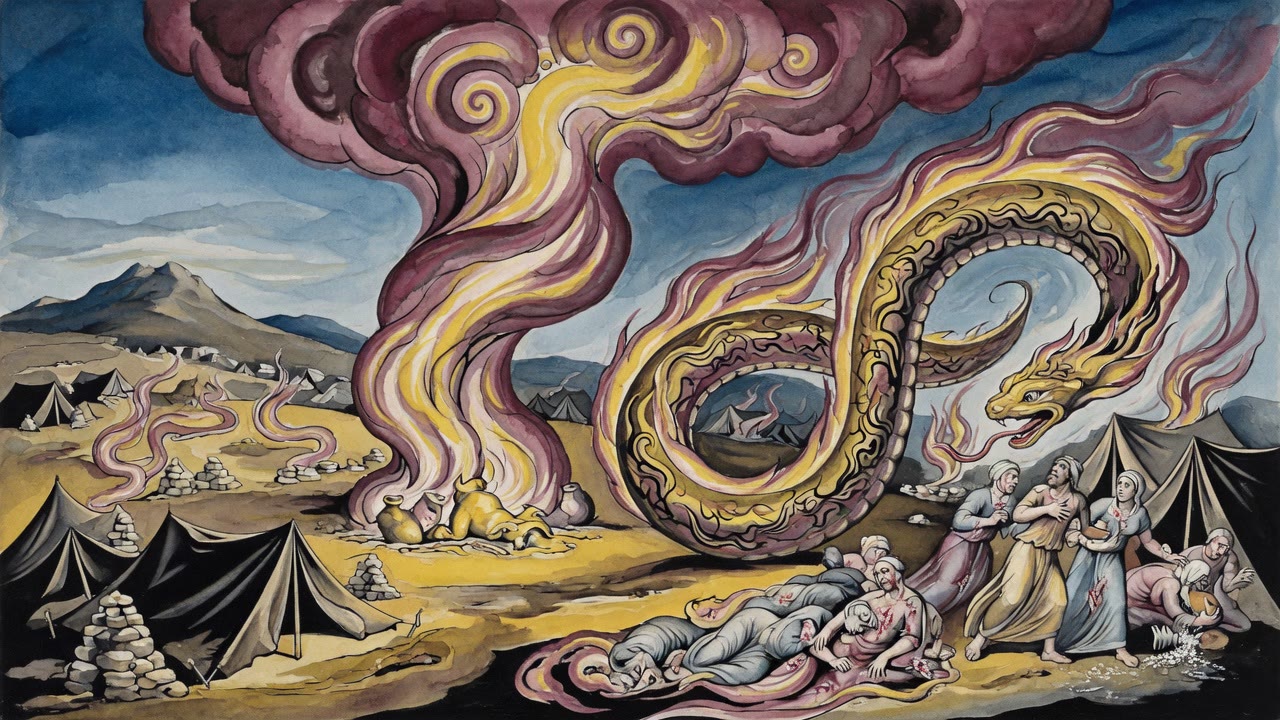
They came to the river in numbers, went in to drink, and the Hebrews closed round the bank and shot into them until there was nobody left standing in the water. Sihon was killed with them. The men who had refused to sell water at any price died in a river with their mouths open.

The country the army took that day sits between three rivers and looks like an island: the Arnon along the south, the Jabbok along the north, the Jordan running down the western edge. It was thick with fruit. The herds went out over it without a guard, because there was nobody left alive in it to fight.

Og Came to Help a Dead Man

Og of Bashan marched in a hurry to save his friend Sihon and arrived to find him already dead.

He fought anyway. He wanted to see for himself what these people were worth. He was a huge man, well made, quick with his hands, and none of it mattered. He died on the field and his whole army died with him, and afterwards the Hebrews measured the iron bed he had slept in at Rabbath, four cubits across and nine cubits long. Sixty walled cities came in with him, all of them rich, and Moses crossed the Jabbok and took the lot.

Then the camp walked into Heshbon.

God had told them plainly not to besiege Moav, and no Israelite ever went up against a Moavite wall. The fields they moved into had been Moav's until an Emorite king took them, and the man who had cleared the title had paid for the curse himself, out of his own treasury, to make a city he would not hold for long.


← All myths
From the tradition

Sources

2 sources

The texts behind this telling. Some cards carry a translation of the source; others are our own retelling of it, and each card says which. Every card links out to the original.

Bamidbar Rabbah 19:30Bamidbar Rabbah

Retold in our words. Read the original at the link below.The Sefaria Midrash Rabbah, 2022 · CC-BY

Our tradition has some fascinating things to say about that, especially when it comes to warfare and justice. to a curious little passage from Bamidbar Rabbah 19, which elaborates on a verse from Numbers (21:26): “For Ḥeshbon was the city of Siḥon, king of the Emorites, and he fought against the first king of Moav, and took all his land from his possession, until Arnon.”

Seems straightforward. But the Rabbis, never content with the surface level, dig much deeper.

The passage begins by linking this verse to (Psalm 37:28): “For the Lord loves justice.” What's the connection? Well, it all boils down to divine instruction and who took what from whom. God had told the Israelites, "Do not besiege Moav" (Deuteronomy 2:9). But Ḥeshbon, as the verse points out, was originally Moavite land. So if Israel just waltzes in and takes Ḥeshbon, aren't they violating God's command? Wouldn't that be, well, unjust?

Here’s where it gets interesting. The Holy One, blessed be He, according to Bamidbar Rabbah, had already foreseen this potential conflict. The key is that Siḥon, the Emorite king, had already taken the land from Moav! Israel wasn’t stealing from Moav directly; they were taking it from Siḥon, who had, in a sense, stolen it first. As Bamidbar Rabbah puts it, "Siḥon took it from Moav, and Israel from Siḥon; therefore, they were exempt from robbery." It's a fascinating example of divine justice working through layers of human action.

This is why the verse pointedly states, “For Ḥeshbon was the city of Siḥon.” It’s not just a historical note; it's a crucial piece of the puzzle, justifying Israel's actions within the framework of divine law.

Now, the passage takes another unexpected turn, referencing (Numbers 21:27): “Therefore, the allegorists will say: Come to Ḥeshbon. The city of Siḥon will be built and established.” And then verse 28: “For a fire emerged from Ḥeshbon, a flame from the city of Siḥon; it consumed Ar of Moav, the lords of the high places of Arnon.”

Who are these "allegorists?" Bamidbar Rabbah identifies them as Bilam and his father. Yes, that Bilam – the one hired to curse Israel! According to this interpretation, Siḥon had hired Bilam to curse Moav. Their curse, "The city of Siḥon will be built and established… for a fire emerged from Ḥeshbon…it consumed Ar of Moav," prophesied Moav's downfall at the hands of Siḥon. The text concludes with the lament, "Woe to you, Moav" (Numbers 21:29), highlighting the completeness of their defeat.

What are we to make of all this? It’s a intricate web of political maneuvering, divine command, and even prophetic curses. It shows us how the Rabbis saw the hand of God not just in grand miracles, but in the details of history, in the rise and fall of nations. It also prompts us to consider: How often do we see events unfolding without fully understanding the deeper forces at play? And how might those forces, ultimately, be guided by a sense of justice that transcends our own limited perspective? Perhaps the story of Siḥon and Ḥeshbon invites us to look beyond the immediate and consider the long, complex, and often mysterious workings of divine providence.

Full source
Antiquities IV.5-7Antiquities of the Jews (Josephus)

Retold in our words. Read the original at the link below.Antiquities of the Jews, trans. William Whiston · Public Domain

Moses spent his final days doing what he had done since Sinai: giving laws. But these were different. These were the laws of a man who knew he would never cross the Jordan.

The military campaigns were finished. Sihon king of the Amorites had refused Israel passage and paid for it with his kingdom, his army shattered, his cities taken, his land divided among the tribes. Og king of Bashan followed him into defeat. Og was a giant of legendary stature; his iron bed at Rabbath measured four cubits wide and nine cubits long. But size meant nothing before Israel's God. Sixty walled cities fell. The eastern bank of the Jordan was now entirely in Israelite hands.

The tribes of Gad, Reuben, and the half-tribe of Manasseh saw the fertile grazing lands east of the Jordan and asked Moses for them as their inheritance. Moses was furious, he thought they were inventing excuses to avoid fighting alongside their brothers in Canaan. But the tribes swore they would cross the Jordan and fight until every tribe had its land. Only then would they return to their families. Moses accepted their oath.

He established cities of refuge. Bezer on the Arabian border, Ramoth in Gilead, Golan in Bashan, where any person who killed accidentally could flee from the avenger of blood and live safely until the death of the high priest (Numbers 35:25). He appointed Joshua son of Nun as his successor, both as prophet who would receive God's commands and as military commander.

Then came the case of the daughters of Zelophehad from the tribe of Manasseh. Their father had died leaving no sons. Could they inherit? Moses ruled yes, provided they married within their own tribe, so the land would not transfer between tribal boundaries (Numbers 36:6). It became a permanent statute: every inheritance must remain in the tribe to which God assigned it. These were the final ordinances of a lawgiver preparing his people for a world without him.

Full source