6 min read

The Fiery Serpents Came Back for the Slanderers

A serpent tastes dust in everything it eats. Israel tasted whatever they liked in the manna and sneered anyway, so God sent the serpent to collect.

Curated by Arthur · Told by Maggid ·
Table of Contents
  1. The First Scream at the Edge of Camp
  2. The Mouth That Started It
  3. One Food and a Thousand Flavors
  4. The Bronze Went Up on a Pole
  5. Balak Counted Out the Silver
The Fiery Serpents Came Back for the Slanderers Click for full size

The First Scream at the Edge of Camp

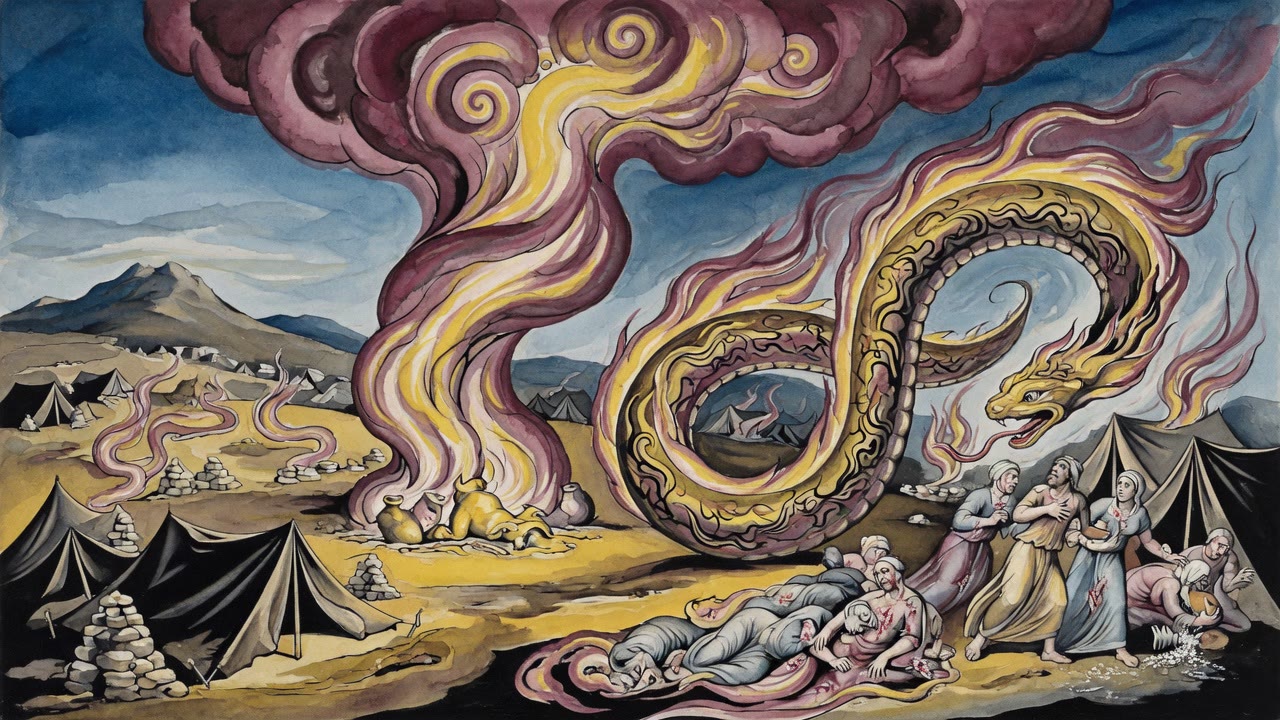
A man went down at the edge of the camp with both hands locked around his calf. Then another one further in. Then a whole line of them, dropping between the tents while something moved through the sand faster than a man could turn around.

The bite burned. That was the part nobody was ready for. It went in cold and then it burned, all the way up, and the ones who took it did not die quietly. A great many of Israel died that day and the day after it.

Moses heard the noise of the camp change. For weeks it had been the same complaint in the same tone, about the bread that fell out of the sky and the road that would not end. Now the road had teeth.

The Mouth That Started It

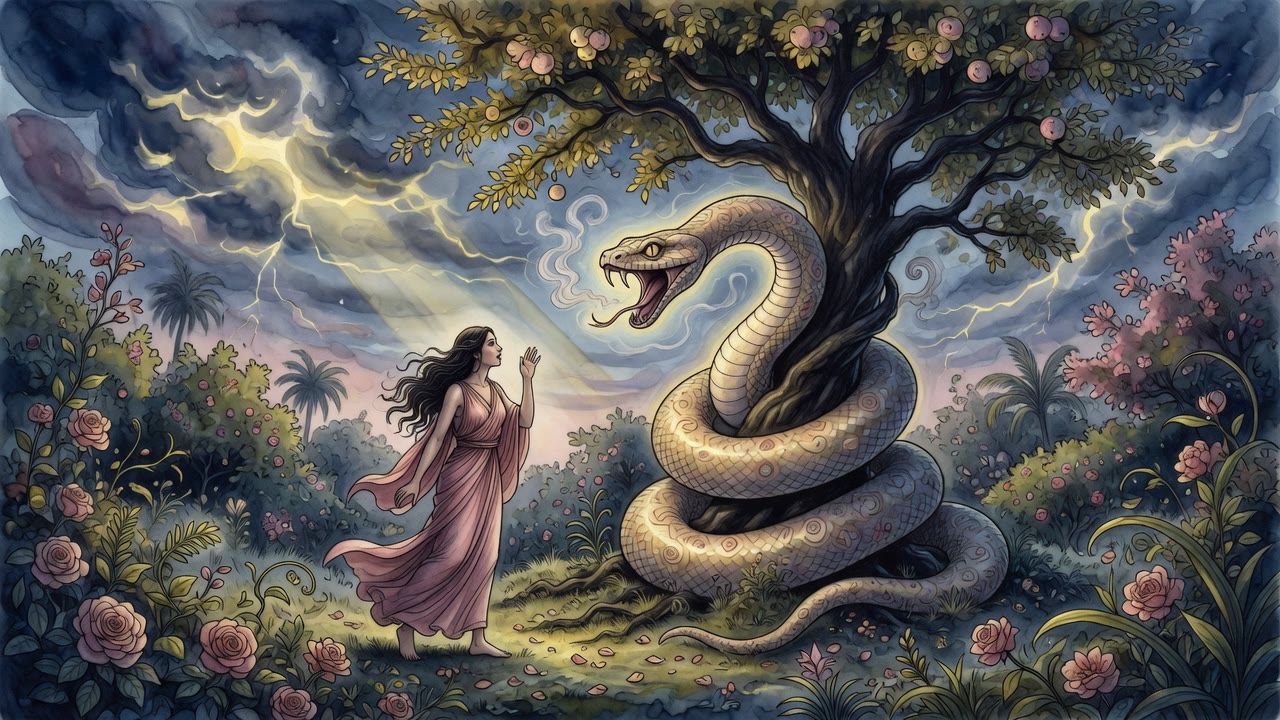
The serpent had opened all of this. In the garden it spoke against its maker, put a lie about God into a woman's ear, and was cursed for it before anyone else was cursed.

Israel had carried that story out of Egypt and across the sand. They knew it by heart. They still stood around in the evenings taking God apart in conversation, and taking Moses apart after Him.

So let the one who began with slander, God said, come and collect from the slanderers.

Whoever breaks through a fence gets bitten by a snake. The fence around this camp was not built of thorns. It was built of miracles, and the hole in it was made with talk.

One Food and a Thousand Flavors

There was a second fit between the crime and the creature, and it was the crueler of the two.

A serpent can eat every delicacy in the world and taste dust. Whatever goes into its mouth turns to dust in its mouth, and it has been eating that sentence since the garden.

Israel ate one thing, every morning, for forty years, and tasted whatever they wanted. A man who craved meat found meat in it. Forty years, and they lacked nothing, and they still found room in their mouths to sneer at the bread.

Let the creature that eats a thousand things and tastes one, God said, collect from the people who eat one thing and taste a thousand.

Rabbi Yudan knew where these particular snakes had come from. The cloud that went in front of the camp used to burn them where they lay and pile the bodies into a wall around the tents. Israel had been sleeping for years behind a fence of dead serpents without once asking what it was made of. Everything built to keep them alive was standing right there, already the right shape for a weapon, and it was let loose on them.

The Bronze Went Up on a Pole

They came to Moses and they did not argue. We have sinned, because we spoke against God and against you. Pray, and get the serpent off us.

He had been the target of that talk for weeks. He prayed anyway, at once, without making them wait while he nursed it, because a man who is asked for forgiveness does not get to turn cruel.

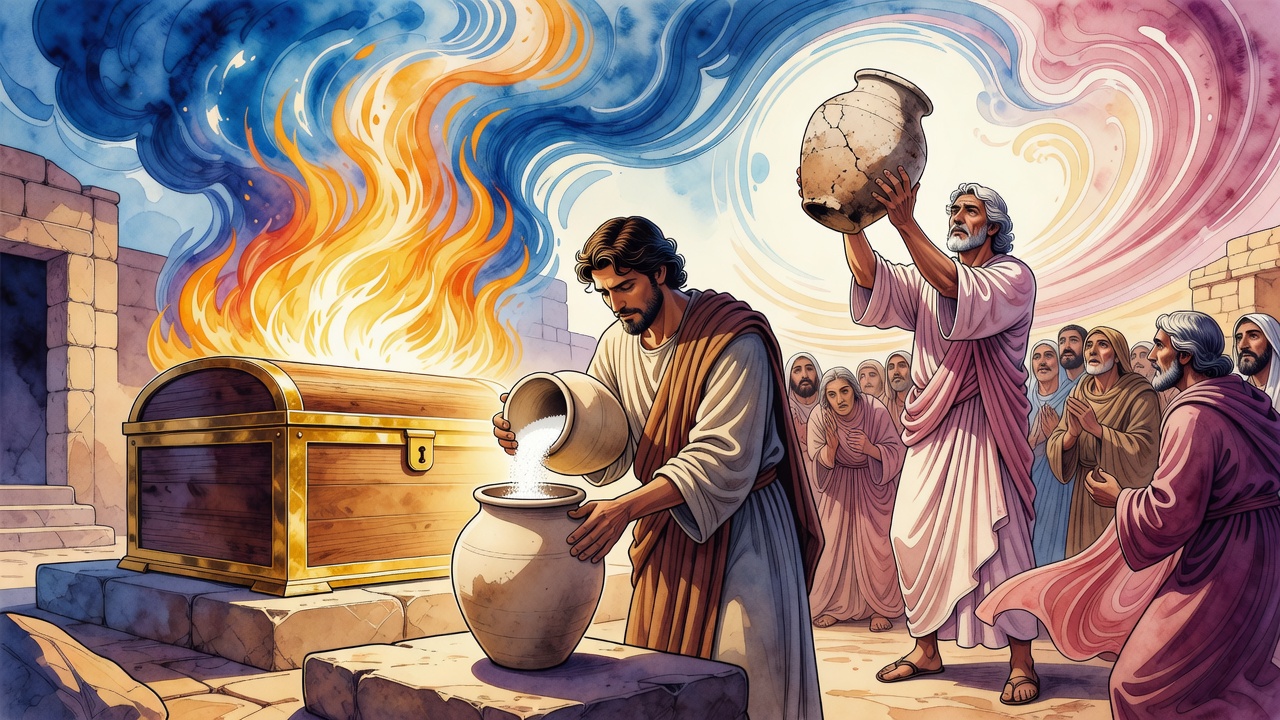
God told him to make a serpent and set it up on a standard, and anyone bitten who looked at it would live. Moses cast one out of bronze and raised it, and it stood there in the heat saying nothing, while men who had used their mouths to tear the manna apart had to use their eyes to take healing off a pole.

Some looked up and stood up. Some stayed face down in the sand they had preferred all along.

Balak Counted Out the Silver

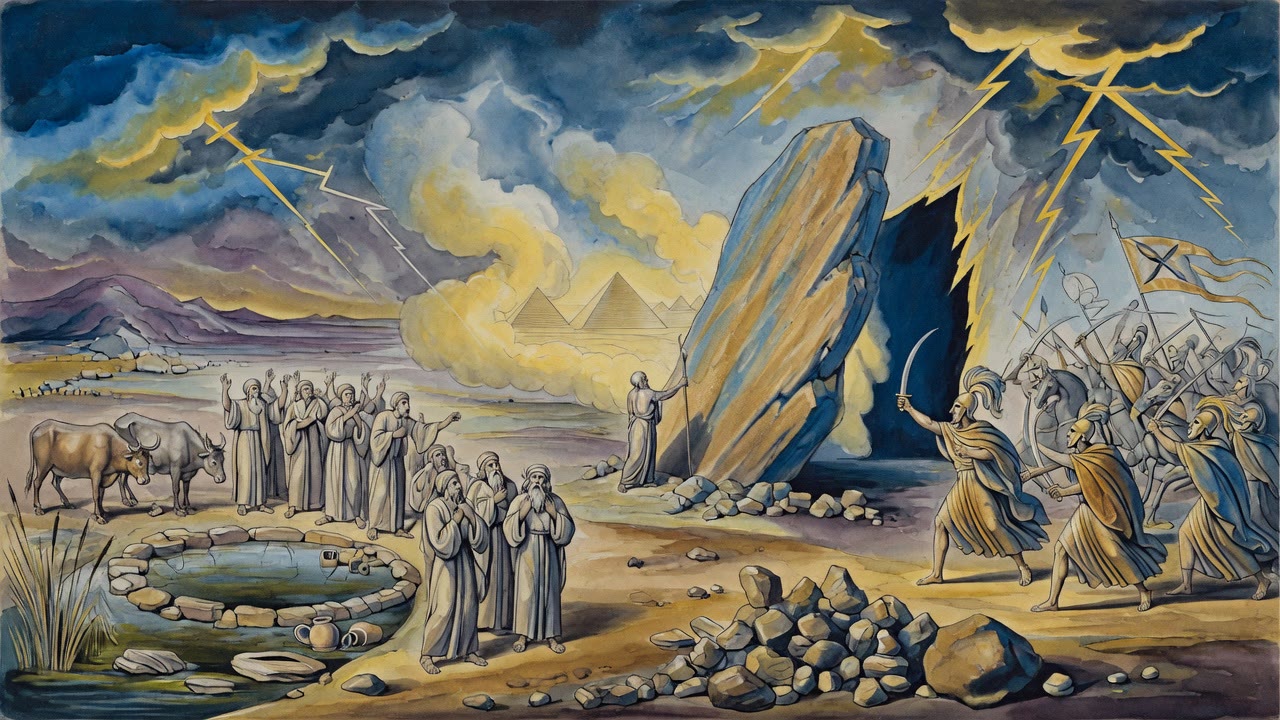
Off to the east of all this, Balak son of Tzipor was doing arithmetic. He had watched what Israel did to the Emorites. Sihon finished, Og finished, two kings and their cities gone, and nothing in Moab that could stand in front of that.

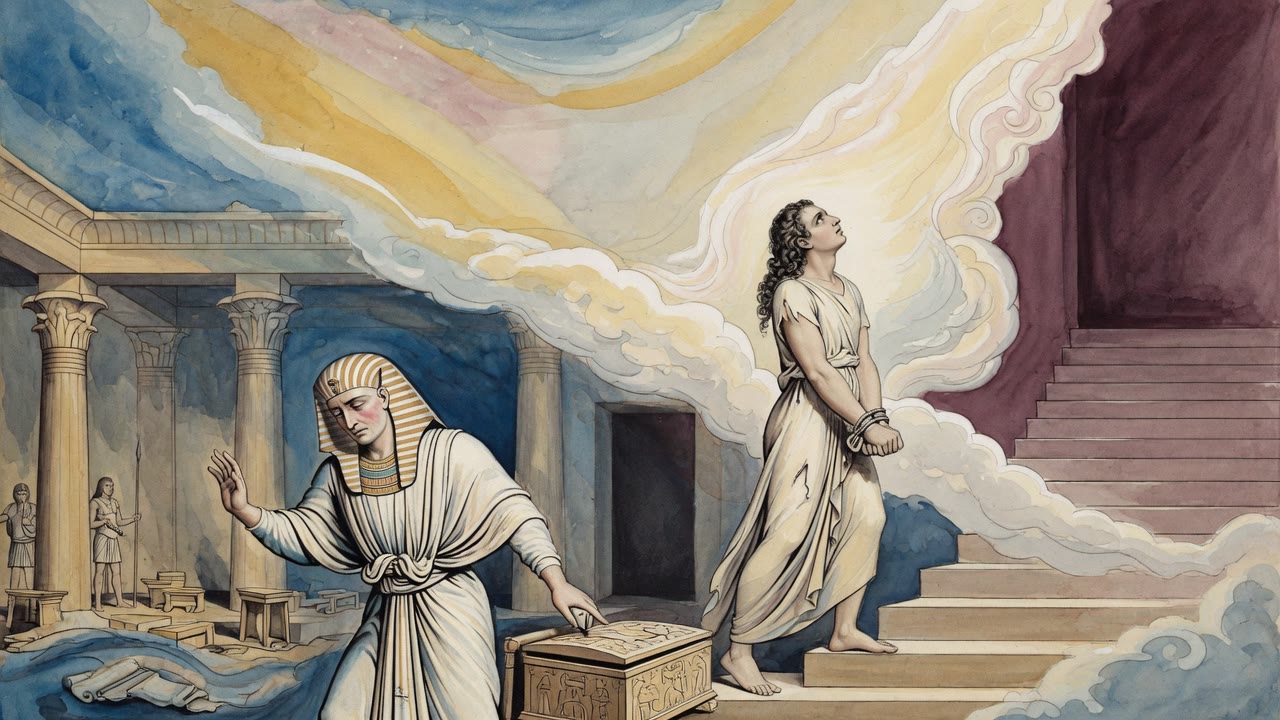
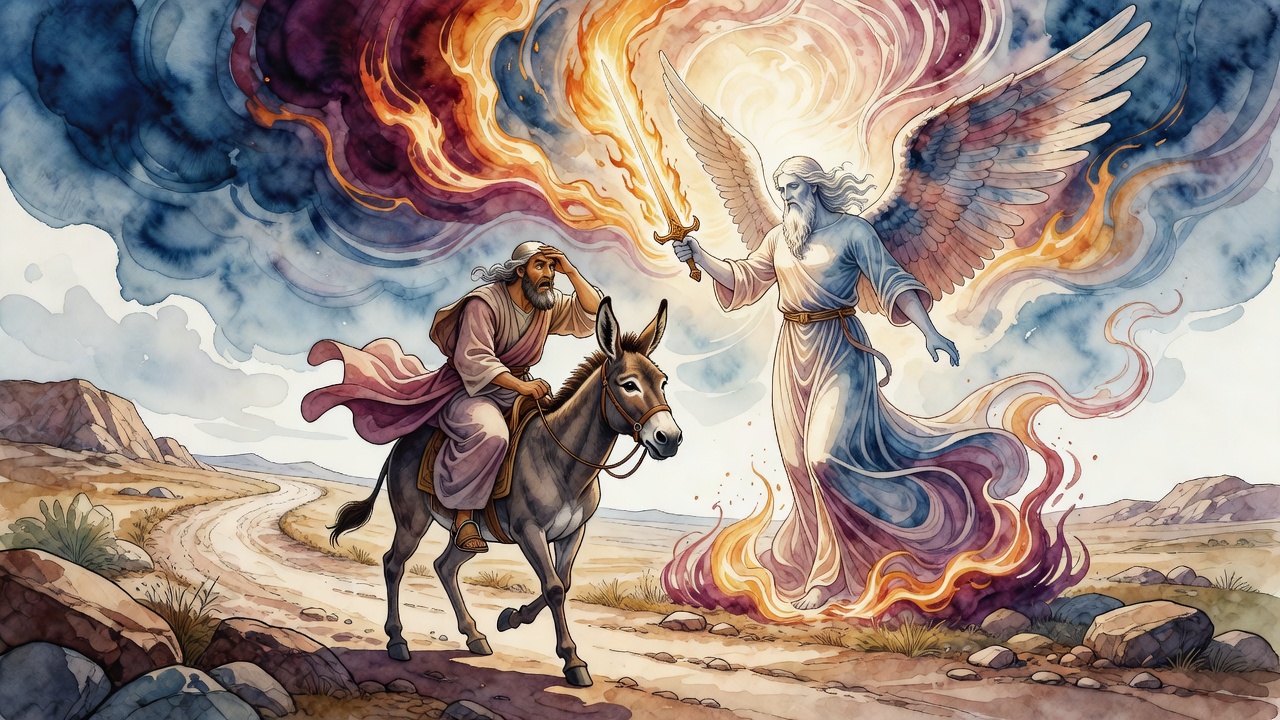
So he sent for a mouth. Bilam could take a nation apart with words the way the serpents had taken men apart with fangs, and the elders of Moab and Midian went out on the road to him with the fee for divination in their hands.

No nation could say afterward that heaven had left it in the dark. Kings, sages, and prophets had been set up for the other nations exactly as they had been set up for Israel, one for one. Solomon built a house for God and sang in it; Nebuchadnezzar pulled one down and announced he would climb above the clouds. David stacked silver for a Temple; Haman stacked silver to buy a whole people and kill it. Moses rose for Israel and Bilam rose for the nations.

What each man did with the gift was the difference. Israel's prophets were posted like sentries on a wall and spent their lives shouting at their own people to stop. Jeremiah's heart went like flutes over Moab. Ezekiel sat down and raised a lament for Tyre. Bilam took the same gift and used it to open a breach, meaning to sweep a nation off the earth, and nobody had done anything to him at all. After that the Divine Spirit was pulled back from the prophets of the nations, because one of theirs had stood up and everyone had seen what he did with it.

The bronze was still up on its pole while Balak's messengers were still on the road. A man who had looked at it and lived sat outside his tent that evening, started a story about a neighbor, and stopped himself halfway through.


← All myths
From the tradition

Sources

2 sources

The texts behind this telling. Some cards carry a translation of the source; others are our own retelling of it, and each card says which. Every card links out to the original.

Bamidbar Rabbah 19:22Bamidbar Rabbah

Retold in our words. Read the original at the link below.The Sefaria Midrash Rabbah, 2022 · CC-BY

The Book of Numbers, in the Bamidbar Rabbah, grapples with this very question when describing the plague of fiery serpents. "The Lord sent the fiery serpents against the people, and they bit the people, and a large multitude of Israel died" (Numbers 21:6). But why serpents?

The text asks a piercing question: what did God see that led Him to punish the Israelites with these venomous creatures? The answer, according to Bamidbar Rabbah 19, lies in the sin of slander. The serpent in the Garden of Eden was the original slanderer, wasn't it? It twisted God's words, planting seeds of doubt and ultimately leading to humanity's expulsion. And what did God do? He cursed the serpent. Yet, the Israelites, despite witnessing this, didn't learn from it. They, too, engaged in gossip and negativity.

So, the Holy One, blessed be He, decided to apply a bit of poetic justice. “Let the serpent that began with slander first come and exact retribution against the slanderers,” says the text, echoing the idea that "one who breaches a fence, a serpent will bite him" (Ecclesiastes 10:8). It's a harsh lesson about the power of our words and the consequences of unchecked negativity.

There's more to it than just slander. The Bamidbar Rabbah offers another perspective, this time focusing on the Israelites' ingratitude.

Consider the serpent's diet. "A serpent, dust will be its food" (Isaiah 65:25). Even if it eats the most delectable things, they all turn to dust in its mouth. Now contrast that with the manna, the miraculous food God provided in the desert. It tasted different to everyone! “They craved… He granted them their request” (Psalms 106:14–15), the text reminds us. It was a constant miracle, tailored to each individual's desires. As (Deuteronomy 2:7) says, “These forty years the Lord your God has been with you; you have not lacked anything.”

So, here’s the comparison: The serpent eats a variety of things, but experiences only one bland, dusty taste. The Israelites ate one thing (manna), yet experienced a multitude of flavors. But instead of appreciating this incredible gift, they complained!

Again, the punishment fits the crime. Let the serpent, which knows only one taste, exact vengeance on those who experience many tastes but remain ungrateful.

And what about the "fiery" aspect of these serpents? The Bamidbar Rabbah doesn't shy away from the severity of their sting, noting that they "burn the soul." Rabbi Yudan offers a fascinating interpretation: the "fiery serpents" were actually connected to the very cloud that protected the Israelites. The cloud that burned and crafted a protective fence around the camp was now turned against them.

This is perhaps the most unsettling part of the story. It tells us that the miracles that God performed on their behalf were the very things He unleashed against them. The very protection they enjoyed became the instrument of their punishment.

The things we take for granted, the blessings we overlook, can become sources of pain if we are not mindful. The story of the fiery serpents in Bamidbar Rabbah is not just a tale of divine retribution; it's a call to examine our own hearts, to be grateful for what we have, and to be mindful of the power of our words. Because sometimes, the very things meant to protect us can turn against us if we're not careful.

Full source
Bamidbar Rabbah 20:1Bamidbar Rabbah

Retold in our words. Read the original at the link below.The Sefaria Midrash Rabbah, 2022 · CC-BY

A quote from (Numbers 22:2): "Balak son of Tzipor saw all that Israel had done to the Emorites." This sets the stage for a larger discussion about divine justice and fairness. "Balak son of Tzipor saw," the Midrash (rabbinic interpretive commentary) repeats, then connects it to a verse from (Deuteronomy 32:4): "The Rock, His actions are perfect, as all His ways are justice." But how do we reconcile this idea of perfect justice with the obvious inequalities we see in the world?

The Midrash poses a powerful question: Did the Holy One, blessed be He, give the nations of the world a fair chance? Did God stack the deck in favor of Israel? The answer, according to Bamidbar Rabbah, is a resounding no. God didn't want any nation to be able to claim, "You distanced us." So, what did God do?

The Midrash argues that God mirrored the leadership and opportunities given to Israel with corresponding figures for other nations. "Just as He established kings, sages, and prophets for Israel, so He established for the idolaters.": Solomon, with all his wisdom and power, had a counterpart in Nebuchadnezzar. David amassed wealth to build a Temple, while Haman used his wealth to try and annihilate an entire people. Every rise in prominence for Israel seemed to have a parallel rise somewhere else.

Perhaps the most striking example is the comparison between Moses and Bilam. Moses, the ultimate prophet of Israel, is juxtaposed with Bilam, a prophet from the nations. But here's where the crucial difference lies. According to Bamidbar Rabbah, the prophets of Israel constantly cautioned the Israelites against transgression. As (Ezekiel 33:7) says, "You, Son of man, I have appointed you as a sentinel for the house of Israel. You shall hear a matter from My mouth and you shall warn them from Me." The role of the Jewish prophet was to guide their own people toward righteousness.

Bilam, however, "established a breach in order to eliminate people from the world." He plotted to corrupt Israel (as the commentaries explain). The Jewish prophets, even while addressing other nations, showed compassion. Jeremiah lamented for Moab in (Jeremiah 48:36): "Therefore, my heart will sigh like flutes for Moav." Ezekiel mourned for Tyre in (Ezekiel 27:2): "You, son of man, raise a lament for Tyre." But Bilam, the Midrash says, was cruel, willing to uproot an entire nation without cause.

This contrast is vital. It illuminates why, according to the Midrash, the Divine Spirit was removed from the idolaters. Because a figure like Bilam arose from among them, and look at what he did! The portion of Bilam, the Midrash concludes, serves as a cautionary tale, showing the consequences of misusing power and rejecting compassion.

So, what does this all mean for us today? Bamidbar Rabbah challenges us to consider the responsibilities that come with leadership and influence, no matter who we are or where we come from. It suggests that the choices we make, as individuals and as nations, ultimately determine the kind of world we create.

Full source