The Angel Who Blocked Bilam's Road Defended the Donkey
Three times the donkey saw what the prophet could not, and the angel said if a beast deserved defense, how much more the nation Bilam rode to curse.
Table of Contents
 Click for full size
A Prophet for Hire on the Road
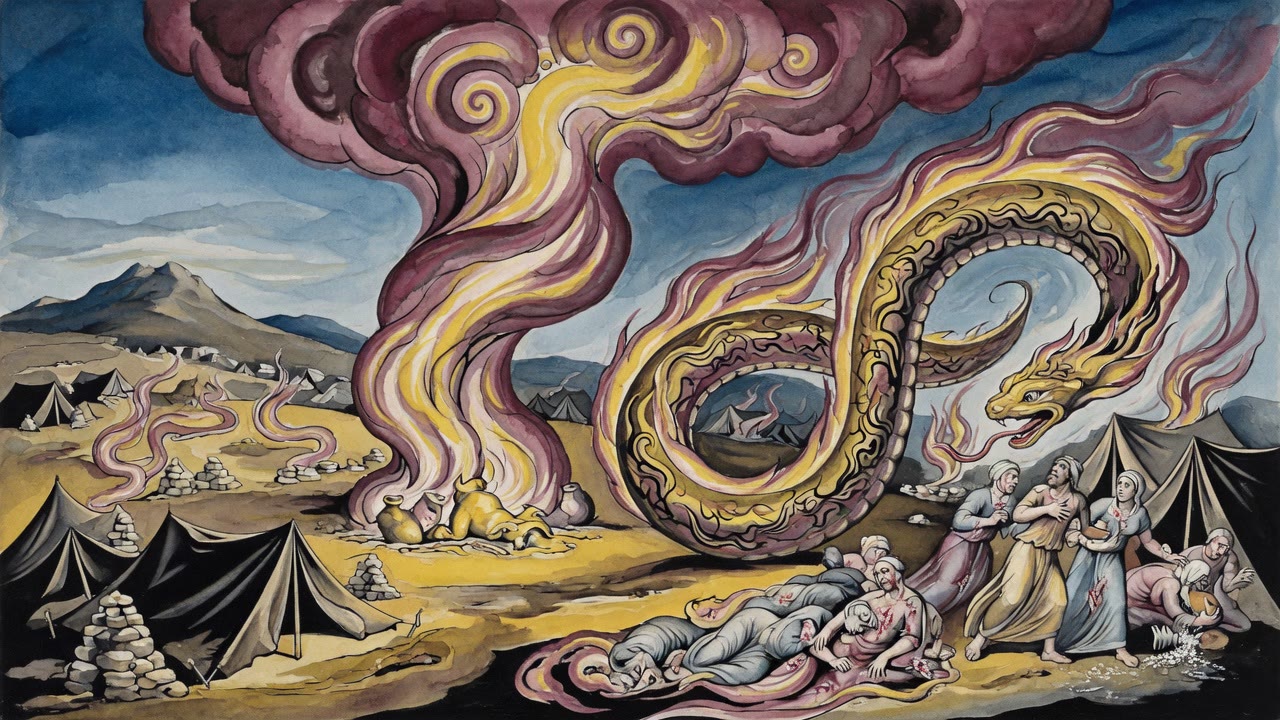
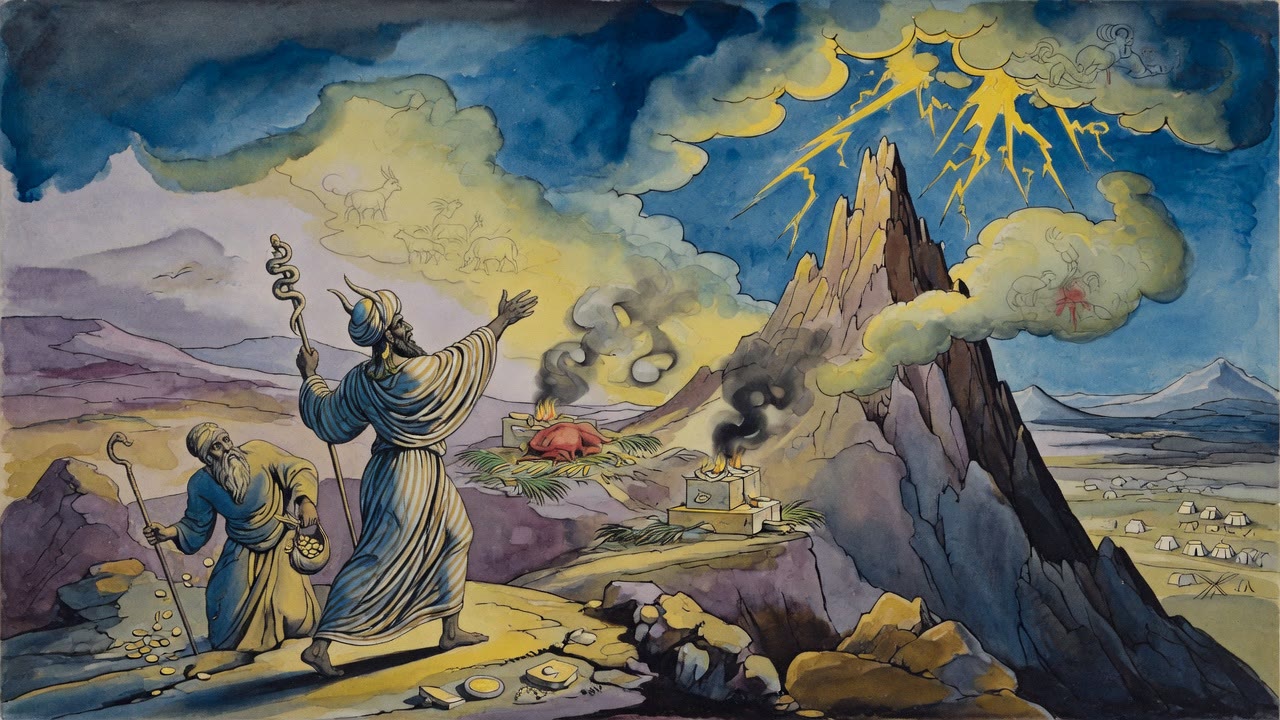
Balak of Moab watched Israel fill the plain and sent for a weapon that was not a sword. He sent for Bilam son of Beor, the sorcerer of Petor, a man whose reputation crossed borders the way plague does. Bamidbar Rabbah sets him as the dark counterpart to Israel's prophets. Where Moses warned his own people against sin, Bilam opened breaches to remove people from the world. Cruelty was not a side effect of his craft. It was the craft. Pay him enough, and he would aim words the way other men aim arrows.
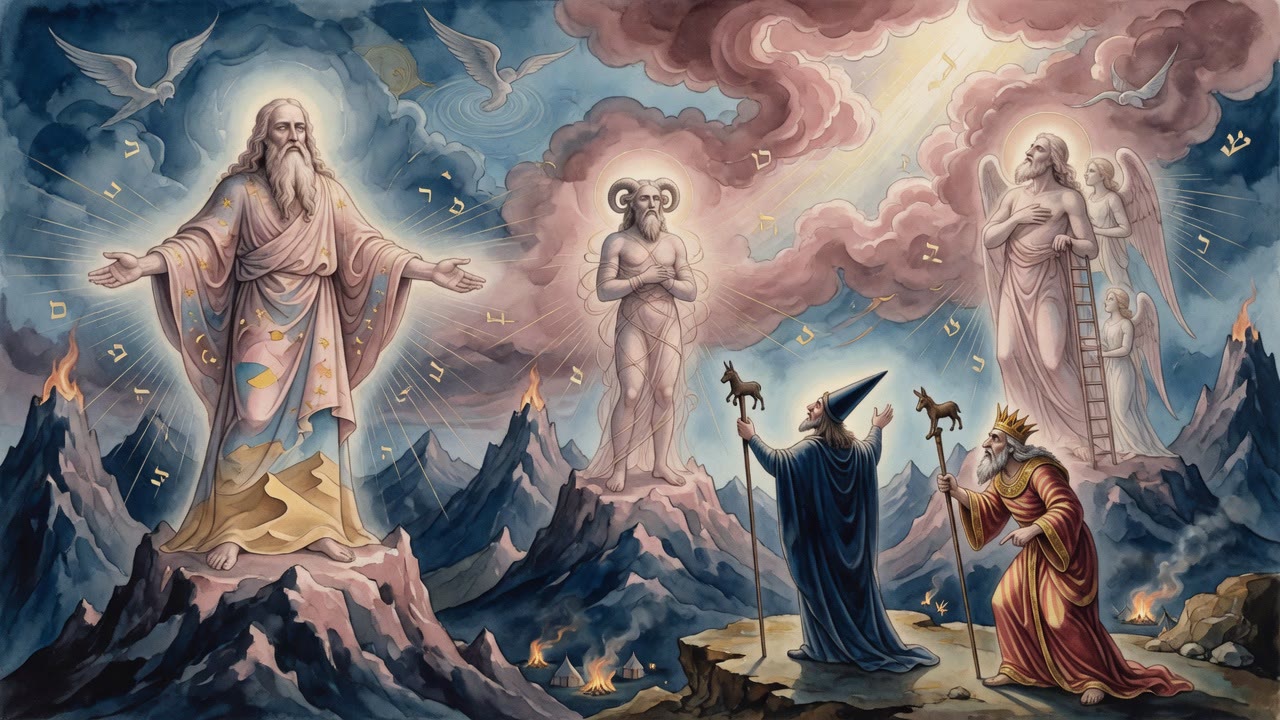
At night God came to him. "If the people came to summon you, rise, go with them; however, only the matter that I will speak to you shall you do." Permission with a chain. The midrash, reading Job's night visions, says heaven sometimes opens an ear even to the crooked, to turn a man from an action and suppress pride. But from Bilam the final cost was hidden. The Accuser dances before a sin, making the path bright, and only afterward does the arrow find the liver. Bilam rose for the silver and the honor and the chance to be the man kings hire when armies are not enough.
He saddled his donkey. The road looked open. Open roads are not always empty.
What the Donkey Saw First
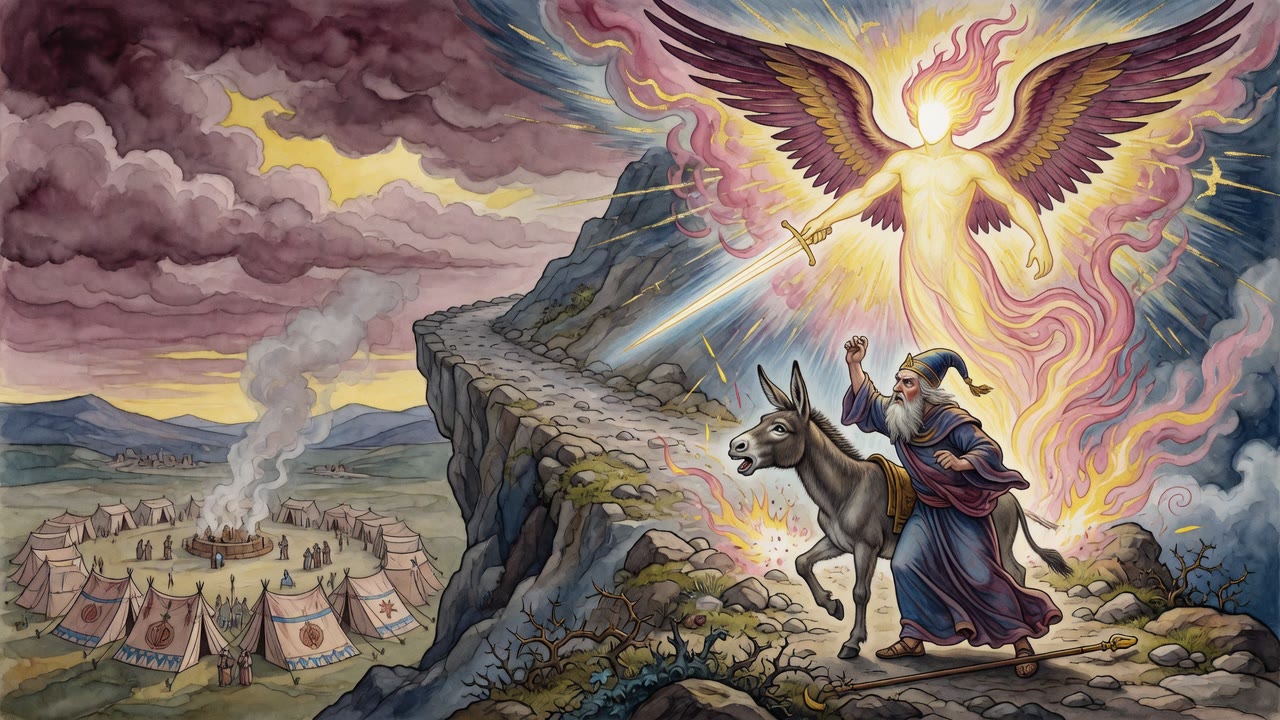
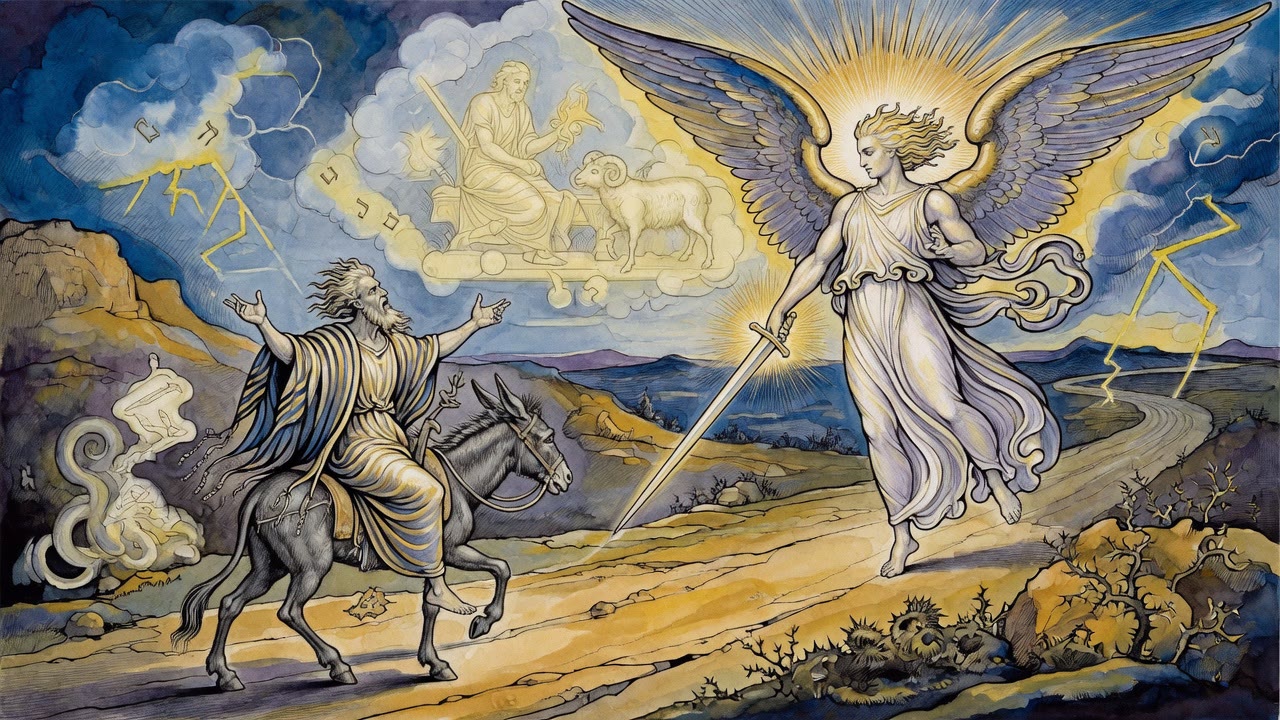
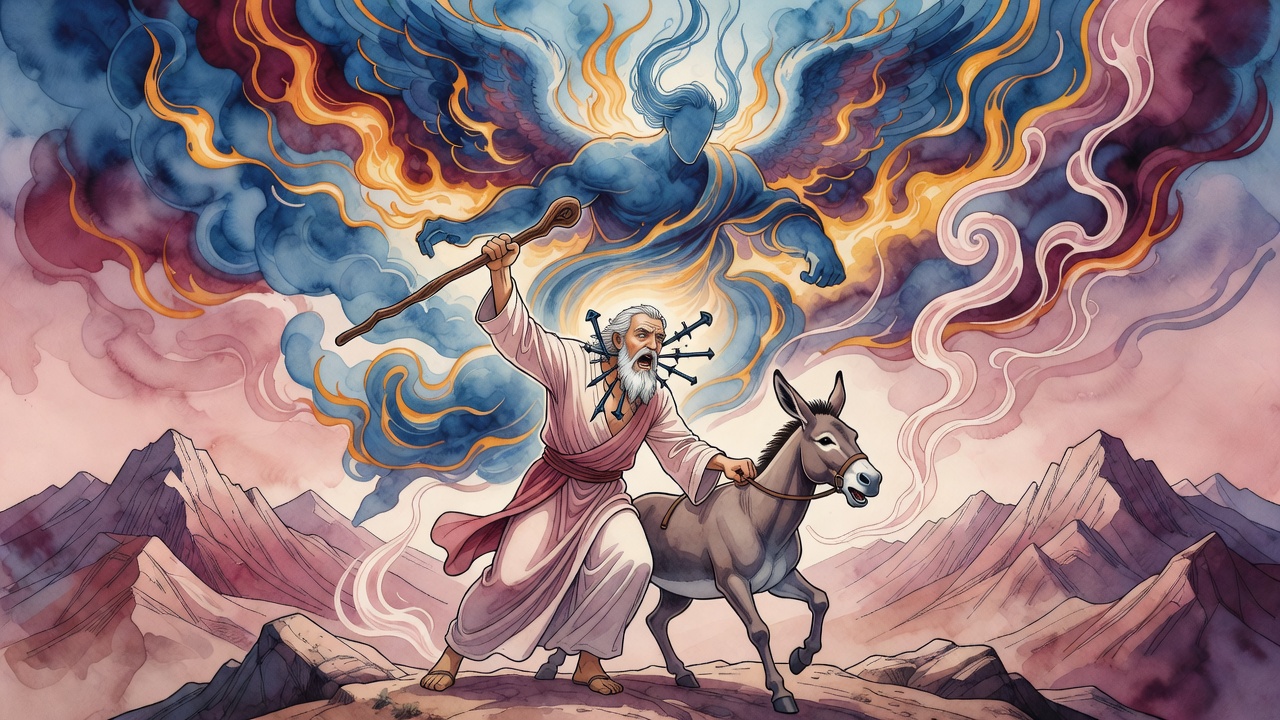
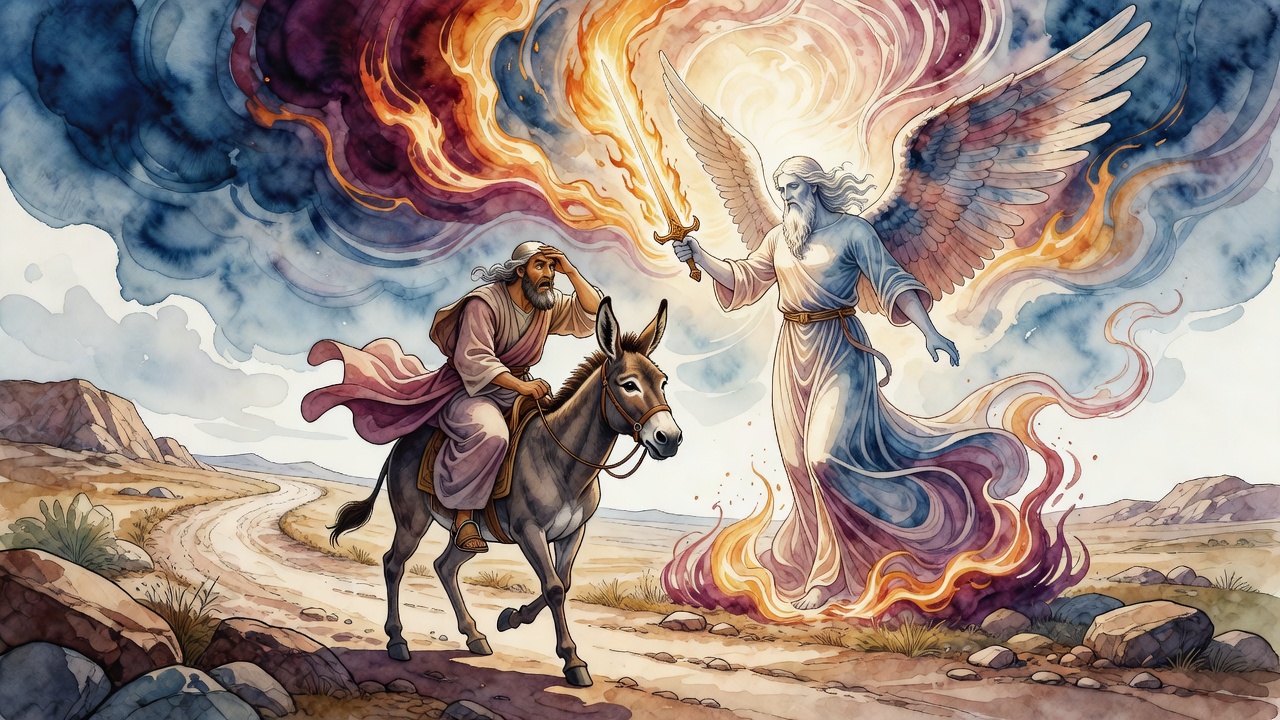
Three times the donkey swerved, crushed a foot, lay down. Three times Bilam struck her. The animal saw an angel in the road with a drawn sword. The prophet, paid to see destinies, saw only stubborn hide and dust. When God opened the donkey's mouth, she asked what she had done to deserve the blows, and the question was cleaner than any oracle Bilam had sold. When God opened Bilam's eyes, the angel stood where the beast had already been looking.
Bilam fell on his face. The midrash says he prostrated because the angel had spoken to him, recognition forced through the body. The rebuke was precise. "For what did you smite your donkey these three times? Behold, I emerged to be an obstacle, because your way is contrary to me." Contrary: against the grain of heaven, against the direction of the covenant, against even the dumb loyalty of a beast that had carried him faithfully until the sword appeared.
A hired seer who cannot see what a donkey sees is already judged, even before he reaches the high places of Moab.
If a Beast, How Much More a People
Was the angel only a defender of donkeys? Bamidbar Rabbah refuses the small reading. If heaven is commanded to seek redress for the affront to a beast without special merit, how much more for the entire nation of Israel, bound by covenant, whom Bilam rode out to curse. The donkey was a parable with hooves. The real wall in the road was love of a people Bilam had not been invited to unmake.
The word for "contrary" is turned by the sages until it yields fear, sight, and turning, or, by cipher, a shield. The obstacle was also protection. What blocked Bilam protected Israel. What humiliated the rider defended the camp he could not yet see from the ridge. An angel with a sword can be a wall. A wall can be mercy for those on the other side of it, and a warning for the man who thought the road was his by purchase.
Speech That Could Not Curse
Bilam would reach the heights and open his mouth, and blessing would come out where hire had ordered poison. That failure is the joke heaven tells against paid prophecy. The midrash contrasts him with Jeremiah sighing for Moab and Ezekiel lamenting Tyre. Israel's prophets could grieve even for nations under judgment. Bilam could not find compassion for the people he was paid to erase. When the Divine Spirit later withdrew from the nations' soothsayers, the portion of Bilam stood as exhibit and warning: power without pity ends in a mouth that cannot deliver the curse it sold.
On the road, though, before the poetry of the high places, there was only a man, a stick, a donkey smarter than her master, and an angel who would not move. Empires hire words as weapons. Sometimes the first weapon to fail is the eye that cannot see what a beast already knows. Sometimes the second is the tongue that discovers, too late, that it belongs to God more than to Balak's purse.
Balak would move Bilam from height to height, hoping a better view would improve a curse. The view changed. The leash on Bilam's mouth did not. Each failed malediction made the hired prophet smaller and the camp in the valley larger in heaven's accounting. The donkey had known first. The hills learned slowly. Israel, packing tents below, did not yet know how many swords had been turned aside before a single blessing fell on their ears.
← All myths