When an Angel Blocked Every Curse in Balaam's Throat
The donkey turned her head and spoke. On the heights Balaam pushed a curse and felt metal stop it. Balak's silver sat unused.
Table of Contents
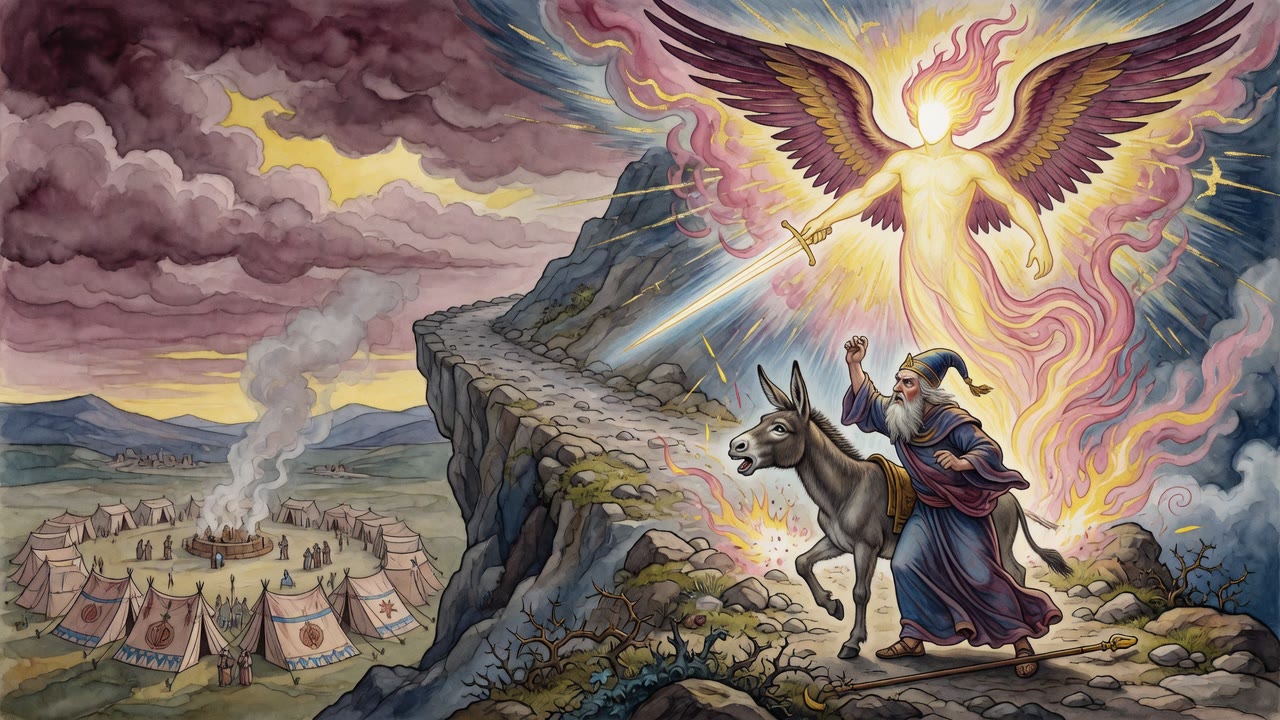
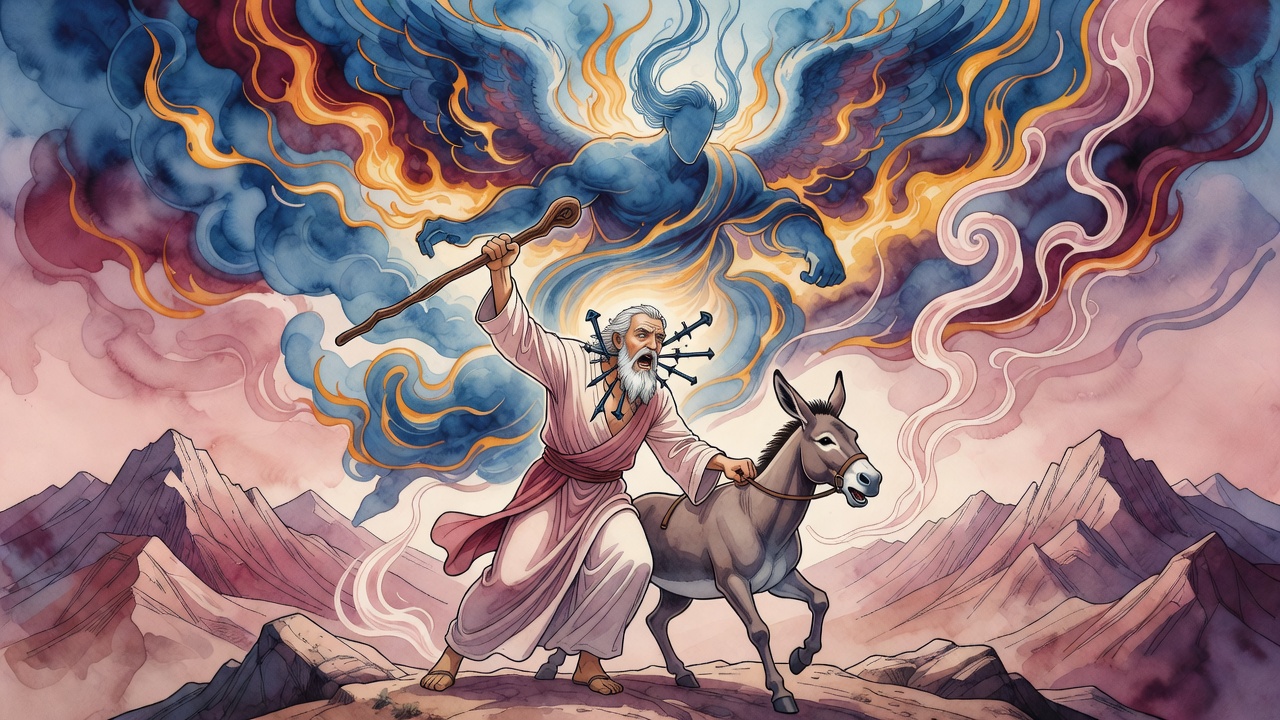
The stick came down a third time. The donkey had crushed his foot against the wall, and Balaam let the rage use his arm. Then the animal turned its head and spoke with a mouth that should not have known any human tongue.
 Click for full size
"What have I done to you that you have beaten me these three times?" (Numbers 22:28)
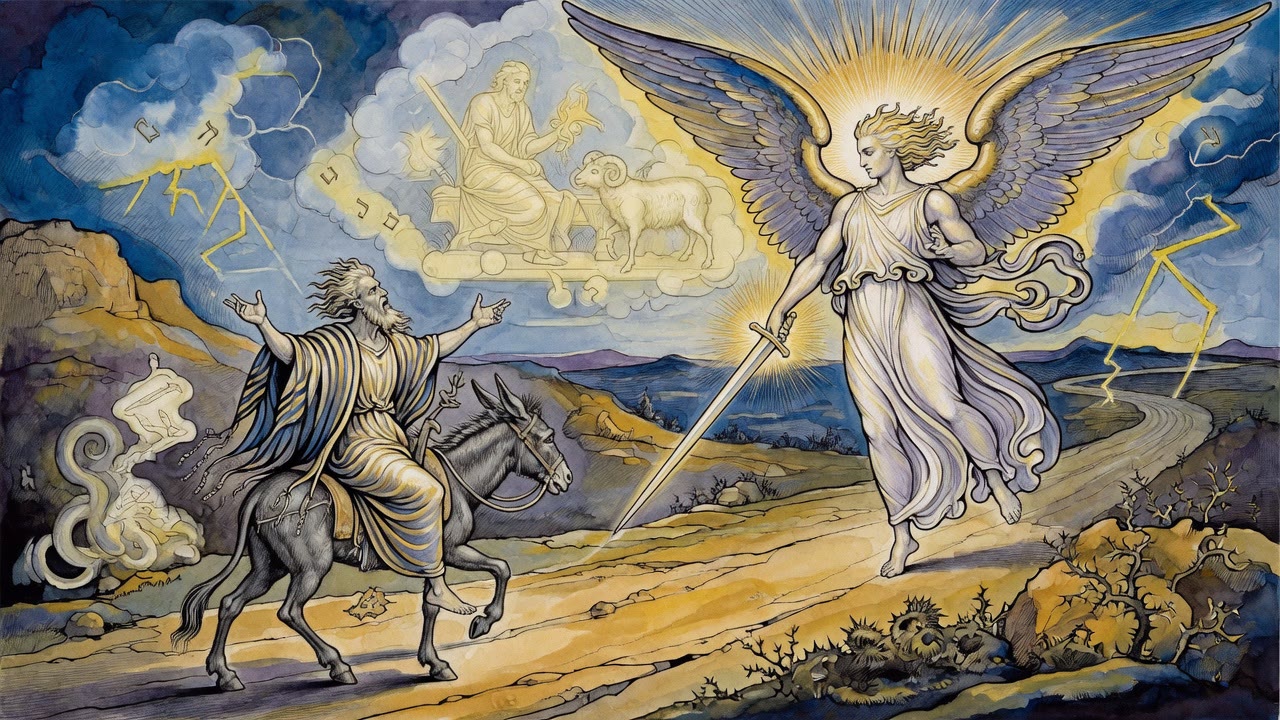
The greatest seer of the nations stood out-argued by a beast of burden. On the path ahead, an angel waited with a drawn sword the donkey had seen and Balaam had not. Sight had left the professional and taken up lodging in the animal hired to carry him.
He lowered the stick. Speed would have admitted shame.
A Word at a Lower Grade
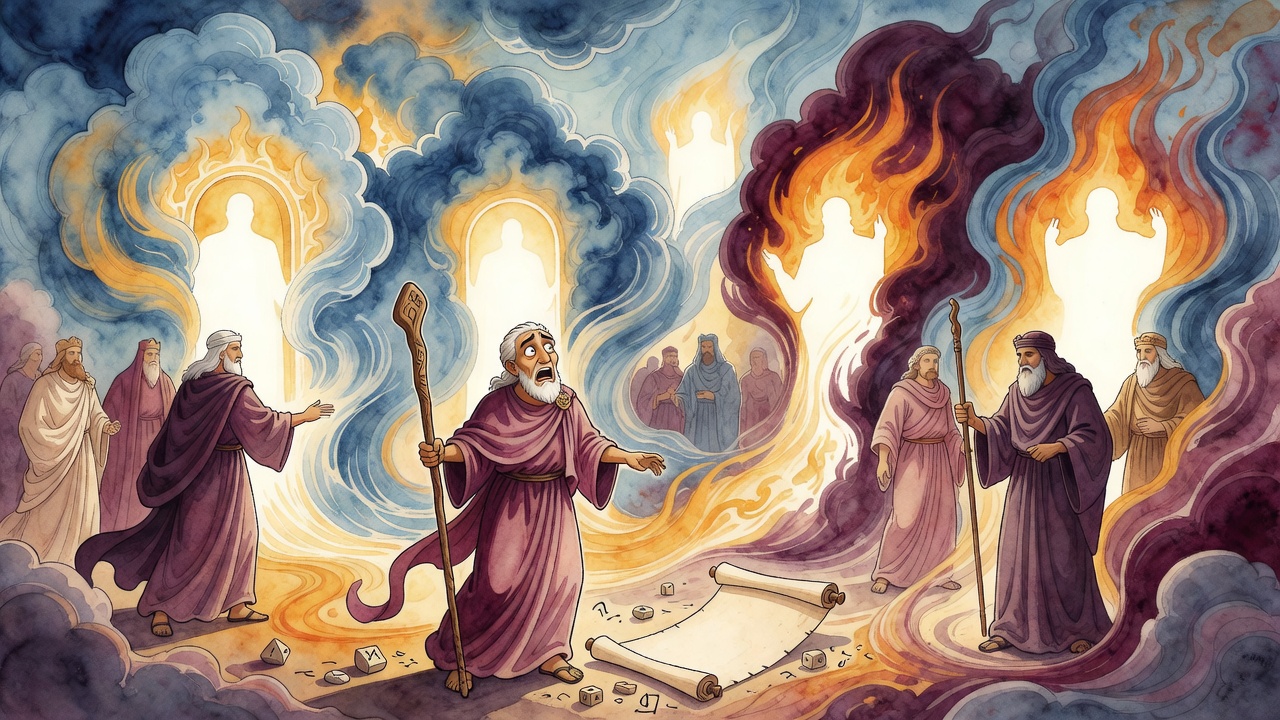
Balak of Moab had hired a mouth. Gold can rent many things. It cannot rent the Source. When messengers came, God appeared to Balaam (Numbers 22:9). What reached him was not the face Moses knew. A Word stood before him, a step removed, prophecy already filtered for a man who treats revelation like a trade good.
Balaam saddled anyway. He wanted the fee and the fame of bending a people with syllables. He wanted to be the man kings call when armies are not enough. The donkey under him wanted only not to die against an angel's blade. Their goals shared a road and nothing else.
Three times she turned from the sword. Three times he beat her for saving him. When the angel finally showed himself, the verdict was plain. If she had not turned away, the sword would have killed Balaam and let her live (Numbers 22:33). The donkey had bought him a throat he still meant to sell.
Iron in the Throat
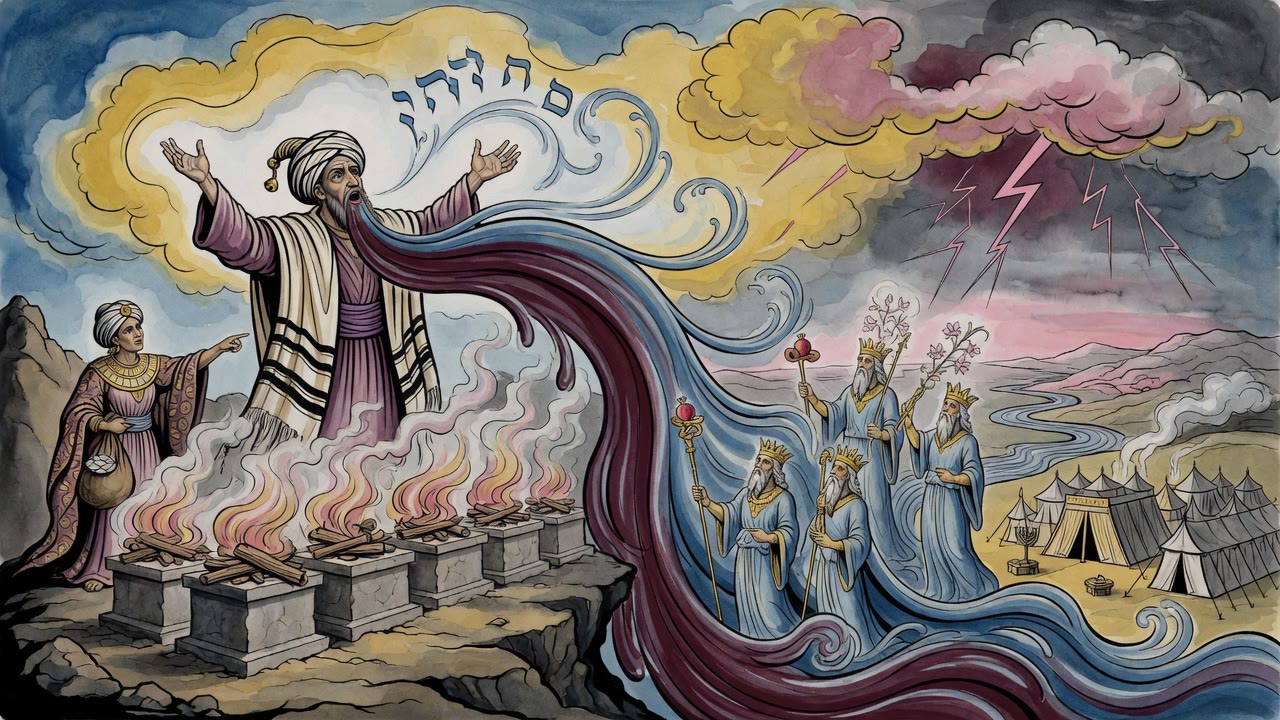
When at last he climbed the heights to curse Israel, the Lord put a word in Balaam's mouth (Numbers 23:5). The word had a body. An angel sat in his throat. When he meant to bless, the angel let breath pass. When he meant to curse, the angel closed the passage, the way a sent word can occupy the place where harm was planned (Psalm 107:20).
He felt it first like a fishbone. He pushed. Nothing. He pushed again, harder, and the blockage turned to iron, a nail lodged where speech has to go. Blessings slid past. Curses rasped and died against metal. God did not take him off the stage. God occupied the instrument and played a different tune through unwilling flesh.
He softened into blessing, and air returned with humiliating ease. Moab's king watched his purchased weapon fail in public, altars smoking, silver waiting, throat on strike.
The Donkey's Question Followed Him Up
On the high places he still heard the donkey. What have I done to you. The question was larger than three beatings. What had Israel done to Balaam, that he rode out to break them with his mouth for a foreign payroll? What had the angel done, except stand where a hired curse would have to look at justice before it could pass?
He opened his mouth to earn the rest of his silver and heard himself praise the tents of Jacob, the dust of a people counted like stars. The nail, or the angel, or the Word, chose the consonants for him. His will remained ugly. His throat became a checkpoint between intention and sound.
Balak's face changed color with each blessing that escaped. A king who buys speech expects delivery. Delivery kept arriving in the wrong crate.
Balak Watched the Mouth Fail
"I hired you to curse, and you have blessed," Balak shouted, pacing like a man whose contract had been rewritten by the sky. Balaam could only tell the truth that humiliated him. He could not say anything beyond what was put in his mouth.
He tried other overlooks, other altars, other angles of sun. Same nail. Same angel. Same people below who did not even know their enemy's throat had become a battlefield on their behalf. Israel camped and cooked and quarreled, unaware that a foreign prophet was being turned into their shield by force. Protection does not always feel like protection from inside the camp.
Balaam looked down at the tents and hated how beautiful the forced words made them. Hatred without a working mouth is a special kind of prison. He swallowed and tasted iron.
After the Mouth Was Returned
When the work was done, the blockage lifted. Balaam owned his throat again. Ownership did not make him clean. A man who has been prevented from evil is not yet a man who loves good. He went his way with the memory of a donkey's clarity and an angel's sword, and the knowledge that speech is leased, not owned, when it aims at the people God chooses to guard.
On the road home he passed the place of the three beatings. The donkey walked quietly. He did not strike her. He also did not apologize. Some lessons enter through shame and never become kindness. Even so, for a few hours on Moab's heights, every curse had died in a throat that could not be bribed open, and every blessing that escaped had done the work armies envy.
Far behind them, Balak's altars cooled. The silver stayed heavy. The rented mouth had given the king nothing he could spend.
← All myths