On the Moab Road, Balaam Mocks the Binding of Isaac
An angel blocked Balaam with a drawn sword. He twisted guilt into theology, comparing Gods command and the angels stop to Abrahams knife over Isaac.
Table of Contents
 Click for full size
Sword Across the Road
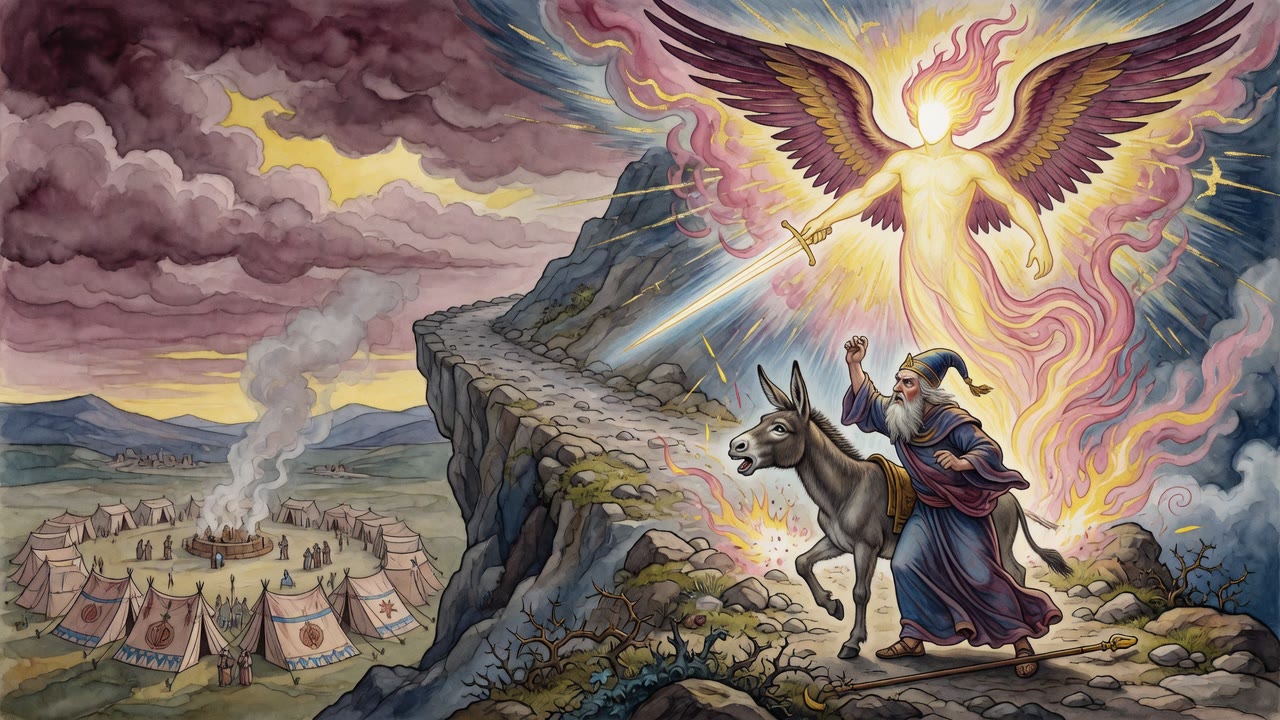
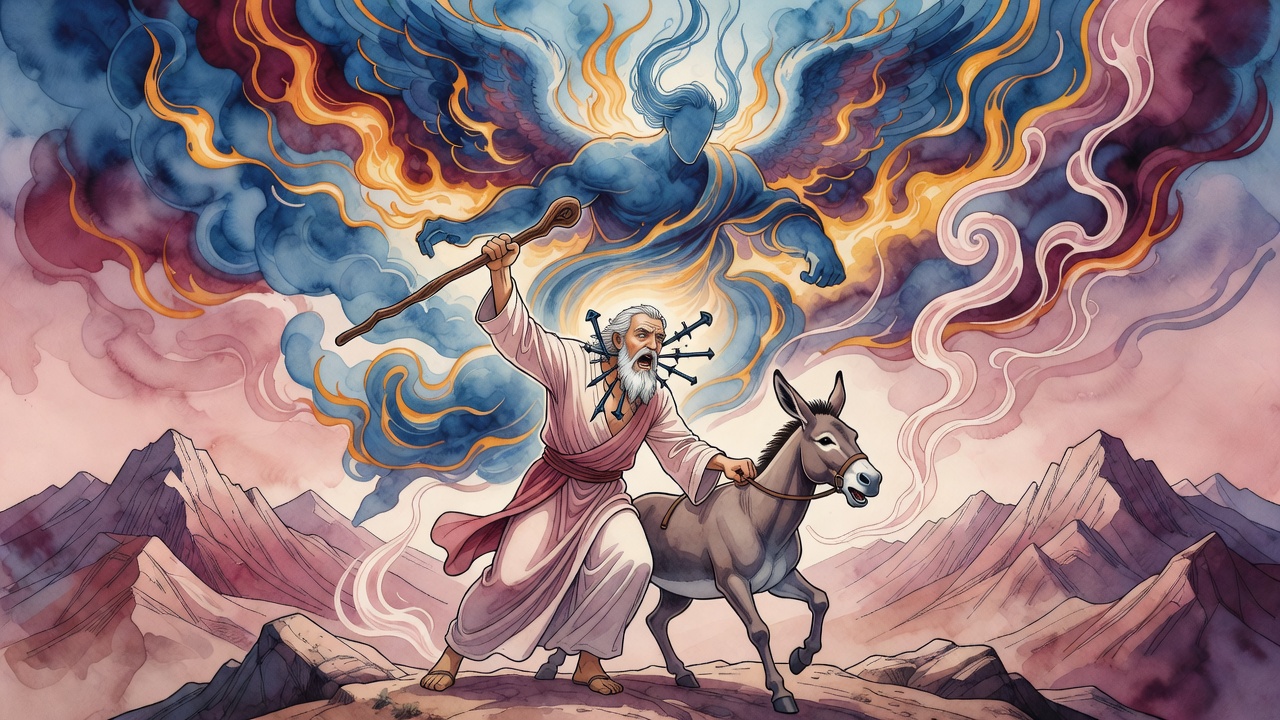
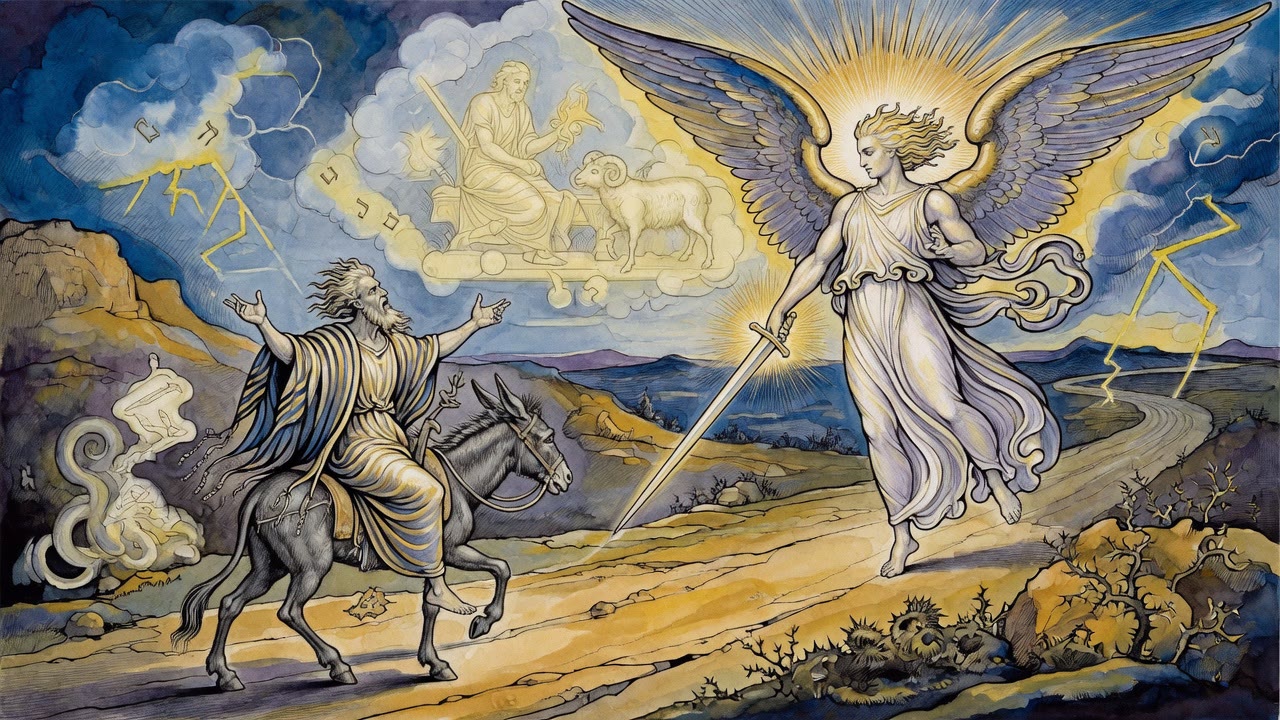
The road to Moab narrowed between scrub and dust. The donkey saw what the rider refused. Between thorn and track a sword burned, held by an angel who did not step aside for hirelings. Balaam kicked. He cursed the beast. He beat her until the animal spoke, and only then found his own path sealed by light.
Balak's gold was still a rumor in his purse. The journey had felt like permission. He could not deny the sin once the sword filled the lane. So he remade it. "And now, if it is evil in your eyes, I will return," he said, packing insolence into a show of obedience. He had not left home until the Holy One Himself said, "Arise, go with them" (Numbers 22:20). If an angel now blocked the road God opened, Balaam argued, that was simply how Heaven did business.
He spoke as if the angel were a clerk who had lost a file. The flame did not cool. The donkey's flank still trembled where the stick had landed. Dust stuck to Balaam's tongue. He had come to sell a curse and found himself inventing a theology of loopholes on a path too narrow for pride.
He Reaches for Isaac
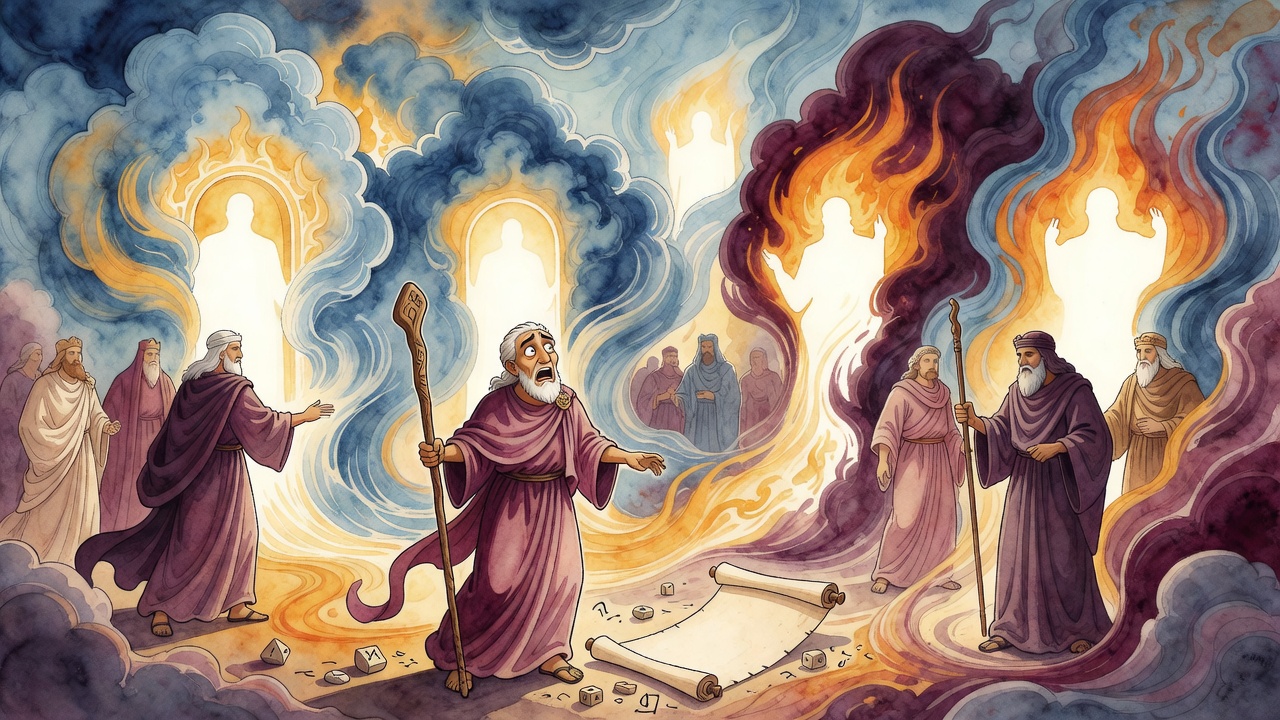
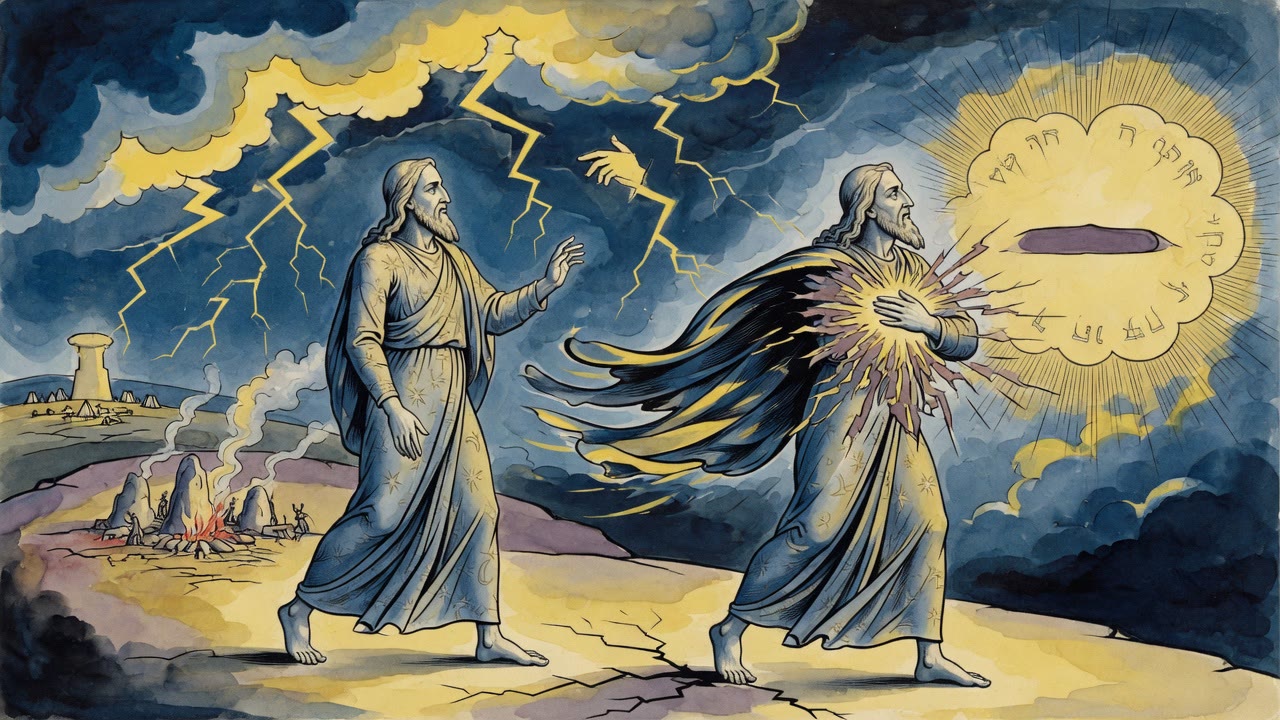
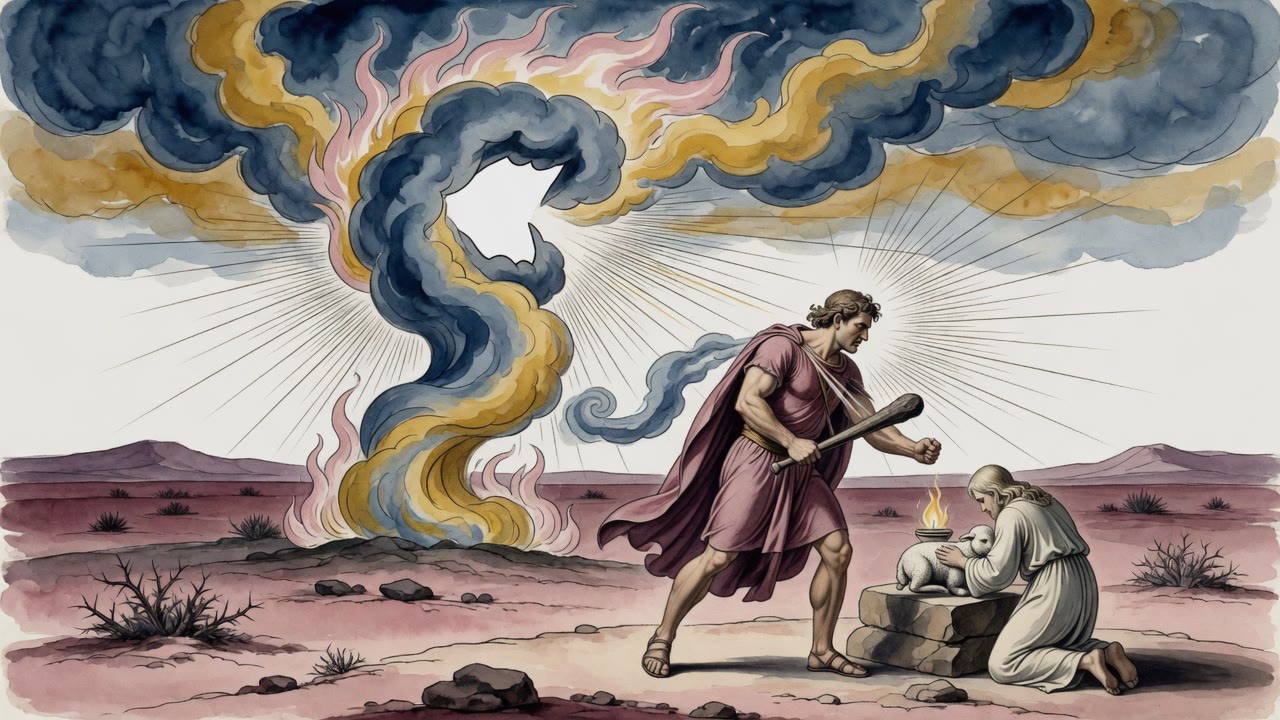
Then he stole the holiest story in the house of Israel and bent it into a shield. Did not God tell Abraham to offer his son on the mountain? And when the knife rose, did not an angel cry, "Do not stretch out your hand against the lad" (Genesis 22:12)?
Balaam shrugged under the blaze. The Master of the world speaks a word, and an angel comes to undo it. He commanded me go. Now He sends you to say return. The Binding, in his mouth, was not a trial of love. It was proof that Heaven reverses itself, that commands are provisional, that a prophet for hire may treat divine speech like a canceled contract.
On Moriah the knife had been love measured to the root. Wood, fire, rope, the boy's question about the lamb, the father's silence that could have broken stone. The angel's stop completed the trial. It did not cancel a whim. Balaam heard only inconstancy, because inconstancy was the only god he could bargain with. The sage later heard the slander under the excuse: where Abraham's binding drew a father upward, Balaam read only a loophole wide enough for a donkey and a fee.
The angel did not laugh. The road stayed shut. Somewhere behind the mockery, Isaac's near-death became a joke told by a man whose own life was being spared for a few more miles of failure.
Why the Curse Recoiled
Israel was "on the way," tossed about after Egypt, a people still tasting dust between miracles. Water from rock. Bread from sky. Amalek's shadow on the rear ranks. The midrash hears "on the way" as the time of being thrown from side to side, body and spirit both unsure of the next camp, still carrying the taste of liberation like a half-remembered song.
Balaam was the "because" in that road, the obstacle with a paid tongue. God did not listen to him. The curse turned to blessing "because the LORD your God loved you" (Deuteronomy 23:6). The curser was cursed by the shape of his own intent. Words aimed to break a nation bounced and found the mouth that shot them.
Ammon and Moab would later be barred from ordinary peace offers that other cities received. Memory of hired hate outlived the journey. Balaam's road was not only a personal failure. It was a national scar written into law, a refusal to pretend that paid prophecy is just another tool of kings.
He would still climb the high places for Balak. He would still open his mouth over Israel. Each time the blessing would climb out against his will, like a sword that refused to stay in the scabbard of a traitor. Love had already chosen the target. His craft could only miss.
Two Ways to Hear Reversal
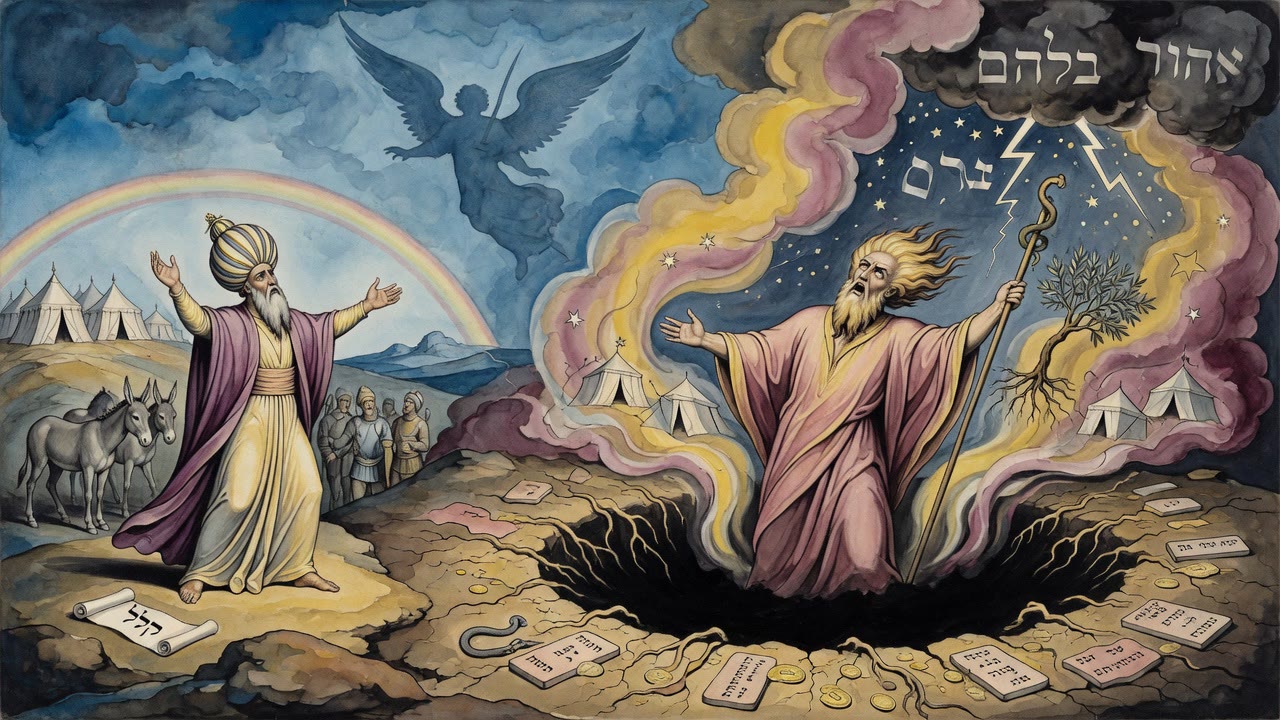
Abraham climbed with a son, wood, fire, and a knife because love was being measured until it rang. The angel's stop was the second half of one command, not a clerical error. Balaam stood between donkey and flame and still thought he was the clever party in the deal.
He wanted a theology that made Heaven look as fickle as a royal court, so that a hired seer could navigate it with flattery and timing. What he got was a road closed by fire and a people protected by love he could not invoice. The sword did not argue. It waited until the mouth that mocked the Binding would open again over Moab, and open into blessing against its will.
Love of Israel was the force that broke the hire. The road remembered both men: the one who nearly offered a son, and the one who nearly sold a nation. Only one of them understood that when Heaven stops a hand, it may be finishing a mercy, not admitting a mistake. The other rode on toward Balak with a theology already rotting in his mouth.
← All myths