Parshat Balak5 min read

Bilam Failed to Curse the Bannered Israel Camps

Nations offered Israel ranks and power. Israel pointed to tribal banners. Bilam's eye failed when he saw them camped by tribes.

Curated by Arthur · Told by Maggid ·
Table of Contents
  1. Who Is She Who Appears Like Dawn
  2. Holiness Even After Failure
  3. Bilam's Eye on the Tribes
  4. Bela on Edom's Early Throne
  5. What the Banners Refused to Sell
Bilam Failed to Curse the Bannered Israel Camps Click for full size

Who Is She Who Appears Like Dawn

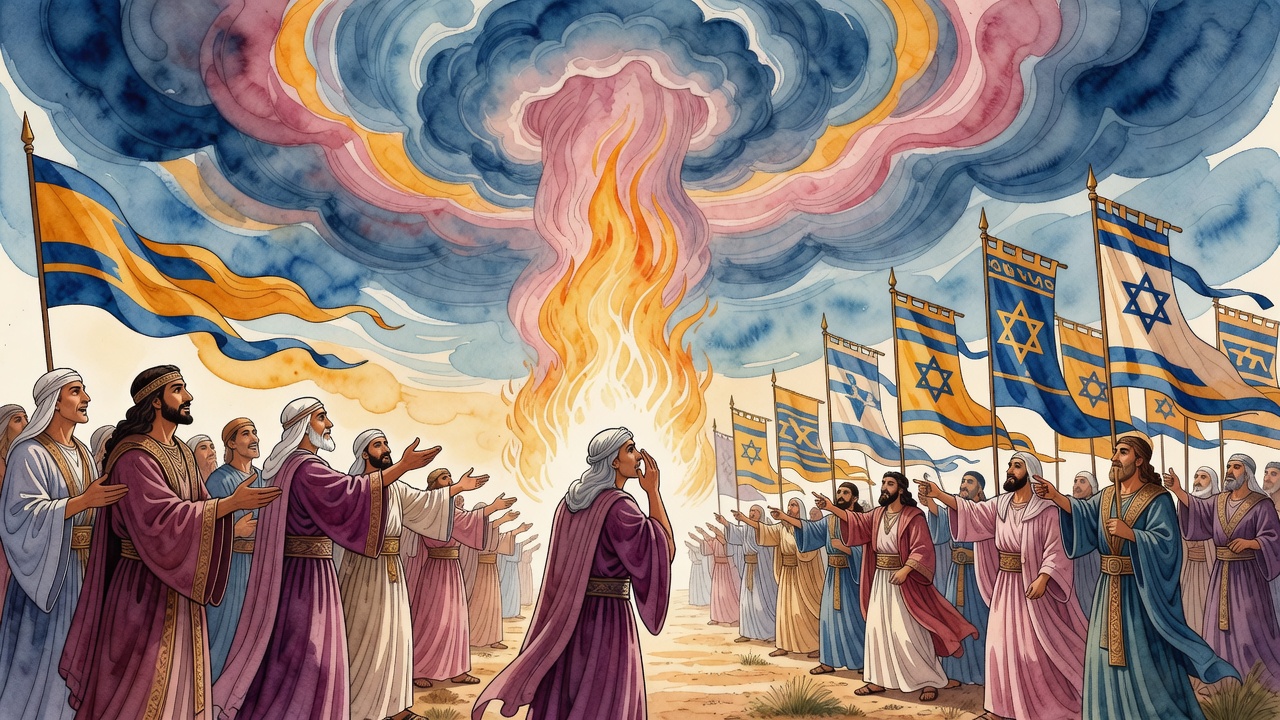
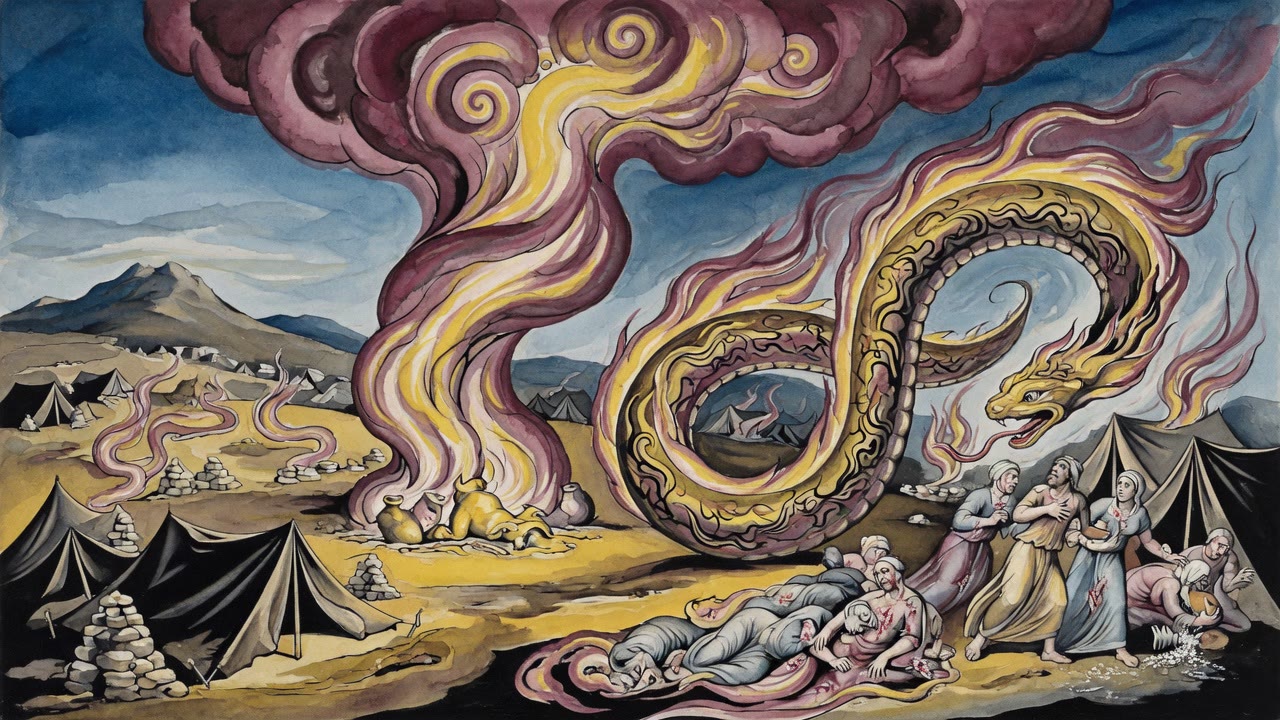
In the wilderness Israel camped under banners, each tribe in its mark. Nations looked and borrowed the language of Song of Songs. "Who is she who appears like dawn, fair like the moon, pure like the sun, formidable like banners?"

They beckoned. "Return, return, the Shulamite; cleave to us, come to us, and we will make you governors, generals, commanders." Power with titles. Gaze as recruitment. The midrash hears in their "we will gaze" the same root as seeking leaders from among the people.

Israel answered with a shrug sharp as a spear. What greatness can you give that matches the dance of the camps? Judah's banner. Reuben's. Dan's. Ephraim's. Order under God outranked foreign commissions.

Holiness Even After Failure

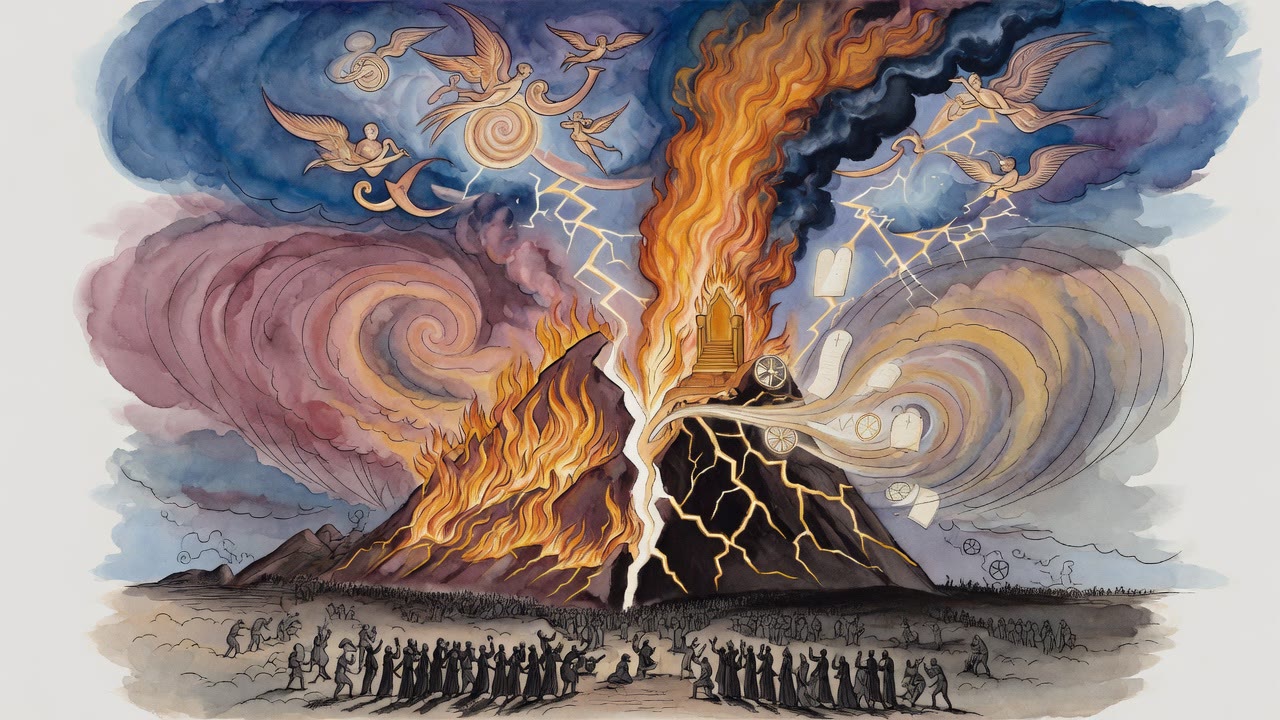
The nations could not match another gift. In the wilderness Israel sinned and was pardoned, and still heard, "Your camp shall be holy." Greatness was not only parade geometry. It was a covenant that survived failure without selling the camp to the highest empire.

Moses had set the people in patterns that made holiness visible from a ridge. Smoke of offerings, ranks of tents, families that knew their fathers' names. A map of belonging.

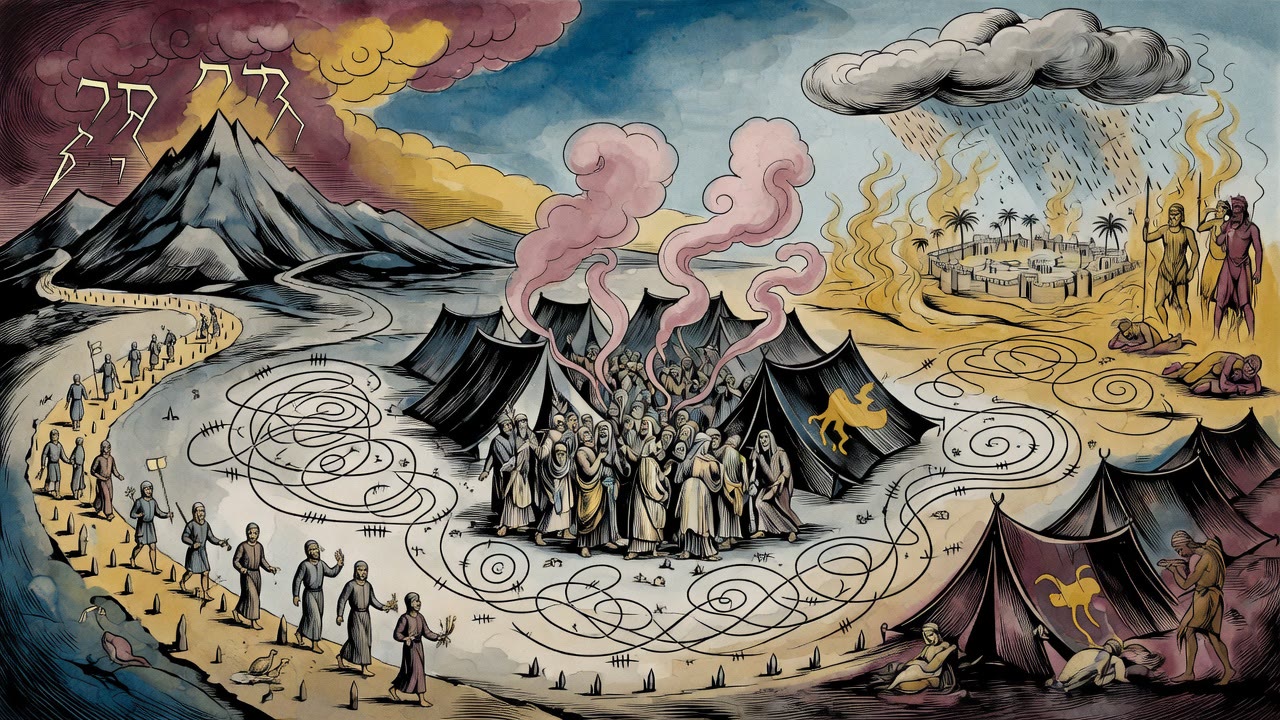
From a distance the camp looked like a single body with four faces of banners. Up close it was messy with ordinary hunger. Both views were true. Both views protected.

Bilam's Eye on the Tribes

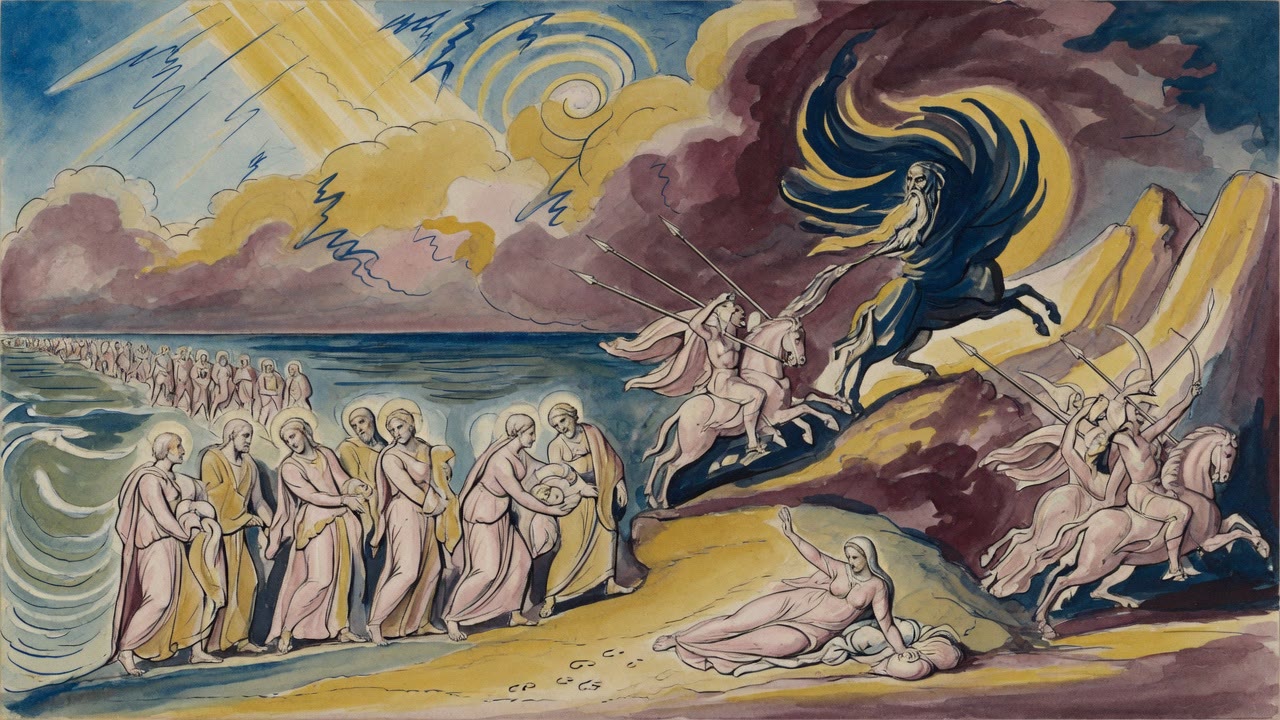
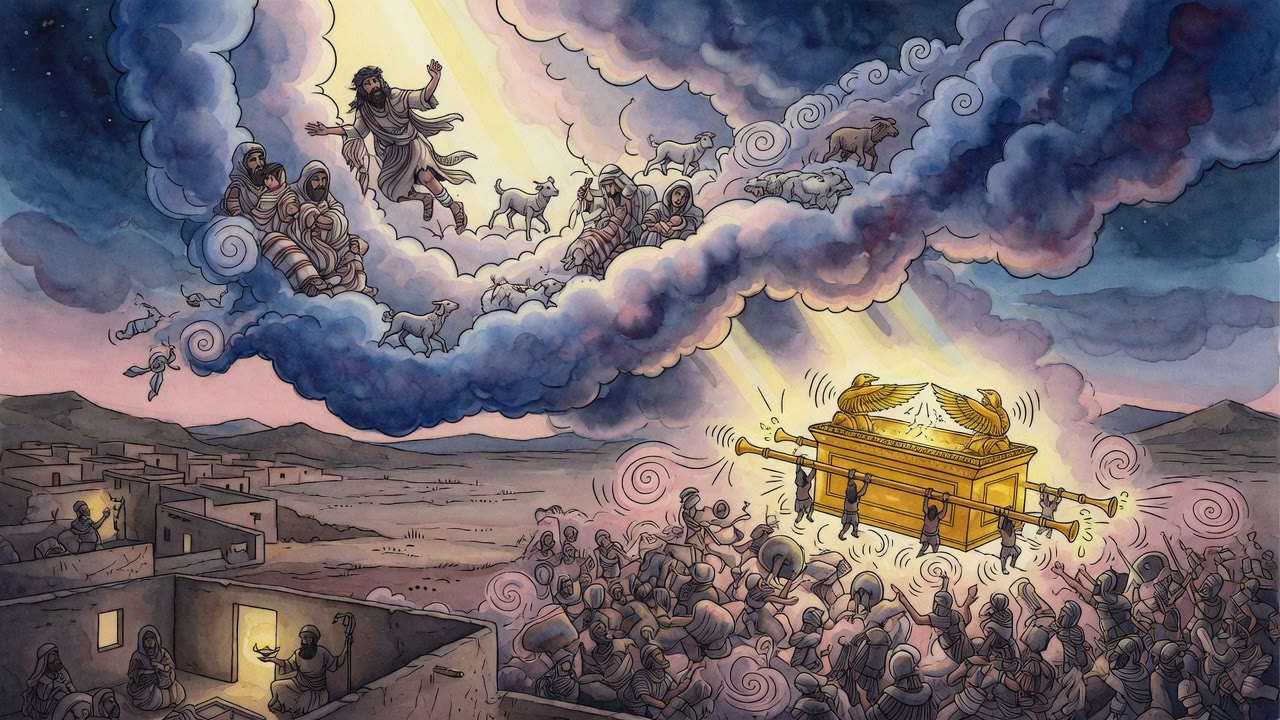
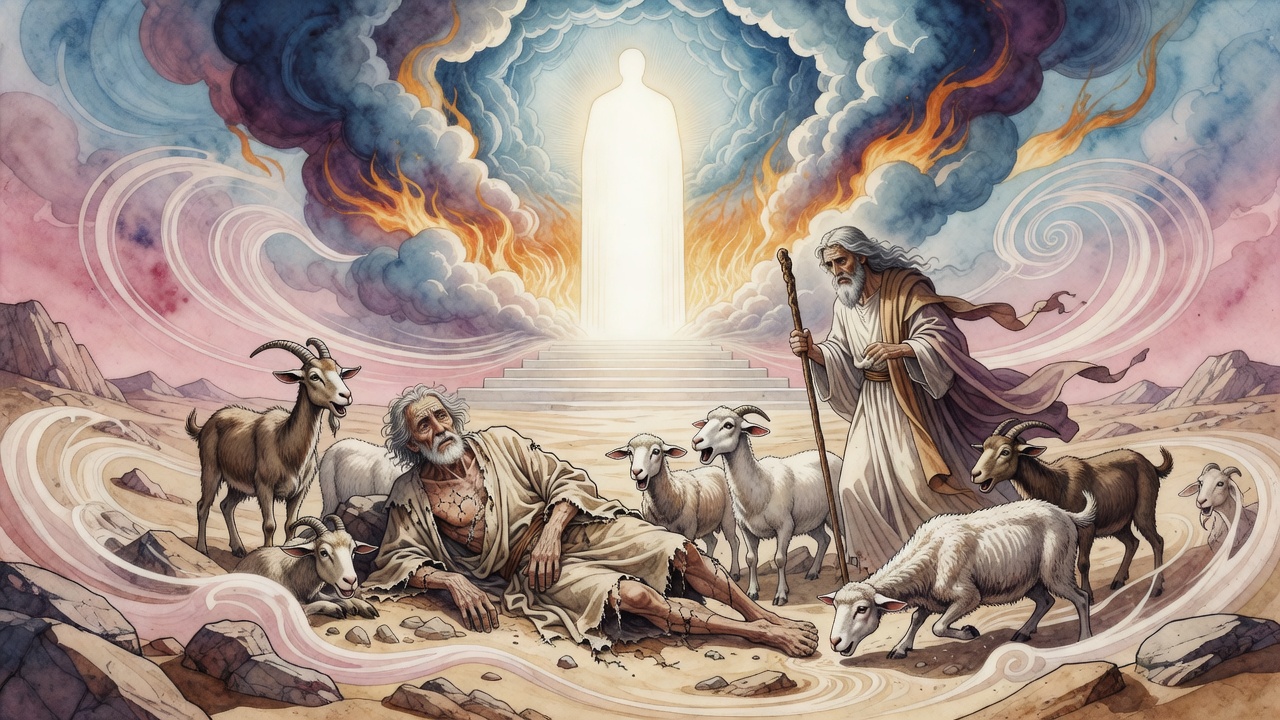
Bilam, hired to curse, lifted his eyes and saw Israel dwelling according to its tribes. The midrash says his eye came out on their account, a figure for extreme frustration. He could not find a gap for the curse to enter.

"Who can touch these people, who know their ancestors and their families?" Tribal structure was armor. A people that can name its tents cannot be easily renamed by a sorcerer's fee.

Balak paid for ruin and bought poetry of blessing instead. The banners did not flap harder. They simply stayed true while Bilam's mouth was turned against his contract.

Bela on Edom's Early Throne

Later reckonings of Edom list eight kings before Israel had one. The first Edomite king, tradition says, was Bela, and Bela is Bilam in another office. The man who failed to curse the bannered camps appears in the rival line as an early outsider king.

Edom took rulers from outside. Israel raised kings from within. Jobab of Bozrah, linked with Job's name in the lists, and others followed. Bozrah would one day face judgment for feeding Edom a throne.

The rivalry of Esau and Jacob thus runs through camps and crowns. One brother-line learns banners and inner leaders. The other line borrows names and prophets from the market of nations.

What the Banners Refused to Sell

Governors and generals offered by the nations were a soft curse, a compliment meant to dissolve. Bilam's paid curse was a hard one. Both failed against a people arranged by tribes and watched by a God who still called the camp holy after sin.

Moses' songs and Bilam's forced blessings stand on opposite ridges of the same story. One leader teaches Israel to see itself. The other is forced to see Israel truly and choke on the sight.

In later wars Edom and Israel would trade upper hands, eight kings to none, then the reverse under Saul through Jehoshaphat until Joram lost the leash. The wilderness banners remain the image of a people that does not need foreign ranks to know its worth.

Dust of the desert stuck to those flags. Children learned their tribe before they learned foreign medals. When a hireling prophet climbed a height to aim words like arrows, he found tents already aimed toward a Presence no fee could rent.

Night in the camp sounded with ordinary quarrels and lambs. Holiness does not always sound like choir. Sometimes it sounds like a census that still works, a banner still raised, a family still able to say which father pitched which rope.

Bilam went home with a reputation ruined for curse-work. Israel stayed under cloth marked with signs older than Balak's silver. The nations' job offer blew away like smoke from a pot. The question "Who is she?" hung unanswered because the answer refused to step out of formation into their ranks.

Formidable like banners, the Song said. Formidable not only to enemies with swords, but to enemies with contracts and compliments. The camp that knows its tribes can survive both.

Balak's silver sat heavy in bags that never bought the curse they wanted. Money can hire a mouth. It cannot hire the Owner of mouths when that Owner decides a camp is not for sale.

On the ridge Bilam squinted until tribal markers blurred into one shining body, then sharpened again into Judah, Reuben, Dan, Ephraim. Blur and sharp both defeated him. Unity and detail were two walls of the same fortress.

Edom's later chronicles of borrowed kings read like a market list of talent. Israel's chronicles of inner kings read like a family argument that still stays in the family. Both are histories. Only one matches the wilderness lesson of banners.


← All myths

From the tradition

Sources

2 sources

The texts behind this telling. Some cards carry a translation of the source; others are our own retelling of it, and each card says which. Every card links out to the original.

Bamidbar Rabbah 2:4Bamidbar Rabbah

Retold in our words. Read the original at the link below.The Sefaria Midrash Rabbah, 2022 · CC-BY

In the desert, the Israelites found that strength, not just in their faith, but also in their organization, in their very banners.

"Each at his banner, with the insignias," says the verse. And Bamidbar Rabbah, a rabbinic commentary on the Book of Numbers, explores this idea, connecting it to the beautiful imagery of the Song of Songs (6:10): "Who is she who appears like dawn, fair like the moon, pure like the sun, formidable like banners?" What is the connection?

The Midrash (rabbinic interpretive commentary) suggests that the nations of the world looked upon Israel, arrayed with their banners, and were filled with wonder. "Who is she who appears…?" they exclaimed. They were so impressed that they beckoned, "Return, return, the Shulamite (Song of Songs 7:1); cleave to us, come to us, and we will make you governors, generals, commanders, lieutenants, commanders-in-chief. Return, return and we will gaze [neḥze] upon you." The nations were offering positions of power, trying to entice Israel to join them.

What does "neḥze," meaning "we will gaze," really imply? The Midrash cleverly connects it to Yitro's advice to Moses (Exodus 18:21): "You shall seek [teḥze] from among all the people…and set over them as leaders." Here, teḥze, related to neḥze, speaks of authority, of leadership. So, the nations were offering Israel authority and a place among them.

But Israel, secure in their own identity and relationship with God, responds, "Why will you gaze at the Shulamite? What greatness are you according us? Is it perhaps like the dance of the camps?" (Song of Songs 7:1). In other words, can you offer us a greatness comparable to that which God has already bestowed upon us? Can you match the order and majesty of our encampments in the wilderness, each tribe under its own banner: "The banner of the camp of Judah" (Numbers 2:3), "the banner of the camp of Reuben" (Numbers 2:10), "the banner of the camp of Dan" (Numbers 2:25), "the banner of the camp of Ephraim" (Numbers 2:18)?

The Midrash continues, "Can you, perhaps, accord us [greatness] like the greatness that God accorded us in the wilderness, where we would sin and he would pardon us and say to us: 'Your camp shall be holy' (Deuteronomy 23:15)?" It wasn’t just about military strength or political power. It was about a unique covenant, a divine connection that set them apart. Even in moments of failing, God's presence, symbolized by the holiness of the camp, remained.

Even Bilam, the sorcerer hired to curse Israel, was affected by the sight of their organized encampment. The Midrash says that "his eye came out on their account" – an expression of extreme frustration – because he was unable to harm them. As (Numbers 24:2) states, "Bilam lifted his eyes and he saw Israel dwelling according to its tribes." He recognized the power and protection inherent in their tribal structure. He began saying: ‘Who can touch these people, who know their ancestors and their families,’ as it is stated: “According to its tribes.”

So, what do we take away from all this? According to Bamidbar Rabbah, the banners represented more than just tribal affiliations; they symbolized greatness, protection, and a unique relationship with the Divine. They were a visible manifestation of Israel's identity and purpose. That is why it is stated: “Each at his banner.”

What are our "banners" today? What are the symbols and structures that give us strength, identity, and a sense of belonging? Perhaps it’s our families, our communities, our values, or our shared traditions.

Full source
Legends of the Jews 6:286Legends of the Jews

Retold in our words. Read the original at the link below.The Legends of the Jews by Louis Ginzberg (1909) · Public Domain

It's often because the story isn't just about one family or one kingdom, but about the tangled web of relationships between them all. Take, for instance, the story of Esau and Jacob.

The familiar version gives us the tale: the twins, the birthright, the blessing stolen. But the ramifications of that sibling rivalry echo throughout history, shaping the destinies of their descendants: the Edomites (descendants of Esau) and the Israelites (descendants of Jacob).

In Legends of the Jews, the Edomites actually had eight kings before Israel even had its first. for a second. It sounds like they were off to a roaring start. But the tables turned. A time came, Ginzberg tells us, when the Jews had eight kings while the Edomites had none and were actually subject to Jewish rule. This period falls between the reign of Saul, the first king of Israel who ruled over Edom, and Jehoshaphat. It wasn't until the time of Joram, Jehoshaphat's son, that Edom finally managed to break free and assert its independence.

What's really interesting, though, is the kind of kings each nation had. The Jewish people, we're told, always produced their kings from within their own ranks. They were home-grown leaders, chosen from among their own people. But the Edomites? They had to go to outsiders. They had to look to other nations to find someone to rule over them.

The very first Edomite king, for example, was Balaam. Yes, that Balaam, the Aramean prophet! He's referred to as Bela when he's acting in his capacity as king of Edom. Then there was Job – yes, the Job of suffering fame! – who was also called Jobab, and hailed from the city of Bozrah.

And that city, Bozrah? It gets a pretty harsh fate in the future. The text hints at a coming judgment. A reckoning, if you will. According to this tradition, when God sits in judgment on Edom, Bozrah will be the first to suffer punishment. Why? Because it furnished Edom with a king. It played a role in this reliance on outside leadership.

So, what does all this mean? Is it just ancient history? Or is there a deeper message here? Perhaps it's about the importance of self-reliance, of cultivating leadership from within. Maybe it's a commentary on the dangers of relying too heavily on outsiders. Or maybe it's simply a reminder that the stories of our ancestors, with all their complexities and rivalries, continue to shape our understanding of the world, even today.

Full source