Parshat Tetzaveh5 min read

Simon Came Out of the Sanctuary Like the Morning Star

On the Day of Atonement the high priest steps from behind the veil in cloth of gold, and all Jerusalem falls to the ground as glory walks among them.

Curated by Arthur · Told by Maggid ·
Table of Contents
  1. The City He Built Against the Spoiler
  2. The Reservoir Wide as the Sea
  3. Behind the House of the Veil
  4. The Man Who Came Out Wearing Glory
  5. When the Assembly Fell to the Ground
Simon Came Out of the Sanctuary Like the Morning Star Click for full size

The City He Built Against the Spoiler

Before the gold, before the bells, there was the wall.

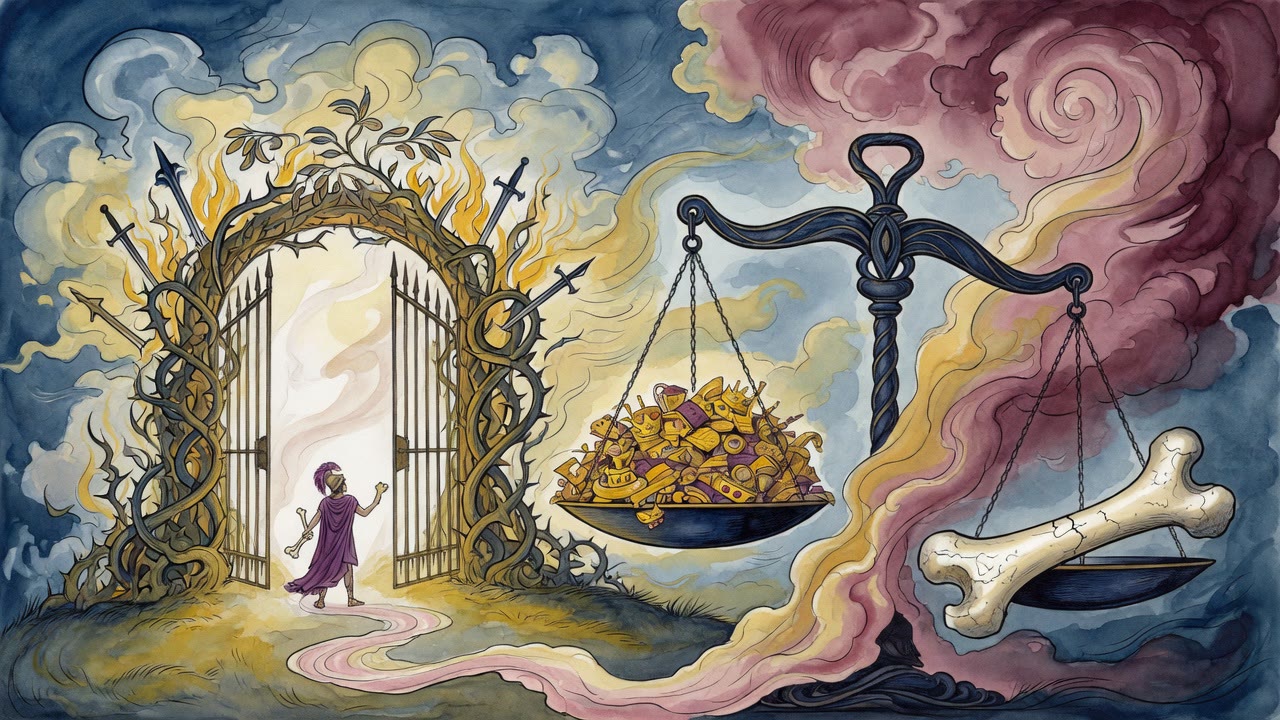
Simon son of Onias took thought for his people against the spoiler and fortified his city against the besieger. He read the horizon the way a farmer reads a sky about to break. Armies moved along the coastal roads, kings quarreled over who owned the hill country, and Jerusalem sat on its ridge with the Temple at its crown, a prize any general would want to burn. So Simon raised the walls higher and set the stones deeper, and he built a bulwark of refuge around the house of the King, the sanctuary itself. He did not wait for the enemy to arrive before deciding the city would stand.

The Reservoir Wide as the Sea

Then he went down into the rock and gave the city water.

In his generation a cistern was dug, a basin so vast the people spoke of it as if it were the sea held in its abundance. Water in that land was not comfort. It was survival. A siege did not need swords when it could simply wait for the wells to fail, and a summer without rain could empty a city faster than any army. Simon carved out a store that would not run dry, a pit whose water the people measured against the sea, and those who drew from it understood that the man who governed them had already imagined the worst day and dug ahead of it.

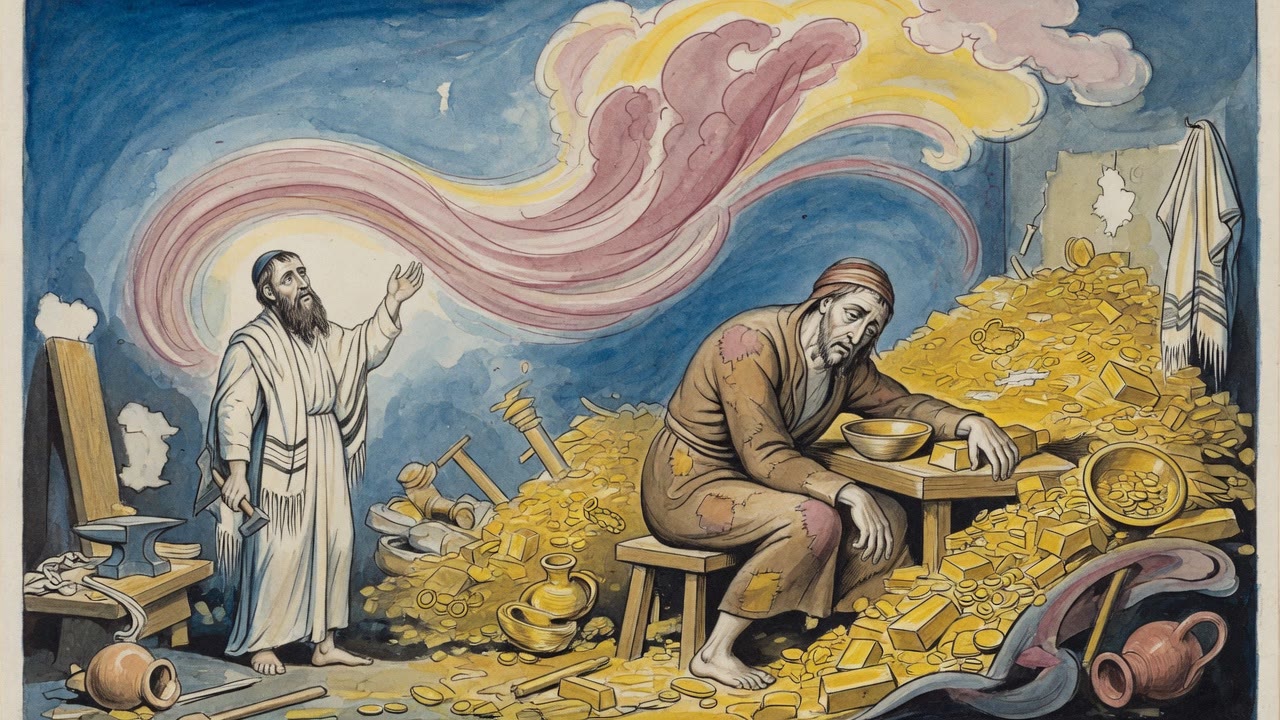
He was a builder of ordinary, unglamorous things. Walls. Water. The kind of work no hymn usually remembers. And the same hands that measured cisterns would soon lift over the whole assembly, and the crowd that trusted him for water would fall on its face before what he became one morning a year.

Behind the House of the Veil

Once a year the high priest passed out of sight.

On the most solemn feast he went in alone, behind the veil, into the room where the ordinary world was not allowed to follow. The assembly of Jerusalem gathered in the courts and waited. They could not see him. They could only imagine him standing in the small dark space at the center of everything, wrapped in the weight of the whole nation, and listen for the sound that told them he still lived. The bells.

His robe was hemmed with them, gold bells set between woven pomegranates, and they made music with his every step. The sound was not decoration. It was a lifeline. As long as the bells rang, the service was being accepted and the man inside was still on his feet. The people counted the chimes the way they would count a heartbeat.

The Man Who Came Out Wearing Glory

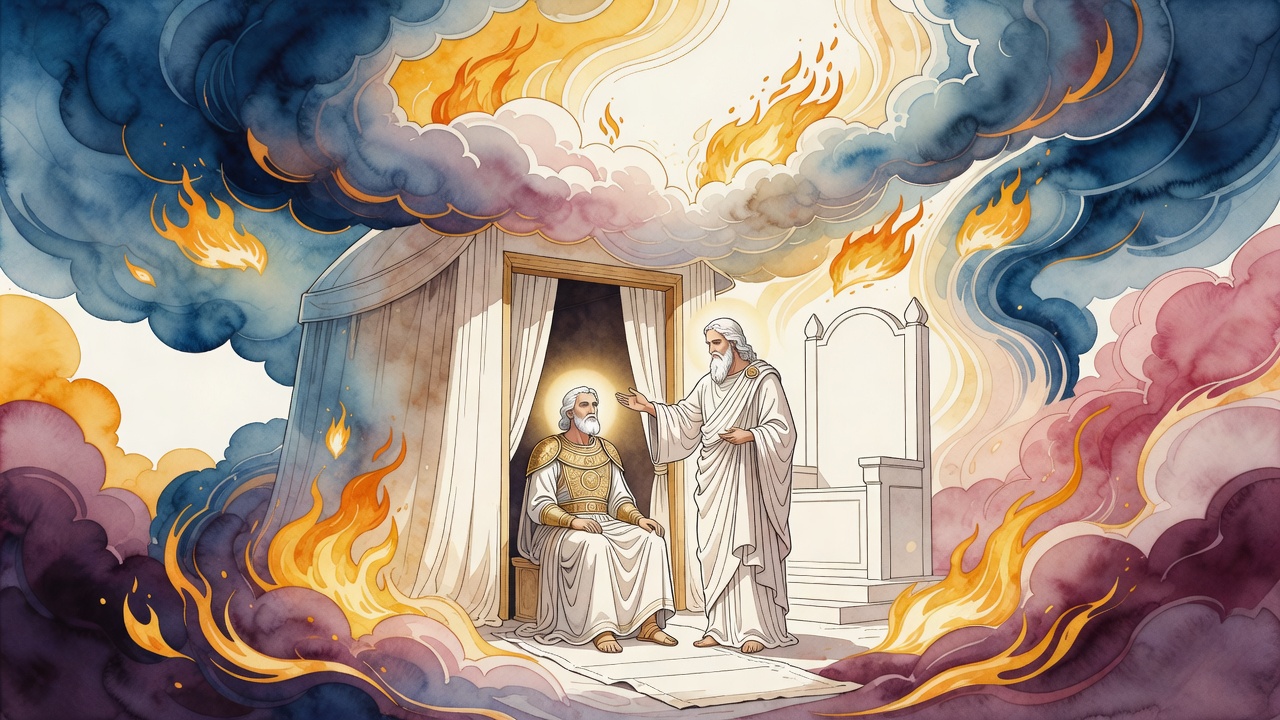
Then the veil moved, and Simon came out.

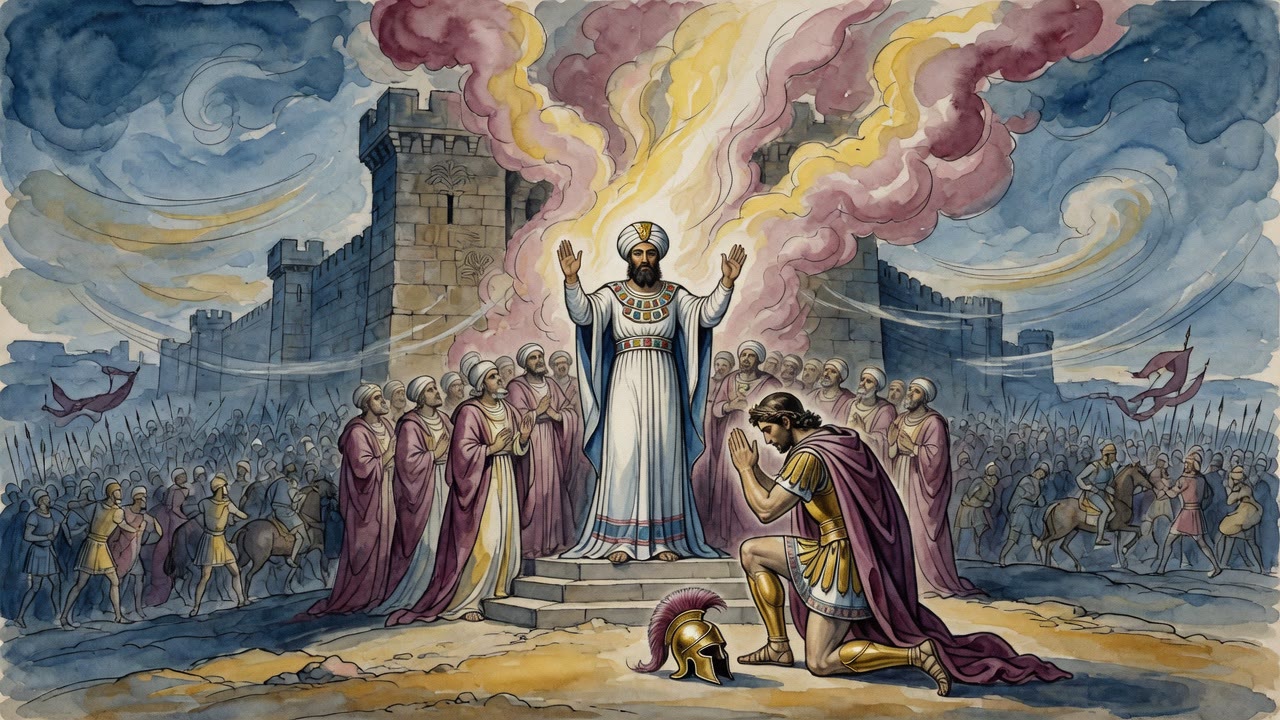
He was girded with majesty like the wild ox, clothed in the holy garments, gold and purple and crimson, the work of masters. Over his heart hung the breastplate of judgment, and set into it were twelve precious stones, sealed and engraved, each one carved with the name of a tribe of Israel. Beneath it lay the ephod and the woven girdle, the breeches and the tunic and the long robe, bound with two scarlet threads, layer upon layer of holy cloth built up until the man himself nearly vanished inside the office. He carried the whole people on his chest into the light, every name a memory pressed against him, and the morning sun struck the gold and the stones caught fire.

The assembly saw him and could not find one thing to compare him to, so they reached for all of heaven at once. He was the morning star breaking through thick clouds. He was the full moon at the height of the feast. He was the sun rising over the Temple of the King, and he was the rainbow standing bright against the storm cloud, the old sign that the world would not be drowned. A mortal man in cloth and thread had put on something that belonged to the sky.

When the Assembly Fell to the Ground

He lifted his hands over the crowd.

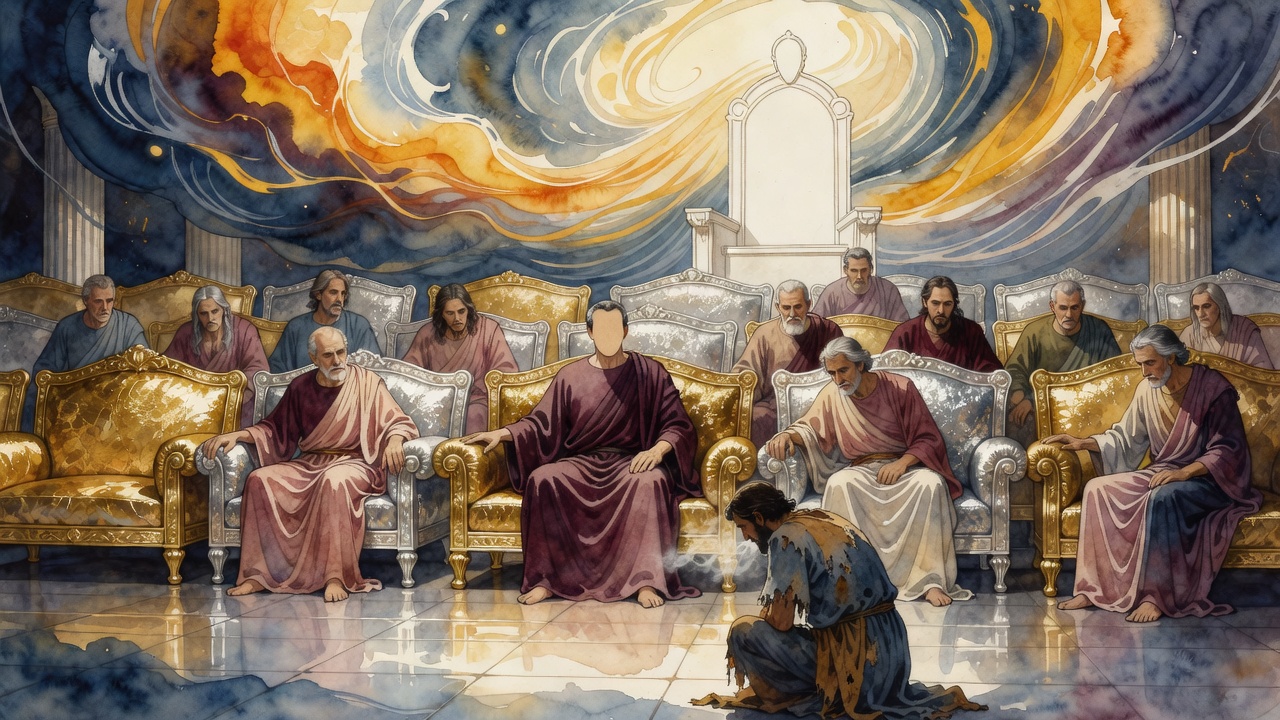
The whole congregation of Israel stood in the courts, and Simon raised his arms above them and pronounced the blessing of the Lord, glorying in the Name that only he was permitted to speak aloud, and only here, and only now. "The Lord bless you and keep you," the blessing began, and the sound of the Name moved over the people like weather.

And they fell. The whole assembly went down on its face to the pavement at once, thousands of them dropping as one body, because the blessing was descending and no one could receive it standing. For a moment there was no sound in Jerusalem but the last of the bells and the breath of a nation pressed to the stone. The man they had trusted to build their walls and dig their water now stood over them clothed in glory, the nearest any mortal ever came to wearing the light of God, and then he lowered his hands, and the day went on.


← All myths
From the tradition

Sources

2 sources

The texts behind this telling. Some cards carry a translation of the source; others are our own retelling of it, and each card says which. Every card links out to the original.

Ben Sira 45:11Ben Sira

Retold in our words. Read the original at the link below.The Wisdom of Ben Sira, Cambridge University Press (1899) · CC-BY

It wasn't just fabric and thread; it was a carefully constructed, divinely ordained manifestation of glory.

Ben Sira, in his wisdom, gives us a glimpse into this splendor. He tells us that God "put upon him splendor, and He appointed him minister in His glory." Right away, we understand this isn't just about clothing; it's about divine appointment and the reflection of God's own glory.

Then the imagery becomes incredibly vivid. The High Priest was "girded.. with the majesty of the aurochs," an ancient wild ox, symbolizing power and strength. He was "clothed.. with bells." Can you hear them? The gentle tinkling as he moved, a constant reminder of his sacred office.

Ben Sira continues, "And He clothed him all in majesty, and beautifued him in glory and strength; breeches, tunic, robe, and surrounded him in bells." It's a layered description, each garment adding to the overall impression of holiness and awe. Think about the weight of it all, both literally and figuratively.

And those bells? They weren't just decorative. "Many pomegranates surrounding, to make music with his steps." Pomegranates, symbols of abundance and fruitfulness, were woven into the design, creating a harmony of sight and sound. Each step the High Priest took was an act of worship, a living prayer. The Talmud (Zevachim 88b) specifies that the bells were to ensure that his service was accepted by God and also as a warning to the people, lest they intrude on the sacred space without proper reverence (Exodus 28:35).

The materials themselves were extraordinary: "Holy clothes, gold, purple, and crimson, works of the masters." These weren't just everyday fabrics. These were precious materials, dyed in royal colors, crafted by skilled artisans. The breastplate of judgement, the ephod (a type of apron or vest), and the girdle, were all meticulously constructed, interwoven with "two scarlet threads."

And then there's the breastplate, adorned with "precious stones… sealed and engraved in openings; every stone called a memory, written carved for the number of the children of Israel." Each stone represented one of the twelve tribes, a constant reminder of the High Priest's responsibility to the entire nation. Imagine the weight of that responsibility, carried so visibly and so intimately.

This wasn't just about outward appearance, it was about inward significance. The High Priest's garments weren't simply clothes; they were a tangible representation of his sacred role, a constant reminder of his connection to God and his responsibility to the people. They were a harmony of color, sound, and meaning, all woven together to create a powerful symbol of holiness.

So, the next time you read about the High Priest, don't just skim over the descriptions of his clothing. Pause, and imagine the splendor, the craftsmanship, and the profound spiritual significance of every thread, every bell, and every stone. It's a reminder that even the smallest details can be imbued with meaning when they are offered in service to the Divine.

Full source
Ben Sira 50:7Ben Sira

Retold in our words. Read the original at the link below.The Wisdom of Ben Sira, Cambridge University Press (1899) · CC-BY

The Book of Ben Sira, a work of wisdom literature from around the 2nd century BCE, sings the praises of a leader, likely a high priest, whose impact resonated deeply. But who was this builder, this protector, this figure of awe?

The passage begins by highlighting practical achievements. "In whose generation a cistern was digged (H); A pit (or store) like the sea (?) in its abundance." Imagine the relief of a community suddenly blessed with a reliable water source! Water in the ancient world wasn't just a convenience; it was life. The verse evokes a sense of abundance, a wellspring of hope in a dry land.

It wasn’t just about water. "In whose days a wall was built; A bulwark of refuge (?) in the temple of the King." Walls weren't just barriers of stone; they were symbols of security, of a safe haven against the storms, literal and metaphorical, that threatened to engulf them. This wasn't just any wall; it was a bulwark for the mikdash melekh, the Temple of the King, the very heart of their spiritual life.

Ben Sira continues, "Who took thought for his people against the spoiler; And fortified his city against the besieger." This is a leader who anticipated threats, who acted proactively to safeguard his community. He wasn't just reacting to crises; he was preventing them.

But here's where the text moves beyond the practical and enters the realm of the sublime. "How glorious was he when he looked forth from the tent; And when he went out from the house of the veil!" We’re not just talking about an administrator; we’re talking about someone whose very presence radiated glory. The "house of the veil" likely refers to a sacred space, perhaps within the Temple itself.

Now, the imagery explodes with celestial comparisons. "As the morning star from amid thick clouds; And as the full moon in the days of (?) the solemn feast." The leader's appearance is likened to the morning star, a beacon of hope piercing through darkness, and to the full moon, radiant and complete during a time of sacred celebration. Think about the power of those images – the promise of a new day, the fullness of spiritual fulfillment.

And finally, "And as the sun dawning upon (?) the temple of the King; And as rainbow seen in the cloud." He’s compared to the life-giving sun illuminating the Temple, and to a rainbow, a symbol of divine promise after a storm. The mikdash melekh, the Temple of the King, is bathed in his light, and the rainbow offers reassurance after times of hardship.

This passage from Ben Sira isn't just a description; it's an elevation of leadership to something almost divine. It asks us to consider: What qualities make a leader truly great? Is it their ability to build walls and dig cisterns, or is it their capacity to inspire hope and embody the sacred? Perhaps it's both. And perhaps, that’s the most enduring legacy a leader can leave behind.

Full source