Solomon's Eagle Crossed the Desert and Benaiah Milked a Lioness
Benaiah crouched at the lioness's flank with a clay bowl against his chest. She was still eating the kid. The male above them did not rise.
Table of Contents
The eagle woke before the guards did. It sat hooded on the flat roof of the palace, talons hooked into a beam, and when Solomon came up the stair it turned toward the sound of him and opened its wings the way a gate opens.
 Click for full size
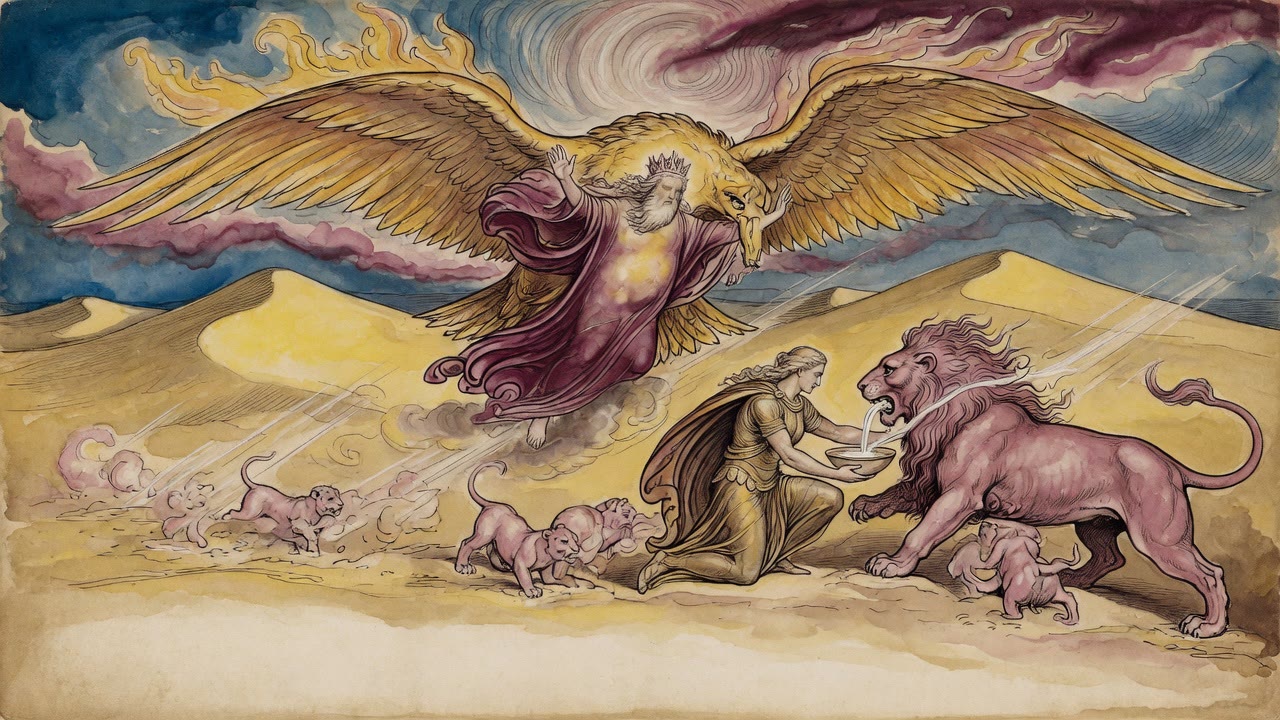
He climbed on and buckled the straps across his thighs. The roof fell away. Jerusalem went small and pale beneath him. Then there was nothing under the wings but the brown crust of the desert.
He Dropped a Verse Over Tadmor
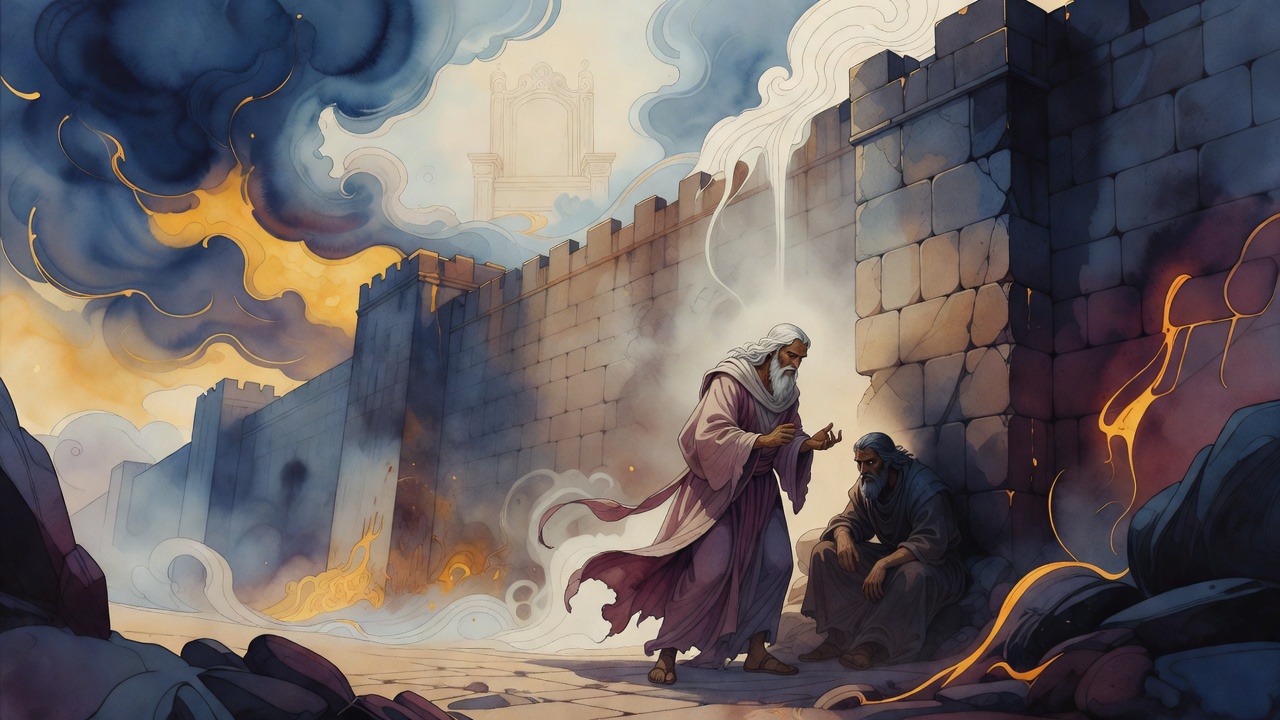
He was building a city out there. Not the Tadmor the traders knew on the northern road. This one stood at the foot of the mountains of darkness, where shepherds turned their flocks back a day's walk short of the place.
The eagle set him down on the site while the sun was still climbing. Solomon walked the foundations with his palm flat to the stone, feeling for a course laid untrue. The masons worked fast and talked little. Things came to the edge of the torchlight at night, and by morning there were prints in the dust nobody wanted to measure.
Before he left he took a strip of paper from his robe, a verse of Torah on it in his own hand, and let the wind lift it off his fingers. It went out over the unfinished walls and down among the things that kept out of daylight. That night the torches over the site burned steady to the bottom for the first time in a month.
He was on the roof in Jerusalem again before the lamps were lit.
The Eagle Folded Him Under the Left Wing
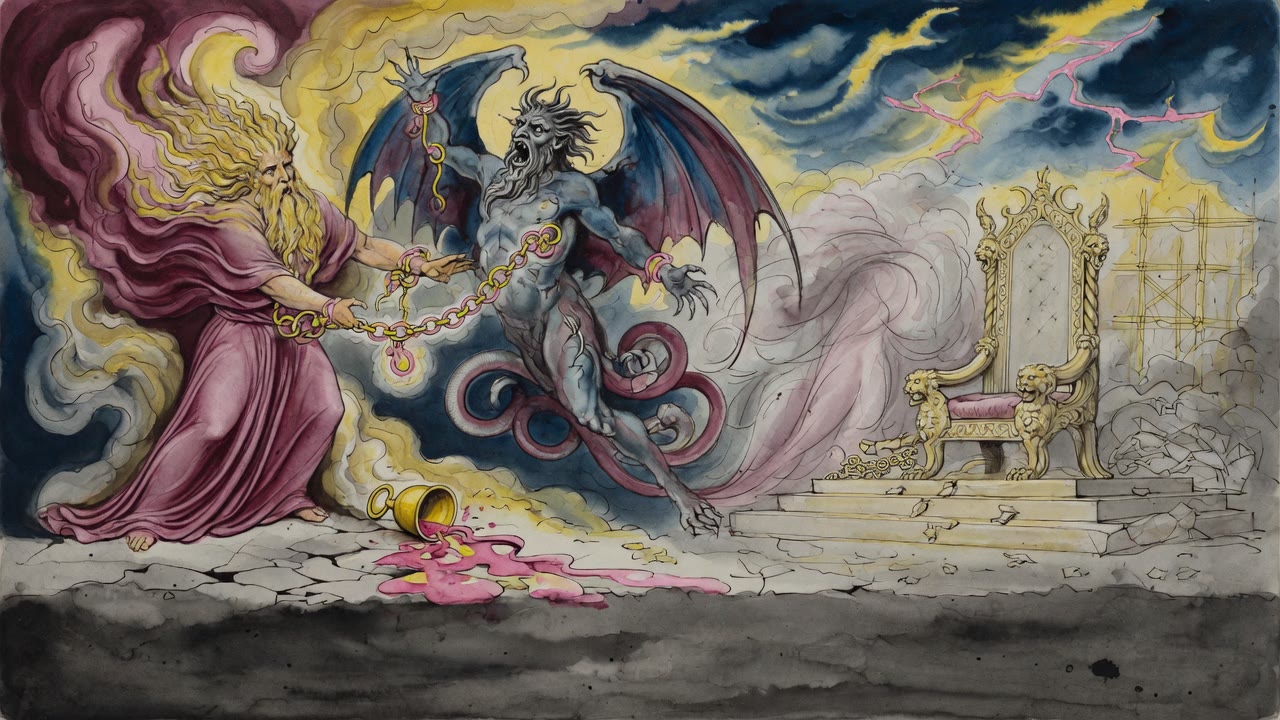
Tadmor was not the only reason he flew east. Past the last ridge any living bird would cross, 'Azza and 'Azzael were pinned in iron. They had been chained so long that the rock had closed over the ends of the fetters. Nothing flew there. The eagle went anyway, hunting the one seam that mattered.
When it found the place it did not land. It reached back, folded Solomon in against its ribs under the left wing, and dropped.
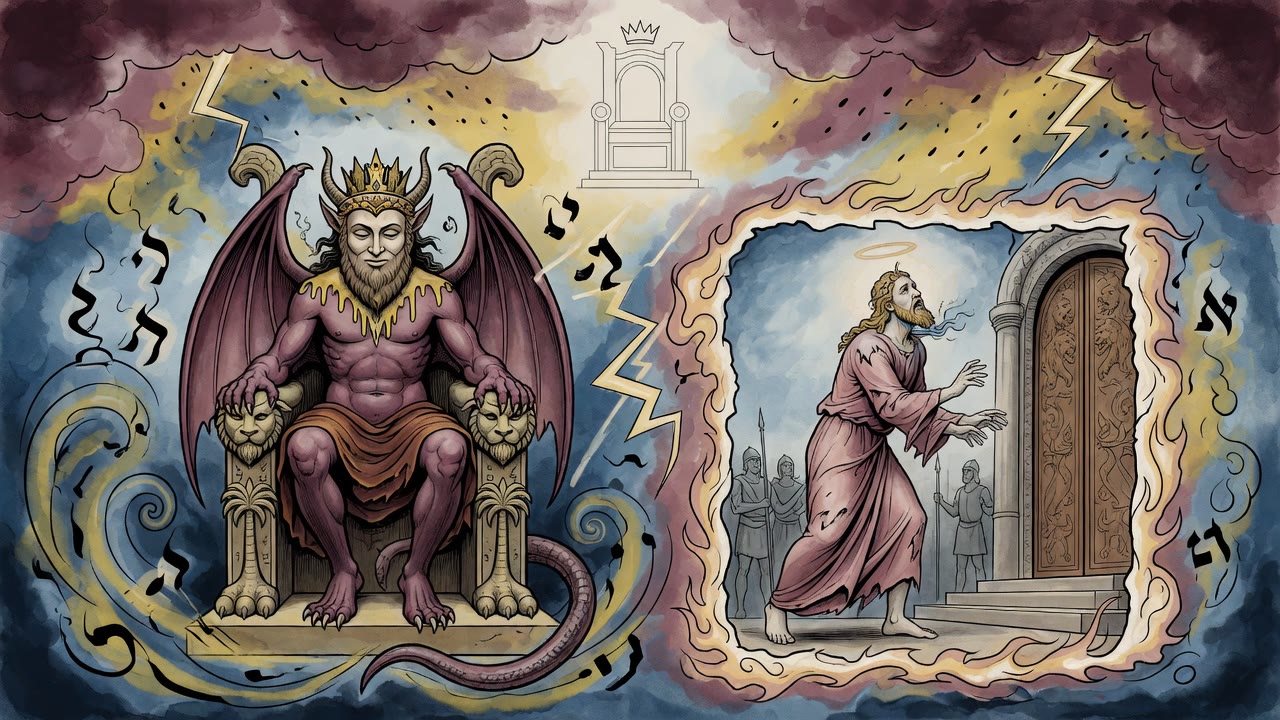
They were larger than he had let himself picture, and older, and the noise they made when light arrived was not a voice at first. Solomon put out his hand. Cut into the ring on it was the Shem HaMeforash (שם המפורש), the Name that is not said aloud. The eagle took the ring in its beak and carried it forward.
"Take it away," 'Azzael said. His chain moved and the mountain caught the sound and handed it back. "Take it away and ask."
So Solomon asked, and they answered him. Heaven's business, told out in the dark by two who had been thrown down from it, while a bird held the Name a handspan from their faces. Then the eagle climbed, and the king was home by dark, as if the mountain had been a room in his own house.
A Rider Came From Persia With Gifts
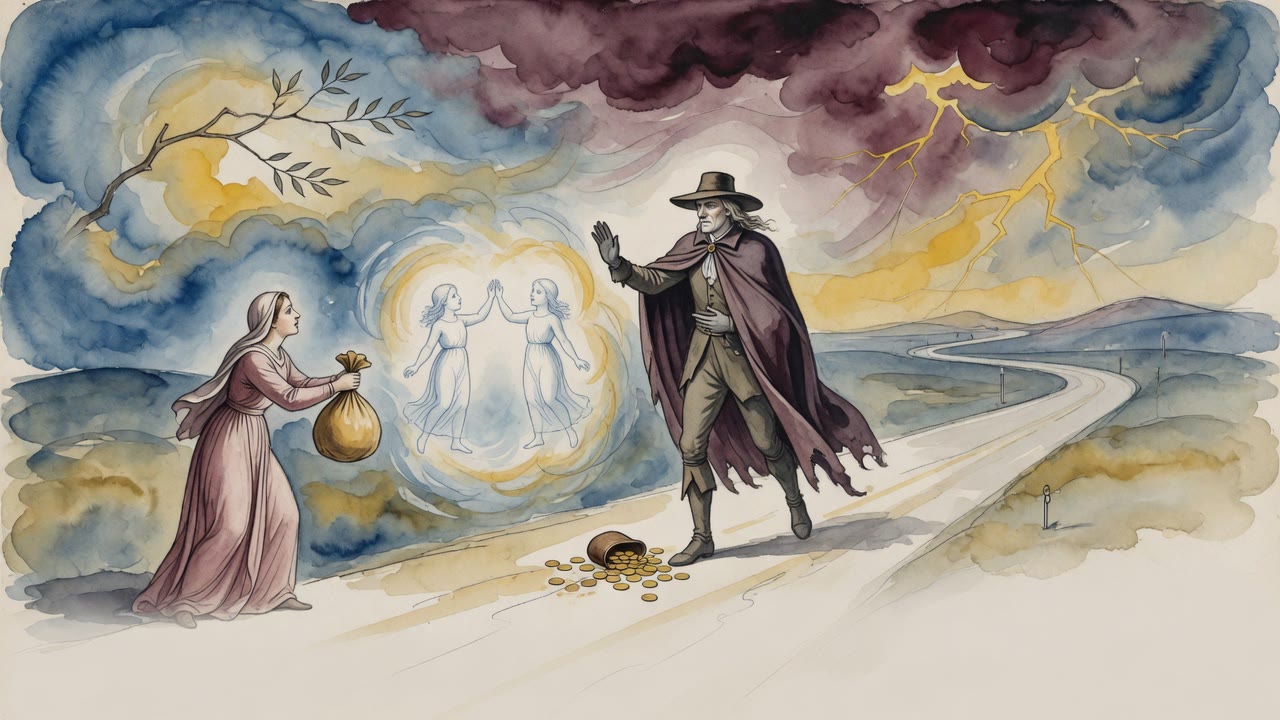
The messengers were waiting in the court when he got home. The King of Persia was his ally and his friend, and the King of Persia was dying. The royal physician had read every scroll in the palace and come out with one answer.
"Milk," the envoy said, still on his knees on the stone. "Milk from a lioness. She has to be alive when it is taken."
Chests stood open behind him, and the gold in them was worth nothing in that room. Solomon had crossed a desert that morning and come home the same day. He looked down at the envoy and understood that no wing in the world would carry him to this one. He sent for Benaiah.
One Kid a Day at the Mouth of the Den
Benaiah son of Jehoiada had gone down into a pit after a lion on a day of snow once already (2 Samuel 23:20). He heard the errand out on his feet, then asked for goats. Not a goat. A flock of kids, penned under the palace wall.
The den was a split in a limestone shelf half a day out. On the first morning he set a kid on the rock at the lip and backed off the whole distance before the lioness came out for it. She ate watching the place where he had stood. The male lay above her in the shade and never bothered to rise.
He came the next morning with another, and every morning after that, stopping each time so slightly nearer that the lions had nothing new to be angry about. He waited while she ate. He left while she was still eating, which was the hard part. He never once ran.
The season turned. The lions stopped getting up when they heard him on the loose stone above the den. Not that they trusted him. He had become one of the ordinary noises of the morning, like wind in the thorn.
On the day it happened he went all the way down and set the kid at her feet. She dropped her head to it. He crouched in at her flank, close enough to feel the heat coming off her ribs, and put his hands on a living lioness while she ate, and drew the milk into the clay bowl he had carried against his chest all season without once needing it.
She turned her head and looked at him. Above them the male went on sleeping.
The Skin of Milk Went East
The bowl went into a skin, and Solomon put it into the envoy's hands himself. It rode east inside a ring of Persian horsemen, and at the other end a sick king swallowed a mouthful and lived.
On the roof the eagle sat out all of it with its head under its wing, ready in any hour to set the king down at the edge of the world and have him home by dark. Below, in the pens against the palace wall, the straw had gone flat and cold and the gates hung open on their pegs. Nobody went down to shut them.
Solomon could cross a desert before noon. The milk had taken a season. Benaiah washed the clay off his hands at the palace well and did not look up at the roof.
← All myths