5 min read

Sons of Light Lose Three Times Before God Wins

The Sons of Light form ranks, lose three clashes to Belial and the Kittim, and only win when God and the poor remnant decide the seventh engagement.

Curated by Arthur · Told by Maggid ·
Table of Contents
  1. The Banners Go Up
  2. Three Advances, Three Shoves Back
  3. God Chooses the Poor
  4. Two Spirits Until the End
  5. The Seventh Engagement
Sons of Light Lose Three Times Before God Wins Click for full size

The Banners Go Up

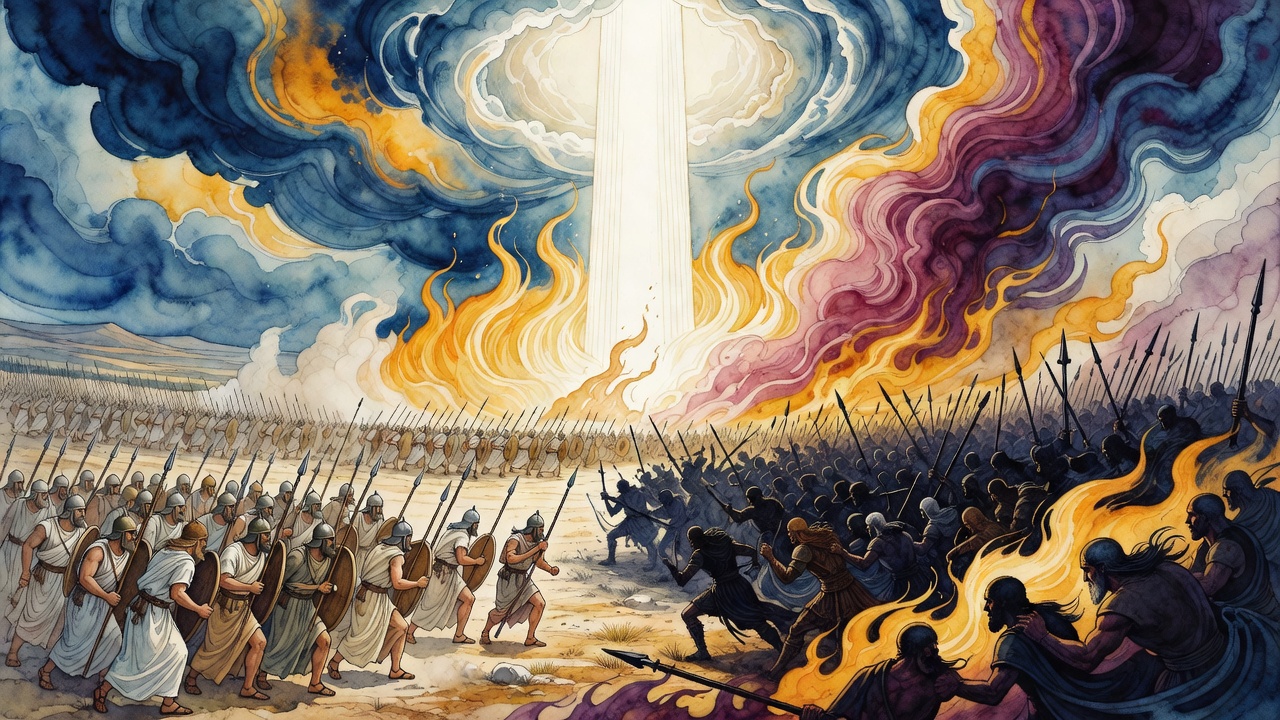
They unrolled the banners before the dust of the enemy was even visible. One read "The Called of God." Another: "The Vengeance of God." Priests checked trumpet signals the way other armies check arrow counts. This was not a metaphor drill. The War Scroll names shield sizes, battle lines, and the sequence of blasts that summon help from above.

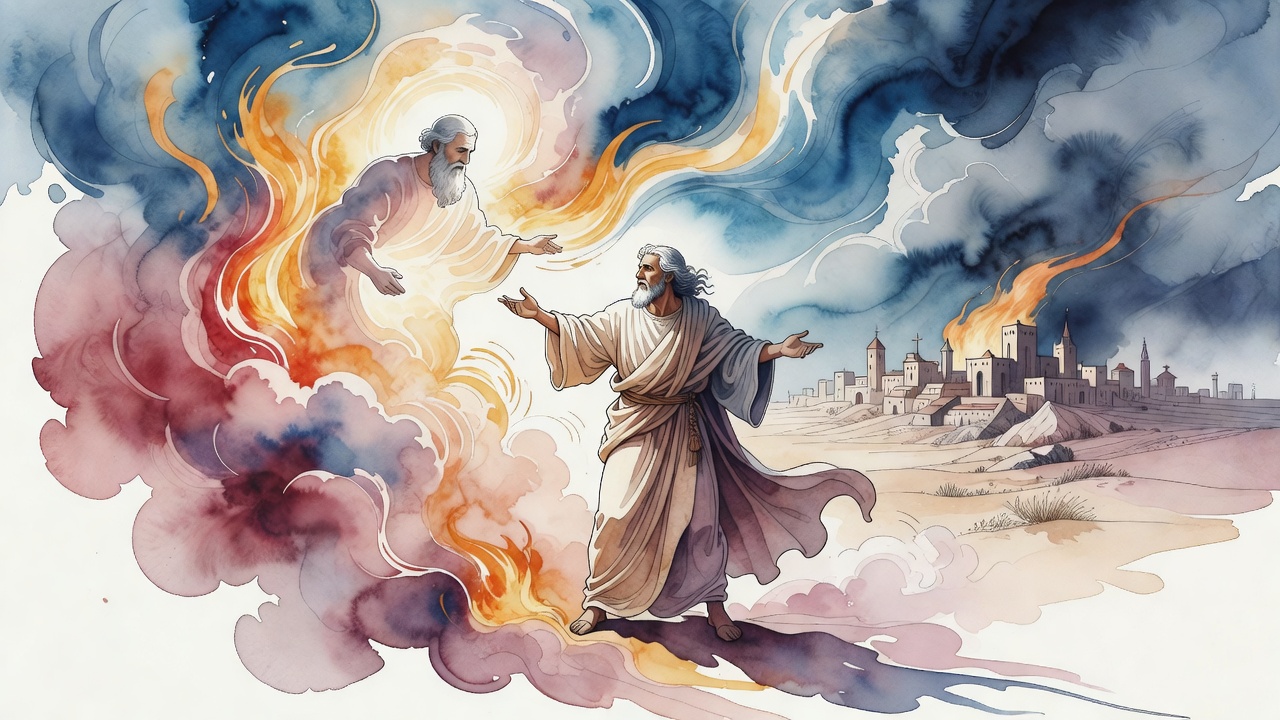
The Sons of Light formed from Levi, Judah, and Benjamin. Across the plain waited the Sons of Darkness: the armies of Belial, joined by Edom, Moab, Ammon, Philistia, and the Kittim. Michael, the great prince, was counted among the commanders as surely as any human captain. The war was scheduled for forty years. No one pretended it would be clean.

Three Advances, Three Shoves Back

The first engagement ended in a draw that tasted like defeat. The Sons of Light advanced. The Sons of Darkness pushed them back. Again. Again. Three times the light moved. Three times the dark answered with enough force to crack confidence. Men who had painted victory hymns in advance felt the hymns stick in their throats.

The scroll refuses the fantasy of easy righteousness. Human strength alone is insufficient. The final victory belongs to heaven. Until the seventh engagement, even the pure can be driven like any other infantry when Belial's host has numbers and steel.

In the ranks, a young fighter gripped a shield and learned the theology of mud: you can be on the right side and still fall, still bleed, still watch a friend dragged backward through churned ground.

God Chooses the Poor

Between clashes they sang the hymns written for a battle that had not yet finished. "You delivered Goliath of Gath, a mighty man of valor, into the hand of David your servant, because he trusted not in sword and spear but in Your great Name." The claim sharpened: God wins His wars through the weak, not the strong.

"Into the hand of the poor You have delivered the enemies from all the lands, and into the hand of those bent in the dust You have cast the mighty of the peoples." This was military doctrine, not soft moral advice. Strength would obscure the miracle. The remnant must stay a remnant for the Name to be seen.

The Sons of Light looked at their thin lines and, for a moment, understood why the plan forbade pride. They were outnumbered on purpose in the story God was writing with their bodies.

Two Spirits Until the End

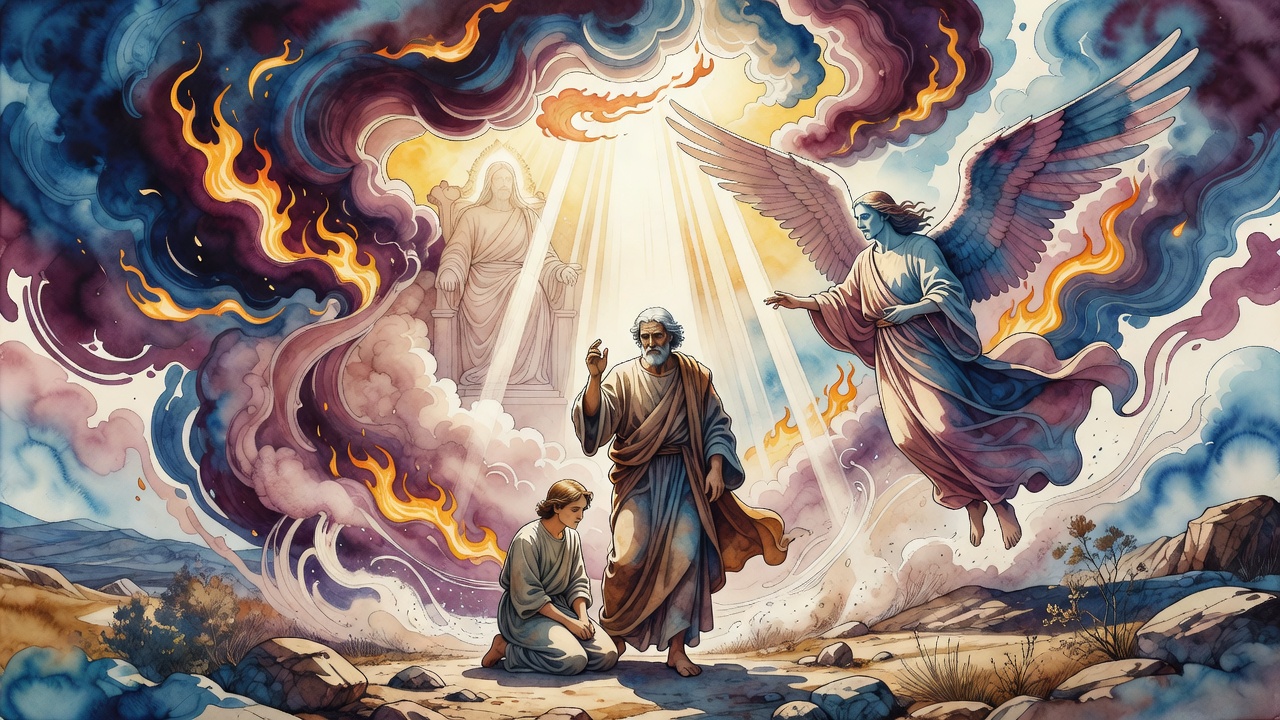
The Maskil had already taught them the deeper war. God created two spirits to govern humanity until the appointed end. The Prince of Light, Angel of Truth, rules the Sons of Righteousness. The Angel of Darkness rules the Sons of Deceit. Both come from the God of Knowledge. The dark angel does not rebel as an independent king. He is instrument until the visitation.

Every heart is a field where the two counsel. The apocalyptic plain outside the camp is only the large version of the struggle already underway behind the teeth. At the appointed time God will destroy wickedness forever and sprinkle the spirit of truth like purifying waters. Until then, no soldier is simple.

The Seventh Engagement

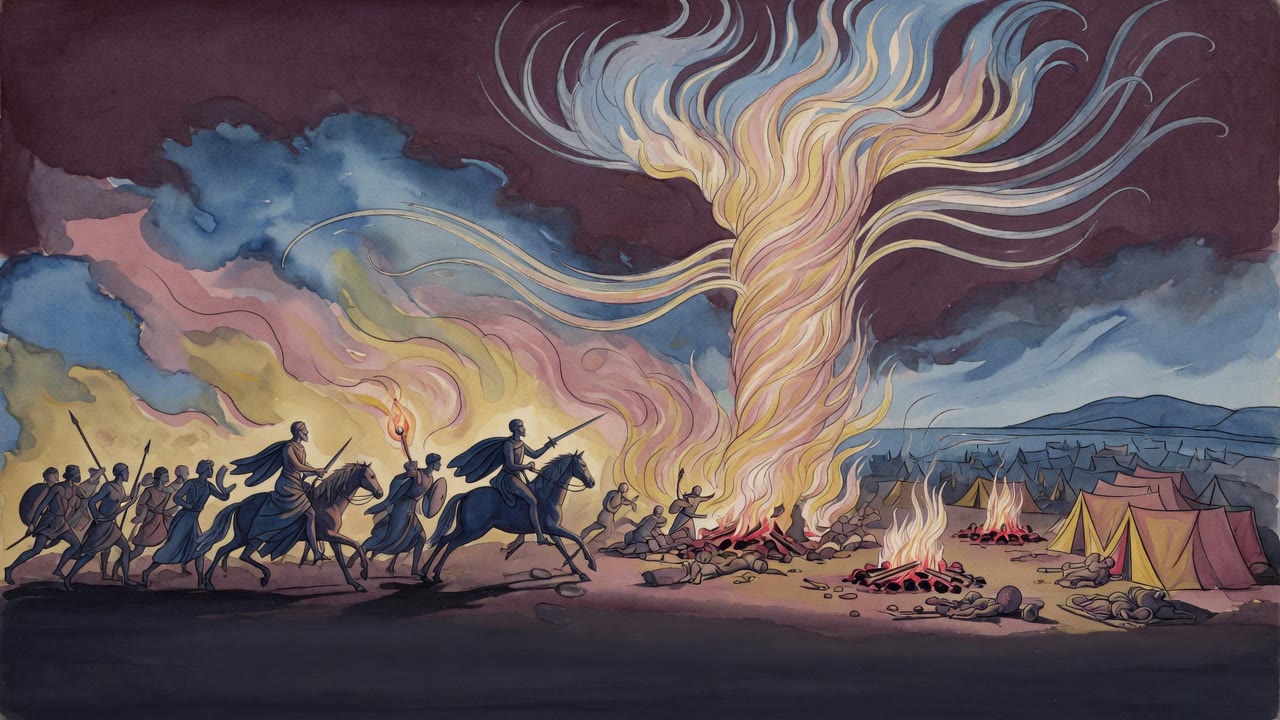
When the seventh clash came, the trumpets were not only metal. They were a summons. God Himself entered the engagement, and the stalemate broke. The King of Glory (Melekh HaKavod, מלך הכבוד) would reign with His holy angels. The wicked would not be negotiated into mildness. Darkness would be erased as though it had never owned the morning.

The poor remnant stood in the quiet after, not swaggering. They had lost three times in the open so that the fourth kind of victory, the one that is not theirs to claim alone, could arrive without a lie attached.

Banners sagged with dust and still named vengeance and calling. The war of forty years was never only about maps. It was about whether a people bent in the dust would still blow the trumpet when the third reverse said they should go home.

Between the third reverse and the seventh hope, armorers repaired straps in silence. A priest walked the lines reciting that both spirits come from the God of Knowledge, so no one should invent a second creator to explain the pain. Belial's success was allowed, timed, and doomed. That doctrine did not make the bruises lighter. It kept the bruises from becoming a new religion of despair.

A banner bearer admitted he had almost buried the cloth after the third shove backward. His friend said, "If we only fly it when we are winning, we were never Sons of Light. We were sons of weather." They lifted the banner again. Dust filmed the letters. The letters still named God, not their mood.


← All myths
From the tradition

Sources

3 sources

The texts behind this telling. Some cards carry a translation of the source; others are our own retelling of it, and each card says which. Every card links out to the original.

1QM 1:1-17War Scroll (1QM)

Retold in our words. Read the original at the link below.Original JewishMythology.com adaptation from ancient manuscript references and scholarly summaries · Original Adaptation

Buried in a cave near the Dead Sea for two thousand years, the War Scroll (Megillat HaMilchamah, מגילת המלחמה) lays out the most detailed battle plan ever written for the end of the world. Composed sometime between the 2nd century BCE and the 1st century CE, this seven-meter-long parchment describes a forty-year war between the Sons of Light and the Sons of Darkness. And it reads less like prophecy and more like a military field manual.

The scroll opens by naming the enemy. The Sons of Darkness include the armies of Belial (a name for the chief angel of wickedness in this text), joined by the traditional enemies of Israel, the Kittim (likely the Romans), Edom, Moab, Ammon, and Philistia. Against them stand the Sons of Light, identified as the tribes of Levi, Judah, and Benjamin, fighting under the direct command of God and His angels.

This is not a metaphor. The scroll specifies the exact formation of battle lines, the dimensions of shields, the inscriptions on banners, and the sequence of trumpet signals. One banner reads "The Called of God." Another: "The Vengeance of God." The priests blow trumpets not to rally troops but to summon angelic reinforcements. Michael, the great prince of heaven, leads the heavenly host into the fray alongside the human soldiers.

The war lasts forty years. And it does not go smoothly. The first engagement is a draw. Three times the Sons of Light advance, and three times the Sons of Darkness push them back. Victory comes only when God Himself intervenes in the seventh and final engagement. The scroll makes clear: human strength alone is insufficient. The final victory belongs to heaven.

Full source
1QM 11:1-12:18War Scroll (1QM)

Retold in our words. Read the original at the link below.Original JewishMythology.com adaptation from ancient manuscript references and scholarly summaries · Original Adaptation

Columns 11 through 12 of the War Scroll contain some of the most powerful hymns in all of Second Temple literature, victory songs composed in advance for a battle that hasn't happened yet. The confidence is total. The outcome is certain. And the theological claim at the center is breathtaking: God wins His wars through the weak, not the strong.

"You delivered Goliath of Gath, a mighty man of valor, into the hand of David your servant," the hymn declares, "because he trusted not in sword and spear but in Your great Name." The War Scroll insists that the final cosmic battle will follow this same pattern. The Sons of Light are outnumbered. They are poor. They are "the remnant." And that is exactly why they will win.

The hymn addresses God directly: "Into the hand of the poor You have delivered the enemies from all the lands, and into the hand of those bent in the dust You have cast the mighty of the peoples." This is not humility as a spiritual virtue, it is a military doctrine. The weaker the human army, the more visible God's power becomes. Strength would obscure the miracle.

The hymns also describe the aftermath of victory. The "King of Glory" (Melekh HaKavod, מלך הכבוד) will reign alongside His holy angels. The wicked will be annihilated. And the faithful, the poor, the overlooked, the community of the covenant, will inherit eternal light. The war ends not in conquest but in purification. The darkness is not defeated; it is erased, as though it had never existed at all.

Full source
1QS 3:13-4:26Community Rule (1QS)

Retold in our words. Read the original at the link below.Original JewishMythology.com adaptation from ancient manuscript references and scholarly summaries · Original Adaptation

The Community Rule (Serekh HaYachad, סרך היחד), one of the first seven scrolls discovered in Cave 1 in 1947, contains what may be the most startling theological statement in all of Second Temple Judaism. In columns 3 and 4, the Maskil, the community's teacher, reveals the doctrine of the Two Spirits.

God, the text declares, created two spirits to govern humanity until the appointed end. The Prince of Light (Sar HaOrim, שר האורים), also called the Angel of Truth, rules over the Sons of Righteousness. The Angel of Darkness (Malakh HaChoshekh, מלאך החושך) rules over the Sons of Deceit. Every human being walks in the counsel of one spirit or the other, and their deeds, their thoughts, even their physical constitutions reflect which angel holds dominion over them.

Here is the crucial detail: both spirits were created by God. "From the God of Knowledge comes all that is and shall be," the verse states flatly. The Angel of Darkness does not rebel. He is not God's enemy. He is God's instrument. He exists because God willed him into being, and he will be destroyed when God decides the time has come.

The text ends with an extraordinary promise. At the "appointed time of visitation," God will destroy wickedness forever. The spirit of truth will be sprinkled on the righteous "like purifying waters," cleansing them of every evil impulse. Until that day, the two spirits struggle within every human heart. The final battlefield is not some apocalyptic plain. It is the interior life of every person alive.

Full source