6 min read

Terrors Lined the Road and the Almond Tree Blossomed White

Rabbi Shimon ben Halafta stopped crossing his own doorway, then walked the street one last time and named the banner planted at the end of it.

Curated by Arthur · Told by Maggid ·
Table of Contents
  1. The Morning He Asked About the Thorns
  2. The Street That Had Become an Ambush
  3. What He Said in the Doorway at Beit She'arim
  4. The Bone That Split the Anvil
  5. Six Hundred Thousand Before the Sun Went Down
Terrors Lined the Road and the Almond Tree Blossomed White Click for full size

The Morning He Asked About the Thorns

Rabbi Shimon ben Halafta stood in his doorway with his staff in his hand and would not cross the sill. His student waited in the yard with the loaded donkey. It was the new moon, and for twenty years the new moon had meant the road to Beit She'arim.

"Are there thorns on the way?" the old man asked.

"The same thorns as last month, rabbi."

"Are there ascents there? Are there descents?"

The student told him the truth. One rise past the olive press, one dip where the winter water cut the road, and a child could walk both without noticing.

Shall I go, or shall I not go. He turned that over until the traveling hour went by, and in turning it over he answered it. The staff went back against the wall.

Three new moons passed that way.

He had drawn a line and told nobody where it ran. As far as the corner where the potter's wall turned, he could go. Not past it. The border kept walking toward his door.

The Street That Had Become an Ambush

On the fourth month he crossed the sill before dawn and sent the student ahead with the donkey, because he wanted no witness.

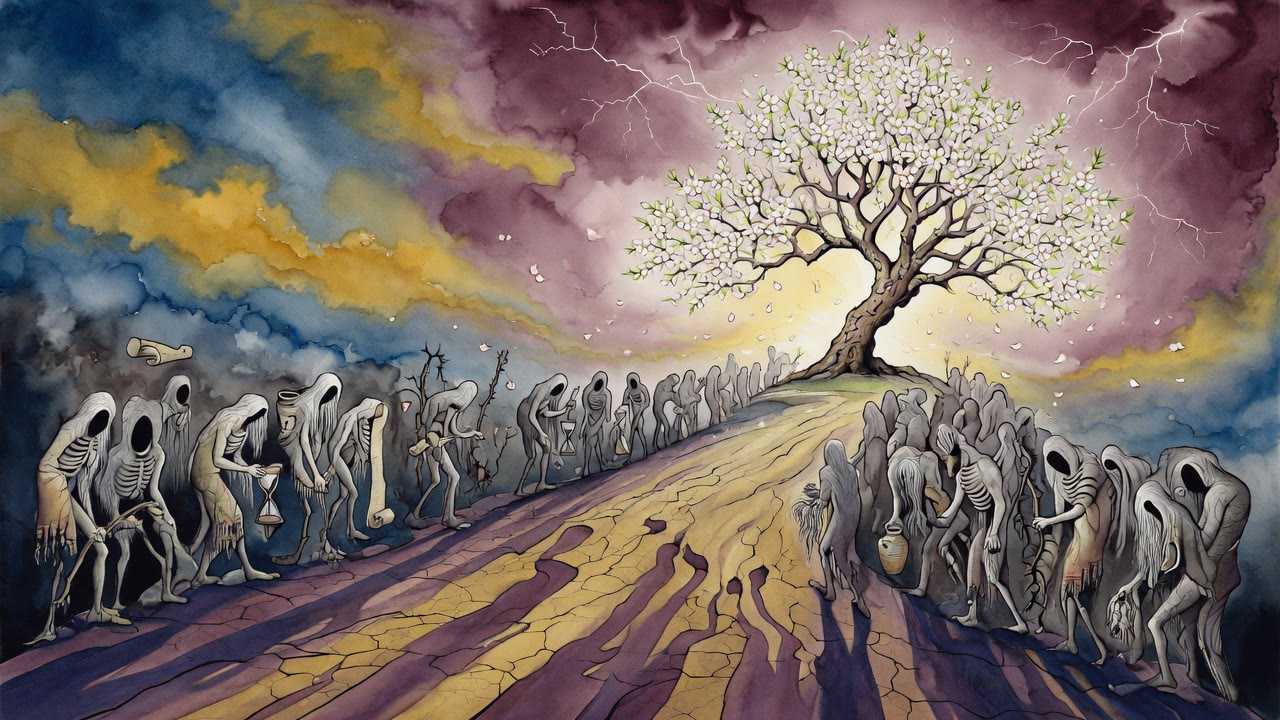
He had walked this street since he was a boy. It had changed nothing about itself. Terrors lined it anyway. His ankles carried him the way a grasshopper carries a load slung over its back, and the small rise past the olive press stood up like a city wall. He stopped twice on it, and the second time gripped a fencepost until his heart quieted.

At the potter's yard, wet vessels went into the kiln one behind another.

"First ones in come out last," the potter said, not looking up. "That is the whole trade."

Farther along a funeral crossed him and he stepped into a shuttered doorway. The hired mourners circled the bier, beating their palms, calling the dead man's name. Under the ground there were other mourners who circled without being hired and used nobody's name.

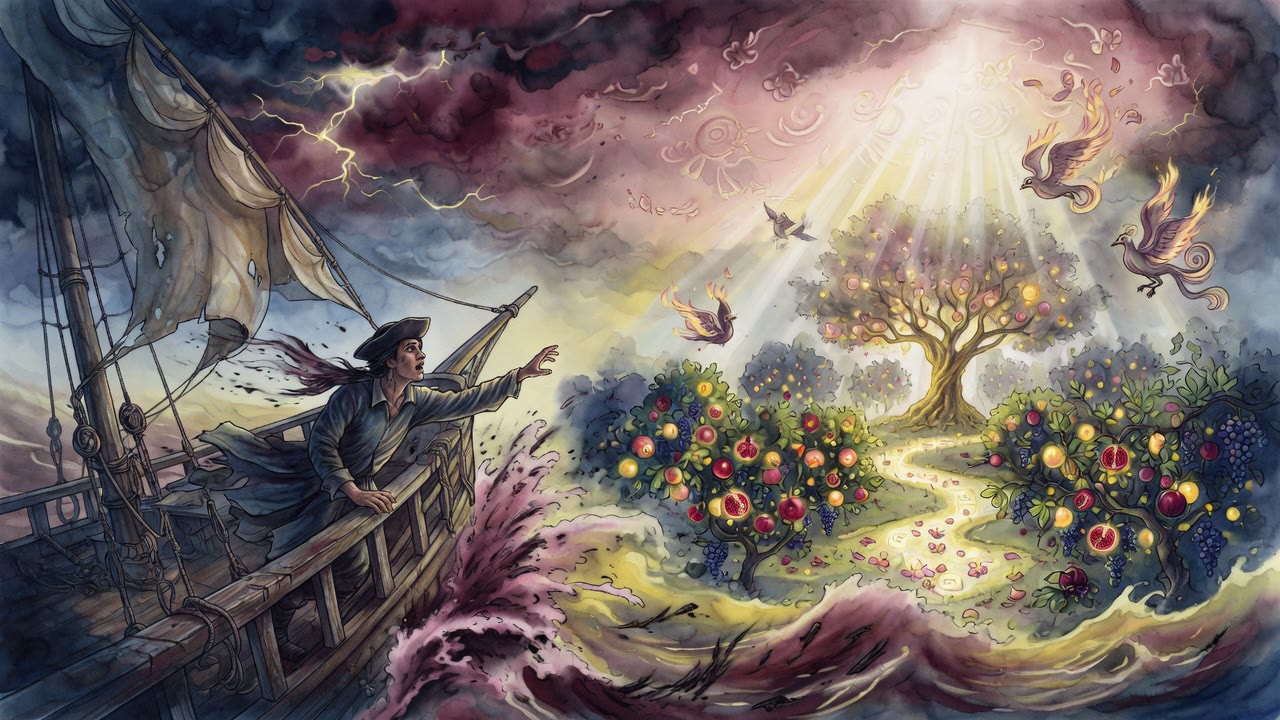
At the last turn before the gate an almond tree had blossomed, white along every black branch, before one leaf.

What He Said in the Doorway at Beit She'arim

Rabbi Yehuda HaNasi came out himself when he heard whose donkey stood in his courtyard.

"Why have we been privileged to see the radiant countenance of the rabbi today?" he said.

Rabbi Shimon set both hands on the staff. "The distant have become close," he said. "The close have become distant. Two have become three. And what makes peace between a man and his wife has ceased."

Nobody spoke. Rabbi Yehuda HaNasi looked at the staff planted between the old man's feet, the third leg, then at the eyes that no longer found what was near.

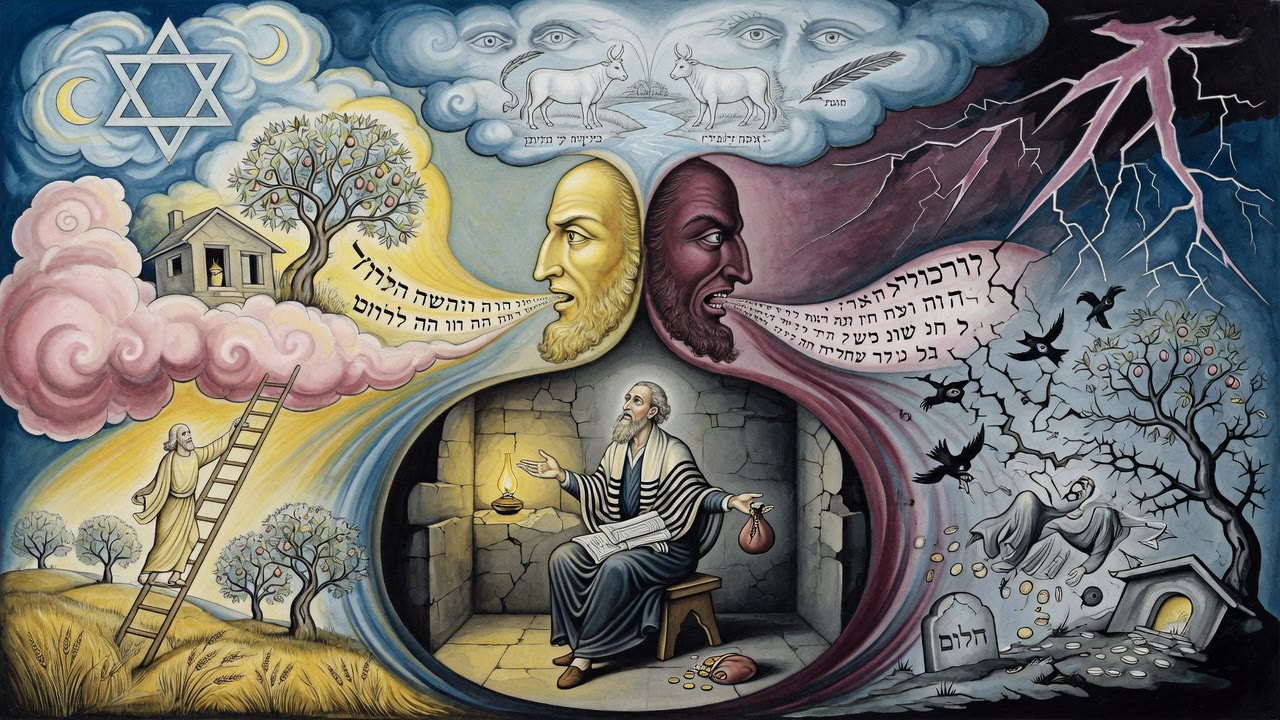
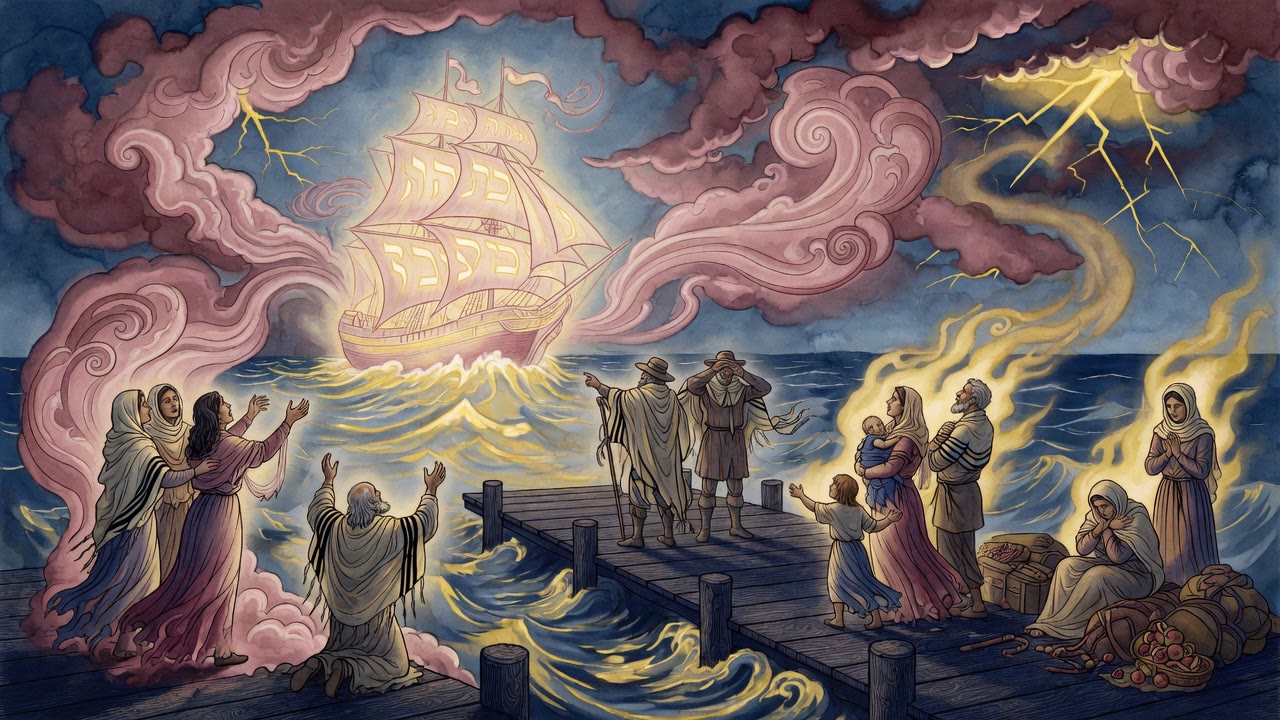
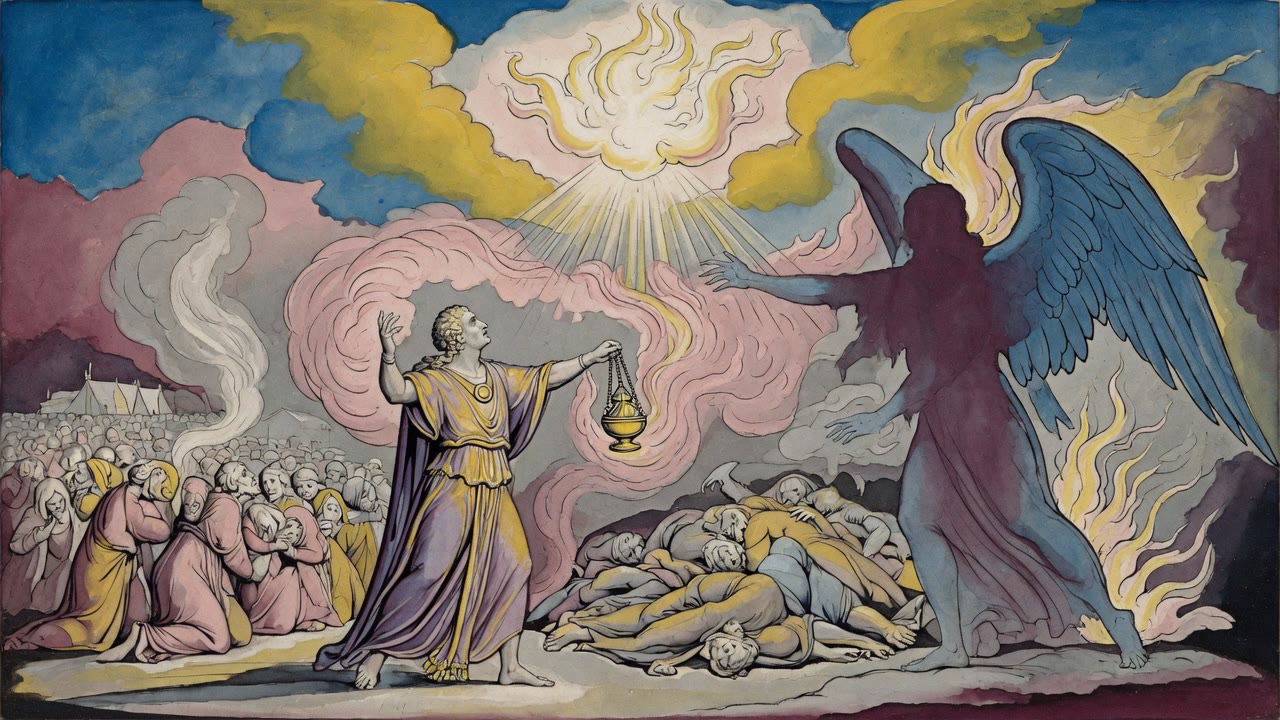
"There is a word I keep hearing on that road," Rabbi Shimon said. "Hevel. Breath. Steam off a pot. The king in Jerusalem wore it out. It is not a complaint. It is a banner, it belongs to the Angel of Death, and it stands at the end of every street. I have walked far enough down mine to read the stitching on it."

The Bone That Split the Anvil

Rabbi Yehuda HaNasi took his arm, brought him inside, poured wine, and answered him with Rabbi Yehoshua ben Hananya, who once stood in front of the emperor Hadrian and was asked a question no Roman had business asking.

"From where does a man blossom again?" Hadrian said.

Rabbi Yehoshua reached back and touched the top of his own spine. "From the little nut here. The luz."

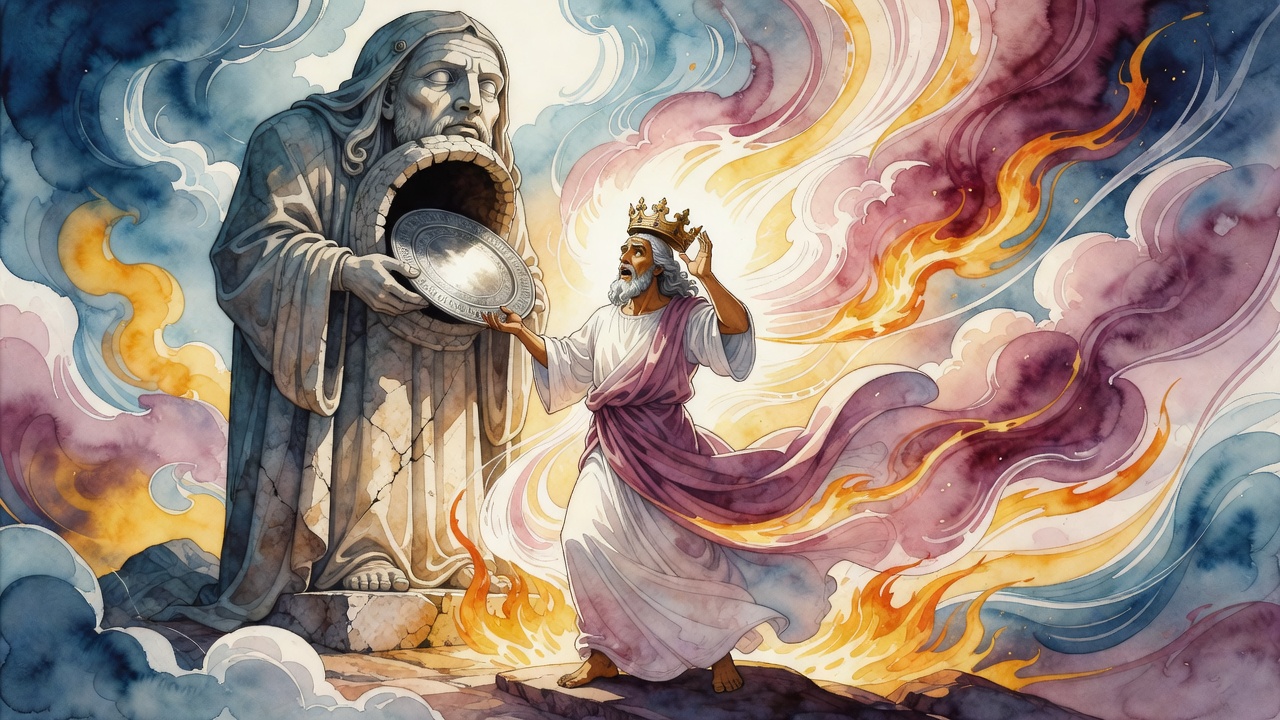
Hadrian wanted it proved. They soaked the bone and it did not soften. They put it in the fire and it came back out. A millstone turned over it and gave it up whole. Then they laid it on an anvil and a smith swung a hammer down with everything he had.

The anvil split. The hammer split. In the wreckage lay a bone the size of a nut, and nobody put out a hand for it.

"You passed a tree in blossom this morning," Rabbi Yehuda HaNasi said. "There is a smaller one at the top of your neck, and it has not started yet."

Six Hundred Thousand Before the Sun Went Down

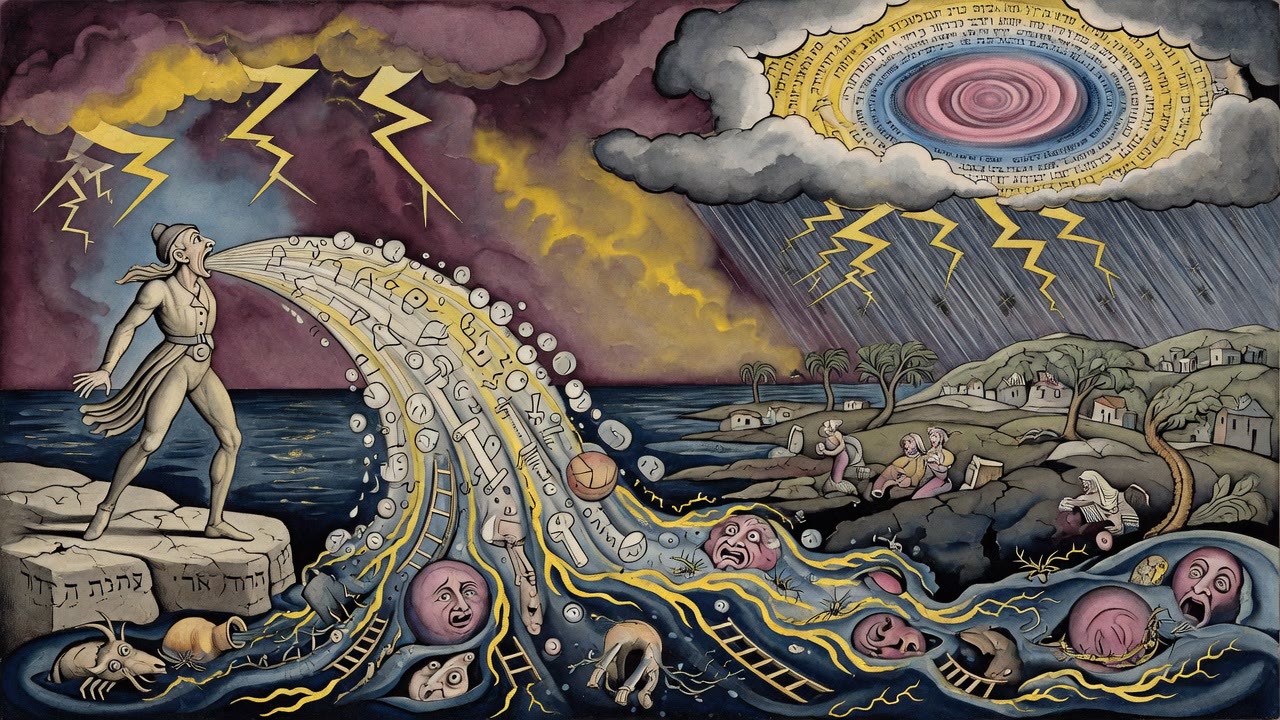
A young student in the corner took the pause. Not a day goes by, he said, without six hundred thousand born and six hundred thousand carried out, the count of the generation that fell in the wilderness. Between sunrise and sunset one generation goes and another comes up.

"Then the potter has it backwards," Rabbi Shimon said. "He loads his kiln and the first vessels in are the last ones out. Ours go in first and come out first."

Someone in the room said the name Yehuda bar Rabbi Hizkiya, worth remembering, and nobody there had thought of him in years. That was the terror under the arithmetic, not the dying but the quiet after it.

Each man goes to his eternal home, Rabbi Yehuda HaNasi said, not to the eternal home. And the righteous nobody remembers will be stood up and counted, and the Holy One will sit as though inside a circle, with them ranged around Him like the court in its half ring, no face hidden from any other. Then He will lead the dance Himself, and they will point at Him with their fingers, the way girls point over their timbrels, and sing that this is God, our God for ever and ever, who will lead us past death.

Rabbi Shimon went home at dusk with the student and the emptied donkey. The almond tree had dropped nothing yet. He walked under it and kept going, past the corner of the potter's wall where his border had been, and did not ask what was ahead.


← All myths
From the tradition

Sources

4 sources

The texts behind this telling. Some cards carry a translation of the source; others are our own retelling of it, and each card says which. Every card links out to the original.

Kohelet Rabbah 5:1Kohelet Rabbah

Retold in our words. Read the original at the link below.The Sefaria Midrash Rabbah, 2022 · CC-BY

Ecclesiastes, or Kohelet, as it’s known in Hebrew, explores these very feelings in its twelfth chapter. It paints a poignant picture of aging, and Kohelet Rabbah, a Midrashic (rabbinic interpretive commentary) commentary on Ecclesiastes, unpacks that picture with vivid detail.

Take the verse, “They will also fear heights, there will be obstacles on the way, the almond tree will blossom, the grasshopper will be burdened, the caper berry will fail. For the man goes to his eternal home, and the mourners will circle in the streets” (Ecclesiastes 12:5). It’s rich with imagery. But what does it mean?

Kohelet Rabbah breaks it down. "They will also fear heights"… Imagine an elderly person invited somewhere. According to the Midrash, they might respond, "Are there thorns there? Are there ascents there? Are there descents there?" They avoid anything that might be physically challenging. It's that growing awareness of our own fragility.

What about "There will be obstacles [ḥatḥatim] on the way?" Rabbi Abba bar Kahana and Rabbi Levi offer two interpretations. One says it’s the fear [ḥititei] itself that becomes the obstacle, creating indecision: "Shall I go, or shall I not go?" leading to ultimately staying home. The other suggests a shrinking world, marked by carefully defined boundaries: "Until this street I can go, but no further."

Then there's the fascinating image of "the almond tree will blossom." Rabbi Levi explains that this refers to a tiny, nut-sized bone at the top of the spinal column. This seemingly insignificant bone, some traditions hold, is the seed from which we will be resurrected.

The story goes that Hadrian, the Roman emperor – may his bones be crushed, and his name expunged! – challenged Rabbi Yehoshua ben Ḥananya on this very point. "From where does a person blossom in the future?" he asked. Rabbi Yehoshua pointed to this very bone. Hadrian, skeptical, demanded proof.

The Rabbi then brought him the bone and subjected it to a series of tests, as recorded in Kohelet Rabbah. He placed it in water – it didn't dissolve. He put it in fire – it didn't burn. He tried to grind it in a mill – it wouldn't break. Finally, he placed it on an anvil and struck it with a hammer. The anvil split, the hammer split, but the little bone remained intact. A powerful image of resilience and the enduring promise of rebirth.

"The grasshopper will be burdened" – that refers to weakening ankles. And "the caper berry will fail" – that, the Midrash explains, is the decline of desire that sustains peace between a man and his wife. It speaks to the intimate losses that come with age.

There’s a touching story here about Rabbi Shimon ben Ḥalafta, who used to visit Rabbi Yehuda HaNasi monthly. As Rabbi Shimon aged, the journey became too difficult. When he finally managed to visit, Rabbi Yehuda HaNasi remarked, "Why have we been privileged to see the radiant countenance of the rabbi today?" Rabbi Shimon replied, "The distant have become close, the close have become distant, two have become three, and what sustains peace has ceased." A beautiful, poetic way of describing the changes brought about by aging and distance.

Finally, "For the man goes to his eternal home." Notice it doesn’t say "the eternal home," but "his eternal home." Reish Lakish uses the analogy of a king entering a province with his entourage. They all enter through the same gate, but each occupies a place according to their status. Similarly, though all experience death, each individual has their own unique afterlife.

And "the mourners will circle in the streets" – these, the Midrash explains, are the worms. A stark, but honest reminder of our mortality.

So what does it all mean? Kohelet Rabbah, in its exploration of these verses, offers a profound meditation on aging, loss, and the enduring hope of renewal. It's a reminder that even in the face of decline, there is still resilience, still meaning, and still a unique place for each of us in the world to come. It urges us to consider our own "eternal home" and what we are doing to prepare for that journey. What is truly essential, and what can we let go of?

Full source
Kohelet Rabbah 7:1Kohelet Rabbah

Retold in our words. Read the original at the link below.The Sefaria Midrash Rabbah, 2022 · CC-BY

The ancient sages grappled with that feeling too, and they left us some pretty intense imagery to describe it.

Ecclesiastes, or Kohelet as it's known in Hebrew, is a book all about this kind of existential pondering. It's full of phrases like "vanity of vanities, all is vanity!" It’s a real party starter. But within that apparent bleakness, there's a lot of wisdom, if you know where to look.

One striking interpretation comes from Kohelet Rabbah, a collection of rabbinic commentary on Ecclesiastes. When Kohelet says, "I returned and saw vanity under the heavens," (Ecclesiastes 4:7) Kohelet Rabbah takes it to a rather… dramatic place. It declares that this phrase, this very sentiment, is actually the banner of the Angel of Death.

Whoa. Why the Angel of Death? What does it even mean to say that "vanity" is this angel's banner?

Think about what a banner represents. It's a symbol, a rallying cry, a visual representation of power and authority. So, if "vanity" is the Angel of Death's banner, it suggests that the fleeting, ultimately meaningless nature of earthly pursuits is the very force that gives death its power. It's the emptiness, the lack of lasting substance, that makes mortality so poignant.

It's a bleak thought, sure. But maybe, just maybe, it's also a wake-up call.

If the Angel of Death's power comes from our obsession with things that don't last, doesn't it stand to reason that we can diminish that power by focusing on what does? On things like connection, meaning, and acts of loving-kindness – things that transcend the fleeting nature of earthly existence.

Perhaps Kohelet Rabbah isn't trying to scare us. Maybe it's trying to shake us out of our complacency. To remind us that life is short, and that we have a choice: We can chase after the wind, or we can build something that truly endures. What will our banner be?

Full source
Kohelet Rabbah 11:1Kohelet Rabbah

Retold in our words. Read the original at the link below.The Sefaria Midrash Rabbah, 2022 · CC-BY

The verse in question, from (Ecclesiastes 1:11), states, "There is no memory of the former ones; and also of the latter ones, who will be, there will be no memory of them, among those who will be last." Pretty bleak. But as always with Jewish tradition, the richness lies in how we interpret these words.

Kohelet Rabbah, a classic midrashic (rabbinic interpretive commentary) collection (meaning, a collection of interpretations and stories based on the Hebrew Bible), dives deep into this verse. And the rabbis, as they so often do, offer multiple perspectives.

Rabbi Aḥa, for example, sees a connection to the generation of the Flood and the people of Sodom. "There is no memory of the former ones" – that's the generation wiped out by the Flood. "And also of the latter ones" – those wicked inhabitants of Sodom. And who will remember? According to Rabbi Acha, it will be Israel. "Among those who will be last" refers to Israel, as it is stated in (Numbers 2:31), "Last they will travel by their banners."

Then Rabbi Yudan, citing Rabbi Shimon Shekafa, offers a different take. "There is no memory of the former ones" – the Egyptians, who enslaved the Israelites. "And also of the latter ones" – the Amalekites, who attacked the Israelites from behind as they fled Egypt. Remember, we are commanded to "Expunge the memory of Amalek" (Deuteronomy 25:19). So again, memory, or lack thereof, is tied to specific historical actors and our relationship to them.

But here's where it gets really interesting. Even the miracles performed for Israel during the Exodus, those earth-shattering events, might fade in comparison to what’s coming. The text suggests that we will eventually say, "They will no longer say: 'As the Lord lives, who took the children of Israel up from the land of Egypt'" (Jeremiah 23:7). Instead, we’ll say, "'As the Lord lives, who took up and who brought the descendants of the house of Israel…from all the lands…'" (Jeremiah 23:8). The miracles of the future will eclipse even the Exodus!

And what about all those prophets, all those righteous individuals whose names history has forgotten? Rabbi Zeira points out that many worthy figures, like Yehuda bar Rabbi Ḥizkiya, deserve to be remembered. But in the future, the Holy One, blessed be He, will bring them forth. As (Zechariah 14:5) says, "The Lord my God will come, all the holy ones with You." They will be recognized and honored in the world to come.

Imagine this: Rabbi Avin, quoting Rabbi Shimon ben Yoḥai, pictures God sitting as though inside a circle, with the righteous gathered before Him. It's reminiscent of the Sanhedrin, the ancient Jewish court, arranged in a semi-circle so everyone could see each other. This image evokes a sense of intimacy and shared wisdom.

Then, in a truly beautiful and somewhat unexpected turn, Rabbi Berekhya, Rabbi Ḥelbo, Ula Beira’a, Rabbi Beivai, and Rabbi Elazar, in the name of Rabbi Ḥanina, say that God will lead the dance of the righteous in the future! They'll be dancing before Him, pointing and singing, "For this is God, our God for ever and ever, He will guide us beyond death [al mut]" (Psalms 48:15). The word almut is even linked to young women [alamot] playing timbrels, evoking joy and celebration. Some interpret al mut as "a world without death," or even "He will guide us in two worlds [olamot], in this world and in the World to Come."

So, what does it all mean? Perhaps the fear of being forgotten isn't about individual fame, but about participating in something larger than ourselves. It's about being part of a story that continues, a dance that never ends. Even if our individual names fade, our contributions to the collective good, to the ongoing story of redemption, will resonate in the world to come. And isn't that a comforting thought?

Full source
Kohelet Rabbah 4:1Kohelet Rabbah

Retold in our words. Read the original at the link below.The Sefaria Midrash Rabbah, 2022 · CC-BY

The book of Ecclesiastes, or Kohelet as it's known in Hebrew, certainly did. “One generation passes, and one generation comes; and the earth abides forever. The sun rises and the sun sets, and hastens to its place where it rises” (Ecclesiastes 1:4–5). A continuous flow of life and death, all under the watchful eye of the sun.

How continuous is it, really? That's where Kohelet Rabbah, a collection of rabbinic interpretations on Ecclesiastes, dives deeper. It's almost like the rabbis are sitting around a table, hashing out the finer points of the text, and we get to eavesdrop.

Rabbi Yudan, quoting Rabbi Levi, offers a rather startling thought. He says there isn't a single day where 600,000 people aren't born, and 600,000 people don't die. Every single day! Why this number? Because, as the verse states, “One generation passes, and one generation comes…the sun rises and the sun sets.” It's a constant renewal, a relentless cycle of beginnings and endings.

You might be thinking, "Six hundred thousand? Where does that number come from?" Well, the rabbis in Kohelet Rabbah tie it back to the generation that wandered in the desert. Remember them? The ones who doubted God after the Exodus? (Deuteronomy 1:35) refers to “this wicked generation,” and that generation numbered around 600,000 men of fighting age. So, in a way, each generation echoes that original, massive group.

Rabbi Berekhya, Rabbi Yaakov bar Avuna, and Rabbi Ḥiyya bar Abba, all quoting Rabbi Levi bar Sisi, take it a step further. They suggest that between sunrise and sunset, a whole generation passes away and a new one arrives. The entire cycle of life and death, compressed into a single day. It's a pretty concept.

Rabbi Berekhya then offers a fascinating analogy. He compares it to a potter placing vessels into a furnace. Usually, what goes in first comes out last. But here, in the grand scheme of life, the opposite is true. Those who pass away first are also the first to return, hinting at the concept of resurrection. It's a beautiful image of hope and renewal woven into the very fabric of existence.

So, what does it all mean? Perhaps it's a reminder of the preciousness and fleeting nature of life. A call to appreciate each moment, knowing that we are all part of this grand, continuous cycle. And maybe, just maybe, it offers a glimpse of hope, suggesting that even in death, there is a promise of return.

Full source