6 min read

Akavya Named Three Hard Things Before Sin

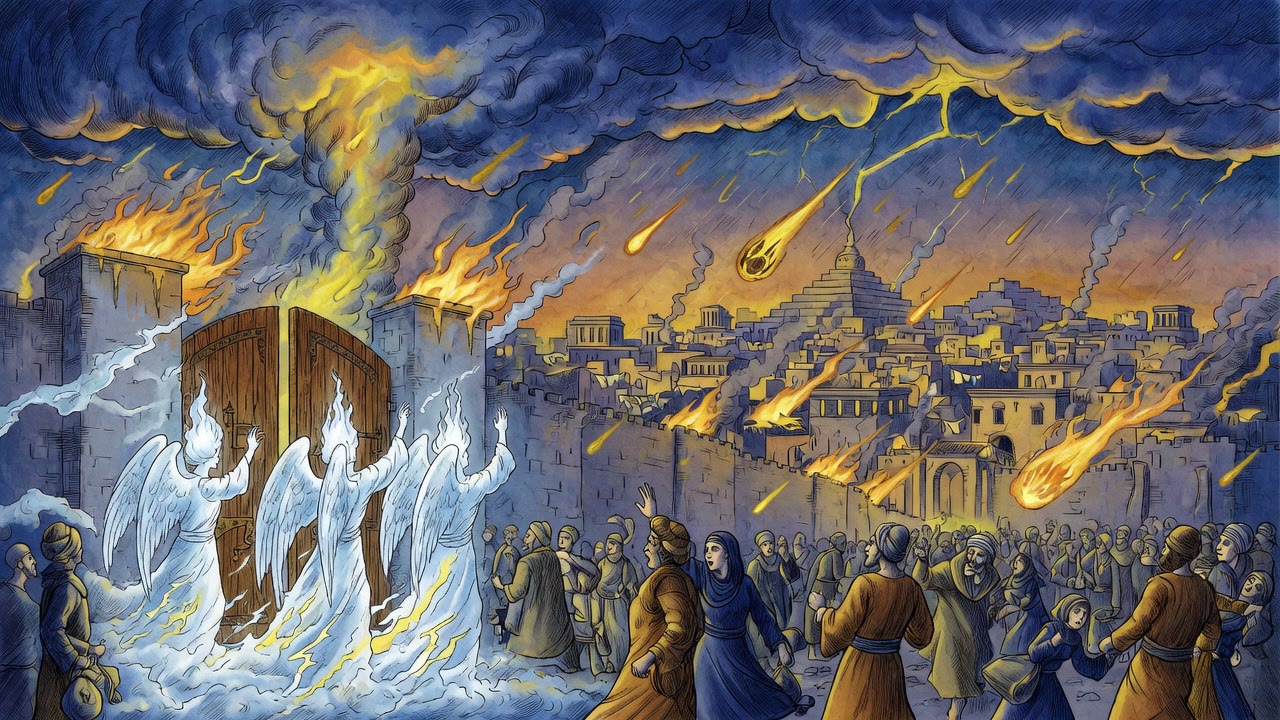
Akavya told his students to remember a putrid drop, the worms waiting ahead, and the King who will ask for a reckoning. Desire lost its grip for a moment.

Curated by Arthur · Told by Maggid ·
Table of Contents
  1. One Verse Held All Three
  2. The Bone That Would Not Break
  3. Rabbi Shimon Ben Halafta Stopped Climbing
  4. May a Man Question the King
  5. The Loaf Handed Back

Akavya ben Mahalalel did not raise his voice for it. He waited until the room went quiet, and then he set three things down on the table between his students and the door.
Akavya Named Three Hard Things Before Sin Click for full size

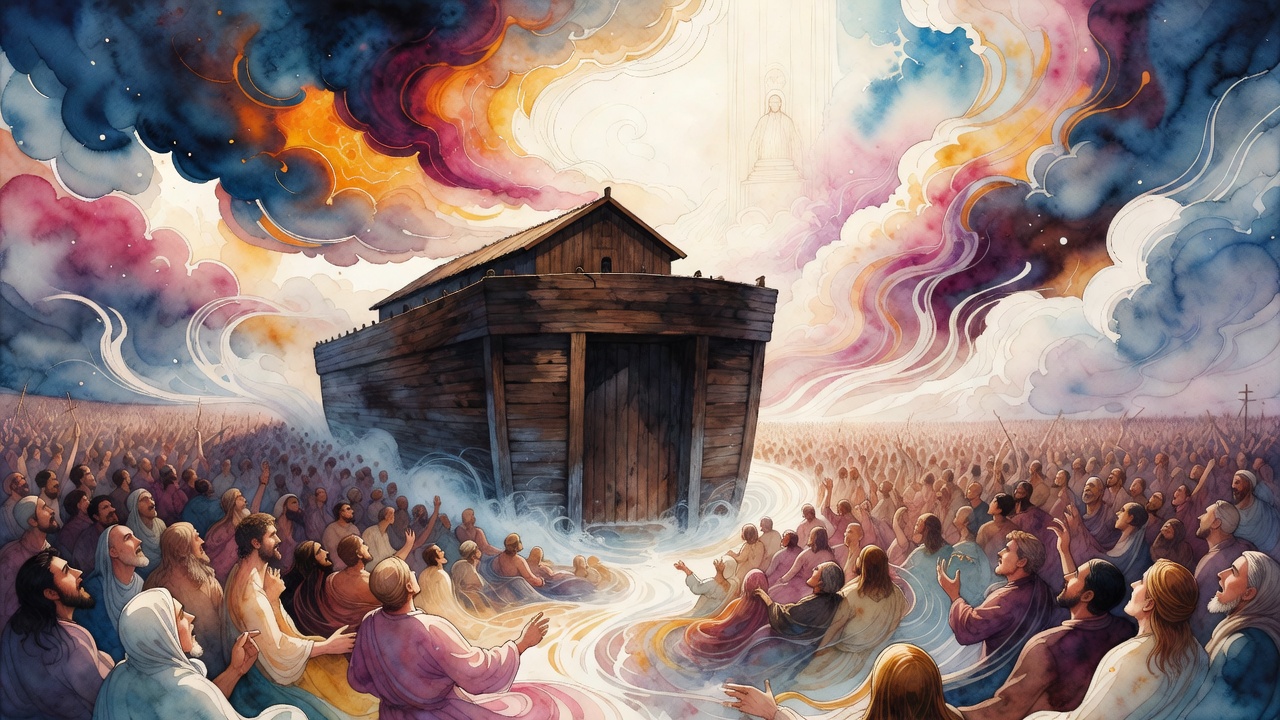
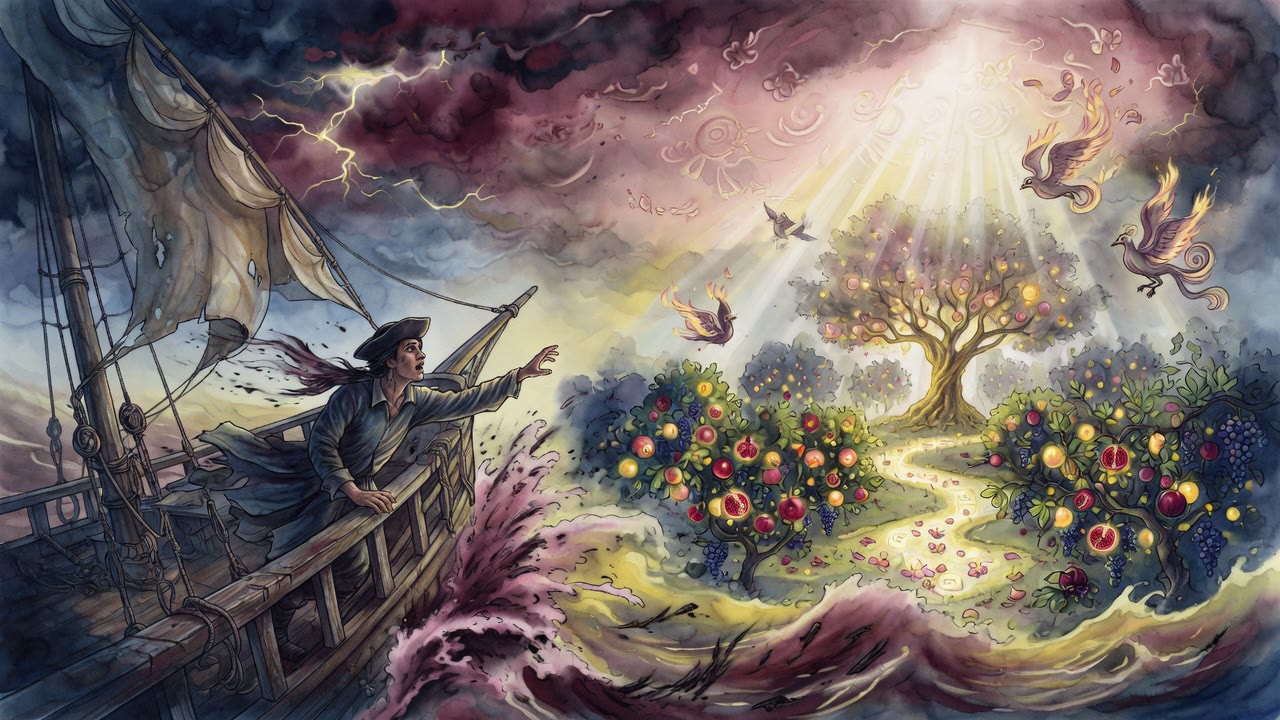
"Consider three matters and you will not come to sin. Know from where you came, from a putrid drop. Know where you are going, to dust, maggots and worms. Know before Whom you are destined to give a reckoning, before the King of kings, the Holy One, blessed be He."

A young man near the window had somewhere to be that evening and had been thinking about it since the morning. He looked down at his own hands as though somebody had just told him where they came from, which somebody had. Outside, a fruit seller kept calling a price that nobody was paying.

One Verse Held All Three

Rabbi Akiva had found the whole of it inside a single line, "Remember your Creator in the days of your youth" (Ecclesiastes 12:1). The word he leaned on was bore'ekha, the Creator. Turned one way it becomes be'erekha, a well, which is the drop a man came out of. Turned the other it becomes borekha, a pit, which is where the worms are. Left alone it is the King who will ask for the accounting.

The verse says the days of youth on purpose, because it is meant to arrive while a man still has his strength and can still be talked out of something. It lands on nobody in the evil days that come after.

The Bone That Would Not Break

The second matter sounds at first like an exit, since a man who is going to be worms has nothing much left to be threatened with. The emperor Hadrian thought so, and he put it to Rabbi Yehoshua ben Hananya as a challenge: from what will the Holy One make a man blossom again in the future?

"From the nut-sized bone at the top of the spine," Rabbi Yehoshua said.

"Prove it to me."

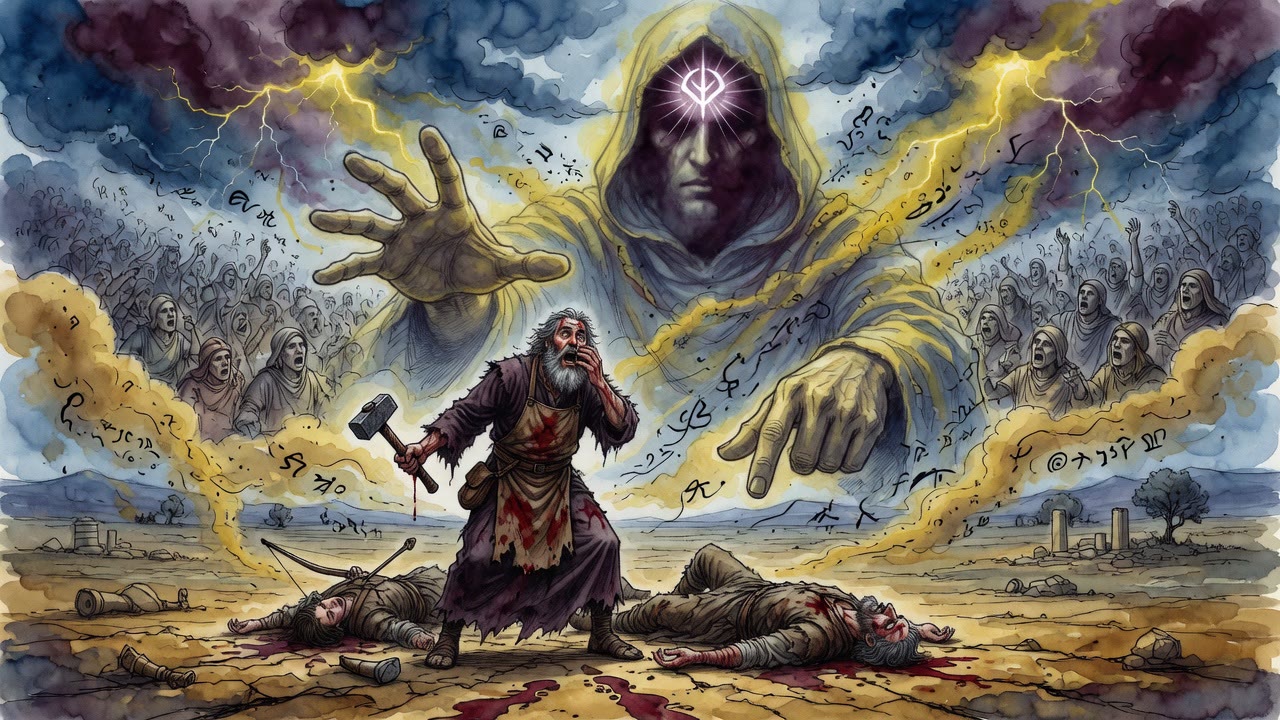
He sent for one and put it in water, and it did not dissolve. He ground it in a mill, and it came out whole. He put it in fire, and it would not burn. Then he laid it on an anvil and struck it with a hammer, and the anvil split and the hammer split, and the bone lay there in the wreckage of the iron without a mark on it.

So the grave is not a door out of the third matter. It is the waiting room.

Rabbi Shimon Ben Halafta Stopped Climbing

Every month for years Rabbi Shimon ben Halafta went up to greet Rabbi Yehuda HaNasi. Then the visits stopped, and when he finally came again he came slowly, and Rabbi Yehuda asked him what had been keeping him.

"The far have become near," he said, "and the near have become far. Two have become three. And the thing that kept peace in my house is finished."

The knees that guard the house had started to shake. The grinders had ceased because the teeth had dwindled, and it had gone dark at the windows where the eyes look out. When a bird chirped near his roof before dawn he sat straight up in the bed, certain that robbers had come for him.

None of that had been news to Akavya. He had said it while his students were still young enough to argue with it.

May a Man Question the King

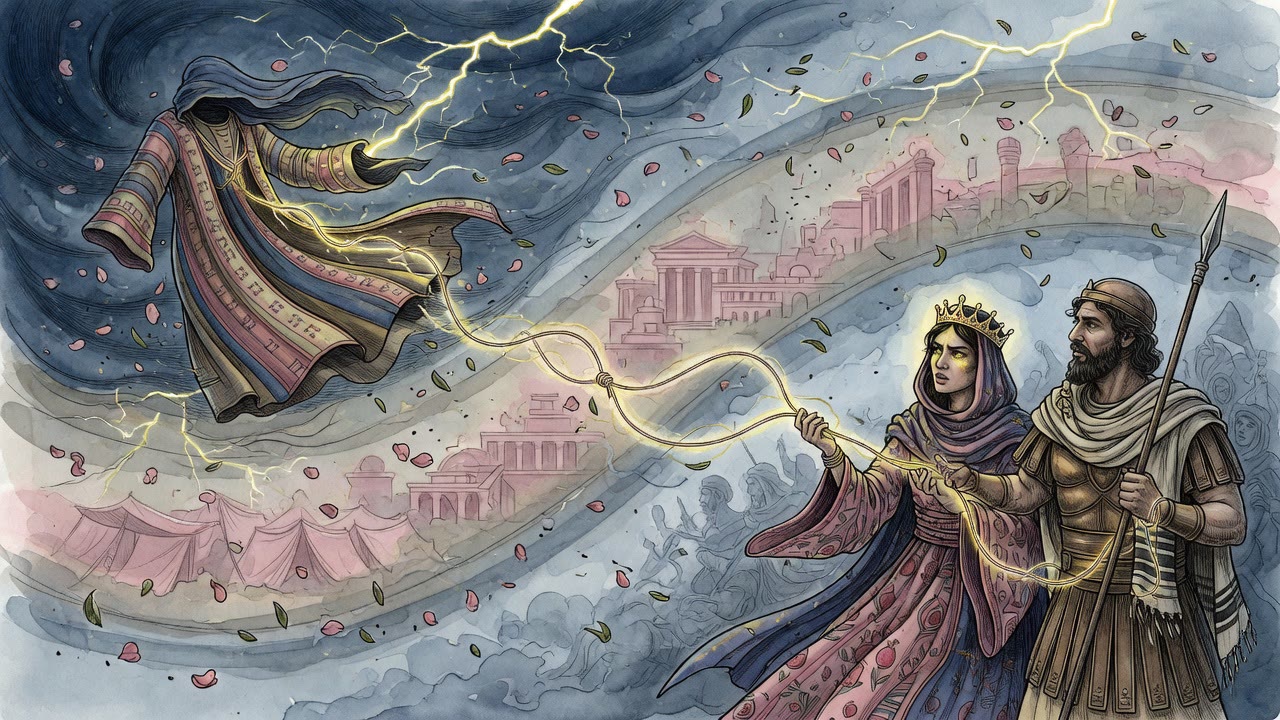
The third matter is the one people try hardest to get out from under, and the way out that Israel tried was to put the Judge on trial. "Master of the universe, did You not write in Your Torah, do not take vengeance and do not bear a grudge? But You take vengeance and You bear a grudge."

It is the complaint of a disciple whose teacher forbade him to lend at interest and who then watched the same teacher lend at interest. "Rabbi, for you it is permitted and for me it is forbidden?" The teacher answered that the disciple had only heard half the rule, since the ban was on lending to an Israelite and not on lending to a gentile, so the disciple had spent his outrage on something he had not understood.

God answered Israel the same way, that He does not bear a grudge against Israel, though He keeps one for the nations who came against them, and that the ban laid on them was a ban on taking vengeance against the members of their own people. Then the verse closes the argument the way a gate closes: "Since the king's word has power, and who will say to him, what are you doing?" (Ecclesiastes 8:4).

The Loaf Handed Back

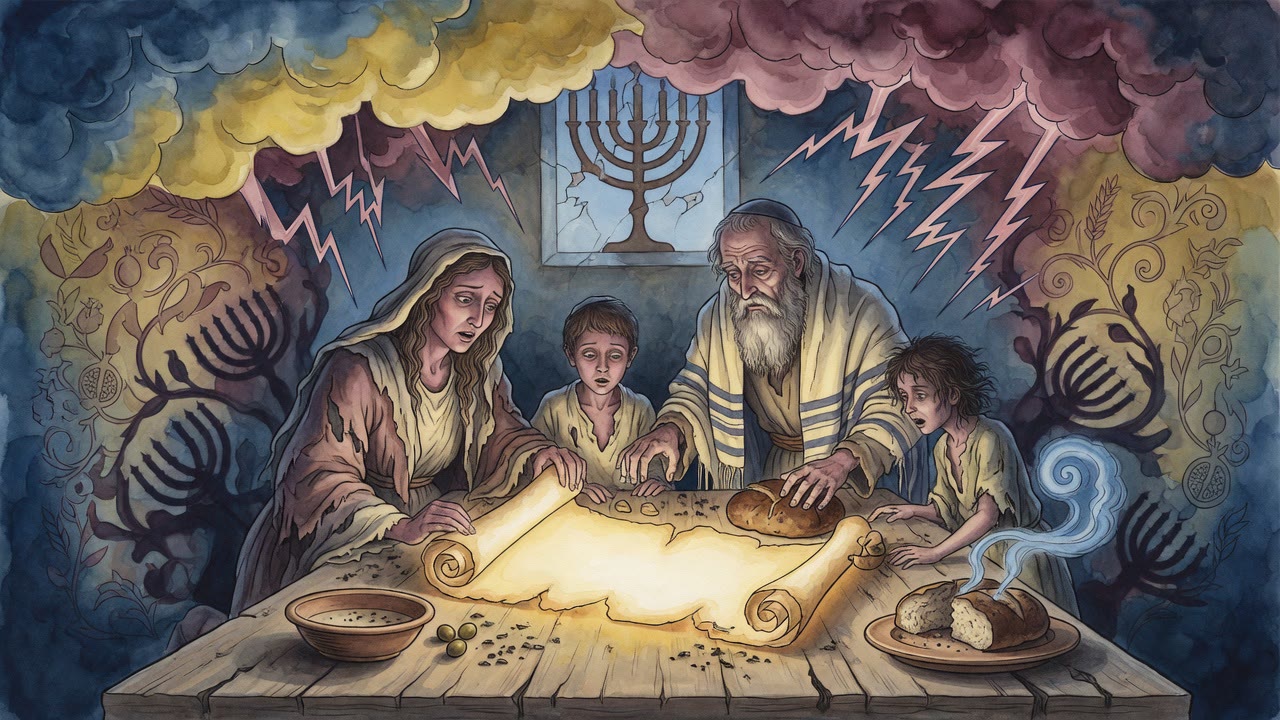
There was a priest who was scrupulous about ritual purity, and he handed a loaf of teruma bread to a priest who was not. "Look," he said. "I am pure, my house is pure, and the loaf I am giving you is pure. Give it back to me the way I gave it to you and all is well. If not, I will throw it down in front of you."

That is the reckoning Akavya meant. The soul was pure when it was handed over, the house it came from was pure, and it is coming back across the same counter.

The young man by the window sat through all of it and then got up when the others got up. He did not turn righteous on the stairs. He went out past the fruit seller and turned left, which was the longer way home, and he did not explain it to anybody.


← All myths
From the tradition

Sources

2 sources

The texts behind this telling. Some cards carry a translation of the source; others are our own retelling of it, and each card says which. Every card links out to the original.

Vayikra Rabbah 18:1Vayikra Rabbah

Retold in our words. Read the original at the link below.The Sefaria Midrash Rabbah, 2022 · CC-BY

In fact, they found some pretty profound answers hidden within the verses of the Torah.

We begin with a seemingly straightforward passage in Leviticus (15:2): "Speak to the children of Israel, and say to them: Any man, when he has a discharge from his flesh, his discharge is impure." What does this have to do with the big questions? Well, stick with me.

Vayikra Rabbah 18, a Midrash – a collection of rabbinic interpretations and stories – takes this verse as a springboard to contemplate life, death, and everything in between. It all starts with a quote from Ecclesiastes (12:1): “Remember your Creator in the days of your youth.”

The sage Akavya ben Mahalalel, in Mishna Avot (3:1), distills this idea into three sobering thoughts: "Consider three matters and you will not come to sin: Know from where you came – from a putrid drop; where you are going – to dust, maggots, and worms; and before Whom you are destined to give a reckoning – before the King of kings, the Holy One blessed be He." Cheerful. But there's a powerful message here.

What’s fascinating is how the rabbis then unpack this idea. Rabbi Abba bar Kahana, in the name of Rav Pappi, and Rabbi Yehoshua of Sikhnin, quoting Rabbi Levi, find all three of Akavya's points embedded within that single verse from Ecclesiastes! "Remember your Creator [bore’ekha]" – they cleverly interpret that as referencing "your well [be’erekha]", a putrid liquid. "Your pit [borekha]" becomes maggots and worms. And finally, "Your Creator [bore’ekha]" points to none other than the King of Kings, before whom we must give account. It's a brilliant piece of drash, of finding hidden meanings within the text.

The Midrash doesn't stop there. It continues to dissect Ecclesiastes, verse by verse, painting a vivid, and sometimes unsettling, picture of aging and mortality. “Before the sun, the light, [the moon, and the stars] will darken” (Ecclesiastes 12:2) becomes a meditation on the fading of our senses: the sun being one’s countenance, the light one's forehead, the moon the nose, and the stars, the cheekbones. It's a poignant reminder of the physical decline that awaits us all.

And it gets even more detailed. "On the day that the guards of the house will tremble.." (Ecclesiastes 12:3)? That's our knees giving way! "The valiant men will be bent?" Those are our ribs. The grinders ceasing? That's our stomach slowing down. It's a stark and unflinching look at the realities of growing old.

Even Hadrian, the Roman emperor (may his bones be crushed, as the text pointedly adds), gets in on the act. He asks Rabbi Yehoshua ben Ḥananya where the Holy One will cause man to blossom in the future, at the resurrection of the dead. The answer? From a tiny nut-sized bone attached to the spine. And to prove it, Rabbi Yehoshua demonstrates the bone's incredible resilience – it can't be dissolved, ground, burned, or even broken by a hammer and anvil! It's a powerful image of the enduring spark of life within us.

But amidst all this talk of decay and mortality, there's also a glimmer of hope. The Midrash assures us that "the eternal home" isn't just a single place, but "his eternal home" – meaning each righteous person has a world to himself. It's a beautiful analogy to a king entering a province with his entourage, each person accommodated according to their standing. Even in death, there's a sense of individual dignity and reward.

And what about the soul? Rabbi Abba son of Rav Pappi and Rabbi Yehoshua of Sikhnin, again in the name of Rabbi Levi, teach that for the first three days after death, the soul hovers over the body, hoping to return. But when it sees the face changing, it departs.

The Midrash returns to its starting point, the verse in Leviticus about bodily discharges. Why? Because all this – the aging, the decay, the eventual return to dust – is what awaits us if we don't "remember our Creator in the days of our youth." If we don't strive to live a life of purity and righteousness, we risk facing these afflictions in our old age.

So, what's the takeaway? Perhaps it’s this: Life is fleeting, our bodies are temporary vessels, and we will be held accountable for our actions. Remember where you came from, where you're going, and before Whom you stand. It's a sobering thought, but also a powerful motivation to live each day with intention and purpose. It’s a reminder to cherish the gift of life and strive to return the soul to its Creator as pure as it was when it was given to us. A challenging, but ultimately hopeful, message from our ancient sages.

Full source
Kohelet Rabbah 4:1Kohelet Rabbah

Retold in our words. Read the original at the link below.The Sefaria Midrash Rabbah, 2022 · CC-BY

The verse at the heart of it all is (Ecclesiastes 8:4): "Since the king's word has power, and who will say to him: What are you doing?" But what does this really mean? Rabbi Bon, in Kohelet Rabbah, uses this verse to explore a complex theological question: If God sets rules, why does it sometimes seem like He doesn't follow them Himself? We're commanded "Do not take vengeance and do not bear a grudge" (Leviticus 19:18), but then we read "The Lord is a zealous and vengeful God" (Nahum 1:2). Contradictory. The rabbis use an analogy to make sense of this apparent paradox. Imagine a rabbi instructing his disciple: "Don’t pervert justice," but then the rabbi himself does. "Don’t show favoritism," yet the rabbi grants it. A parallel story in Bereshit Rabbah (55:3) adds: The rabbi forbids lending with interest, but then lends with interest himself! The student, understandably confused, asks, "Rabbi, is it permitted for you but forbidden for me?"

The rabbi explains, "I only meant you cannot lend to another Israelite with interest, but you can lend to a gentile, as it is written: 'You may take interest from a gentile' (Deuteronomy 23:21)."

The point? The disciple didn’t fully understand the nuances and the context of the rabbi's actions. He saw only the surface level.

Let’s bring this back to the big picture. According to this midrash (rabbinic interpretive commentary), Israel challenges God in much the same way. "Master of the Universe," they say, "didn't you write in Your Torah, 'Do not take vengeance and do not bear a grudge?' Yet, You take vengeance and bear a grudge!"

God's response, according to Kohelet Rabbah, is illuminating. He says, "I will not bear a grudge against Israel, as it is written: 'He will not contend to eternity or forever bear a grudge' (Psalms 103:9). However, for the nations of the world: 'The Lord is vengeful to His foes and bears a grudge against His enemies' (Nahum 1:2)." He further clarifies, "I dictated to you in My Torah: 'Do not take vengeance and do not bear a grudge against the members of your people' (Leviticus 19:18), but you may take vengeance against the nations of the world, as it is stated: 'Avenge the children of Israel [on the Midianites]' (Numbers 31:2)."

And here's where we loop back to our original verse. "Since the king's word has power, and who will say to him: What are you doing?" It isn't necessarily about a double standard. It’s about the complexities of divine justice and the limitations of human understanding. God's actions operate on a plane we can't always fully grasp.

So, what does this all mean for us? Perhaps it's a call for humility. To recognize that we may not always see the full picture. It's an invitation to trust in a higher wisdom, even when things seem contradictory or unfair. It's a reminder that justice, like a story, has many threads, and we may only see a few at a time. And maybe, just maybe, that perceived double standard is really just a matter of perspective.

Full source