6 min read

Moses Withheld Simeon's Blessing and Hid It Inside Judah

Moses blessed eleven tribes and skipped Simeon, then buried Simeon's blessing inside Judah's so no one would hear the name spoken.

Curated by Arthur · Told by Maggid ·
Table of Contents
  1. The Camp Counts the Names and Finds One Missing
  2. Moses Remembers the Tents at Shittim
  3. The Brothers Who Drank from One Cup
  4. The Blessing Folded Inside Another

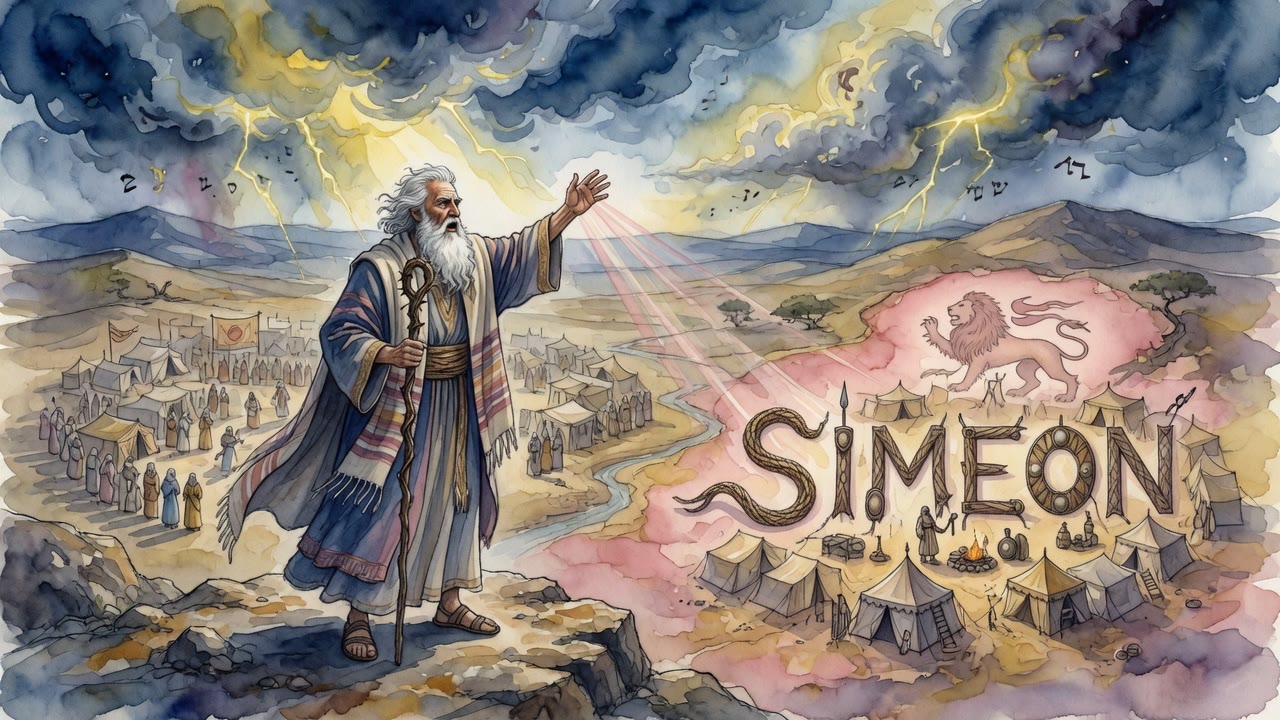
The old man's voice carried down the slope of Moab, and the tribes leaned in to catch their names. Moses was dying, and everyone in the camp knew it. He had climbed down from the tent with the lamplight still in his eyes, and now he stood with the river behind him and the people spread out before him like grain, and he began to bless them tribe by tribe, the way a father empties his hands over his children before he goes.

Reuben first. Then Judah. Then Levi. The names came out of him slow and weighted, each one a door swinging open onto a future none of them had walked yet. Zebulun in his tents. Issachar at his books. Gad like a lion tearing the arm and the crown of the head. Dan a lion's whelp leaping from Bashan. The crowd swayed with it. Mothers held their sons by the shoulders so the words would land on them too.

The Camp Counts the Names and Finds One Missing

A man near the front began counting on his fingers. He had a habit of it. Reuben, one. Judah, two. Levi, three. Benjamin. Joseph. Zebulun. Issachar. Gad. Dan. Naphtali. Asher. He reached eleven and stopped, and his fingers hung in the air with nothing left to fold.

Where was Simeon?

The man looked left and right. The Simeonites stood off to one side, a hard knot of faces gone pale in the morning light, waiting for the syllable that would carry their name up to heaven the way every other name had gone. The old man's lips kept moving. Naphtali, satisfied with favor. Asher, dipping his foot in oil. The blessing rolled on past them and did not stop. Moses spoke Joseph's name with tears in it. He did not speak theirs at all.

The silence where Simeon should have been was louder than any of the curses the people had heard at the foot of the mountain. A curse, at least, names you. This did not name them. The old man who had spent forty years arguing with heaven on their behalf, who had thrown himself down to stop a fire and a plague, who had begged forgiveness out of God's own clenched hand, had reached the second son of Jacob and gone quiet.

Moses Remembers the Tents at Shittim

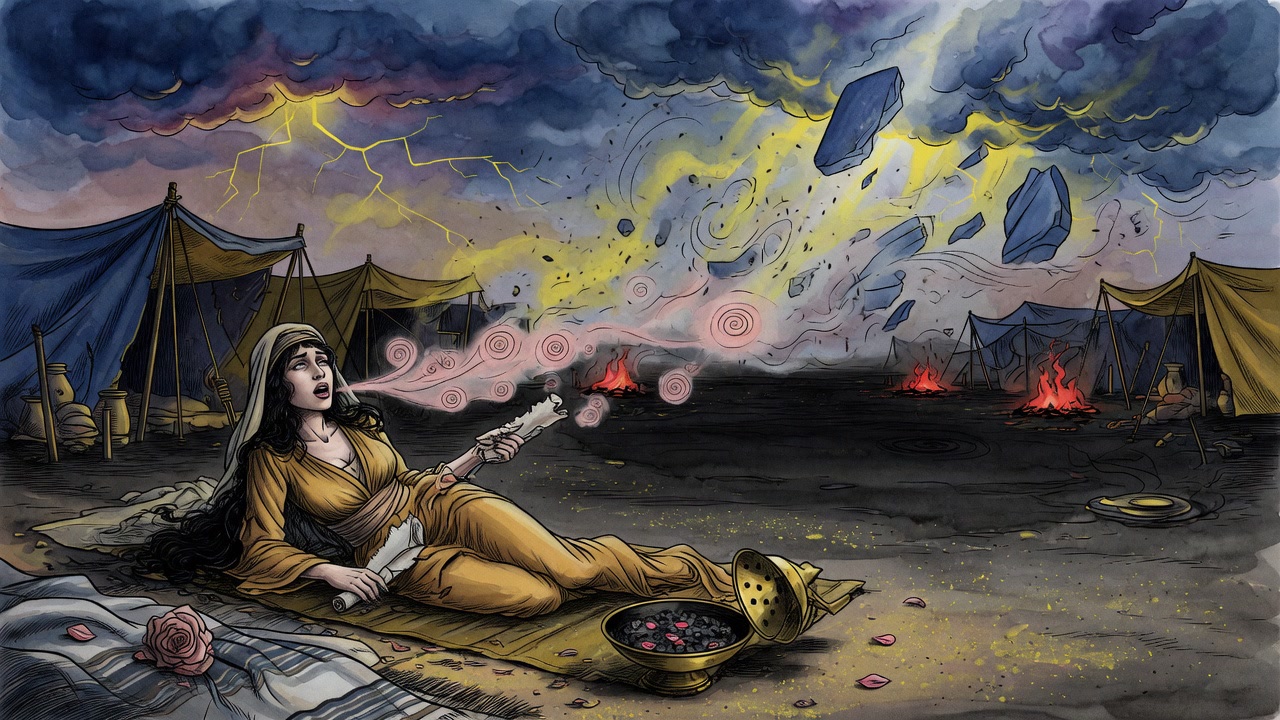
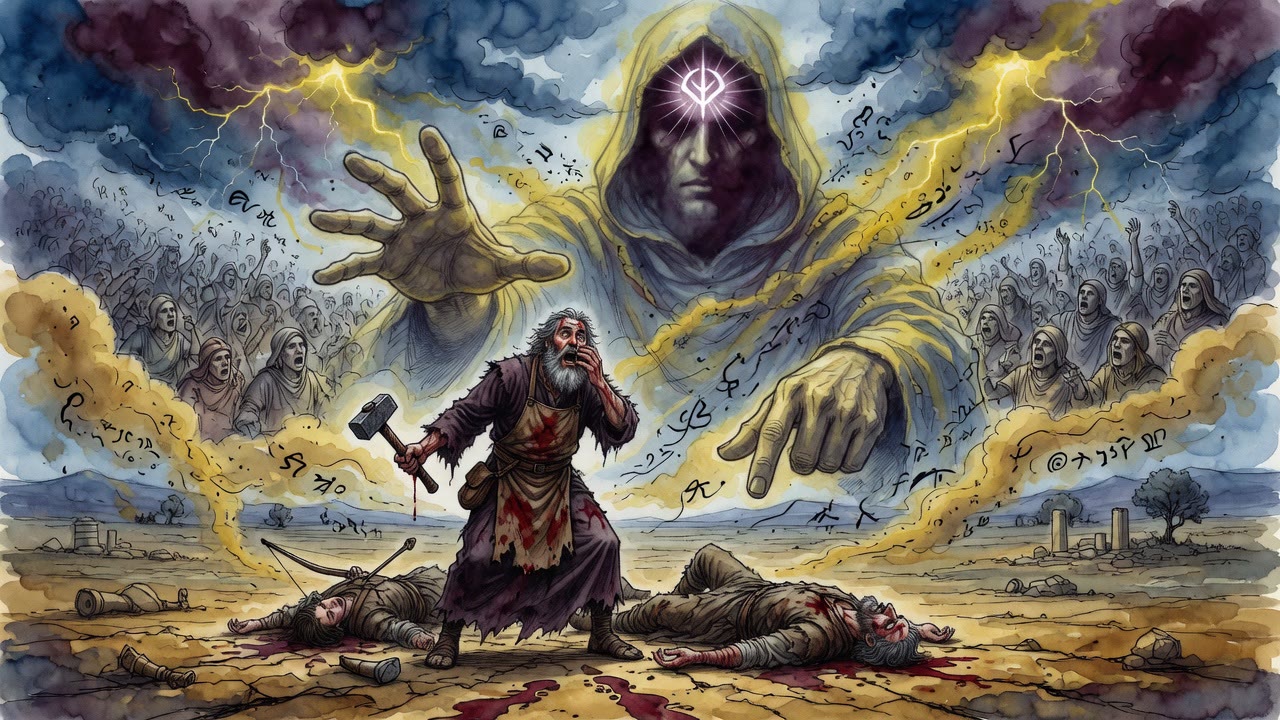
It was not forgetfulness. Moses could not forget. Behind his eyes the camp at Shittim was still burning.

He could still see it. The men slipping out at dusk toward the Moabite tents. The women waiting with their wine and their bright cloth and their invitations to bow before another god. He had watched it spread like fire in dry brush, watched Israel give itself away for a night, and then he had watched the plague come down the rows of tents and take twenty-four thousand of them before Phinehas drove a spear through the worst of it and the dying stopped (Numbers 25:9).

And when the counting was done, when the dead were sorted tribe by tribe, the numbers from Simeon had not been a portion. They had been a flood. The Simeonites had not been swept along at the back of the sin. They had stood at the front of it, leading the others down into the tents. Moses had bound up that grief and carried it across the wilderness, and now, at the very end, with the blessing in his mouth, he could not make himself lift it onto their heads.

The Brothers Who Drank from One Cup

He had blessed Levi only a breath before. That was the wound inside the wound. Levi and Simeon were a matched pair, two sons cut from one cloth, two swords that had once gone out together. Moses remembered why.

Years before any of them were born, the two brothers had walked into Shechem with their blades hidden and put every man in the city to the ground while those men still lay weak from the knife of their own circumcision, payment for what one of them had done to their sister Dinah (Genesis 34:25). Simeon and Levi, the same fury, the same hand that struck first and counted the cost long after. They had drunk from one cup of violence.

But Levi had turned the blade. When Israel danced around the golden calf, the sons of Levi were the ones who came back to the right side and stood with Moses, and the priesthood was their reward. Simeon kept the old fire and carried it into the Moabite tents. Two brothers, one cup, and only one of them had set it down. So Levi received a blessing thick with priestly things, and Simeon stood in the crowd and received the worst thing a father can give a son, which is nothing at all.

The Blessing Folded Inside Another

The old man came to Judah, and here his voice changed. He was no longer only blessing the lion of the tribes, the root from which a king named David would one day rise. He was hiding something inside the words.

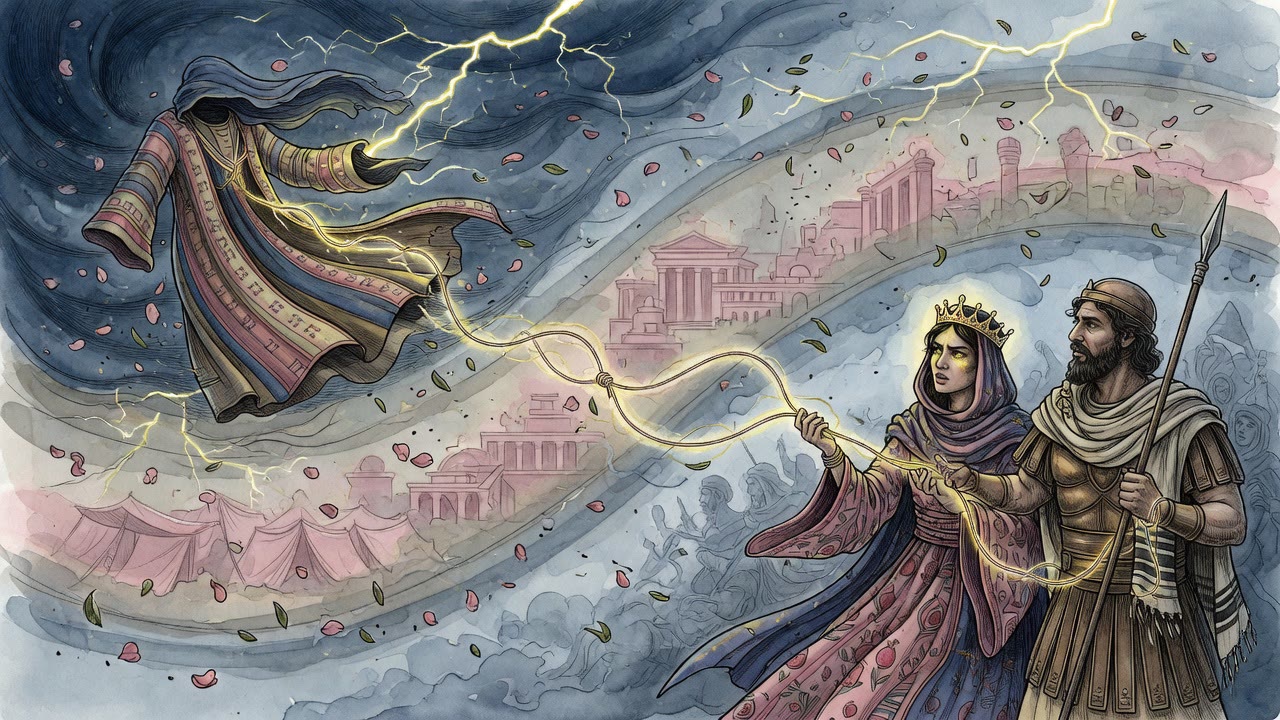
"Hear, Lord, his voice," Moses prayed over Judah, and he was looking past the morning, past the river, into a day when a shepherd boy would walk out alone toward a giant taller than any man in the camp, and he asked that David's hands be enough for him in that hour and that he be brought home in peace (Deuteronomy 33:7). But folded into that same petition, so quietly that the Simeonites in the crowd never caught it, was their own rescue. Let Judah's voice be heard, Moses prayed, every time Judah cries out for Simeon in his distress. Let the lost tribe live inside the land of the lion, its inheritance carved out of Judah's own portion, fed by Judah's prayers.

He would not say the name aloud. The wound at Shittim was too fresh in his mouth for that. So he did the only thing a dying father could do for a son he could not bless and would not abandon. He hid the blessing where it would be safe, inside the blessing of the brother strong enough to carry it, and he climbed the mountain and died with the secret kept.


← All myths
From the tradition

Sources

3 sources

The texts this telling draws on, in full. Open a card to read inline, or expand it for a wider, quieter read.

Targum Jonathan on Deuteronomy 33Targum Jonathan

The Blessing of Moses in (Deuteronomy 33) gets the full Targum treatment, every tribe's destiny expanded, every blessing loaded with specifics the Torah never mentions. It opens with the Sinai revelation reimagined: God first offered the Torah to the sons of Esau at Gebal, "but they received it not." Then to the sons of Ishmael at Mount Paran, "but they received it not." Only then did He reveal it to Israel, accompanied by "ten thousand times ten thousand holy angels" and "forty and two thousand chariots of fire." That is 100 million angels and 42,000 flaming chariots. The Torah says "ten thousands of holy ones." The Targum multiplied.

Reuben's blessing adds an afterlife: "Let Reuben live in this world, nor die the second death which the wicked die in the world to come." Two deaths, physical and spiritual, are now part of the covenant vocabulary. Judah's blessing is combined with Simeon's, and Levi's blessing names specific figures: "the oblation of the hand of Elijah the priest, which he will offer on Mount Karmela," and prays to "break the loins of Ahab his enemy."

Joseph's blessing explains why his tribe cannot be enslaved: "as it may not be that a man should work the ground with the firstling of his herd, so are not the children of Joseph to be reduced to servitude among the kingdoms." The firstborn is exempt from labor, and so is Joseph's line. Specific military victories are prophesied, "Myriads will be slain in Gulgela by Hoshea bar Nun" and "thousands of the Midianites by Gideon bar Yoash."

Zebulon's tribe discovers treasures from the sea, "the shell-fish and dye with its blood in purple the threads of their vestments; and from the sands make mirrors and vessels of glass." Gad's territory holds Moses' hidden burial place, "for there is the place where Mosheh the prophet is hidden, who will go in and out in the world that cometh." Moses leads Israel in this world and will lead again in the next. The closing verse declares: "There is no God like the God of Israel, whose Shekinah (the Divine Presence) and Chariot dwell in the heavens."

Full source
Legends of the Jews 7:35Legends of the Jews

Remember the story of the daughters of Moab? It's a troubling episode in the Torah where the Israelites succumbed to temptation and idolatry (Numbers 25). According to the biblical narrative, the men of Israel began to have sexual relations with Moabite women, who then invited them to sacrifices to their gods. This led to a plague sent by God, which was only stopped by Phinehas's zealous act.

Moses, it seems, just couldn't let go of Simeon's involvement in this dark chapter. So, when it came time for the final blessings, as recorded in Deuteronomy 33, Simeon was. conspicuously absent. No specific blessing was given. Ouch.

Here's the thing. According to Legends of the Jews, as retold by Ginzberg, Simeon wasn't entirely forgotten. Moses, in a roundabout way, included them in his blessing for Judah. He prayed that God would hear Judah's voice whenever they prayed for Simeon, especially when they were in distress. And he asked that they would have their inheritance in the Holy Land beside Judah. It’s a bit like saying, "I'm not blessing you directly, but I hope your neighbor helps you out."

So, why this near-omission? The text highlights a connection between Simeon and Levi. "Simeon and Levi 'drank out of the same cup,'" the verse says, meaning they shared a similar nature or destiny. Both tribes were known for their fierce actions, particularly their revenge against the people of Shechem for the rape of their sister Dinah (Genesis 34). They acted together.

But here's where their paths diverged. Levi, eventually, made amends. The tribe of Levi, in their zeal for God, took action against those who worshipped the Golden Calf. It was a Levite, Phinehas, who slew the wicked prince of Simeon and his Midianite mistress, Cozbi. This act, rooted in religious zealotry, actually atoned for the earlier violence in the eyes of God. Levi's actions redeemed them.

As a result, Moses praised and blessed the tribe of Levi. Simeon, however, "added another new one," another sin on top of the old one. As Legends of the Jews emphasizes, Simeon didn’t learn from the past. Because of this, they didn’t earn a blessing.

It’s a powerful reminder: our actions have consequences, not just for ourselves but for generations. And sometimes, even when we think we've been forgotten, a glimmer of hope can still shine through, even if it’s just through the kindness of a neighbor. Maybe that’s enough.

Full source
Legends of the Jews 7:33Legends of the Jews

Legends of the Jews turns to Moses's Prayer Shapes the Military Destiny of Judah.

Moses, even as he shepherded the Israelites, was already praying for future generations. Specifically, he prayed for Judah. Judah, was more than just a tribe; it was the seed from which the Davidic dynasty would sprout. This dynasty, of course, would eventually give rise to the kings of Israel.

So, what exactly did Moses pray for? He foresaw a time when David, king of Israel, would stand in need. And in that moment, Moses pleaded, "Hear, Lord, his voice, and Thou shalt be an help against his adversaries; bring him then back to his people in peace." Imagine the weight of that prayer! He wasn't just asking for divine assistance; he was asking for David's safe return, his ultimate victory.

It didn't stop there. Moses knew that David would face seemingly insurmountable odds, like when he stood alone against the giant Goliath. In that impossible moment, Moses prayed, "Let his hands be sufficient for him, and Thou shalt be an help against his adversaries." It's a prayer for strength, for courage, for the ability to overcome the impossible.

But why focus so intently on Judah? The tribe's primary weapon was the bow. So Moses also prayed that God would stand by the tribe of Judah, that their “hands might be sufficient,” that they might vigorously and with good aim speed the arrow.

This image of Moses, praying for generations to come, is profoundly moving. It speaks to the interconnectedness of time, the enduring power of faith, and the idea that our actions today can ripple through eternity. It makes you wonder, doesn't it? What kind of legacy are we building with our own prayers, our own actions? What seeds are we sowing for the future?

Full source