Parshat Bereshit5 min read

Lamech Killed After Cain Had Warned the World

Cain murdered before anyone knew what murder was. Lamech killed after Cain had become the warning, and that made the blood heavier.

Curated by Arthur · Told by Maggid ·
Table of Contents
  1. Cain Learned Death by Making It
  2. The Mark Became a Warning
  3. Lamech Counted Higher Than Seven
  4. The Later Killer Knew Better

Cain struck before the world knew what murder looked like.
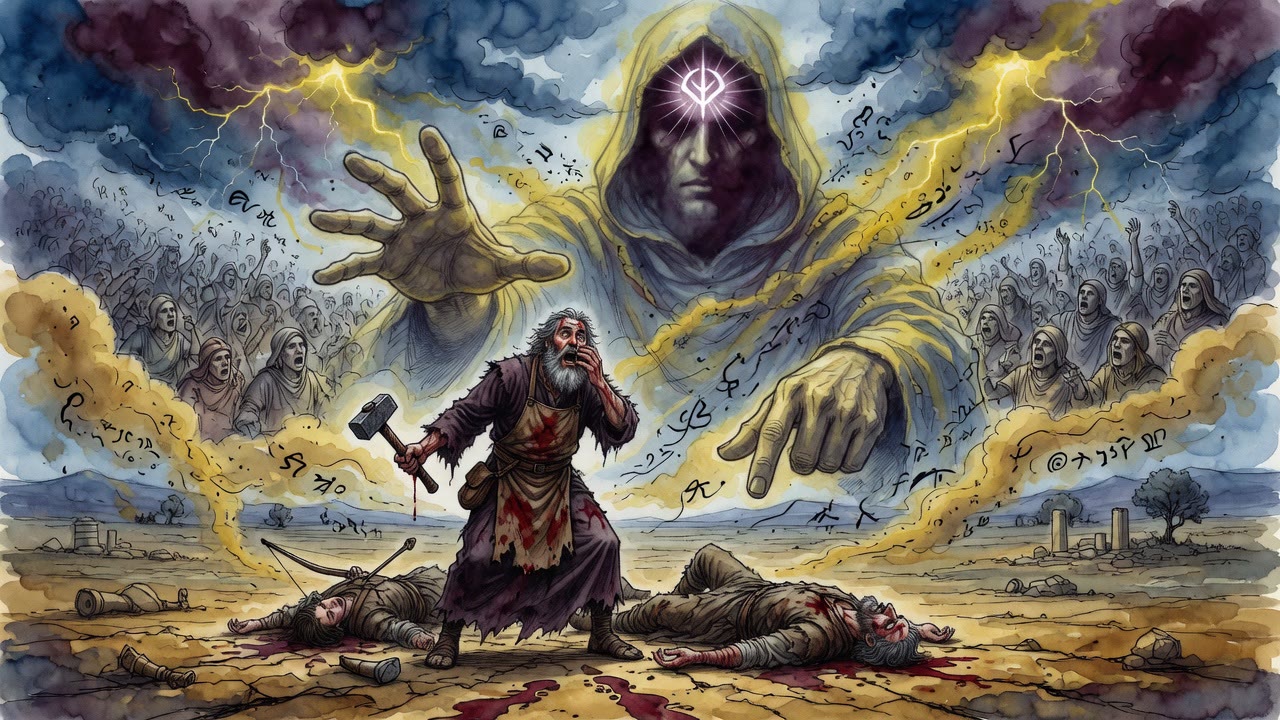
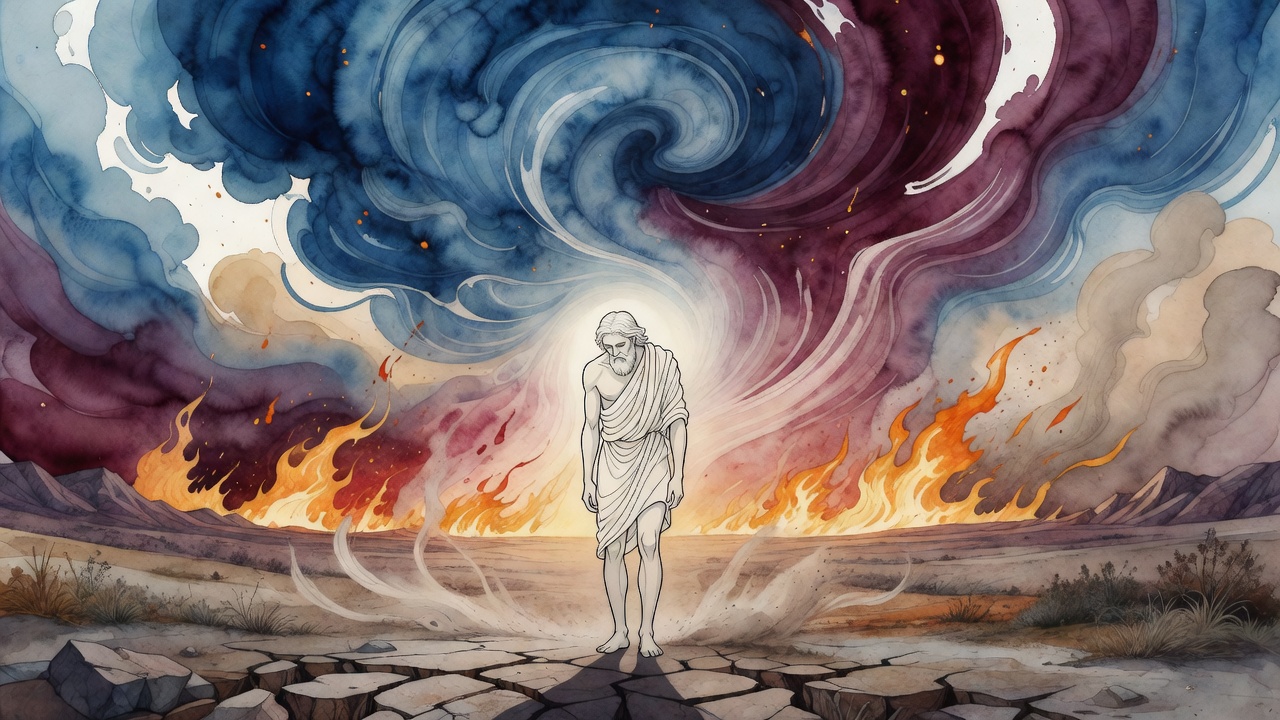
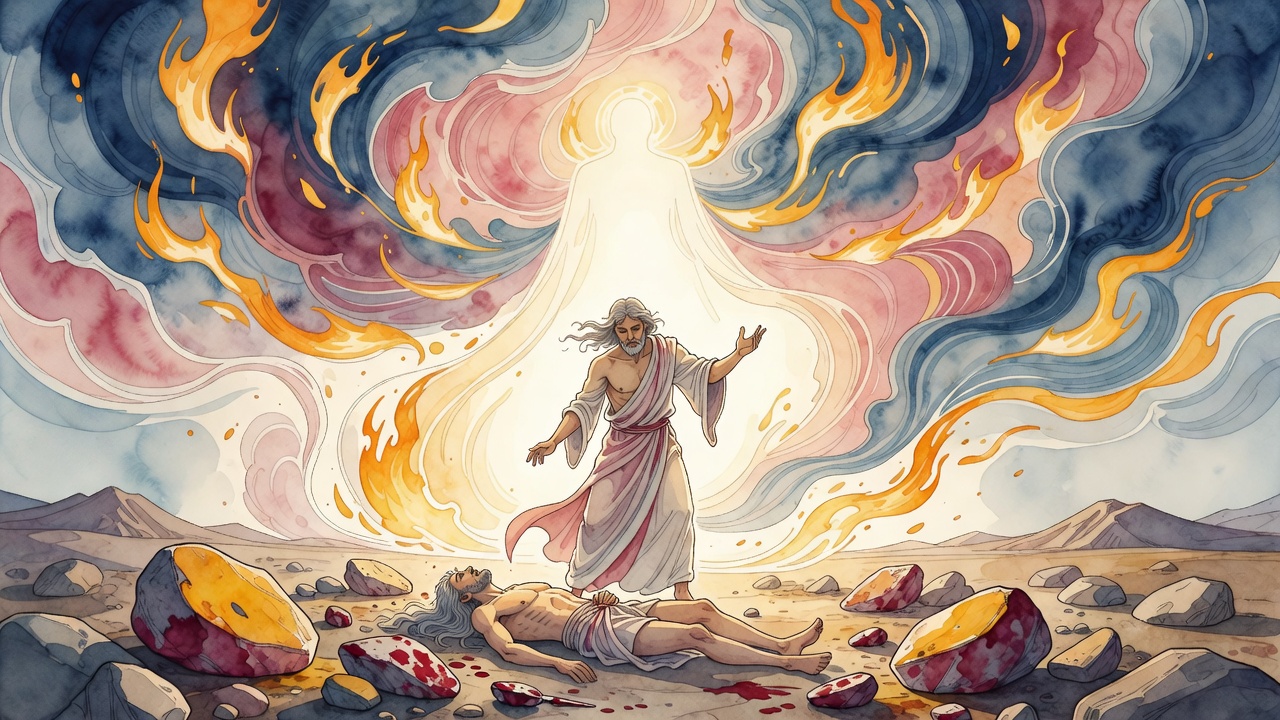
There had been no corpse before Abel. No grave. No old story told at night about a brother who raised his hand and made a family incomplete forever. Cain discovered death by doing it. The first blood on the ground had no precedent.

Lamech had no such shelter.

Cain Learned Death by Making It

Cain did not know where the fatal place in a body was. He struck Abel again and again, stone after stone, until one blow found the neck and life went out. The ignorance does not make him innocent. Abel was still dead. The field still drank his blood. God still came asking the question Cain could not bear: "where is your brother?"

But the first murder had a terrible confusion inside it. Cain had never seen a man die. He could envy, rage, wound, and strike, but he could not measure the full shape of what he was bringing into the world until Abel no longer answered.

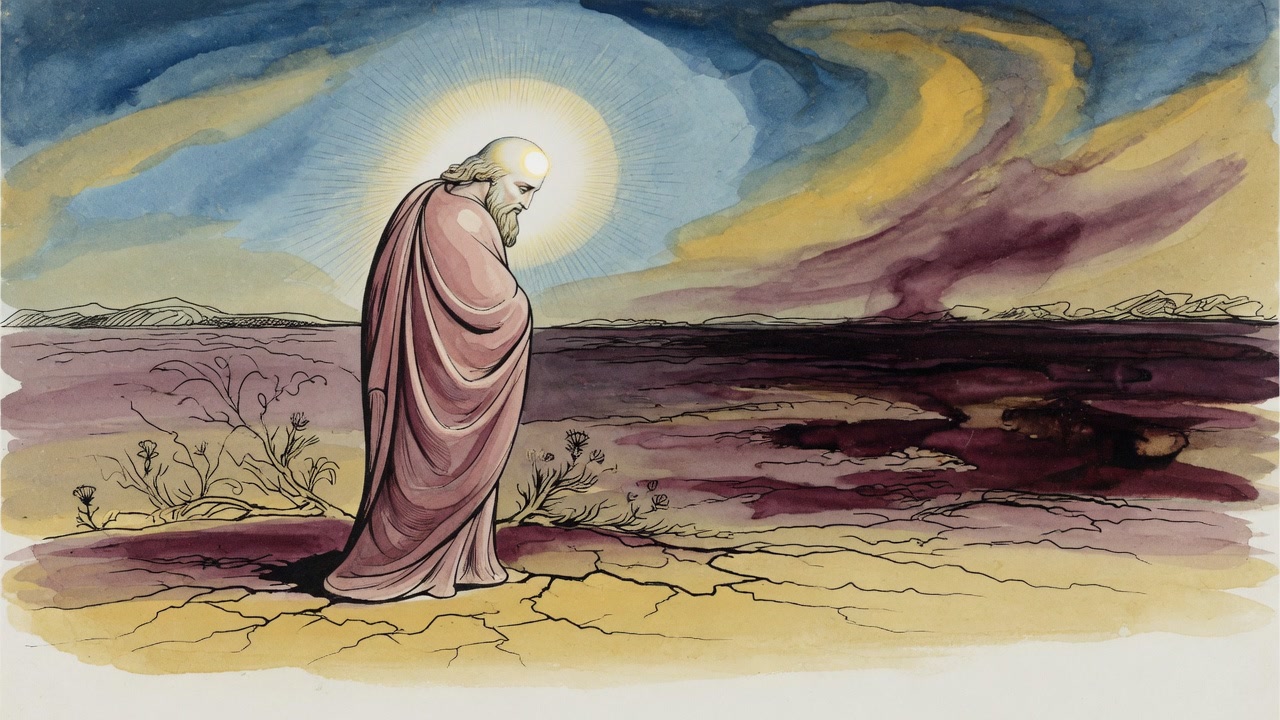
Then he tried to flee the question. He could hide from his parents, perhaps. He could not walk out of God's sight. The mark came upon him. The sentence came with it. Whoever killed Cain would be avenged sevenfold.

The Mark Became a Warning

Cain lived with punishment on his body. Every generation after him had a sign to read. The mark did not only protect him from vengeance. It taught the world that blood calls upward and that God answers.

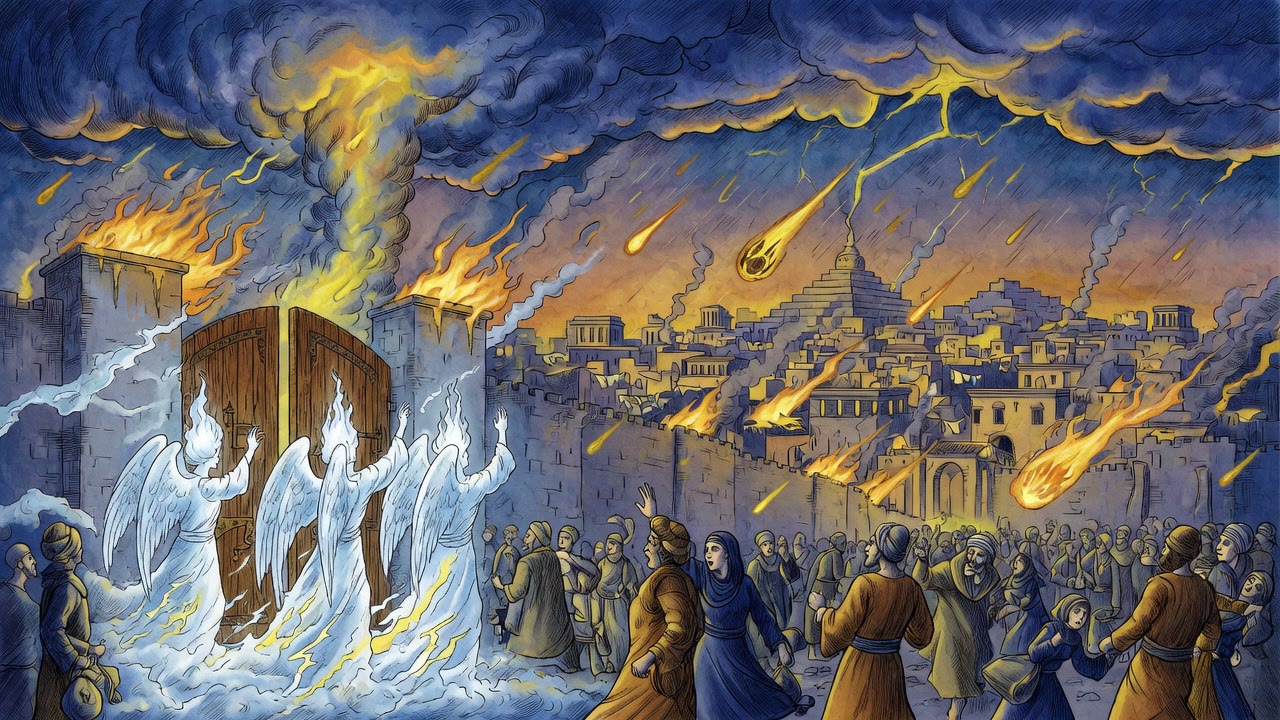
Cain did not become gentle. He built cities and surrounded his descendants with walls. He gathered power, wealth, and violence around himself as if stone could outlast the sentence God had spoken. But even his defiance became instruction. The world now had an example of murder and consequence.

That is where Lamech enters with blood already remembered.

He was not the first man standing over a body. He was the man who could look back at the first murderer, see the mark, hear the warning carried through family memory, and still raise his hand. Cain had sinned in the dark of human beginnings. Lamech sinned after the torch was lit.

Lamech Counted Higher Than Seven

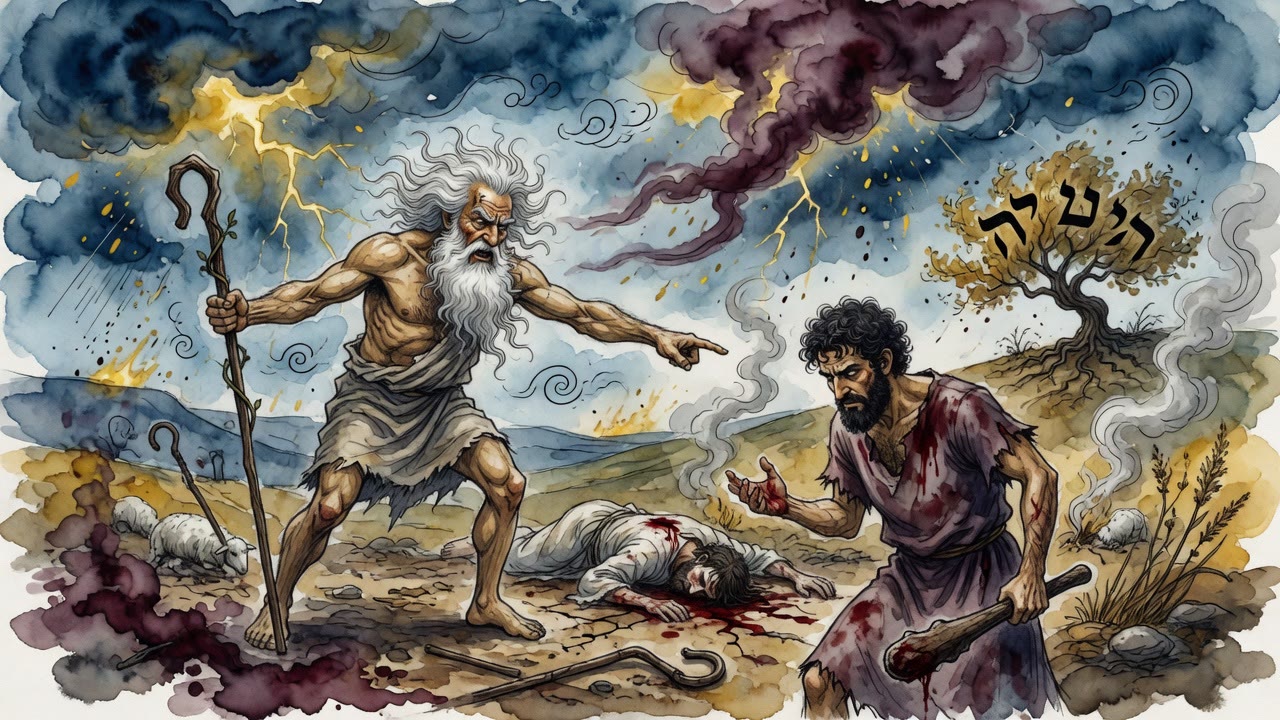
Lamech did not whisper what he had done. He spoke to his wives with the cold confidence of a man turning violence into arithmetic. He had killed a man for wounding him, a young man for hurting him. If Cain would be avenged sevenfold, Lamech declared, then Lamech seventy-sevenfold.

He was not begging forgiveness. He was calculating protection.

Numbers mattered. Seven stood as the first complete measure, the simple unit of Cain's punishment and protection. Seventy-seven was not merely more. It carried history inside it, generations multiplied, consequence stretched until one man's act no longer stayed inside one man's house.

Lamech used the memory of Cain like a shield. He treated divine warning as legal precedent for his own survival. That is why his guilt grew heavier. Cain had made the first wound in the human family. Lamech turned the wound into doctrine.

The Later Killer Knew Better

There is a mercy in judging beginnings differently. A child touching fire for the first time is not the same as a grown man pushing another person into flame while staring at an old scar on his own hand.

Cain's punishment was terrible, but it was the punishment of a first transgression. Lamech's was the punishment of memory ignored. He had inherited the world's first cautionary tale and answered it with a boast.

That is the difference between ignorance and contempt. Ignorance can be punished and still leave room for pity. Contempt takes instruction and twists it into permission. Cain became a warning. Lamech used the warning as a weapon.

By the time Lamech finished speaking to his wives, the blood was no longer only on the ground. It had entered language. It had become a claim about what a violent man deserved, how far vengeance could stretch, and whether the mark of Cain was a boundary or an invitation.

His boast also changed the audience. Cain answered God. Lamech addressed his wives, making the household listen while he converted killing into status. The first murderer tried to dodge responsibility. The later killer wanted witnesses.

He knew the answer should have been fear. He chose arithmetic instead.


← All myths
From the tradition

Sources

3 sources

The texts this telling draws on, in full. Open a card to read inline, or expand it for a wider, quieter read.

Legends of the Jews, III. The Ten Generations, The Punishment Of CainLegends of the Jews

In Legends of the Jews, the death of Abel was unimaginably brutal. Cain, clueless about what constituted a fatal wound, pelted his brother with stones, hitting him over and over, until finally, a blow to the neck ended Abel's life. Can you imagine the horror of that moment?

Cain, realizing what he'd done, planned to flee. "My parents will demand account of me concerning Abel," he reasoned, "for there is no other human being on earth." But then, bam! God appears.

"Before thy parents thou canst flee," God says, "but canst thou go out from My presence, too? 'Can any hide himself in secret places that I shall not see him?'" The text paints a picture of God confronting Cain, almost lamenting, "Alas for Abel that he showed thee mercy, and refrained from killing thee, when he had thee in his power! Alas that he granted thee the opportunity of slaying him!"

God then asks the obvious: "Where is Abel thy brother?" Cain's response? A defiant, "Am I my brother's keeper? Thou art He who holdest watch over all creatures, and yet Thou demandest account of me!" It's a classic line, and one that speaks to a deep human tendency to deflect blame. Cain goes on, arguing that God created the evil inclination within him, and that God’s favor towards Abel's offering fueled his envy. He even has the audacity to say, "Thou didst Thyself slay him, for hadst Thou looked with a favorable countenance toward my offering as toward his, I had had no reason for envying him, and I had not slain him."

But God isn't buying it. "The voice of thy brother's blood," God says, "issuing from his many wounds crieth out against thee, and likewise the blood of all the pious who might have sprung from the loins of Abel." Even Abel's soul, according to the story, couldn't find rest, unable to ascend to heaven or descend to the grave, because no human soul had done either before.

Cain, however, remains stubbornly unrepentant. He claims ignorance – how could he know that stones could kill? So, God curses the ground because of Cain, so it won't yield fruit for him. Both Cain and the earth are punished, the earth for holding Abel's corpse.

In his stubbornness, Cain even accuses God: "O Lord of the world! Are there informers who denounce men before Thee? My parents are the only living human beings, and they know naught of my deed. Thou abidest in the heavens, and how shouldst Thou know what things happen on earth?"

God's response is powerful: "Thou fool! I carry the whole world. I have made it, and I will bear it."

According to the Legends of the Jews, this reply gives Cain an opening to feign repentance. "Thou bearest the whole world," he says, "and my sin Thou canst not bear? Verily, mine iniquity is too great to be borne! Yet, yesterday Thou didst banish my father from Thy presence, to-day Thou dost banish me. In sooth, it will be said, it is Thy way to banish."

Even though it's insincere, God shows mercy. Cain's punishment is lessened. Originally, he was to be a fugitive and a wanderer forever. Now, he'll only be a fugitive. But even that is a heavy burden. The earth quakes beneath him, and animals, even the accursed serpent, try to devour him, seeking vengeance for Abel's blood.

Finally, Cain breaks down, crying, "Whither shall I go from Thy spirit? Or whither shall I flee from Thy presence?" To protect him, God inscribes a letter of His Holy Name on his forehead and commands the animals to leave him be. "Cain's punishment shall not be like unto the punishment of future murderers," God declares. "He has shed blood, but there was none to give him instruction. Henceforth, however, he who slays another shall himself be slain." God even gives him a dog for protection and marks him with leprosy as a sign of his sin.

Even Cain's insincere repentance has a positive effect. When Adam learns of it, he exclaims, "So potent is repentance, and I knew it not!" He then composes a hymn of praise to God, beginning with the words, "It is a good thing to confess thy sins unto the Lord!"

The consequences of Cain's actions ripple outward, affecting not just him but all of creation. Before the murder, the fruits Cain grew tasted like paradise. Afterward, only thorns and thistles. The ground itself changed at the moment of Abel's death. Trees and plants refused to bear fruit in the area where Abel lived, only flourishing again with the birth of Seth, and even then, they never fully regained their former glory. Where the vine once bore nine hundred and twenty-six varieties of fruit, it now bore only one. This, the text implies, will only be restored in the world to come.

Even the disposal of Abel's body is a poignant moment. Adam and Eve, unfamiliar with death, didn't know what to do with the corpse. They wept beside it, guarded by Abel's faithful dog. Then, they saw a raven bury a dead bird. Inspired, Adam buried Abel, and the raven was rewarded – its young are born with white feathers, initially rejected by their parents but cared for by God until their plumage darkens. And, according to tradition, God grants the ravens' prayers for rain.

What can we take away from the story of Cain? It's a story about the first sin, the first murder, but it's also about responsibility, repentance, and the far-reaching consequences of our actions. It reminds us that even in the face of terrible deeds, the possibility of change, however imperfect, remains. And perhaps most importantly, it highlights the interconnectedness of all things – how one act can alter the course of history and the very nature of the world around us. It's a powerful reminder to consider the impact of our choices, both on ourselves and on the world we inhabit.

Full source
The Midrash of Philo 23:2The Midrash of Philo

Philo explores the significance of numbers, particularly one, seven, ten, and seventy, connecting them to sin, punishment, and the very fabric of justice. He starts with a fundamental idea: one precedes ten, not just in sequence, but in importance. One is the beginning, the foundation, the measure of all things. Ten, on the other hand, is derivative, measured by the one. This establishes a hierarchy, a sense of primal purity versus derived complexity.

Similarly, seven is presented as older and more fundamental than seventy. Seventy, he says, contains the calculation of generations. – the sweep of history, the consequences of choices rippling through time.

Where does sin come into all of this? Philo uses this numerical framework to explain the differing punishments meted out to Cain and Lamech. Cain, the first sinner, who committed the first murder, "as if he had been really always ignorant of evil," receives a "more simple" punishment. It's like the number one – a primary transgression, dealt with directly.

Lamech? Ah, Lamech is different. He had Cain's example to learn from. There’s no excuse for him. His crime is voluntary, deliberate. He didn't learn "honourable wisdom" from Cain's punishment. The consequence, according to Philo, is a double punishment. Not just Cain's punishment, but another one, "contained in the number ten."

Philo uses a vivid analogy: horse races. The groom who trains the horse gets twice the reward of the driver. Similarly, wicked men who "gain the miserable triumph of victory" are punished doubly – by the "unit" (the first sin) and by the "number ten" (the compounded guilt).

Cain, in his ignorance, suffered a "sevenfold penalty in the order of the unit." But Lamech, unable to plead ignorance, deserves a twofold punishment: one equal to Cain's, and another, "which should be the seventh among the decades" – that is, seventy.

And here’s where it gets really interesting. Philo connects this concept to the legal process, specifically, the trial before a tribunal, which he describes as "sevenfold." What does he mean by that? He breaks it down:

First, the eyes are judged, for seeing what is forbidden. Second, the ears, for hearing what they shouldn't. Third, the sense of smell, tainted by "smoke and vapour." Fourth, the sense of taste, enslaved to the pleasures of the belly. Fifth, a charge against the "taste" in a broader sense – encompassing the destructive forces that overcome the spirit, like "the takings of cities, the captivities of men." Sixth, the tongue, for being silent when it should speak, and speaking when it should be silent. And seventh, the lower belly, for inciting passions with "immoderate lust."

This sevenfold trial represents a holistic judgment of the individual, encompassing all aspects of their being: senses, desires, and speech.

Philo concludes that this is why "a sevenfold vengeance was taken upon Cain, but a seventy and sevenfold vengeance upon Lamech." Lamech, the second offender, deserved not only the original punishment but also a multiplied one, "equal to the number ten."

So, what do we take away from this numerical midrash (rabbinic interpretive commentary)? It's more than just math. It's a profound exploration of responsibility, the weight of example, and the cascading consequences of our choices. It challenges us to consider the ripple effect of our actions and the importance of learning from the mistakes of others. Are we doomed to repeat the errors of the past, or can we break the cycle and choose a different path? It’s a question worth pondering.

Full source
Legends of the Jews 3:5Legends of the Jews

Legends of the Jews turns to Cain's Repentance.

The texts tell us that Cain knew, deep down, that the consequences of his actions would catch up with him, specifically in the seventh generation of his line. God had decreed it. So, what does a guilty man do? He tries to create a legacy, to cheat death, in a way. Cain became a builder, a founder of cities. The first he named Enoch, after his son, because it was at Enoch’s birth that Cain finally felt a measure of peace. He went on to build six more cities.

Here's the thing: the building of these cities wasn't exactly a philanthropic endeavor. According to the texts, it was a "godless deed." He surrounded them with walls, essentially forcing his family to stay put. All his actions were considered impious. The punishment God ordained for him? It didn't exactly lead to a spiritual awakening. He kept sinning, pursuing his own pleasure, even if it meant hurting others. He grew his wealth through violence and robbery, leading others down the same wicked path.

As we find in Legends of the Jews, Cain introduced a change in the "ways of simplicity" that had existed before. He was the originator of measures and weights. And while before, people lived innocently, generously, without such artifice, he changed the world into one of "cunning craftiness." Like father, like sons. Cain's descendants followed in his footsteps, impious and godless. It was their collective wickedness that ultimately led God to resolve to destroy them.

But how did Cain actually meet his end? The Zohar tells us it was in the seventh generation, just as prophesied. And the agent of his demise? None other than his great-grandson, Lamech. Now, Lamech was blind. Blindness becomes a significant theme. He was led on hunts by his young son, who would point out the game. One day, the boy spotted something horned in the distance. Mistaking it for an animal, he told Lamech to shoot. The arrow flew, and the quarry fell.

Can you imagine the horror? When they approached, the boy cried out, "Father, you've killed something that resembles a human being, except it has a horn on its forehead!" Lamech knew instantly. He had killed his ancestor, Cain, the one marked by God with a horn. In despair, Lamech clapped his hands together, and, tragically, inadvertently killed his own son. Misfortune upon misfortune.

As Ginzberg retells in Legends of the Jews, the earth then opened up and swallowed the four generations sprung from Cain: Enoch, Irad, Mehujael, and Methushael. Lamech, being blind, was stranded beside the corpses of Cain and his son. His wives eventually found him and, upon hearing what happened, wanted to leave him, fearing the doom that awaited Cain's descendants.

But Lamech pleaded his case, arguing, "If Cain, who committed murder intentionally, was only punished in the seventh generation, then I, who killed unintentionally, may hope for mercy for seventy-seven generations." He went with his wives to Adam himself, who heard both sides and ruled in favor of Lamech.

The story doesn't end there. The corrupt state of the world, particularly the depravity of Cain's line, is further illustrated by the practice of men taking two wives. According to Midrash Rabbah, one wife was for procreation, while the other was for pleasure, often rendered sterile artificially. The men lavished attention on the barren wives, while the others lived like widows, joyless and neglected.

Lamech’s two wives, Adah and Zillah, each bore him two children. Adah had Jabal and Jubal, and Zillah had Tubal-cain and a daughter, Naamah. Jabal was said to be the first to build temples to idols, and Jubal invented the music played within them. Tubal-cain, whose name echoes that of his ancestor, continued Cain's legacy. While Cain committed murder, Tubal-cain, the first to master iron and copper, created the instruments of war. And Naamah, "the lovely," earned her name by playing sweet music on her cymbals, calling worshippers to the idols.

So, what are we left with? A story of sin, consequence, and the enduring power of legacy. A legacy that can be twisted, corrupted, but never truly erased. The descendants of Cain remind us that the choices we make, the paths we forge, echo through generations, shaping the world long after we are gone. What kind of legacy are we building?

Full source