Parshat Bereshit5 min read

Forty Decrees Fell and Nimrod Added His Own

After Eden, forty decrees fell on Adam, Eve, the serpent, and the earth, and later Nimrod tried to rule birth by decree.

Curated by Arthur · Told by Maggid ·
Table of Contents
  1. Adam Lost the Garment of Splendor
  2. Eve, the Serpent, and the Earth Answered
  3. Why the Number Was Forty
  4. Nimrod Tried to Decree Against Birth

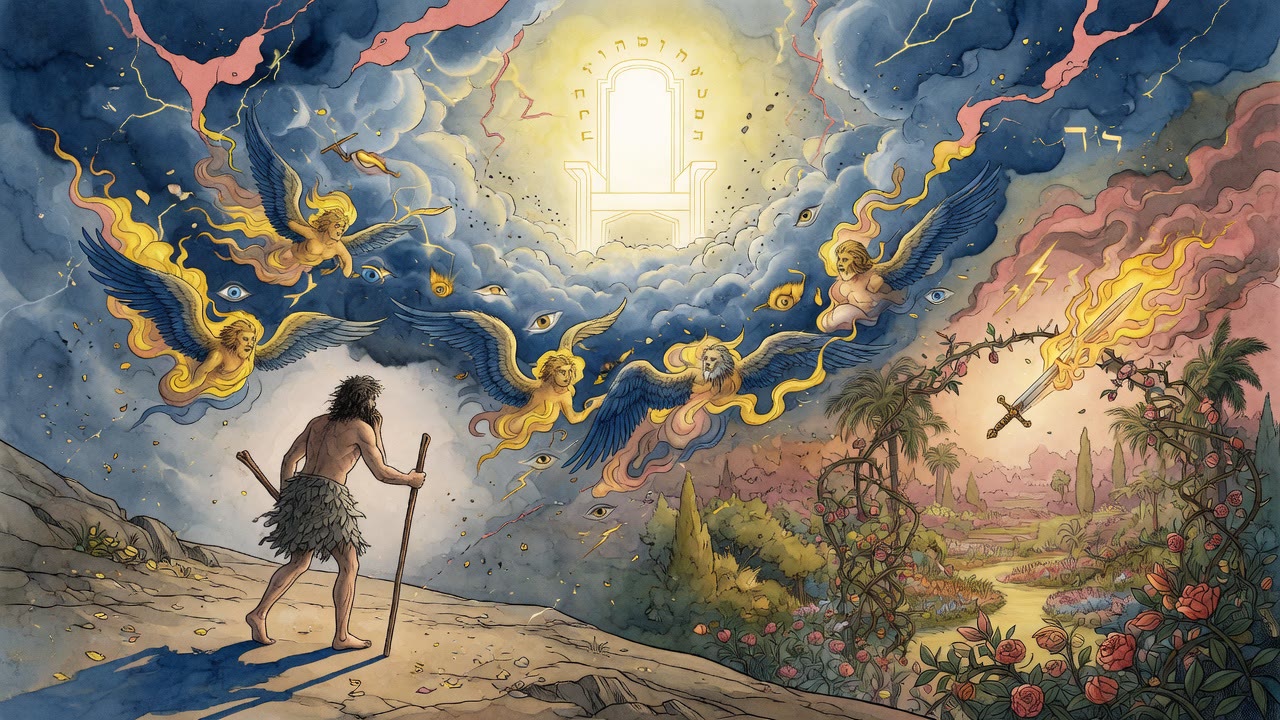
The first court sat east of Eden.

Adam had eaten. Eve had listened and taken. The serpent had opened its mouth and the ground had received the crime. Genesis gives the punishments in a few hard lines, but the midrash counted them like a judge counting blows.

Not three punishments.

Forty decrees fell. Ten on Adam, ten on Eve, ten on the serpent, and ten on the earth. The garden did not close behind one wound. It closed behind an entire order of consequences.

Adam Lost the Garment of Splendor

Adam's light was stripped first.

The midrash says he had been clothed in garments of splendor. Then the splendor came away. Afterward came labor, sweat, exile from place to place, the evil inclination pulling at him from inside, worms and decay waiting at the end, shortened days, turmoil, death, and judgment.

Food itself changed. He could eat what was good, but even the body would turn good food into waste. Nothing remained untouched. Work entered the hands. Odor entered the skin. Mortality entered the bones.

Adam was not only removed from the garden. The garden was removed from Adam.

Eve, the Serpent, and the Earth Answered

Eve's decrees entered blood, birth, age, and household.

The serpent lost height, limbs, speech, and blessing. Its mouth was shut. Its hands and feet were cut away. Dust became its bread, even when it tasted delicacies. Every creature might receive blessing, but the snake carried curse wherever it moved.

The earth itself took ten wounds. Its fruit became afflicted. Blight and mildew entered. Mountains, valleys, thornbushes, gravel, barren trees, thorns, and thistles rose from soil that had once opened without resistance. People would plant much and harvest little. In the future, the earth would testify about blood it had hidden and wear out like a garment.

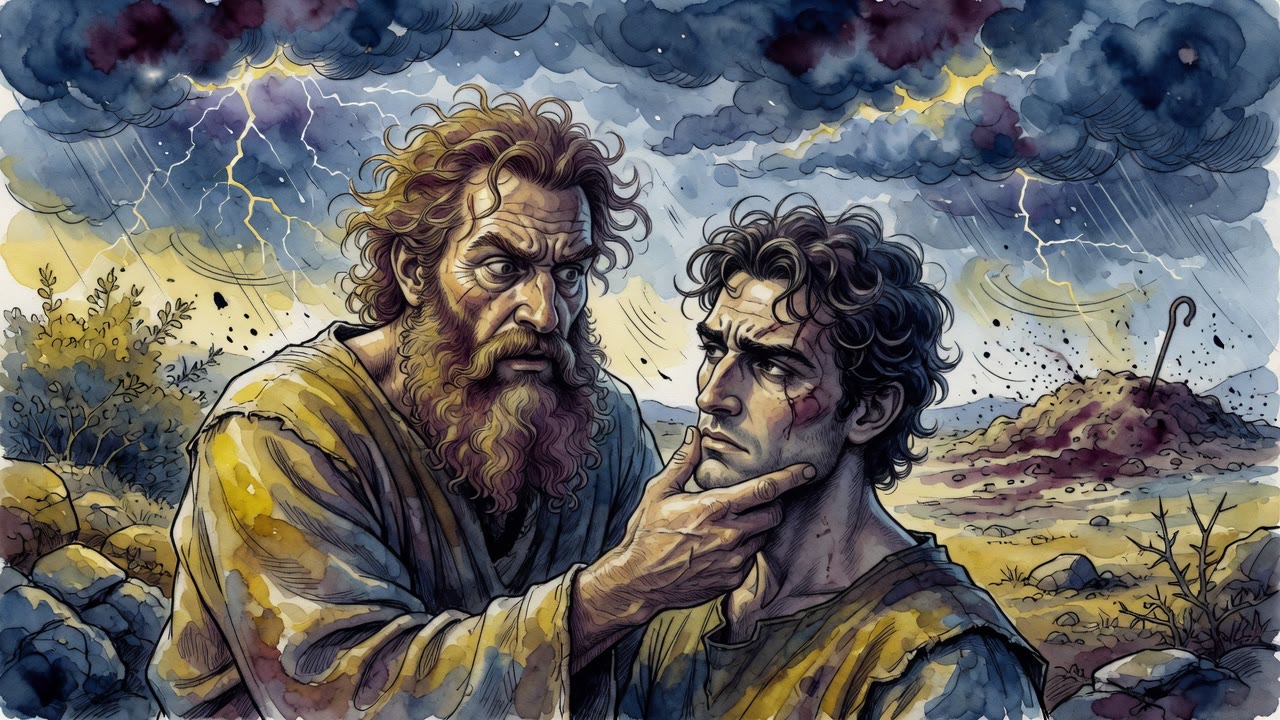
The ground had received the sin. Now the ground would remember.

Why the Number Was Forty

The rabbis did not let the number float.

Forty matched the days of formation in the womb. Human life takes shape under that count, and after Eden, human burden took shape under it too. The same number that marks a body becoming recognizable marked the world becoming wounded.

Another answer tied the forty decrees to the forty lashes of court discipline. Sin that deserved death by heaven could sometimes be met by lashes below, and the punished person could return from the court as one restored. Forty therefore held both judgment and the possibility of repair.

The number was not decoration. It was a measure placed on broken life.

Nimrod Tried to Decree Against Birth

Generations later, a king learned the language of decrees and made it monstrous.

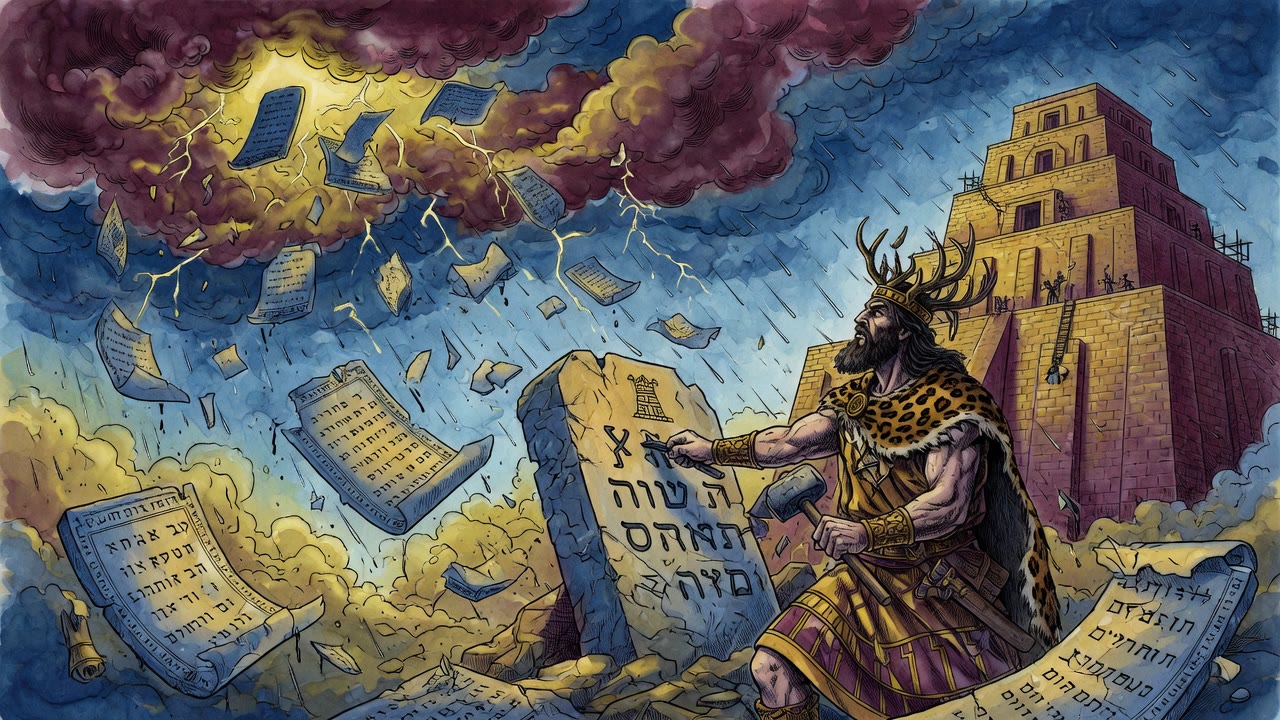
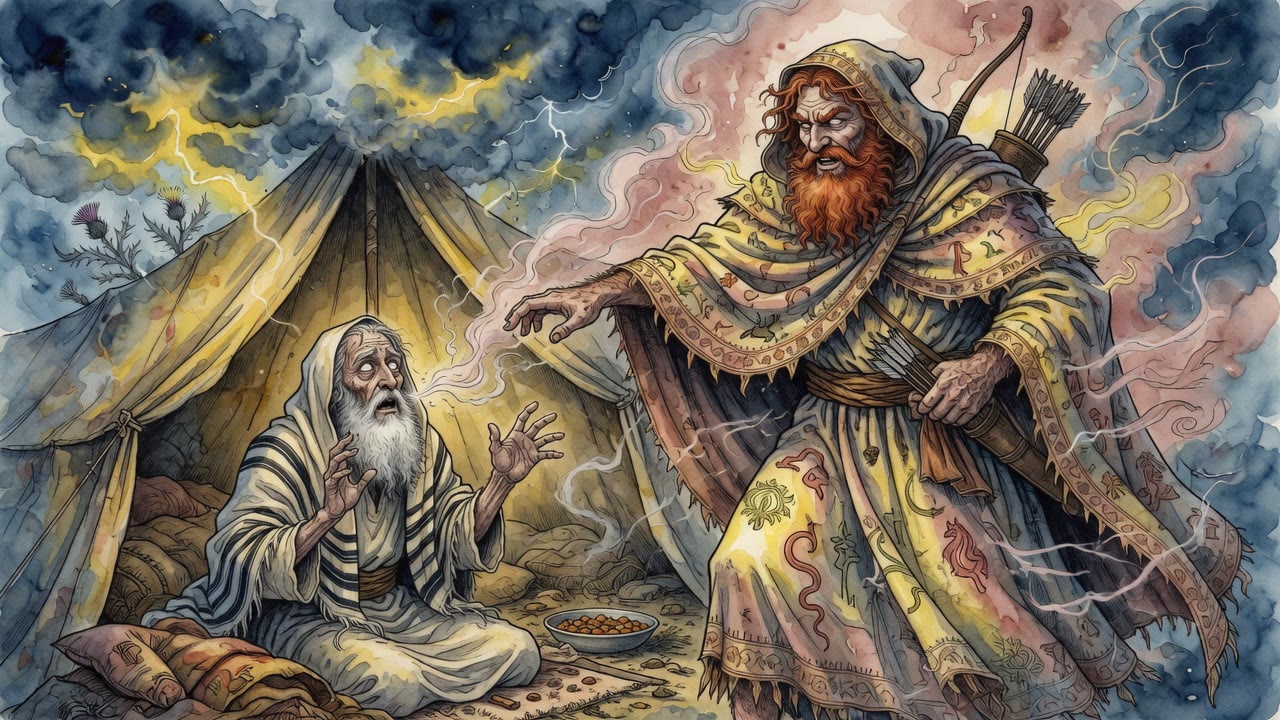
Nimrod looked into the stars and saw a child who would deny him and defeat him. Fear entered the throne room. He built a palace sixty cubits high and eighty cubits long, set guards at its door, and ordered pregnant women brought inside. Sons would be slaughtered on their mothers' bodies. Daughters would leave with honor and gifts.

The first decrees after Eden named what mortality would be. Nimrod's decree tried to decide who would be allowed to live at all. But Abraham was born anyway. The king who called himself a god could count rooms, guards, and cubits. He could not decree away the child sent to break his rule.

The two scenes are far apart, but the pressure is the same. Eden shows divine decree naming the limits of fallen life. Nimrod shows a human ruler imitating decree without wisdom, mercy, or truth. One judgment tells creation what it has become after sin. The other tries to strangle the future because a king is afraid of one unborn child.

That is why Abraham's birth matters here. The first human beings learned that mortality could not be escaped. Nimrod learned that tyranny could not master providence. Decrees can wound the world, but they do not give a false god control over the promise moving through it.

Adam and Eve left Eden under decrees they could not repeal. Nimrod built his palace because he imagined decree as domination, a way to make the future kneel before fear. The midrash places both at the beginning of human history to show the difference between judgment that tells the truth and power that panics before truth arrives.

The palace was large enough for guards, mothers, and terror, but not large enough to contain the future. Nimrod measured walls in cubits. Providence measured the child he feared by covenant.


← All myths

From the tradition

Sources

2 sources

The texts this telling draws on, in full. Open a card to read inline, or expand it for a wider, quieter read.

Chapter on Adam HaRishon, Chapter on the First Man (Version 1)Otzar Midrashim (Eisenstein)

Ten decrees were decreed upon Adam, ten upon Eve, ten upon the serpent, and ten upon the earth: Ten upon man: He was clothed in garments of splendor, but God stripped them from him. That he earns his livelihood through toil. That he eats good food but eliminates waste. That he is exiled from place to place. The odor of sweat. That he has an evil inclination. That maggots and worms rule over him. That he was handed over to death, that it should kill him. Shortened days and much turmoil. That he is destined to stand in judgment, as it says "Rejoice, young man, in your youth, etc." (Ecclesiastes 11:9) Ten upon Eve: The blood of menstruation; she is scolded from her home, divorced from her husband. That she gives birth after nine months. That she nurses for 24 months. That her husband rules over her. That her husband is jealous over her, that she not speak with any man. That she ages quickly. That she is weak after giving birth, while the man continues to bear children forever. That she sits in the house and is not known to any man. She goes out to the marketplace with her head covered like a mourner - therefore they precede the corpse in a funeral procession (this was their custom, that the wailing women would walk ahead of the men in a funeral procession). If she was virtuous, her husband buries her, as we find with Abraham, Isaac and Jacob, who buried their wives. And ten upon the serpent: Its mouth was sealed shut. Its hands and feet were cut off. It eats dust. It sheds its skin and suffers like a woman in childbirth, and its voice carries from one end of the world to the other, yet its voice is not heard. "And I will put enmity..." (Genesis 3:15) Rabbi Chelfai said in the name of Rabbi Meir: Even if it eats delicacies and drinks the sweetest wine, it becomes dust in its mouth, as it says "and dust shall be the serpent's bread" (Isaiah 65:25). It gives birth every seven years. (Bechorot 8a) A person sees an animal or bird and is not bothered, but when he sees a snake he is bothered and curses it. Everything receives blessing but it remains accursed. Rabbi Meir would say a tradition: "And I will remove the evil beasts from the earth" (Leviticus 26:6) - this refers to the snake. And ten upon the earth: That it would absorb water on its own from now on: "And a mist rose up from the earth" (Genesis 2:6) That it is afflicted in its fruits. That it is afflicted with blight and mildew. That mountains and valleys were made upon it. That thornbushes and gravel were created upon it. That barren trees grew upon it. That thorns and thistles grew upon it. They plant a lot but it produces little. That it will testify about its dead in the future, as it says "And the land will reveal its blood, and will no longer cover its slain" (Isaiah 26:21). That it is destined to wear out like a garment, as it says "And the earth will wear out like a garment" (Isaiah 51:6). Why were these forty decrees? Corresponding to the 40 days that the fetus is formed. Another interpretation: Corresponding to these decrees, the Sages instituted 40 lashes in the court. How so? When a person stumbles in a sin that makes him liable for death by the hand of Heaven, they bring him to court and lash him, and immediately forgive him entirely. This is what is taught: "There are four death penalties by the court." (All those liable for excision who were lashed were exempted from their excision - Makkot 23a.) Rabbi Eliezer says: Adam was the blood of the world, and when Eve spilled it [by causing his death], she became liable for the blood of menstruation. Adam was the challah of the world, and when Eve defiled it [through sin], she became liable for separating challah. Adam was the light of the world, and when Eve extinguished it [through sin], she became liable to light the Shabbat (the Sabbath) candles. This corresponds to what was taught: "For three sins women die in childbirth: menstruation, challah, and lighting the candles" (Shabbat 31b).

Full source
Avraham our Father, The Story of Avraham our Father and NimrodOtzar Midrashim (Eisenstein)

It was said before Abraham was born. Nimrod was a heretic concerning the truth of the lord blessed be he. He was conceited and he said that he himself was a God. And the people of his time served and bowed to him. He was so - an established king, and he was wise and he saw in the wisdom of the stars that there will be one man born in his time that will oppose him and deny him from his faith and he will be victorious over him. And he [Nimrod] trembled with a great fear. What did he do? He sent after his lesser officers and he told them this matter. He consulted them about what to do concerning this future child that will come. They advised him "we agree on the following: that you will build a great palace and place guards in the opening and declare among your kingdom that every woman that they pass through and come there after...[unknown]... if it's a son, you will slaughter him on her womb and if it's a daughter, it will live and you will give gifts to the mother and dress her in royal garments and they will call before her. Such will be done to a mother of a daughter. When Nimrod hear their advice, he was greatly gladdened much so. He declared in all the countries of his kingdom that there will come all the nations to build a great palace for the king 60 ama high, 80 ama long. After it was completed, he declared that all the women shall come and pass through the house and remain there until they gave birth. He commanded officials to bring them there....[unknown]... He decreed that the born son will be slaughtered on the chest of the mother and if a daughter, the mother was dressed in clothing of fine linens and silks colorfully embroidered and she will go out from there and they will give her much honor. So commanded King Nimrod and they left the house with honor.

Full source