5 min read

The Thanksgiving That Outlives Every Sacrifice

In the age to come every offering falls silent except thanksgiving. Meanwhile each enemy of Israel mocks the last failed plan and forgets the Patron above.

Curated by Arthur · Told by Maggid ·
Table of Contents
  1. The Sound Jeremiah Already Heard
  2. Each Plot Mocking the Last
  3. When Mercy Is Forced to Wear Another Face
  4. What Remains When the Altars Cool

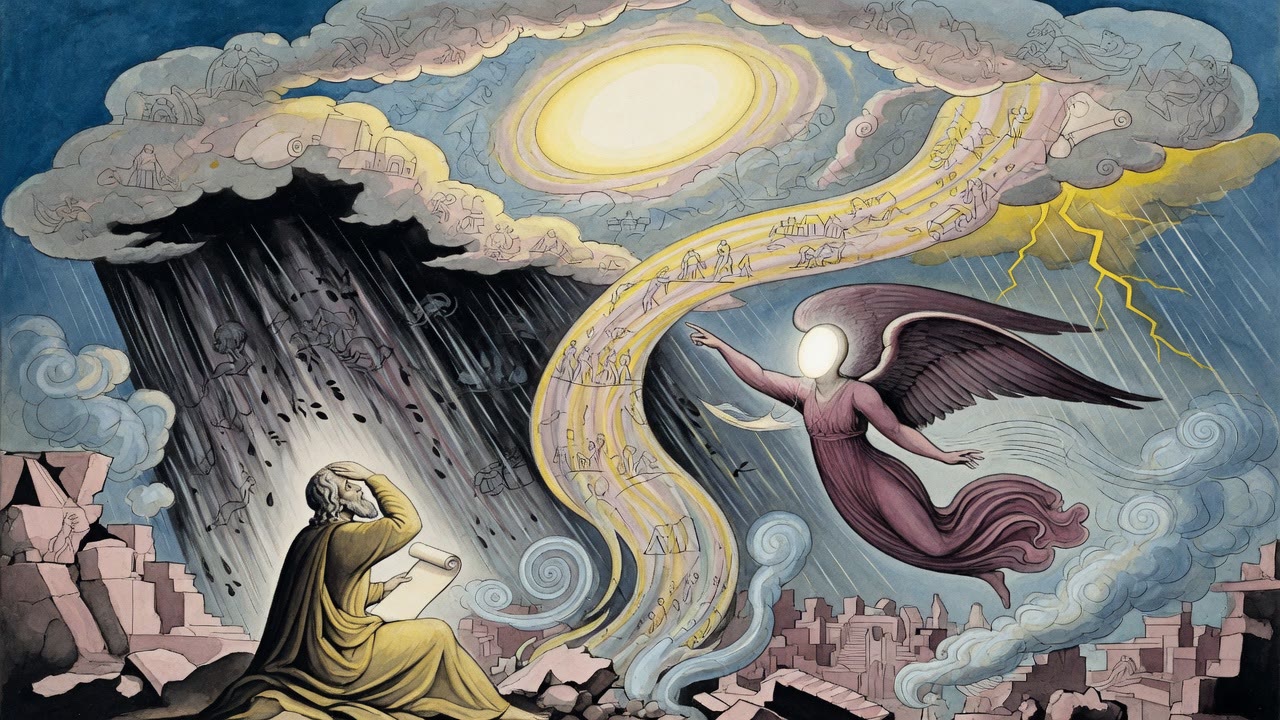
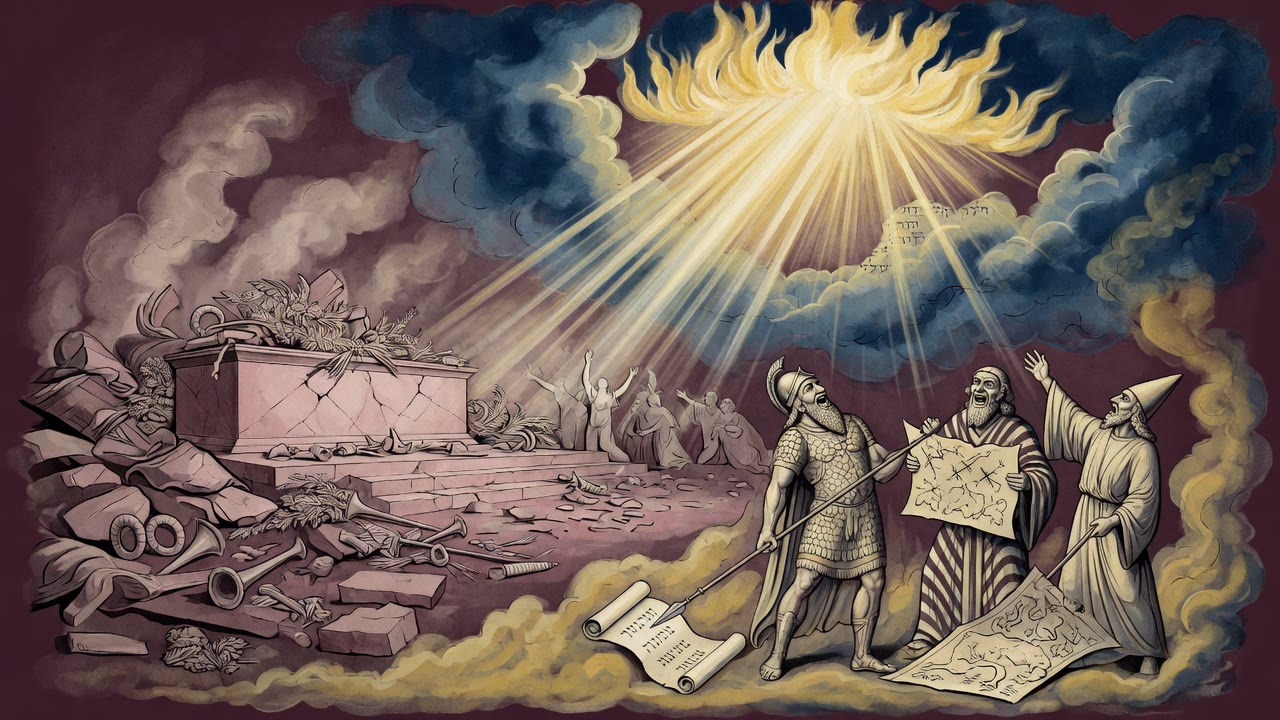
In a world made whole, the bulls fall silent. The rams, the sin-offerings, the guilt-offerings: what work is left for them when there is nothing left to repair? The prayers of petition also thin out, for there is nothing left to beg and nothing left to mourn.
The Thanksgiving That Outlives Every Sacrifice Click for full size

One sound does not stop. Rabbi Pinchas, Rabbi Levi, and Rabbi Yochanan taught in the name of Rabbi Menachem of Galilee that the thanksgiving offering, the korban todah, and the thanks that rise with it are never annulled, not for all eternity. Gratitude does not belong only to the broken ages. It belongs more to the mended one.

The Sound Jeremiah Already Heard

The prophet already caught it on the wind of a future city: the voice of joy and the voice of gladness, the voice of those who say, give thanks to the Lord of hosts (Jeremiah 33:11). Exile taught Israel how to ask. Redemption, they said, will teach Israel how to thank without the old wounds driving the words.

At the sea, Israel did not sing that God did a wonder once and sealed it. They sang that He is a doer of wonders, present tense still open. The grammar itself leans forward. The same people who will one day need no sin-offering will still need a way to say the world is gift. A mother who walks out of a burning house does not stop blessing the open air when the fire is gone. She blesses it more.

Each Plot Mocking the Last

While thanksgiving waits for the end of days, cruelty invents new calendars. Rabbi Levi lined up the mockers. Esau sneered at Cain for killing Abel while Adam could still father more sons, so Esau waited for mourning over Isaac before striking Jacob. Pharaoh sneered at Esau for waiting while Jacob multiplied, and chose to drown sons while they were still small. Haman sneered at Pharaoh for sparing daughters who would marry and bear Jews, and chose one day to wipe out young and old together.

The righteous One forbids slaughtering an ox or a sheep with its offspring on the same day. Haman decreed destroy and annihilate in a single day. Compassion for beasts stands as a rebuke to a decree that treats a people as less than livestock.

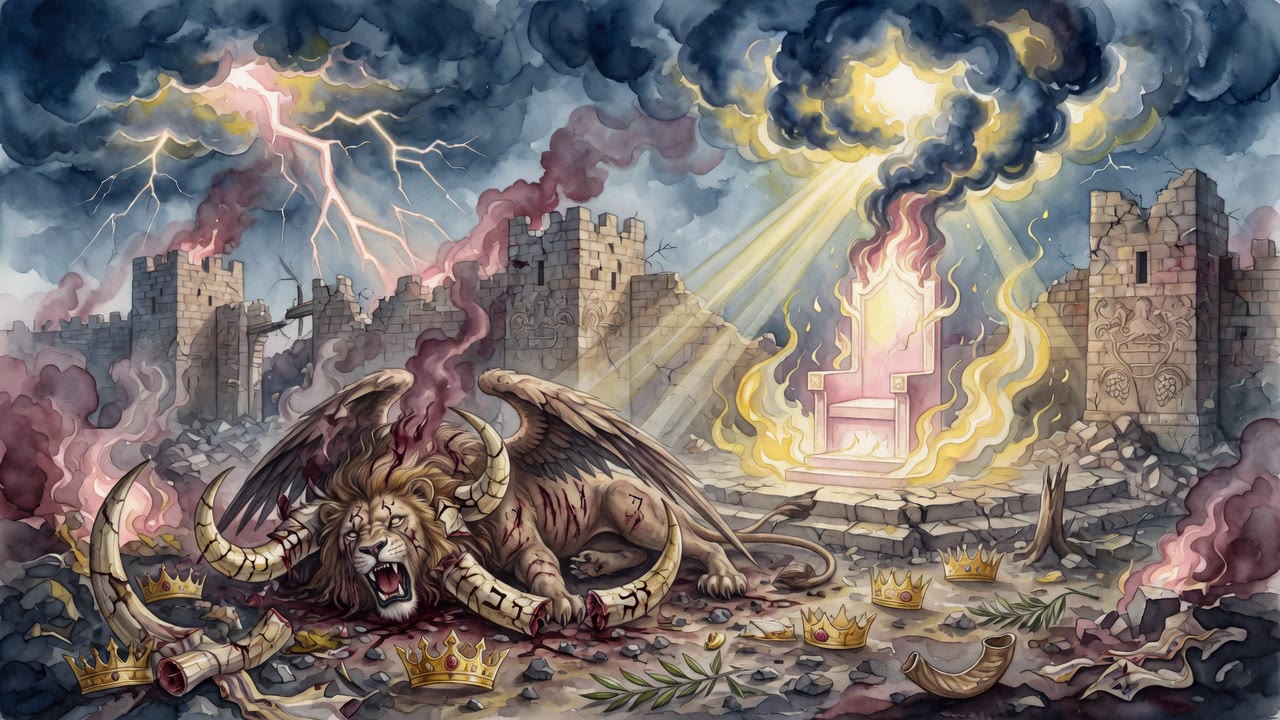
Gog, said Rabbi Levi, will sneer at them all and plan to strike the Patron in heaven first, then the people below, against the Lord and against His anointed. Each villain improves the slaughter and forgets the same fact. Israel has a Patron who is not bound by their cleverness. The ledger of plots grows thick. The Patron's name does not thin.

When Mercy Is Forced to Wear Another Face

Sometimes the pressure does not come only from outside. The Holy One says He intended Israel for tranquility, bread to fullness, a planting that would not be uprooted. They ascribed to Him what was never in Him. Measure for measure, plagues not written in the book arrived. Isaiah's "they have forsaken the Lord" is read as more than leaving. They made the merciful One appear forsakeable. Attributes named as gracious were bent by their deeds until Lamentations could say the Lord has become like an enemy.

That sentence is not a second god rising. It is the terror of a relationship so real it can feel like war when the people refuse to listen. Hosea seals the charge: they wander among the nations because they would not heed. Enemies line up outside. Estrangement hollows the inside. A people can be hunted by Hamans and still be under pressure from the very mercy they twisted into distance.

What Remains When the Altars Cool

Put the end beside the middle. In the middle, plots stack, decrees sharpen, mercy seems to flip. At the end, most offerings retire and thanksgiving stays on duty. The people who survive Haman's math and Pharaoh's river and Esau's delayed knife are training, without knowing it, for a world where the only lasting sacrifice is thanks.

The present-tense wonder at the sea already practiced that future. So did every todah brought by someone who walked out of danger and refused to treat survival as ordinary. When the last enemy has finished mocking the previous fool, the sound that outlasts him is not another clever plan. It is a table of gratitude that does not need blood to prove the world is still gift.

In the meantime the altars still smoke. In the meantime children still learn the names of villains who thought they had improved on murder. Between smoke and names, someone still says thank you over bread that is not guaranteed. That someone is already rehearsing the age when thanks is the only offering left standing.


← All myths
From the tradition

Sources

4 sources

The texts behind this telling. Some cards carry a translation of the source; others are our own retelling of it, and each card says which. Every card links out to the original.

Midrash Tanchuma Buber, Emor 19:1Midrash Tanchuma Buber, Emor

Translation of the source text.Midrash Tanchuma (Buber), Public Domain, on Sefaria · CC-BY-SA

"And when you sacrifice an offering of thanksgiving to the Lord" (Leviticus 22:29). Rabbi Pinchas and Rabbi Levi and Rabbi Yochanan said in the name of Rabbi Menachem of Galilee: In the age to come all the offerings will be annulled, but the thanksgiving offering will not be annulled [forever]. All the thanksgivings will be annulled, but the thanksgiving of the thanksgiving offering will not be annulled [forever]. It is stated, "The sound of joy and the sound of gladness, the voice of the bridegroom and the voice of the bride, the voice of those who say, 'Give thanks [to the Lord of Hosts, for the Lord is good], for His mercy endures forever,' as they bring a thanksgiving offering to the House of the Lord" (Jeremiah 33:11). "Give thanks to the Lord", these are the thanksgivings [the prayers of thanks]; "bringing a thanksgiving offering", this is the thanksgiving sacrifice. And so it says, "Upon me, O God, are Your vows; I will pay thanksgivings to You" (Psalms 56:13). "Thanksgiving" [in the singular] is not written here, but "thanksgivings" [in the plural], the thanksgiving prayer and the thanksgiving offering.

Full source
Midrash Tanchuma Buber, Emor 18:2Midrash Tanchuma Buber, Emor

Translation of the source text.Midrash Tanchuma (Buber), Public Domain, on Sefaria · CC-BY-SA

[Another interpretation:] "A righteous one knows" (Proverbs 12:10), this is the Holy One, blessed be He, who said, "Whether an ox or a sheep, it and its offspring" (Leviticus 22:28). "But the compassion of the wicked is cruel" (Proverbs 12:10), this is Haman, of whom it is written, "to destroy and to annihilate" (Esther 3:13).

Rabbi Levi said: Woe to the wicked, for they devise deep plots against Israel, and each and every one of them says, "My plan is better than your plan." Esau said: Cain was a fool, who killed his brother Abel during his father's lifetime, and did not know that his father would be fruitful and multiply. I will not do so; rather, "Let the days of mourning for my father draw near, [and I will kill my brother Jacob]" (Genesis 27:41).

Pharaoh said: Esau was a fool, who said, "Let the days of mourning for [my father] draw near," for he did not know that his brother would be fruitful and multiply during his father's lifetime. I will not do so; rather, while they are small, beneath their mothers' birthstool, I will strangle them, as it is written, "Every son that is born you shall cast into the river" (Exodus 1:22).

Haman said: Pharaoh was a fool, who said, "Every son that is born [you shall cast into the river, but every daughter you shall let live]," for he did not know that the daughters marry men and are fruitful and multiply through them. I will not do so; rather, "to destroy, to slay, and to annihilate [all the Jews, from young to old, children and women, in a single day]" (Esther 3:13).

Rabbi Levi said: Gog [and Magog] too is destined to say thus: The earlier ones were fools, who devised deep plots against Israel; they did not know that they have a patron in heaven. I will not do so. First I will engage their patron, and afterward I will engage them. This is what is written, "The kings of the earth take their stand, and rulers take counsel together, against the Lord and against His anointed" (Psalms 2:2). The Holy One, blessed be He, said to him: Wicked one, against Me have you come to do battle? By your life, I will wage war with you, as it is said, "The Lord goes forth like a warrior" (Isaiah 42:13), and it says, "Then the Lord will go forth and fight against those nations, as when He fights on a day of battle" (Zechariah 14:3).

Full source
Yalkut Shimoni on Torah 250:5Yalkut Shimoni on Torah

Translation of the source text.Torat Emet (Yalkut Shimoni) · CC-BY-NC

"Doer of wonders" (Exodus 15:11). It is not written here "He did a wonder," but "doer of wonders" [in the present tense], referring to the time to come, as it is said, "Therefore, behold, days are coming, says the LORD, when it shall no longer be said, As the LORD lives who brought up [the children of Israel out of the land of Egypt]" and so forth (Jeremiah 16:14).

Full source
Midrash Tanchuma Buber, Bechukotai 2:1Midrash Tanchuma Buber, Bechukotai

Translation of the source text.Midrash Tanchuma (Buber), Public Domain, on Sefaria · CC-BY-SA

[(Lev. 26:3:) IF YOU WALK IN MY STATUTES.] This text is related to (Hos. 9:17): "GOD WILL REJECT THEM BECAUSE THEY DID NOT HEED HIM." The Holy One said: I said that you would be set in tranquility, as stated (Amos 9:15): "AND I WILL PLANT THEM UPON THEIR LAND...." When? (Lev. 26:3, 5:) IF YOU WALK IN MY STATUTES, "AND YOU SHALL EAT YOUR BREAD TO SATIETY...." I counseled thus, but you did not act so. Instead (2 Kings 17:9): "AND THE CHILDREN OF ISRAEL ASCRIBED THINGS THAT WERE NOT SO...." I too set upon you things that I had not written in the Torah, as stated (Deut. 28:61): "ALSO EVERY SICKNESS AND EVERY PLAGUE THAT IS NOT WRITTEN IN [THE BOOK OF THIS TORAH]." And if [things] that were not in Me you set upon Me, for so Isaiah said (Isa. 1:4): "THEY HAVE FORSAKEN THE LORD", do not read "they have forsaken," but rather they made Me, as it were, forsakable. I was called (Exod. 34:6) "A MERCIFUL AND GRACIOUS GOD, SLOW TO ANGER," but through your iniquities I was made cruel and I overturned My attribute, as stated (Lam. 2:5): "THE LORD HAS BECOME LIKE AN ENEMY," and it says (Isa. 63:10): "AND HE WAS TURNED TO BE THEIR ENEMY." Therefore Hosea said: Who caused this for you? Because you did not heed Him, as stated (Hos. 9:17): "GOD WILL REJECT THEM BECAUSE THEY DID NOT HEED HIM, AND THEY SHALL BE WANDERERS AMONG THE NATIONS." [And it is written] (Deut. 28:65): "AND AMONG THOSE NATIONS YOU SHALL FIND NO REST."

Full source