5 min read

The Altar Drank a Bullock Every Morning for Seven Days

Wood does not sin. Stone does not rebel. Moses still moved between blood and oil at every dawn, and by the seventh the stones no longer looked new.

Curated by Arthur · Told by Maggid ·
Table of Contents
  1. Seven Dawns of Blood
  2. Lying Lips in the Waiting Months
  3. Gold That Will Not Let a Tribe Slip
  4. When the Presence Finally Rests
  5. What the Stones Learned to Carry
The Altar Drank a Bullock Every Morning for Seven Days Click for full size

Seven Dawns of Blood

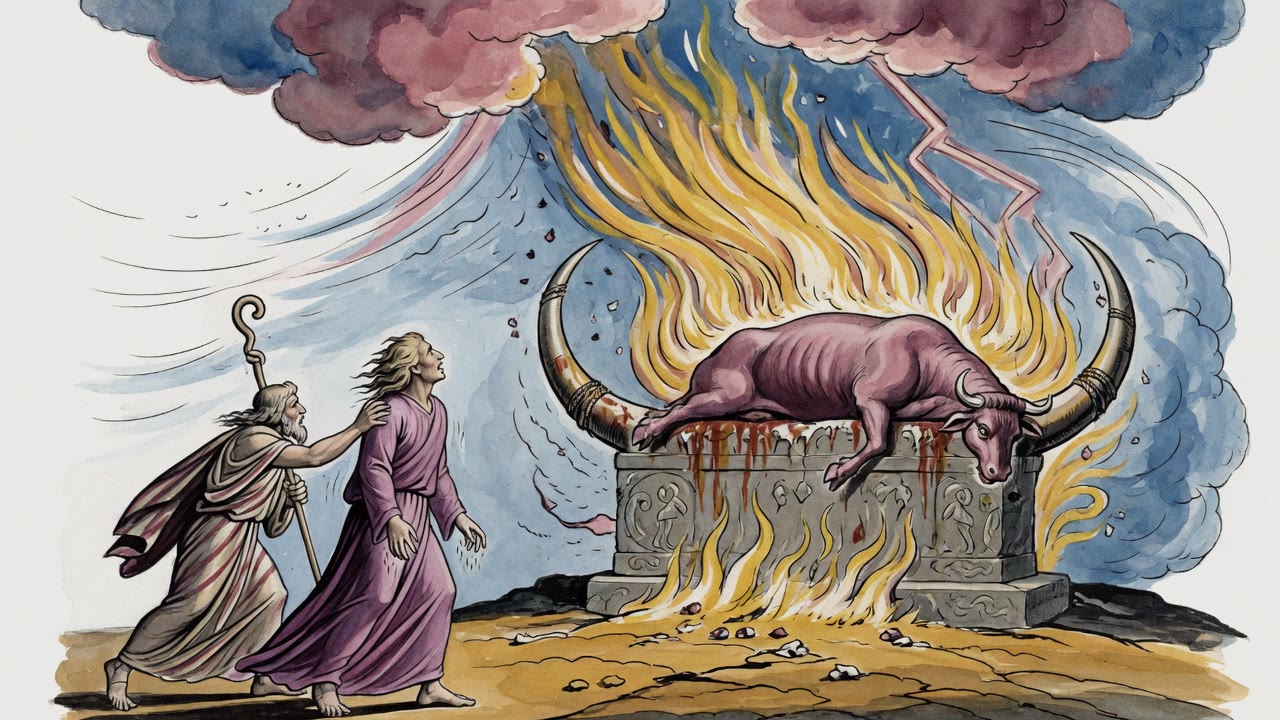
Before the altar could take Israel's offerings, the altar had to be taught how to hold them. Each morning of seven, a bullock rose as a sin offering. Blood anointed stone. Oil sealed what blood had claimed (Exodus 29:36). Wood does not sin. Stone does not rebel. Still the altar drank atonement every dawn, not for its guilt, but for its capacity. It would soon bear the weight of a nation's failures. It needed layers, the way creation needed seven days.
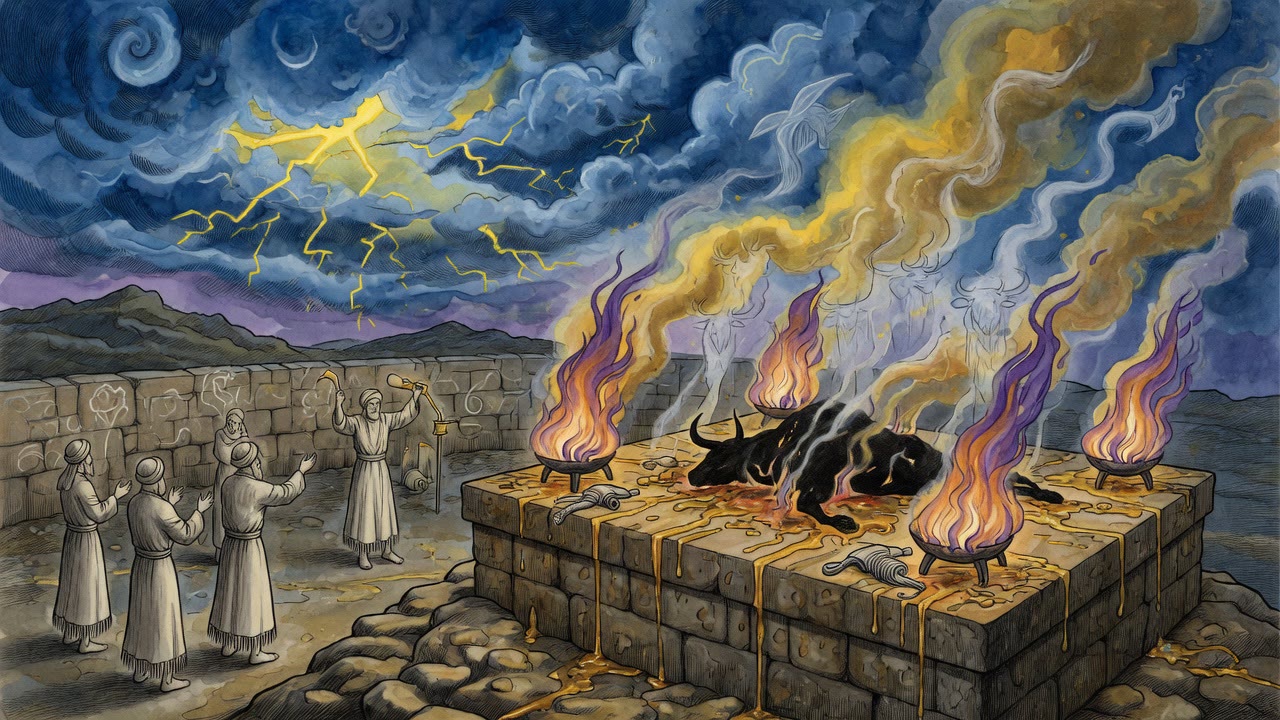
Moses moved between oil and blood as if the two were one motion. Sanctify. Atone. Sanctify again. The camp watched a structure become a mouth that could safely swallow fire. Priests learned the rhythm with him. Children watched from a distance and learned that holiness is not a sudden costume. It is a week of repeated work that stains the hands.

By the seventh dawn the stones no longer looked new. They looked ready.

Lying Lips in the Waiting Months

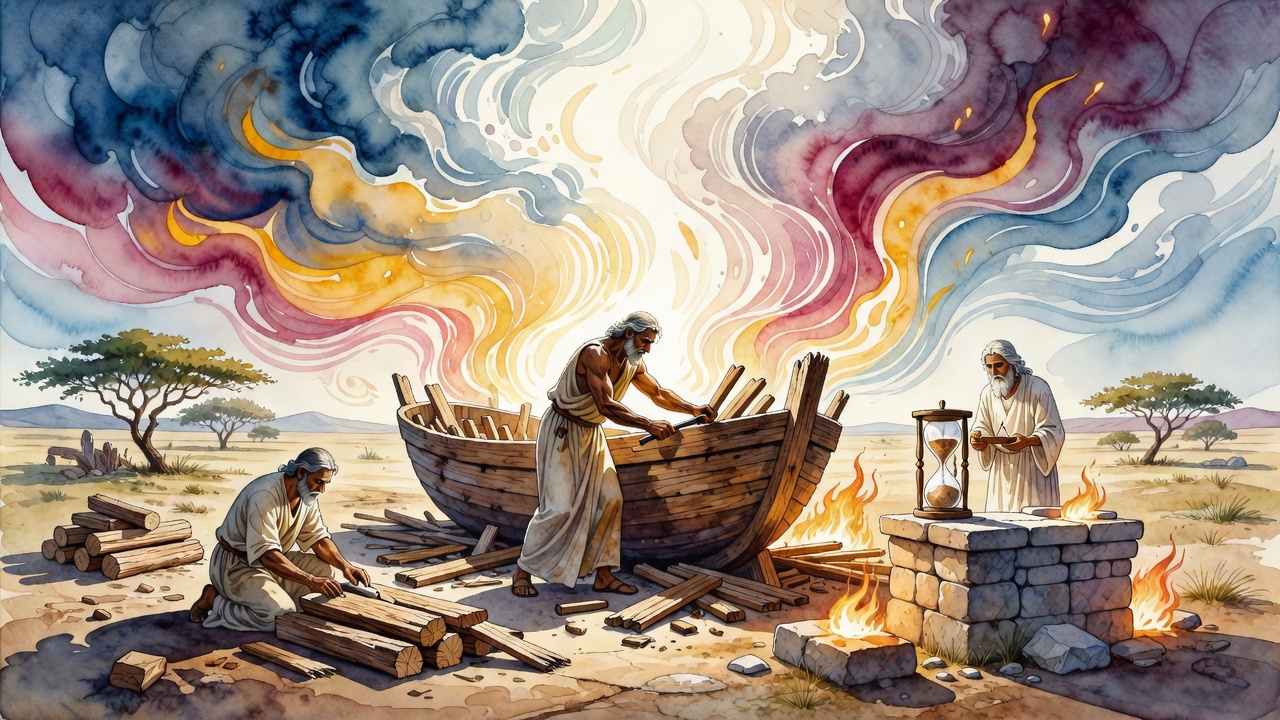
The Tabernacle itself had already endured a longer test. Three months to build. Three months to wait. In the waiting, cynics found their voice. Can the Presence rest through the son of Amram? They said it loud enough for the midrash to keep the sneer. Even speed that looked impossible did not silence them while the parts still lay unassembled. Doubt loves a half-finished holy thing.

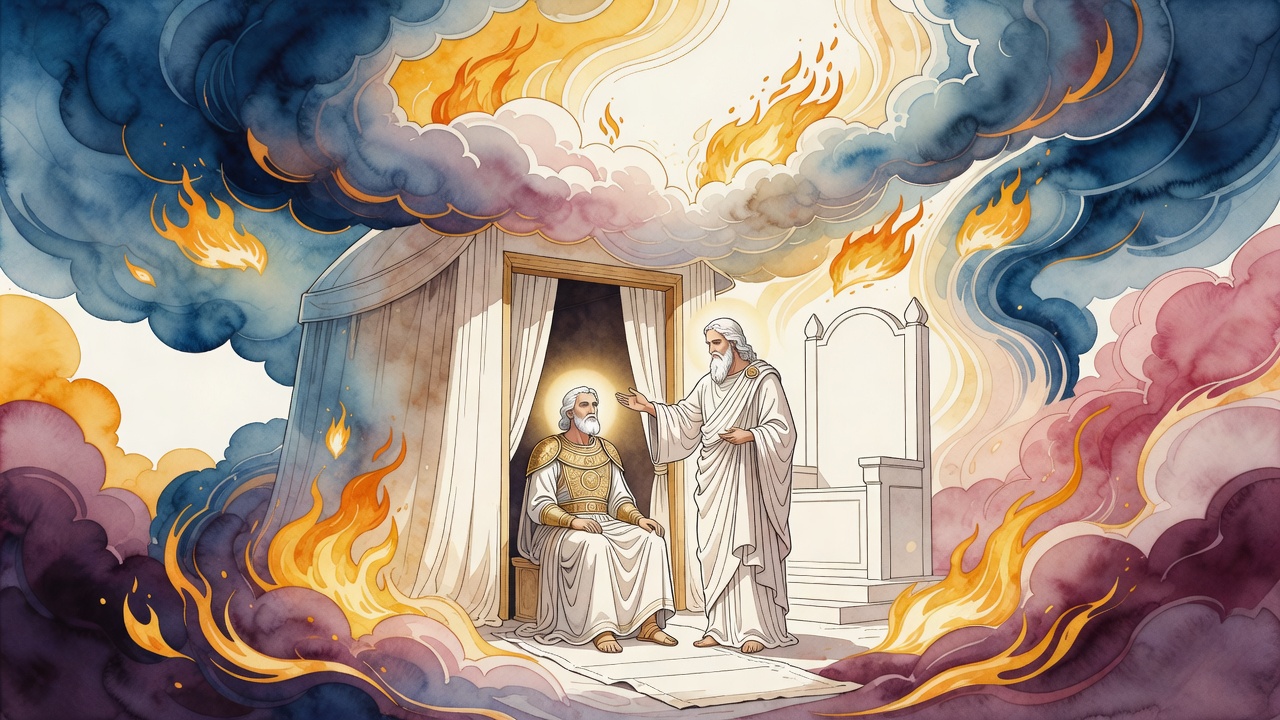
God held the raising for the month of Isaac's birth. Only then came the command: on the first of the first month, erect the Tent of Meeting (Exodus 40:2). The people carried their work to Moses. Collective shoulders answered private scorn. Boards rose. Curtains hung. The lying lips of Psalm 31 meet the Mishkan (the Tabernacle, the portable sanctuary of the wilderness) story as mouths that keep recycling old contempt instead of watching a new thing arrive on time.

A woman who had spun blue thread for the curtains heard the mockers and kept spinning. When the cloud finally covered the Tent, she did not need to answer them. The cloud answered.

Gold That Will Not Let a Tribe Slip

While boards rose and curtains hung, a goldsmith set the breastplate's last row: chrysolite, onyx, jasper. On them, Zebulun, Joseph, and Benjamin, names enchased so nothing could fall out (Exodus 39:13). Merchant shore, bones carried from Egypt, the youngest in whose land the Temple would one day stand. Trade, survival in exile, sanctuary. The last row is not leftover decoration. It is the clasp that closes the whole people against a priest's heart.

If one stone loosens, the garment loses authority. If one tribe is forgotten, Israel is not whole. The craftsman fixing gold around a name is doing the same work as the blood on the altar: making a vessel strong enough for what a people will pour into it. His hammer spoke a quieter language than the cynics, and a longer one.

Late tradition holds that those stones did not perish with the Temple. They wait for a priest who will wear all twelve names again. Waiting is part of their job.

When the Presence Finally Rests

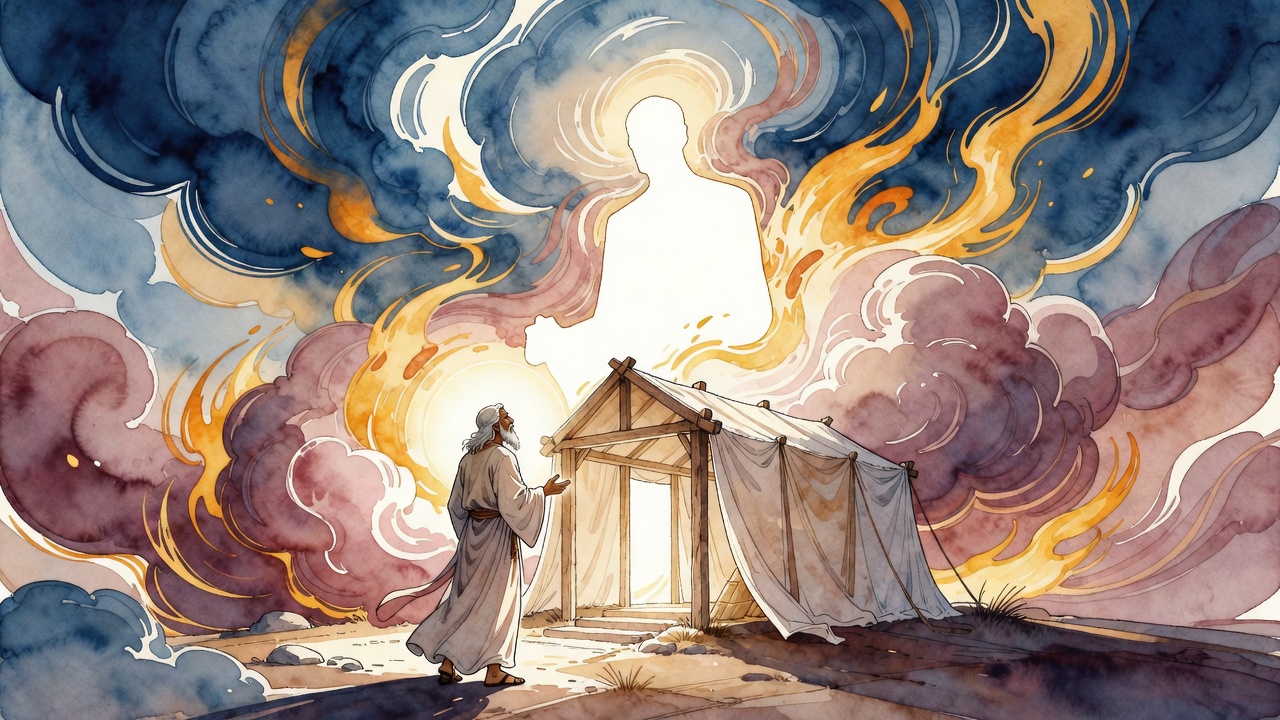
Seven bullocks. Seven dawns. Then ordinary offerings can begin. The cynics go quiet when cloud covers the Tent and no one can pretend the wait was empty. Moses no longer needs to argue with scorn. The structure argues for him. Fire takes what it is given without burning the camp to ash.

Holiness, in this telling, is never a single gesture. It is repetition until stone learns, until gold locks, until a camp that mocked learns to carry. The altar does not become pure by wishing. It becomes pure by being prepared, day after day, to hold what human hands will bring.

Stand in the courtyard on the morning after the seventh bullock. The air smells of fat and oil. The stones are no longer only stones. They are a trained vessel. That is the whole plot of inauguration.

What the Stones Learned to Carry

On the eighth morning the first ordinary offering approached without the inauguration's special bullock. Priests moved with less ceremony and more fear. The altar did not reject them. Seven days of blood and oil had trained it. Capacity is a kind of intelligence stones can learn when heaven insists.

Across the courtyard the high priest's garments waited with their locked names. Zebulun's sea-trade, Joseph's exile bones, Benjamin's future sanctuary: the last row still pressed against a living chest when the priest walked. Cynics who had mocked the months of waiting found fewer listeners. Mockery sounds thin next to a cloud that will not leave the Tent.

Preparation had been the true sacrifice before any animal. Time, scorn endured, gold set tight, blood layered on stone. Only then could guilt arrive without destroying the place meant to hold it.


← All myths

From the tradition

Sources

3 sources

The texts behind this telling. Some cards carry a translation of the source; others are our own retelling of it, and each card says which. Every card links out to the original.

Targum Pseudo-Jonathan on Exodus 29:36Targum Pseudo-Jonathan on Exodus

Retold in our words. Read the original at the link below.The Targum of Jonathan ben Uzziel, trans. J. W. Etheridge, London, 1862 · Public Domain

Before the altar of the Mishkan could receive Israel's offerings, it had to be made holy itself. Targum Pseudo-Jonathan (an Aramaic paraphrase whose expansions preserve tannaitic and amoraic traditions) records the instruction: every day of the seven-day inauguration, a bullock was to be offered as a sin offering, and its blood was to anoint the altar, a daily consecration, layered like oil on stone, until the altar itself was saturated with atonement.

The ancient rabbis noticed something strange here. Why does the altar need a sin offering? Stone does not sin. Wood does not transgress. The answer the sages offered: the altar does not sin, but it bears sin. Every offering brought to it carries the weight of human failure, and even the stones of a holy place absorb something of what passes across them. The daily bullock was not for the altar's guilt. It was for the altar's capacity, preparing it to hold the guilt of a nation.

This is why Moses anointed it as he offered atonement upon it. The two acts were one motion: the oil sanctifying, the blood atoning, the altar becoming what Israel needed it to be (Exodus 29:36). Seven days, because holiness in Jewish thought is never achieved in a single gesture. It is built in layers, like the seven days of creation itself.

The Maggid hears in this a teaching about preparing any sacred space, a home, a heart, a moment of prayer. You do not walk in clean. You clean as you walk, day by day, until the place itself learns to hold what you bring.

Full source
Shemot Rabbah 52:2Shemot Rabbah

Retold in our words. Read the original at the link below.The Sefaria Midrash Rabbah, 2022 · CC-BY

That feeling, that struggle, is something deeply human, and surprisingly, it echoes in the story of the Mishkan, the Tabernacle.

Shemot Rabbah, a collection of rabbinic interpretations on the Book of Exodus, explores this very idea. It starts with a powerful verse from Psalms (31:19): “Mute the lying lips that speak falsehood against the righteous with arrogance and contempt." What does this have to do with the Tabernacle? Well, the Rabbis find connections in the most unexpected places!

One interpretation focuses on Yom Kippur, the Day of Atonement. If you keep bringing up the same old sins, God might say, "Enough! Mute those lying lips!" It's as if to say, "Haven't you moved on? Do you have nothing new to confess?" The Hebrew word used here, atak, refers to things that have already passed. It's even used in (Genesis 12:8) in the phrase "vayatek from there to the mountain," meaning "He relocated." Bringing up old sins, according to this reading, is a form of arrogance, implying that you haven't grown, that you have no current shortcomings to address.

The Shemot Rabbah doesn't stop there. It takes this idea and applies it directly to Moses and the building of the Tabernacle. Remember, God commanded Moses to have the Israelites build this portable sanctuary, this dwelling place for the Divine Presence. Moses, being the faithful leader he was, immediately relayed the command: "Let them bring Me a gift" (Exodus 25:2).

Now, here's where the “lying lips” come in. According to Rabbi Yoḥanan, Moses was involved in the Tabernacle project for six months: three months to build it, and three months. just waiting. And during that waiting period, the cynics of Israel started to murmur. “Is it possible,” they scoffed, “that the Divine Presence will rest by means of the son of Amram?” They couldn't believe that this seemingly ordinary man, Moses, could be the instrument through which God's presence would manifest.

The Yefei To’ar commentary adds that even the remarkably quick construction of the Tabernacle (in just three months!), which arguably required divine assistance, didn't silence the critics. They were still skeptical because it wasn't yet assembled, and the Divine Presence wasn't visibly dwelling within it.

Why the delay? The Shemot Rabbah tells us that God intended for the Tabernacle to be erected in the month that Isaac, our patriarch, was born. But God didn’t immediately command Moses to act. It wasn’t until that specific month arrived that God finally said to Moses: “On the day of the first month, on the first of the month, you shall erect the Tabernacle of the Tent of Meeting” (Exodus 40:2).

Only then, in that divinely appointed moment, did the people begin to carry the Tabernacle, each person bringing the fruits of their labor. As the verse states, “They brought the Tabernacle to Moses.” It was a collective effort, evidence of their faith, finally silencing the "lying lips" that had doubted and mocked.

So, what can we learn from this? Perhaps it's a reminder that even the most righteous among us, like Moses, face criticism and doubt. Maybe it's a lesson in patience, that divine timing is often different from our own. Or perhaps it's simply a call to be mindful of our words, to avoid becoming those "lying lips" that speak falsehood with arrogance and contempt. After all, who knows what incredible things might be unfolding, even when we can't yet see them?

Full source
Targum Pseudo-Jonathan on Exodus 39:13Targum Pseudo-Jonathan on Exodus

Retold in our words. Read the original at the link below.The Targum of Jonathan ben Uzziel, trans. J. W. Etheridge, London, 1862 · Public Domain

The fourth and final row of the breastplate, according to Targum Pseudo-Jonathan on (Exodus 39:13), held chrysolite, onyx, and jasper. Engraved upon them were the names of Zebulun, Joseph, and Benjamin, "enchased and set in gold in their infillings."

Why these three at the end?

Zebulun was the merchant tribe, the one who dwelled on the shore of the sea. Joseph was the viceroy of Egypt, whose bones Moshe himself carried out of the land of bondage (Exodus 13:19). Benjamin was the youngest, the beloved of Jacob, the tribe in whose territory the Temple would eventually stand. Trade, sustenance in exile, and the promise of the sanctuary, three pillars of Israel's survival, fastened in gold.

Enchased in gold

The meturgeman's phrase is careful: the stones were enchased and set in gold in their infillings. Nothing was loose. Nothing could fall out. The tribes were not decoration; they were structural. The breastplate would not hold together without them.

The ancient storytellers noticed something here. If even one stone loosened, the garment would lose its authority. If even one tribe were forgotten, Israel would not be whole. The goldsmith who set the stones was not just a craftsman. He was a guardian of the people's unity, fixing each name so firmly that time could not pry it loose.

late antique tradition holds that when the Temple was destroyed, these stones did not perish. They waited. They wait still, the meturgeman implies, for the day when a priest will again wear the names of all twelve tribes over his heart and walk into the Holy of Holies.

The takeaway: the last row is not an afterthought. It is the clasp that closes the whole.

Full source