The Angel Who Told Manoah He Changes His Form Every Hour
Manoah pressed a messenger for his name, and the answer was that he changes shape every hour and cannot be called anything at all.
Table of Contents
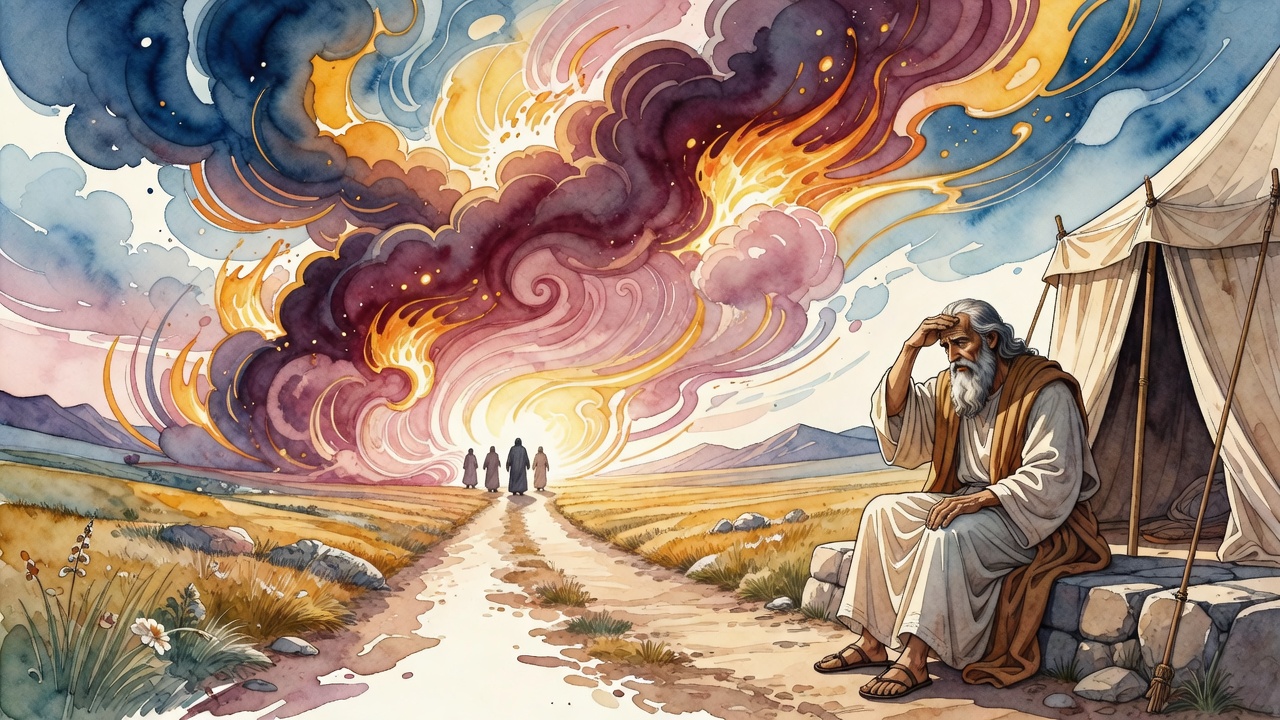
The field at Zorah was empty except for one woman, and then it was not. A man stood where no man had been, and the wife of Manoah turned and looked at him without fear, which was its own kind of strange. He told her she would carry a son. No razor was to touch the boy's head, no wine to pass his lips, no unclean thing to enter his mouth, for the child belonged to God from the womb to the day of his death. Then the man was gone, and only the words stayed, heavy in the dry grass.
 Click for full size
She ran home. Manoah listened to her account of the meeting and did a thing the sages would argue about for centuries afterward. He prayed for the stranger to come back. He wanted to hear it again, from the source, with his own ears.
The Husband Who Walked Behind
God answered. The man returned, again to the woman, again in the field, and again she ran, and this time Manoah rose and went after his wife to the place where the messenger waited. That small verb, "went after," would split a study hall in two. Rav Nachman read it and pronounced Manoah an ignoramus, a man who trailed behind his own wife because he had never sat in a schoolroom long enough to learn that Rebecca rode behind the servant and not before him.
The objection came fast. If walking behind a woman makes a man a fool, then Elkanah the prophet's father stands convicted by the same logic, and he was no fool. No, the others answered. Manoah did not walk behind her body. He walked behind her words. He went after her counsel, trusting that she had met something real, and there is no shame in a man who follows the one who saw the angel first.
Whatever the sages decided, Manoah reached the field. He stood before the man who had spoken to his wife twice and asked the practical questions of a father. How should the boy live. What is his work to be. And then he asked the question that would unmake the whole quiet scene.
The Name He Could Not Give
"What is your name," Manoah said, "so that when your words come true we may honor you?" He wanted a name to keep, something to write down, a way to point later and say this one brought us the news.
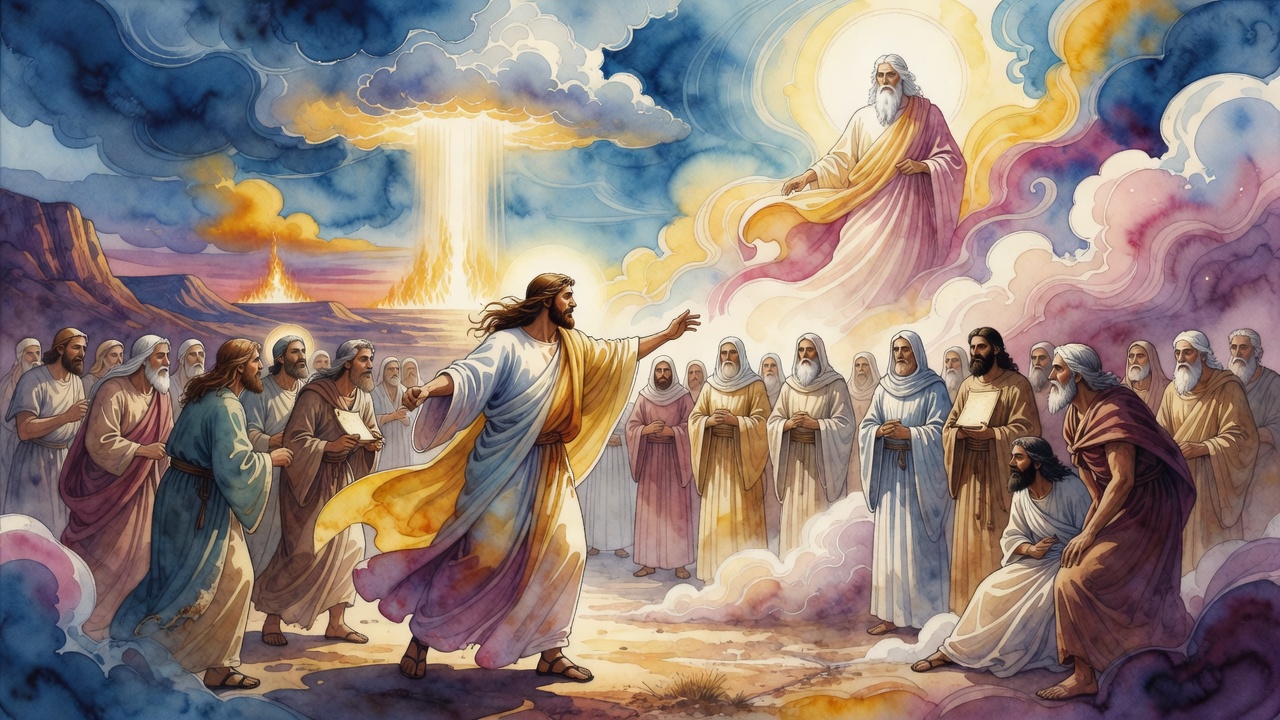
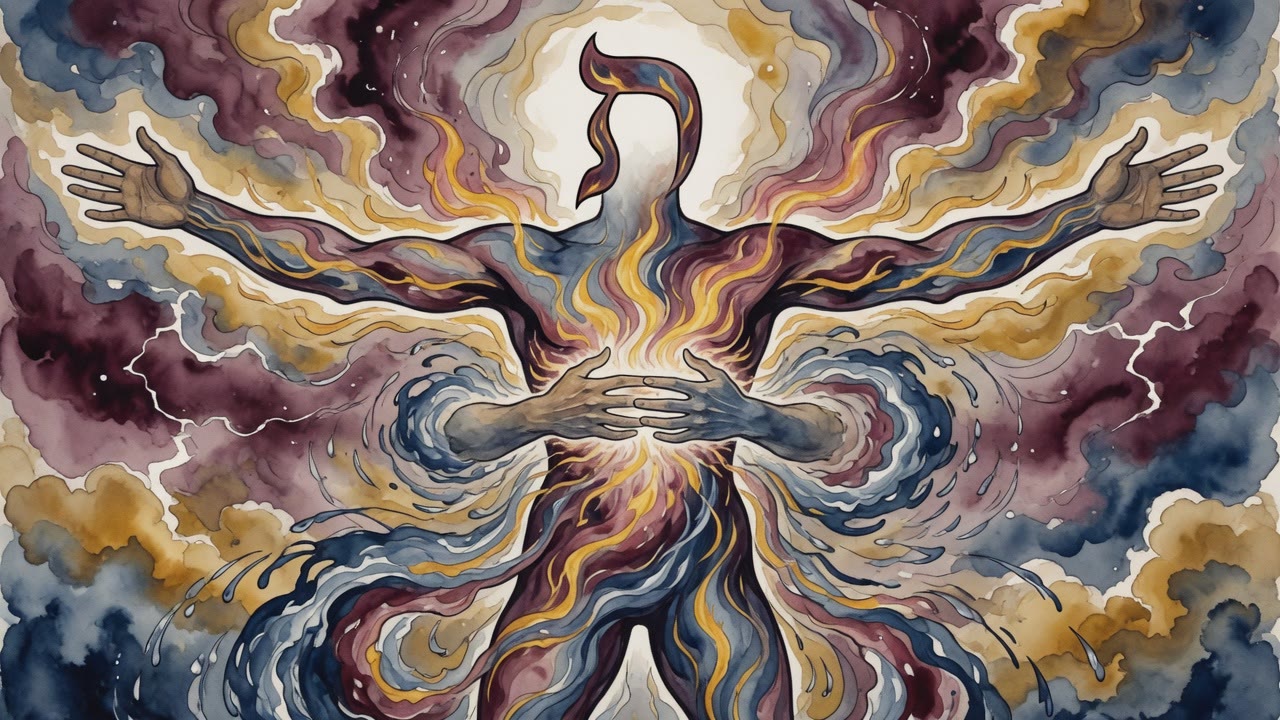
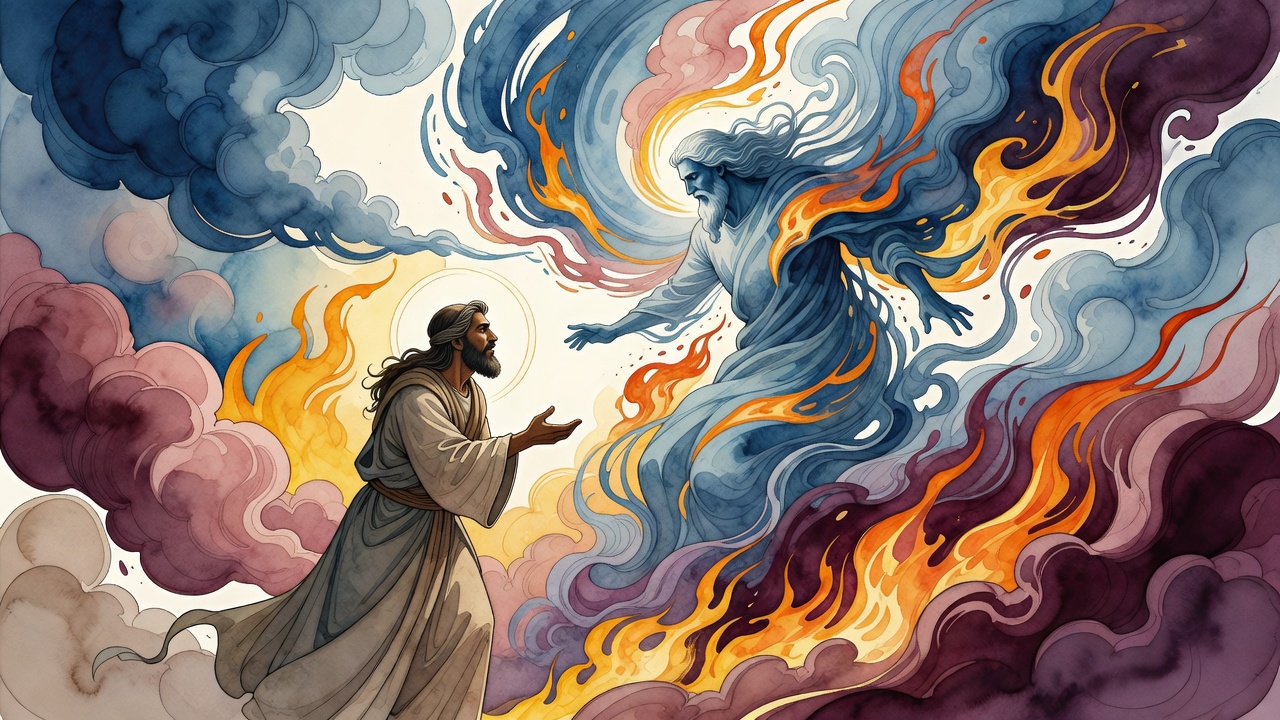
The answer did not come the way names come. The messenger said, "I do not know in whose likeness I am made, for at every hour He changes me." The thing standing in the field could not tell Manoah what it was, because it was not the same thing it had been an hour before, and it would not be the same an hour from now. It had no fixed shape to attach a name to. "Why do you ask my name," it said, "seeing it is wondrous."
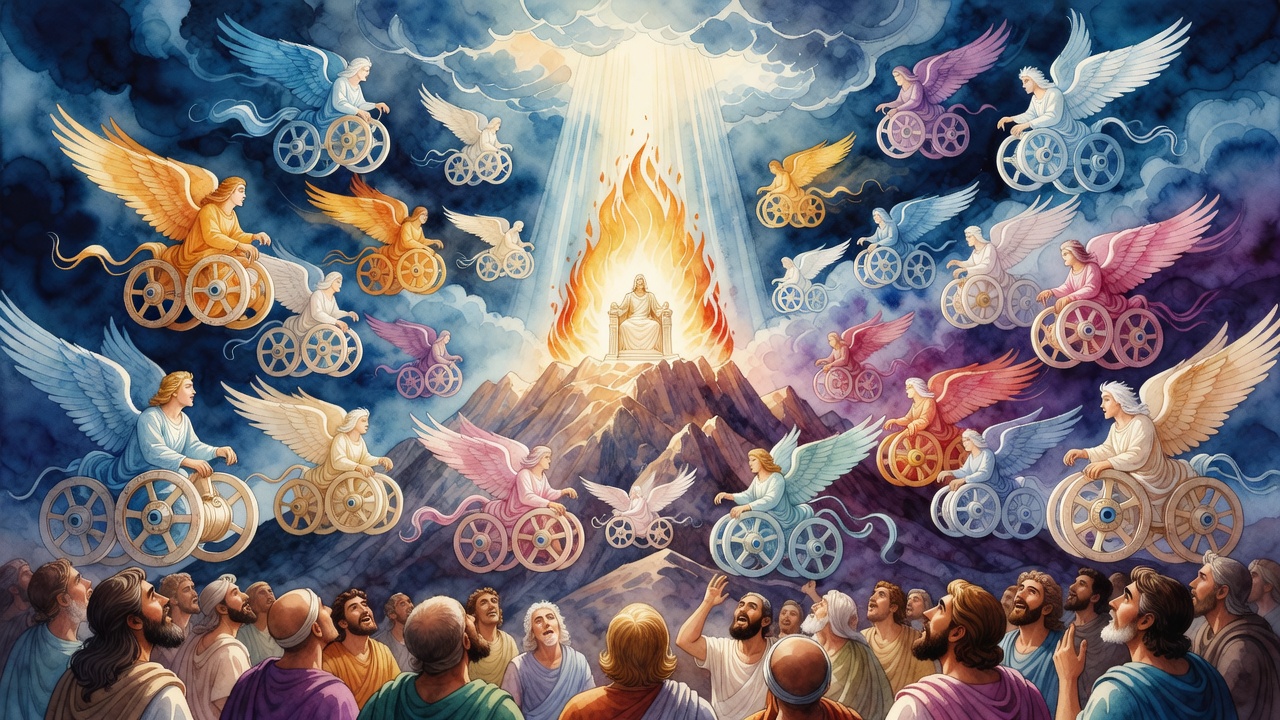
Wonders upon wonders were worked through it, and it named them. "Sometimes I am wind." For it is written that He makes His messengers winds. "Sometimes I am fire." For it is written that His ministers are a flaming fire. The face Manoah was looking at was not a face. It was the current shape of something that would be air by evening and flame by night, lent a body only long enough to deliver its message.
The Same Power at Abraham's Tent and at Sodom
This was not the first time the shifting had been seen. At Abraham's tent the same kind of beings had arrived wearing the bodies of travelers. He lifted his eyes and looked, and three men stood before him, dusty from the road, and he ran to wash their feet and feed them. Men, plainly men. The same messengers walked on to Sodom that evening, and by the time they reached the gate they were angels again, two of them, blazing enough to strike a mob blind in the dark. Travelers in the morning, angels by nightfall, and never once a settled form to carry a settled name.
Manoah did not yet grasp what he was speaking to. He invited the messenger to stay and eat, the way Abraham had fed his three, and the messenger refused the food and turned the offer toward Heaven instead.
The Fire That Took the Offering Up
So Manoah took a kid and a meal offering and laid them on a rock in the open field. This troubled the sages later, because the sanctuary stood at Shiloh in those days, and by one ruling no offering belonged on a bare rock outside its walls. They settled it with a phrase. This was a ruling for the hour, a single directive permitted by Heaven for that one moment, lawful because the moment itself was not ordinary.
The flame went up from the rock toward the sky, and the messenger went up inside it. The thing that had been wind and would be fire became fire in front of them and rode the smoke of the offering back to the place it came from. Manoah and his wife fell on their faces in the dirt. He was certain now that they would die, because they had looked at God's messenger and lived to be afraid of it. His wife, steadier than him from the first field to the last, told him that a God who meant to kill them would not have accepted their offering or shown them any of this.
The son came as promised. They named him Samson. He grew, and the spirit of God began to move him, and the field where a nameless thing had refused to say what it was became the place where the strongest man in Israel was conceived. Manoah never got his name. He got something stranger to remember instead, a visitor that would not hold still long enough to be called anything at all.
← All myths