The Arrows of Light and the Arrows of Blood
Before the world began, the letters fought to be first. Generations later, humans shot arrows at heaven. The arrows came back covered in blood.
Table of Contents
 Click for full size
The Letters Fought to Be First
Before there was a world, there was an alphabet, and the alphabet was loud.
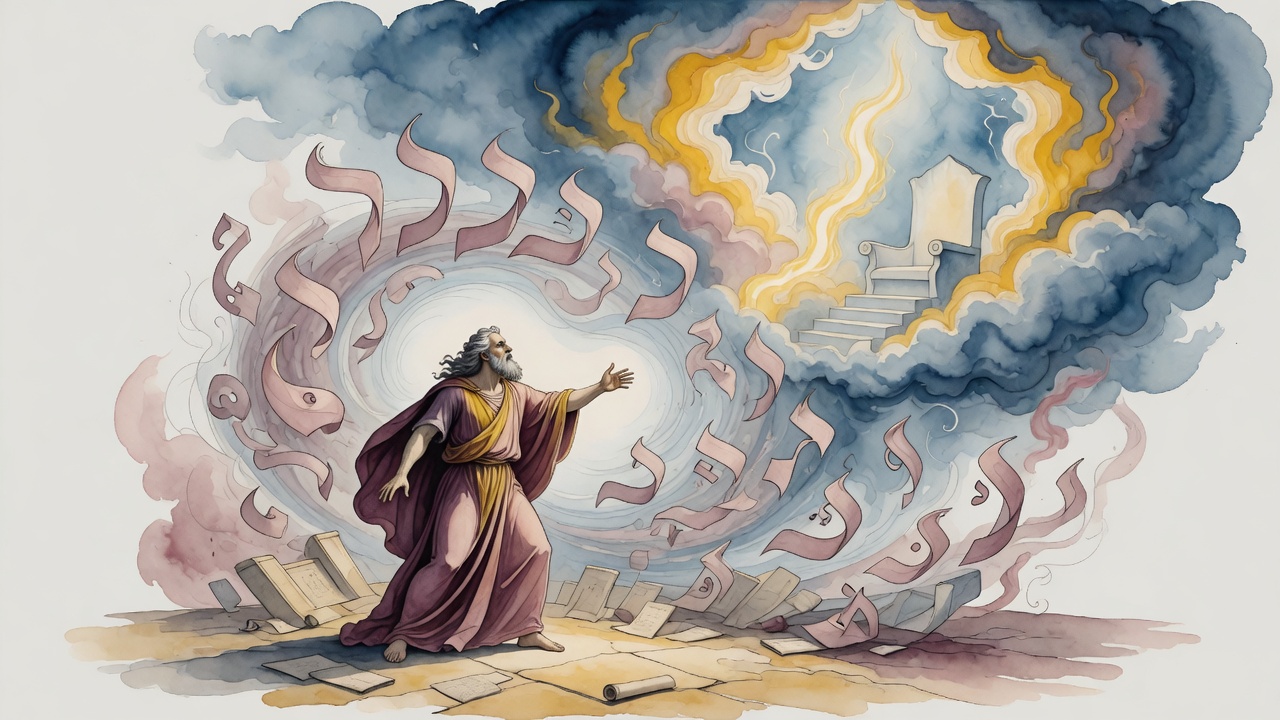
The twenty-two letters of Hebrew lined up before God and made their arguments. Each one wanted the honor of opening creation. Tav said it was the seal of truth and therefore the most essential. Shin said it carried God's own name. Letter by letter they made their cases, and God listened, and one by one God found reasons to say no.
Bet stepped forward last, or nearly last, and said the simplest thing: through me, the world will bless you every day. The first word people say when they want to reach you begins with me. Baruch atah Adonai. Blessed are you. The universe, Bet said, should open with blessing.
God agreed. The Torah begins with Bereshit, in the beginning, because the world was built on a letter whose function is praise. But the rabbis noted something else. Alef had said nothing. Alef stood at the back of the line in silence while the others argued. For its silence, God gave Alef the opening of the Ten Commandments at Sinai. The letter that won creation was the loudest one. The letter that won revelation was the one that waited.
The Sun and Moon Begged Not to Watch
The sun and moon were hung in the sky on the fourth day and given their duties. But the duties were not what the celestial lights had expected. Below them, the creation was already beginning to go wrong. The generation of Cain. The generation of the flood. The builders of the tower. The destroyers of Sodom. Every generation that followed the garden pushed harder against the limits God had drawn, and the sun and moon had no choice but to light the whole enterprise.
They petitioned God to be relieved of the witnessing. They said: we do not want to shine on what is happening down there. We cannot unsee what we have already seen. We were made to give light, but giving light to wickedness is not the same as giving light to creation. God refused the petition. The lights were not given the option of going dark to preserve their own innocence.
This is the moment when heaven and earth stopped being in simple agreement. The creation had entered something the lights were unwilling to bless, and the lights were required to shine anyway. The covenant between the creator and the created did not require everyone to feel good about their part.
The Child Who Glowed in the Dark
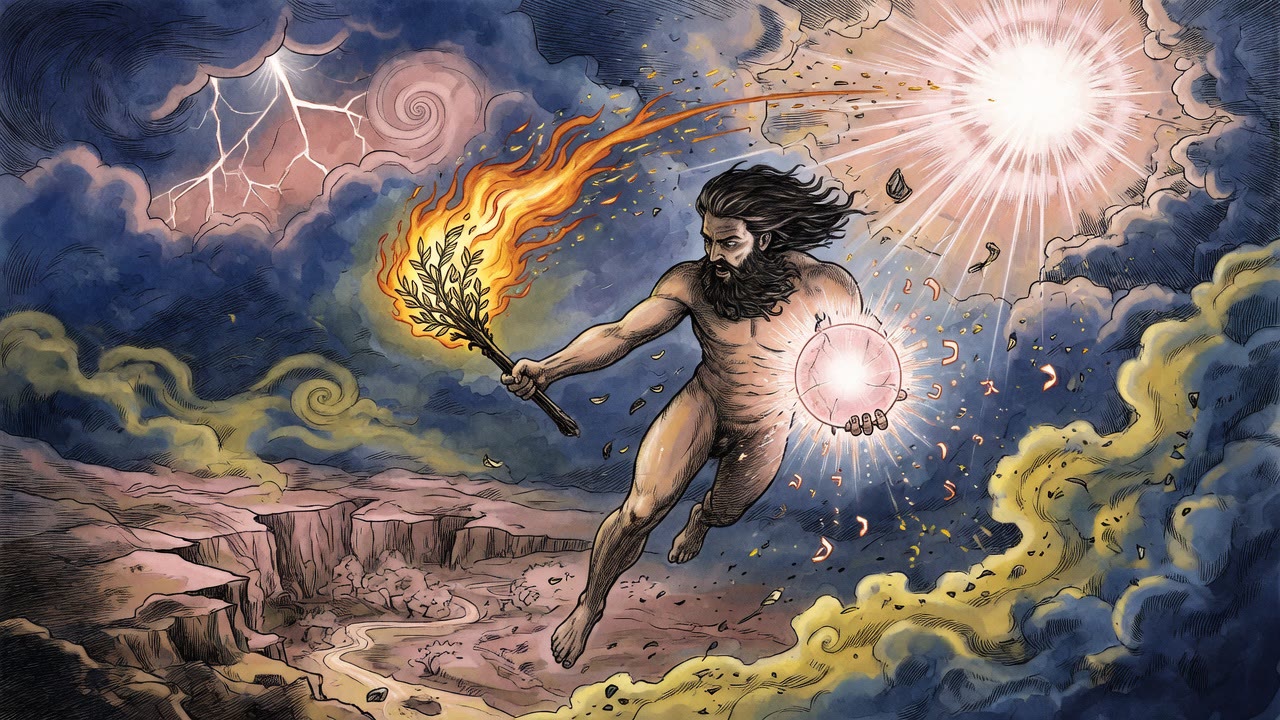
Lamech the blind was hunting by sound when his guide, a young boy, told him there was something moving in the dark ahead. Lamech drew and released. The thing he killed was not an animal. It was his ancestor Cain, the first murderer, who had been wandering since the exile from the garden, marked but alive by divine decree.
The mark of Cain was light. That was what the boy had seen moving in the dark: a man who glowed. Lamech had killed what was shining. He beat his hands together in grief and accidentally struck the boy's head and killed him too.
Light had traveled too long in a world that did not know how to read it. Cain's protective light became his death. The sign that was supposed to preserve him made him a target for a blind man who heard a sound and shot.
The Arrows That Came Back With Blood
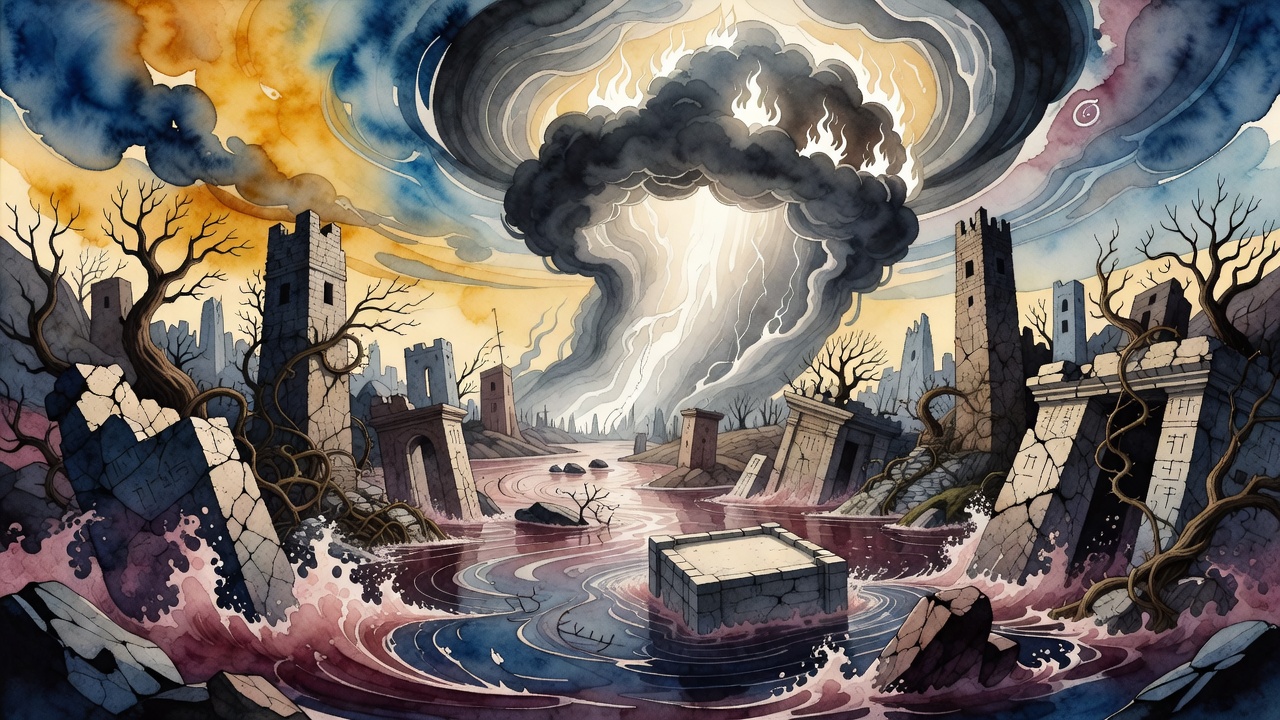
At Babel the builders decided they had been in the inferior position long enough. They had the technology now. They had a plan. They would build a tower high enough to reach the sky, and once they reached the sky they would settle the question of dominion once and for all.
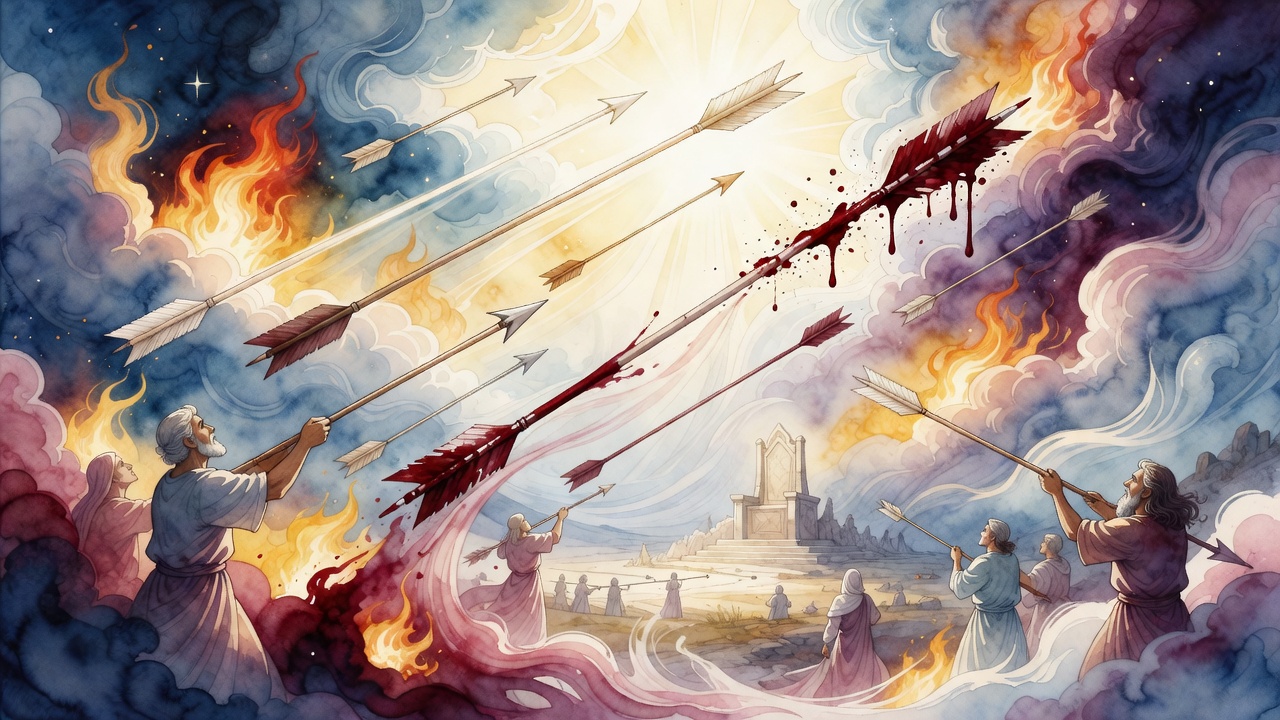
Some accounts say they brought weapons. They fired arrows upward and the arrows came back covered in blood. They took this as confirmation that heaven was mortal and could be killed. The rabbis did not say the blood was from angels or from God. They let the image stand without explanation: arrows sent up, arrows coming back red, and a generation that read that returning blood as victory.
God confused their language and scattered them before they could finish, not because the tower was tall enough to be dangerous but because the intention behind it was becoming its own disaster. A people unified by the project of conquering heaven would not stop at the tower. The scattering was not punishment. It was interruption.
Creation had opened with Bet, with blessing. Revelation would open with Alef, with direct address. In between, the sun and the moon had been forced to light things they did not want to see, a glowing exile had been shot by a blind man who thought he was hunting, and an army had fired arrows at the sky and decided that heaven bled. The letters that fought to begin creation could not have predicted the world their victory was opening.
← All myths