The Baby the Midwives Saved Had Ten Names
Pharaoh ordered two midwives to drown every Hebrew boy. They refused, lied to his face, and one of them later cradled the child his family renamed ten times.
Table of Contents
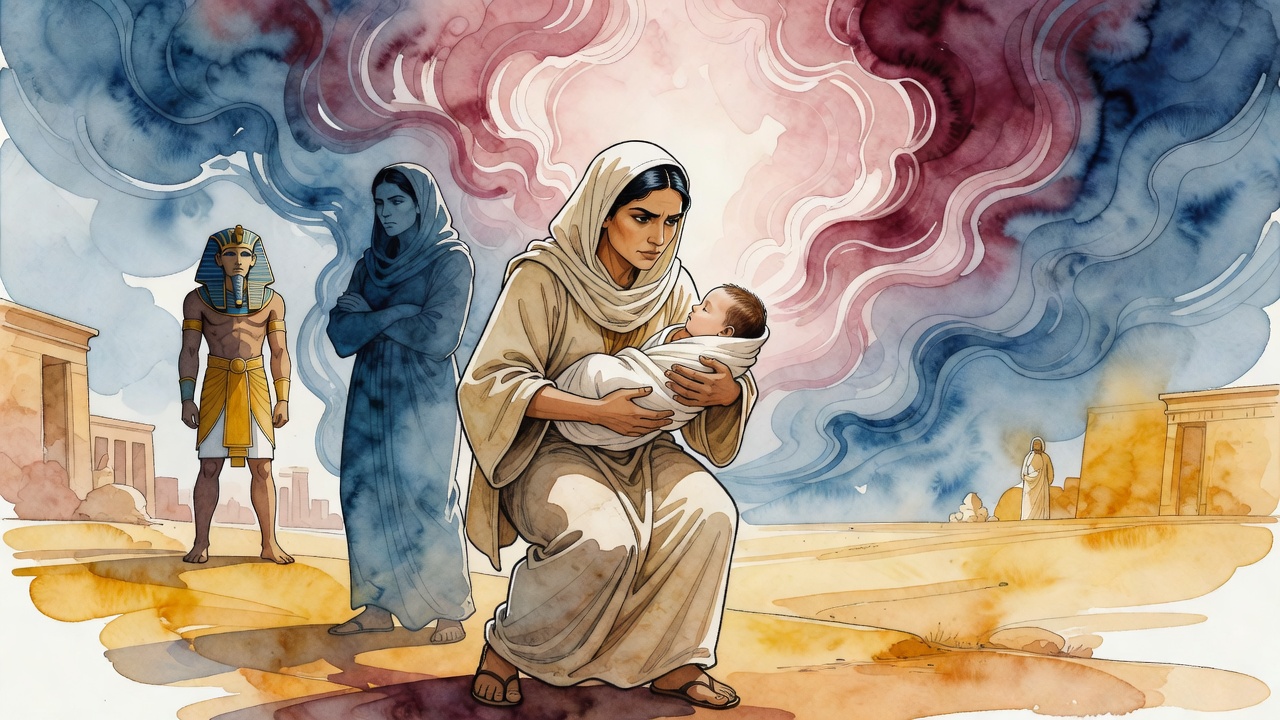 Click for full size
Pharaoh asks his cabinet how to murder a people
The Israelites were multiplying. The land thickened around the Egyptians like underbrush after rain, pressing and crowding, and Pharaoh called his three most trusted advisors to decide what to do.
Balaam said kill them. Not in ones and twos but systematically, efficiently, with a method that could not be named as murder. He proposed the midwives because the gods of Egypt, he believed, would not punish women for doing their assigned work.
Jethro objected and walked out of the room. He paid for that objection later with decades of exile in the desert. Midian received a refugee that Egypt lost.
Job kept his mouth shut. He did not endorse the plan. He did not oppose it. He sat in the council of the wicked and said nothing, and the rabbinic tradition, as Louis Ginzberg assembled it in his Legends of the Jews, counted this silence as a verdict. Every sore that later appeared on Job's body was accounted for by the number of heartbeats he spent watching Balaam make his argument and choosing not to speak against it.
Two midwives walk into the throne room
The two women Pharaoh summoned were not strangers. Shiphrah was Jochebed, the mother of the baby not yet conceived. Puah was Miriam, the older sister not yet born into her full prophetic role. Ginzberg's retelling, drawing on Sotah, Tanchuma, and Shemot Rabbah, knows who these women are before the text identifies them, because the tradition refused to let them be anonymous.
Pharaoh gave them the instruction. When you deliver a Hebrew boy, look at him carefully. If he is alive, let him die before his mother sees him survive. If he is a girl, let her live.
They went back to their work. They continued to deliver Hebrew children, and the Hebrew children continued to live.
When Pharaoh called them back and demanded an explanation, they gave him the one that required no courage to say and the most courage to say. They told him: Hebrew women are not like Egyptian women. They are vigorous, animal-quick, and they deliver before the midwife arrives. We were never present for the births.
The lie was perfect because it was untestable and because it required Pharaoh to accept an implied insult to the women of Egypt as part of the same sentence. He accepted it. They went back to work.
The baby who came in a basket
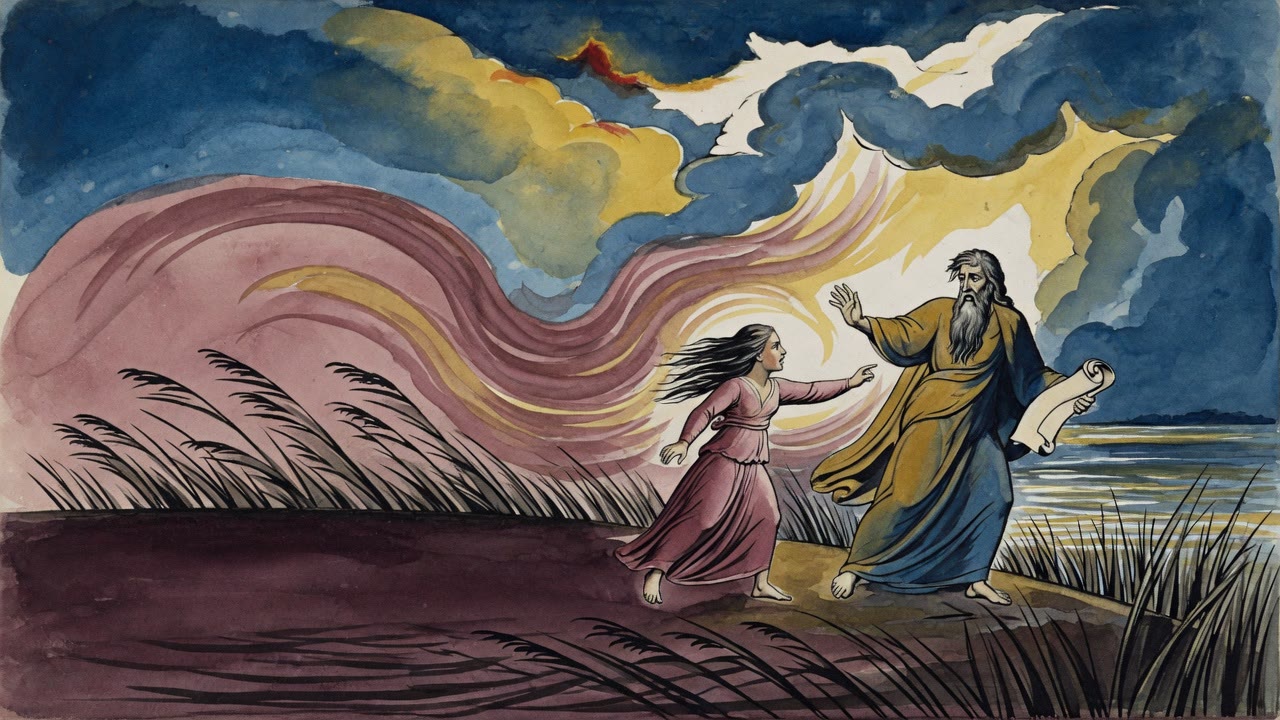
Jochebed, called Shiphrah in the throne room, gave birth to a son three months into the new drowning decree. She hid him. When hiding was no longer possible, she made a basket of bulrushes, sealed it with bitumen and pitch, and put her son in the Nile.
She did not put him in the Nile randomly. She put him in the section of the Nile where Pharaoh's daughter came to bathe. She had done her calculation.
The daughter of Pharaoh found the basket. She recognized a Hebrew child. And the tradition says that Miriam, who had been watching from the bank, stepped forward at exactly that moment to offer a Hebrew nurse for the infant. The nurse she brought was the child's own mother.
Jochebed nursed her own son in the palace of the man who had ordered him drowned, and was paid for it.
Ten names for one child
He was called Yekutiel by his father Amram, from the Hebrew root for hope and expectation. His mother called him Heber, the one who unites. His sister called him Yered, the one who descends, because he descended into the Nile. His brother Aaron called him Avi Zanoah: my father was driven away, which was a description of the household in that moment of crisis. Pharaoh's daughter called him Moses, drawn from water. The rabbis added five more names, each one a description of something they saw in him at birth or recognized in him through his life.
Ten names for one person is not redundancy. In the tradition, a name is a covenantal marker, and a person with ten names has been claimed by ten different people or ten different moments of significance. Each name was an act of recognition. Each recognition was a vote that this child mattered and should survive.
The midwives had cast the first vote, in the throne room, with a lie that worked.
← All myths