Korach Watched the Tribal Banners and Lost the Inheritance
Each tribe flew the color of its stone in Aaron's breastplate. Korach looked at the flags, then at the cousin who had been named prince.
Table of Contents
 Click for full size
The Camp Wore Aaron's Stones
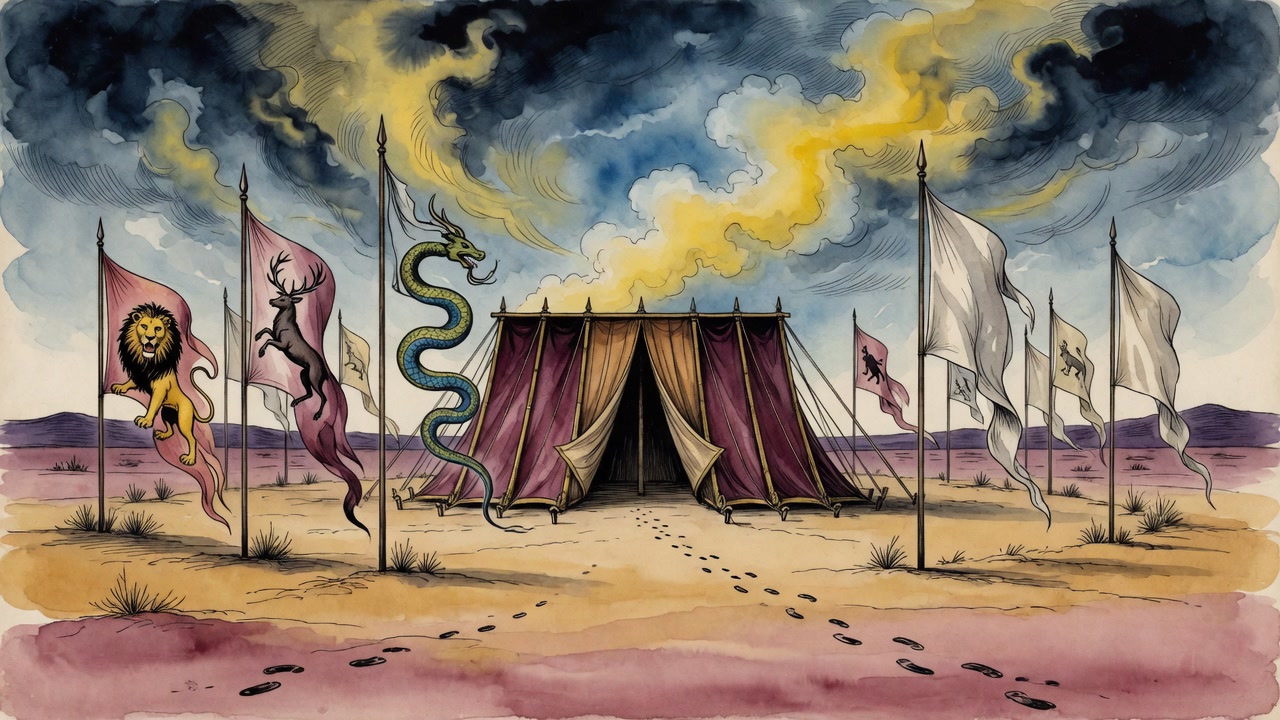
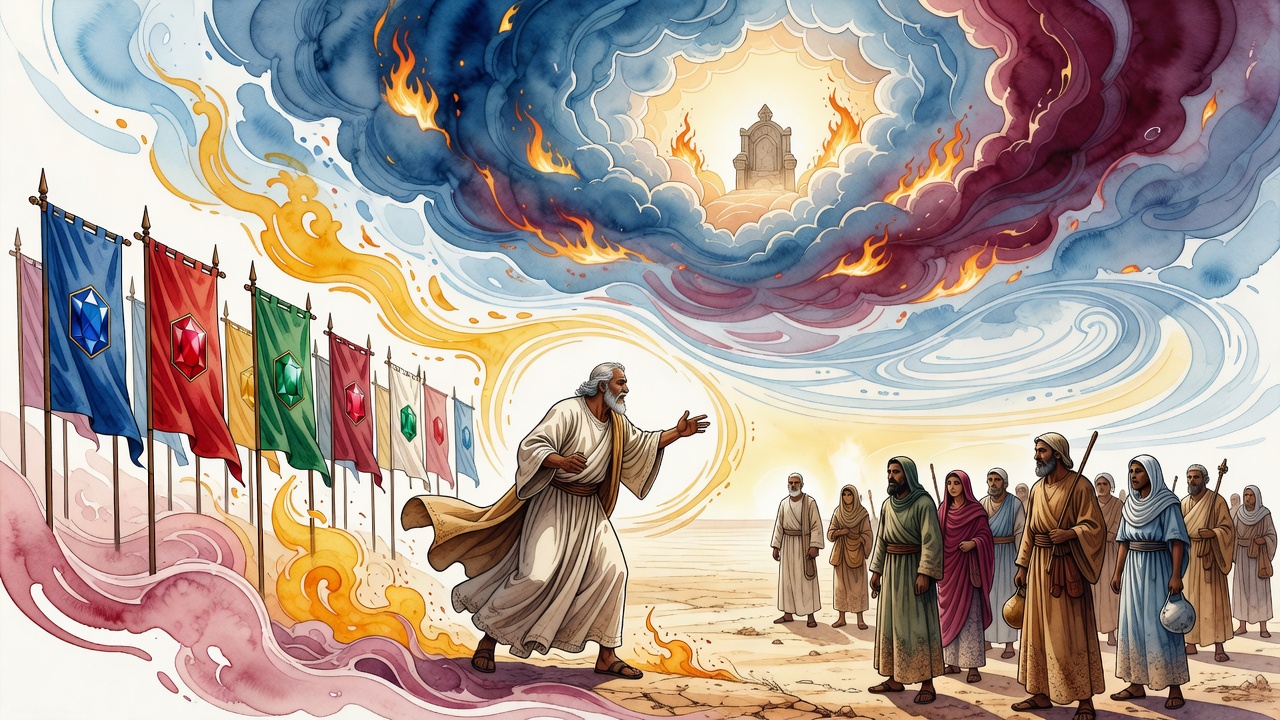
The Israelite camp in the wilderness was not a field of brown tents. Each tribe flew a banner the color of its stone in Aaron's breastplate, the choshen (חשן) that sat on the high priest's heart.
Korach walked the lanes and could read a family by the cloth. Reuben's flag was red as ruby, with mandrakes on it. Judah's was the color of the sky, with a lion. Levi's ran in three bands, white and black and red, with the urim ve-tumim sewn into the weave. Joseph's onyx split into two black fields, an ox for Ephraim and a wild ox for Manasseh.
Every color named a stone in Aaron's breastplate. Every place named a job. Korach knew his own work. The Kehatites carried the holy furniture. They did not wear a prince's banner.
The Cousin Who Was Named Prince
Kehat had four sons. Amram was first. From Amram came Moses, who held the prophecy, and Aaron, who held the priesthood. Yitzhar was second. Korach was Yitzhar's son. Hebron was third. Uzziel was last.
The prince over the families of Kehat was named, and the name was not Korach. It was Elitzafan son of Uzziel, son of the youngest brother.
Korach stood in the lane with that appointment in his mouth. Amram's house had taken the two crowns. The second house had been skipped. The youngest house had been raised over him. The grievance was not a rumor. It had a genealogy and a title nailed to someone else's tent.
"Who is worthy of the second place," Korach said, "if not the son of the second brother? I was worthy of becoming prince of my family. He arranged that the son of Uzziel would be greater than I."
Korach Took Them With Words
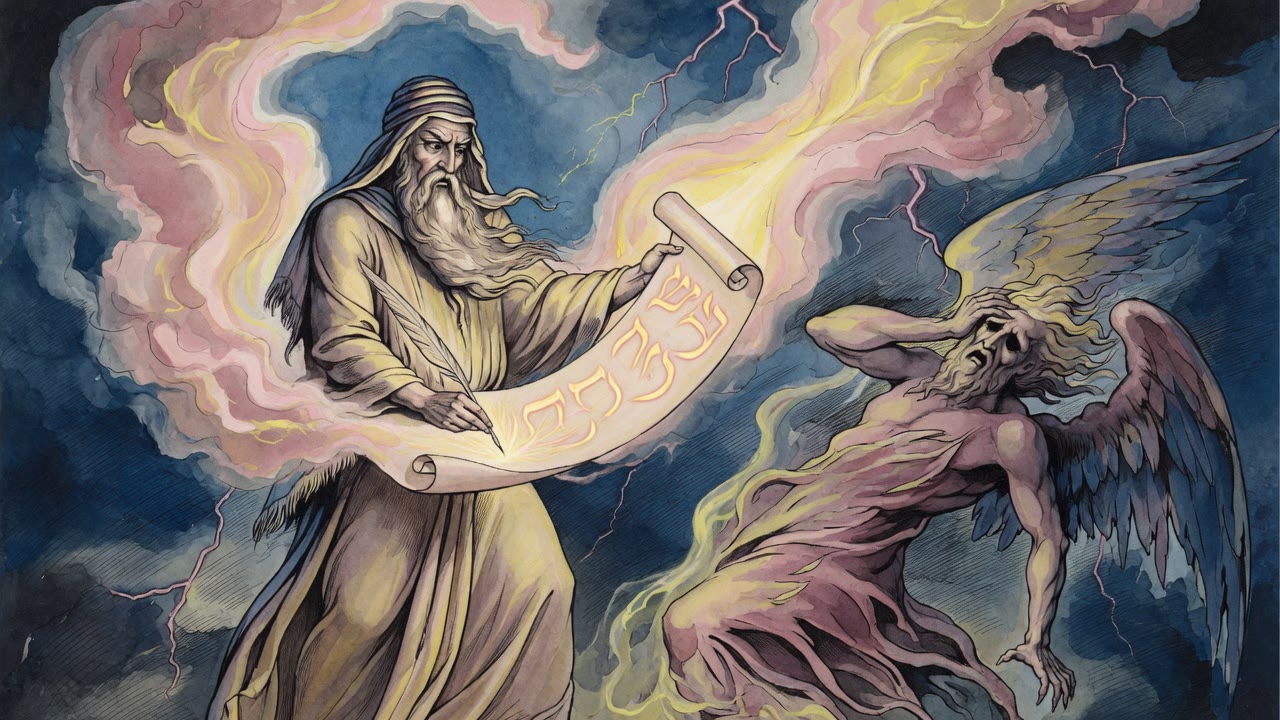
The Torah says Korach took, and does not say what he took. He took men. He took them with gentle words, the way a man takes a court with him without raising a hand. Prominent leaders came. Members of the Sanhedrin came. Two hundred fifty men with censers came, because he had made the slight sound like a law.
He did not seize the Tabernacle. He persuaded the camp that the order of the banners was a fraud. If Aaron's stones could assign a color to every tribe, why could Amram's house assign both prophecy and priesthood, and then skip Yitzhar's son for a cousin from the youngest line?
The flags still flew. Korach looked at them as proof. A camp that careful about place had, in his hearing, put him in the wrong one.
Moses Fell on His Face
Moses had fire in his history. He had plagues. He had the ground itself, if he asked. He did not crush Korach on the spot.
He fell on his face. He proposed a test. He waited. The cousin who had asked a question about birth order and office would get an answer from God, not from Moses striking him in the lane.
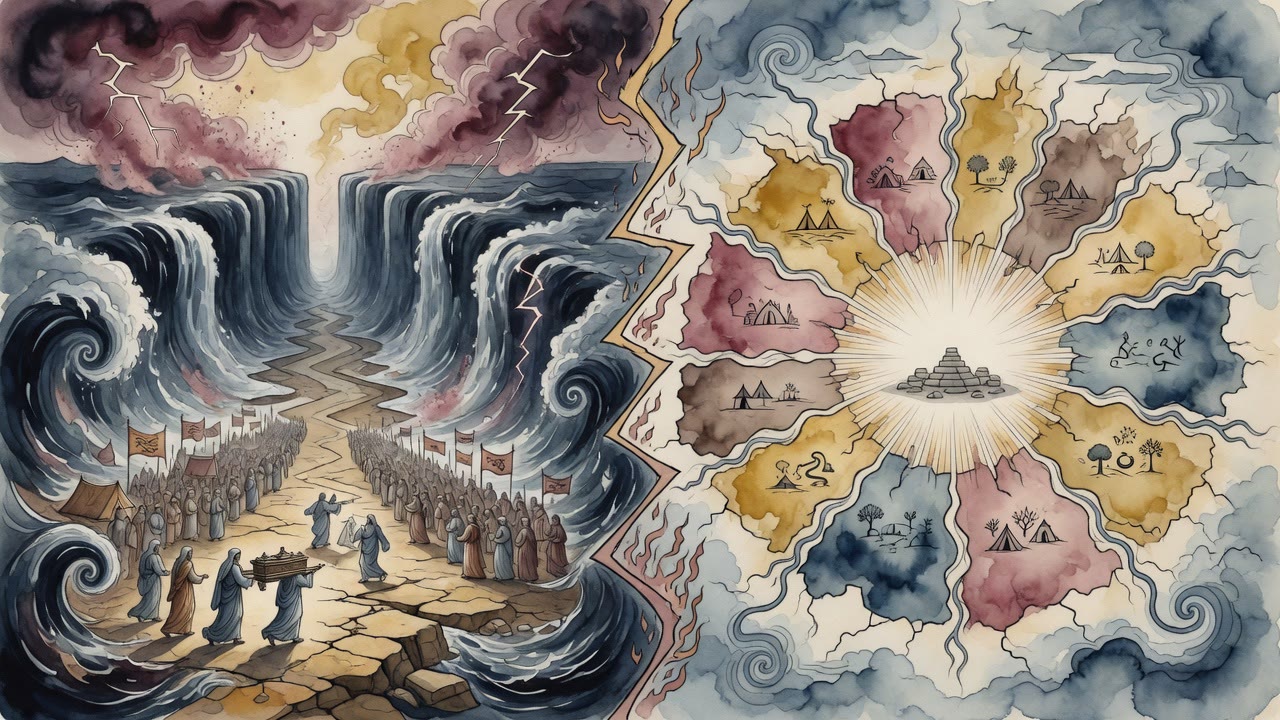
In the morning they came with pans. Fire came out. The ground opened. Korach and the tents that had stood with him went down, and the banners of the tribes that had not gone with him still stood in their colors around a hole in the earth.
Moses got up with dust on his mouth. The question about place had been heard. The answer had been a mouth in the dirt.
The Land Waited for Moab
Years later, on the plains of Moab, Moses counted again. The first census at Sinai was a roll of the dead. Joshua and Caleb remained. The people standing on the edge of the Jordan were not the people who had left Egypt. Their parents had left Egypt. They had grown up under the flags.
The promise had been spoken to the generation of Egypt. "I will give it you as a heritage" (Exodus 6:8). On the plain God said, to these the land shall be distributed. To the ones standing here, whole.
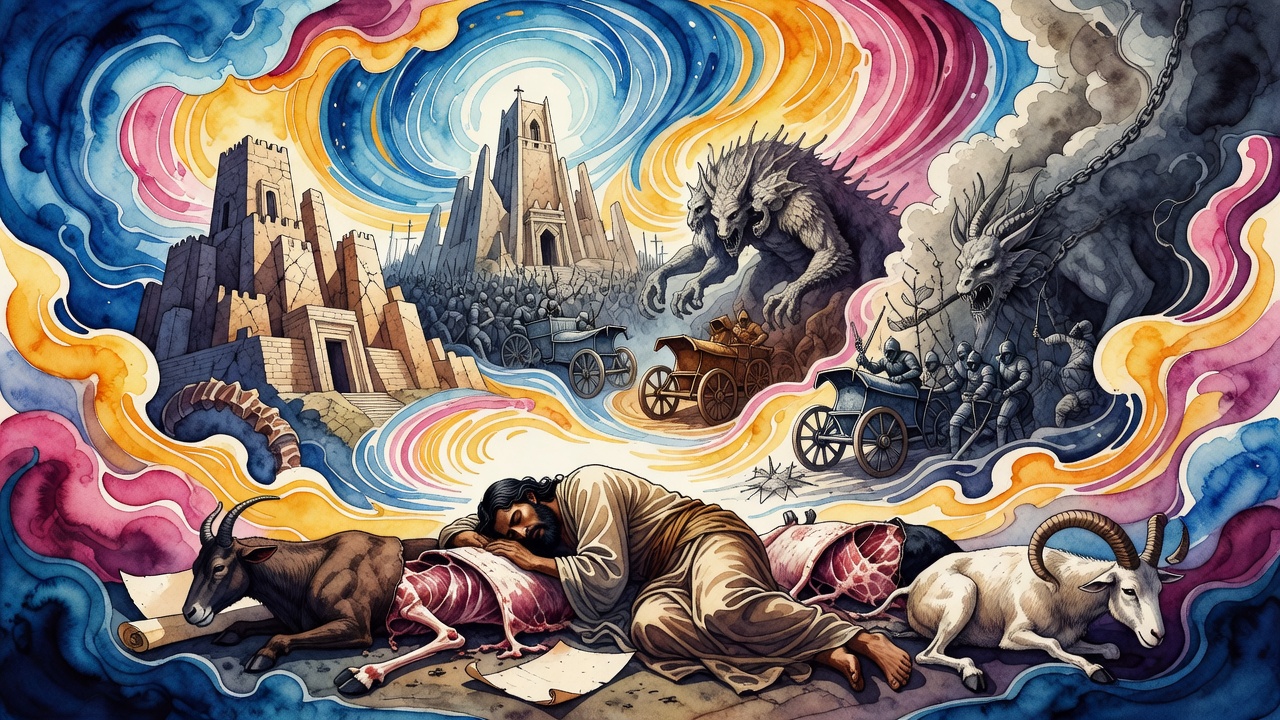
Families were already missing. Simeon's list had a gap. Benjamin's ten sons had become five. The plague after Balaam's counsel had taken them. God would not assign an inheritance to names destined to vanish before they could hold it. The inheritance was deferred until the camp at Moab stood in its entirety. Then he pointed at the living.
Korach had wanted a place under the banners and lost the ground under his feet. The children who had not been counted in Egypt received the land. The flags still stood. The names under them had changed.
← All myths