The Lion, the Stag, and Israel's Banners Around the Tabernacle
A lion on blue silk, a stag where an ox should stand, and a serpent to the north. Israel raised twelve banners and turned the wilderness into a map of heaven.
Table of Contents
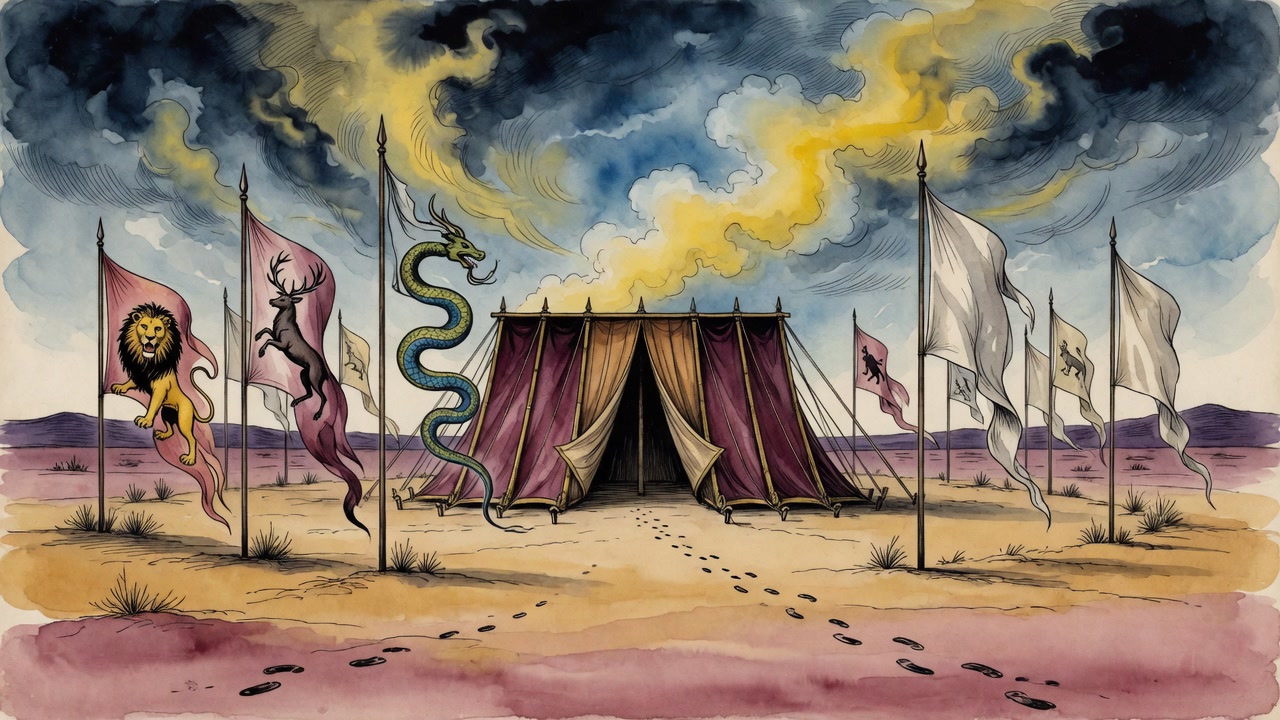
The dust had not yet settled when the first standard went up. A long pole, a stretch of silk catching the desert wind, and on it a lion the color of a coal pulled from fire. The men of Judah gathered beneath it, and the cloth snapped taut, and across its field ran letters they all knew by heart: "Arise, O Lord, and let Your enemies be scattered." The wind filled the lion's body until it seemed to breathe. No one had ordered them to feel what they felt. They simply stood straighter under it.
 Click for full size
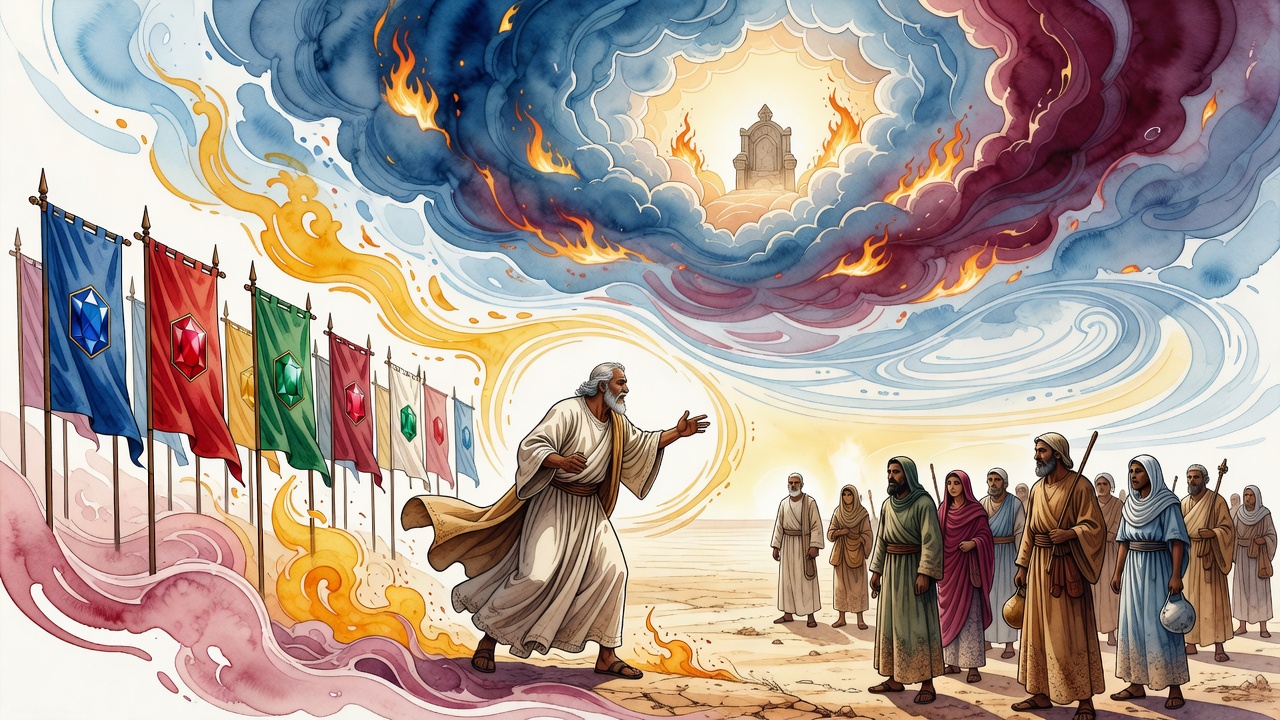
To the east the camp was waking the same way. One pole, then another, then a forest of them, each crowned with three colors of silk, each color drawn off a single stone. The wilderness that had been a scatter of tents was becoming something with corners and edges and a center, and the center was the dwelling place of God.
The Day the Tents Found Their Corners
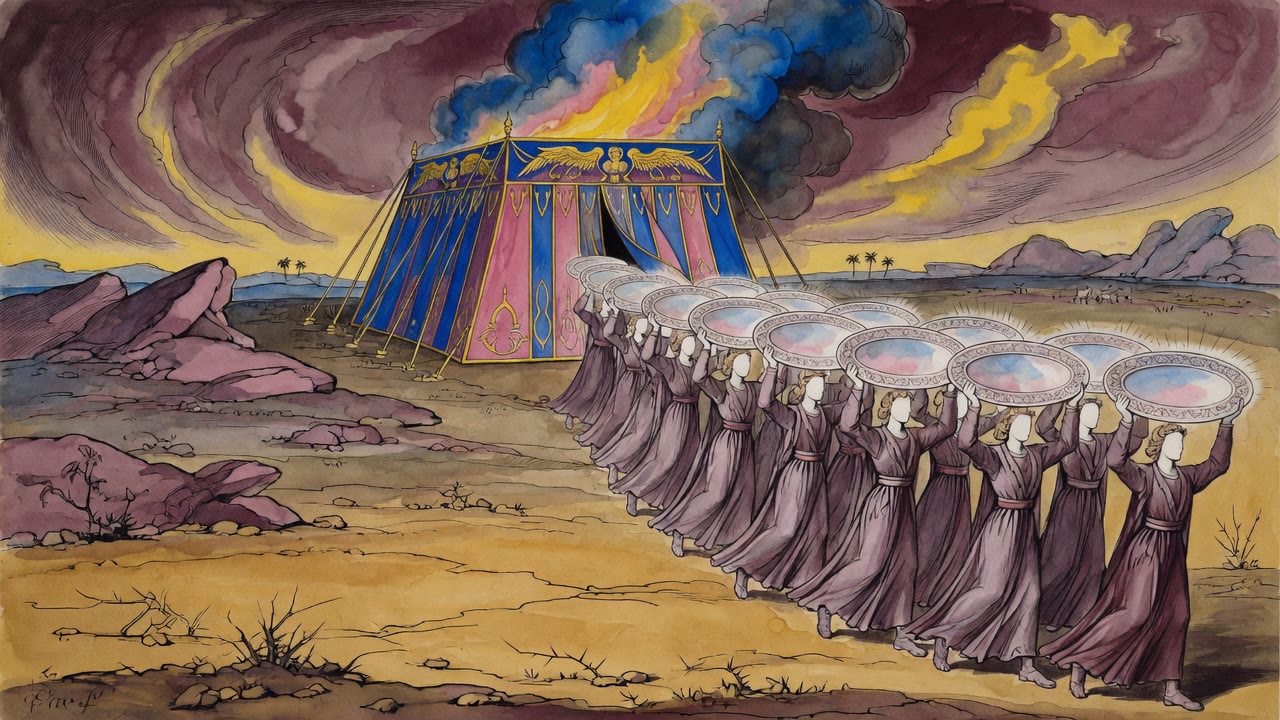
Israel did not camp as a crowd. That was the whole point of the morning. Tribe by tribe, family by family, the people took their assigned ground, and the four great camps squared off around the Tabernacle like the four walls of a single room (Numbers 2:2). Judah and his banner held the east. Ephraim took the west. To the north went a third camp, to the south a fourth, and inside the square stood the tent where the cloud rested.
An ordinary man walking the rows could read the whole nation by its colors. He did not need a name called out. He needed only to look up and see which beast flew overhead, which three shades of silk rippled there, and he knew exactly where he stood and to whom he belonged. The order was the message. A people that had run out of Egypt as a mob now woke each morning into geometry.
Where the Colors Came From
The colors were not chosen for the eye alone. They were stolen, deliberately, off the chest of one man. When Aaron the high priest entered the holy service, he wore the choshen, the breastplate of judgment, set with twelve precious stones in rows of gold (Exodus 28:15-21). Each stone burned with its own tribe's color. Aaron carried all of Israel over his heart in those gems whenever he went in before the Lord.
So the people took those same colors out into the open air. Whatever fire glowed in a tribe's stone on the breastplate, that fire was dyed into the silk of its banner. Reuben's stone was a ruby, and so the men of Reuben camped under red. What the priest carried inward toward God, the tribe carried upward toward the sky. The breastplate had become a field of flags, and the nation wore on poles what its priest wore on his chest.
The Lion, the Man, the Serpent, the Stag
Each banner held a figure as well as a color. Judah's lion crouched on its silk in the east, ready to spring. Ephraim raised the figure of a young man to the west, and over him the words "The Cloud of the Lord was over them," because the cloud that led Israel hung there above his camp. To the north flew a stranger image, a basilisk serpent coiled on the cloth, taken from the old deathbed words of Jacob who had said that Dan would be a serpent by the way (Genesis 49:17).
The southern banner held the secret. Reuben's standard bore a stag, leaping. By every expectation a young ox should have stood there instead. The image was changed, the ox set aside and the stag put in its place, so that no figure of an ox would ever fly over the camp of Israel and stir up the memory of a calf shaped from gold. Moses would not let that shape rise on a pole above his people. A stag bounded across Reuben's silk, and the ox stayed buried in what no one would speak of.
What They Had Seen at the Mountain
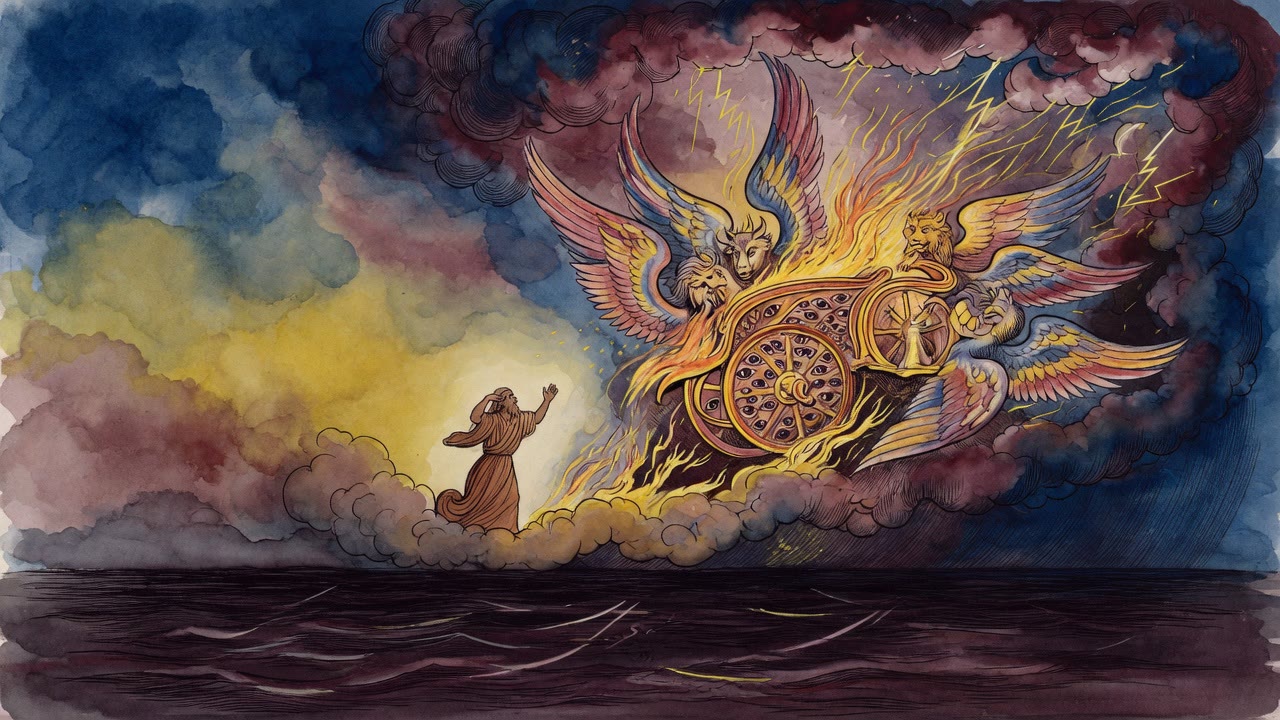
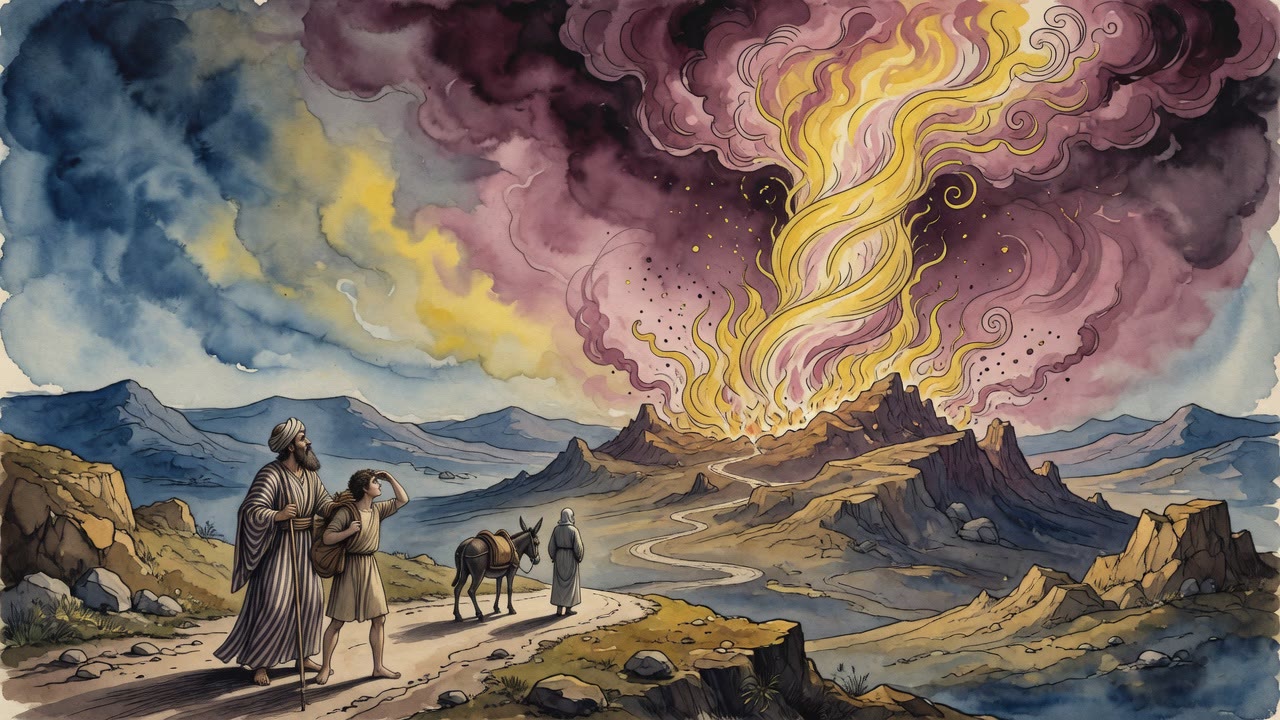
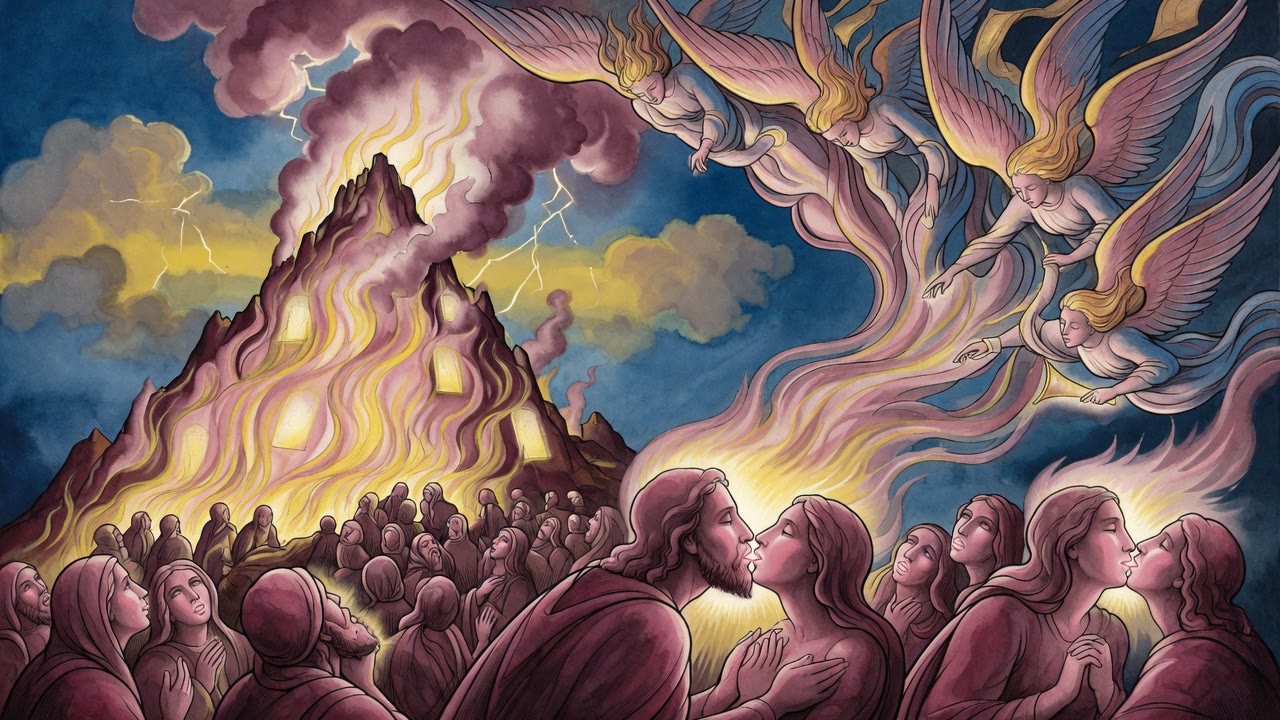
None of this began in the desert. It began at the foot of Sinai, when the mountain shook and the Lord came down, and He did not come alone. With Him descended chariots of angels beyond counting, twenty-two thousand of them by the reckoning, rank upon shining rank. The hosts of heaven did not arrive as a swarm. Every company among them was gathered beneath its own banner, standard after standard blazing down the slopes of fire.
Israel stood at the bottom and looked up at that ordered glory, and something cracked open in them. They did not want to conquer anyone. They wanted to be arranged like that. "If only we too could be made into standards," they said, staring at the companies of angels each under its own sign. Sinai was the house of wine where the Torah was poured out, and from that house a longing rose like heat. "His banner over me is love," went the cry. Raise over us the banner of Your love, they begged, give us a place in the array, let us stand somewhere we can be counted.
A Camp Shaped Like Heaven
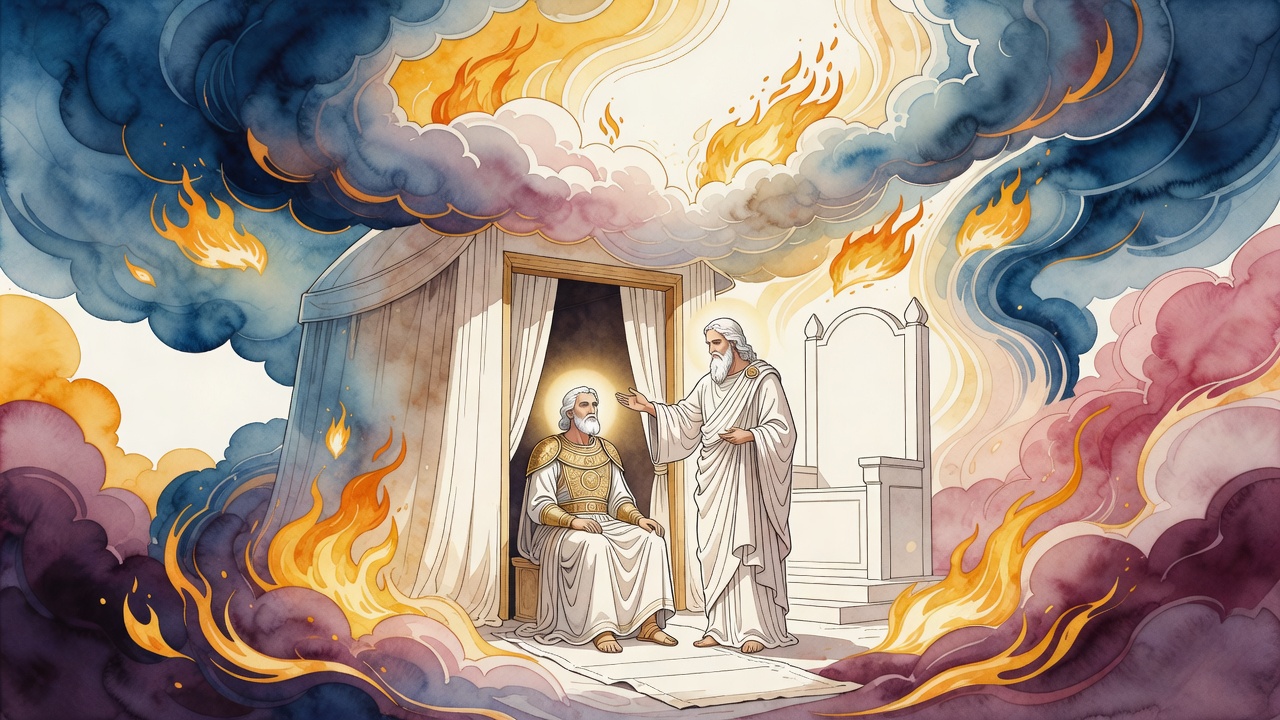
The banners in the wilderness were the answer to that begging at the mountain. What the angels had over their heads in the descent, Israel now had over its tents in the sand. The square of four camps around the Tabernacle was a copy, drawn in silk and dust, of the ranked hosts the people had glimpsed at Sinai. Down below sat the cloud over the tent. Above, in the highest heaven, in Aravot, stood the throne, half of it fire and half of it snow, a scepter of fire in the hand that held it. Between the throne above and the camp below ran one straight line of order, and the banners marked it.
A freed slave could walk out of his tent at dawn, lift his eyes to the lion or the stag or the young man under the cloud, and know that he had been placed. Not lost in a multitude. Set down on purpose, in a named spot, under a sign, in a camp built to mirror the courts of heaven.
← All myths