Parshat Noach6 min read

The Bargain That Smuggled Falsehood Aboard the Ark

Refused at the ark for having no mate, Falsehood weds Wickedness to sneak aboard, and the flood meant to drown deceit carries the pair through.

Curated by Arthur · Told by Maggid ·
Table of Contents
  1. The Stranger at the Gangplank
  2. The Contract on the Drowning Shore
  3. A Year of Lying in the Floating Dark
  4. Dry Land and the Reckoning of the Ledger

The rain had been falling for an hour, and already Falsehood had nothing to do.
She walked the drowning streets looking for a mouth to lie into, and found none. The wicked had bolted their doors. The merchants had stopped weighing their false weights, because the buyers were carrying their children to the rooftops. A liar needs a listener, and the listeners were all screaming at the sky. By the time the first valley filled, the only dry thing left in creation was a great black hull rising above the water like the back of a whale.

The Stranger at the Gangplank

She climbed toward it over the rising flood. Up the slick ramp came the beasts in their pairs, lion beside lioness, raven beside raven, the slow ox nosing its mate up the boards. Noah stood at the door counting them, and behind him the dark belly of the ark swallowed creature after creature. He had been at this fifteen days. The herding, the bellowing, the sheer impossible scale of it had hollowed his face, and still the animals came, two and two, two and two.

Falsehood pushed up among them and knocked on the timber.

Noah looked down at a creature he had never once seen in all his years, because he was a righteous man who had never told a lie, and a liar is invisible to a man with nothing in him for the lie to catch on. He spoke the rule plainly. "Only pairs come aboard," he said. "Where is your mate?"

She had none. She had never had one. Falsehood is born alone and dies alone, and she stood there in the spray with no second self to show him. Noah shook his head and turned back to his counting, and the door did not open for her.

The Contract on the Drowning Shore

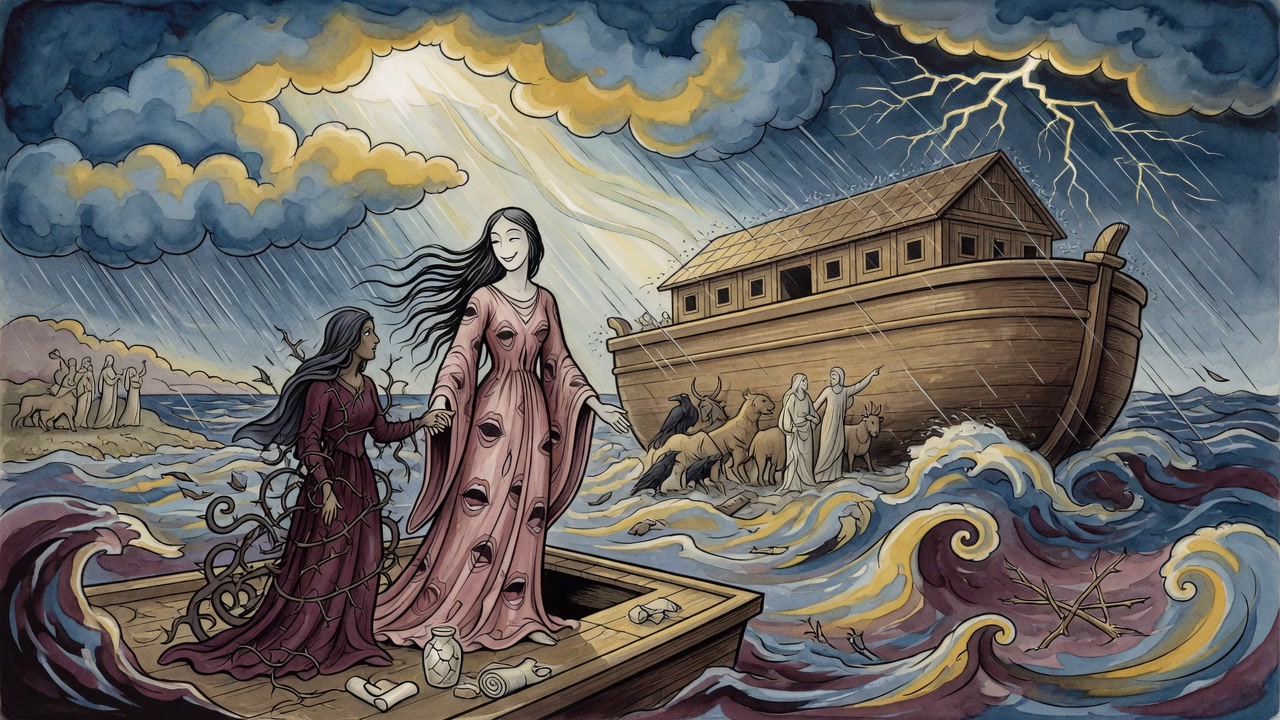
She went back down the ramp in grief, and a little way along the shrinking shore she met Wickedness, soaked to the bone, also turned away, also alone. He looked her over with the eye of a man who smells a deal.

"Is it true," he asked, "that you have been refused for want of a partner?"

"It is true," she swore, "on my word of honor." She did not so much as blink at the words, for the word of honor of Falsehood is the funniest thing she owns. "Be my mate. Two honest, ruined creatures, perfect for each other. We will go up together and they will let us in."

Wickedness was willing, but Wickedness drove a bargain. "I will marry you," he said, "but on one condition. Everything you earn aboard that ark is mine. Every coin, every profit, all of it comes to me. Agree, and we are a pair."

She agreed. What did she care for terms, who had never kept one? They wrote a contract there on the last strip of dry ground, signed it, sealed it, and climbed the ramp arm in arm. Noah counted them as a pair and let the happy couple in, and somewhere above the water God closed the door of the ark with His own hand and sealed the world's one dry room shut for a year.

A Year of Lying in the Floating Dark

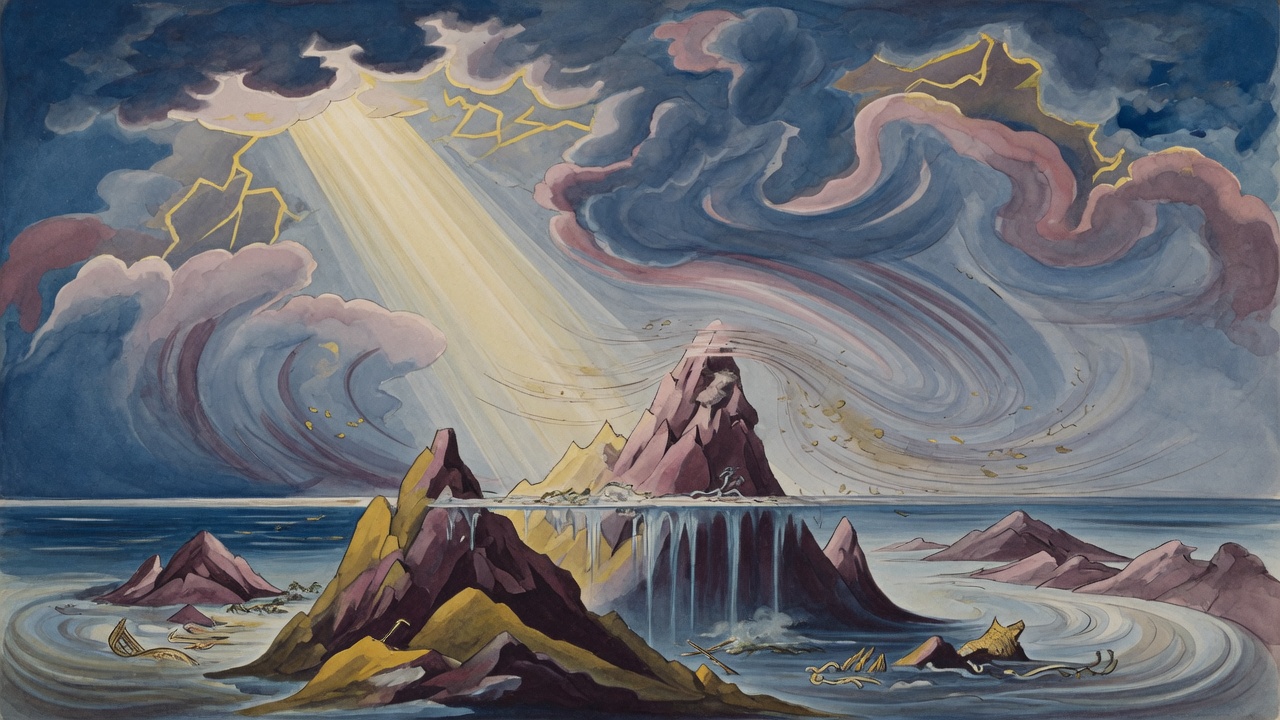
Outside, the old world dissolved. The mountains went under. The generation that had filled the earth with violence breathed water and was gone, scrubbed off the face of the ground as if it had never schemed or stolen or struck a brother down. God had meant the flood to wash the world clean, to drown every crooked thing and leave only the righteous man and his sons and the breeding pairs of the beasts to begin again.

And in the belly of the ark, in the swaying lamplight, Falsehood went to work.

She did splendid business. There is always business for a liar, even with the world reduced to eight souls and a cargo of animals. She traded and cheated and swore and earned, lying and earning through the long floating dark, while beside her Wickedness said almost nothing. Each night he took out his ledger and tallied her takings by lamplight, every coin entered in his own hand, then closed the book and said nothing of what he meant to do with it. Falsehood worked. Wickedness counted. The rain went on.

Dry Land and the Reckoning of the Ledger

Twelve months later the waters fell. The dove went out and came back with the leaf, and the door opened on a washed and empty world, green at the edges, smelling of mud and beginnings. Down the ramp the pairs went into the new earth, and down went Falsehood with her arms full of everything she had earned, a whole year's fortune in lies.

Wickedness held out his hand and took all of it.

She stared at him. She had knocked on the timber, sworn the oath that got them aboard, lied through twelve months while he did nothing but watch and write. "Give me my share," she said.

"Your share," said Wickedness, and the contempt in it could have curdled the new sea, "is nothing, cheat. We agreed. I take everything you earn. It is written, it is signed, it is sealed." He held up the ledger. "Would you have me tear up our own contract? That would be a wicked thing to do."

And Falsehood, who had cheated her way onto the one boat that survived the end of the world, stood empty-handed on the clean new earth and held her peace, beaten for the first time in her life, and beaten at her own game. She had built the lie that got them both aboard. Wickedness walked off with it, into the washed world, the pair God's flood had failed to drown. Falsehood earns much. Wickedness carries it all away.


← All myths
From the tradition

Sources

3 sources

The texts this telling draws on, in full. Open a card to read inline, or expand it for a wider, quieter read.

Jewish Fairy Stories, Falsehood and WickednessJewish Fairy Stories (Friedlander, 1920)

The rain had started, and Falsehood was out of work.

This is the strange little legend the Yalkut preserves on the Psalms. When the flood came, the animals streamed toward Noah's ark two by two, each beast beside its mate. The wicked hid in their houses. Business stopped. Lying stopped. And Falsehood, a creature who lived by deceiving people, suddenly had no one left to deceive.

So she ran to the ark and knocked. Noah opened the window and looked down at a stranger he had never once seen in his life, because he was a righteous man who never told a lie. He told her the rule plainly. Only pairs come aboard. Where is your mate?

She had none. She turned away in grief, and a few steps later she met Wickedness, also unemployed, also desperate. He eyed her and asked the obvious question. Was it true she needed a partner?

Of course it is true, she swore, on my word of honor. Be my mate. Two honest, poor creatures, perfect together. And Wickedness made his terms. I will marry you, he said, but everything you earn aboard the ark belongs to me. They signed a contract, sealed it, and walked back to Noah, who welcomed the happy couple.

Falsehood worked hard. She did splendid business in that floating year, lying and earning, lying and earning, while Wickedness simply tallied her takings in his ledger every night.

Twelve months later the waters fell and they walked out onto dry land. Falsehood carried home a fortune. Wickedness took all of it.

She begged for a share. She had done every bit of the work. Wickedness looked at her with contempt. Your share is nothing, cheat, he said. We agreed I take everything. Would you have me break our own contract? That would be wicked.

And she held her peace, having been beaten at her own game. Falsehood earns much, the proverb goes, but Wickedness carries it all away.

Full source
Book of Jubilees 5:34Book of Jubilees

The details... they're often more vivid and terrifying than we imagine. to one particular version, found in the Book of Jubilees, a text considered sacred by some, and a fascinating window into ancient Jewish thought for others.

The Book of Jubilees, sometimes also called Lesser Genesis, elaborates on the stories in Genesis, offering a more detailed timeline and often, a very specific perspective.

Here, the countdown has begun. Noah’s already been building the ark, gathering the animals… and now, the moment arrives. Jubilees tells us he entered the ark in the sixth year of his life, in the second month, on the day of the new moon. Specific, isn't it?

It wasn't a quick process. It took fifteen days to get everything – and everyone – safely inside. the chaos, the herding, the sheer scale of the operation! According to Jubilees, God Himself closed the door on the evening of the seventeenth. A powerful image, isn't it? The finality of that act.

And then, the heavens opened.

The text says: "And the Lord opened seven flood-gates of heaven, and the mouths of the fountains of the great deep, seven mouths in number." Seven flood-gates of heaven. Seven mouths of the deep. That repetition, that emphasis… it’s meant to convey the utter, overwhelming force of what was about to happen. It wasn't just rain. It was a cosmic unleashing.

Forty days and forty nights. We hear that phrase so often, it can lose its impact. But imagine it: relentless, unending torrents from above, coupled with the earth itself erupting in watery chaos. The tehom, the "deep," as Genesis calls it, wasn't just a body of water; it was a primordial force. And now, it was unleashed.

The Jubilees says the fountains of the deep "also sent up waters, until the whole world was full of water." The whole world. Not just localized flooding, but a complete and total inundation.

What does this image of the flood evoke for you? Is it a story of divine punishment? A cleansing of a corrupted world? Or perhaps a reminder of the awesome, and sometimes terrifying, power of nature... and of the One who created it all? Whatever your interpretation, the Book of Jubilees offers a stark and dramatic glimpse into one of the most enduring stories ever told.

Full source
Midrashic proverbial traditionHebraic Literature (1901)

When the waters of the flood began to rise and every living thing scrambled toward the ark, a strange creature came to Noah's gate, the Lie.

The Lie asked to be admitted. Noah looked her over and shook his head. "Only pairs may enter here," he said. "Every creature must have a mate. Where is yours?"

The Lie had none. She had always worked alone.

She slipped back into the rising waters and searched the flooding plains for a companion. At last she met Vice. Lonely creatures, both of them. She invited Vice to come with her to the ark.

Vice was willing, but he drove a hard bargain. "I'll travel with you," he said, "but only on one condition. Everything you earn, you must give to me."

The Lie, desperate and out of time, agreed. And so the two of them walked up the ramp, claimed their place among the pairs, and were admitted. They survived the flood together.

After the waters receded and the ark opened, the Lie realized what she had done. She began to earn and earn and earn. And all of it, every last coin, flowed straight to Vice. She tried to dissolve the partnership, but the terms had been signed before the flood, and there was no undoing them.

That is why, the midrash concludes, you will hear the old saying on the lips of every generation: what the Lie earns, Vice devours.

A parable small enough to fit in a pocket, and sharp enough to cut. A dishonest life may fill its purse for a season, but somewhere in the fine print it has already promised its wages away.

Full source