Parshat Lech Lecha5 min read

The Blood on Abraham's Hands and the Child He Once Was

Twice the man the world remembers as unshakably certain lay awake and doubted himself, once a cave-born child, once a warrior sick with blood.

Curated by Arthur · Told by Maggid ·
Table of Contents
  1. The Woman Who Came Looking for an Infant
  2. The Son She No Longer Recognized
  3. Decades Later, a Field Full of the Dead
  4. The Voice That Called Them Thorns
  5. Bread, Wine, and a Blessing Instead of a Curse
The Blood on Abraham's Hands and the Child He Once Was Click for full size

The Woman Who Came Looking for an Infant

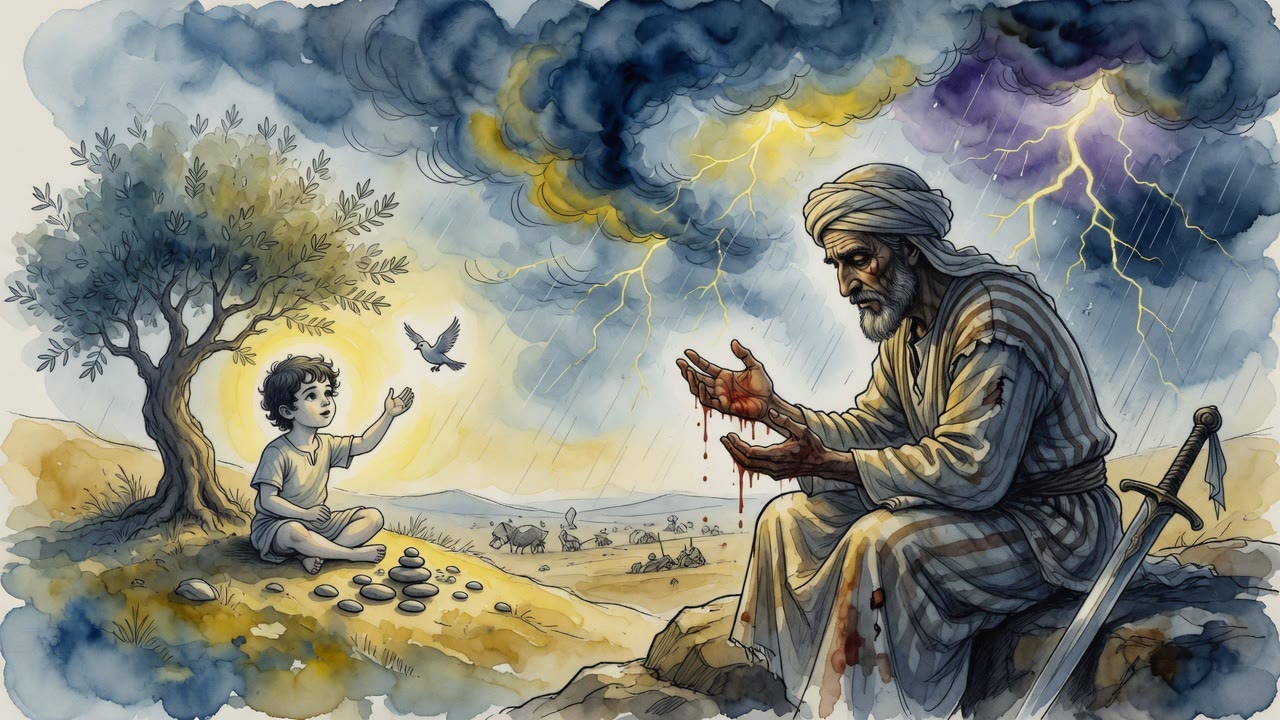
She had been walking the valley since dawn, calling a name into the rocks, when a young man stepped out of the shade and asked her what she had lost. Abraham was not yet the patriarch anyone would remember. He was a boy grown strange and quick in a cave, and the woman in front of him did not know his face.

"A child," she said. "My child. I left him here, and I have come back for him."

"How old was this child you speak of?" Abraham asked.

"Twenty days," she said.

He looked at her a long moment. "Is there a woman in the world who would forsake her new-born son in the desert, and come to seek him after twenty days?"

The question was cruel, and he knew it, because he already understood the answer. She had hidden him to keep him alive. Somewhere a king was killing infants, and a mother had chosen the desert over the sword. Twenty days was nothing. Twenty days was a whole life. In the span of it a helpless thing had learned to stand, to speak, to reason its way past the fire and the water and the sun toward a God none of them could see.

"Peradventure God will show Himself a merciful God," she said. There was more faith in the sentence than in anything the boy had yet heard from a grown mouth.

The Son She No Longer Recognized

"I am the son whom thou hast come to seek in this valley," Abraham said.

She stared. She had left a bundle that could not lift its own head. She had come back to a man who spoke to her as an equal. "My son, how thou art grown! But twenty days old, and thou canst already walk, and talk with thy mouth!"

Time had eaten the infant she loved and left this stranger in his place. She had lost the child after all. Not to the king, but to the twenty days themselves.

The stranger did not comfort her with what she wanted to hear. He gave her the thing he had found in the dark instead. "So it is," he said, "and thus, O my mother, it is made known unto thee that there is in the world a great, terrible, living, and ever-existing God, who doth see, but who cannot be seen. He is in the heavens above, and the whole earth is full of His glory."

That was the first sermon Abraham ever preached, and he preached it to a woman who had come for a baby and found a prophet.

Decades Later, a Field Full of the Dead

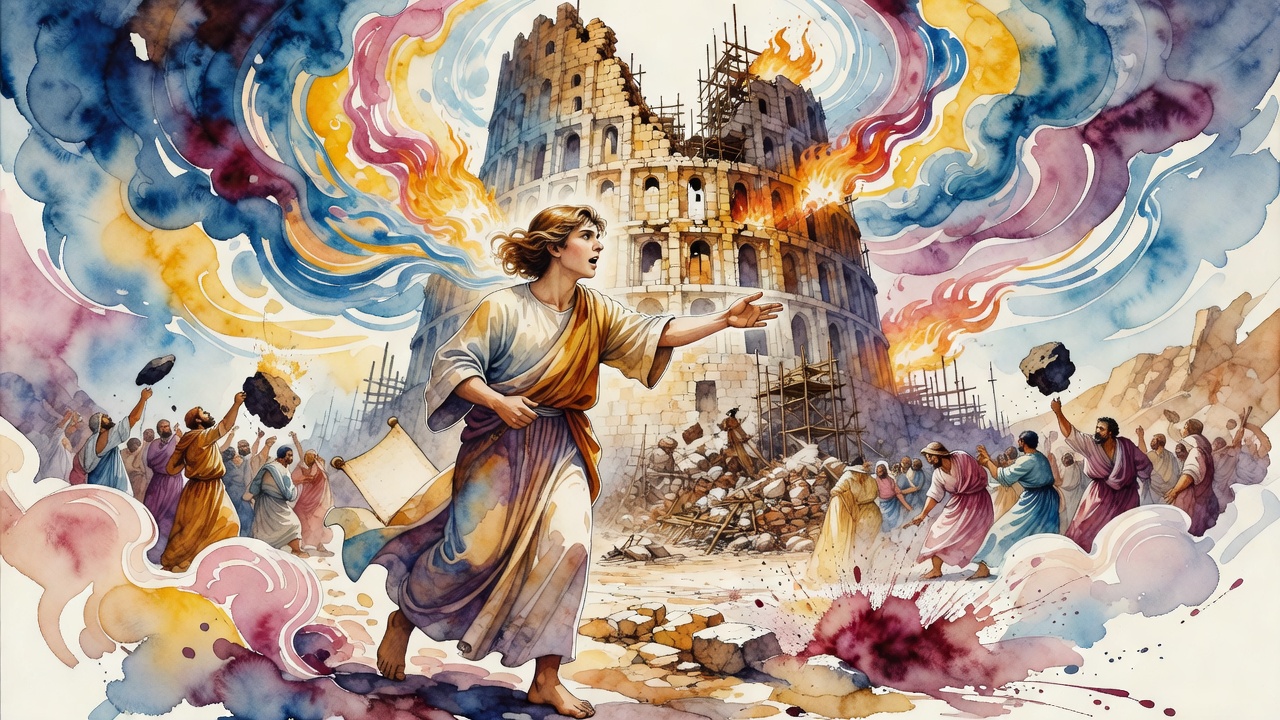
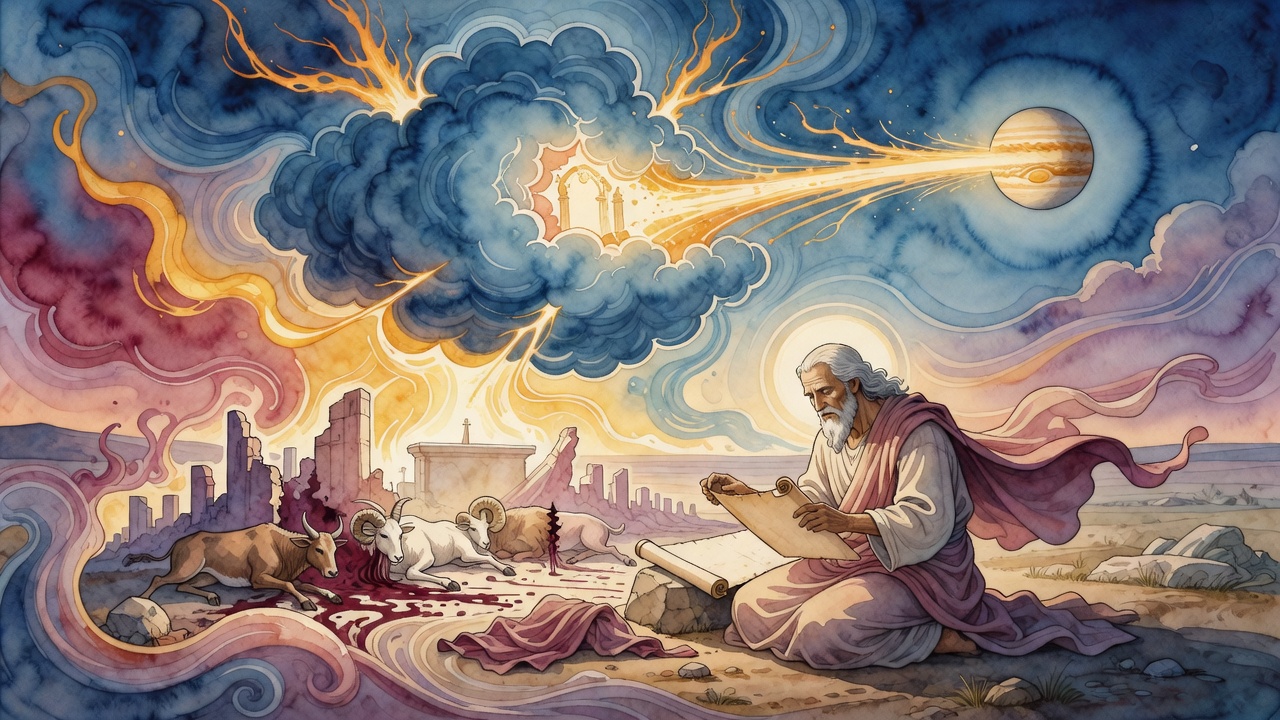
The boy became a man, and the man became a name kings feared. When four of those kings dragged his nephew Lot off in chains, Abraham armed his household, rode through the night, and broke their coalition in the dark. He came home a victor. He had every reason to sleep well.

He did not.

He lay awake with the whole field of the dead behind his eyes. Among the men he had cut down, how many had been guilty of nothing worse than standing in the wrong army? He had shed human blood, streams of it, and the prohibition against shedding human blood was older than he was, older than the flood the world had drowned in. He thought of Shem, the son of Noah, still alive in those days, still walking the earth. Some of the men Abraham had killed were Shem's descendants. Surely the old survivor of the flood would curse him for it.

The Voice That Called Them Thorns

Into that sleepless dark came the voice he had first reasoned his way toward in the cave.

"Be not afraid," God told him. "Thou hast but extirpated the thorns, and as to Shem, he will bless thee rather than curse thee."

Thorns. Not men. The kings who burned cities and dragged nephews off in chains were weeds choking a field, and pulling them was not murder but husbandry. It was permission. It was also a verdict on the four kings that Abraham had not dared pronounce himself. He waited to see whether the second half of the promise would hold.

Bread, Wine, and a Blessing Instead of a Curse

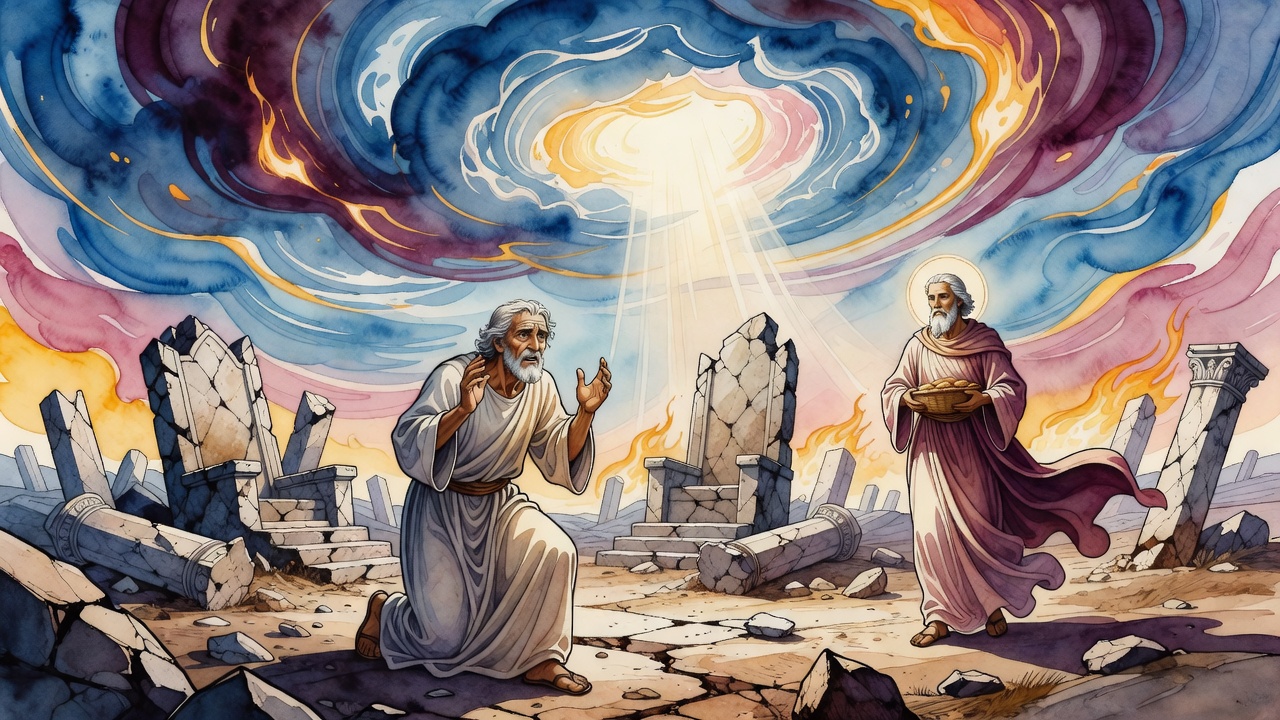
It held. Shem came out to meet him, and in that meeting he wore his other name, Melchizedek, king of Salem, priest of God Most High. He did not come with a curse for the blood of his children. He came with bread and wine, the oldest gesture of welcome the ancient world knew, and he blessed the man who had wept all night over the killing.

So the father of monotheism, the one later ages would remember as unshakably certain, had spent two nights of his life undone. Once as a child astonishing his own mother with a God she could not see. Once as a warrior terrified that the God he had proved might hold the dead against him. Both times the answer arrived the same way. A voice out of a place he could not point to told him the earth was full of a glory that saw everything and forgave more than he had dared to hope.


← All myths
From the tradition

Sources

2 sources

The texts behind this telling. Some cards carry a translation of the source; others are our own retelling of it, and each card says which. Every card links out to the original.

Legends of the Jews 5:119Legends of the Jews

Retold in our words. Read the original at the link below.The Legends of the Jews by Louis Ginzberg (1909) · Public Domain

Even if you're Abraham, the father of monotheism, it turns out you're not immune.

Abraham has just pulled off an incredible victory, rescuing Lot and defeating a coalition of kings. A total triumph. But Abraham, ever the thoughtful one, is troubled. As Ginzberg tells us in Legends of the Jews, he's worried. Has he violated the sacred prohibition against shedding human blood? Will Shem, yes, that Shem, son of Noah, hold a grudge because some of his descendants were caught in the crossfire?

It's a very human moment for a figure readers often think of as larger than life.

Luckily, God steps in, reassuring Abraham: "Be not afraid! Thou hast but extirpated the thorns, and as to Shem, he will bless thee rather than curse thee."

And guess what? God was right. Shem, also known as Melchizedek (a name that echoes "king of righteousness"), the king of Jerusalem and priest of God Most High, comes out to greet Abraham. He brings bread and wine, a symbol of hospitality and peace. Think of it as the ancient Near Eastern version of a peace offering and "welcome home" party all rolled into one.

According to the legends, Melchizedek then instructs Abraham in the laws of the priesthood and in the Torah (the teachings and laws given to Moses, though here referring to earlier traditions). He even blesses Abraham, calling him God's partner in bringing the divine name to humanity. Pretty high praise, wouldn't you say?

But here’s where the story takes a surprising turn.

Melchizedek, in his blessing, phrases things in a way that… well, let's just say God wasn't thrilled. He names Abraham first, and then God. A subtle slip-up, perhaps, but in the eyes of the Divine, a significant one.

The consequences? According to Legends of the Jews, Melchizedek is deposed from his priestly role. The priesthood is then passed on to Abraham and his descendants forever. Abraham's lineage becomes the source of the priestly line. A seemingly small error in the order of a blessing leads to a monumental shift in spiritual leadership. What does it say about the importance of humility, even after achieving great things? What does it say about the weight of words, and the responsibility that comes with blessing?

It's a reminder that even the most righteous figures are subject to divine scrutiny, and that true greatness lies not just in action, but in reverence.

Full source
Legends of the Jews 5:20Legends of the Jews

Retold in our words. Read the original at the link below.The Legends of the Jews by Louis Ginzberg (1909) · Public Domain

That feeling, that fleeting nature of time, echoes in a powerful story about Abraham from Ginzberg's Legends of the Jews.

Abraham, not yet the patriarch we know, but a young man on a mission, confronts a woman in the desert. She's searching desperately for her lost child. "How old was this child you speak of?" Abraham asks, his voice likely gentle but firm. He’s trying to understand the situation, to piece together the truth.

Then he poses a question that cuts to the heart of her desperation: "Is there a woman in the world who would forsake her new-born son in the desert, and come to seek him after twenty days?" Twenty days. Such a short time in the grand scheme, but an eternity for a mother separated from her child.

Her response is simple, yet profound: "Peradventure God will show Himself a merciful God!" There’s such hope and faith in those words, isn’t there? A belief that even in the harshest of circumstances, divine mercy can prevail.

And then comes the twist. Abraham reveals himself: "I am the son whom thou hast come to seek in this valley!"

Can you picture the mother’s astonishment? "My son, how thou art grown! But twenty days old, and thou canst already walk, and talk with thy mouth!" The impossibility of it all crashes down on her. Just twenty days… and yet, he is standing before her, a changed being.

And here's the message Abraham delivers, the core of the entire encounter: "So it is, and thus, O my mother, it is made known unto thee that there is in the world a great, terrible, living, and ever-existing God, who doth see, but who cannot be seen. He is in the heavens above, and the whole earth is full of His glory."

The story, as related in Legends of the Jews, isn't just about a miraculous growth spurt. It's about witnessing the divine in the impossible, seeing God's presence even when it defies logic and understanding. It's a reminder that even in the blink of an eye – or the span of twenty days – everything can change, and the hand of the divine is always present, even when unseen.

Full source