The Boy Who Cut His Grandfathers Mantle in Half
A son pushed his father to the gate in rags. The grandson cut the mantle in half and saved a share for the day his own father would grow old and cold.
Table of Contents
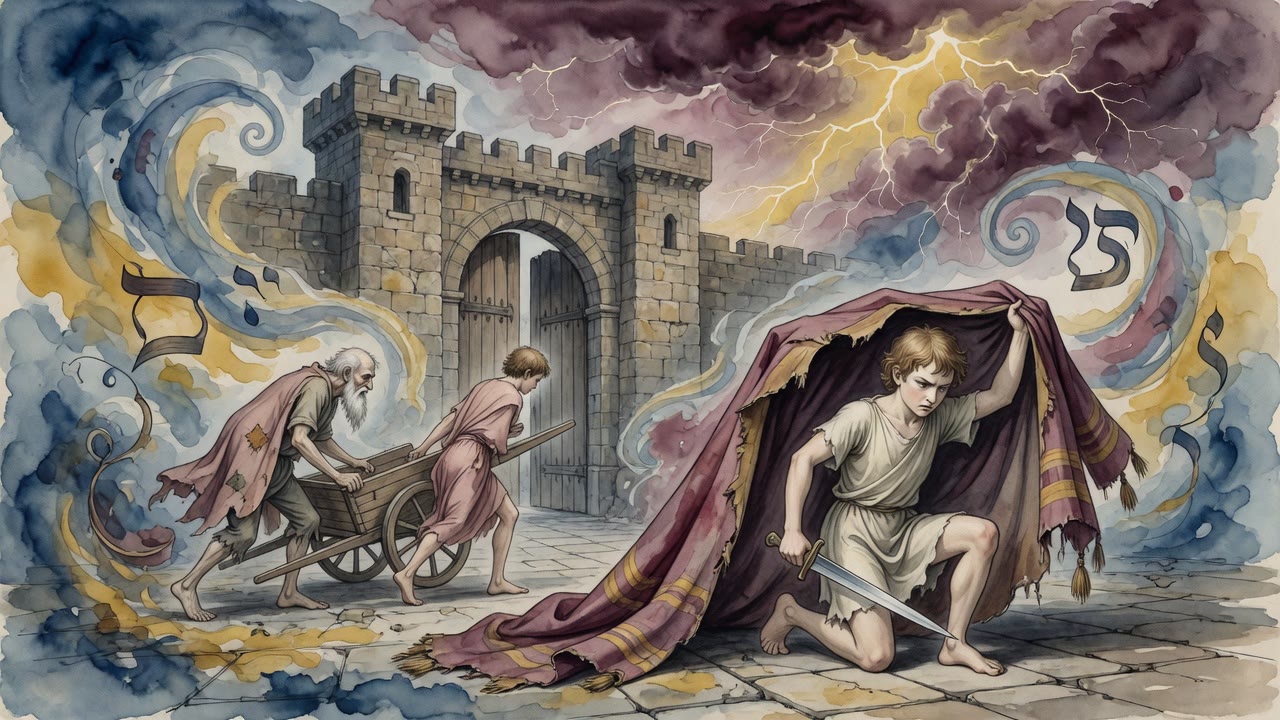
The boy stood in the loft with a knife and a heavy mantle across his knees. Below, his father waited, annoyed that a beggar at the gate had dared to ask for warmth. The beggar was the boy's grandfather.
 Click for full size
The Estate Signed Away
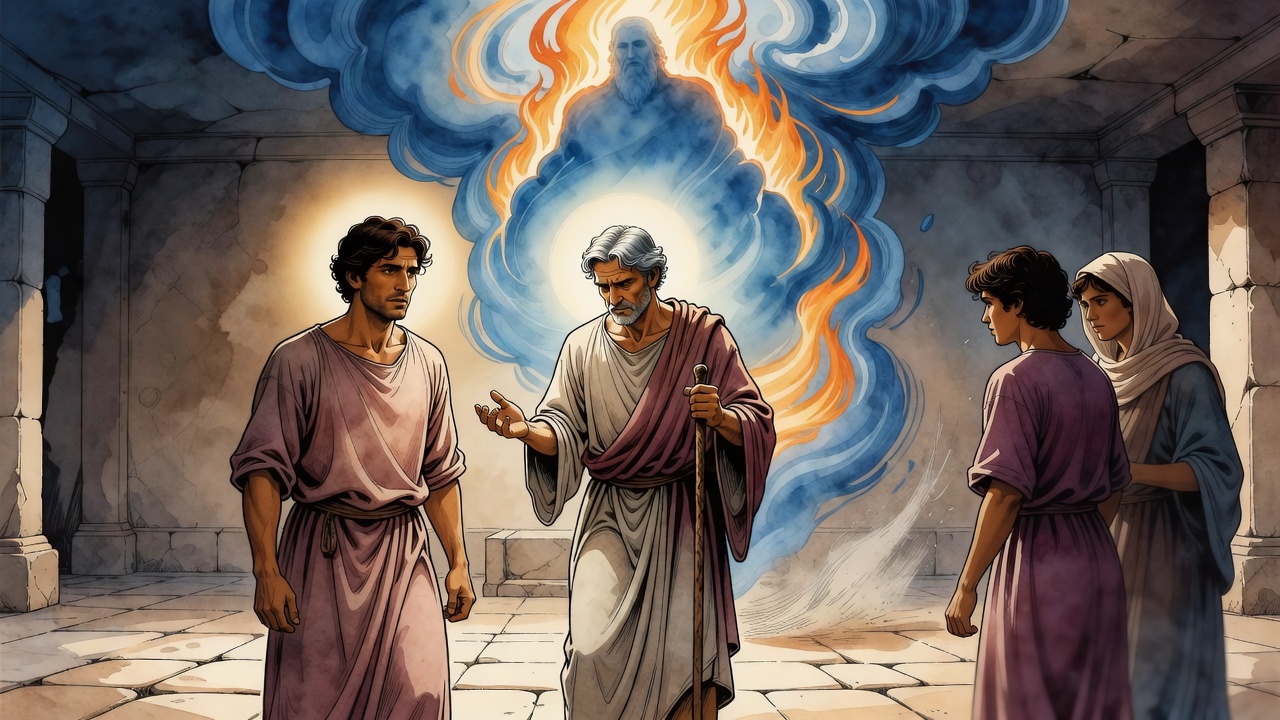
Years earlier the old man had trusted his only son with everything. He signed the estate over in full and kept nothing but the promise of care. At first the son kept the promise with warmth that looked like love. Then the old man's speech slowed. His opinions grew inconvenient at dinner. Guests preferred not to wait while he finished a thought. Clean robes became coarse ones. His place at the table moved lower, then to a side bench, then out of the conversation altogether.
At last the son put him out among the beggars at the town gate and kept the house, the fields, and the good name for himself. The town saw and said little. People often say little when the cruelty wears the face of family business.
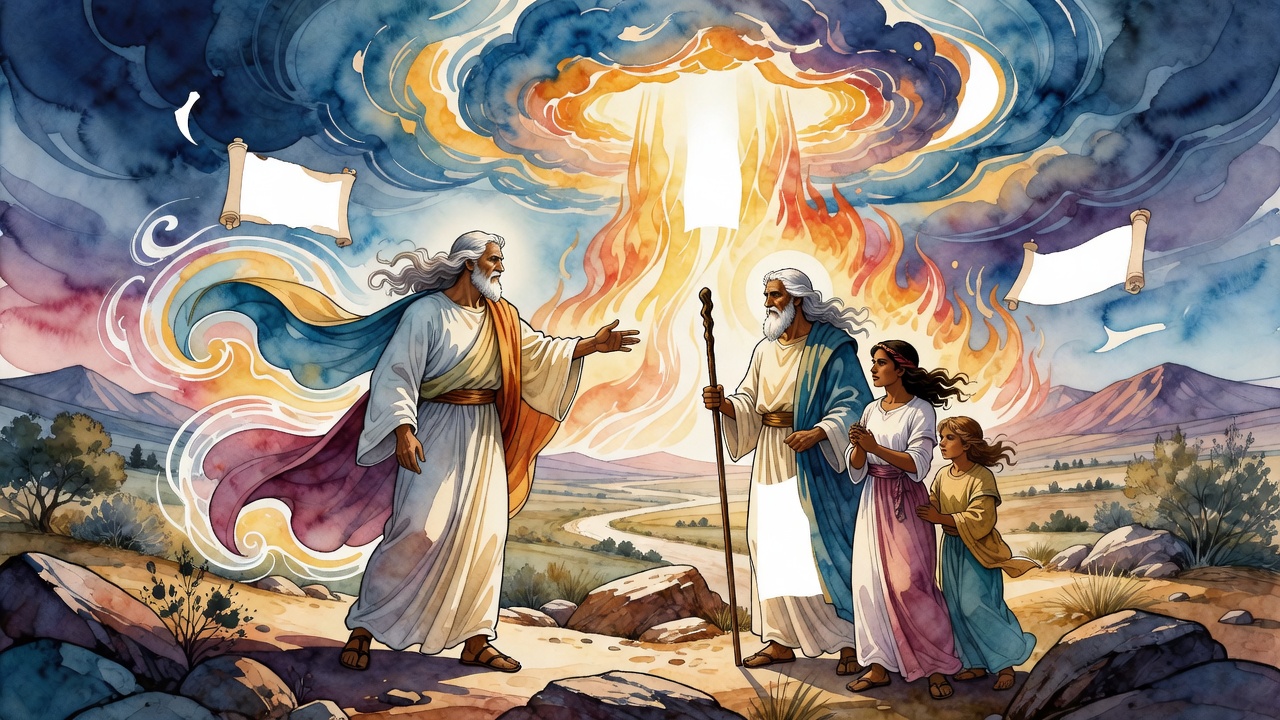
On a cold day the grandfather met the boy playing near the gate. His hands shook on the thin cloth of his sleeves. "Go up," he said, "and ask your father for a mantle. The cold is cutting me." The boy ran, still young enough to think a request so simple must be easy. The father, irritated, told him which hook in the loft held a spare cloak. The boy went up and did not come down.
Half for Grandfather, Half for You
When the father climbed after him, he found the child cutting the mantle carefully down the middle, measuring with the seriousness of a tailor. "What are you doing?"
The boy looked up without guile. "I am giving Grandfather one half. I am keeping the other half for when you are old."
The father could not speak. In his son's innocent arithmetic he read his whole future. The measure he was dealing his father was already being reserved for himself. The loft smelled of dust and stored wool. The knife was small. The verdict was not. He set the blade aside, ran to the gate, and brought the old man home under his own arm. He restored his dignity, returned his place at the table, and kept him with honor from that day on, because the alternative had been demonstrated in cloth by a child who had only copied what he saw.
The sages tell the parable with an edge. Children learn by watching. The treatment a son shows his father is the size of the mantle he is cutting for himself, and his own children are already taking the measurements in secret.
The Chair Dama Would Not Sit In
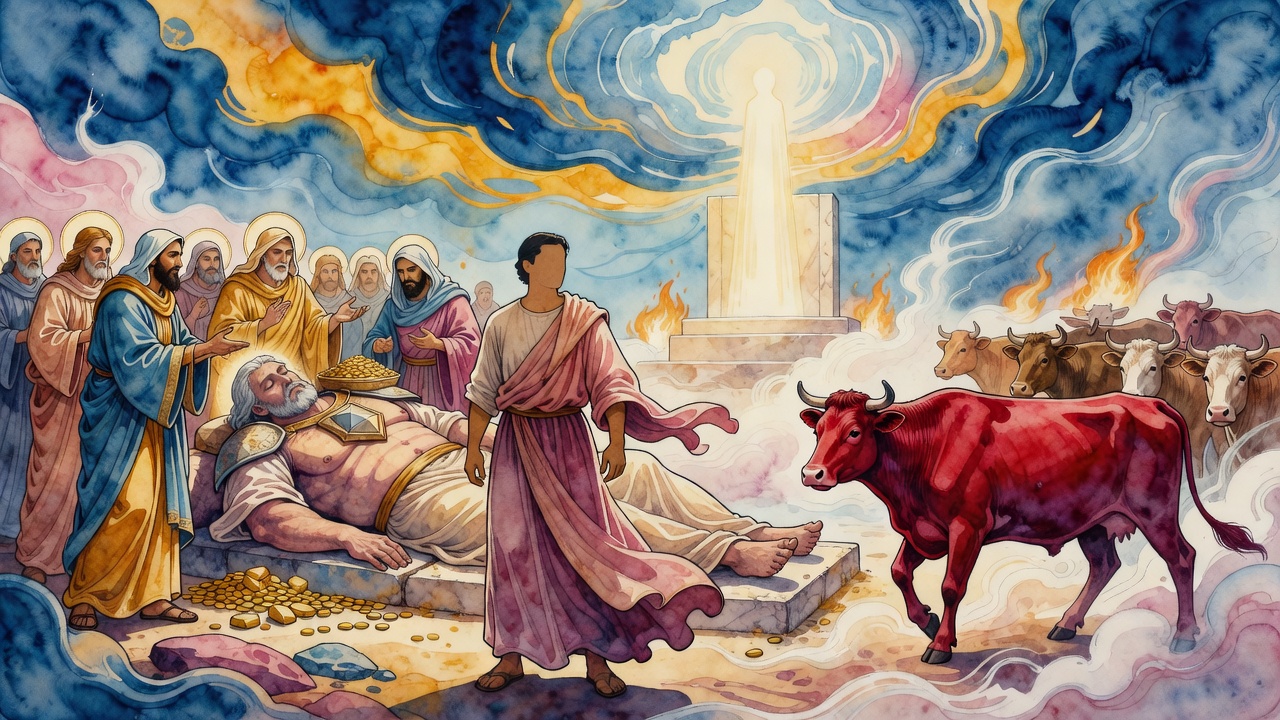
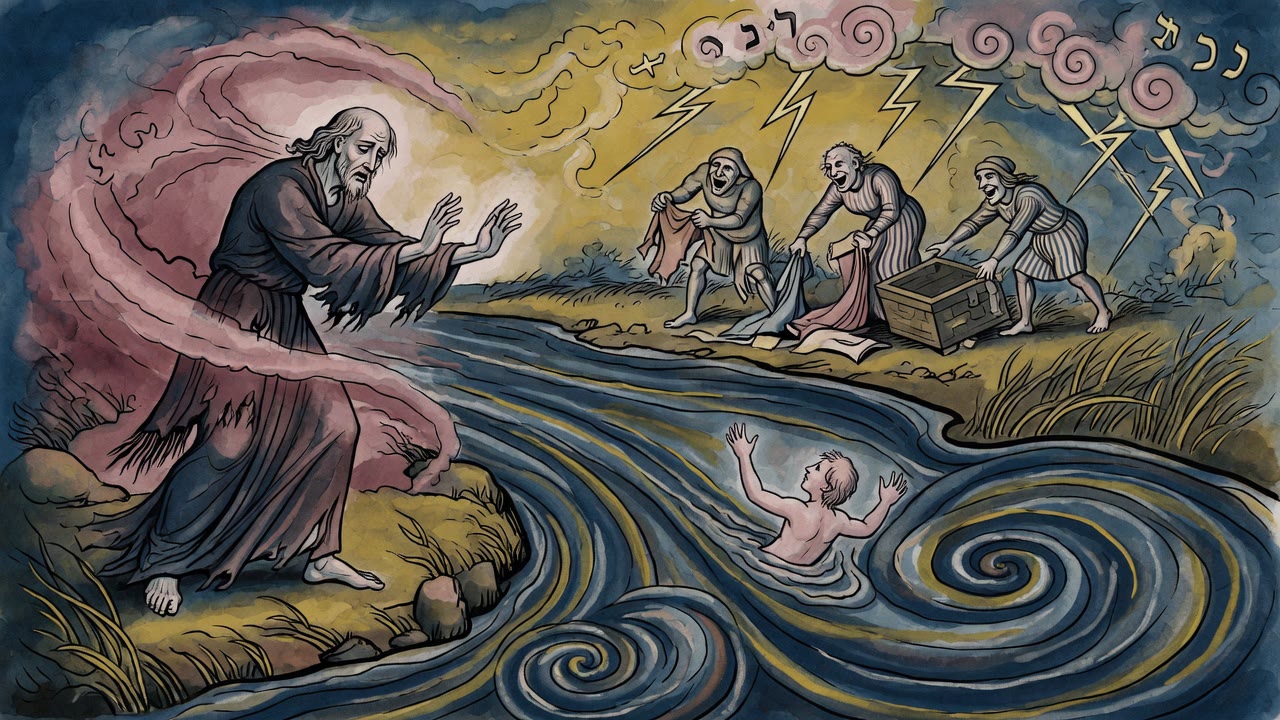
The Talmud holds up a gentile from Ashkelon, Dama ben Netina, as the gold standard of the fifth commandment, told to shame Jews who treated the duty lightly while quoting it loudly. Once his mother struck him across the face in public, before the city's leading merchants. The blow landed. Merchants watched. He did not protest. He did not pull away. He absorbed the humiliation and said nothing, because honor of a parent was not, for him, a performance contingent on her mood.
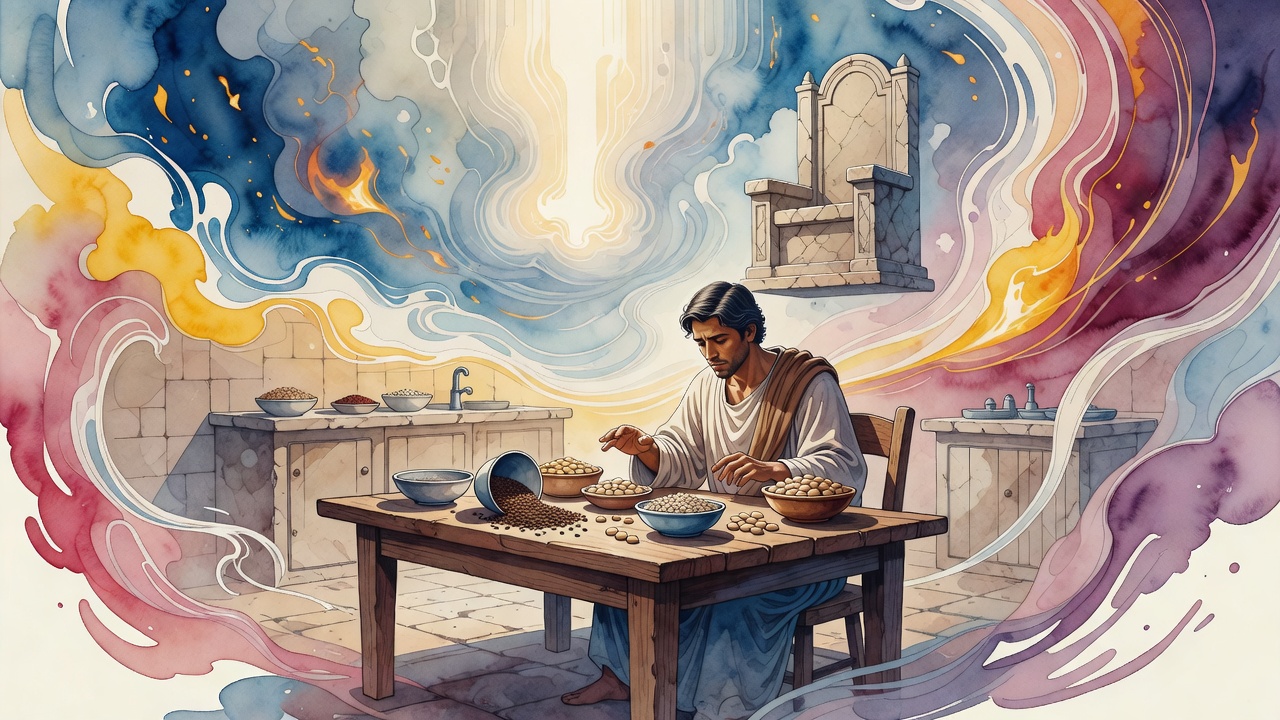
After his father died, Dama never sat in his father's chair. The chair stayed where it had always been, wood polished by years of another man's weight. He walked past it every day. He stood near it when business required. He would not occupy it. Absence did not cancel the place. Death did not free the seat for convenience.
When the High Priest needed a rare gem for the breastplate and only Dama's stock held the match, messengers came with a fortune in hand. Dama refused to wake his sleeping father to open the chest where the stone lay. He lost the enormous profit without a speech. A year later his cow bore a pure red heifer, the rarest animal the Temple purification rite required, and the Jews paid him the sum he had forgone. The rabbis read the sequence as a settling of accounts that needed no contract. Honor is not a feeling. It is a posture: a cheek that receives a slap, a chair that stays empty, a fortune left asleep because a father is sleeping.
Two Pictures of the Same Command
The Jewish son in the parable fails until a child holds up a mirror cut from wool. The gentile in Ashkelon succeeds so completely that the sages use him as a reproach across the aisle of nations. Both stories refuse to let kibbud av va'em, the honor of father and mother, remain abstract. One ends with a mantle returned to a household and an old man eating at the table again. The other ends with a chair no one sits in and a red calf that pays a delayed wage.
The boy with the knife never meant to teach Torah. He only projected forward the cold he was learning. That is why the story still cuts. The loft is not only a storage room. It is the place where the next generation decides what size of winter the old will suffer, and whether anyone will run to the gate before the measurements become permanent.
← All myths