The Law Gave the Hated Wife's Firstborn a Double Portion
A father favored the second wife's son until the law forced him to stand and name the firstborn of the wife he loved less.
Table of Contents
The father counted his flocks with his eyes on the younger boy, the son of the wife whose voice still pleased him at evening. The older boy stood near the gate and already knew what the counting meant, the way a dog knows a raised hand before it falls.
 Click for full size
Two Wives, One Double Portion
The Torah spoke as if it had watched the house for years and grown tired of soft thefts dressed as love. A man has a loved wife and a hated wife, and both bear him sons, and the firstborn is the son of the hated one (Deuteronomy 21:15-17). Preference is not a legal eraser. The bechor, the firstborn, takes a double portion whether the father's heart is warm or cold, whether the mother's name is spoken gently or with a shrug.
In the midrash, Rabbi Shimon heard in "loved" and "hated" a grim forecast that can grow from other bonds, including a captive taken in war and later resented when the heat of conquest dies. Desire moves from bed to bed. Birth order does not move with it to please a new favorite.
The loved wife's son kicked a stone and waited for a gift of words that would make him first in the yard's economy. The words did not come from heaven. They would have to come from a mouth that did not want to open in front of neighbors.
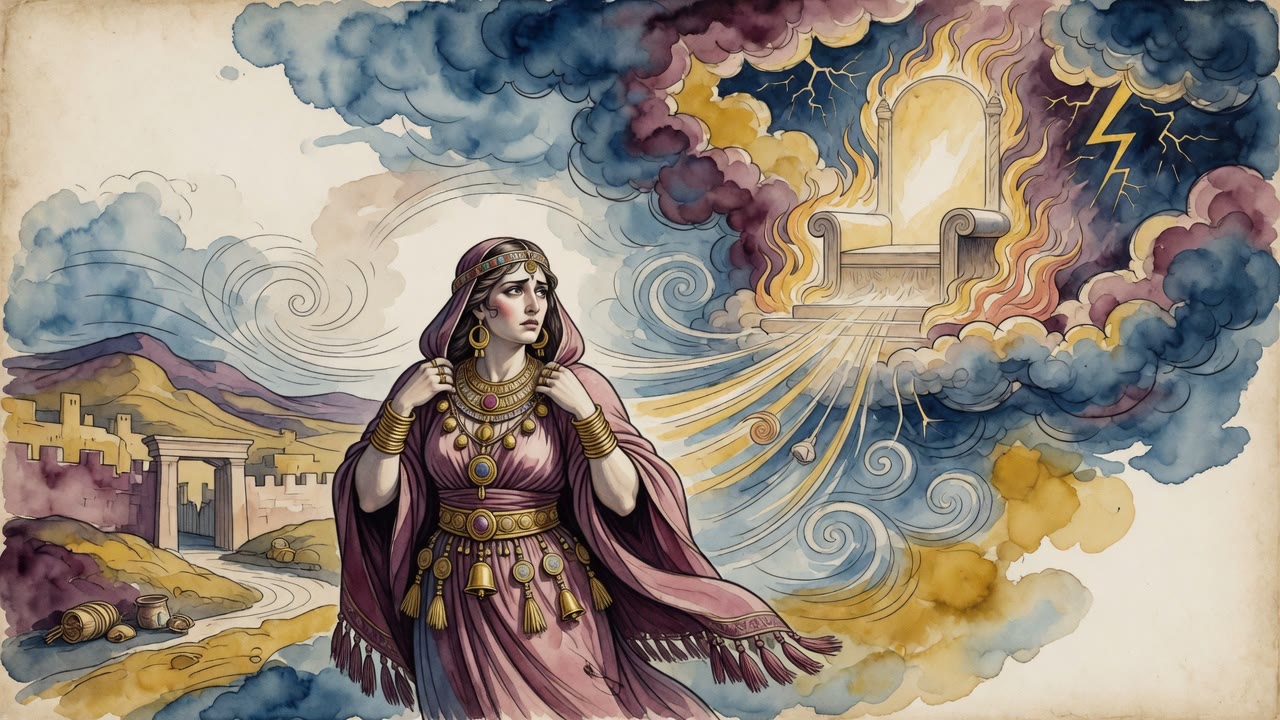
The hated wife ground grain with more force than the grain needed. Stone on stone can sound like a verdict if you listen with the wrong hunger.
Recognize Means Make Him Known
"He shall recognize the firstborn son of the hated one." The midrash refused a private nod behind a door. Recognize means cause him to be recognized by others. The father had to stand where brothers, neighbors, and future claimants could hear, and name the boy whose mother he loved less, with a voice that would outlive his preference.
Rabbi Yehudah said that if a man declares, "This is my firstborn son," he is believed. The declaration is power, and therefore it is also duty. The same mouth that can clarify status for a chalutzah's son or a divorcée's child cannot use silence to smuggle a favorite into the double share while the true firstborn waits at the gate like a servant.
On the day of the naming, the yard filled with people who pretended to come for other reasons. The hated wife did not smile. Vindication that arrives through law can still taste like iron and leave the tongue dry. Her son kept his eyes on his father's sandals, not on the flocks, as if looking at wealth too soon might curse it.
The father said the sentence once, then had to say it again because the first time it came out thin. The second time the air held it.
The Math That Blocks Favoritism
Double portion is not poetry and not a metaphor for affection. If a man leaves three sons, the estate is cut into four parts in the reckoning: the firstborn takes two, and the others take one each. The numbers are a fence. They stop a soft heart from becoming a false will spoken at a deathbed when grief makes liars of kind men.
The younger boy finally understood and went red to the ears. The older boy did not gloat. He had grown up under a weather of being second in affection, praised less, touched less, seated farther from the best meat. Being first in inheritance did not warm the weather. It only kept him from being robbed in daylight with the town watching and calling it love.
Disputes still came in other houses. Was this son truly first of the seed? Was there doubt of paternity that the verse's "they bear him sons" meant to exclude from the double claim? Courts could be dragged into bedrooms of rumor. Still, the center held: hate is not a tool for rewriting birth, and love is not a deed of transfer.
A neighbor muttered that the father looked like a man swallowing medicine. The father heard and did not turn. Medicine is still medicine when it is bitter.
After the Declaration
When the speaking finished, the yard was quiet enough to hear goats chew and a fly hit a bowl. He had done the mitzvah (a commandment) with a stiff mouth. The loved wife turned away first, her hand on her son's neck as if guiding him from a fire. The hated wife put a hand on her own son's shoulder and then removed it, as if even touch might look like triumph she refused to perform.
Years later men would still say which wife he preferred when the lamps were lit. They would also say which son took the double share when the flocks were divided. The law had forced one truth into public air. The other truth stayed in the house like smoke that never fully left the rafters.
The firstborn walked the fence line at dusk and counted the animals that would one day answer to his name. He did not sing. He only walked until his legs hurt enough to match the day, and until the gate behind him stopped feeling like a place where he had been almost erased.
← All myths