The Bramble King and Jotham's Curse on Mount Gerizim
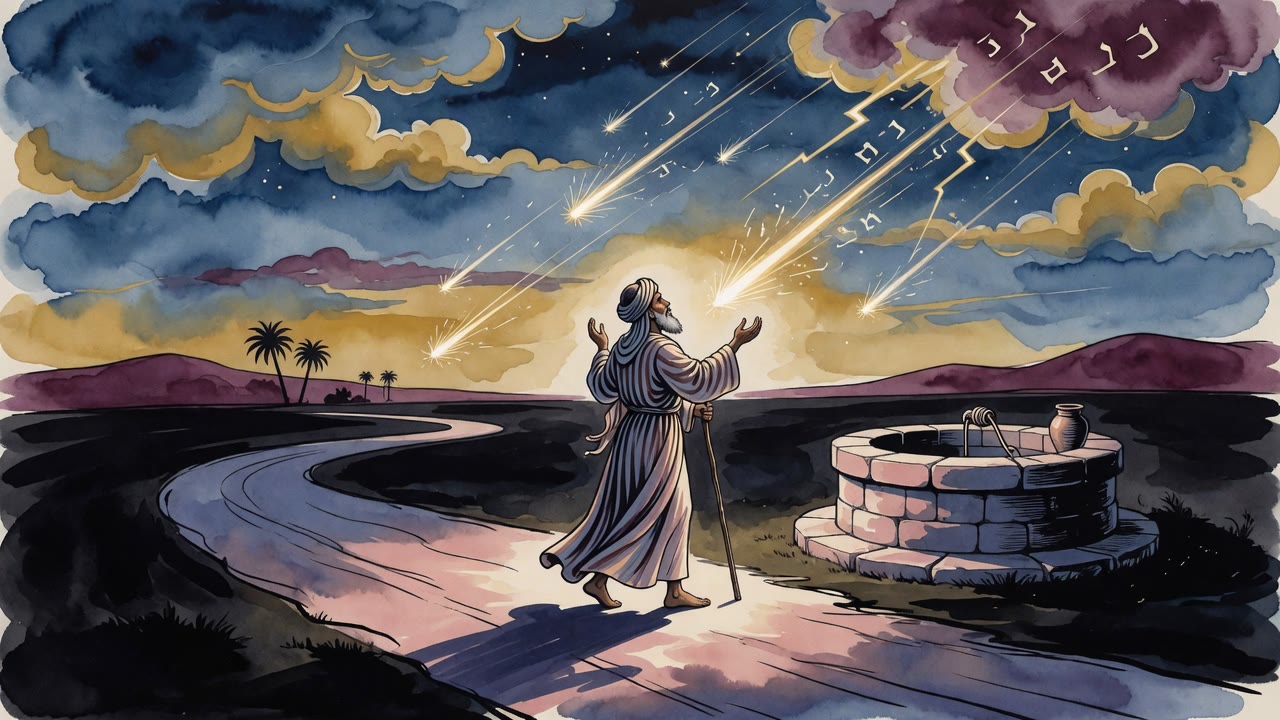
Abimelech butchered seventy brothers on one stone for a crown, so the last survivor climbed Gerizim and cursed the bramble king with fire.
Table of Contents
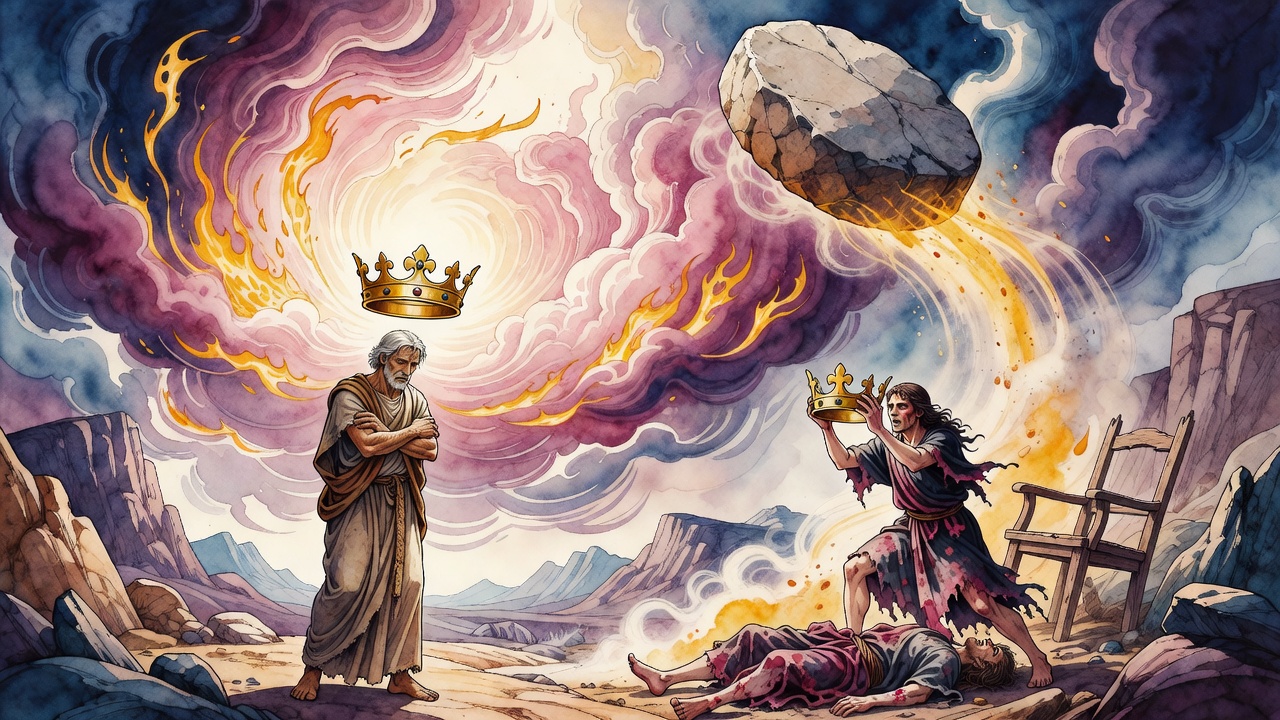
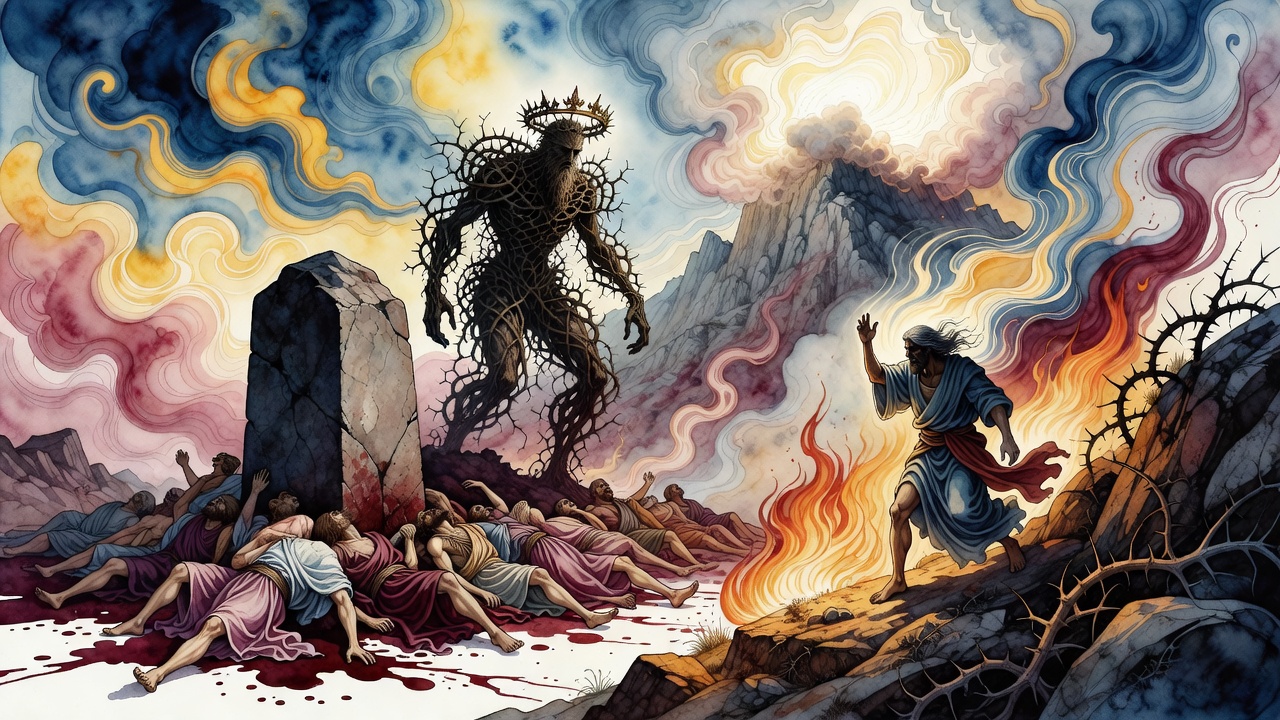
The stone sat in the courtyard of Shechem, broad and flat, and they laid the brothers across it one after another like sheaves brought in for threshing. Seventy sons of Jerubbaal, who was Gideon, the man who had broken Midian with three hundred torches. Seventy men butchered on a single rock so that one man could wear a crown.
 Click for full size
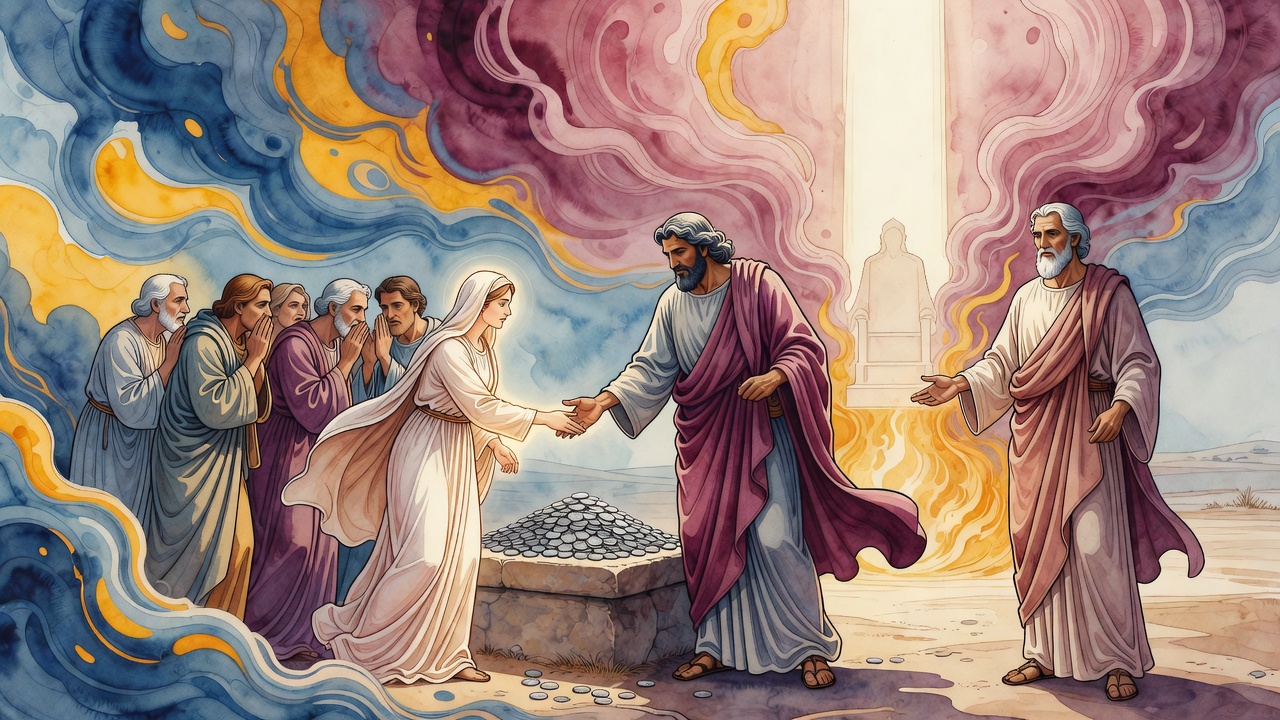
That man was Abimelech. He had gone down to his mother's people in Shechem and spoken into their ears, and his words were sweet and small. "Which is better for you," he asked them, "that seventy men rule over you, or that one man rule, and that one your own bone and your own flesh?" The lords of Shechem liked the sound of one. They opened the treasury of their idol and counted out silver, and Abimelech hired the kind of men who do not ask why. They went to his father's house. They did the work on the stone.
One Brother Hidden in the Reeds
They counted the bodies and came up short by one. The youngest, Jotham, had folded himself small and slipped away while the knives were busy. Now he was alive in the hills above a city whose new king had just paid to kill everyone with his blood.
He did not run far. He climbed. Above Shechem two mountains face each other across the valley, Gerizim and Ebal, and long ago Israel had stood between them and shouted the blessings and the curses across the gap. Jotham went up Gerizim, the mountain of blessing, and that was a strange place from which to curse a king.
Why He Chose the Mountain of Blessing
There was a reason, and it was sharp. The Kutim who would settle that country one day would boast, "Gerizim is ours, for on Gerizim the blessings were spoken." They had it backward. The men on Ebal opened their mouths and cursed, and the curse flew across the valley and landed on the people standing opposite, on Gerizim. The men on Gerizim blessed, and the blessing crossed and fell on Ebal. So the curses had always come to rest on Gerizim, and the blessings on Ebal.
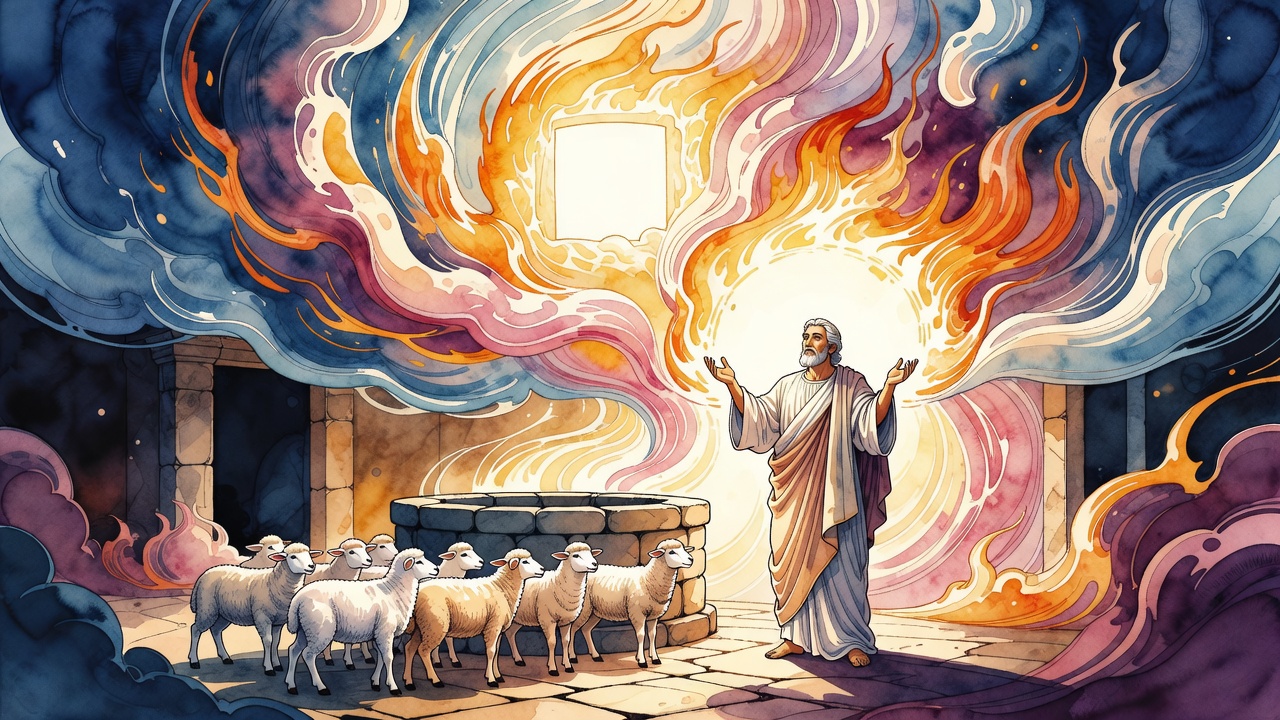
Jotham knew the geography of it. "I will not curse my brother and the men of Shechem from anywhere," he said, "except from the top of Gerizim." He stood on the summit where his enemies thought blessing lived, and he opened with a fable, the way a man tells a story to children who have done a terrible thing.
The Trees Who Went Looking for a King
"The trees once went out to anoint a king over themselves," he called down the slope, and his voice carried into the valley.
The trees were Israel, restless and wanting a crown. They went first to the olive, fat and shining, and the olive was Othniel of the tribe of Judah, the leafy olive tree of the prophet's word. "Should I give up my oil," the olive said, "the oil by which gods and men are honored, to go and sway over the rest of you?" And he would not.
They went to the fig, heavy and sweet, and the fig was Deborah, who sat under her palm and sang her song after the kings of Canaan lay broken. "Should I give up my sweetness," she said, "to go and sway over you?" And she would not.
They went to the vine, and the vine was Gideon himself, Jotham's own father, with Barak beside him. They had already heard this offer once. "Rule over us," Israel had begged Gideon after Midian fell, "you and your son and your son's son." And Gideon had answered, "I will not rule over you, and my son will not rule over you. The Lord shall rule over you." "Should I give up my wine," the vine said now in the fable, "that gladdens God and men, to go and sway over the trees?" And he would not.
The Bramble Said Yes
So the trees came at last to the bramble, the low thornbush that grabs at the ankles of anyone who passes. Every other tree had something to lose. The bramble had only thorns. The bramble was Abimelech, and just as the thornbush is full of nothing but prickles, Abimelech was full of nothing but cruelty.
"If in truth you are anointing me king over you," the bramble said, "then come and shelter in my shade." Jotham let the absurdity hang in the air over the valley. A thornbush throws no shade. A man lies down in its shade only to be torn. He had heard the real words his brother used in Shechem, the soft accounting of it. Is it not better, Abimelech had reasoned with them, that one rule and not seventy? Better for you. He never said for whom.
Then the fable bared its teeth. "But if not," Jotham cried, "let fire come out of the bramble and devour the cedars of Lebanon. And let fire come out from Shechem to devour Abimelech, and fire come out from Abimelech to devour the lords of Shechem." He named the burning before it came. Then he turned and ran for his life, down off the mountain of blessing, into the country beyond, and Shechem did not see him again.
The Evil Spirit and the Fire
For a while nothing happened. Abimelech ruled three years, and the silver kept the lords of Shechem quiet, and the stone in the courtyard was washed clean. Then God sent an evil spirit between Abimelech and the lords of Shechem, and the men who had bought a king turned on him.
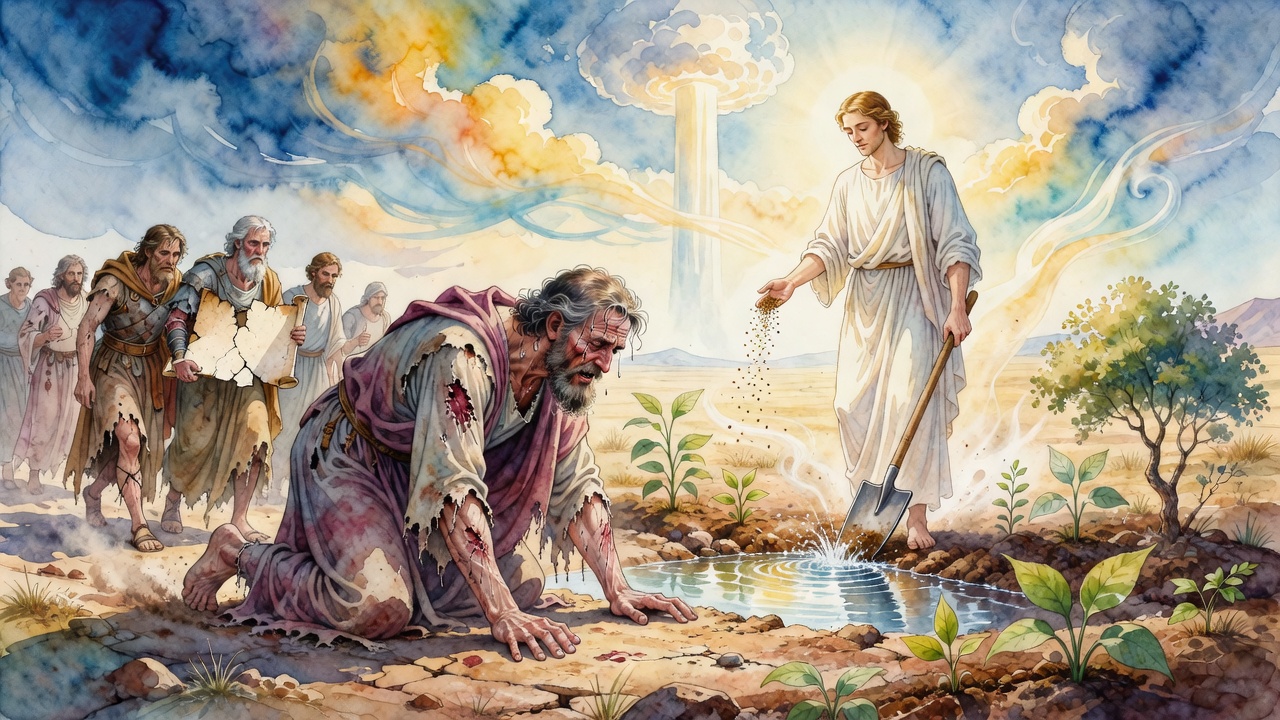
The fire came exactly as the bramble had promised it. Abimelech burned the tower of Shechem with everyone shut inside it, men and women together, smoke standing over the valley where the curse had been spoken. And then a woman on a wall above another town dropped a piece of a millstone, and it cracked his skull, and he begged his armor-bearer to run him through so no one could say a woman had killed him. The curse of Jotham, the youngest of seventy, came home on all of them.
Shechem already wore that reputation. The wisest teacher of his age would later set down a short bitter list of the peoples his soul despised, and among them, plainly, "the foolish nation that dwells in Shechem." The city had a long history of choosing the bramble.
← All myths