God Made Chaos and Kindled Gehenna on Creation's First Day
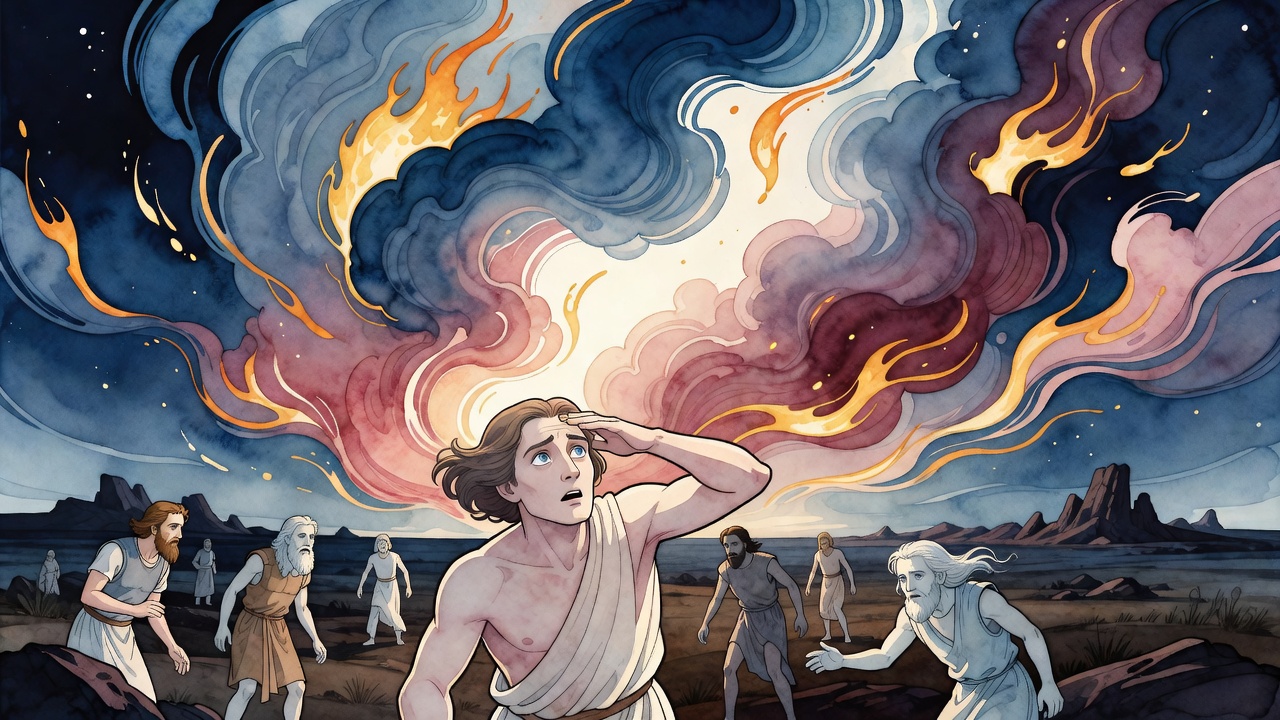
Before the first man drew breath, a green band bled darkness, drowned stones fed the deep, and the fire of judgment already burned beneath the young world.
Table of Contents
 Click for full size
Ten Things at Once in the First Light
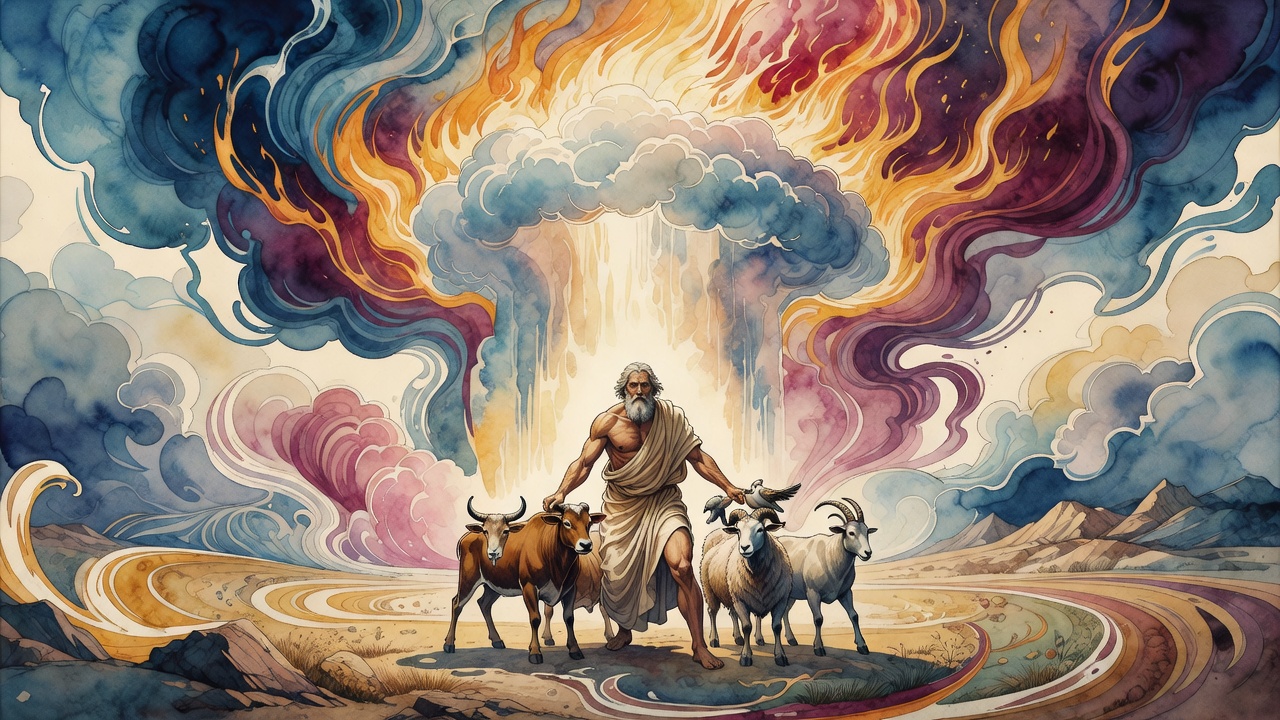
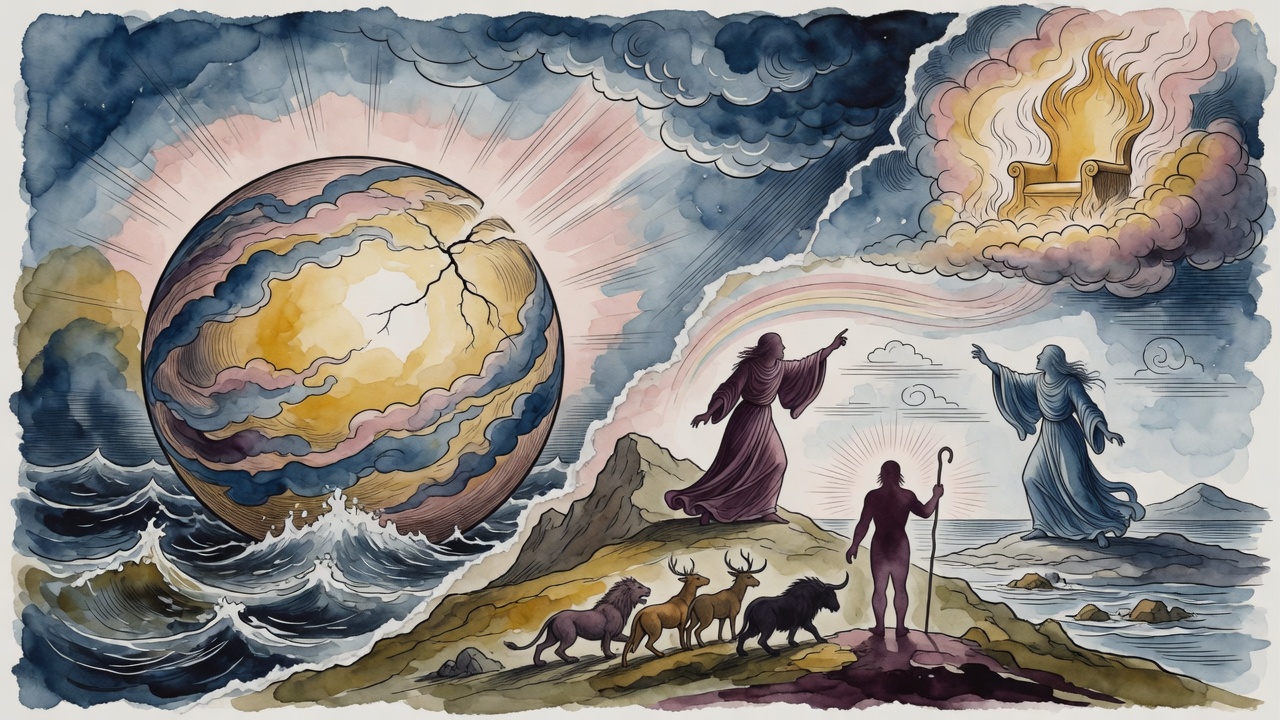
On the first day there was no first day yet, only a voice moving across water that had not been told where to stand. Then God spoke, and ten things came out of the silence at once, crowding into being in a single breath. Heaven. Earth. Tohu (formless void) and Bohu. Light. Darkness. Wind. Water. The measure of the day, and the measure of the night. They did not arrive in a tidy line. They fell into existence together, the way a hand opens and everything it was holding drops in the same instant.
Heaven and earth came out joined, fitted to each other like a pot and the lid that closes it. They were made from one beginning, pressed so close that later, when they were parted, each still carried the shape of the other. And already, in that first crowd of created things, the bright and the dark stood side by side. Nobody had sinned. Nothing had gone wrong. And still the darkness was there from the opening word, handed its own place in the world before the world had anyone to punish.
The Green Band and the Stones in the Abyss
Two of those ten things were stranger than the rest.
Tohu was a green line, a band drawn all the way around the young earth, and out of it darkness leaked into the empty places. It did not shine and it did not burn. It simply breathed out night, steadily, the way a wet cave breathes out cold. Formlessness given an edge and a color and set to work.
Bohu lay lower still. It was stones, sunk into the abyss, and from between those stones the waters came up. Emptiness that was not empty at all but heavy and wet, the hidden source of every flood the world would ever hold. Chaos here was no scream. It was a green band and a bed of drowned stones, quietly furnishing the underside of a world only hours old.
The Light Too Bright to Keep
Then there was the light.
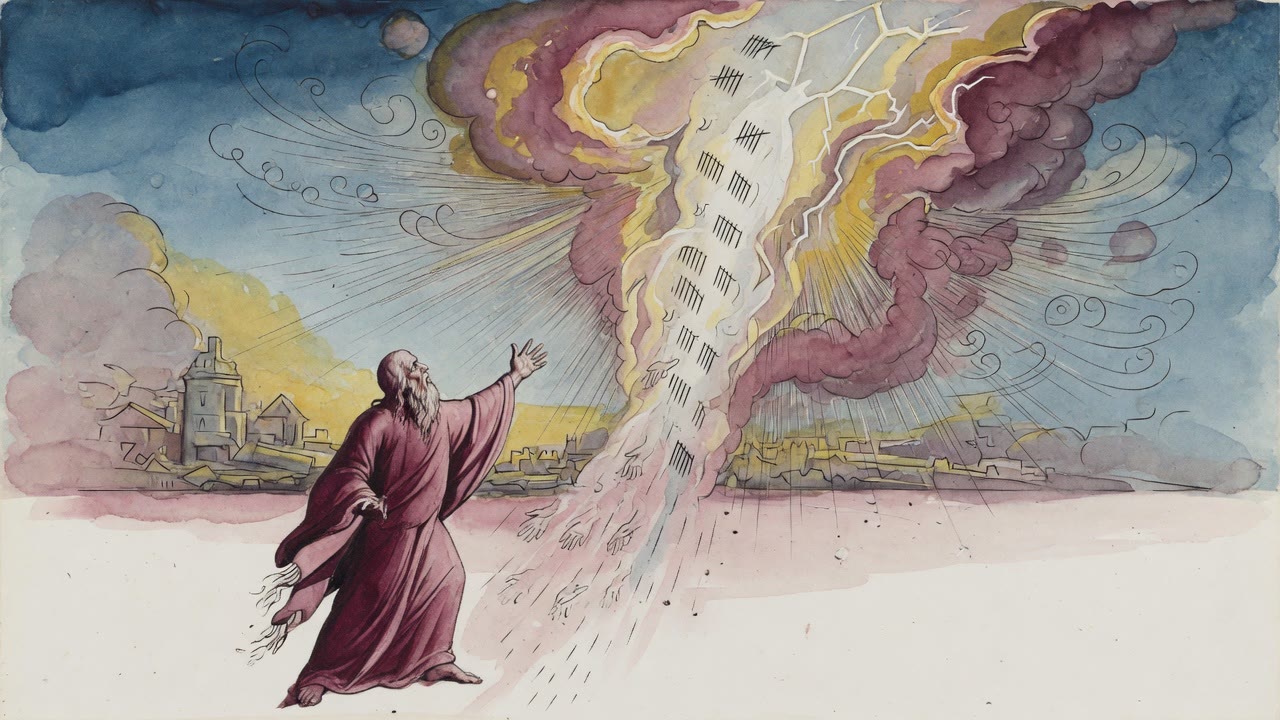
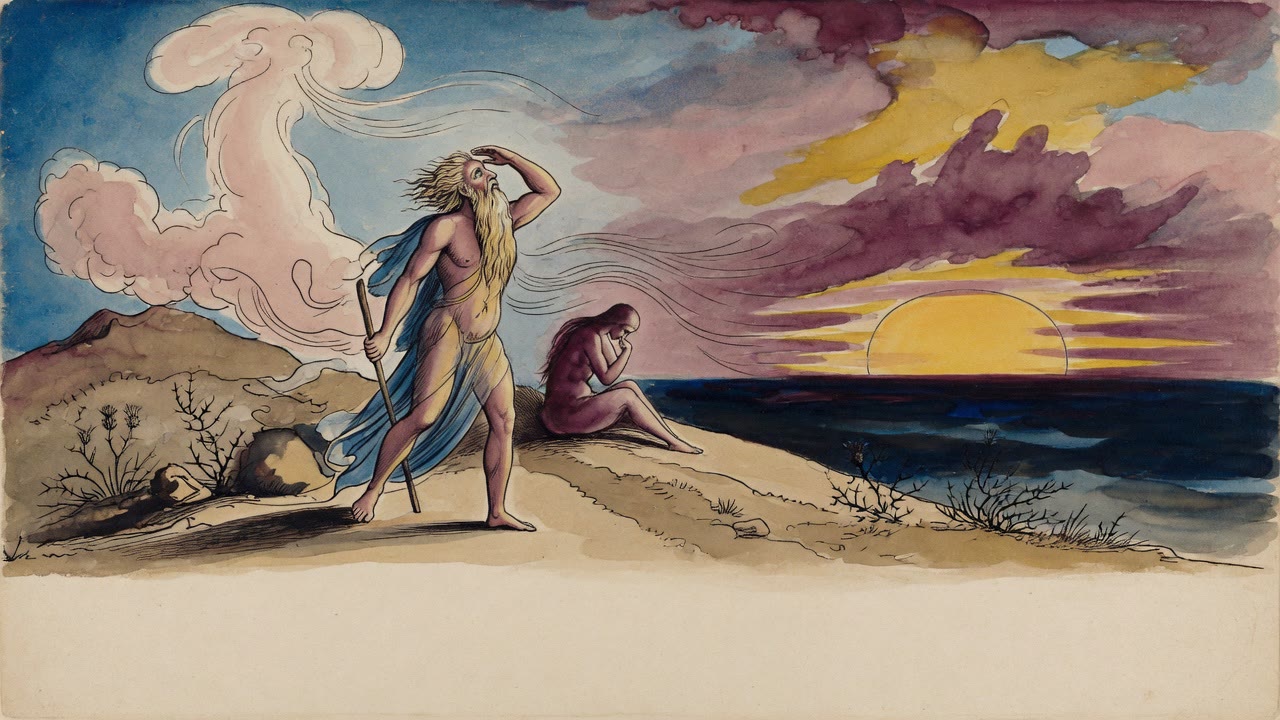
Not the sun. The sun would not be hung until the fourth day, with the moon and the stars strung up beside it. This first light was something else, and it was enormous. A man standing in it could have looked once and seen the whole world at a single glance, from the first edge of things to the last, the way a man takes in one small room.
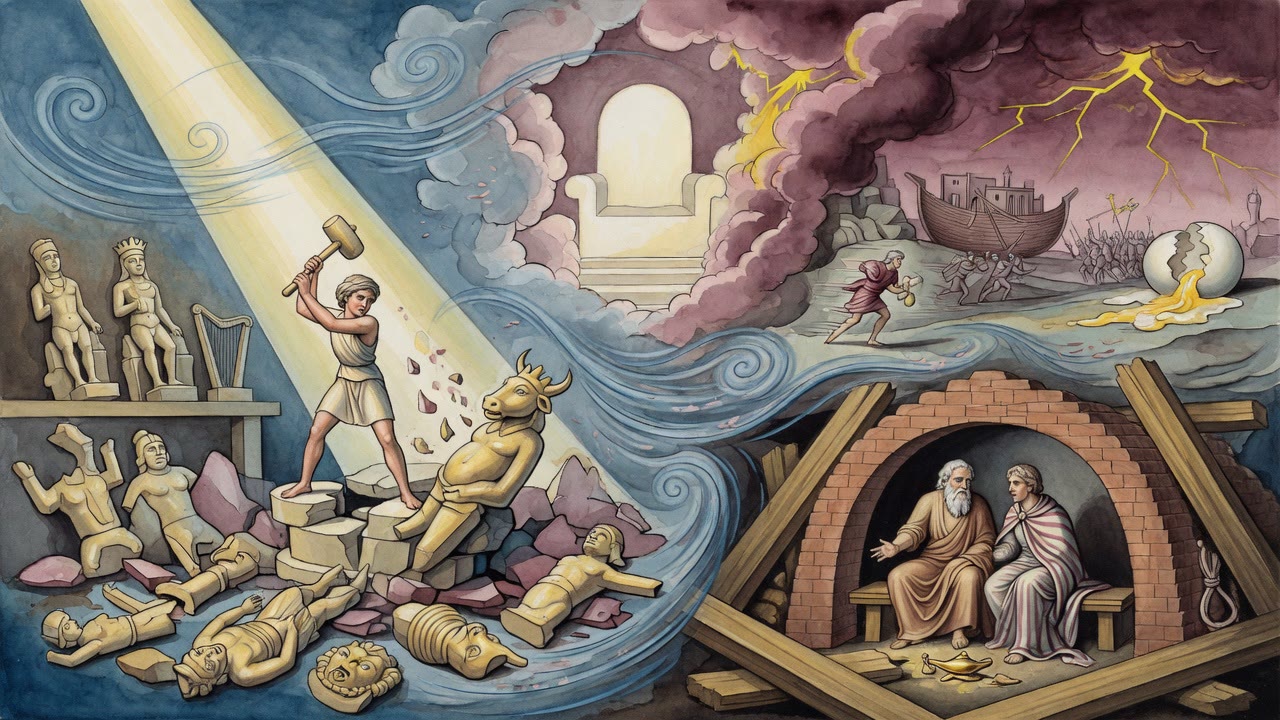
God looked ahead down the line of the generations, and He saw what was coming. He saw the men of the Flood. He saw the builders at Babel, hands full of bricks and mouths full of pride. He saw that such people would take a light that showed them everything and use it to see only what they wanted. So He gathered the great light back up and hid it. He folded it away and set it apart, kept for the righteous in the world that has not yet come. On the first day the best thing made was already too good for the ones who would live under it, and it was carried out of their reach before they were even born.
The Fire Prepared Beneath the World
And beneath all of it, the fire was already lit.
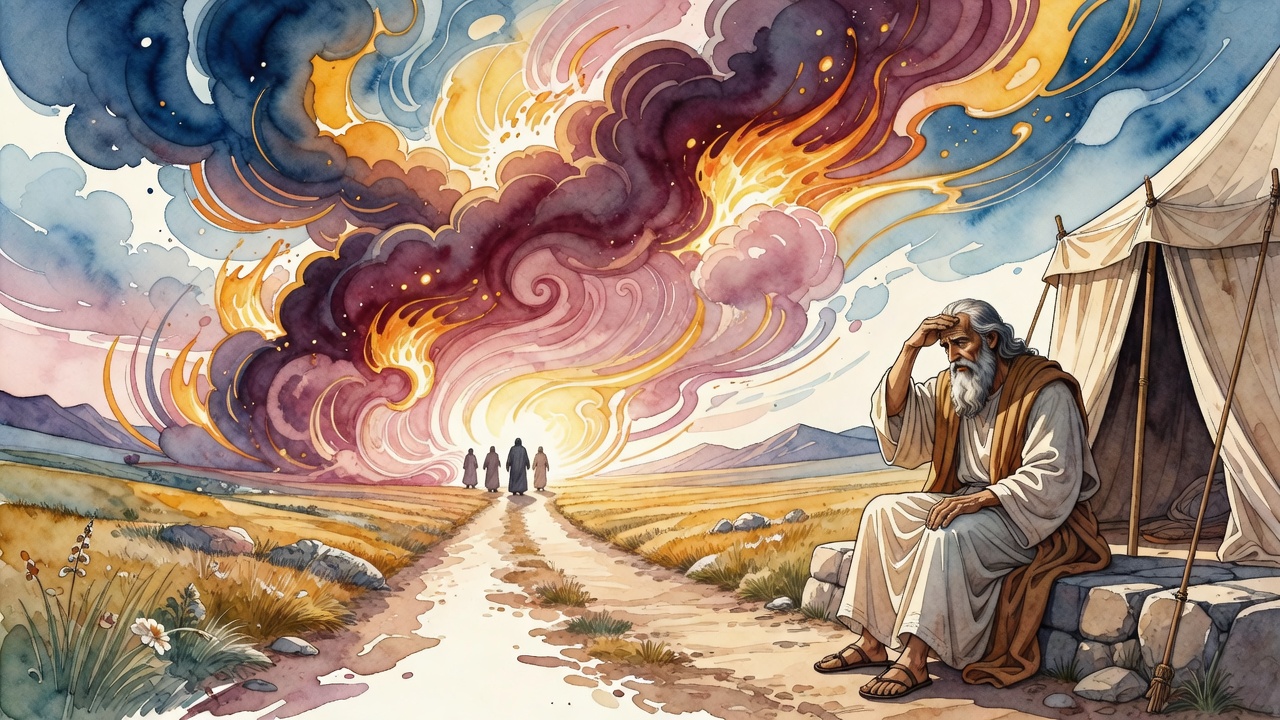
Gehenna (the realm of judgment after death) was kindled early, in the first days, its furnace stoked under the floor of a world where no one had yet done anything to earn it. The pit was dug and the flame was fed before the first man opened his eyes. Judgment did not wait to be provoked. It was built into the foundation, laid down with the water and the darkness and the drowned stones, a fire waiting under the fields for people who did not yet exist.
So the shape of the first day was not only light and water. It was a bright band bleeding darkness, an abyss of wet stones, a light too pure to be trusted to human hands, and a fire banked and ready below the ground. The furniture of the deep was set out on the same morning as the sky.
The Earth That Would Not Obey
The earth, for its part, disobeyed almost at once.
On the third day the earth was ordered to bring forth fruit trees. And God wanted a particular kind of tree, one whose wood would taste as sweet as the fruit it carried, wood sweet enough to bite, a trunk as good as an apple. The earth heard the order and did it halfway. It pushed up trees heavy with fruit, yes, but the wood came out dry and bitter and inedible, wood that was only wood. A small refusal. The first crack of will in a thing that was supposed to have none.
The earth's deafness did not end there. When Adam reached for what he had been forbidden, God had set witnesses to watch him. The sun understood. The moment the man sinned, the sun went dark with the shame of it. But the earth felt the same weight pass over it and shrugged. It did not dim. It did not shudder. It took in the fall of the first man and carried on as though nothing at all had happened.
For that, the ground was sentenced ten times over. The earth that had watered itself from its own springs would now wait, mouth open, for rain from above. Its harvests would fail. Its grain would sicken in the ear. Vermin would breed in it. Its flat face would buckle into valleys and mountains. It would raise trees that gave nothing. It would push thorns and thistles up between the crops. Much would be sown in it and little gathered. It would be forced to open and give back the blood spilled on it, no longer able to hide what was done above it. And in the end it would wear out like an old coat, the whole green weight of it aging like a garment left too long on the body.
The fire under the fields had been ready since the first day. Now the field above it had been marked to feed it.
← All myths