6 min read

The Deathless Scribe and the Golden Grass of Baruch's Grave

Jeremiah's scribe poured his grief into a book, then slipped from the record, and a Babylonian prince later found his grave still deadly and still gold.

Curated by Arthur · Told by Maggid ·
Table of Contents
  1. The Eagle Came Down Over the Graves
  2. The Book He Read to the Captive King
  3. The Prayer He Dared to Say for His Enemy
  4. The Prince Who Wanted Ezekiel's Tomb
  5. The Grass That Only Shone at Night
The Deathless Scribe and the Golden Grass of Baruch's Grave Click for full size

The Eagle Came Down Over the Graves

Baruch was on his knees pouring out thanks to God when a shadow crossed him. An eagle was falling out of the noon sky, not stooping on prey but coming down to him, deliberate as a servant on an errand. It settled and said it had been sent as a messenger. In its grip it carried a letter for the exiles and a cluster of figs, and the figs were soft and green as if picked that morning, though sixty-six years had passed since any hand had gathered them.

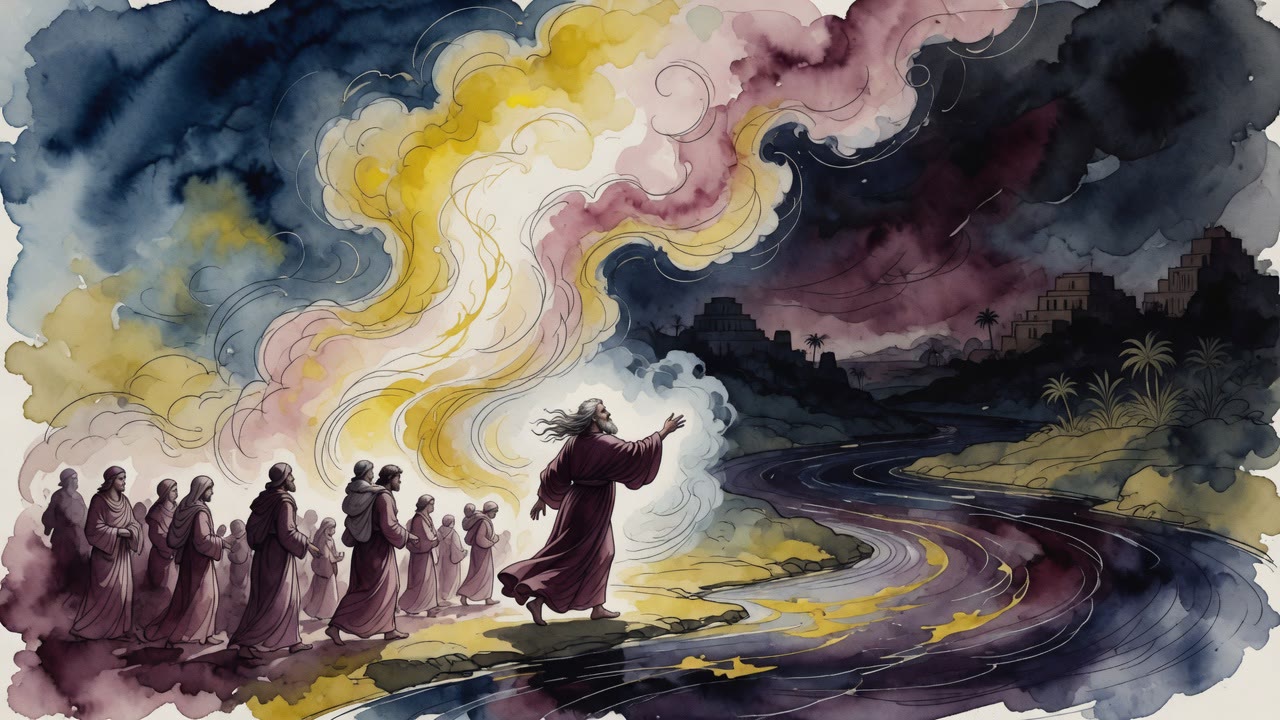
The bird flew on to a poor patch of ground outside the walls, a Jewish burial field that Nebuchadnezzar had granted the prophet Jeremiah only after long begging. A funeral was coming toward it, mourners bent under a bier, carrying their dead far from home. The eagle cried out over them. "I have a message for thee, Jeremiah! Let all the people draw nigh to receive the good tidings!" A bird that spoke could be a madness of grief, so the eagle gave a sign. It touched the corpse on the bier, and the dead man opened his eyes and sat up among the living. The people broke, and their voices ran together into one cry. "Save us. What must we do to return to our land?"

The Book He Read to the Captive King

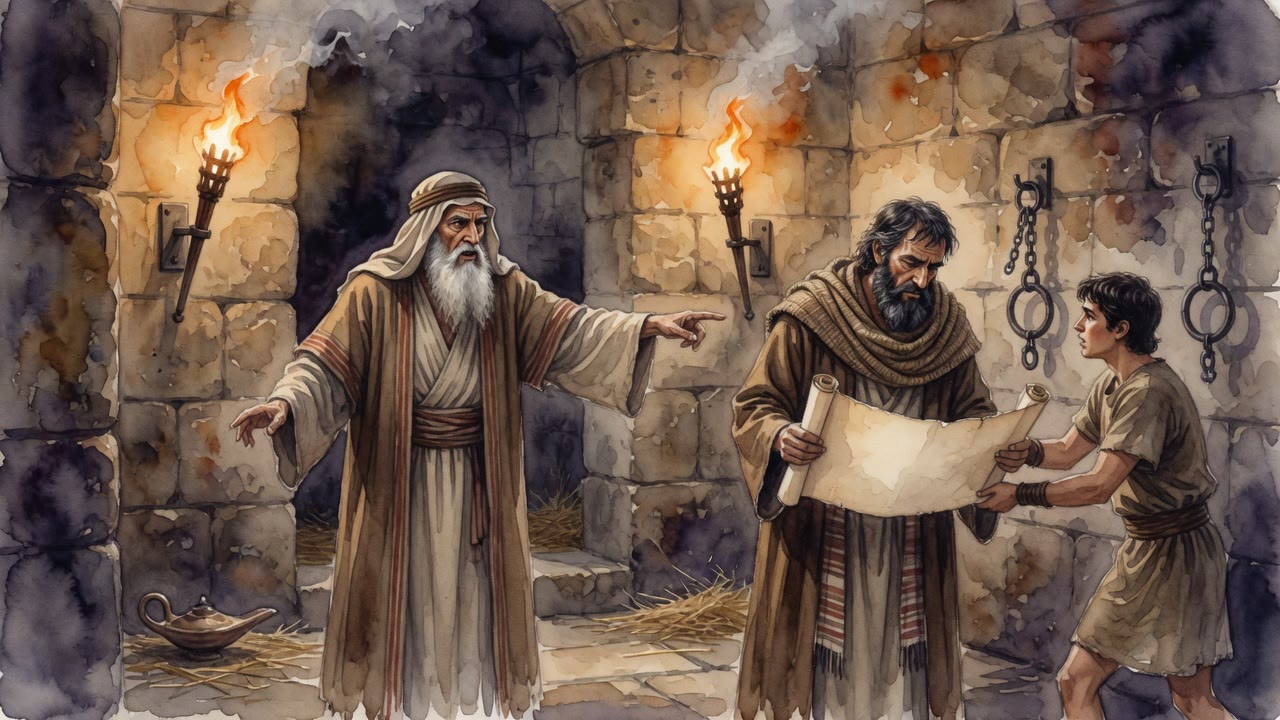
Baruch had never wanted the front of any room. He was the scribe, the hand behind the prophet, the man who wrote down another man's thunder. But Jerusalem was ash now and Jeremiah's voice was thinning, and someone had to speak into the silence. So Baruch spoke. He wrote letters, one of admonishment to those still in the land, and two for the tribes carried off, one for the nine and a half and one for the two and a half, and the eagle bore the first across the desert.

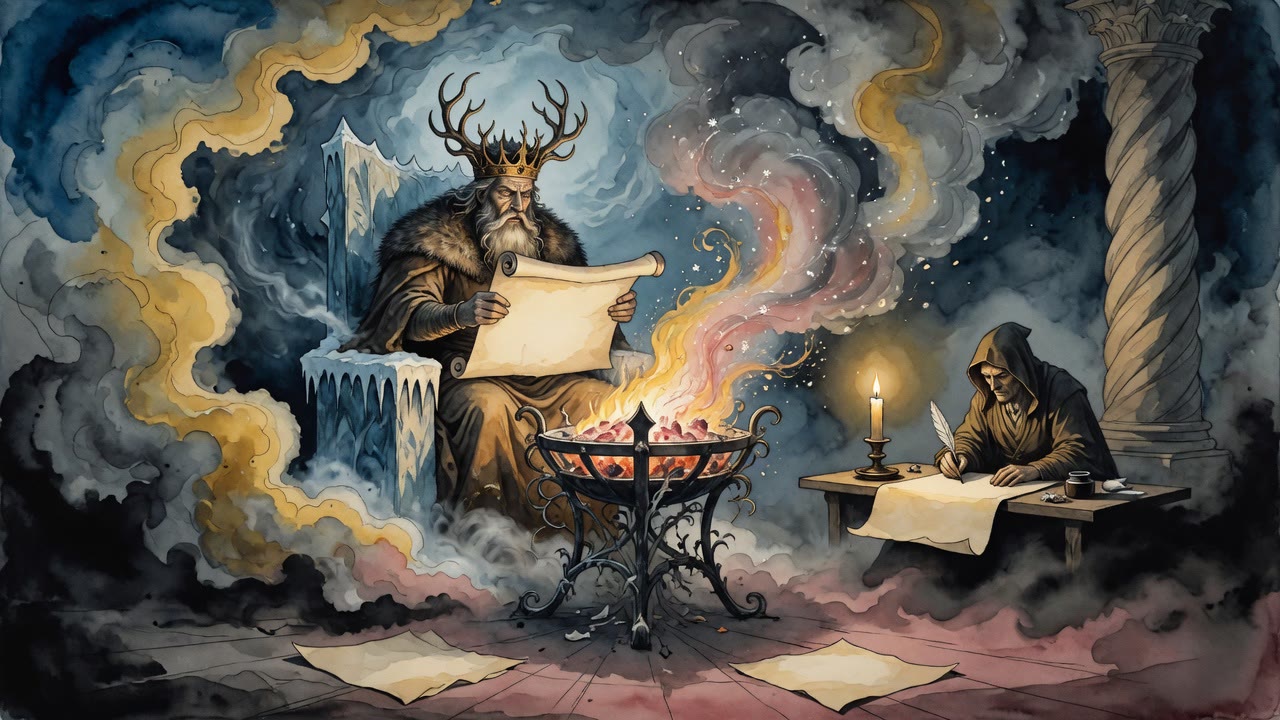
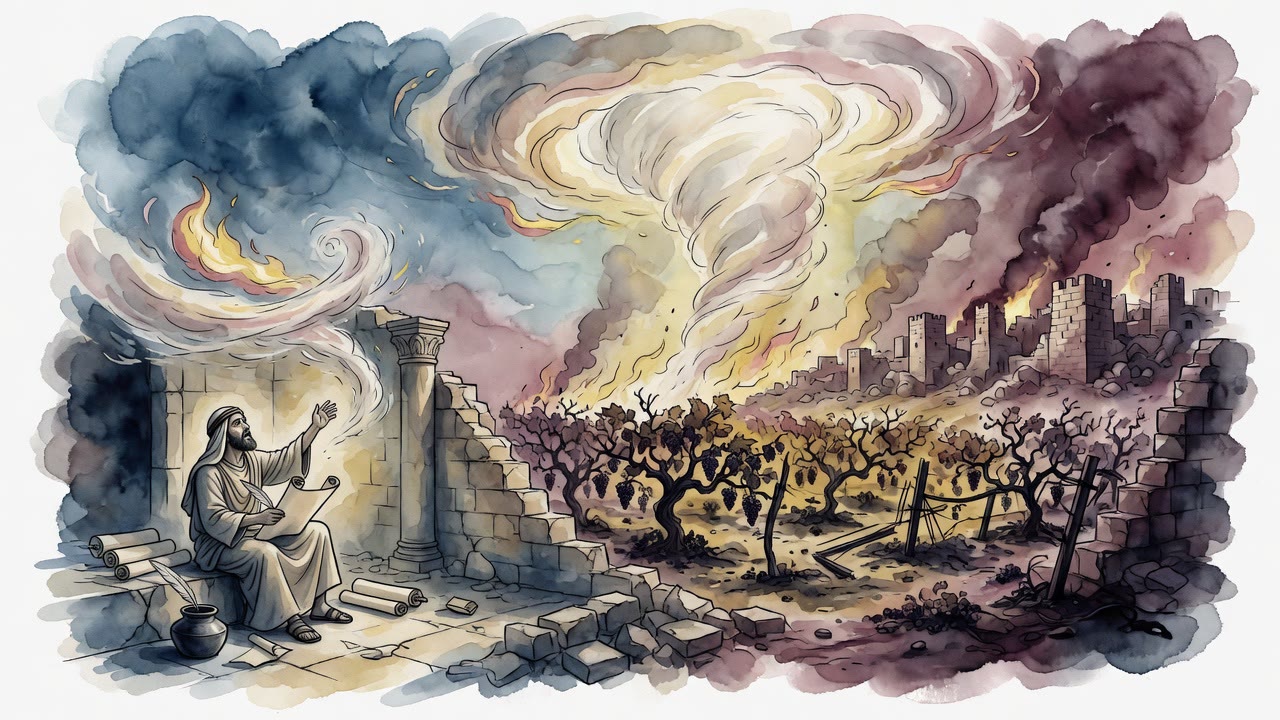
Then, five years into the ruin, sitting in Babylon among the captives, he made a whole book. It held penitential prayers, the raw pleading of people who knew what they had lost, and hymns of consolation for the longest nights. Return to God, it said on every page. Return to His law and you will not be left here. On a fast day he read it aloud to King Jeconiah, whom some called Jehoiachin, and to all the people, and the whole exile mourned and remembered and turned its face back toward the God who had let them fall.

The Prayer He Dared to Say for His Enemy

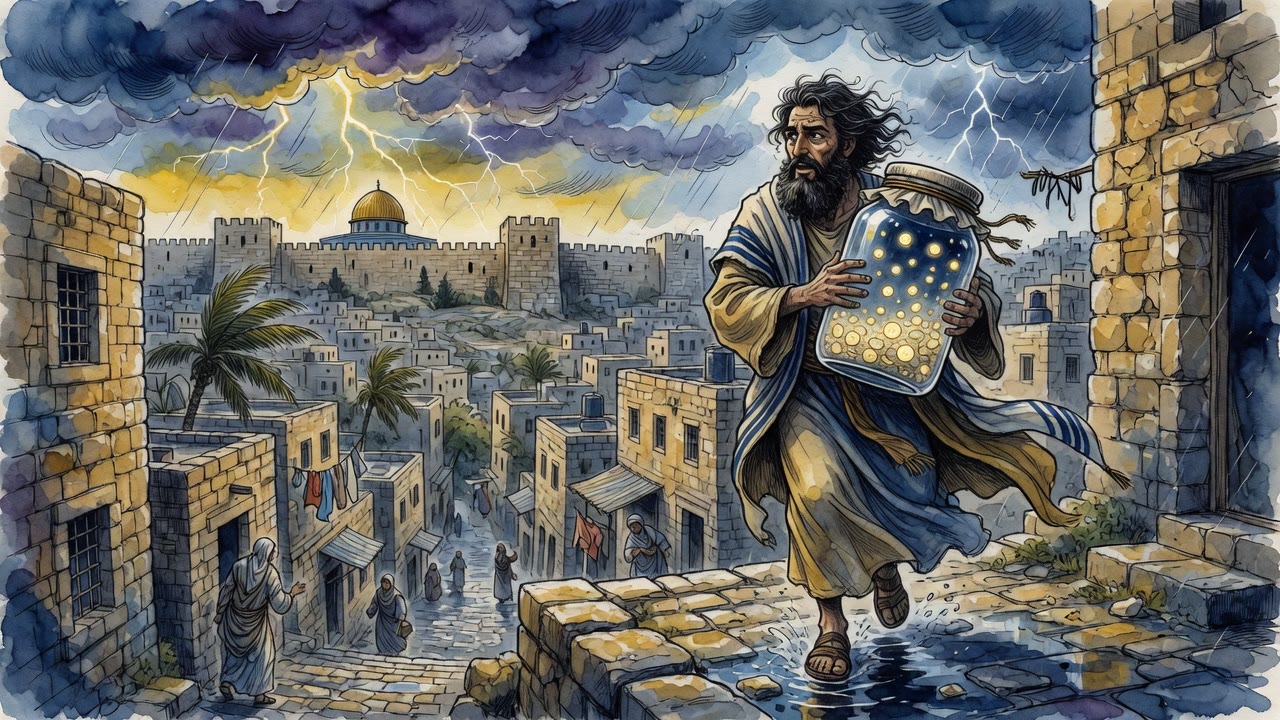
Then Baruch asked something that caught in the throat. A collection went around the camp, coin and silver, and with it the people gathered the silver Temple vessels that Zedekiah had made after Jeconiah was dragged into captivity. All of it Baruch sent back to Jerusalem, to the high priest Joakim and the remnant, with instructions. Buy sacrifices. And pray for the life of Nebuchadnezzar, who had burned the House, and for his son Belshazzar.

Pray for the man who did this. Baruch swallowed the hard word and gave it anyway, because a people praying under a roof, even a conqueror's roof, was a people still alive to pray, and he meant them to live long enough to go home. After that the account loses him. He does not appear among the exiles who sicken and die through the foreign years. Among them it was said he had not truly died at all, only been laid aside like the figs the eagle carried, kept whole against the day the exile would end.

The Prince Who Wanted Ezekiel's Tomb

Generations turned, and a Babylonian prince grew hungry for the grave of the prophet Ezekiel, whose tomb stood in that country. He summoned a Jew, Rabbi Solomon, and demanded to be led to it. The rabbi named a smaller door first. "Try to enter the tomb of Baruch, which adjoins that of Ezekiel," he said. "If you succeed there, then perhaps you may approach Ezekiel, the teacher of Baruch."

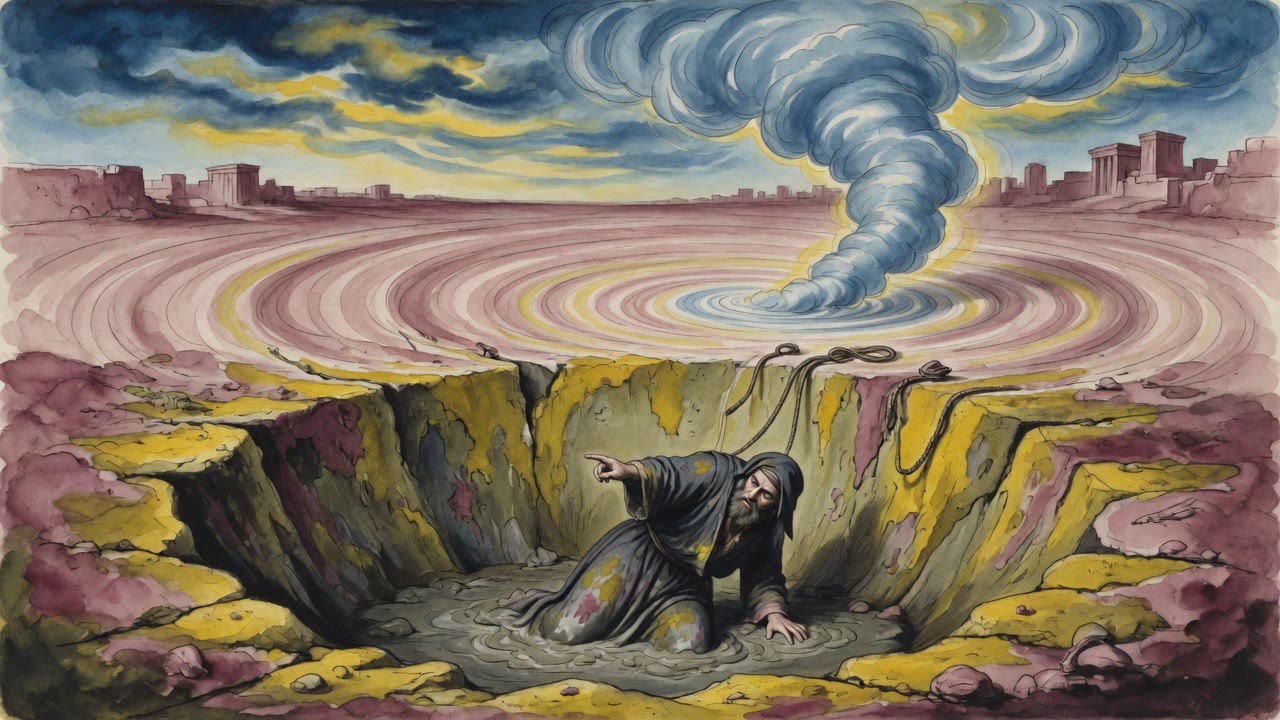
The prince set his men to open Baruch's grave. The first who laid a hand on the stone dropped dead where he stood. So did the next. The ground would not be forced. An old Arab of the region gave the only counsel that fit. "Call upon the Jews, for Baruch was one of them, and they still study his books." So the Jews of the district came, and not with tools. They came with ta'anit and t'fillah, fasting and prayer, with teshuvah and tzedakah, repentance and open hands. They humbled themselves at the stone, and it opened as gently as a book falling open. Inside lay Baruch on a bier of marble, whole and unmarked, as though the breath had gone out of him that same hour and not an age ago.

The Grass That Only Shone at Night

The prince, staring at the uncorrupted man, decided it was not fitting for Baruch and Ezekiel to share one grave, and ordered the bier carried into the city. His strongest bearers took hold. Teams of animals were harnessed to it. The bier moved a little more than two thousand ells and would go no further, rooted as if the earth had reached up and closed a fist. The prince read the sign. He set the bier down where it had stopped and ordered a house of study raised over the spot, so that where Baruch would not be moved, his books would be opened forever. And the prince and all his court left the gods of their fathers and took the God of Baruch for their own.

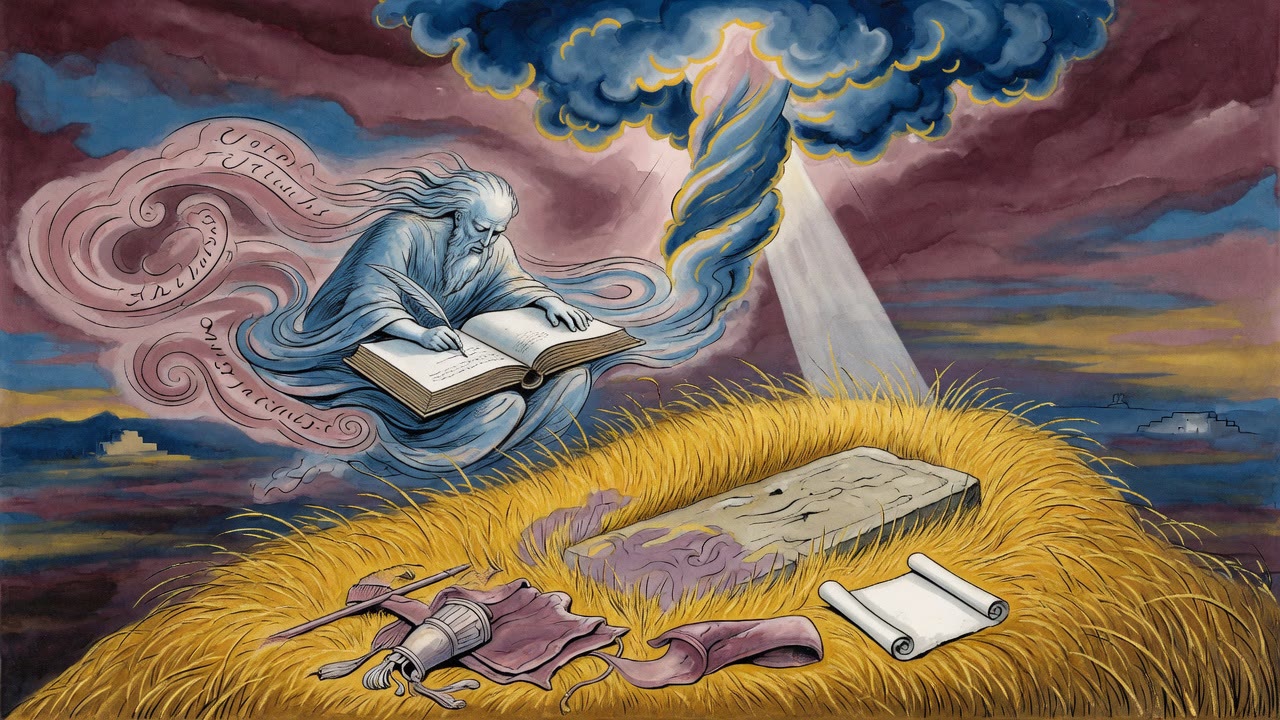
The grave kept one last secret for the patient. Grass grew over Baruch, common by day, but its blades were dusted with gold, and the gold would not answer sunlight. Only in the dark did it catch and shine, so the seekers learned to come by night, mark the shining places with a stake, and return at first light to gather what the night had shown them. Not far off, two thousand ells across the plain, the low gate of Ezekiel's tomb widened of its own accord whenever the crowds pressed in, so that no pilgrim who came for the teacher was ever turned from the door beside the scribe.


← All myths
From the tradition

Sources

4 sources

The texts behind this telling. Some cards carry a translation of the source; others are our own retelling of it, and each card says which. Every card links out to the original.

Legends of the Jews 10:59Legends of the Jews

Retold in our words. Read the original at the link below.The Legends of the Jews by Louis Ginzberg (1909) · Public Domain

Legends of the Jews turns to Baruch's Prophetic Vision.

Our story begins with Baruch, a loyal companion of the prophet Jeremiah. He wasn't just any scribe; he was a man deeply connected to the divine. According to Legends of the Jews, compiled by Rabbi Louis Ginzberg, Baruch was pouring out his heart in gratitude to God when a magnificent eagle descended from the sky. Not just any eagle, but one sent on a divine mission.

This eagle, acting as God's messenger, led Baruch to Jeremiah. Now, Jeremiah, as we know from the Book of Jeremiah, was a prophet who warned the people of impending doom if they didn't mend their ways. He’s a figure of lament, of warning, but also of profound faith. The Zohar, that foundational text of Jewish mysticism, also speaks of the importance of divine messengers and signs during times of crisis.

So, what was the message? God commanded Baruch to write to Jeremiah, instructing the people to remove the "strangers" from their midst. Who were these strangers? Perhaps those who had adopted foreign ways, those who had strayed from the covenant. The message was clear: purify yourselves, and God would lead you back to Jerusalem.

But how to deliver such a crucial message across the vast distance to Babylonia, where the exiled Jews were held captive? Again, the eagle steps in. Baruch not only sends the letter but also some figs that, miraculously, had retained their freshness for sixty-six years! A tangible symbol of hope, a reminder of the bounty that awaited them in their homeland. This detail, almost whimsical, reminds us that even in the direst circumstances, miracles can occur.

The eagle, having declared he was sent to serve as a messenger, embarked on his journey. His first stop? A desolate, forgotten place – a Jewish burial ground Nebuchadnezzar had granted Jeremiah after much solicitation. A somber location, a reminder of loss and death. This was a place where Jeremiah and the people would inevitably come to mourn.

And, as the eagle perched there, he saw Jeremiah and a funeral procession approaching. Imagine the scene: grief-stricken people, carrying their dead, far from home. Then, the eagle cries out: "I have a message for thee, Jeremiah! Let all the people draw nigh to receive the good tidings!" Talk about an unexpected interruption!

But how could they be sure this wasn't just some wild bird squawking nonsense? The eagle provided a sign. He touched the corpse being carried in the funeral procession, and…it came back to life! Resurrection! A powerful, undeniable sign of divine intervention.

Overwhelmed with emotion, the people cried out to Jeremiah, "Save us! What must we do to return to our land?" It’s a primal scream, a desperate plea for guidance. According to Midrash Rabbah, this moment of collective yearning, this turning back to God, was a pivotal step towards their eventual redemption.

The story doesn't end there, of course. But this episode, this incredible encounter with the eagle, serves as a potent reminder: even in the darkest of times, hope can take flight. It can arrive in unexpected forms, carried on the wings of faith and divine intervention. What "eagle" might be waiting to bring you a message of hope today?

Full source
Legends of the Jews 10:67Legends of the Jews

Retold in our words. Read the original at the link below.The Legends of the Jews by Louis Ginzberg (1909) · Public Domain

A reader can imagine despair settling in, but the Jewish spirit, as we know, is nothing if not resilient.

Let's He wasn't just any guy; he was the scribe and devoted companion of the prophet Jeremiah. But even in the face of such tragedy, Baruch stepped up.

In Ginzberg's, Legends of the Jews, Baruch, after offering words of comfort, sent out a message, not just a quick text, but a carefully crafted letter of admonishment to the people who remained in Palestine. But that’s not all! He also penned two letters to those carried off into exile. One went to the nine and a half tribes, and the other to the remaining two and a half tribes. Now, how do you deliver a letter to dispersed tribes? Legend says an eagle carried the letter to the nine and a half tribes.

Baruch didn’t stop there. Five years after the catastrophe, while in Babylon, he composed an entire book. It contained penitential prayers, you know, those heartfelt cries for forgiveness, and hymns of consolation, songs to lift the spirits in the darkest of times. He urged the people to return to God and His law, to find solace and strength in their faith.

This book wasn't just for personal reflection. Baruch read it aloud to King Jeconiah (also known as Jehoiachin) and all the people on a special day dedicated to prayer and repentance. It was a public act of mourning, remembrance, and a collective turning back to God.

And here's where the story takes another interesting turn. A collection was taken up among the people. They pooled their resources, and what's even more fascinating, they gathered the silver Temple vessels that Zedekiah had made after Jeconiah was taken captive. All of this was sent to Jerusalem, along with a request.

The message was for the high priest Joakim and the people of Jerusalem: use the money for sacrificial services and, crucially, for prayers for the life of King Nebuchadnezzar and his son Belshazzar.

Wait, what? Pray for the Babylonians?

It might sound strange at first, but the intention was clear: to ensure peace and happiness under Babylonian rule. They hoped that by praying for their rulers, they might secure a more favorable environment for themselves. Above all, they were to supplicate God to turn away His wrath from His people. It was a pragmatic approach, a way to navigate a difficult reality while holding onto hope.

What does this all tell us? Even in the face of immense loss and displacement, the Jewish people found ways to maintain their faith, their community, and their hope for a better future. They adapted, they prayed, and they even found it within themselves to pray for their oppressors, all in the hope of a more peaceful tomorrow. It's evidence of the enduring power of the human spirit, and a reminder that even after the darkest of nights, the possibility of dawn always remains.

Full source
Legends of the Jews 10:72Legends of the Jews

Retold in our words. Read the original at the link below.The Legends of the Jews by Louis Ginzberg (1909) · Public Domain

It all began with a Babylonian prince, captivated by tales of the prophet Ezekiel's tomb. He summoned a Jew, Rabbi Solomon, demanding to be shown the sacred site. Rabbi Solomon, wise and cautious, suggested a detour: "First," he said, "try to enter the tomb of Baruch, which adjoins that of Ezekiel. If you succeed there, then perhaps you can approach Ezekiel, the teacher of Baruch." It was a test, a way to gauge the prince’s worthiness.

Accompanied by his court, the prince approached Baruch's grave. But every attempt to open it failed miserably. Anyone who dared touch the tomb was instantly struck dead!

Desperate, the prince turned to an old Arab for counsel. "Call upon the Jews," the Arab advised, "for Baruch was one of them, and they still study his books. Perhaps they can intercede."

So, the Jews of the region gathered, humbling themselves through ta'anit (fasting), t'fillah (prayer), teshuvah (repentance), and tzedakah (charity). They understood the weight of the task. With hearts full of devotion, they approached the grave. And this time, it opened without incident.

Inside, they found Baruch lying on a marble bier, his body perfectly preserved as if he had just passed away. The prince, astonished, ordered the bier moved to the city, deciding it wasn't fitting for Ezekiel and Baruch to share the same grave.

But here's where the miracle deepened. The bearers, despite their strength and the help of numerous animals, couldn't move the bier more than two thousand ells (approximately 1000 meters) from its original spot. It was as if an invisible force held it rooted to the ground.

Following Rabbi Solomon's guidance, the prince understood this was a sign. He ordered the bier placed where it stood and decreed the construction of an academy at that very location. A place of learning, evidence of Baruch's enduring influence.

But the story doesn’t end there. These miraculous events sparked a profound transformation in the prince. He journeyed to Mecca, and there, he became convinced of the falseness of Mohammedanism, his former faith. He converted to Judaism, along with his entire court! What a ripple effect from one protected grave!

The legend of Baruch, as recounted in sources like Legends of the Jews, demonstrates the potent force of piety, the enduring power of a righteous life, and the astonishing ways in which the divine can manifest in the world. What legacies are we building, and what impact will they have long after we're gone?

Full source
Legends of the Jews 10:74Legends of the Jews

Retold in our words. Read the original at the link below.The Legends of the Jews by Louis Ginzberg (1909) · Public Domain

Our first stop is the grave of Baruch. Now, near Baruch's grave, something truly remarkable happens. But here's the thing: this golden sheen isn't easily visible in the bright light of day. So, what do people do? They wait for night. Under the cloak of darkness, they seek out the spot, carefully marking where the golden grass grows. Then, at daybreak, they return to gather this unexpected treasure. A secret revealed only to those who seek it under the watchful eyes of the stars.

Let's travel a little further, about two thousand ells – an ancient unit of measurement, roughly equivalent to an arm's length – from Baruch's grave. Here lies the tomb of Ezekiel. And this isn't just any tomb. According to Legends of the Jews, as retold by Ginzberg, it's overarched by a magnificent mausoleum, built by King Jeconiah after he was freed from captivity by Evil-merodach. A evidence of gratitude and faith.

This mausoleum, it's said, stood for centuries. Its walls bore the names of the thirty-five thousand Jews who helped Jeconiah build it. And the mausoleum wasn't just a beautiful structure; it was a place of miracles.

Think about this: when huge crowds journeyed to Ezekiel's tomb, drawn by reverence for the prophet, the entrance – a low, narrow gate – would miraculously expand. It would grow in width and height, just enough to allow everyone who wished to enter to pay their respects. A tight squeeze turned into an open embrace.

And the stories don't end there. There's the tale of the prince who vowed to give a colt to the prophet's grave if his barren mare would bear a foal. When his wish came true, he hesitated to fulfill his promise. But the filly, seemingly guided by divine intervention, ran the equivalent of four days' journey to the tomb! The prince couldn't reclaim her until he paid the colt's value in silver at the gravesite. It’s almost like Ezekiel himself was making sure the promise was kept!

People also used to entrust their valuables to Ezekiel's protection. When embarking on long journeys, they'd bring their treasures to the grave, asking the prophet to ensure that only the rightful heirs could retrieve them. And, according to tradition, Ezekiel always honored their requests. Talk about a safe deposit box!

There's even a story of someone who tried to steal books from the grave. But the would-be thief was immediately struck with sickness and blindness. A powerful reminder, perhaps, of the respect due to sacred objects and spaces.

Finally, we hear of a pillar of fire that once rose above Ezekiel's grave, visible from afar. It was a beacon, a sign of the prophet's presence. But, alas, it disappeared because of the "unseemly conduct" of the pilgrims who visited the site. A poignant reminder that even in the most sacred places, human behavior can affect the divine presence.

These stories, passed down through generations, paint a vivid picture of the reverence and awe that surrounded these figures. They remind us that even in death, these figures continued to inspire faith, hope, and a sense of wonder. They invite us to consider: what traces of the sacred might we find in unexpected places, if only we know where. And how, to look? What responsibilities do we have to uphold the sanctity of these spaces, both physical and spiritual?

Full source