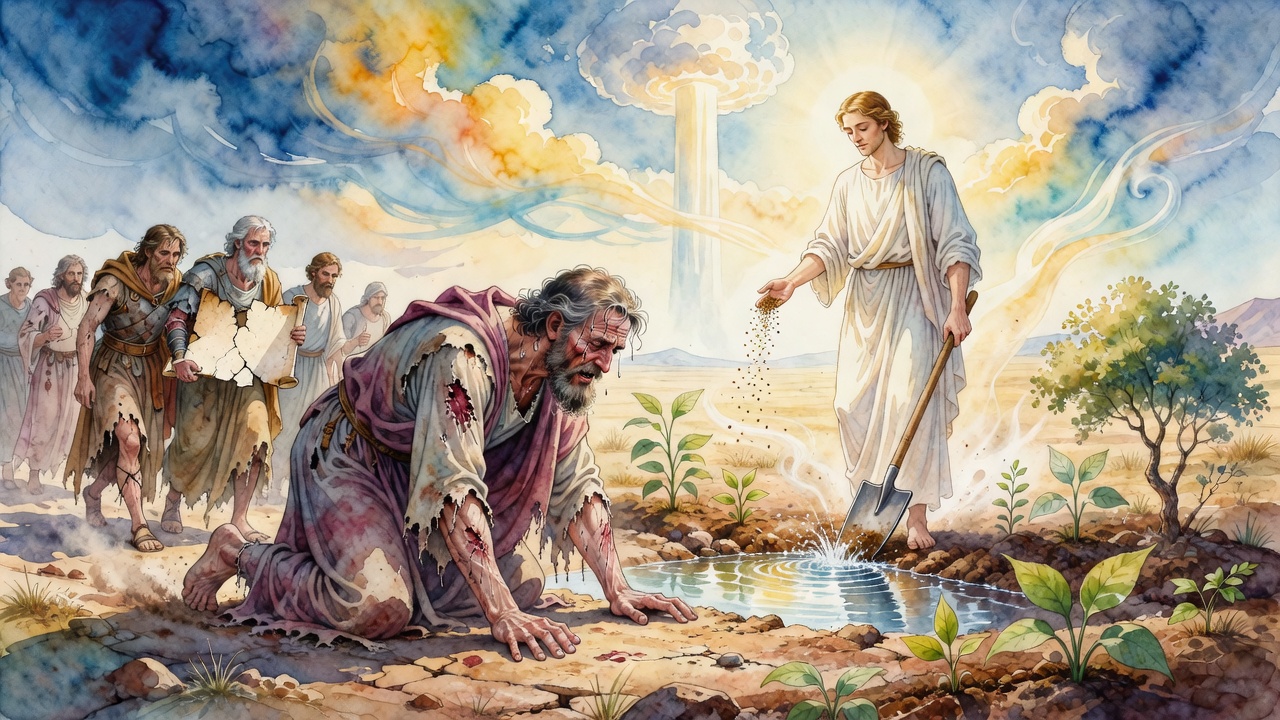
The Silver Dinar That Baked Into a Deadly Oath
A woman hid a silver dinar in flour, fed it away in a loaf, then swore on her child's life. Heaven treated the vow as written.
Table of Contents
 Click for full size
The Coin in the Flour Jar
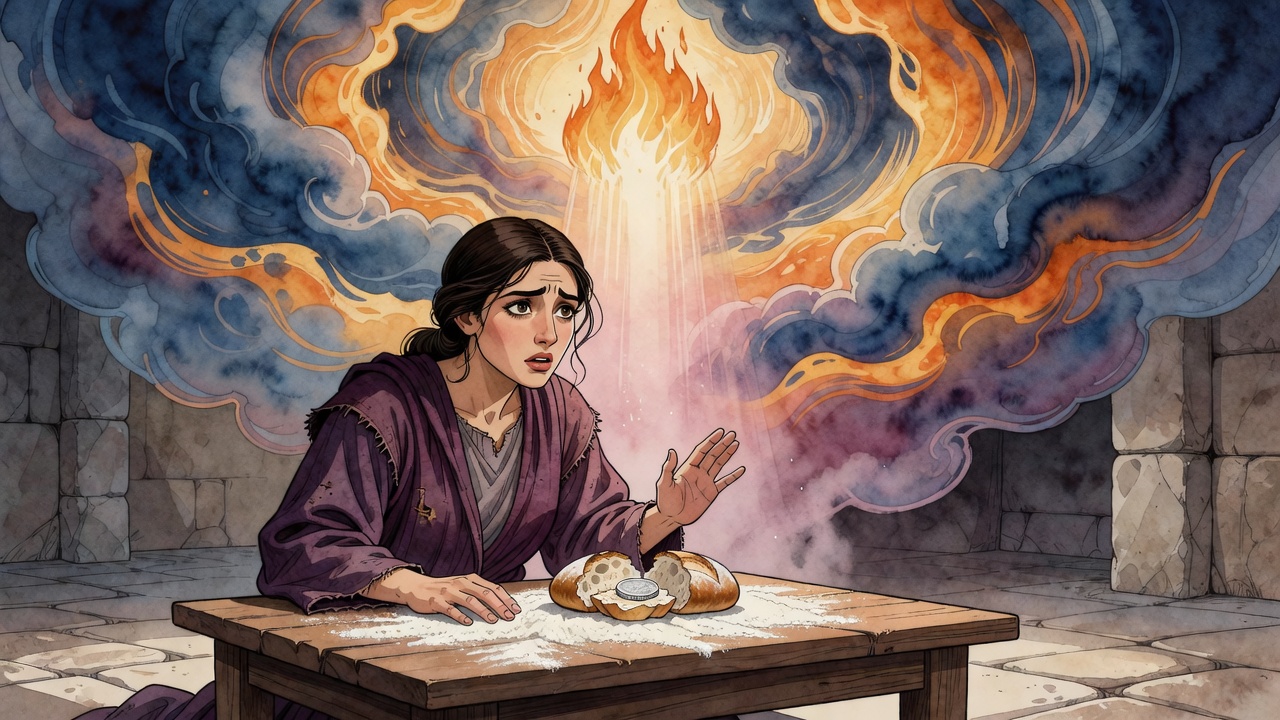
The woman set a single silver dinar into a jar of flour the way a person hides a small fear. A poor man had pressed the coin into her palm for safekeeping and walked back into the street. She meant to put it on a high shelf. The dough needed kneading. The jar stood open. Her fingers chose the flour without asking her mind for permission.
Later the oven glowed. She shaped loaves, scored them, and fed them heat. When a second poor man came to the door asking for bread, she tore a warm loaf free and pressed it into his hands. The dinar went with it, sealed inside the crust like a secret no one had meant to keep. She did not know. The beggar did not know. Only the flour knew, and flour does not speak.
The Owner Returns
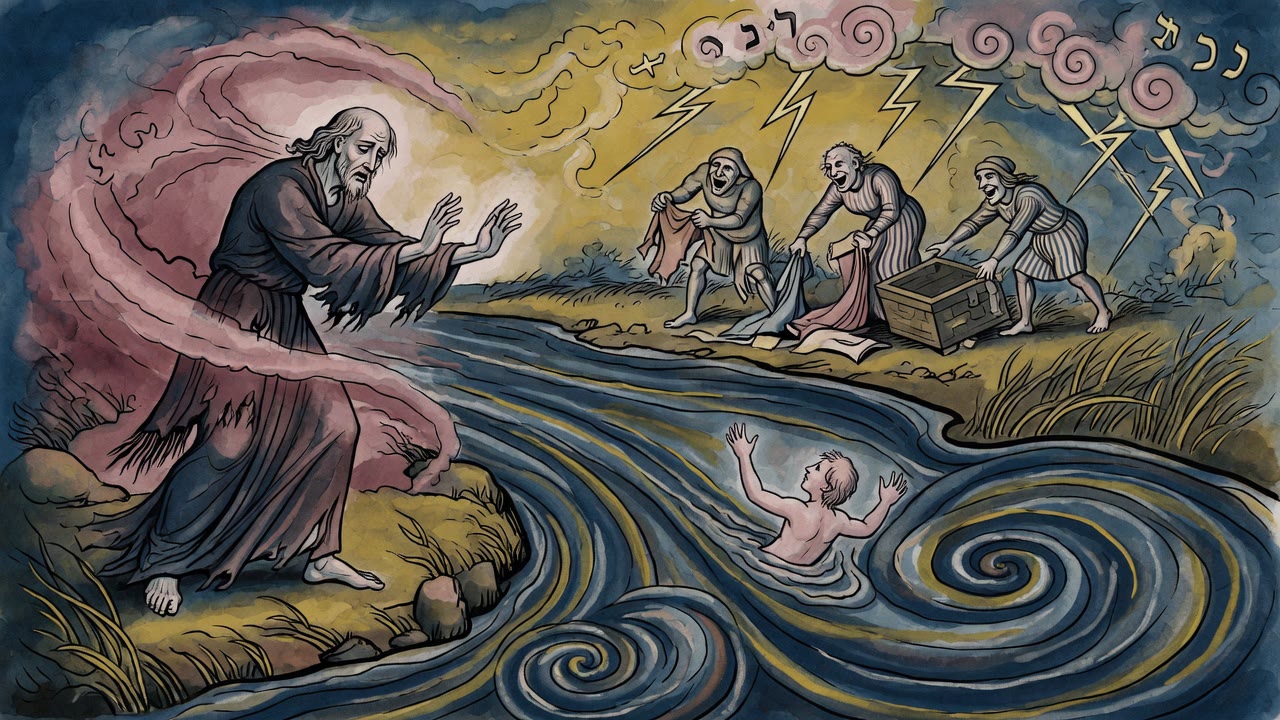
When the first man came back for his coin, the house turned over. She searched shelves, corners, the bottom of the jar, the folds of her cloak. Nothing. The accusation arrived before her breath could catch up. He said she had used what was not hers. She said she had not. Between them lay a missing dinar and a room full of silence that wanted a word strong enough to end the argument.
In panic she reached for the strongest word she knew. She swore before God that if she had made any use of his money, one of her children should die by poison. The sentence left her mouth and did not come back. It hung in the air the way a knife hangs after the hand has already thrown it.
What the Court Already Knew
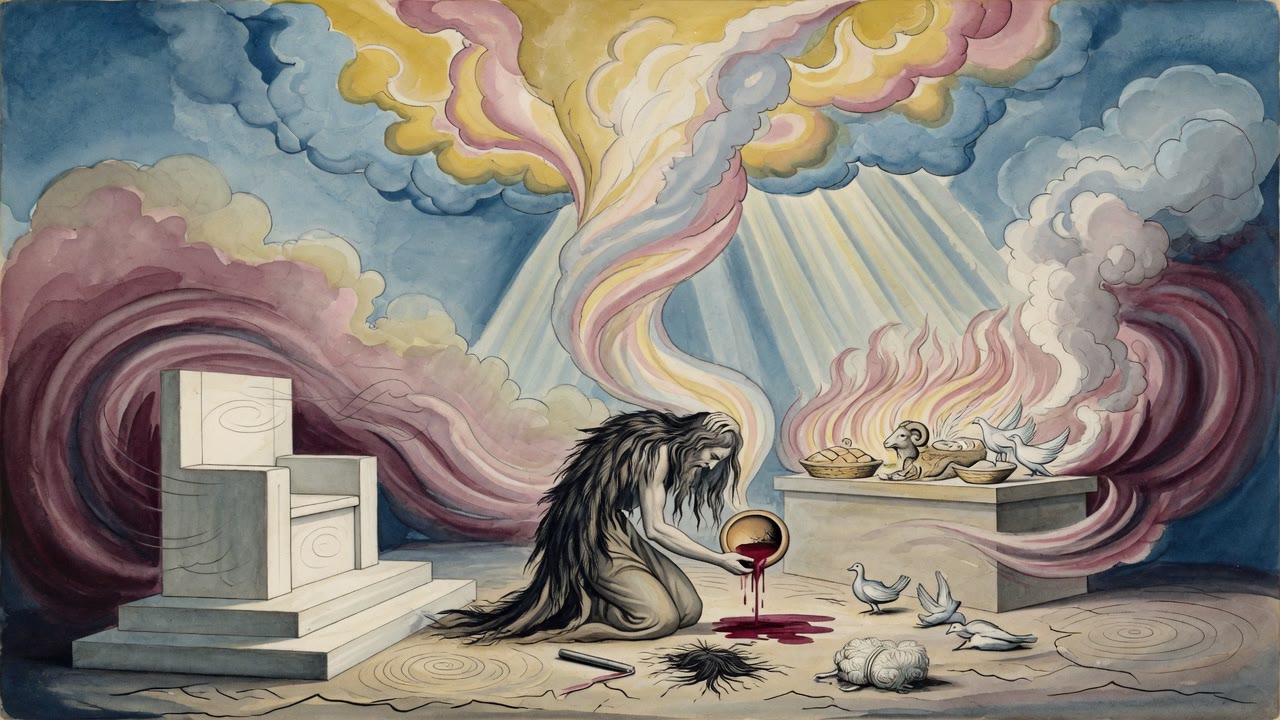
In the courts of Israel a man under oath is not first asked the question. He is first warned. The judges tell him that all creation shuddered when the Holy One said at Sinai, "You shall not take the Name of the Lord your God in vain" (Exodus 20:7). Ordinary sins strike the sinner. A false oath, the sages taught, can reach family and even the land itself, for the prophet saw the land mourn over swearing and lying (Hosea 4:2-3). Ordinary guilt may wait for years. A vain oath may not wait at all.
They tell the man he may say, "I will not swear," and walk free. If he insists, bystanders step back as Israel once stepped back from the tents of Korah. The court closes every private meaning a clever conscience might invent. They adjure him by the court's meaning, not by the private dictionary of his fear. The woman had no court around her, only panic, and panic is a bad clerk of the Name.
The Child Who Paid the Vow
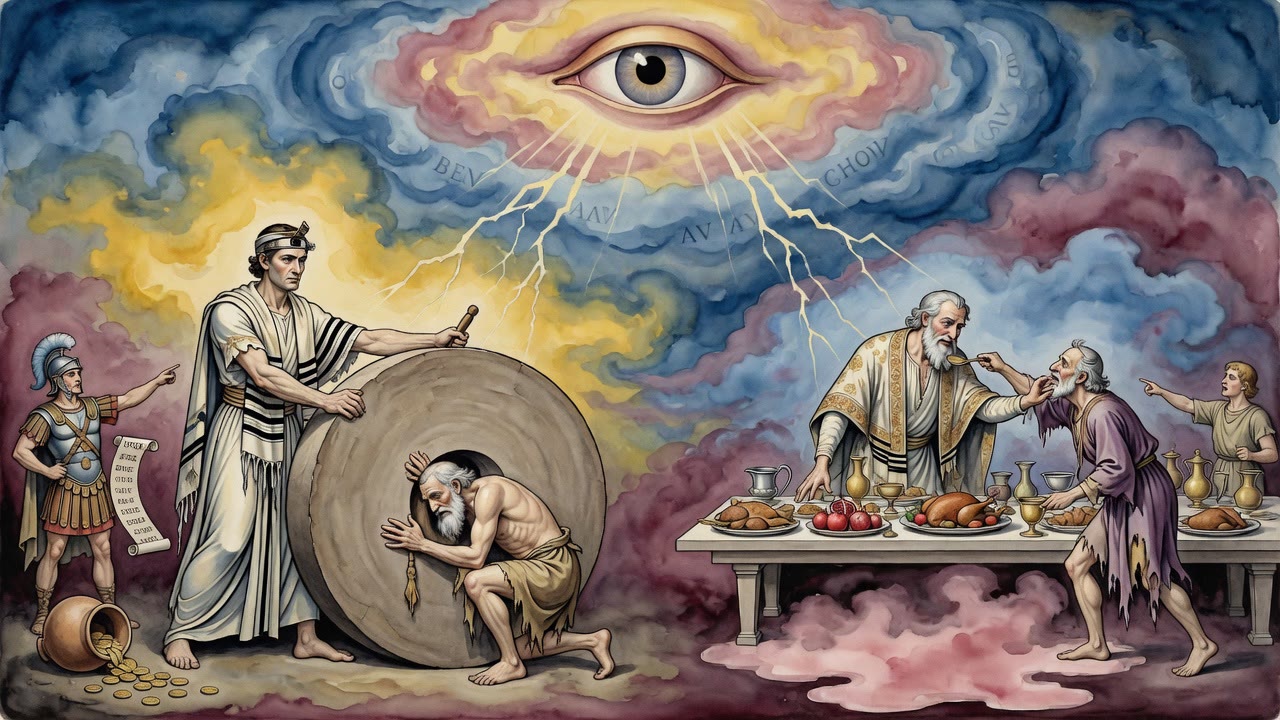
A short time later one of her children died by poison. The story does not claim she stole. The story claims she spoke. She had not knowingly eaten the dinar or spent it. She had given bread to a hungry man, which is a mitzvah (a commandment), and the coin had ridden out of her house inside charity. But the oath had named a child's life as collateral. Jewish law treats such a vow as a door, not as decoration. Once opened, it does not care that the speaker wished the words were softer.
The sages of the exempla, drawing on the old Ma'aseh chains and on the hard case in the Talmud, kept the tale as a double warning. Carelessness with a deposit is still a weight on the soul, even when the hand did not mean theft. And an oath that stakes another person's body is never "only words." Better to lose a dinar than to lose a child to a sentence spoken in defensive rage.
The Name That Does Not Clear
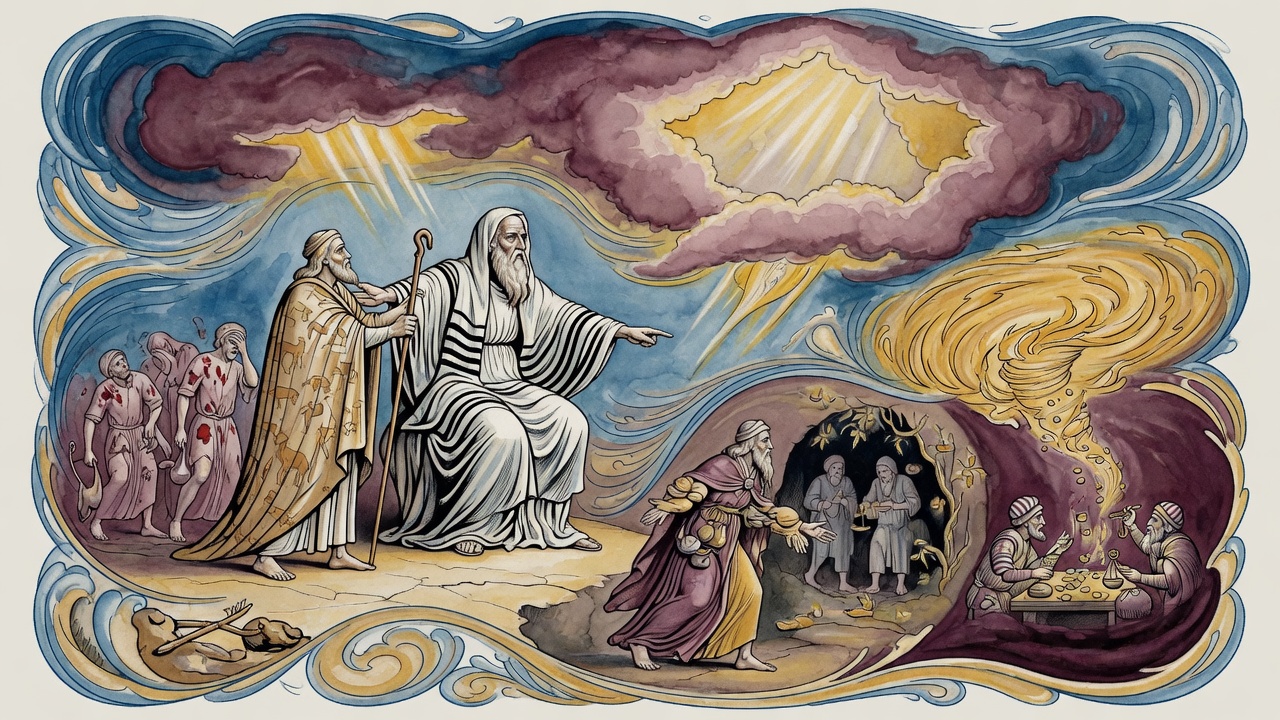
Elsewhere the Torah leaves room for mercy. Here the verse says the Lord will not clear the one who takes His Name in vain. The prophet Zechariah saw a curse that enters a liar's house and consumes timber and stones, things that fire and water cannot destroy (Zechariah 5:3-4). The woman's house had held a coin, a loaf, and a vow. The coin fed the poor. The vow fed death. Heaven, the story insists, can tell the difference between charity and a reckless self-curse, and it will not confuse them just because both left the same doorway on the same day.
So the tale ends where Sinai began, with a world that still shudders when the Name is dragged into a fight over money. Speak the truth without swearing if you can. If you must swear, know every syllable. If you cannot know, keep silent. The flour forgets. The Name does not.
← All myths