Joseph Ruled Egypt From Empty Rooms He Could Not Fill
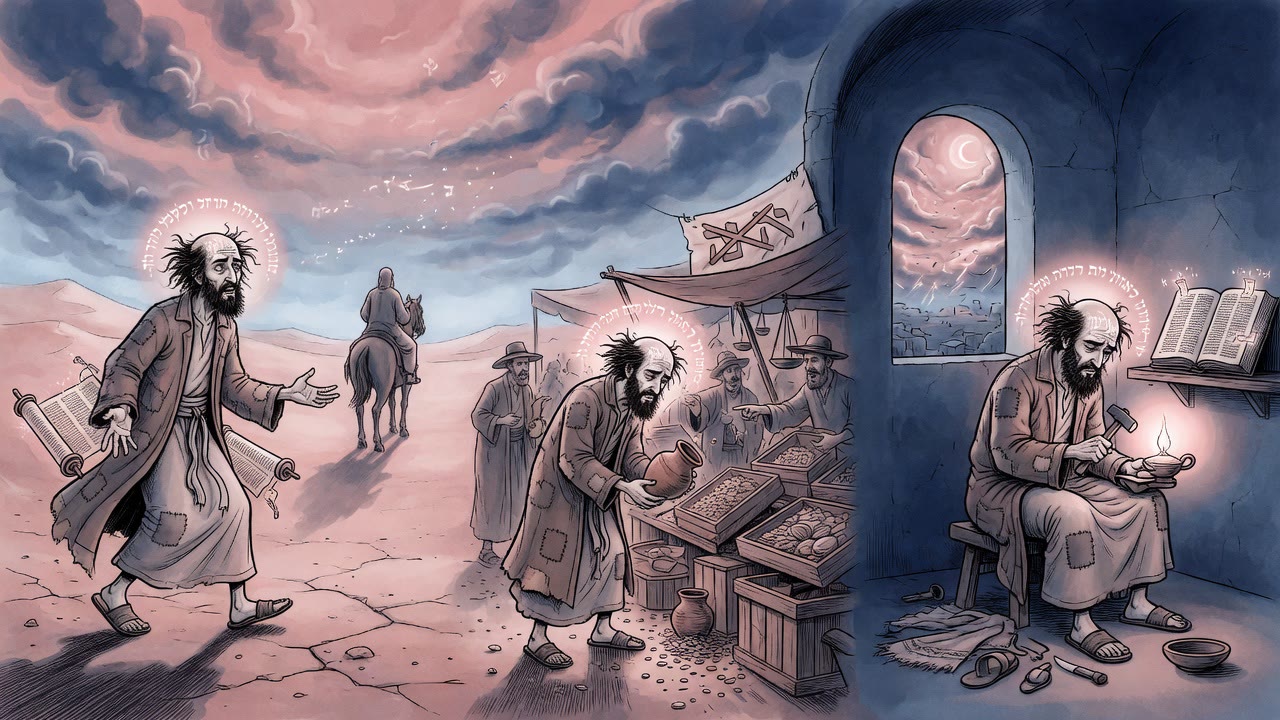
The Nile festival emptied Potiphar's house. Joseph stayed to work the accounts. His garment tore free in her hand on the way to the door.
Table of Contents
Joseph stepped into a house with no one in it. He had come to work his master's accounts. The corridors that usually held servants held nothing. The rooms where the household ate and slept stood swept and waiting. Outside, the city had emptied itself toward the river, and the noise of the crowd thinned to a hum that only made the silence inside the walls heavier.
 Click for full size
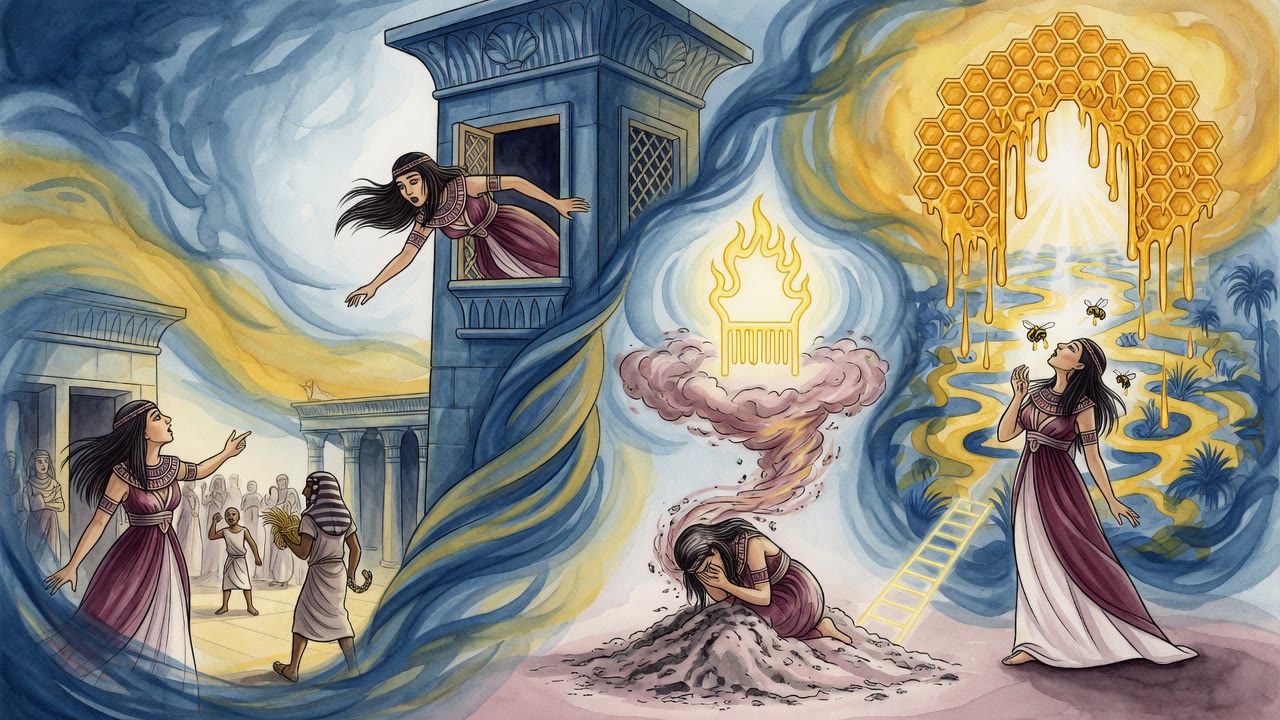
It was the day of the Nile festival. Everyone had gone to watch. Joseph had not gone. He came into the house to perform his labor, and there was no one of the people of the household there in the house (Genesis 39:11).
The Day the House Emptied
Then Potiphar's wife found him in that emptiness and reached for him. He ran. He ran so completely that the garment tore free in her fingers as he pulled toward the door. He left cloth in her hand and took the rest of himself out of the room.
In the empty house he had already started to give way. Then he saw the image of his father, and his blood cooled. The labor he had come to do was the accounts. For a breath it was not. Jacob's face filled the room that no servant had stayed to fill, and Joseph fled with his garment gone and his name still his.
The house had needed to be empty for the test to happen. A witness in any doorway would have changed the hour. Absence was the fuel. He ran on it.
A Country Whose Sons Were Named for the Sea
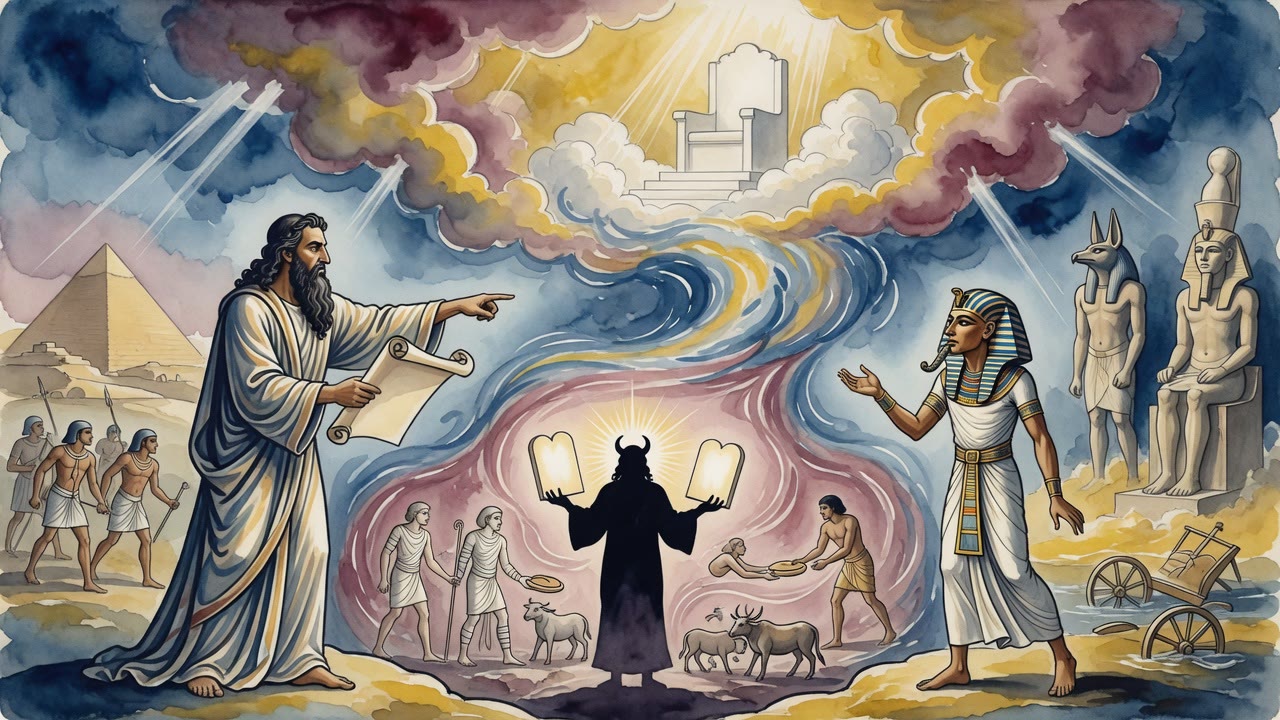
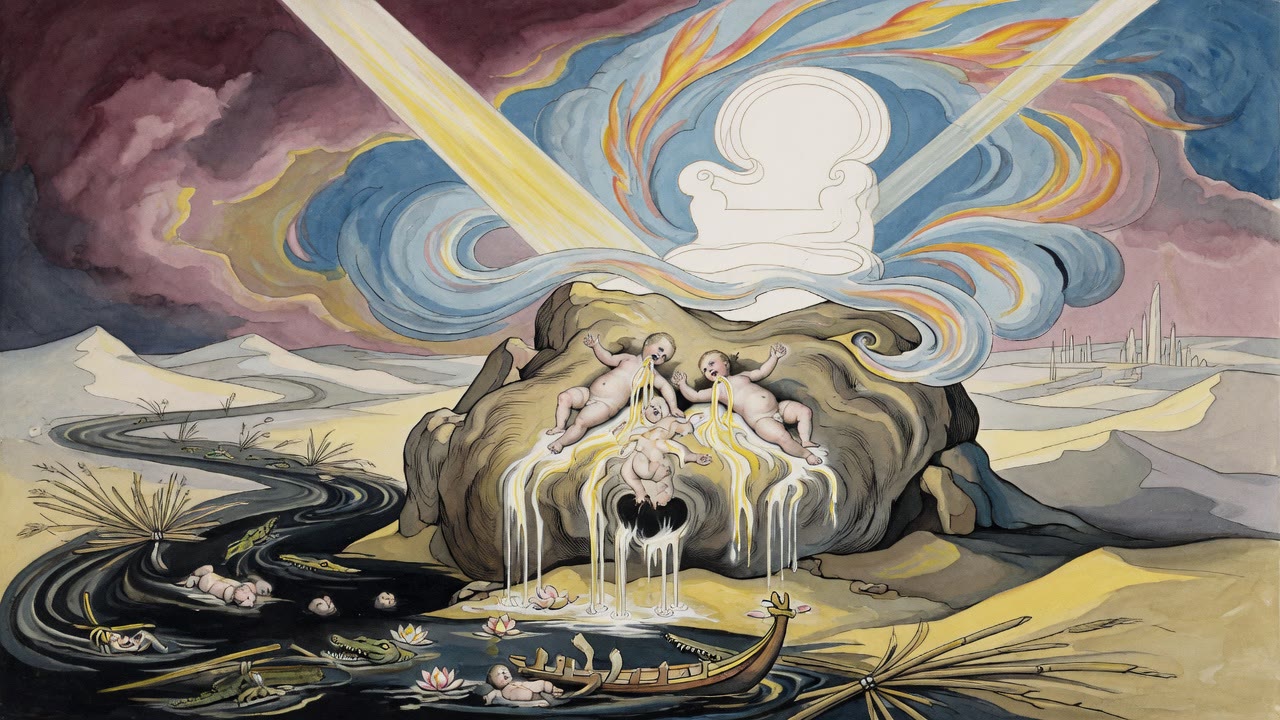
This was the country he had been sold into. Mitzrayim, Egypt, was a man before it was a map, Ham's grandson, and his sons carried the sea in their names. Ludim, Anamim, Lehavim, Naftuhim. Each name ended in yam (ים), sea. The Ludim of the sea. The Anamim of the sea. Whole lineages spoken as coastline.
The Patrusim and the Kasluhim had already lost themselves another way. Their bachelors stole one another's wives until new peoples came out of the theft. Philistines, mighty, who invaded other lands. Kaftorim, small and round as buttons. Names remaining. People scattered. Families swallowed until only a sound was left.
Joseph lived inside that sound. A Hebrew in a house that emptied for a river festival. A son whose brothers had sold him into a land that named its children for water and then let the children dissolve.
Three Edicts at the Gate
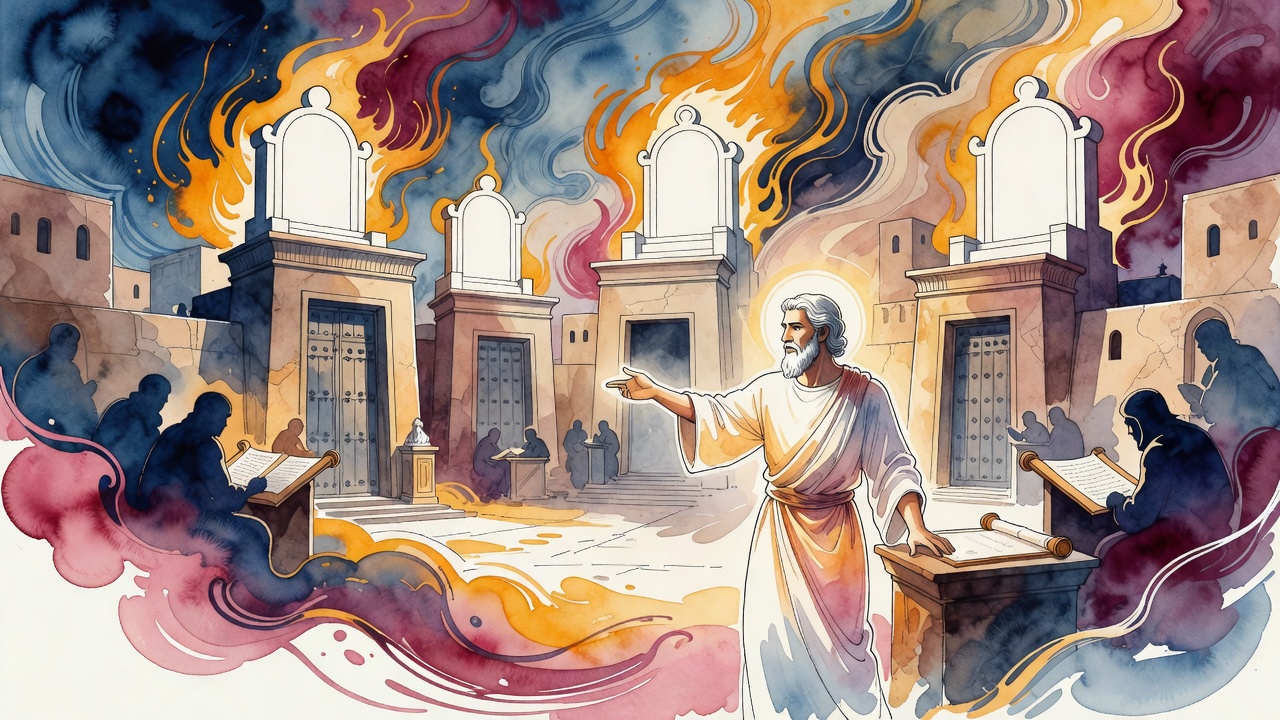
Years later he ruled the land. Famine sat on every road. He issued three edicts. No slave would enter Egypt. No man would enter with two donkeys, and donkey drivers would not haul grain from place to place. No person would enter until he wrote his name, his father's name, and his grandfather's name.
He was done with unnamed families. The country that had swallowed sons into the sea would now have to put its names on paper before it ate.
His brothers came to buy grain and bowed, faces to the ground (Genesis 42:6). They did not know him. He knew them. He had built the gate to catch exactly this arrival, and the empty rooms of twenty years had taught him how to wait.
Manasseh Collected the Names
Manasseh stood at the gate collecting the notes. Joseph's Egyptian-born son, two languages in one body, Hebrew from a father who had never let it go, Egyptian from the palace where he had been born. He took the slips as men handed them over. Name. Father's name. Grandfather's name.
When he read the brothers' names he summoned them. They stood in a room they thought they understood.
"If they make claims against us with a measured tax," they said, "we will pay it. If not, in the morning we will see what we will do."
They did not know the young man with the notes was their brother's son, or that the viceroy already knew every name they had written.
The brothers watched Joseph's face for a reaction and saw only the mask he had chosen. Beside him Manasseh carried their private words and their written names across a threshold they could not see. What was hidden ran the room. It had always run the room, from the festival house to the gate.
Joseph had spent his years in Egypt learning the uses of empty space. A house with no witnesses. A country whose founding family had become sea. A son stationed where names passed in and the people who wrote them did not know who was reading. He filled none of it. He ruled from it.
← All myths