The Four Winds Sealed Behind a Curtain of Holy Names
Adam knelt on dry ground and asked for rain. The garden grew. Behind a small cave's curtain, four winds waited to unmake the world.
Table of Contents
 Click for full size
Adam Knelt on Dry Ground
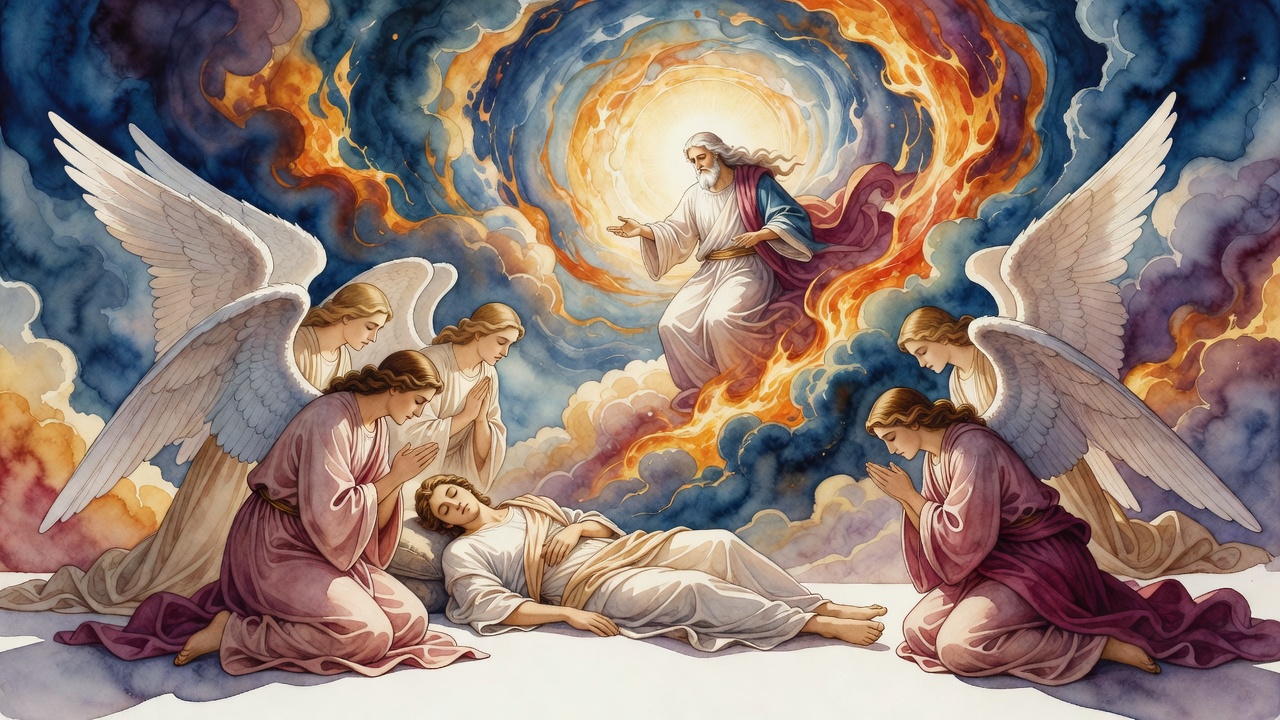
In the first days the plants of the Garden of Eden lay just under the surface of the ground, drinking straight from the waters of the earth, holding still. God had made them, and then held the rain back. The clouds lifted off the ground and climbed into the heavens and filled there like sealed reservoirs, and nothing came down. The garden waited. It waited for Adam.
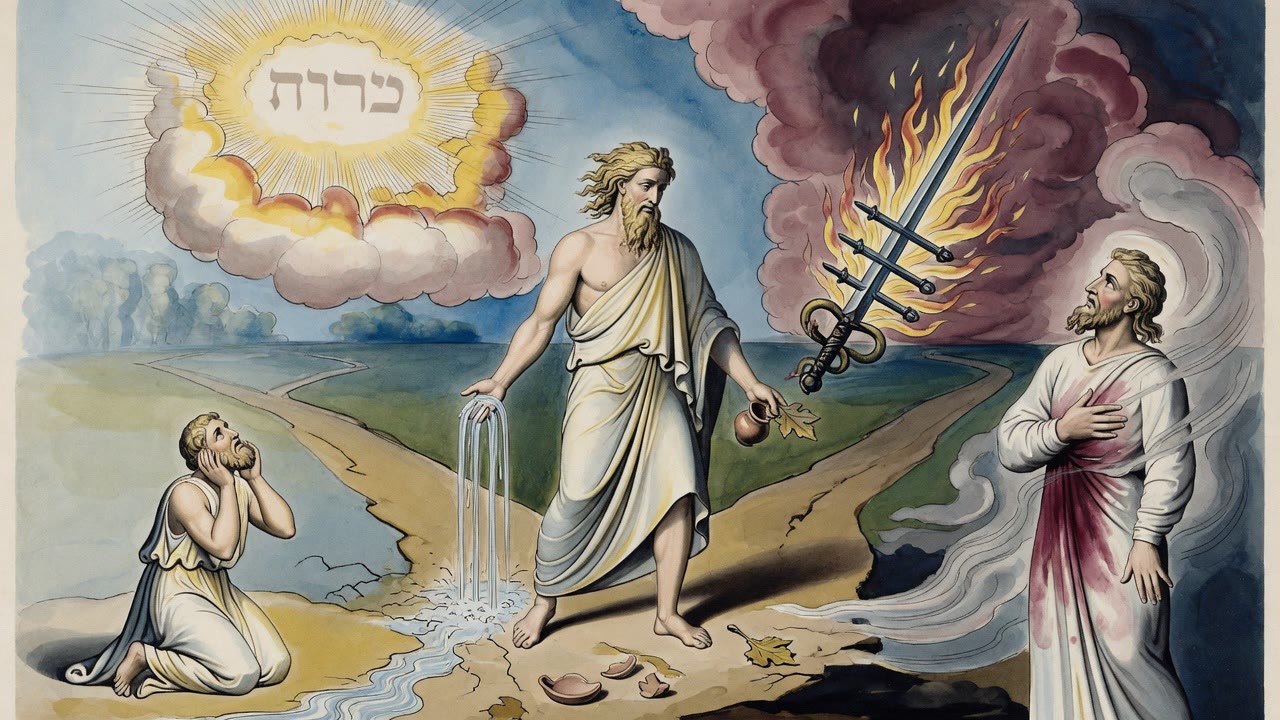
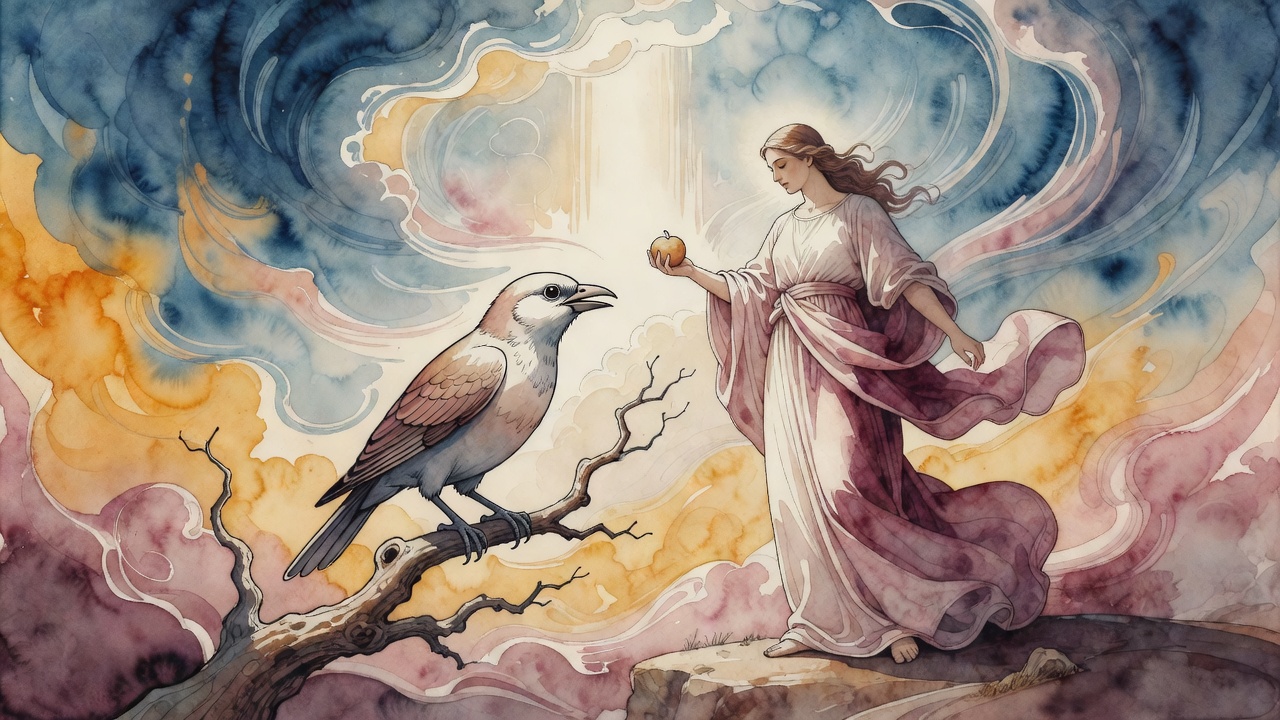
When Adam was formed and set among the beds, the ground under his feet was dry, and that dryness was the one wrong note in the whole place. He bent his knees and asked heaven for rain. He asked that the upper waters be let down onto the lower ones. Heaven, which had been holding its breath for exactly this, opened. The rain came. The plants broke the surface and rose and covered the beds. The garden God had planted only truly grew after a man knelt in it and asked for it.
Adam stood up wet. Leaves opened around his ankles. He walked into a garden that his own mouth had called down, and the ground that had been dust took his heel without cracking.
Five Hundred Years Across One Trunk
At the center of the garden stands a tree so wide that a walker setting out along the diameter of its trunk would die of old age before reaching the other side. Five hundred years of walking, and still the bark curves on ahead. Its shade falls across a whole country. This is the Tree of Life, and from the ground beneath it a spring pushes up out of the dark and splits into four rivers that carry the water of the garden to the ends of the earth. One arm becomes the Ganges. One becomes the Nile. One becomes the Tigris, one the Euphrates. Every river any nation has ever drunk from began as a single thread of water under one tree.
Adam came as far as the shade and stopped. No path ran straight to the trunk. The water came out from under the roots and went away in four bright lines, and the bark went on and on, farther than a life.
The Maze That Reads Whoever Enters
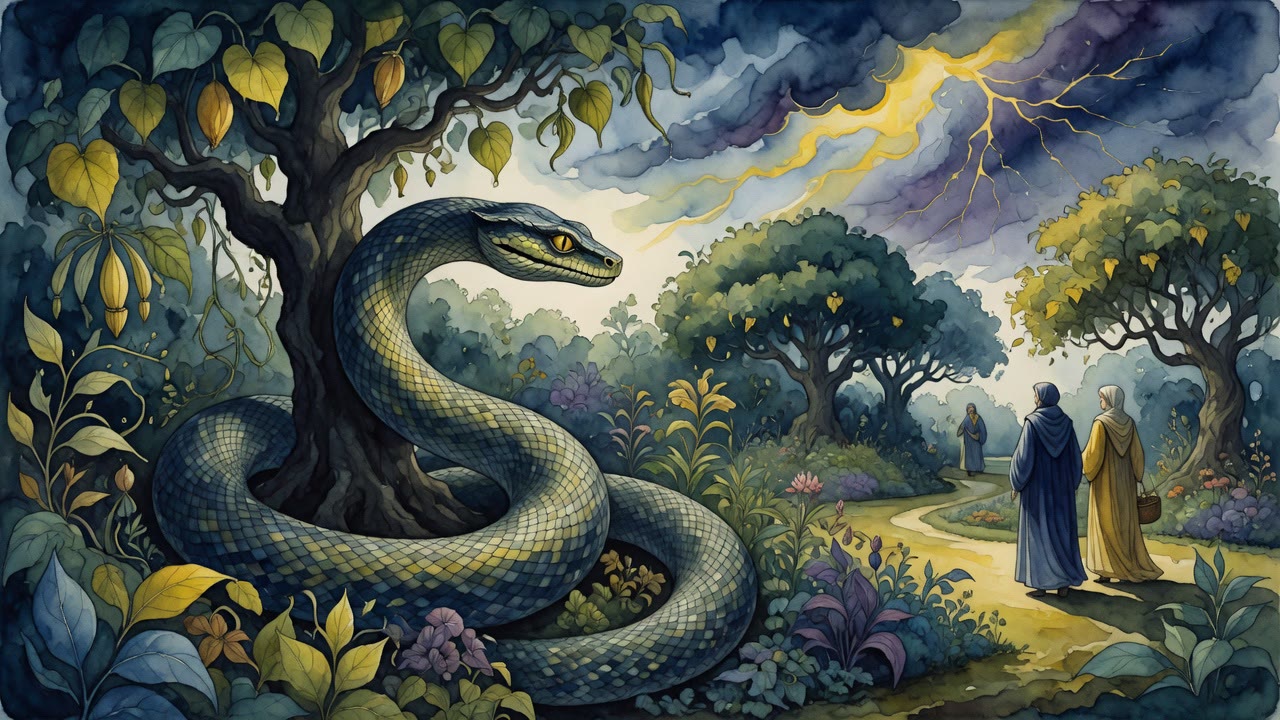
Between the outer garden and the Tree of Life grows the Tree of Knowledge, and it does not stand aside for anyone. Its branches turn back on themselves. Its roots braid the ground into corridors that fold and double and close. It is less a tree than a maze grown out of wood, and it wraps the source of life the way a wall wraps a treasury. A soul that wants to reach the far tree has to pass through this one first, and the passage is not a matter of walking.
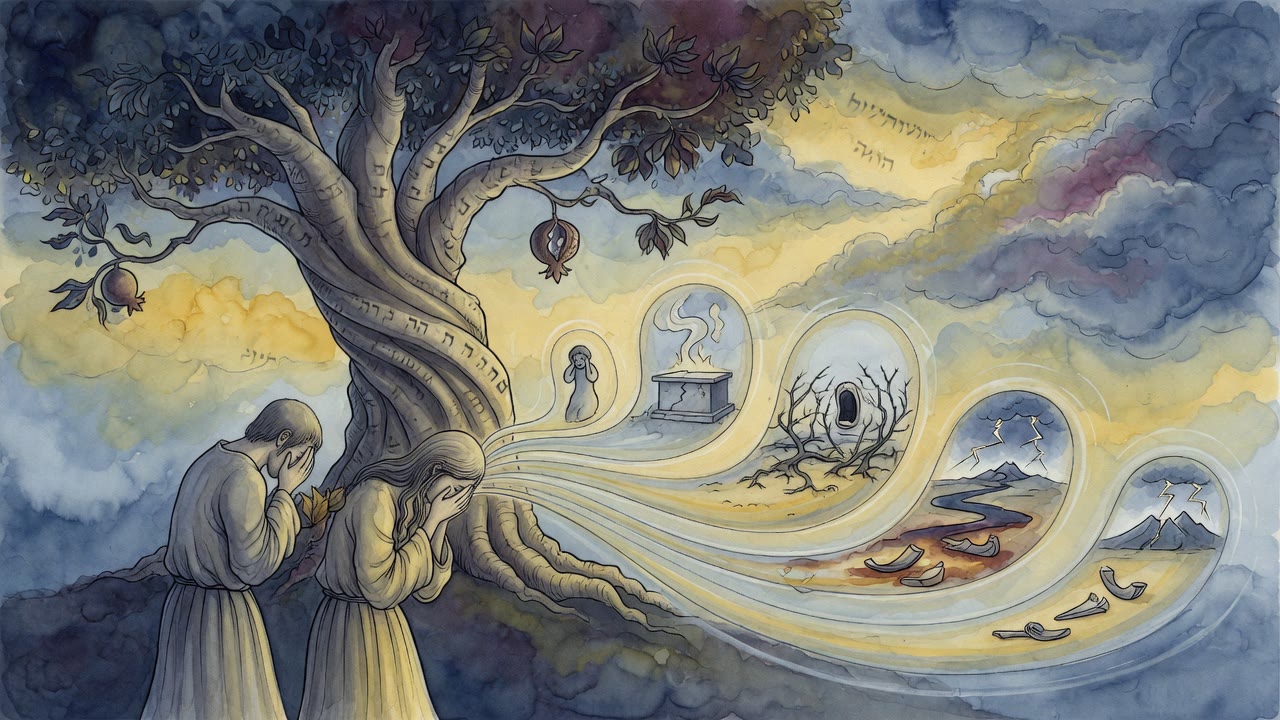
The corridors read whoever enters them. They open for a soul that has already carried the weight of knowing, that has been through the losing and the choosing and come out the other end still standing. They seal shut against a soul that has not. Only one who has survived the maze can stand at the roots of the Tree of Life. The rest wander the folds of the Tree of Knowledge until it turns them out the way they came, no closer to the water than when they went in.
Adam walked the outer edge of those folds. The garden he had prayed into growth was already older than his first hour in it. The maze was already at work. He did not force the corridors. He turned aside, where the folds thinned toward inner ground, and the land opened on a cave.
Four Winds Behind the Curtain
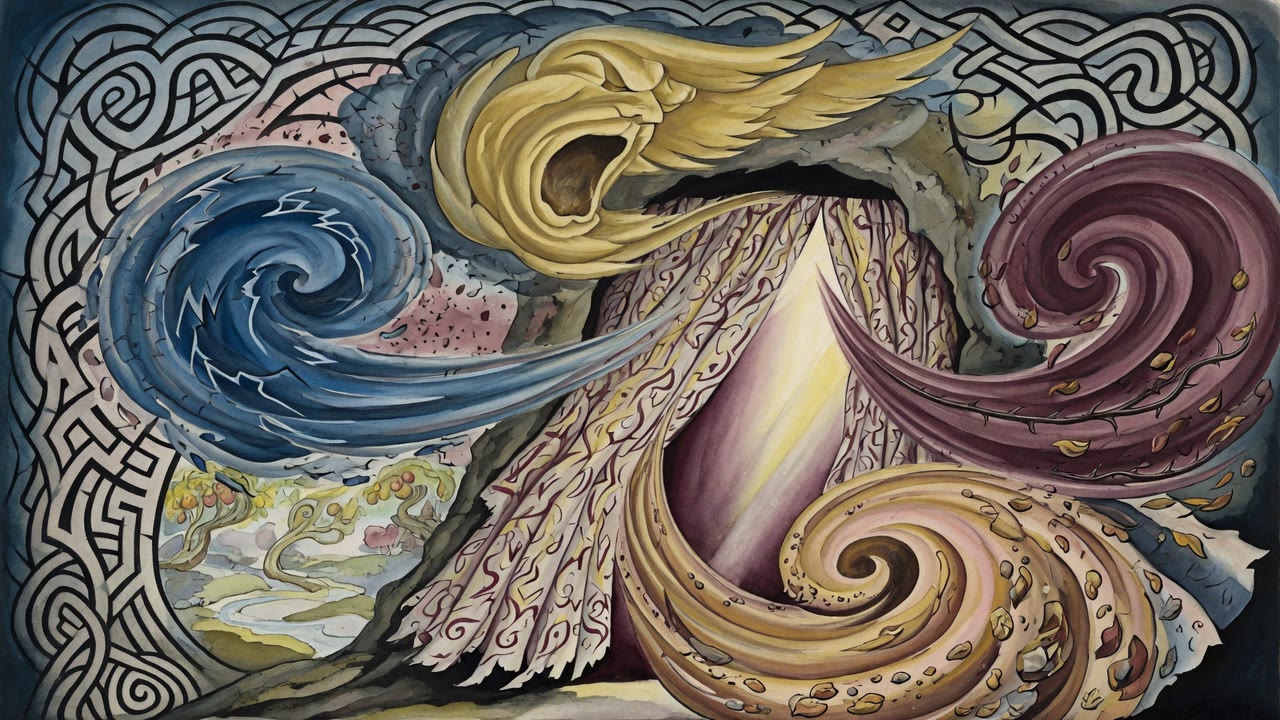
The cave is small. Nothing about it announces itself. A person could pass the mouth of it a hundred times and take it for a plain hollow in the rock. Across the opening hangs a curtain, and the curtain is the only strange thing about the place until one looks closely and sees that it is covered edge to edge in letters. Secret names. Holy names. Symbols set down in a careful hand, potent and shut, each one a seal. The curtain does not stir in any wind of the garden. The garden's winds never reach it. The winds that concern this curtain are on the inside.
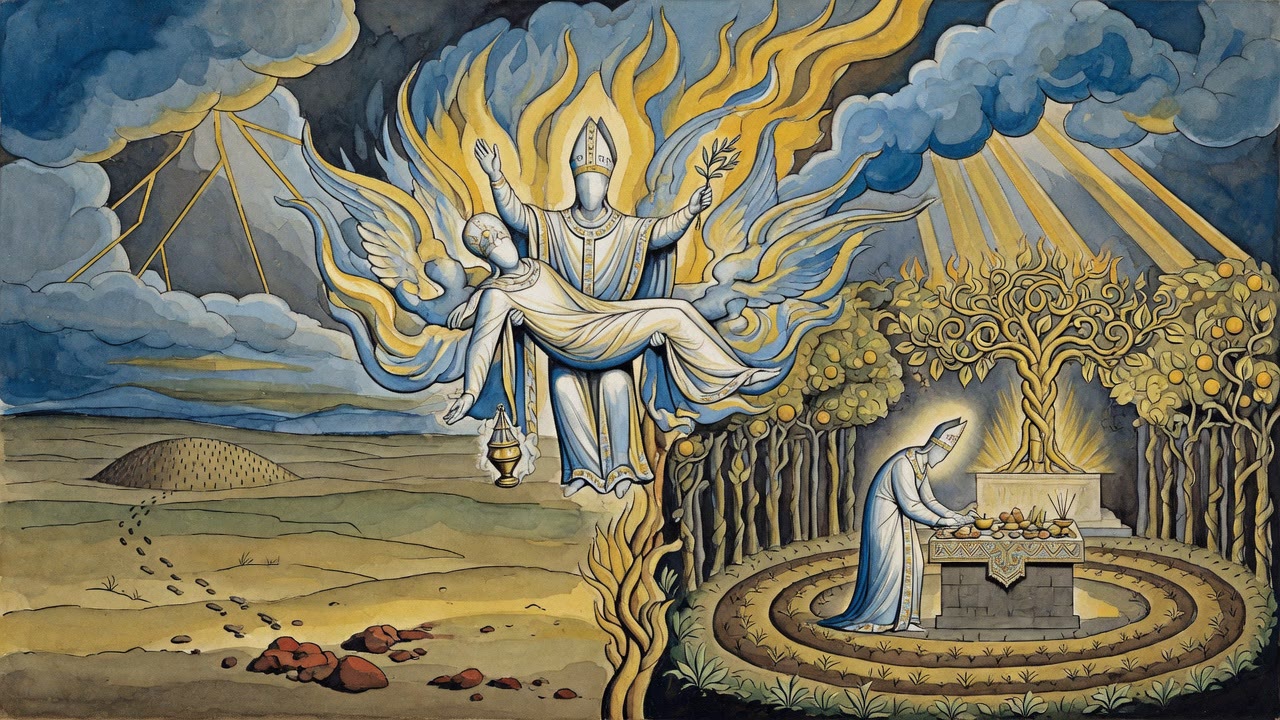
Four winds are shut inside the cave, and they are not weather. They are the four winds of the world from before the world was steadied, and the curtain of names is what stands between them and everything that has been made since. They press. They turn. They lean their whole weight on the inside of the cloth, and the names on the outside do not give.
Lift only a corner of it, and a single gust tears out through the gap. That much is enough to throw boulders around like windfall apples, enough to pull up trees by the roots and fling them, even the great trees planted on the sixth day of creation, ancient and deep and sure of their ground. That is the leak. That is one corner of one curtain.
Lift the whole curtain, and all four come out at once, and then there is no garden and no earth and no boulders and no trees to throw, because the winds carry the world back to what it was before the first day. Tohu vavohu (תֹהוּ וָבֹהוּ). The formless waste. The chaos and the void that lay everywhere before God spoke order into them. Everything that had been separated would be unseparated. Everything gathered would scatter. The rain Adam asked for would have no ground to hit.
So the letters hold. Deep in the garden, a short walk from the tree whose fruit taught the difference between one thing and another, a thin curtain of holy writing keeps the difference between a world and no world at all. Adam stood in front of it with rain still in his hair and did not touch the cloth. Behind him the maze went on reading whoever entered. Ahead of him the Tree of Life went on being too wide to cross. Between them the sealed winds turned and leaned, and the names did not move.
← All myths