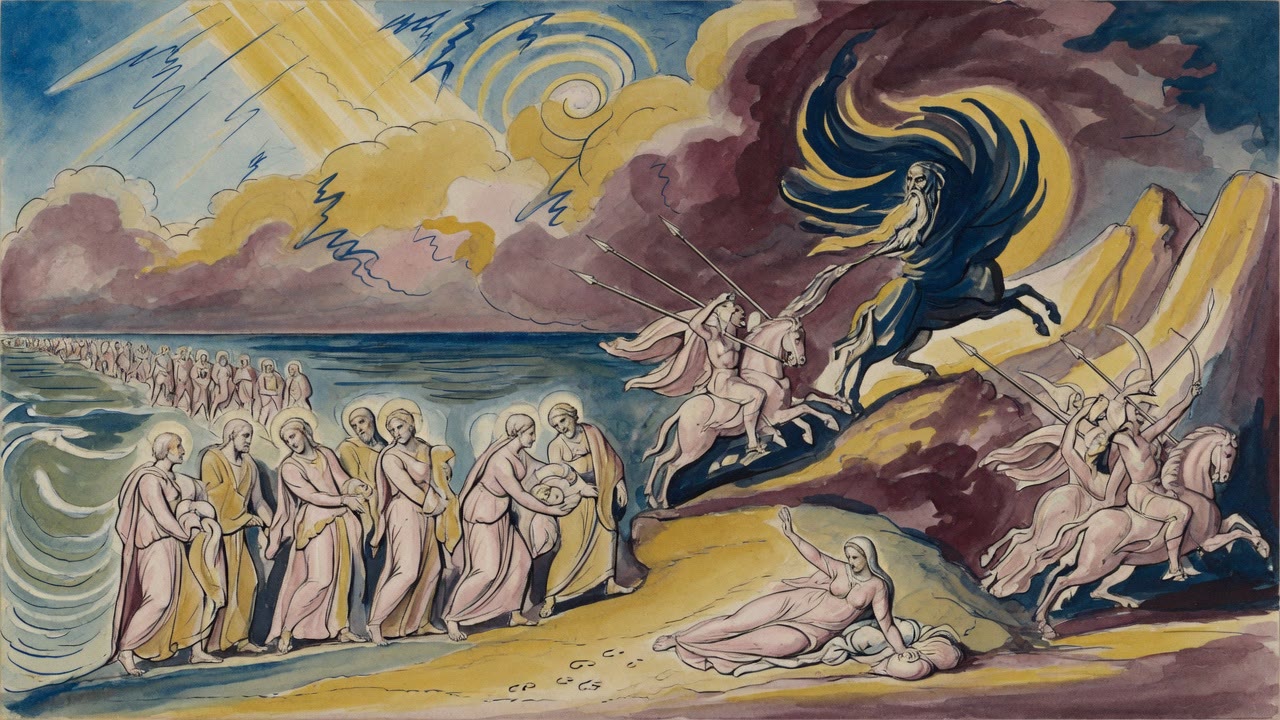
The Giants Who Hid the Spies Inside a Pomegranate Shell
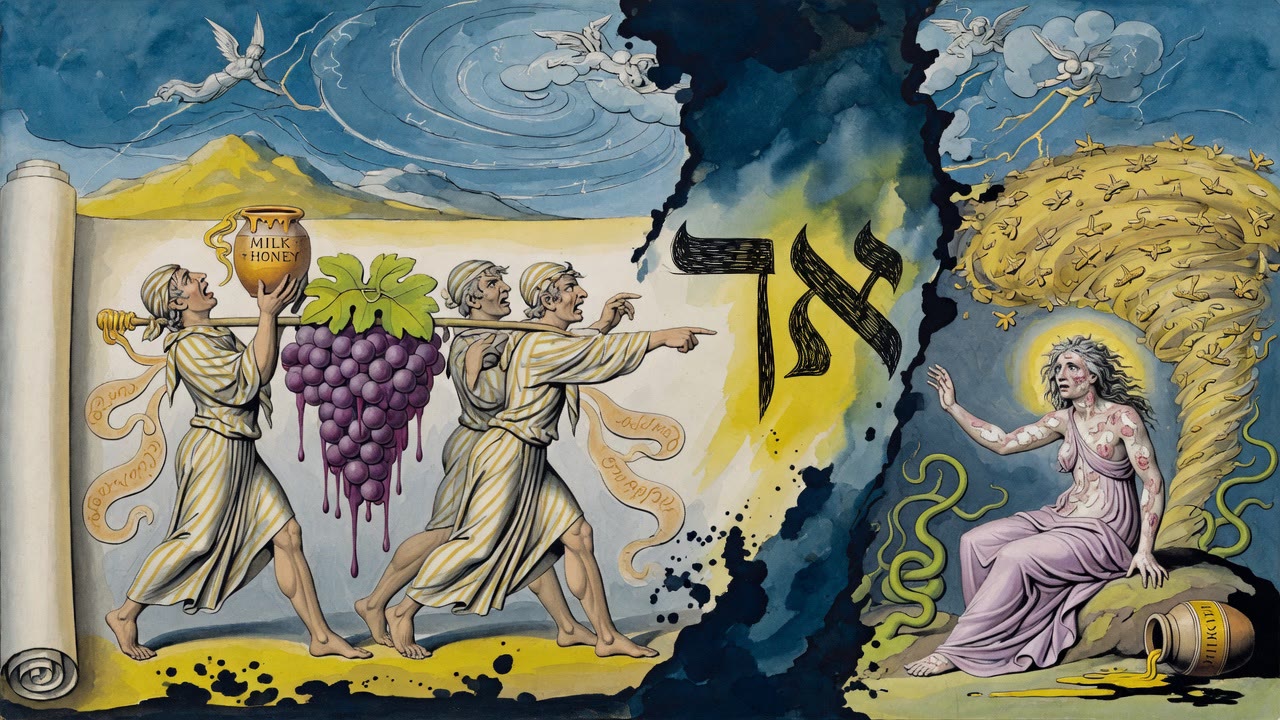
Twelve scouts crept into Canaan through plague-emptied streets and hid inside a discarded fruit rind a giant's daughter mistook for litter.
Table of Contents
Twelve men crossed into the land at dusk, and the first thing they noticed was the silence. Moses had chosen one scout from every tribe, sent them north out of the wilderness to learn whether Canaan could be taken, and they had braced themselves for sentries, for dogs, for the shout that would give them away at the wall. Instead they walked into a city where the gates stood open and no watchman called down.
 Click for full size
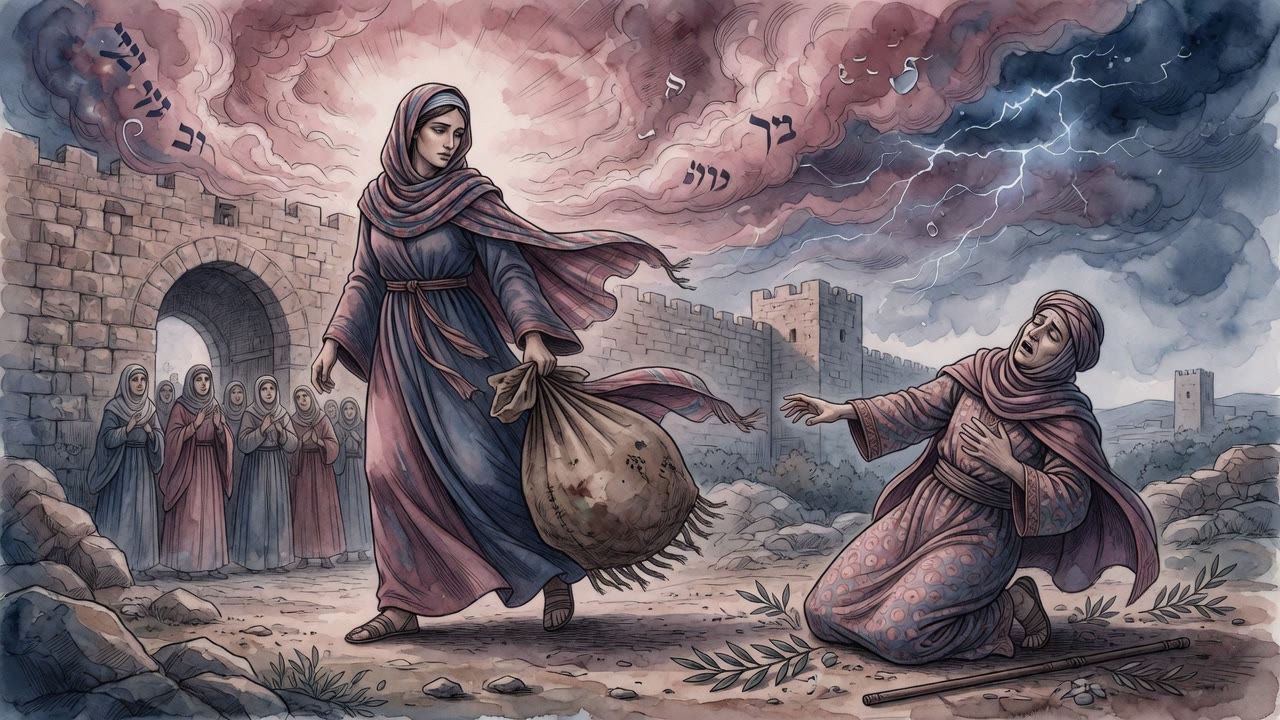
The streets were not empty for nothing. In every town they entered the same grim mercy met them. As they slipped through a gate, sickness slipped in beside them, and the people fell to burying their dead. Funeral after funeral filled the squares. Mourners with dirt on their hands had no eyes to spare for strangers, no patience to question a dozen dusty travelers picking their way between the biers. The scouts moved through the grief like smoke. They did not know that God was clearing each road ahead of them, emptying the houses so they could see everything and be seen by no one.
The Towns That Buried Their Dead
For a while it felt like favor. They counted the orchards, weighed the soil in their hands, measured the height of the walls with their eyes. The land was good. The grapes hung heavy, the fields were thick, and the dying who passed them never looked up. A man could grow bold in a city that would not meet his gaze.
Then the road bent toward Kiriath-Arba, the City of Four, and the boldness drained out of them all at once. The place was named for four who lived there, and as the scouts came near they understood what kind of four those were. The shadows on the ground were wrong. They were too long, too dark, and they did not belong to any building.
The Sun Reached Only to Their Ankles
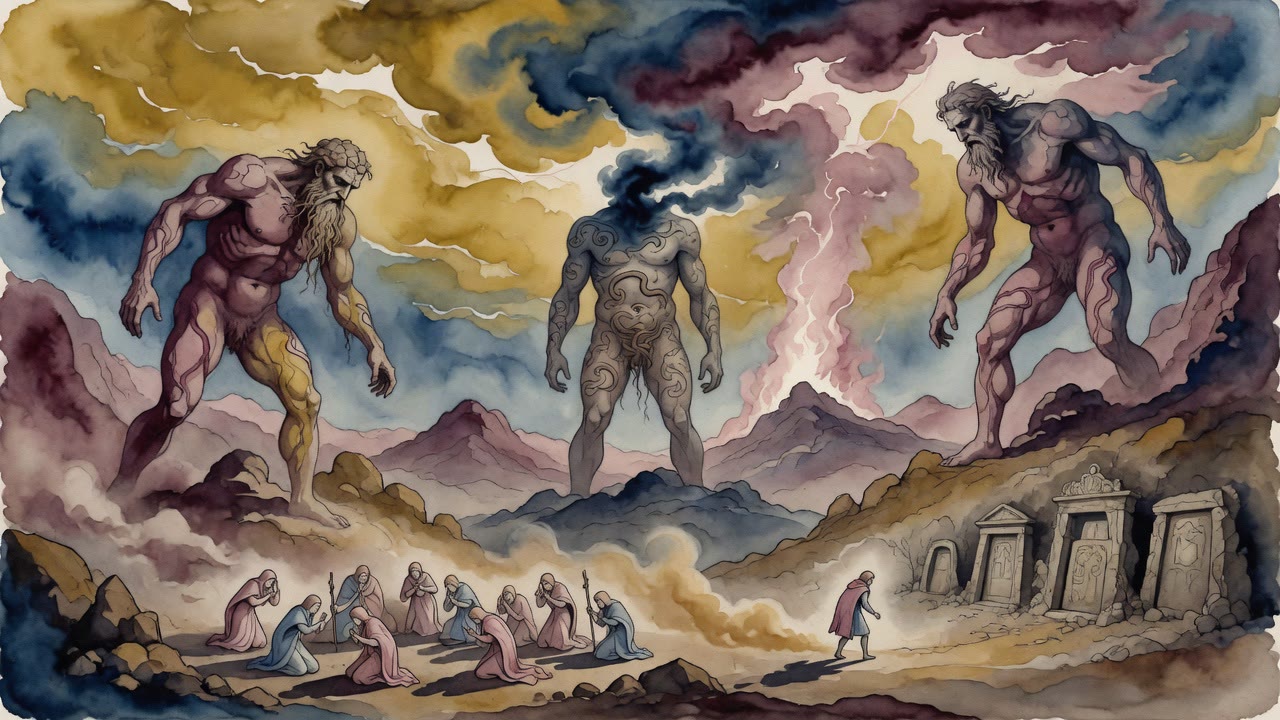
Three brothers held that ground, the sons of Anak, the father of the giants. Ahiman was the strongest. To stand before him was to stand at the foot of a mountain that had decided to lean, and men who saw him cried out without meaning to, "What is this that is coming upon me?" That cry became his name. Sheshai, the second, was hard as the marble he was named for, a slab of a man who did not bend. And Talmai walked with strides so heavy that the earth tore open in furrows behind each step, plot after plot of ground ripped up by the weight of him, so that the very fields wore his name.
The scouts looked up and could not find the tops of them. The sun, climbing the sky, reached only as high as the giants' ankles. Above that the light failed against the columns of their legs. Twelve grown men stood in a dusk made by three bodies, and somewhere above the dusk were heads they would never see.
The Shell They Took for a Cave
Their nerve broke. They scattered, looking for any crack in the ground to crawl into, and one of them found what looked like the dark mouth of a cave. They crowded inside, all twelve, pressed together in the curved dark, breathing slow, waiting for the giants to pass.
It was not a cave. It was the rind of a single pomegranate, eaten and tossed aside by one of Anak's daughters, and the hollow of that one discarded husk was wide enough to shelter every scout Israel had. They were each sixty cubits short by the measure of that house, small as field mice in the curl of a peel.
The girl remembered the rind. She did not want her father angry at litter left in the garden, so she came back, bent down, and lifted the shell the way a person lifts an eggshell off a table, with two idle fingers and no thought at all. The twelve men rode inside it, clinging, certain they were about to be crushed or seen. She felt nothing. She tossed the peel across the garden, never once knowing she had carried a dozen armed men in the palm of her hand, and went back to her work.
Behold the Strength of the Women
When the giants had gone the scouts climbed out of the rind, shaking, and stood among the torn furrows. For a long moment no one spoke. Then one of them said the thing they were all thinking. "Behold the strength of these women," he said, "and judge by their standard the men." If a daughter could fling them across a garden without noticing the weight, what were the brothers? What was the father? The math of it sat in their chests like a stone.
Most of them never even reached Hebron, where the giants truly kept their seat. They had seen enough. They turned back south toward the wilderness with the dusk of those legs still cooling their blood, and somewhere on the road the wonder began to curdle. Fear does not like to be felt alone. It wants company, and it will lie to get it.
The Wall of Words They Built From Terror
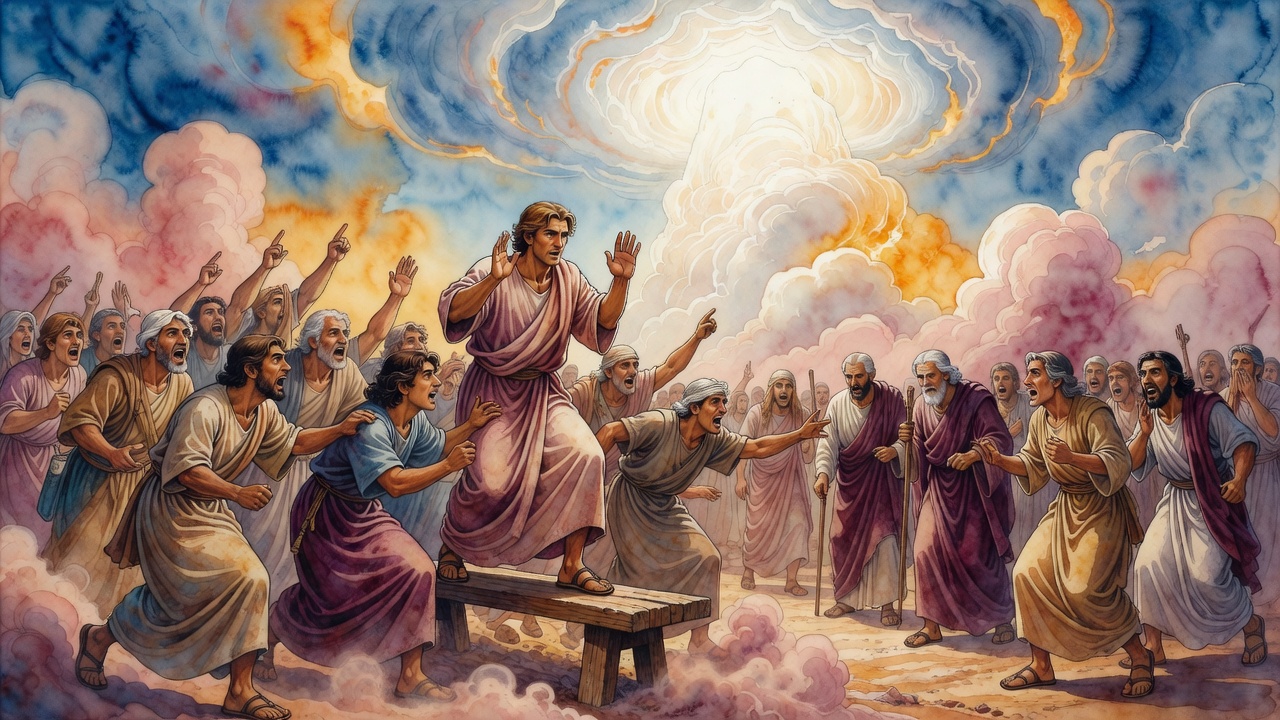
So when they came home to the waiting camp, ten of them built a wall out of their mouths. The people are strong, they said, and the cities are great and walled to the sky, and who can make war on such as these. And we saw the children of the giant there, in Hebron, with our own eyes. But that was the lie laid on top of the truth. They had not gone to Hebron. They spoke with their mouths what they had not seen with their eyes, and they said it on purpose, to frighten the camp the way the camp's own scouts had been frightened, so that no one would think them cowards alone.
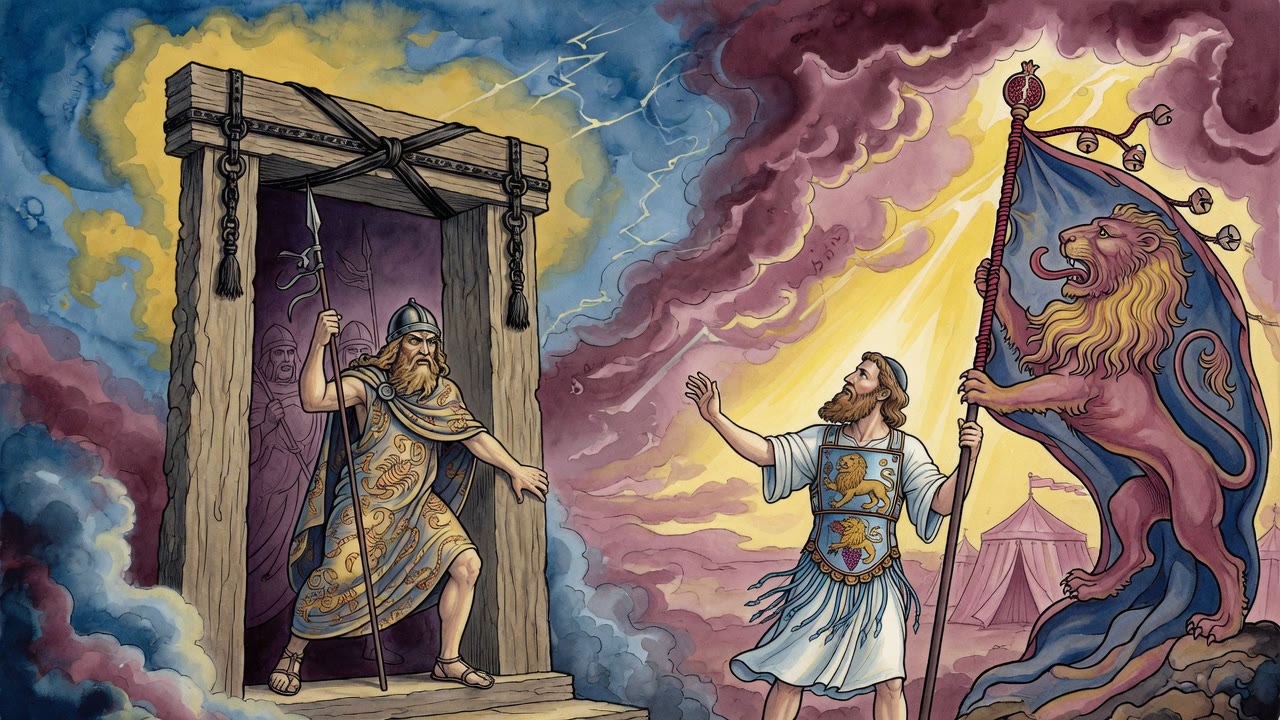
Out of the same shell, in the same dark, two men had hidden and drawn another conclusion. Caleb and Joshua had crouched in that pomegranate beside the others, had seen the ankles swallow the sun, had felt the giant's daughter lift their whole world between two fingers. And they came out saying, "We can surely go up and possess it." Same rind. Same giants. The terror had been real for all twelve. Only ten chose to turn it into a verdict, and the verdict cost a generation the land.
← All myths