The Giants Whose Names Were Threats and the Spies Who Shrank
Three towering brothers boasted that no one dared face them, and twelve scouts saw themselves as insects while one man broke away to beg the dead for courage.
Table of Contents
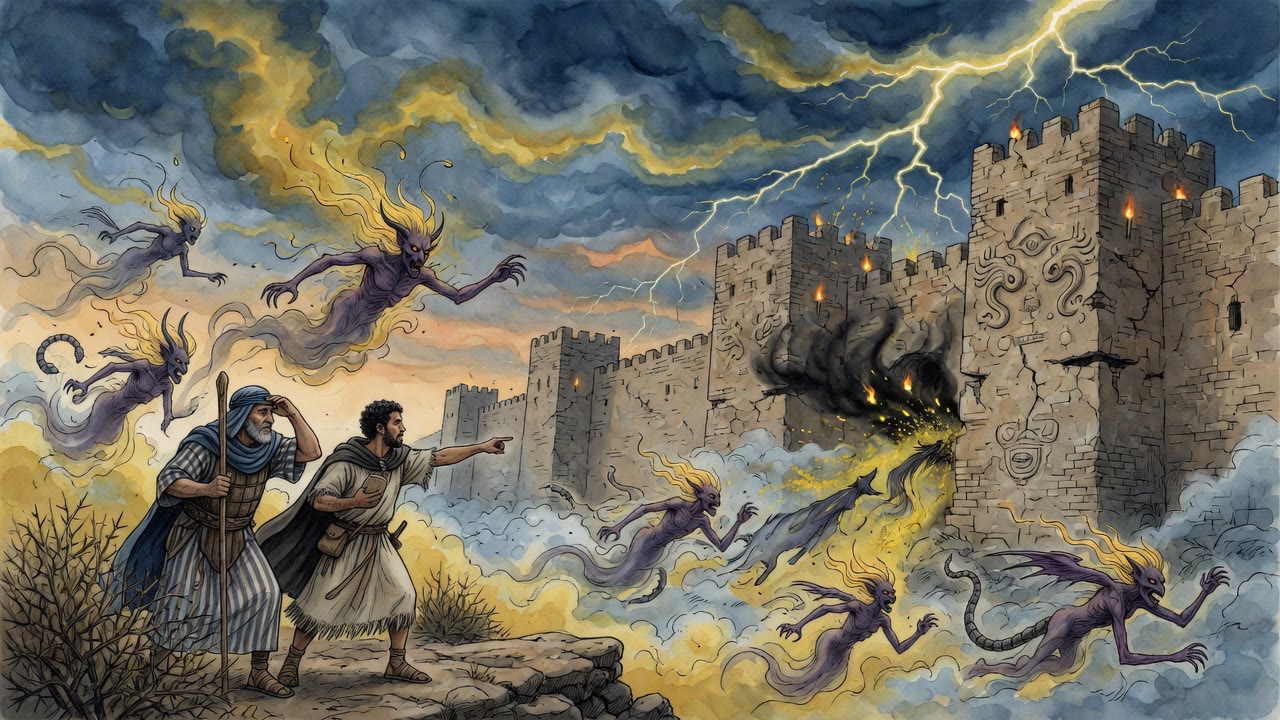
The scouts climbed the hill country expecting villages and vineyards. What met them in the high groves were bodies so large the men had to tip their heads back to find the faces. These were the Nephilim, the fallen ones, the offspring of angels who had tumbled out of their holy places in heaven and never climbed back. They had not crawled up from the earth. They had dropped from the sky, and the height was still in them.
 Click for full size
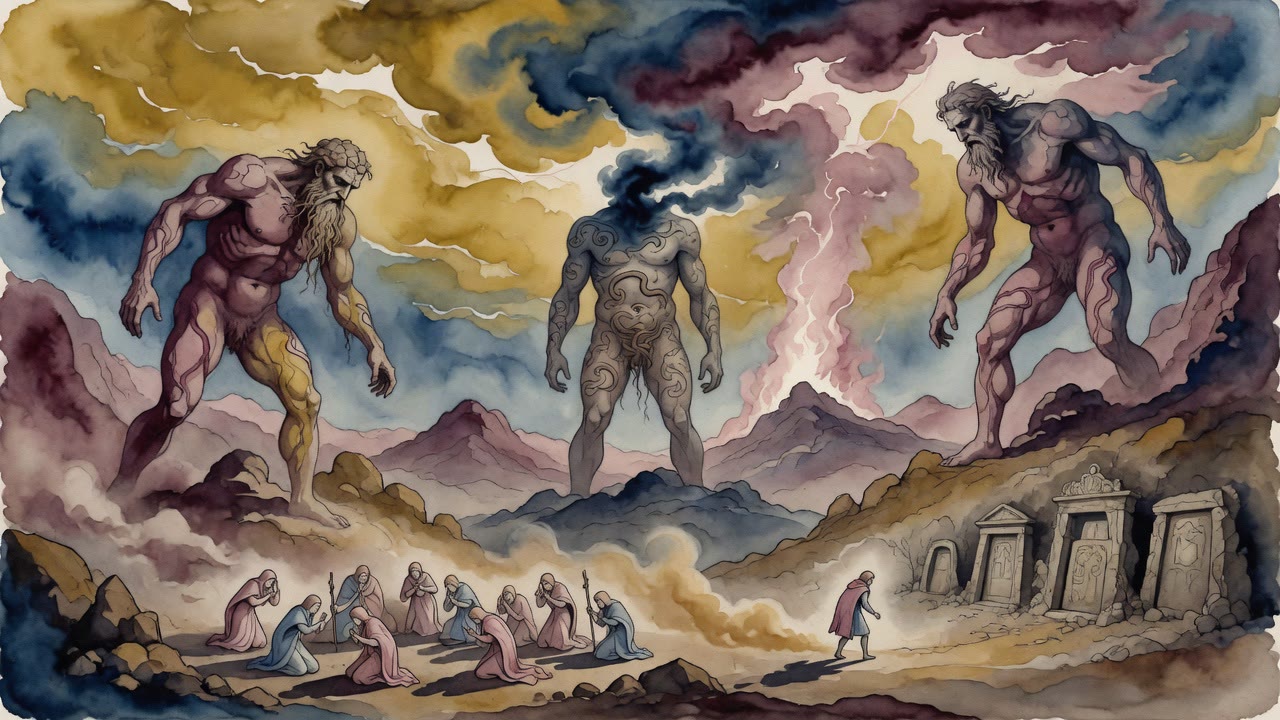
Three of them ruled the groves above Hebron, and they were brothers. The first was Ahiman. His name was a dare he said aloud to anyone who came near. "My brother stands with me," he would call down, "so who will come against me?" The second was Sheshai, named for marble, because his body was hard as cut stone and nothing the spies carried could have so much as scratched him. The third was Talmai. When he walked he dragged the ground open behind him, splitting the soil into furrows the way a plow tears a field, and that was where his name came from, from the long wounds he left in the earth.
The Brothers Who Embraced the Sun
People called the three of them the children of Anak, and the name itself was a measurement. They were so tall that their necks reached up and choked the sun, throttling its light in their throats as if the day belonged to them and they could close their hands around it whenever they pleased. Their city carried the count of them in its name. Kiriath-arba meant the City of Four, named for one father and his three enormous sons, so that even the gate a traveler passed under announced how many giants waited inside.
The spies stood in the shadow of all this and felt themselves dwindle. Ten of them looked at the brothers and could not imagine surviving them. The fear curdled fast into a verdict, and they carried it back in their mouths like a stone. "The people are stronger," they would say, and the word for stronger pointed upward, past the giants, as though even heaven could not pull this land away from the Anakim.
The Words That Walked Among the Trees
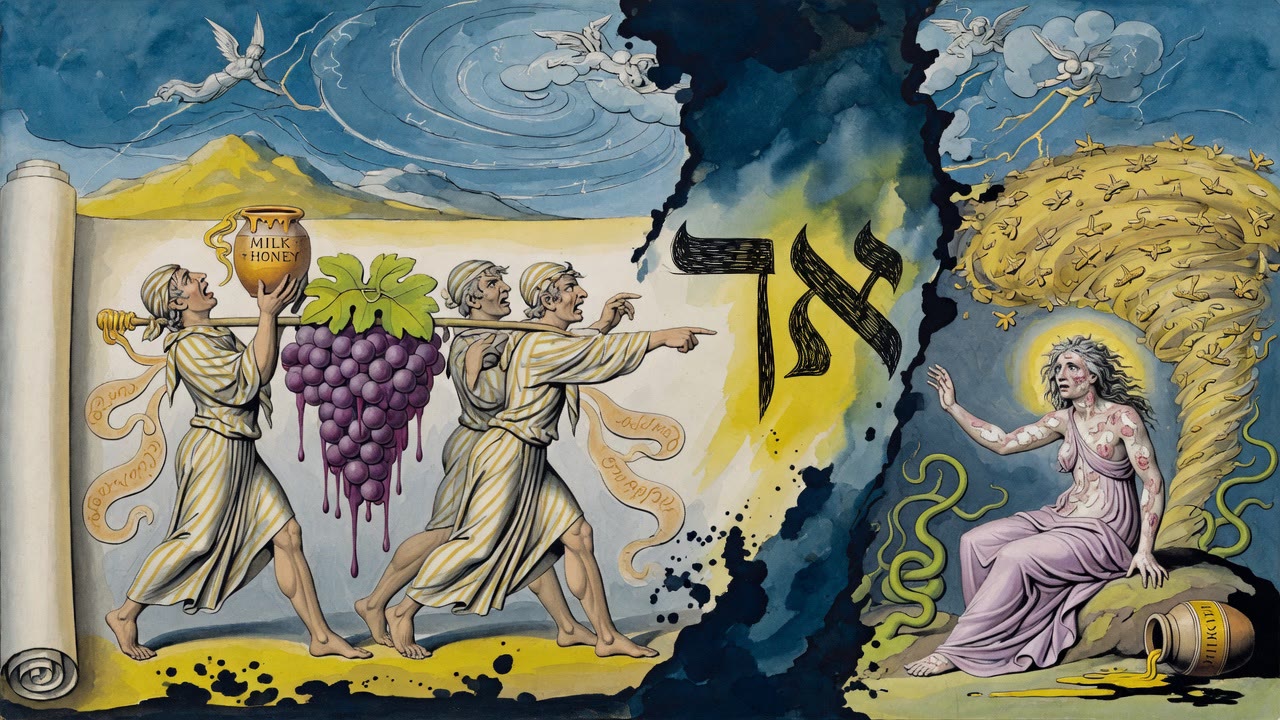
There was a moment in the groves the spies could not unhear. They had crept in among the high trees, small and hidden, when the Nephilim began to talk above them. The giants were squinting up into the branches, puzzled, pointing. "Look," one of them said, "there are grasshoppers up in the tops of the trees, and the strangest thing, they have the shape of men."
The spies had become insects to the eyes of the fallen. Later they would repeat it as their own confession. "We were like grasshoppers in our own eyes," they said, and that part was honest fear. But they added more. "And so we were in their eyes." That second half was the sentence that doomed them. No one had told them what the giants saw. They had decided it, and they had decided the worst.
The Sin Hidden in a Single Phrase
Heaven heard the addition and went cold. The first half could have been forgiven, a man frightened of a creature that throttles the sun. The second half was different. Who told the spies they looked like vermin and not like messengers from above? Who told them that the giants did not flinch to see them, that the men did not appear in those huge eyes as something sent, something to be feared in turn? They had not known what they were in the eyes of the Nephilim. They had only assumed they were nothing, and the assumption became a curse spoken against themselves.
For that sentence the decree fell. A day of scouting for a year of wandering, the number of days they had walked the land turned into the number of years they would die in the wilderness for it. The men of flesh and blood who had shrunk themselves would not cross into the land. Their own tongues had clipped their wings.
One Man Climbed to the Graves
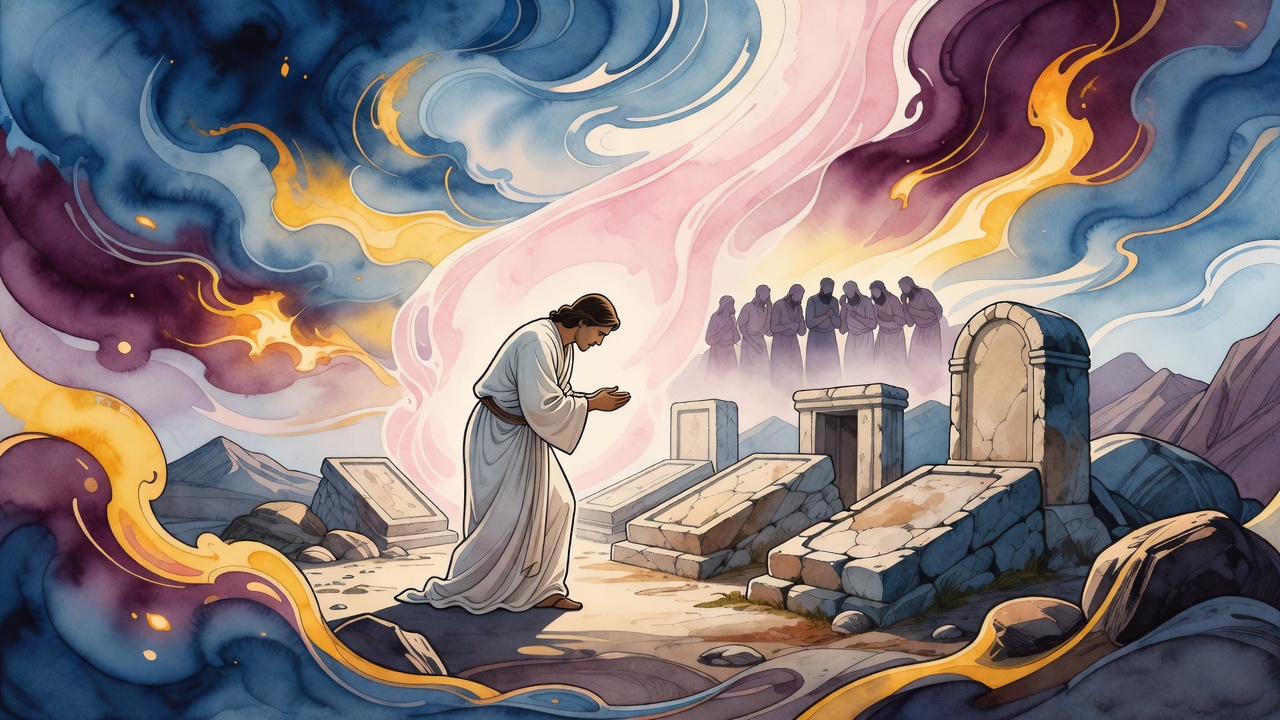
While the ten built their case, one scout slipped away from the others and went up alone to Hebron. Not one of the rest set foot there. Caleb went by himself, and he did not go to measure the giants or count the city's gates. He went to the cave where the fathers were buried, and he threw himself down on the graves of Abraham, Isaac, and Jacob, pressing his face to the dust over their bones.
"Beg mercy for me," he said into the ground. "Pray that God deliver me from the plan of the spies." He could feel the verdict forming in the others before they spoke it. He had heard the same giants, seen the same throats swallowing the sun, and the fear was in him too. So he carried it to the only place he trusted, down among the dead who had walked this land first, and he asked the buried patriarchs for the courage the living men beside him had already thrown away.
The Lowliest City in the Land
The ground he wept on was, by every ordinary measure, nothing. Hebron was the poorest of the cities, a burial place and little more, and it had been built seven times over before Zoan of Egypt rose, the proud city of Pharaoh's princes and ambassadors. A builder with two houses to raise always builds the beautiful one first and saves the leftover stones, the rubble, for the second. Hebron had been raised first. The good stones had gone into it. The refuse had gone to Zoan.
So the worst place in this land outranked the best place in Egypt, and the giants who choked the sun stood guard over graves that were worth more than all the palaces of the Nile. Ten men looked at the brothers and saw insects in a mirror. One man looked past the brothers, lay down on the dust, and asked the fathers to make him large again.
← All myths