The Hand That Strikes Egypt Also Heals Israel
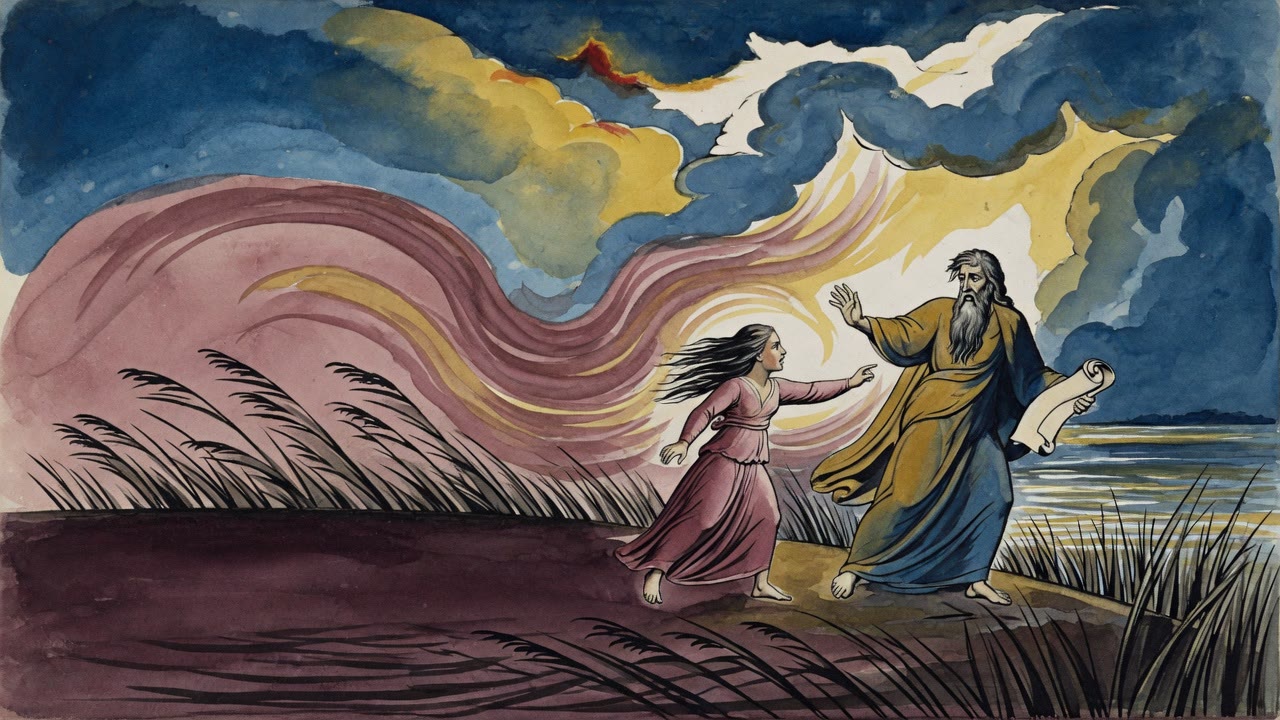
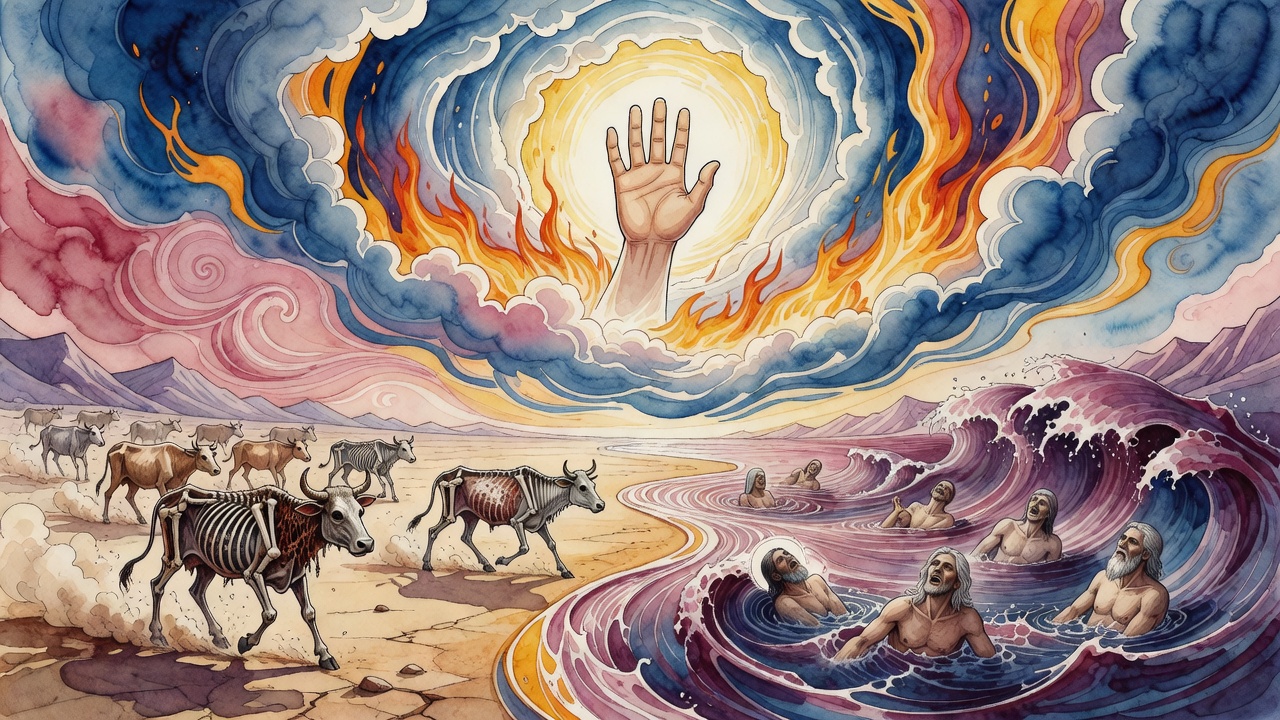
The courtyards stank of fly-killed cattle. Egyptians cut them for the hides. By dawn those carcasses were on their feet, walking north.
Table of Contents
 Click for full size
The Dead Cattle Walked North
The flies were gone. The courtyards were not. Carcasses lay in every Egyptian yard, bloated from the swarm that had bitten them until they dropped. Men came with knives. They cut for hides. They cut for meat. Heat was already working on the flesh, and they meant to salvage what the plague had left them.
God refused the salvage.
The slaughtered animals stood up. Legs that had been folded under knives found the ground. Necks lifted. The ones killed by the swarm and the ones killed by Egyptian blades shook the flies off a second time and walked north, out of Goshen, out of the brick cities, toward the road Israel would later take. Egypt was left with empty yards and no profit. Not the hides. Not the meat. The frogs had died in place and stayed dead, because a frog is not a coin. Cattle are coins. Heaven would not let Pharaoh keep the coins.
A fifth plague rode with the others. Pestilence mowed the remaining herds, and some men with them. Israelite beasts lived. If an Israelite had a claim on an Egyptian animal, that animal lived too. Shared property lived. The striking counted ownership down to the last hoof.
Pharaoh Called God Righteous
Hail came next, ice with fire inside it, and Pharaoh finally used a true sentence. "The Lord is righteous, and I and my people are wicked." He said God had been righteous when He warned them to pull the cattle in, and they had been wicked for leaving men and beasts in the field. He begged Moses to pray the ice away. He promised to let Israel go.
Moses agreed to pray. He did not agree to believe. "Think not that I do not know what will happen after the plague is stayed," he said. "I know that thou and thy servants will fear the Lord God, once His punishment is removed, as little as ye feared Him before. But to show His greatness, I will pray to Him to make the hail to cease."
The ice stopped. Fields that had been white went to mud. Pharaoh's mouth closed on the confession. The same power that had emptied the yards now emptied the sky, and the king took the mercy as a chance to harden again. Striking had not opened him. The halt of the hail did not either. He kept the people.
They Drank What Was Left of the Calf
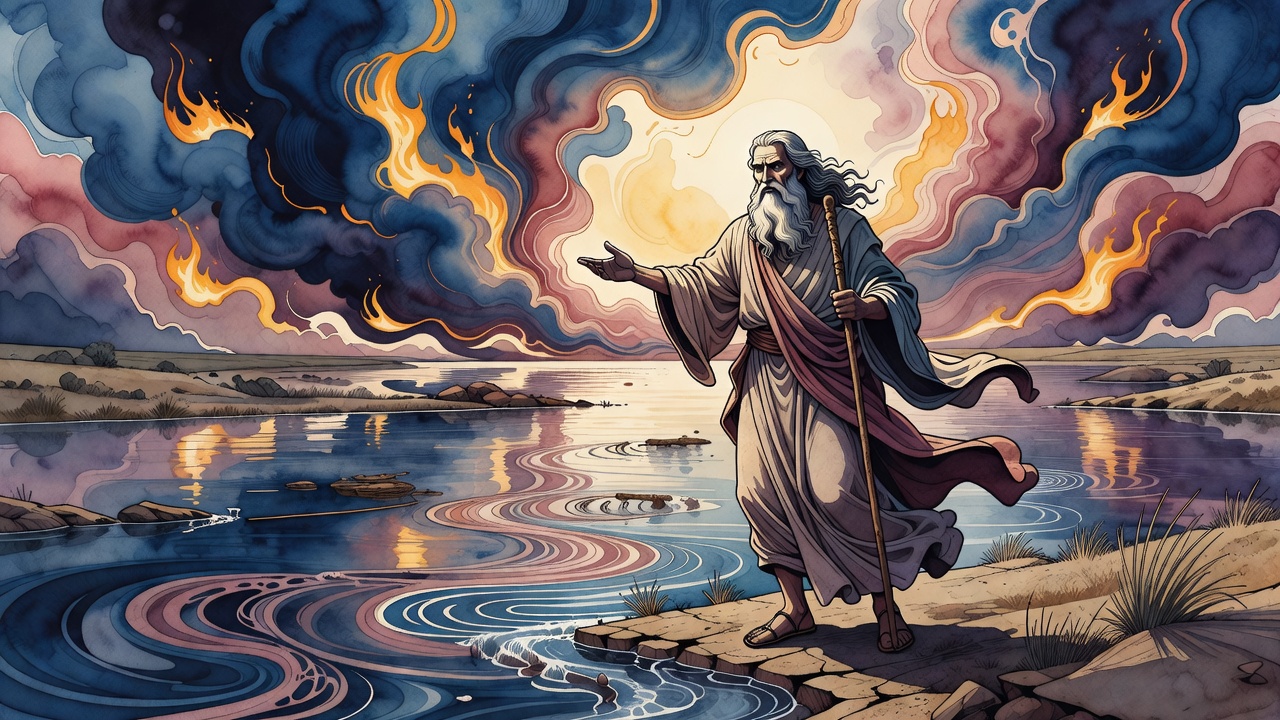
Israel got out. At the mountain they made a calf of gold and danced. Moses came down, burned the statue, ground it, and strewed it on water. He made them drink (Exodus 32:20). Gold grit sat on their teeth. The camp swallowed what it had kissed.
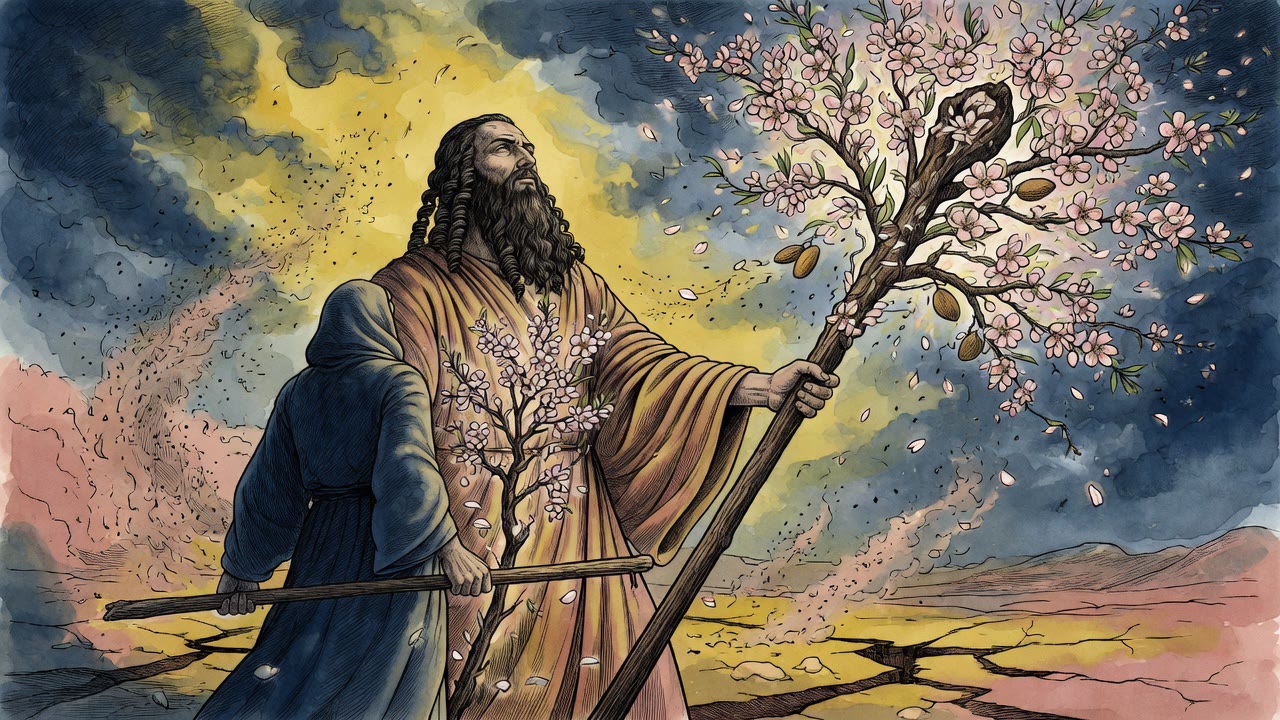
"Who is on the Lord's side? Let him come unto me," he called. The sons of Levi came, the ones who had not bowed. Moses set them as judges for a single day. Witnessed idolaters who had been warned lost their heads. The law's usual delays would have left the camp unclean until night. Moses spoke as if God had commissioned the speed. God had not. The day still had to finish the guilty.
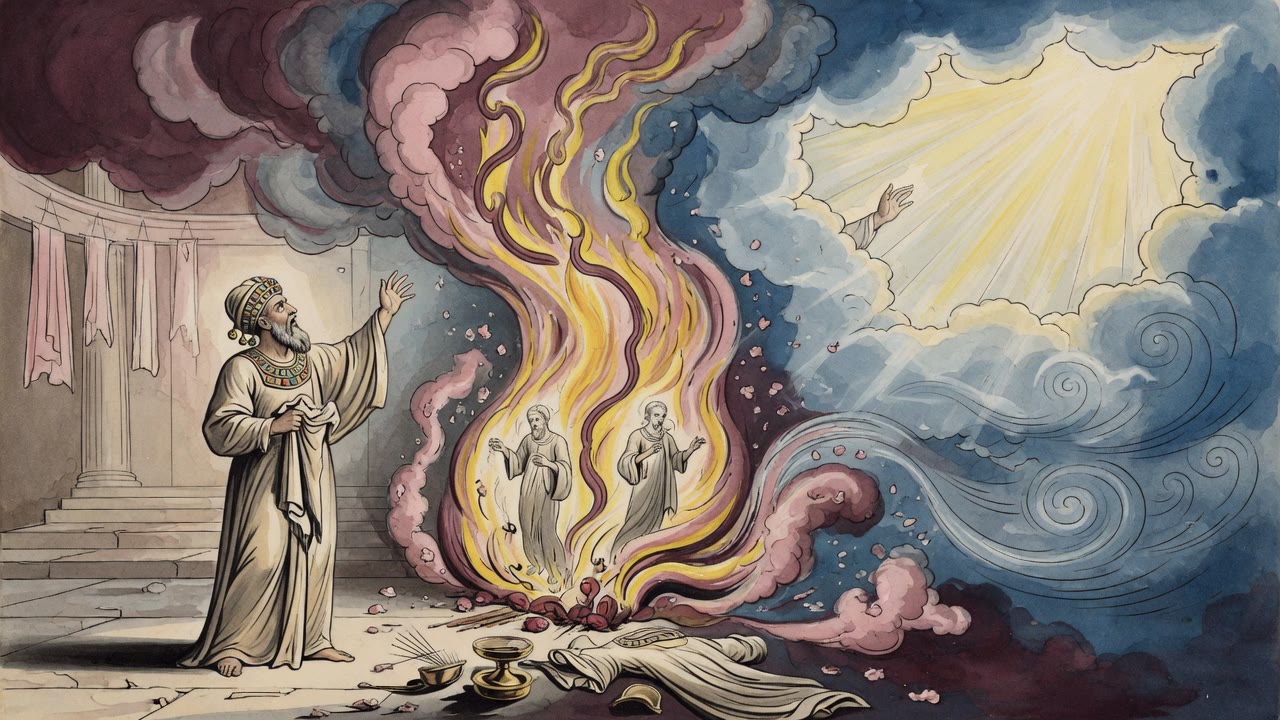
Those seen in the dance but never warned drank the water. It worked on them the way the bitter water of the sotah (סוטה), the wife accused of hidden unfaithfulness, works in the priest's court (Numbers 5). The innocent swallowed and lived. The guilty swelled and died. Sinners with no witnesses at all did not slip out. A plague took them. The water that tests a marriage tested a nation. Mouths that had drunk freedom in Egypt now drank judgment in the sand.
A Bronze Snake Healed the Bite
Later the camp complained in Zalmonah, a station of thorns, and God sent serpents. They bit. People died. The murmurs followed them to Punon, to Oboth, to Iye-abarim. Moses, at God's word, made a serpent of bronze and set it on a pole. Anyone bitten who looked at it lived (Numbers 21:8-9).
The looking had to be long if a snake had done the damage. A man lifted his face and kept it lifted until his eyes watered. A casual glance was not enough. Dog bites and other animal wounds closed faster. A child nipped by a camp dog looked once, short as a blink, and the puncture shut. The bronze had no medicine in it. The gaze was the act. A person turned toward the thing that wore the killer's shape, and the power that had sent the live snakes now used the dead image to close the holes they had made.
In the valley of Arnon the same hand crushed Amorites hiding in caves by shoving one mountain's rocks into the other mountain's mouths. Israel walked the ridge and never descended into the trap. Egypt's yards stayed empty of even dead meat. The hand that strikes those yards also heals Israel. In the camp a boy with a dog bite looked once at the pole and ran.
← All myths