5 min read

The Heretic Who Claimed God Could Not Command the Wind

A min boasts that no one commands the wind. A rabbi walks him into an open field, prays, and the air goes dead still.

Curated by Arthur · Told by Maggid ·
Table of Contents
  1. Still Air
  2. A Name for Every Generation
  3. Hosts at the Bride's Adorning
  4. What the Min Could Not Unsee
  5. Messengers You Call Chance

The min came with a challenge he thought unanswerable, the kind men carry like a knife under the cloak of philosophy. "Your God claims to control everything," he said, "but can He control the wind? It topples houses, uproots trees, scatters ships across the sea. No one commands it. Not even your God."
The Heretic Who Claimed God Could Not Command the Wind Click for full size

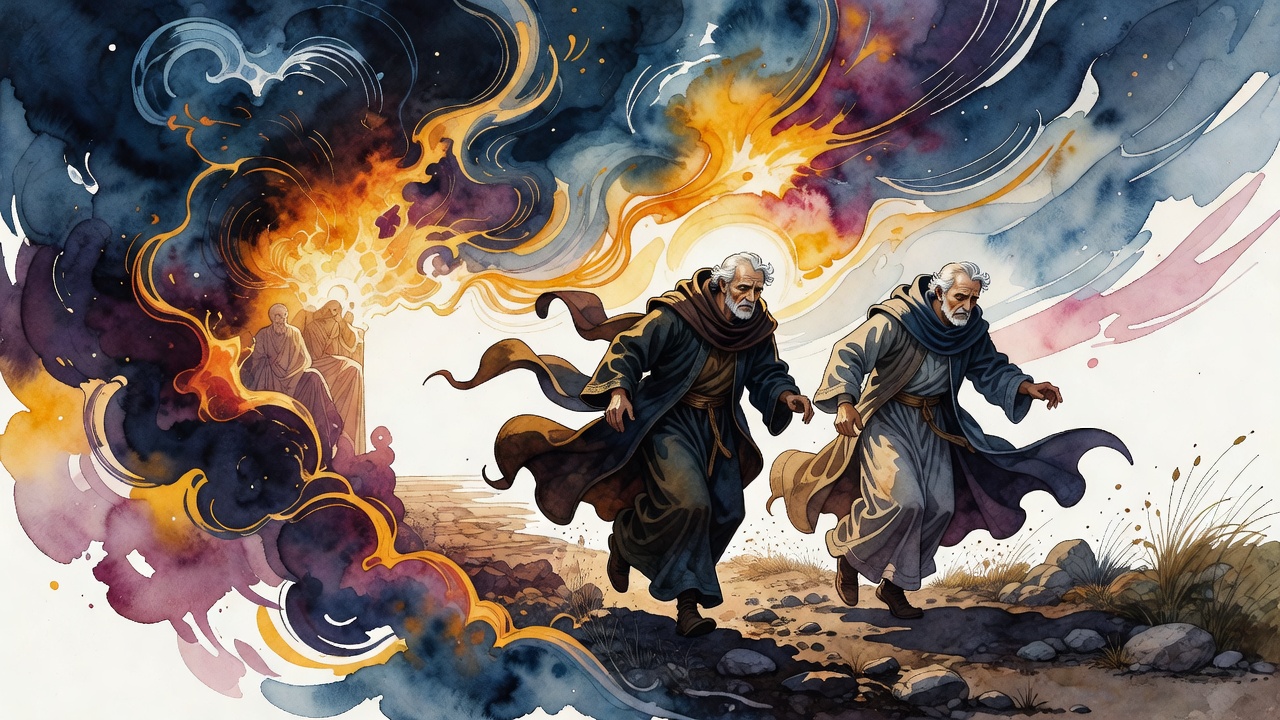
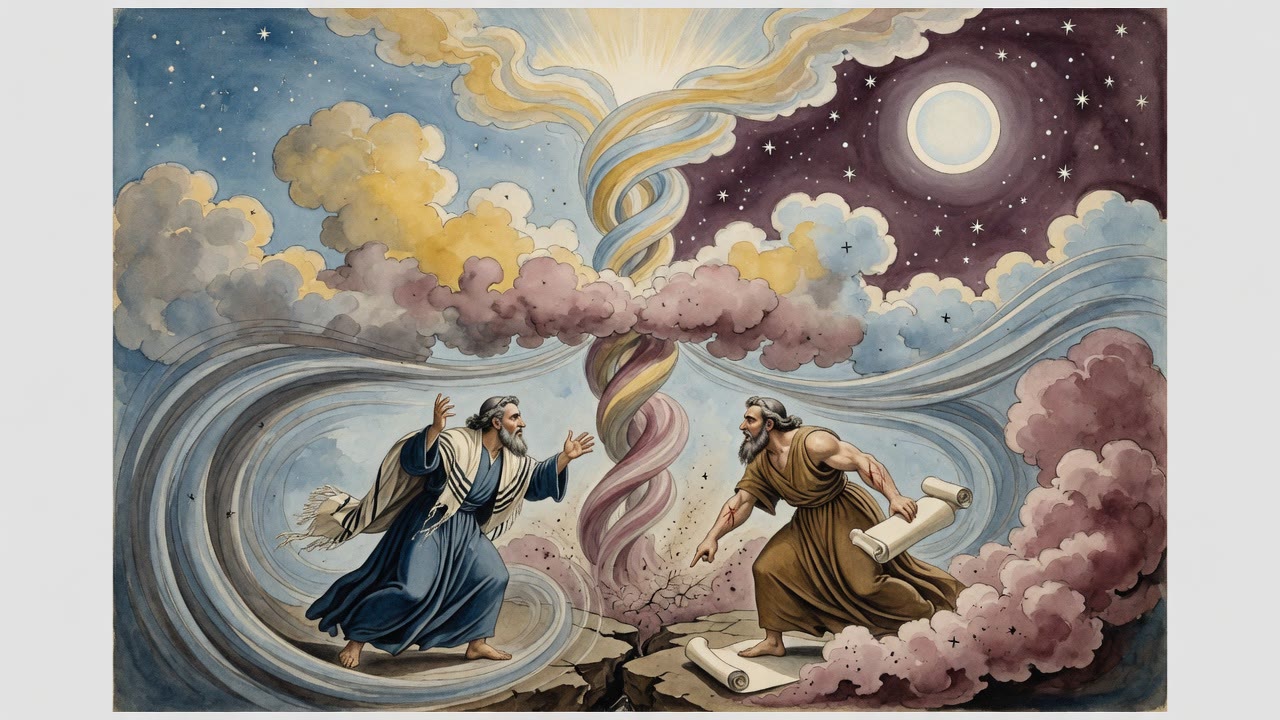
The rabbi did not answer in the study hall where books might have become another kind of shield. "Come with me," he said, and led the heretic into an open field where the wind was already whipping dust into their eyes and tearing at their robes as if it had been hired for the argument.

Still Air

He pointed at the sky. "You see how it rages? Watch." He lifted his hands and prayed without theater, without a raised voice meant for the min's pride. The wind died. Leaves stopped mid-tremble. The field held its breath like a held note in a song no one finished. Dust that had been a weapon a moment before settled on their boots in a thin, even coat. The min's jaw worked on nothing.

"Coincidence," he managed, because coincidence is the last friend of a man who has just watched his proof collapse.

The rabbi prayed again. The wind returned, soft this time, carrying the scent of flowers instead of grit, a messenger on a different errand. "God does not merely control the wind," the rabbi said. "He speaks to it. He tells it where to go, how hard to blow, and when to stop. You do not see the hand, so you assume no hand exists. The invisible hand is the strongest of all."

A Name for Every Generation

When Moses stood before the bush that burned and was not consumed, the Holy One did not give only a cosmic Name too large for a mouth. He gave a family Name that could be carried into Egypt like a seal. "The God of Abraham, the God of Isaac, and the God of Jacob has sent me to you. This is My Name forever, and this is My memorial to every generation" (Exodus 3:15). The Aramaic translators keep the triple beat with stubborn care. Not "God of the patriarchs" in one blur that saves breath. Three bonds, three lives, one God who answers in history, not only in sky and storm.

A God with a memorial in every generation is a God who still speaks to weather when a min laughs in a field and calls emptiness proof.

Hosts at the Bride's Adorning

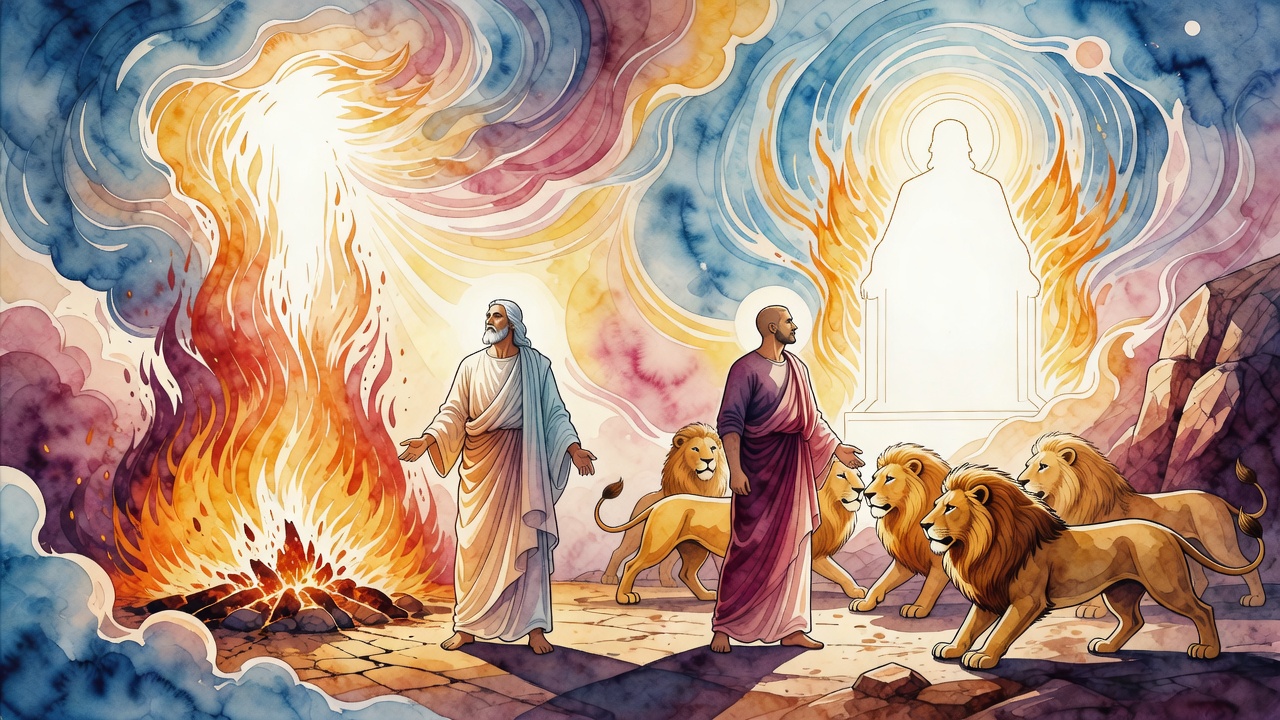
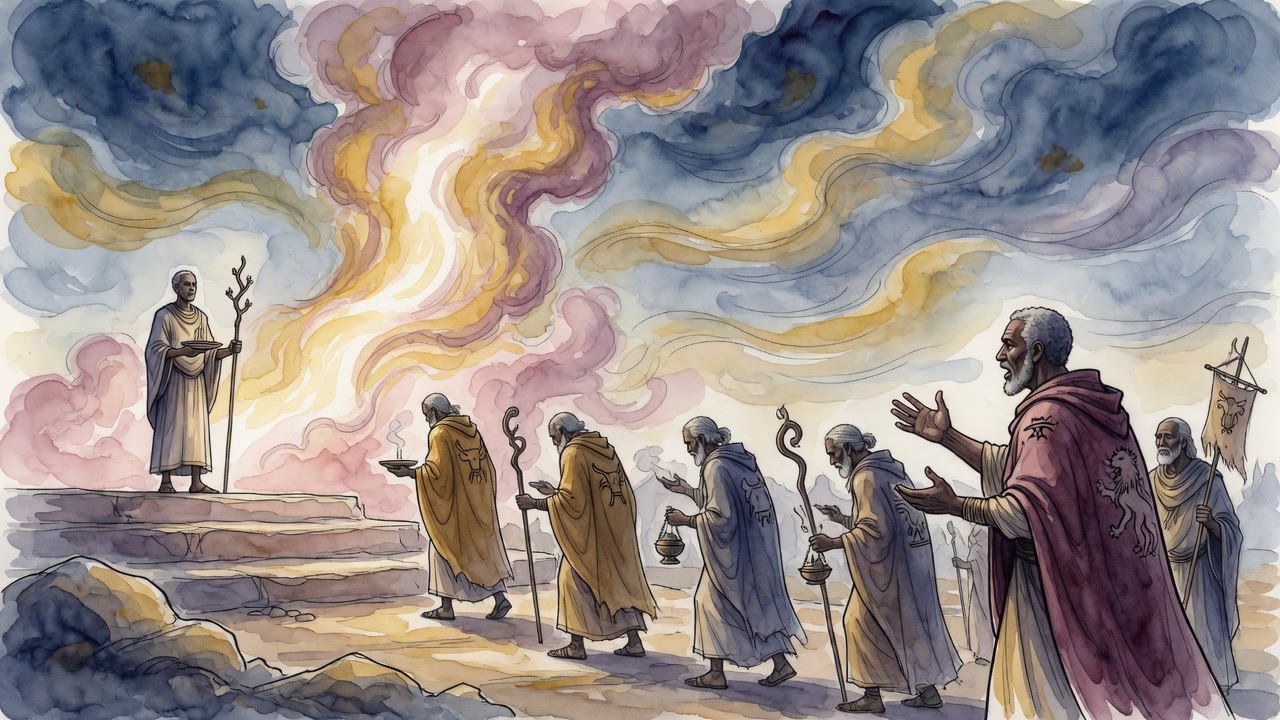
In the Zoharic imagination, holy hosts are called to enter and witness the bride being adorned. The groom is the sun coming to the moon; more than sunrise, a union renewed when the world seems too tired for renewal. The hosts do not debate whether the wind has a master. They assemble for a wedding of lights the eye can barely hold. Creation is not a dead machine left running after its maker walked away. It is a chamber being prepared, lamps set, garments arranged, attention unpaid and unending.

The heretic's wind was his proof of chaos. The rabbi's still field was proof of address. The hosts around the bride are proof of attention that never clocks out for the night shift of doubt.

What the Min Could Not Unsee

He could invent a coincidence once and almost believe himself. Twice is harder, especially when the second act is gentleness after force. Soft return after hard stop is a signature, not a shrug. Argument from absence ("I do not see the hand") collapses when the air itself becomes the answer and refuses to stay on his side. The rabbi did not drag him through tractates stacked like walls. He dragged him through weather until weather took a side.

Some denials die in libraries among clever footnotes. This one died with dust settling on a boot and a man trying to swallow his own silence.

Messengers You Call Chance

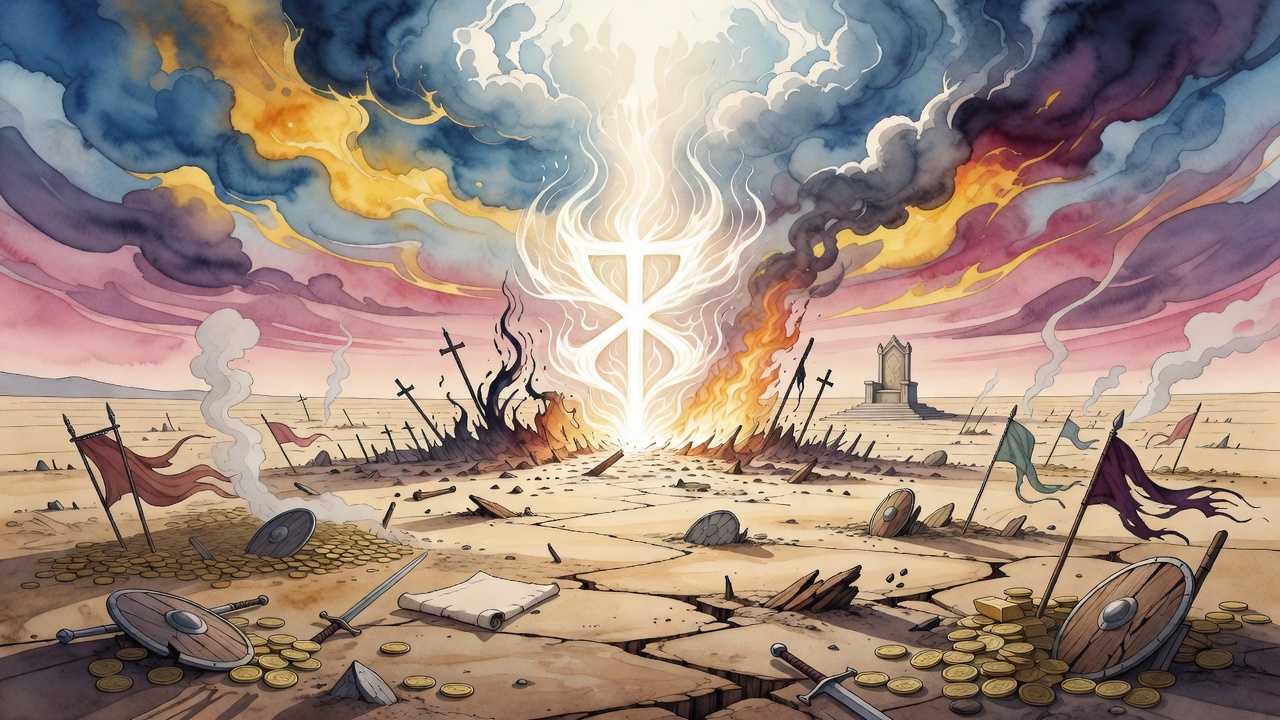
Wind, the rabbi said, is a messenger the way angels are messengers. Ships that scatter and houses that fall are not proof of a vacant throne. They are proof that the world is not a toy sealed in glass for safe display. The same mouth that can still a field can also let a storm teach a harder lesson than a sermon. The min wanted a God who never touched the dangerous parts of creation. He met a God who touches them precisely, and who can be addressed by a Name that still means Abraham, Isaac, and Jacob when empires change their coins.

Abraham's Name, Isaac's Name, Jacob's Name: memorials that outlast the men who deny them. A laugh in a field does not retire them. Neither does a wind that, for one long minute, agrees to stand still.


← All myths
From the tradition

Sources

3 sources

The texts behind this telling. Some cards carry a translation of the source; others are our own retelling of it, and each card says which. Every card links out to the original.

Exempla of the Rabbis, No. 176Exempla of the Rabbis (Gaster, 1924)

Retold in our words. Read the original at the link below.The Exempla of the Rabbis, Moses Gaster (1924) · Public Domain

The Talmud in Hullin (f. 87a) preserves a curious exchange between a Min, a heretic. And a rabbi, concerning the nature of wind and divine power.

The heretic approached the rabbi with what he believed was an unanswerable challenge. "Your God claims to control everything," the Min said, "but can He control the wind? The wind blows where it pleases. It topples houses, uproots trees, and scatters ships across the sea. No one commands it. Not even your God."

The rabbi studied the heretic calmly. "Come with me," he said, and led the Min outside to an open field. The wind was blowing fiercely that day, whipping dust into their eyes and tearing at their robes. The rabbi pointed to the sky. "You see how the wind rages? Watch." He lifted his hands and prayed. The wind died. The air went still. Not a leaf moved.

The heretic's jaw dropped. "This proves nothing," he sputtered. "It was a coincidence." The rabbi smiled. "Then let me show you something else." He prayed again, and the wind returned. But gently this time, a soft breeze that carried the scent of flowers. "God does not merely control the wind," the rabbi said. "He speaks to it. He tells it where to go, how hard to blow, and when to stop. The wind is His messenger, just as the angels are His messengers. You do not see the hand that moves it, so you assume no hand exists. But the invisible hand is the strongest of all."

Full source
Targum Pseudo-Jonathan on Exodus 3:15Targum Pseudo-Jonathan on Exodus

Retold in our words. Read the original at the link below.The Targum of Jonathan ben Uzziel, trans. J. W. Etheridge, London, 1862 · Public Domain

"And the Lord said again unto Mosheh, Thus shalt thou speak to the sons of Israel: The God of your fathers, the God of Abraham, the God of Izhak, and the God of Jakob, hath sent me unto you. This is His Name for ever, and this is His Memorial to every generation and generation."

The Targum Pseudo-Jonathan on Exodus (3:15) follows the mystical Name of the previous verse with something more domestic: a family name. "The God of Abraham, the God of Izhak, the God of Jakob." This is the Targum's genius. It sandwiches the cosmic Name between the ancestral one.

Notice the repetition: the God of Abraham, the God of Izhak, the God of Jakob. Why not say "the God of the patriarchs"? The sages of the Mekhilta (tannaitic midrash on Exodus) explained: because each patriarch found God anew, in his own way. Abraham's God was not simply inherited by Isaac. Isaac had to meet Him himself. Jacob had to wrestle Him at the Jabbok. Every generation's relationship with the Holy One is personal, which is why every name gets listed separately.

Then the closing phrase: This is His Memorial to every generation and generation. The Aramaic dukhrana, memorial, remembrance, invocation. This is the Name by which He will be called in the synagogues not yet built, in the exiles not yet suffered, in the generations not yet born.

The theology is staggering. God gives Moses two names in two verses. A cosmic Name that points to His essence (3:14) and a relational Name that points to His history with a particular family (3:15). Moses must hold both. Without the cosmic Name, God is small. Without the family Name, God is distant.

Beloved, the God of your ancestors is the same God who spoke the universe. Both are true at once.

Full source
Tikkunei Zohar 288:7Tikkunei Zohar

Retold in our words. Read the original at the link below.Sefaria-hosted English translation · CC-BY

Tikkunei Zohar turns to Enter Holy Hosts to Witness the Bride Being Adorned.

Who is this bride? Who is this groom?

Rabbi Shimon doesn't leave us hanging. He clarifies that the groom is the sun, coming to light up the moon, who is the bride. But it's so much more than just a sunrise. It's a sacred union, a constant renewal of creation itself.

Get this: as the sun, the groom, approaches, the moon adorns herself. But not with just anything. She decorates her "hair" – a wild image. – with thirteen decorations: the twelve constellations of the zodiac, and the moon herself. It's a cosmic makeover for a divine appointment!

The text then quotes (Psalm 19:6): "He is like a groom coming forth from his chamber; like a hero, eager (yasis) to run." The word yasis, eager, is so evocative, painting a picture of the sun bursting forth with joyous energy. He’s ready to fulfill his purpose, to bring light and life to the world.

But there's also a sense of longing, a tender intimacy in this cosmic courtship. The Tikkunei Zohar connects yasis with another word, yatsits, meaning "he surely peeks." And it links this to (Song of Songs 2:9): "Peeking through the lattice." image: the groom, the sun, peeking through the lattice of the heavens, gazing at his bride, the moon. It's not just about fulfilling a duty. It's about love, connection, and a deep, abiding relationship.

Elijah, the prophet who never died, descends with angelic hosts and righteous souls to witness and participate in this adornment. The sheer energy and excitement of it all?

So, what does it all mean for us?

This passage from the Tikkunei Zohar invites us to see the world not just as a collection of physical objects, but as a living, breathing pattern of relationships. The sun and the moon aren’t just celestial bodies; they’re symbols of connection, of giving and receiving, of the constant interplay between the divine and the created world.

Maybe next time you see the sunrise or gaze at the moon, you’ll remember this celestial wedding, this cosmic love story playing out above us. And maybe, just maybe, you’ll catch a glimpse of that hidden world, that deeper reality, that connects us all.

Full source