Malkitzedek Blessed Abraham First and Lost the Priesthood
Malkitzedek walked out of Shalem with bread and wine for a man coming off a battlefield, and then he blessed him in the wrong order.
Table of Contents
 Click for full size
Bread and Wine After the Battle
Abraham came back up the valley with three hundred and eighteen tired men, the rescued people of Sodom walking behind them, and the property of four broken kings loaded on whatever could carry it. He had been awake for days. He had just fought a war to get his nephew back.
Malkitzedek, king of Shalem, walked out to meet him with bread and wine. He was a priest of God Most High, of the line of Shem, and the priesthood of the world belonged to his family, and he had brought food to a man coming off a battlefield. It should have been the best moment of his life.
He set the bread down and opened his mouth to bless.
"Blessed be Abram to God Most High, maker of heaven and earth. And blessed be God Most High, who has delivered your enemies into your hand."
Abraham did not touch the bread.
"Does a man bless the servant," he said, "before he blesses the master?"
The order of a sentence. That is all it was, two clauses in the wrong sequence, said by a tired man to another tired man on an evening road. God took the priesthood out of Shem's line while the words were still in the air and put it into Abraham's hands, and the psalm that records the transfer says the Lord swore it and will not take it back: you are a priest forever, on account of what Malkitzedek said.
The Hill of Animals at the Door
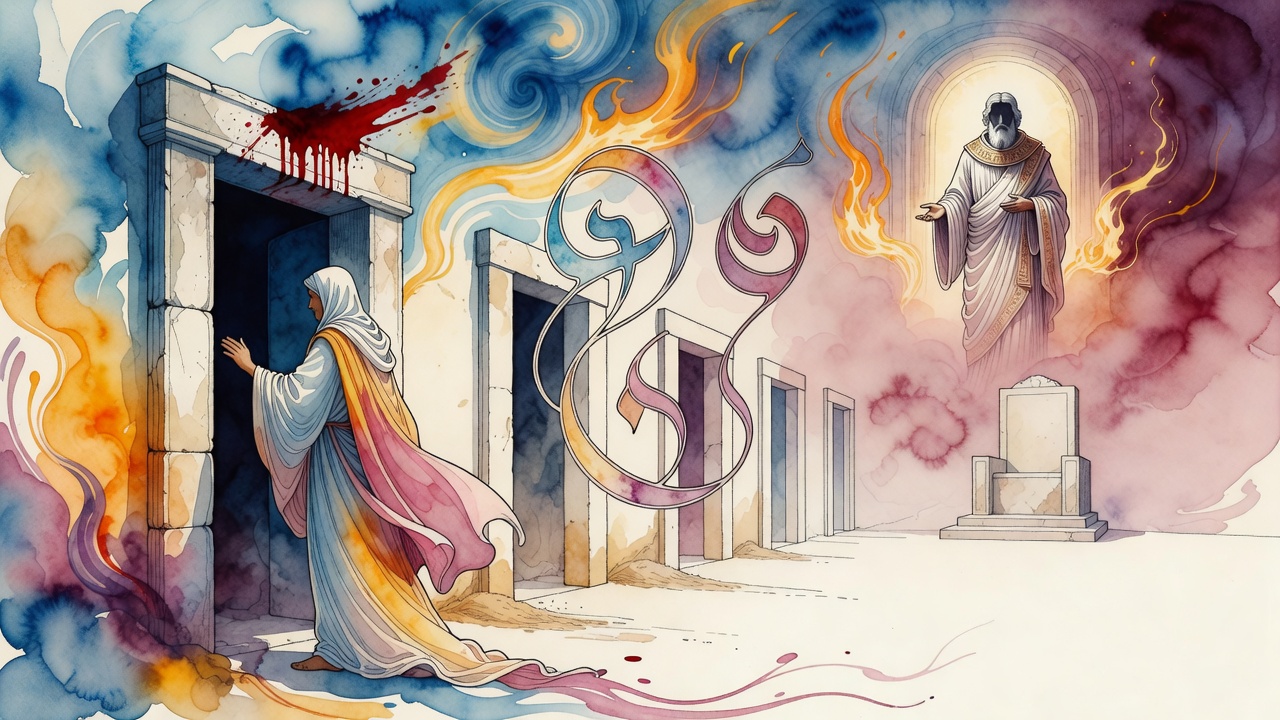
The office traveled down through Abraham's family and came to rest at the entrance of a tent in a desert.
Aaron stood there with his sons in new clothes that did not fit their bodies yet, and in front of them Moses had laid out a bull and two rams. Rav Huna, in the name of Rabbi Abba bar Kahana, looked at how they were placed. A ram on one side. A ram on the other. The bull in the middle, taller than both.
The three animals made a hill. Not a throne, not a crown, not a chair carried on poles. A small rise in the ground, shaped out of the animals about to die, and a man walking up it.
Six Hundred Thousand in a Doorway
Then Moses was told to assemble the whole congregation at the entrance of the Tent of Meeting.
Rabbi Elazar stopped there and refused to move on. All Israel was six hundred thousand men. And you are telling me they stood at the entrance of the Tent of Meeting?
They did. It is one of the places where the small thing held the large one.
The world had been water to the horizon in every direction, and God said let the water gather to one place, and it went, which is pouring a full vessel into a full vessel. Moses scooped up soot from a furnace in two cupped hands and Aaron scooped up two more, and Moses threw all four handfuls into the Egyptian sky with one arm, and they went up. The courtyard of the sanctuary measured a hundred cubits by fifty and every Israelite alive stood inside it. Moses and Aaron gathered the assembly in front of a rock the size of a kitchen sieve.
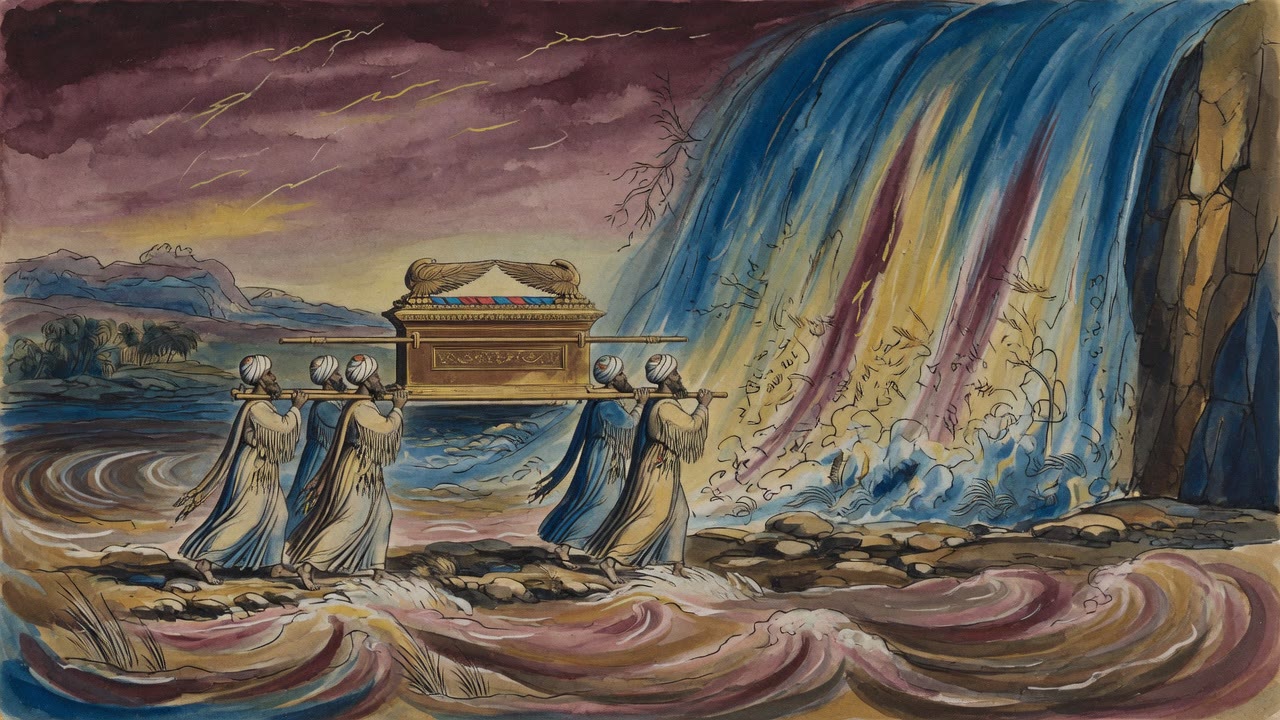
And Joshua, at the Jordan, called the whole nation to come near, and stood them all in the space between the two carrying poles of the Ark.
"By this you will know that the living God is among you," he told them, standing in a crowd that could not fit where it was standing.
Crowded Standing, Spaced Kneeling
Centuries later the same thing happened every festival in Jerusalem, and people noticed it because it was physically uncomfortable.
The courtyard packed shoulder to shoulder until nobody could lift an arm. Then the moment came to bow, and there was room. Every man went down with space around him, four cubits of it, and a cubit more on either side, so that no one heard the words the man beside him was saying to God.
Rabbi Yohanan climbed the hill to sit with Rabbi Hanina, who was ill, and found him working on the verse about the day when Jerusalem will be called the Throne of the Lord and all the nations will be gathered to it.
Rabbi Yohanan asked him the practical question. "Will it hold them?"
The sick man had the answer ready, from the prophet. "Enlarge the place of your tent. You will spread out to the right and to the left."
Your Lamp Is in My Hand
Bar Kappara used to open this with a line from the psalms, that You light my lamp, and then he would go back to the first man in the garden.
God said to Adam, "Your lamp is in My hand, and My lamp is in your hand."
The lamp of a man is his breath, and God is holding it. The lamp of God is the flame in the sanctuary that is never allowed to go out, and a man is holding that.
"Light Mine," God said, "and I will light yours."
So every evening Aaron came into the tent alone, in the clothes, past the place where the bull had been killed, and trimmed the wicks and poured in the oil and set the flame going for the night. Outside, six hundred thousand people were somehow standing in a doorway. Inside, one man with a small fire in his hands was keeping up the other end of a bargain made in a garden.
← All myths