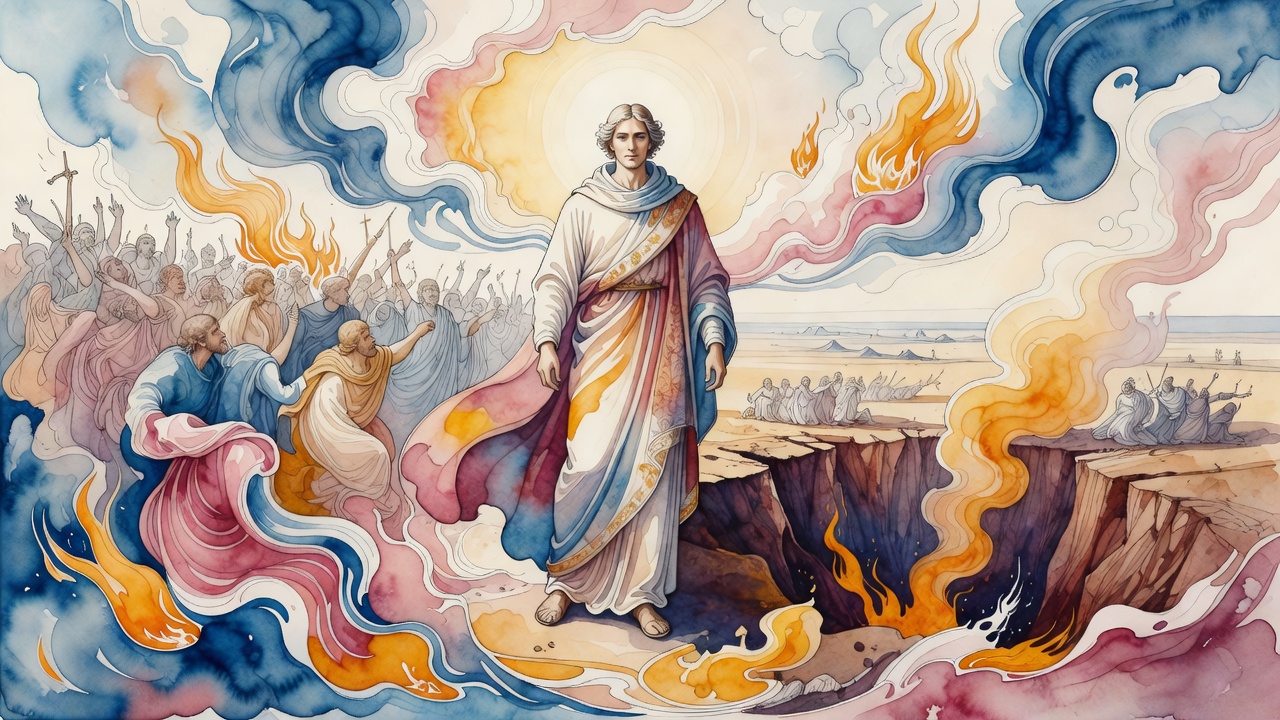
God Stood at Every Marked Door in Egypt and Barred the Destroyer
Akilas the convert asked the rabbis what God actually promised a stranger. Bread and clothing, said the verse. The rabbi told him to read it again.
Table of Contents
 Click for full size
The Destroyer Was Held at the Painted Lintel
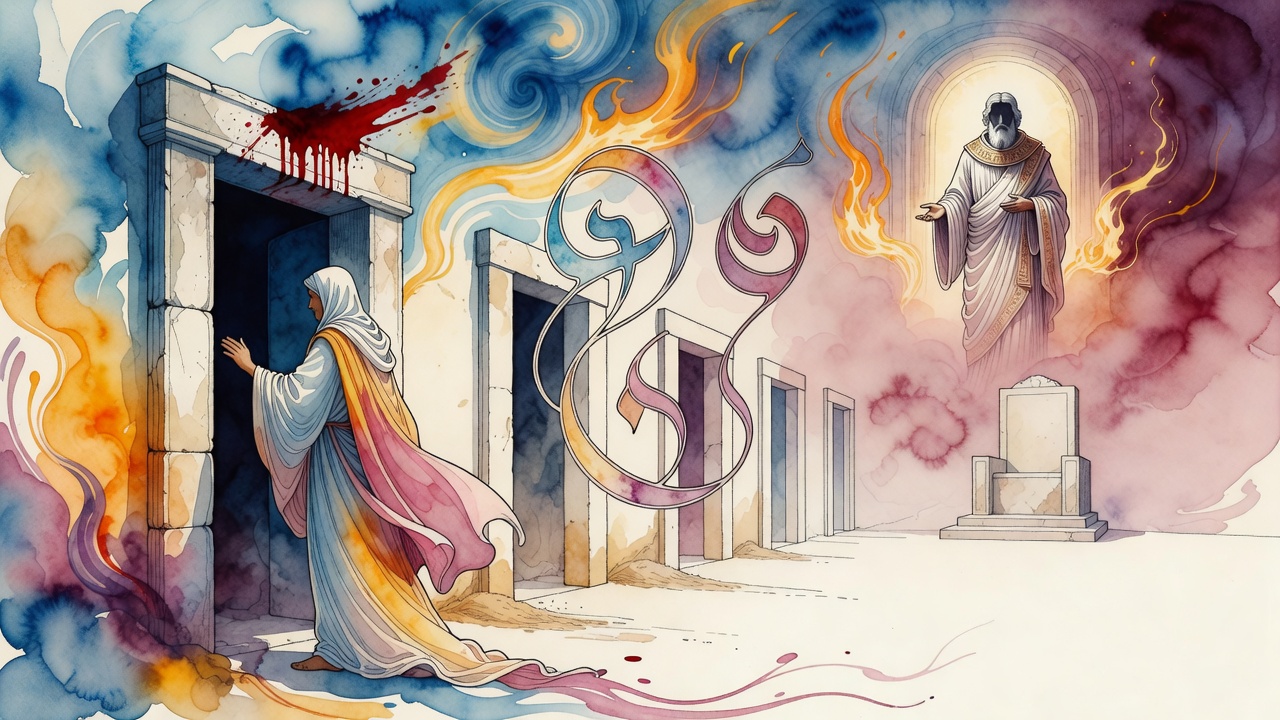
Two came to every doorway in Egypt that night, and only one of them was God.
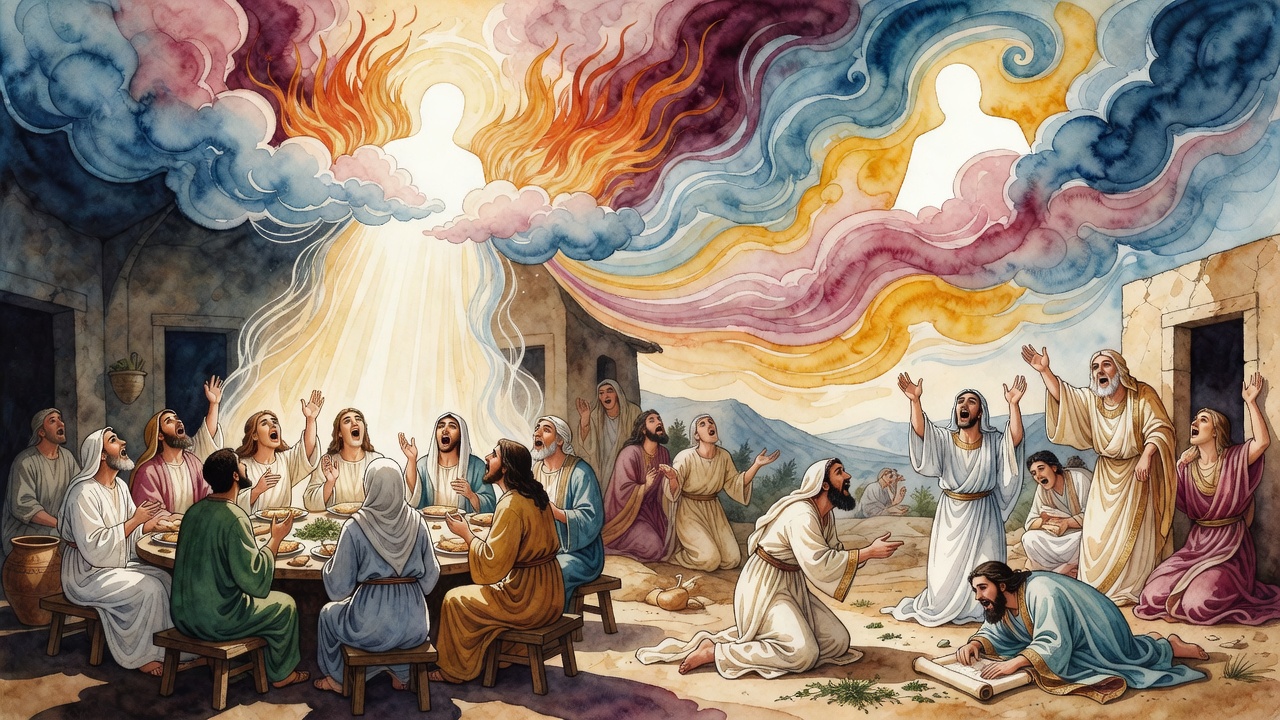
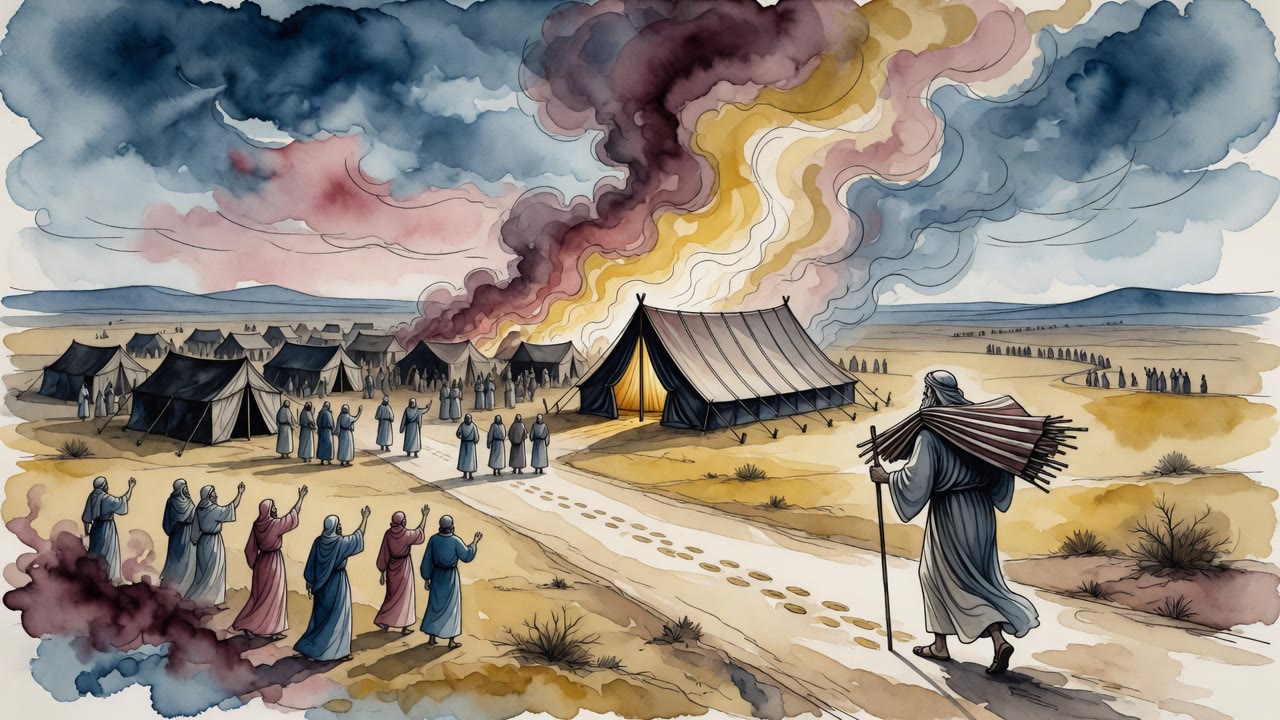
The other had been sent out to do the killing and was not permitted everywhere. Blood went on the lintel and down both posts while the meat was still roasting inside, and the mark was not put there for God, who had no difficulty telling one house from another. It was put there for the one walking behind Him. The verse says it plainly. He will pass over the door and will not let the destroyer come into your houses to strike you. Somebody stood in that gap all night, house after house, barring the way, and the destroyer went past every marked doorway and did not turn in.
Sitting, Passing, and One Day Standing
The angel set over the world looked at what happened in Egypt and said a line out of Job. What will I do when God rises up? When He calls the account in, what am I going to answer?
Count the postures. Over the generation of the Flood, God judged sitting down. The psalm puts Him enthroned at the waters, and what came of that judgment was that He blotted out everything alive. Over Egypt He judged while moving, walking the streets, stopping at doors, marking which lintel carried what. He did not wipe out the country. He took the firstborn.
Sitting, He erased a world. Passing, He struck a nation. The prophet says that one day His feet will stand, and that is the posture nobody has seen yet. If judgment while seated did that, and judgment on the move did this, the angel asked, what happens when He stands? And the reason He is going to rise, according to the psalm the sages set beside it, is not idolatry or bloodshed. It is the groan of the poor. For the oppression of the poor, for the sighing of the needy, now I will arise.
The Gate That Was Never Shut
Akilas the convert came to the Rabbis with a verse he could not swallow. It says God loves the stranger, giving him bread to eat and a garment to wear. Bread and a coat. Is that the whole of what a man gets for walking away from everything he was?
One of them answered him without softening it. That is what Jacob asked for. Sleeping on stones at Bethel, with a ladder still burning in his head, he asked God for bread to eat and a garment to wear, and Jacob is the firstborn of the Holy One. It should be enough for you to be handed what he asked for.
Then the Rabbi turned the words over. Jacob was not asking for lunch. He wanted a sign that God was actually with him, and the sign he named was priesthood. Bread to eat is the showbread laid out in the sanctuary. A garment to wear is the vestments Aaron was dressed in. So the promise to the stranger is that his daughters will marry into the priesthood and his grandchildren will eat the showbread and wear the linen.
God pressed the same case Himself, according to the midrash, and picked an unflattering example to do it. Look at the Givonites. They came to Israel out of fear, lied about where they were from, and got a treaty by fraud, and when Saul went after them I gave seven of his descendants into their hands. If I did that for people who came crookedly, what will I not do for people who came in love. The gates stand open at every hour. Whoever wants in, comes in.
Rabbi Berekhya added the other half, so nobody in Israel got comfortable. A man who is circumcised and wicked will not slip past on the mark alone. An angel is sent to draw the foreskin back over him, and Gehenna, seeing it there, opens its mouth.
God Made Worlds and Sent Them Back
Rabbi Abahu found a switch buried in two spellings. When the Torah says these, it cancels what came before. When it says and these, it adds to what came before.
Then he applied it to the first one. These are the generations of the heavens and the earth. Cancelling what? Cancelling the other heavens and earths. He had been making them and looking them over and finding them not to His liking, and putting them back into formlessness, and making the next. When He came to this pair He kept them, and the verse says these, meaning these and not the ones before.
There is a second tell in the same word. Toledot is written short everywhere in the Bible except twice. It is written full at the creation of heaven and earth, because at that hour the angel of death had not yet been let in. It shrank the moment Adam and Eve ate. And it is written full again for Peretz, because the Messiah comes out of Peretz, and in those days death gets swallowed for good.
Elsewhere in the passage the Torah is a noblewoman walking a road, one armed man on her right, one on her left, justice before her and justice behind, and the commandments carried in the middle where nothing can reach them.
Aaron Went In Wearing the King's Own Robe
The last doorway had a curtain instead of a door, and one man a year went through it.
On what merit, the Rabbis asked. Rabbi Hanina son of Rabbi Yishmael said circumcision walked in with him. Rabbi Yitzhak said the tribes did, twelve stones on a breastplate, ruby for Reuben and topaz for Simeon and emerald for Levi and on down the line to chalcedony for Benjamin, so that God would see the names and remember whose brothers these were.
Rabbi Yehoshua of Sikhnin told it as a scene instead. A king's son had wronged his father. His tutor offered to go in and speak for the boy, and then stopped at the entrance, because the palace was full of the king's attendants and a man walking in to argue for a guilty prince tends not to come out. So the king took off his own purple and put it on the tutor and sent him in like that. They saw the robe coming and stood back.
The Holy of Holies was full of ministering angels. Aaron went in past them dressed in garments cut to a pattern God had specified, and the angels saw what he was wearing, and the doorway let him through.
← All myths