The King Who Kept the Law Inside the Prison
Nebuchadnezzar's advisers warned him not to raise a good puppy from a bad dog. So he took the boy king off the throne and put him in a Babylonian cell.
Table of Contents
Nebuchadnezzar stopped his army at Daphne, outside Antioch, and did not move for long enough that the Great Sanhedrin came down the road to meet him.
 Click for full size
They asked him straight out. Has the time come for this house to be destroyed?
No, he said. Your king rebelled against me. Hand me Yehoyakim and I will turn around.
You Shall Not Deliver a Slave to His Master
They went back to Jerusalem and told Yehoyakim what the price was.
He did not go quietly and he did not go stupidly. He quoted law at them, and the law was on his side. Is this how it works, he said. You throw away one life to hold onto your own? It is written that you shall not hand over a slave who has run to you from his master.
They had an answer ready and it was also law. Did your ancestor not do exactly this to Sheva ben Bikhri, whose head went over the wall of Abel in a basket so the town could go on standing?
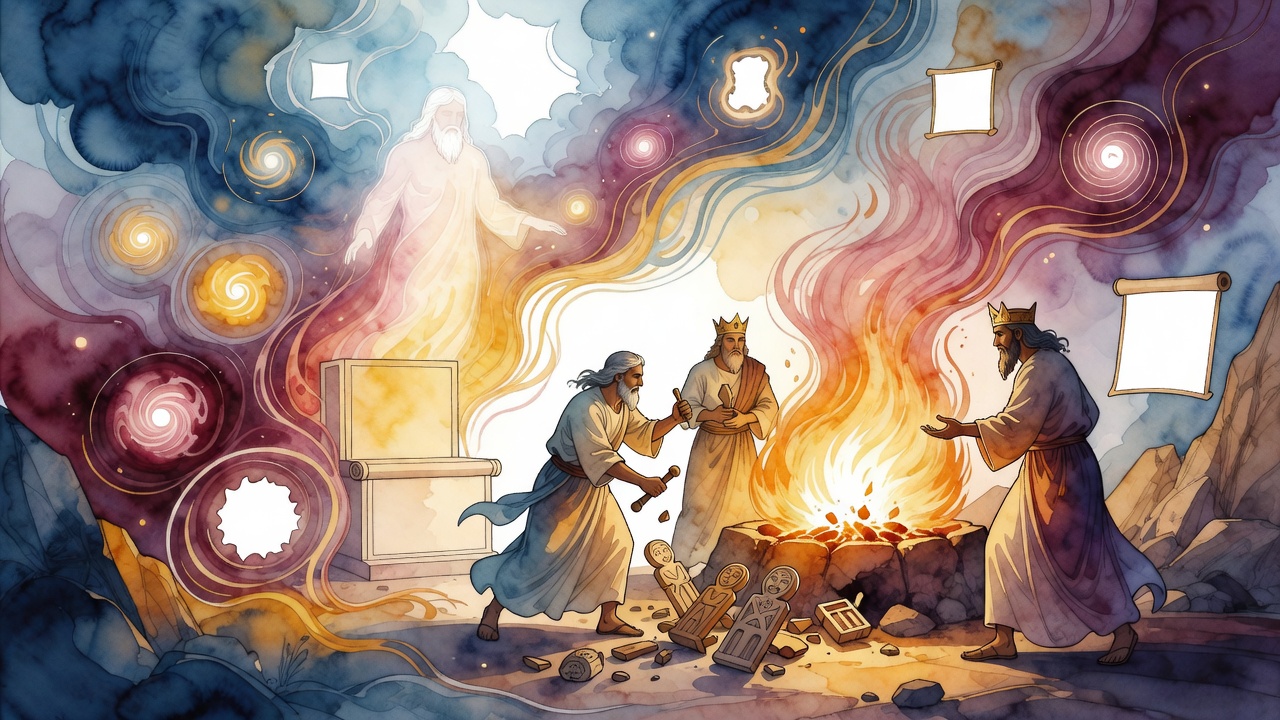
He would not hear it. So they got up, took hold of the king of Judah, and lowered him over the wall themselves.
Nobody who wrote it down afterward could agree on what condition he was in when he reached the bottom. Rabbi Eliezer said he went down alive, into a cage with hooks in it. Rabbi Shimon said he was dead before he cleared the top of the wall. Rabbi Yehoshua ben Levi said both were right, that they lowered him alive and he was a delicate man and he died in their hands on the way. Rabbi Yehuda described what came after in detail: the body carried from town to town across Judah, tried and executed again in each one, and then a donkey opened up and the king of Judah put inside it, so that the word about the burial of a donkey would land the way the prophet had meant it.
Do Not Raise a Good Puppy From a Bad Dog
Nebuchadnezzar put the son on the throne.
Yekhonyahu was eighteen. His father's remains had been dragged through the country he was now supposed to govern, and the court that crowned him had been the court that handed the body over.
The Babylonians got to Nebuchadnezzar within months. Do not raise a good puppy from a bad dog, they told him.
He came back for the boy.
The Keys Went Up and Did Not Come Down
Yekhonyahu did one thing before he went.
He gathered the keys of the Temple, every one of them, went up onto the roof of the sanctuary and held them over his head. We were the custodians of this house, he said, and we were not found trustworthy. Take them back.
Then he threw them upward.
A hand of fire came out and took them, is one account. The other says the keys simply hung there in the air and never came down and nobody has seen them since.
All across Jerusalem that day the roofs were crowded. What is with you, that you have all gone up on the roofs? The young men of the city were standing on the edges of them and stepping off.
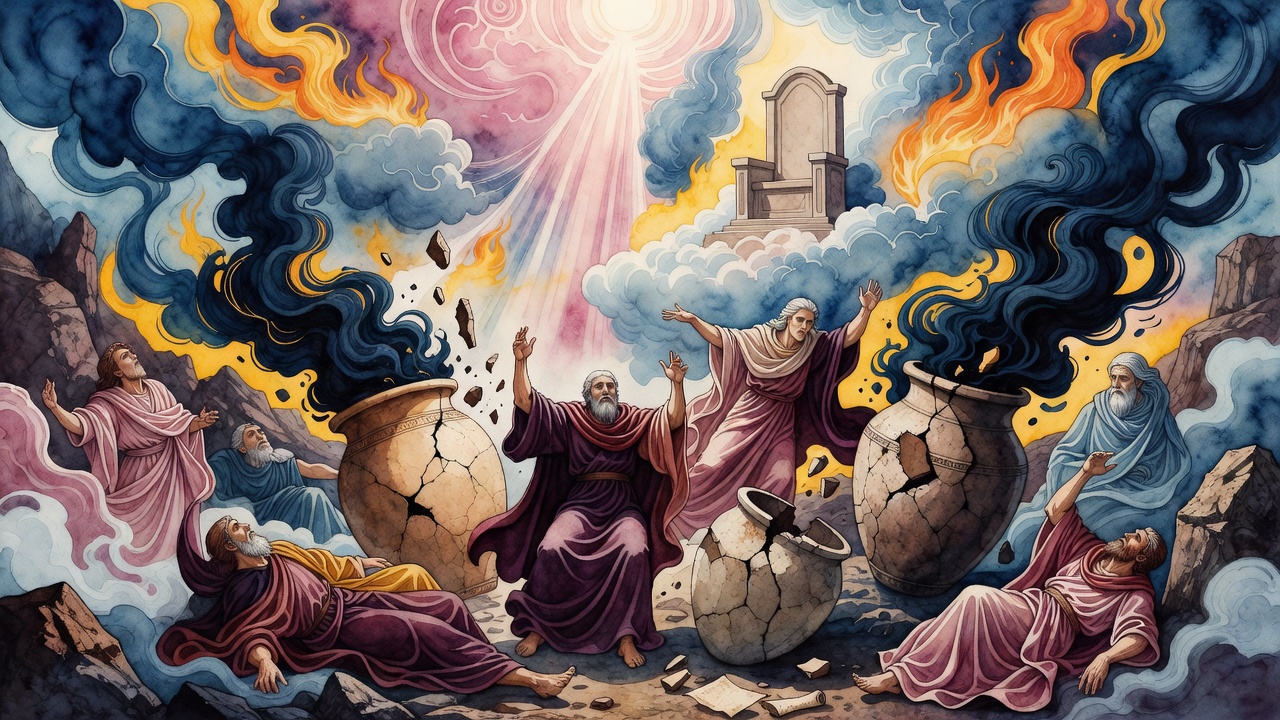
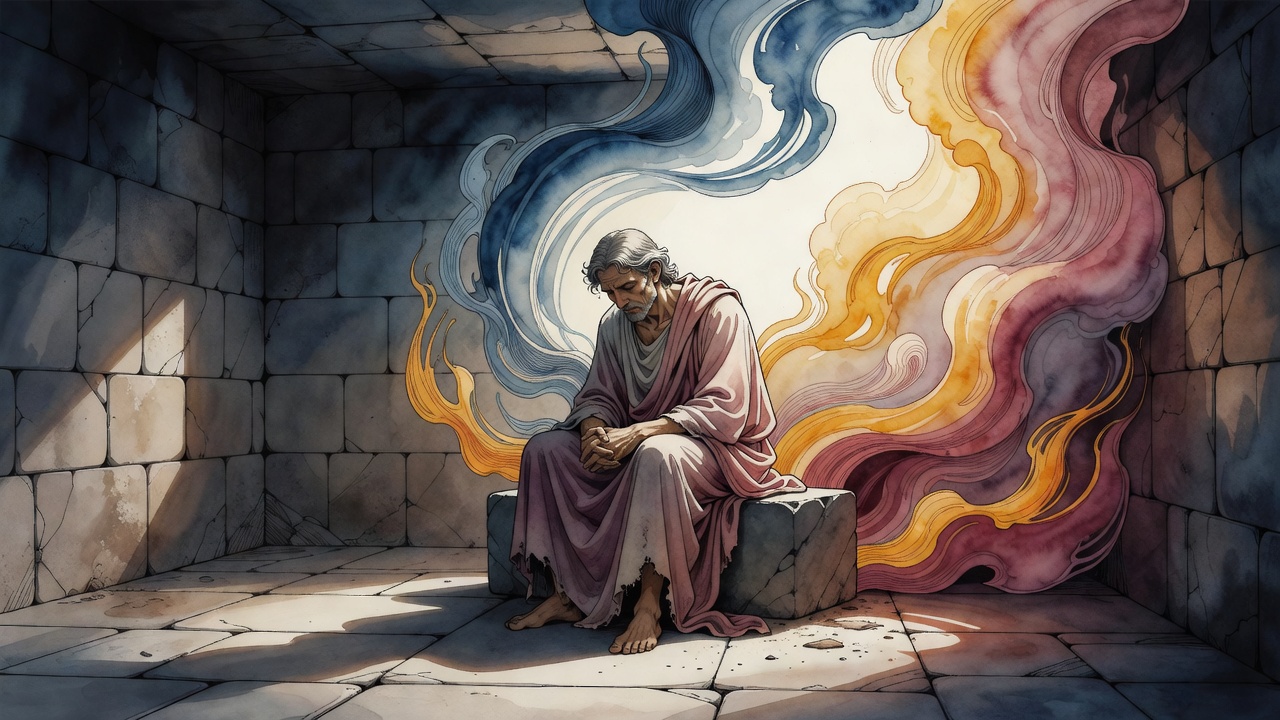
Nebuchadnezzar took him to Babylon and shut him in, and the door did not open again for a very long time. He never sent his prisoners home. There is a line in Jeremiah that calls Konyahu a broken pot, a thing nobody wants, and the rabbis heard it as a bone snapped so badly that no one would set it.
Gadelet Carried It Up the Chain
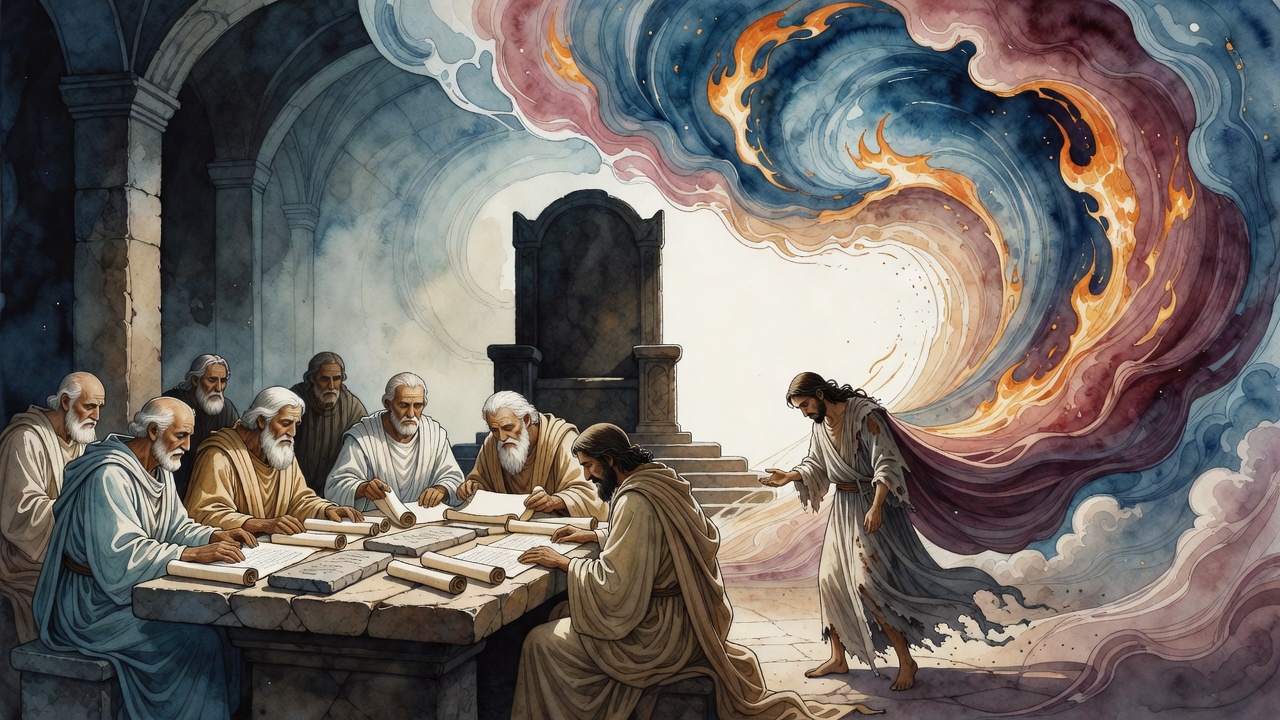
The Great Sanhedrin had gone into exile with him, and they went to work.
They could not reach the king. They could not reach the queen. They could reach a woman named Gadelet, who was the nursemaid of the nursemaid of Nebuchadnezzar's queen, and they made her their friend, and she talked to the woman above her, and that woman talked to the queen.
The queen was called Shemiram, or Shemiramot. She went to her husband with an argument he could not get around without admitting what he was.
You are a king, she said. Is Yekhonyahu not a king? You want what a man in your position wants. Does Yekhonyahu not want it? Let his wife go in to him.
Nebuchadnezzar gave the order.
What He Did When His Wife Came to the Cell
She came down into the prison and she was bleeding. I saw it, she told him, like a red rose.
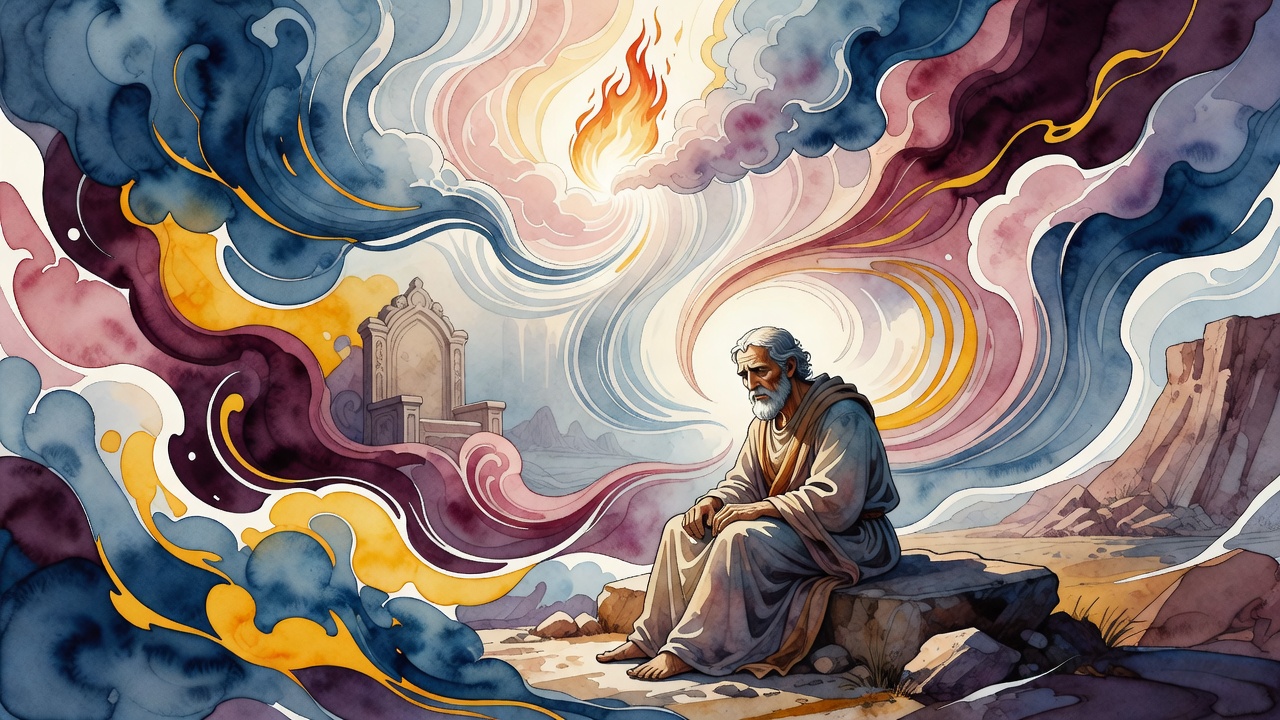
Here is the arithmetic he could have done. He was in a cell in Babylon. The Temple was rubble or close to it. His father had been buried inside a donkey. The keys were gone out of the sky. There was no court to rule on him, no priest to check him, no witness of any kind, and this was very possibly the last time in his life a door would be opened for his wife, and every legal mind he had ever met would have found him grounds.
He stood back from her.
She waited out the days and went down into the water and came up clean, and only then did he touch her.
The Holy One looked at that and said what had not been kept in Jerusalem had been kept in a Babylonian prison. Because of the blood of your covenant, I have set your prisoners free out of the pit. The door came open. Rabbi Shabetai went further and said that every sin the man had ever committed was cleared off him in that one moment: all of you is fair, my love, and there is no blemish in you. A voice went out over the exile. Come back, wayward children, and I will heal you of your wandering.
They brought him up out of the prison, changed his clothes, and gave him a seat above the other kings who were being kept in Babylon, and he ate at the king's own table every day for the rest of his life. The line of David ran on through him.
← All myths