Parshat Bereshit5 min read

God Drew an Invisible City Before a Single Stone Was Cut

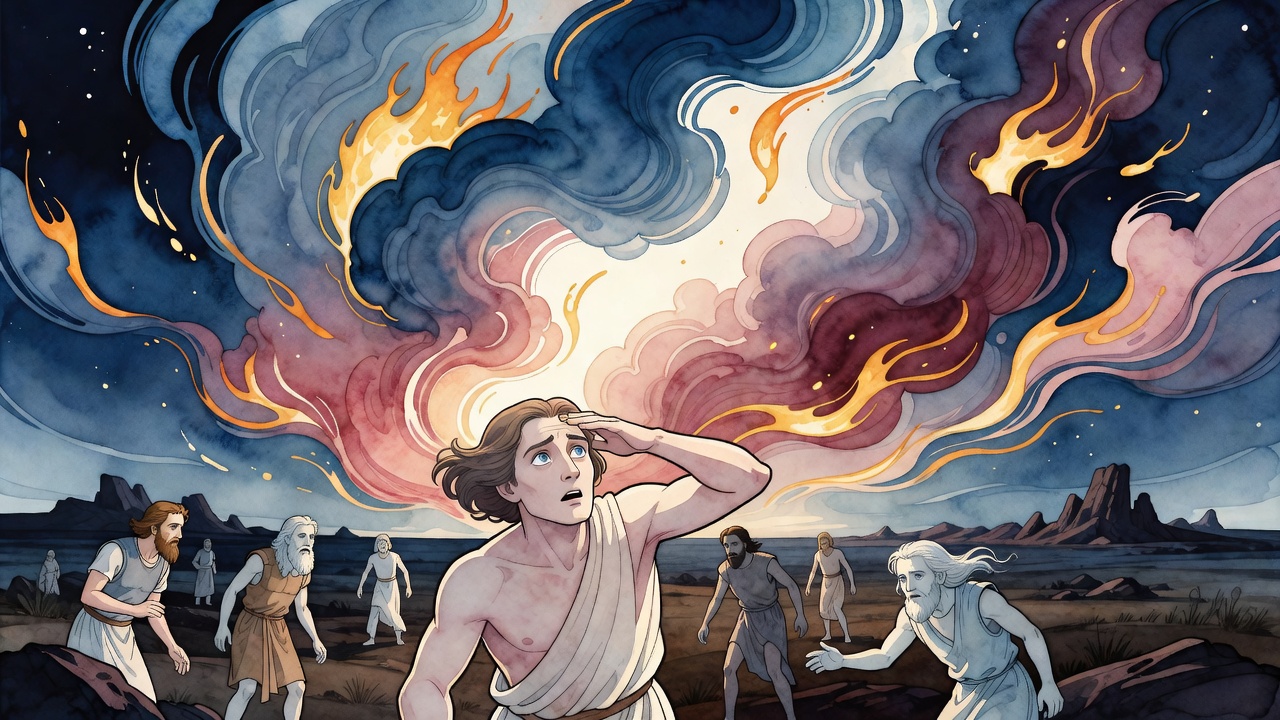
Before the first day, God held a whole world of pure patterns. Then the visible universe was pressed out of that invisible plan.

Curated by Arthur · Told by Maggid ·
Table of Contents
  1. The Verse That Would Not Let Him Pass
  2. The Founder Who Built the City Twice
  3. Six Days of Patterns, Not Things
  4. The Plural That Was Not a Council
  5. One Seal, One Hand

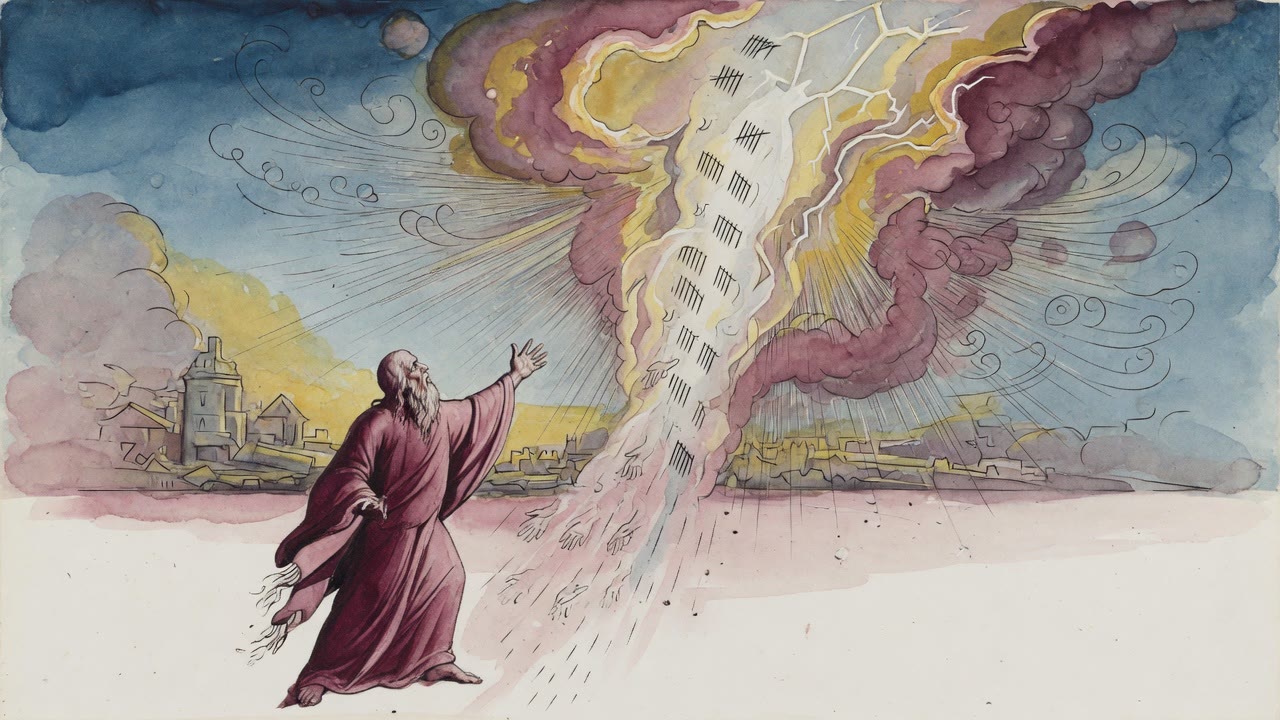
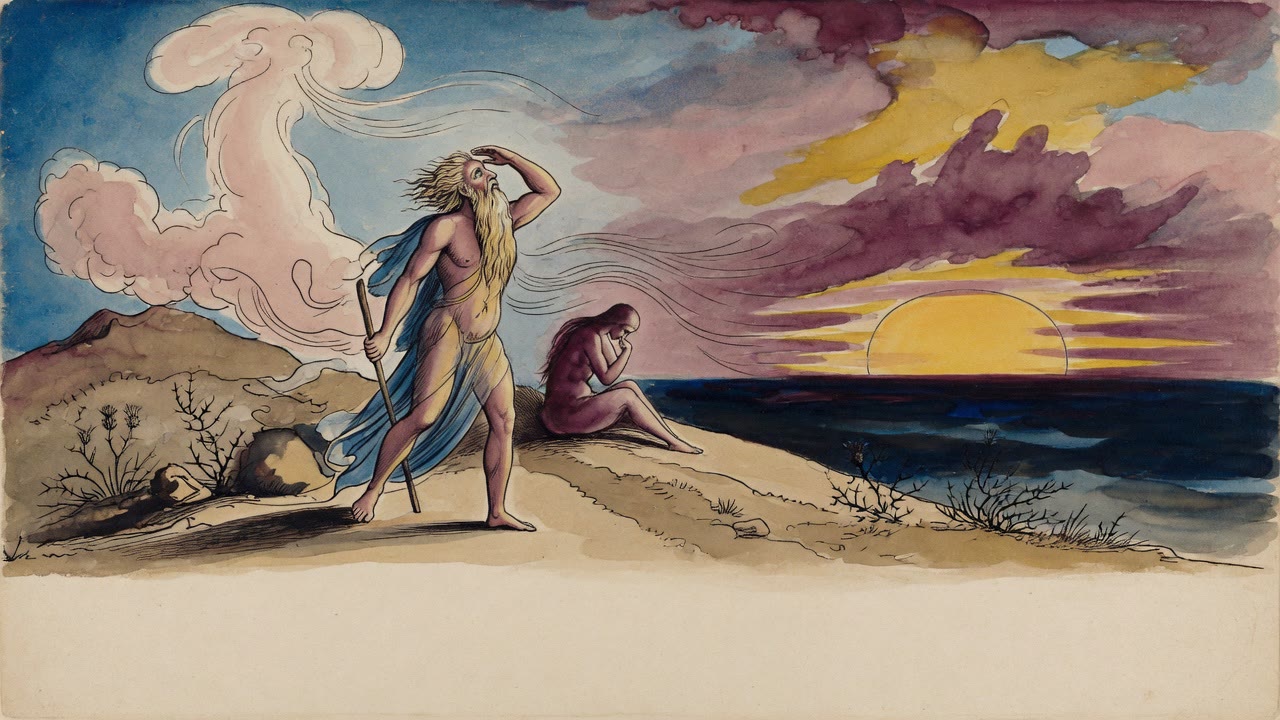
Philo sat over a Greek scroll of Genesis in Alexandria, and one line stopped him cold. "Every plant of the field before it was in the earth, and every herb of the field before it grew." He read it twice. The plants stood ready before the ground held them. The grasses were finished before a single blade broke the soil. A tired scribe, some would say. A phrase copied twice by mistake. Philo did not believe the Torah spent a word by accident.

God Drew an Invisible City Before a Single Stone Was Cut Click for full size

The Verse That Would Not Let Him Pass

If a thing could exist before it grew, then something of it was already complete while the field was still bare. Not the plant. The pattern of the plant. Its form, whole and exact, waiting in a place no rain reached and no season touched. He rolled the scroll shut and let his mind drift to the harbor, to the noise of builders, to the one craft in his city that could carry the weight of the verse.

The Founder Who Built the City Twice

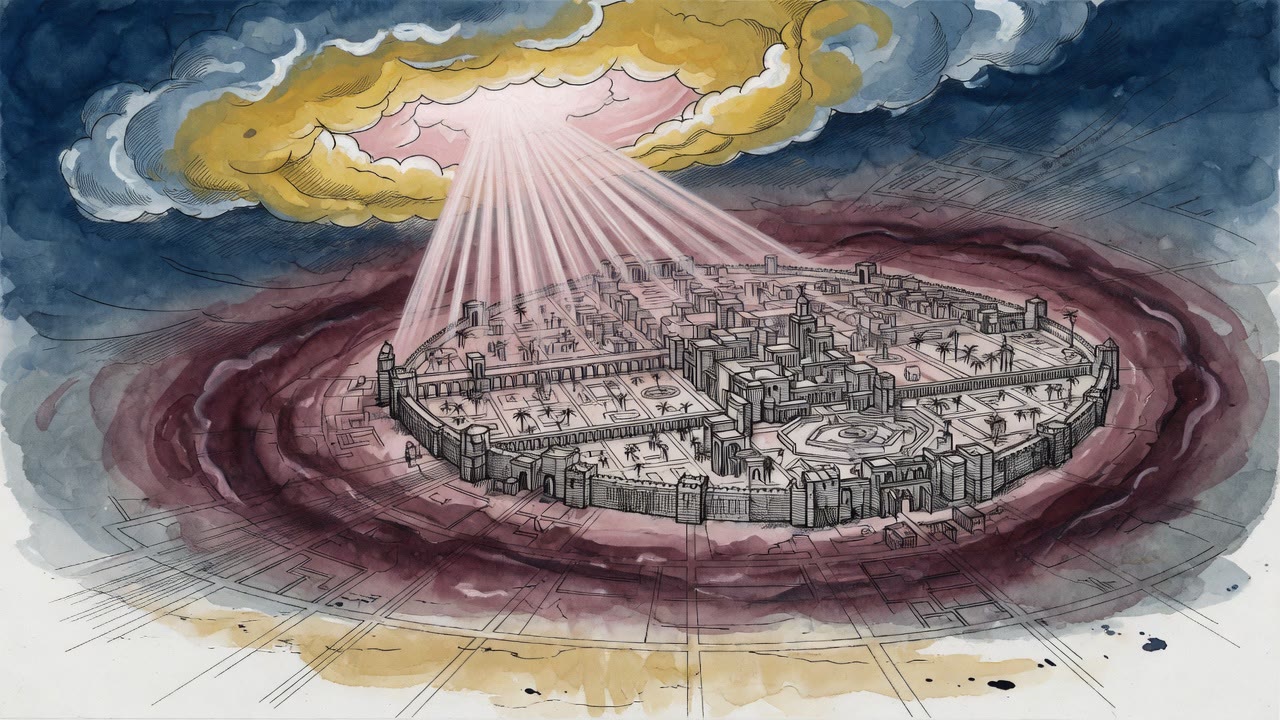
A king decides to found a new city. He does not hand bricks to laborers and hope for the best. He summons a trained architect, a man who has studied climate and stone and the tempers of men. The architect walks the empty ground once. Then he closes his eyes. Inside him the city rises: the line of the walls, the curve of the harbor, the gates, the wide streets, the temples set where the dawn light will find them, the houses ranked block by block. He builds the whole city in his soul before a single stone is cut. He carries that plan inside him like a seal pressed into wax, and only then does he call the masons and reproduce in wood and rock the city he has already made in thought.

Philo opened his eyes. That was it. That was the first day of Genesis, and the days after it.

Six Days of Patterns, Not Things

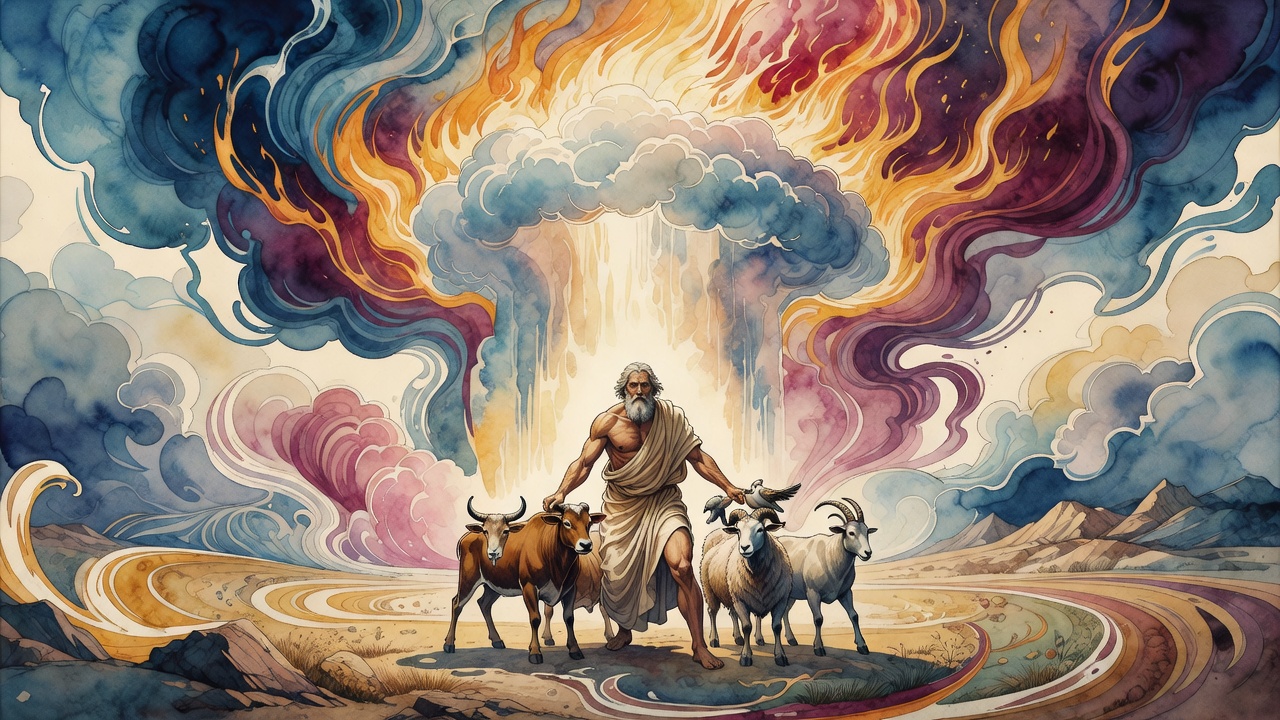
Before God laid the world, he was the founder and the architect both. The world he meant to make was vast, so he conceived first a world with no body at all, a city of pure forms, every species of every created thing standing finished in the divine Reason. The light of the first day was, to Philo, the pattern of light, the invisible model, before any brightness fell across water. The winged things and the beasts of the field were shaped first as figures without weight, appearances only, the earliest messengers made as shapes with no bodies. Only afterward were they stamped into flesh and feather as copies of those unseen originals. Six days did not fill a warehouse with objects. Six days drew the master plan. Then the visible universe was pressed out of the invisible, wax under the seal, and the herb stood ready in its pattern before the earth ever held a root.

The Plural That Was Not a Council

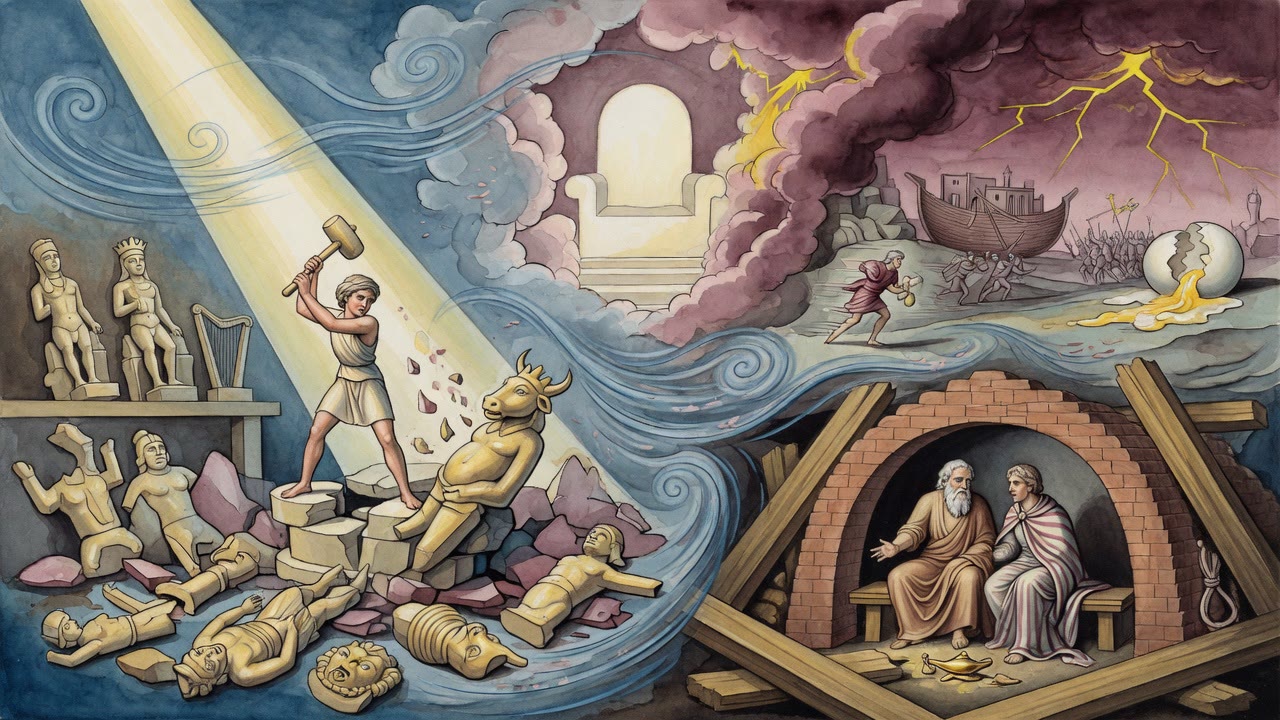
Then he reached the harder line. "Let us make man." The plural caught in the throat. Na'aseh adam, as if more than one worker leaned over the clay. It would be easy to hear a room of makers there, a council of gods around a workbench. Philo would not have it. The Father who was never born and never made joins himself to no partner, borrows no hand, shares the labor with no rival will. The "us" was not a circle of colleagues. It was the one uncaused Cause speaking with his own powers, the virtues by which he shapes and orders, the instruments through which the invisible presses itself into the visible. A workman speaks to his tools. He does not thereby crown them. God reasoned with the powers that stamp the world, and the powers were his, wholly, the way a hand belongs to the body and is not a guest at its table.

One Seal, One Hand

Honor the powers too much and they begin to look like partners. Call them by grand names and forget whose will they serve, and soon the throne looks shared. An earthly king raises up his nobles, and they carry his burden, and still not one of them owns his crown. The powers of God are like that and less. They do not share the burden. They are the burden's own shape. One will conceived the invisible city. One will pressed it into stone. The many streets, the many creatures, the many patterns, all of it came from a single hand that leaned on no one.

Philo set his reed down. Outside, the masons were still working the harbor, cutting the visible out of a plan they carried and could not see. He looked at the bare margin of the scroll where the herb waited before it grew, and he did not write that the world was merely a copy. He wrote that it was a copy of something better, and that the something better had one maker, alone.


← All myths
From the tradition

Sources

3 sources

The texts behind this telling. Some cards carry a translation of the source; others are our own retelling of it, and each card says which. Every card links out to the original.

The Midrash of Philo 5:2The Midrash of Philo

Retold in our words. Read the original at the link below.The Works of Philo Judaeus, trans. C. D. Yonge, London, H. G. Bohn, 1854-1890 · Public Domain

Philo, a Jewish philosopher living in Alexandria in the first century CE, certainly did. And in his writings, particularly in what we now call The Midrash of Philo, he offers a fascinating glimpse into a very specific idea: that everything we see around us, everything physical, was first conceived in an incorporeal, intellectual realm.

Think of it like this: the Torah tells us, in (Genesis 2:5), that God created "every plant of the field before it was in the earth, and every herb of the field before it grew. Why mention things existing before they actually existed?

Philo sees in these words a profound truth. The phrase "before it was upon the earth" hints at the perfection, the ideal form, of every plant, every seed, every tree. It suggests that before the physical manifestation, there was a prior, incorporeal existence.

He argues that God first created the "incorporeal species." These are the intellectual archetypes, the blueprints, the perfect forms of everything in creation. These incorporeal species, being "indicative of the others," were created first, in accordance with intellectual nature. Only then did their physical counterparts spring forth, imitating these original, perfect forms.

The idea that there's a sort of divine template for everything. God, in his infinite wisdom, didn't just haphazardly throw things together. He had a plan, a vision, a perfect ideal for every single element of creation.

So, the next time you see a flower blooming or a tree reaching for the sky, remember Philo's words. Remember that behind the physical reality, there's a deeper, more profound truth: a perfect, incorporeal form that existed even before the earth itself. A reminder that everything around us is a reflection of a divine idea, evidence of the incredible creative power of God.

Full source
The Midrash of Philo 19:5The Midrash of Philo

Retold in our words. Read the original at the link below.The Works of Philo Judaeus, trans. C. D. Yonge, London, H. G. Bohn, 1854-1890 · Public Domain

Philo, the great Jewish philosopher of Alexandria, who lived in the first century CE, offers some mind-bending insights. In his Midrash of Philo, he suggests that those things created in the six days – were they perhaps not quite as we imagine them?

He proposes something truly extraordinary: could the initial creations have been incorporeal angels? Were the "terrestrial and flying animals" initially symbolic expressions, appearances only? And then, they were brought into true, tangible reality, as copies of those ethereal, invisible models. Images perceptible to our senses based on something far grander. A blueprint of the divine made manifest.

(Genesis 2:19). It seems like a simple question, but it opens up a "great source of perplexity" for students of philosophy, as Philo puts it.

Philo argues that this act holds a profound lesson. He suggests that names aren't inherent to the thing itself; they are given. He writes that "a natural nomenclature is with peculiar fitness assigned to each creature when a man of wisdom and pre-eminent knowledge appears." The power to name reflects dominion, understanding, and a deep connection to the essence of the thing being named. It's a concept that echoes through Kabbalistic thought, where names hold immense power and contain the very essence of what they represent.

The role of assigning names, according to Philo, belongs specifically to the mind of the wise – even more specifically, to the first human, born directly from the earth. It was fitting, he says, that the first of our race, the sovereign of all animals, should have this dignity assigned to him. Adam was the first to see these creatures, the first to deserve to govern them. It would have been "inconsistent and mad" to leave them nameless or to allow someone born later to name them.

But there's another layer to this, a truly wondrous idea. Philo suggests that the act of naming was so profound, so seamlessly connected to creation, that the moment Adam gave the name, the animal itself "heard it," being influenced by that name as if it were a familiar, intrinsic part of its being. It’s like the name became woven into the very fabric of the animal's existence.

What does this tell us? Perhaps it speaks to the power of language, the power of human perception, and the profound connection between humanity and the natural world. When we name something, do we simply label it, or do we, in a way, co-create it? Do we shape its very essence? It's a question that continues to resonate, inviting us to consider our role in the ongoing story of creation.

Full source
The Midrash of Philo 22:2The Midrash of Philo

Retold in our words. Read the original at the link below.The Works of Philo Judaeus, trans. C. D. Yonge, London, H. G. Bohn, 1854-1890 · Public Domain

It's one of those verses that’s sparked endless debate and contemplation throughout Jewish history.

The Hebrew there is, of course, "Na'aseh adam b'tzalmeinu kidmuteinu". And that plural "us" has always been a head-scratcher.

Philo of Alexandria, the 1st-century Jewish philosopher who beautifully blended Greek philosophy with Jewish thought, grapples with this very question in his writings. In what’s known as The Midrash of Philo, he offers a fascinating interpretation. Was God, perhaps, conversing with a plurality of beings?

Or, Philo ponders, is God speaking to His own virtues? He imagines these virtues as instruments, tools almost, that God employed to create the universe and everything within it. God using His own inherent goodness as the building blocks of creation.

But then Philo throws us another curveball. He says that the word "as" in the verse is like an enigma, a similitude, a comparison. It hints at something, but doesn't necessarily declare dissimilarity. What is intelligible and good. And even what is its opposite, is known to God in a way that is fundamentally different from how humans understand it. The way we inquire, the way we comprehend, the very things we investigate and perceive, all are different for us than they are for God. Virtue itself, Philo suggests, has a capacity to comprehend these things that surpasses our own.

He goes on to say that among humans, these things are merely similitudes, forms, and images. But among the gods. And here he's using the language of his time, steeped in Hellenistic thought, they are prototypes, models, indications, and far more manifest examples of things that are, to us, somewhat obscure.

It’s a beautiful way of saying that the divine realm holds the true, unadulterated essence of everything we perceive as shadows here on Earth.

Philo concludes that the "unborn and uncreated Father" – referring to God – joins Himself to no one except with the intention of extending the honor of His virtues.

So, what does it all mean? Maybe it means that the "us" isn't about a literal council of divine beings, but about God's own many-sided nature. It's about the infinite potential within the Divine, the boundless capacity for goodness and creation. It's a reminder that even the most fundamental questions of our faith can lead us down paths of profound philosophical and spiritual exploration. And maybe, just maybe, that’s exactly the kind of conversation God wants us to have.

Full source