What God Has Been Doing Since the Sixth Day
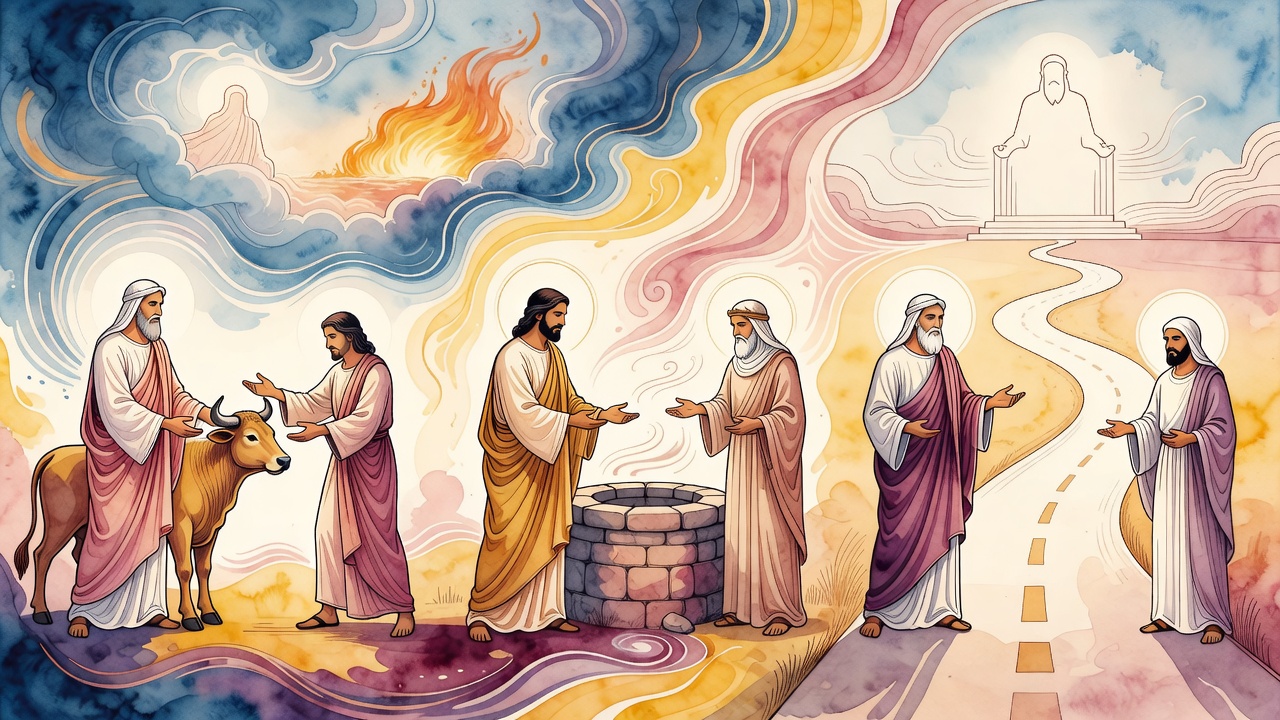
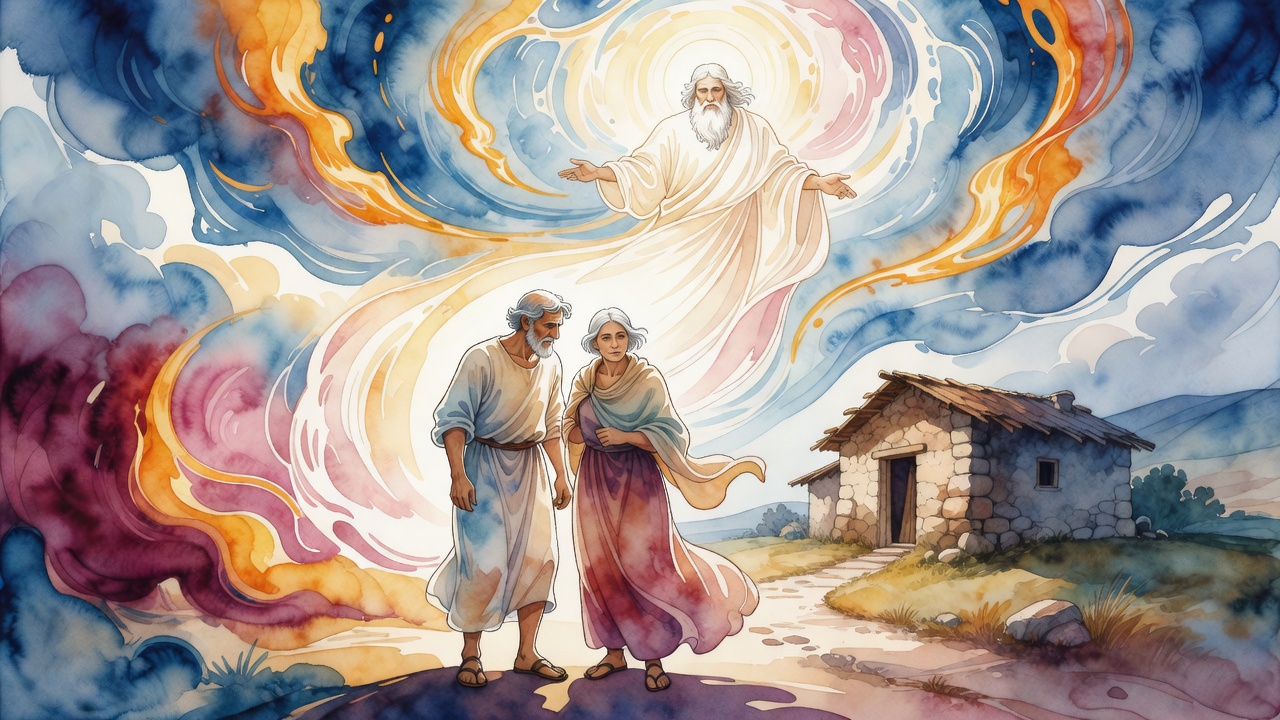
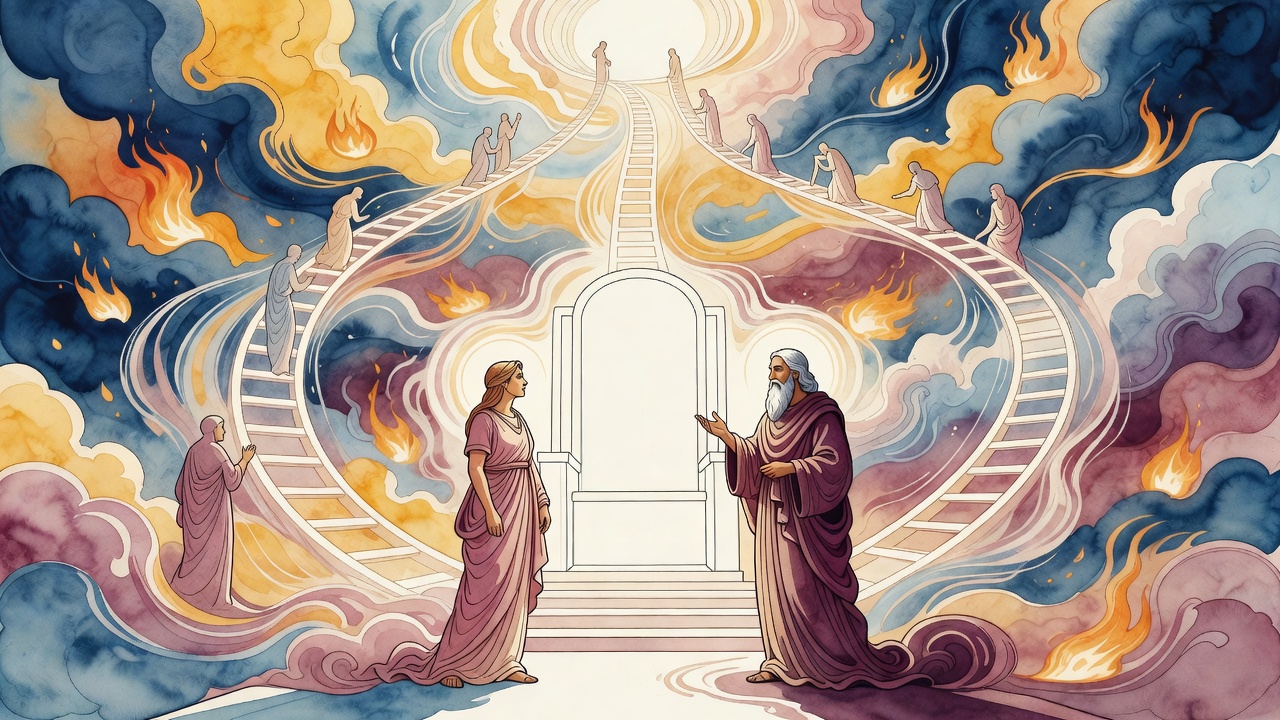
A Roman noblewoman asks Rabbi Shimon what God does all day. He answers without hesitation: God builds ladders and moves people up and down them.
Table of Contents
 Click for full size
The question no one else dared to ask
The noblewoman came at Rabbi Shimon ben Halafta the way philosophers come at rabbis, with a question designed to expose a gap. "Your God finished everything in six days," she said. "What has He been doing since?"
The rabbi could have deflected. He could have answered with something about Providence being beyond human comprehension, or turned the question back on her with a question of his own. Instead he answered the way a man answers when he has been sitting with a thing for years and is glad someone finally asked.
"He sits and builds ladders," Rabbi Shimon said. "He raises one person up. He lowers another. That is what He has been doing."
The psalm behind the image
The rabbi was reading Psalm 75. The verse is stark: wealth comes not from east or west, not from the wilderness or the mountains, but from God the judge, who humbles this one and exalts that one. The psalm does not hedge. It does not say God oversees a process that produces wealth, or that God blesses the industrious. It says God is the one doing the raising and the lowering, personally, continuously, coin by coin.
Rabbi Abba of Rumanya read the Hebrew even more closely. The word translated as mountains, harim, could also be read as exaltedness, romemut. The image is not a geographical one. Wealth cannot be sailed to or climbed to. The source of elevation is elsewhere, and it is not impressed by the direction you face.
The ladder in motion
The image Rabbi Shimon gave the noblewoman is not a ladder standing still with rungs to climb. It is a ladder God is actively building, rung by rung, with a purpose that is not always visible to the people being moved on it. Someone wakes up wealthy and goes to bed ruined. Someone wakes up ruined and receives what they could not have predicted. The mechanism is not random and is not automatic. Someone is carrying the lumber and deciding where the next rung goes.
This was meant to unsettle anyone who thought the universe had shifted to autopilot after the sixth day. The work of creation ended. The work of distribution did not.
The priesthood Aaron almost did not see
The same collection that records the noblewoman's question also dwells on a genealogical puzzle from the Book of Numbers. When Moses counted the Levites, the Torah used a phrase that could mean either during Aaron's lifetime or after his death. Two rabbis disagreed about the grammar, and the disagreement was not trivial.
If the counting happened after Aaron's death, then the priestly duties fell to his grandsons, not just his sons. The structure of the entire priesthood hung on a preposition. Rabbi Yitzhak read the phrase in the present tense, anchored by Haran's death before Terah, and said Aaron was there. Rabbi Hiyya bar Abba read it as a moment after Aaron had gone, and said the grandsons held the line until a new arrangement was made.
The midrash sits with both possibilities, because the question was never which rabbi was right. The arrangement was never final. Not the priesthood, not the wealth, not the rank. God is still building ladders. The grandsons stand on a rung that could have been higher.
← All myths