The Light in Adam's Face Dimmed and Centaurs Were Born
Adam wore the divine image like a lamp in his face, and for three generations it held, until the light dimmed and monsters crawled into the gap.
Table of Contents
 Click for full size
The Light That Burned in the First Face
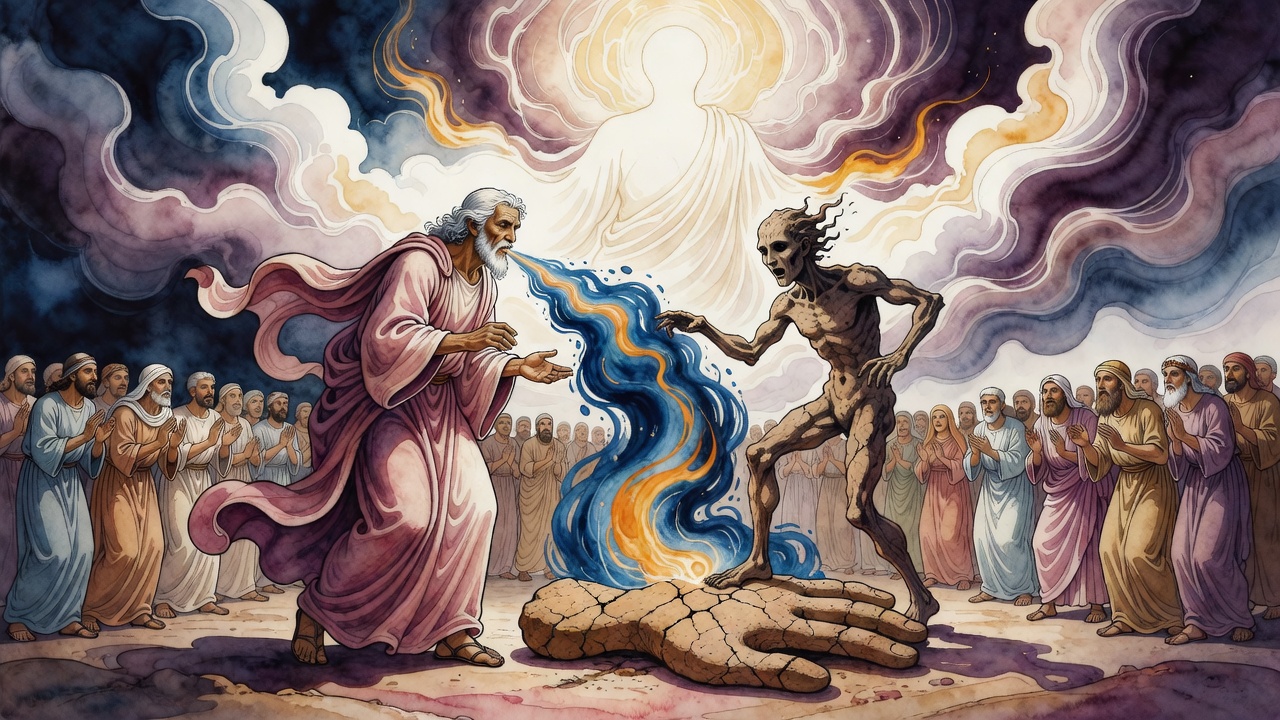
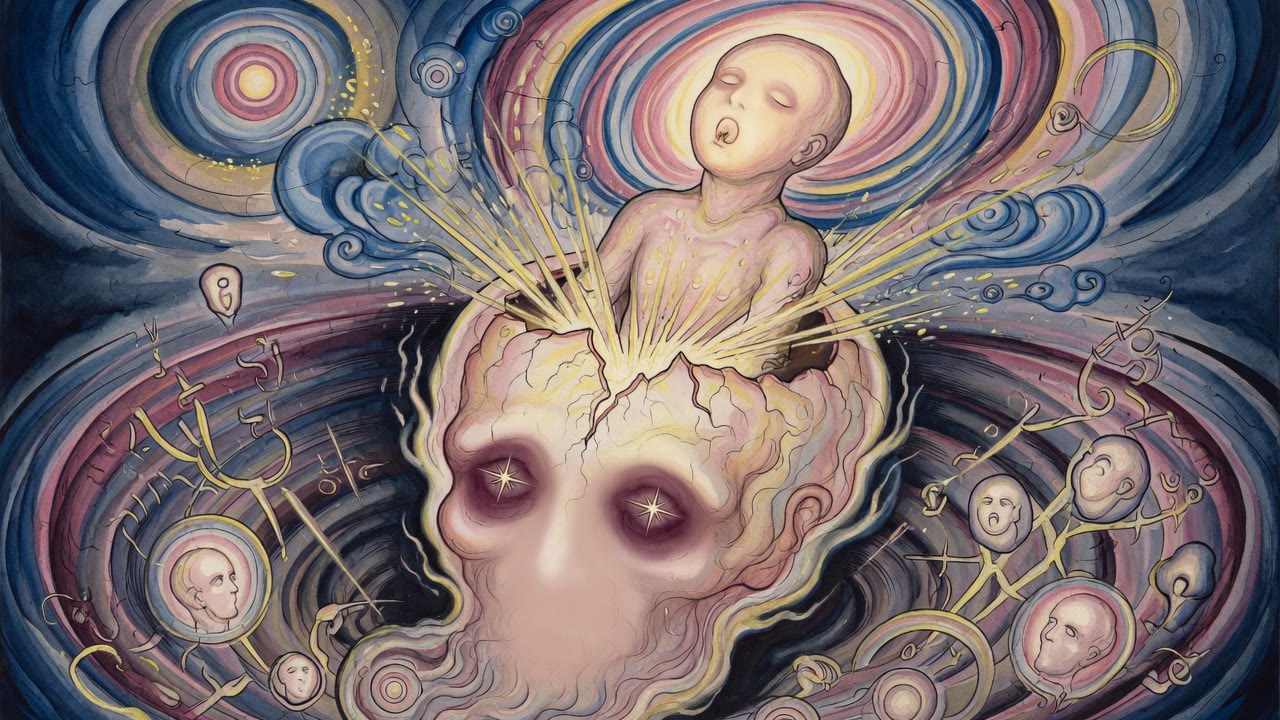
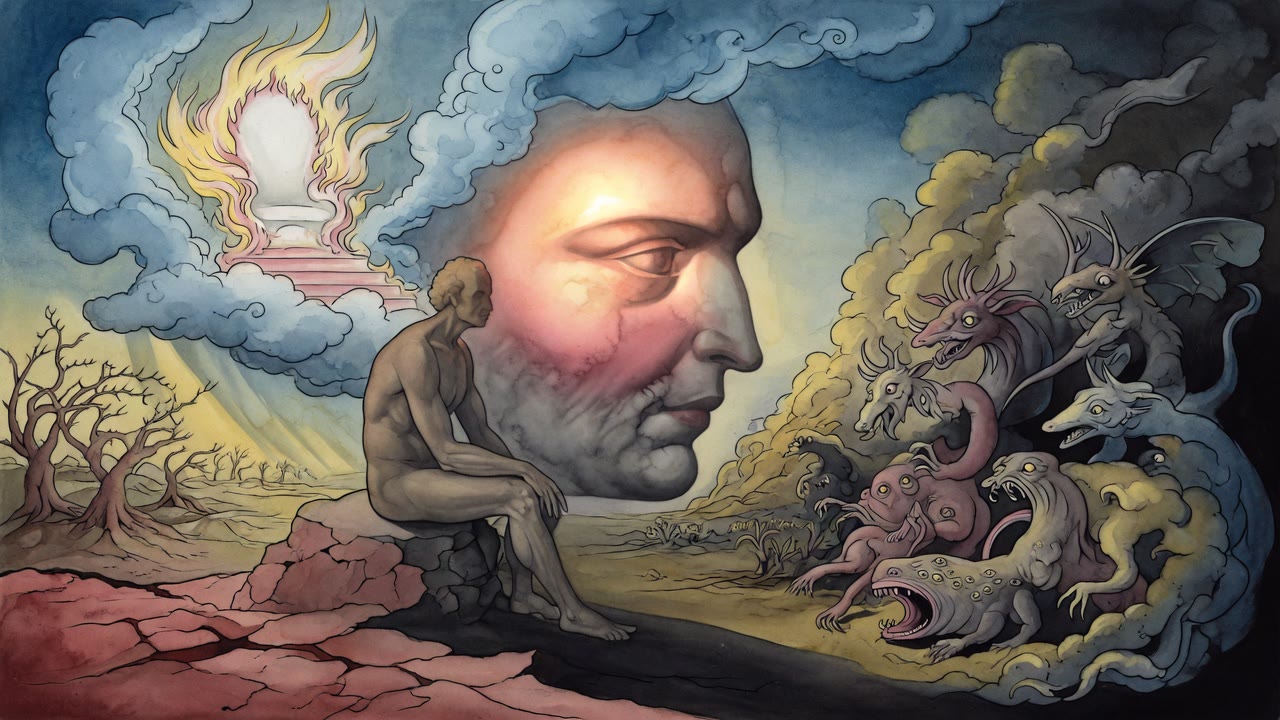
When God shaped Adam from the dust and breathed into him, the likeness settled on his face like a lamp lit behind thin skin. Anyone who looked at him looked, in some measure, at heaven. The image was not a figure of speech. It was a brightness, and it could be inherited, passed down a bloodline the way a father's jaw or a mother's eyes are passed, so that the resemblance to the One who made the first man might walk the earth in face after face.
For a while it did.
The Hundred and Thirty Years of Estrangement
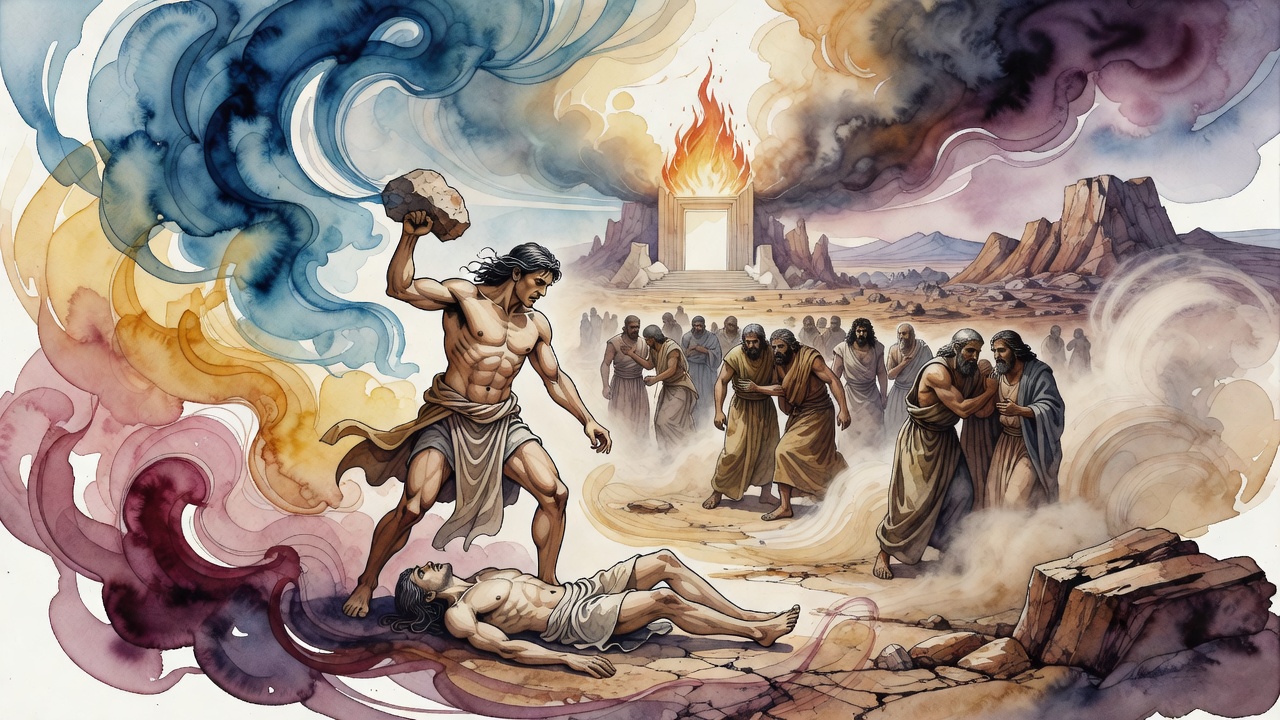
Then Cain killed Abel in the field, and the grief broke something between the first man and the first woman. Adam turned away from Eve. For a hundred and thirty years he would not come near her, and in that long cold gap the world did not stay empty.
Rabbi Simon tells what filled it. Through all those years that Eve slept apart from her husband, the male spirits burned for her and came to her in the dark and got children on her, and the female spirits burned for Adam and came to him and got children from him. The first man became father to a brood that was only half his own, things begotten in the crack between a husband and his wife, neither fully human nor anything with a proper name. These were the afflictions spoken over his house, "the rod of men and the plagues of the sons of men," a whole lineage of trouble bred in the years when the image had no clean channel to flow through.
The Name That Passed Through Seth to Enosh
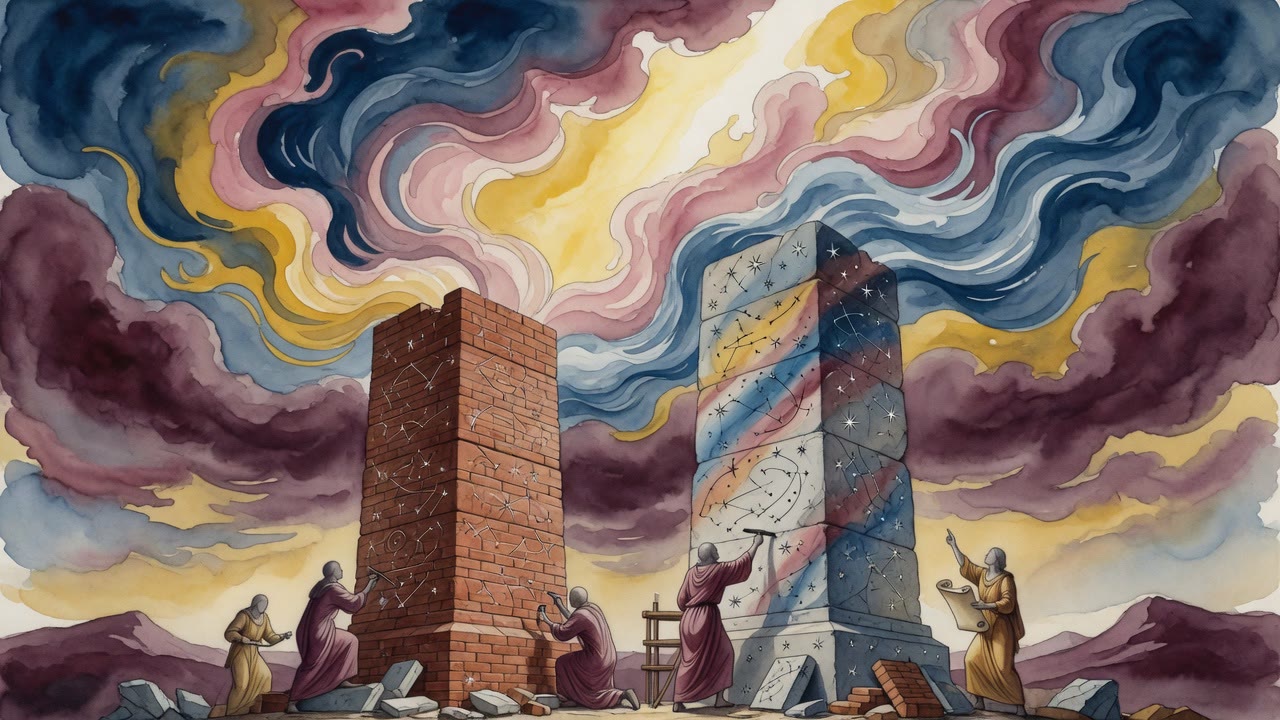
Adam came back to Eve at last, and she bore Seth, and Scripture says the son came in Adam's own likeness, after his image. The lamp had a clean channel again. The brightness went from Adam to Seth, and from Seth to his son Enosh, three faces in a row still carrying the light of the first face.
There was a sage, Abba Kohen Bardela, and his students asked him to trace the line down from the beginning. He began to chant the names like a man counting coins into a palm. "Adam," he said. "Seth. Enosh." Then he stopped. His mouth closed. He would not go on.
They waited. When he spoke again his voice had changed. "Up to here," he said, "it was in the image and in the likeness. From here on the generations went rotten, and the centaurs were made."
When the Resemblance Began to Gutter
Four things went wrong in the days of Enosh son of Seth, and each was a small extinguishing.
The mountains, which had been soft and living ground, hardened into flinty rock that gave nothing back to the hand. The dead, who had lain quiet in the earth, began to swarm with maggots the instant breath left them. And the faces. The faces of men, struck long ago from the pattern of the first face, slid toward the faces of apes, the brightness draining out of them feature by feature until a man looked less like his Maker and more like the beast that grinned back at him from the trees.
The fourth change was the worst. Men became easy prey for the mazzikin, the harmful spirits that had prowled the edges of the human world since the estrangement of Adam. Where the image had once stood like a wall, now there were gaps, and through the gaps the mazzikin came at will.
The Centaurs and the Bowed Neck
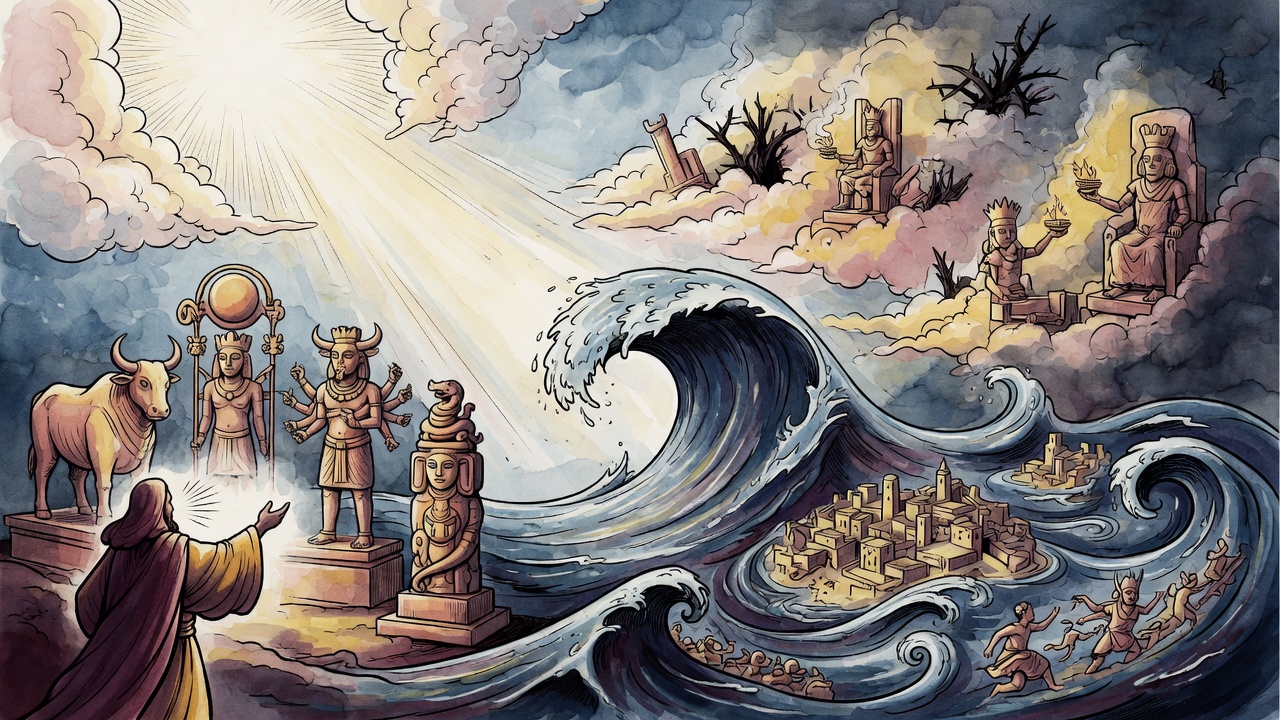
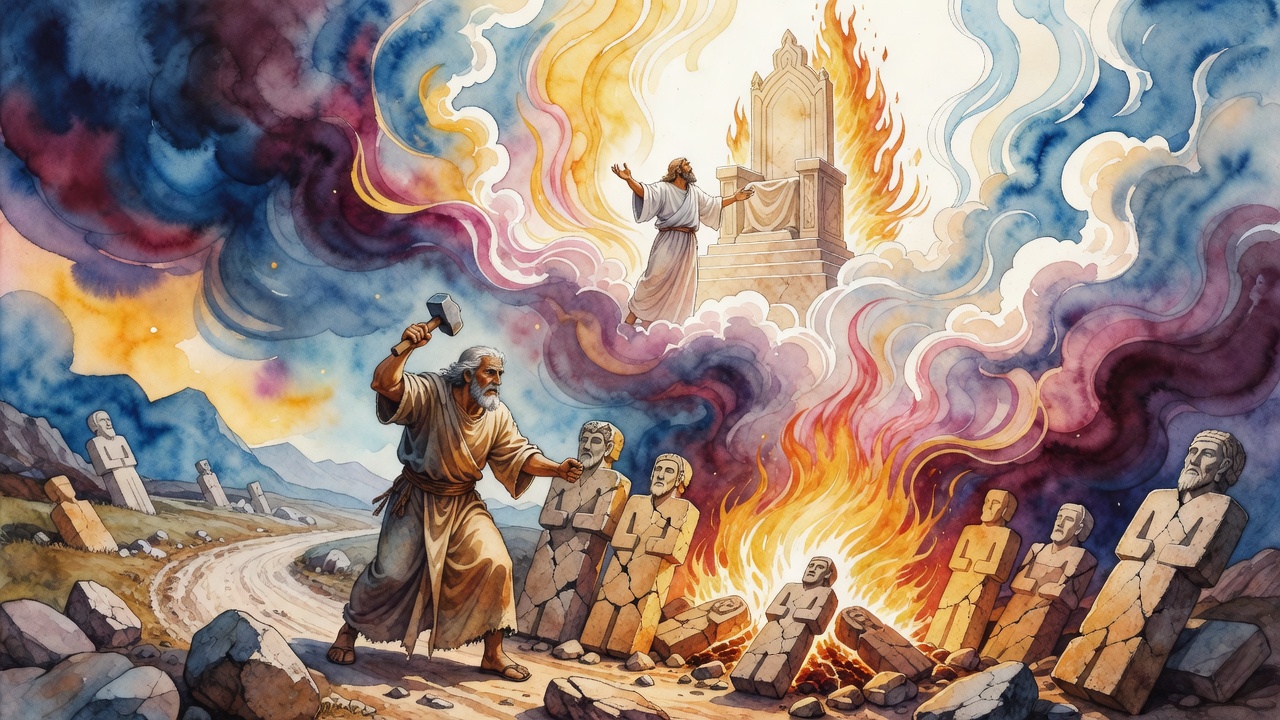
Rabbi Yitzhak refused to let the generation blame the spirits. The men of Enosh's day were not ambushed, he said. They laid themselves open. They walked out and made themselves prey. They began to bow. They bowed to rivers and to fire and to the sun, and worst of all they bowed to one another, one man kneeling before another man as though a face could be a god.
"What is the difference," Rabbi Yitzhak asked, "between one who bows down to an idol and one who bows down to a human being?" Both mistake the image for its source. Both snuff the very light they kneel before. Every knee that bent to a man instead of to the One whose likeness that man carried was a hand cupped over the lamp, and the lamp guttered, and in the dimming the wrong things were born.
The centaurs came out of that gap. Not the offspring heaven had intended, not sons in the image and after the likeness, but hybrid things, half one creature and half another, monsters standing where men should have stood. The corruption ran through the descendants of that generation like fire through dry brush, faster than any tongue could name it, and the farther it ran the fainter the first face grew in the faces of the living, until a person could stand before a whole crowd of Adam's children and strain to find, in any single one of them, the light that had once burned so plainly in the face of the first man.
← All myths