Enosh Breathed Into Clay and the First Idol Stood Up
When the crowd demands proof of how God made man, Enosh breathes into clay, Satan enters it, and the first idol rises to its feet.
Table of Contents
The questions always began the same way, gentle, almost admiring, and then they closed like a trap. Enosh had answered them a hundred times at the well and at the gate. "Who was your father?" "Seth." "And the father of Seth?" "Adam." Here the crowd leaned in, because everyone knew what came next, and Enosh knew it too, the way a man knows the last step of a staircase in the dark.
 Click for full size
"And who was the father of Adam?"
He told them the truth. "He had no father and no mother. God formed him from the dust of the earth." The faces in front of him did not soften. They sharpened. A potter near the back folded his arms. "Dust," he said. "A man does not look like dust." Enosh held his patience the way you hold a coal you cannot drop. "After death a man returns to dust. On the day of his making he was the image of God." That answer had sufficed for a generation. It did not suffice now.
The Crowd That Would Not Take a Word for It
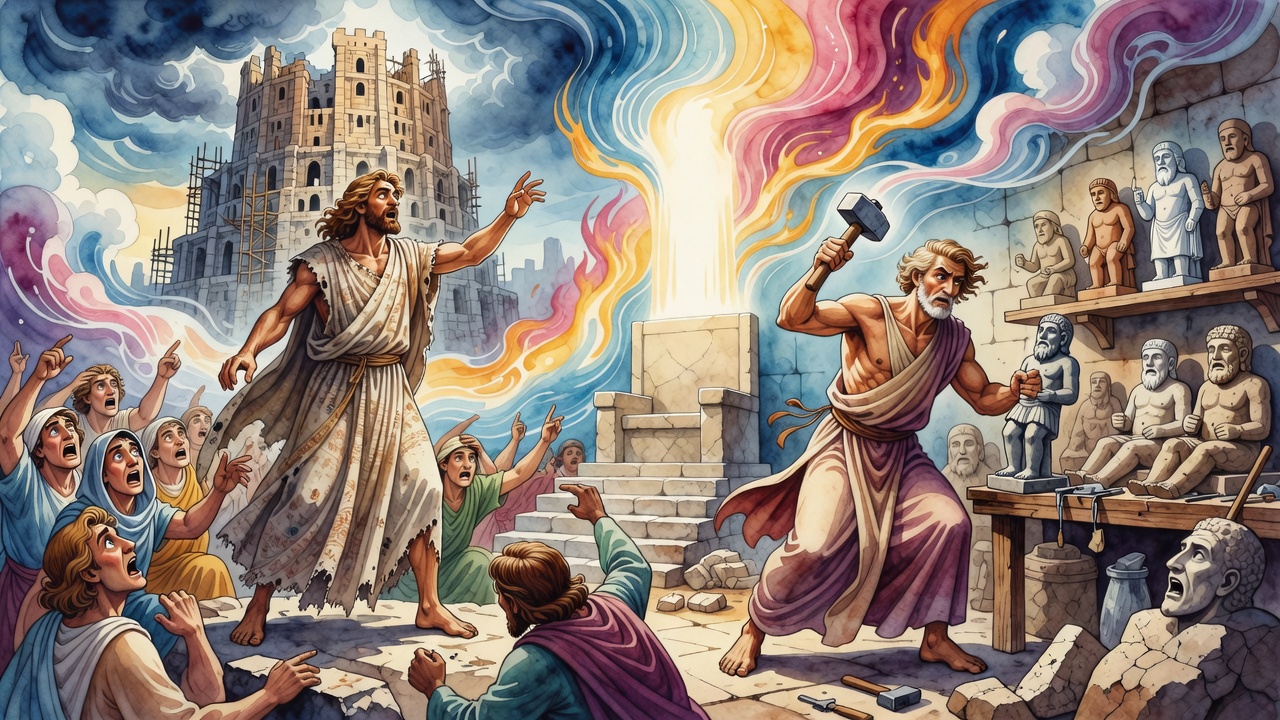
"And the woman," someone called. "How was she made?" Enosh gave them the verse he had carried since childhood. "Male and female He created them." They wanted more than the verse. "But how. Show us how." And this is the hinge on which the world turned, because Enosh, grandson of Adam, the last man whose face still shone with the likeness it was given, decided to demonstrate what should never have been demonstrated.
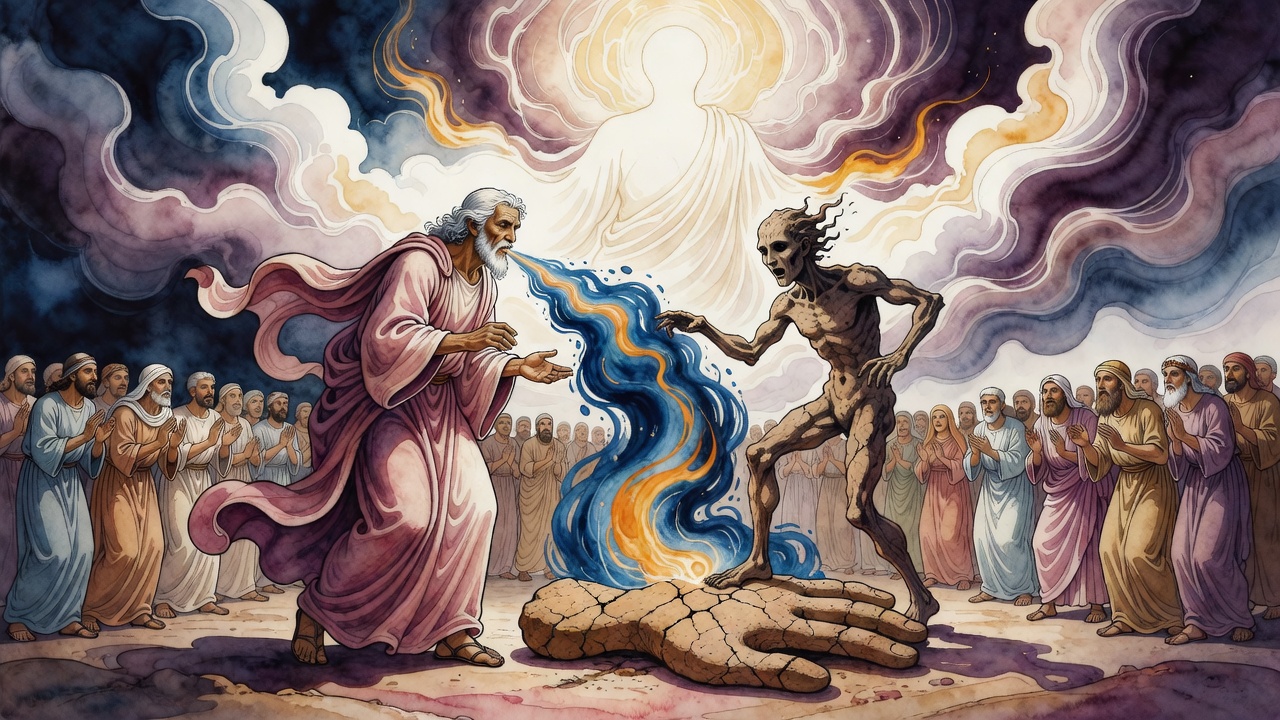
He knelt in front of them. He took six clods of earth, the way the tradition says the first man was gathered, and he worked them in his hands until the dust was a body, two arms folded against a chest, a face turned up toward him with closed eyes. He set the figure on the ground. The crowd looked at it the way crowds look at a trick that has not yet failed. "It does not walk," the potter said. "It does not breathe."
The Breath That Let Something Else In
So Enosh bent over the clay to show them the last thing, the breath, the way God had bent over Adam and put the breath of life into his nostrils. He filled his lungs. He breathed into the cold mouth of the figure he had made.
The clay moved.
It was not God who came into it. Satan slid into the open body and the figure shuddered and rose, and stood, and the crowd cried out, not in worship of the One who had filled a man with a soul once at the beginning, but in delight at the thing in front of them. A man had made a man stand up. That was the only fact they kept. One of them said the sentence that broke the age in two. "If a made image can rise and move, what is the difference between bowing to this and honoring a living man?" No one in that crowd could answer him, and Enosh, who had only meant to defend the dignity of his grandfather's God, watched the first idol take its first step.
From that day the generation of Enosh bowed to the work of its own hands. The change did not stay in their hearts. It crawled out onto their faces. The likeness that had shone on Adam, on Seth, on Enosh himself, drained away from those who came after, until men were born wearing the heads of apes and the bodies of beasts, and the very demons that had once cowered before the image of God lost their fear and came close.
The Light That Stood at the Gate of Eden
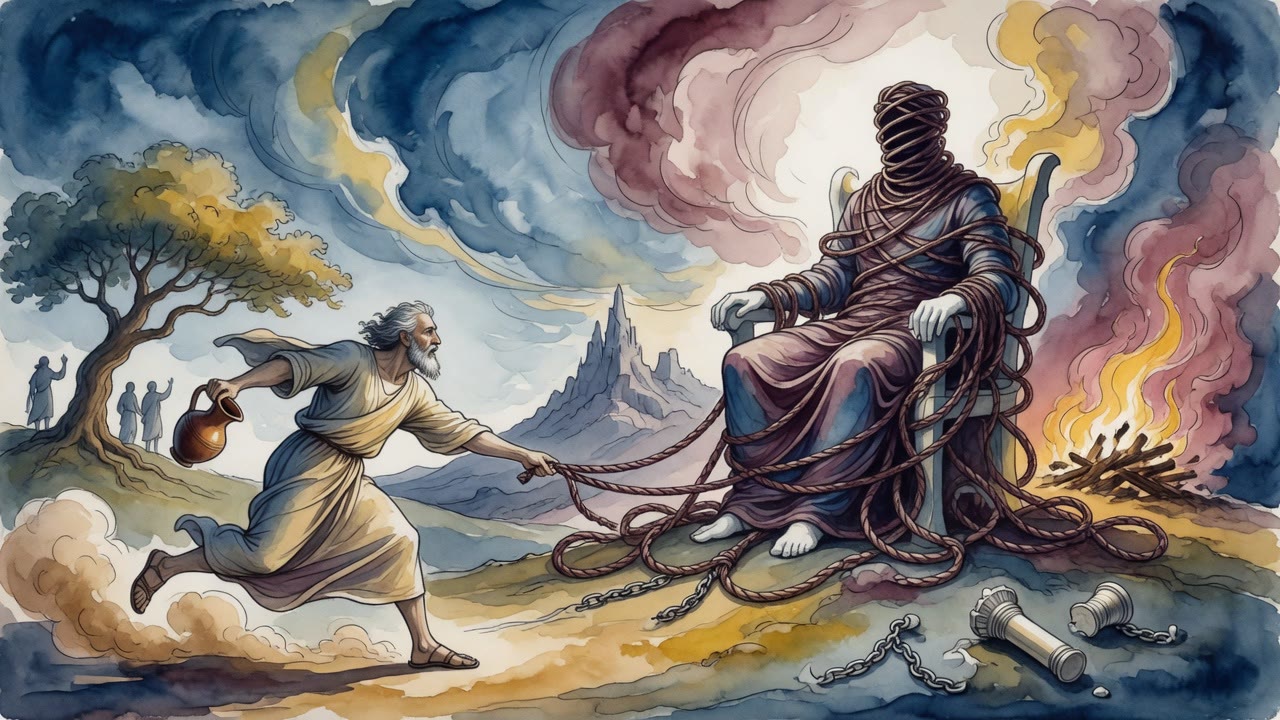
There had been a light at the edge of the world. When God drove Adam from the garden, the divine presence did not leave with him. The Shekhinah stayed, enthroned above a cherub beneath the Tree of Life, and the children of Adam came and sat at the gate and warmed themselves in a radiance sixty-five thousand times brighter than the sun. No sickness reached them in that light. No harm.
The men of Enosh's age turned their backs on it. They gathered gold and silver and pearls and raised idols thousands of parasangs into the sky, towers of worship aimed away from the gate. They learned the secret arts the Watchers Uzza and Azzael had taught, the spells that pull on the heavenly spheres, and they bent the sun and the moon and the stars to wheel at their command instead of God's.
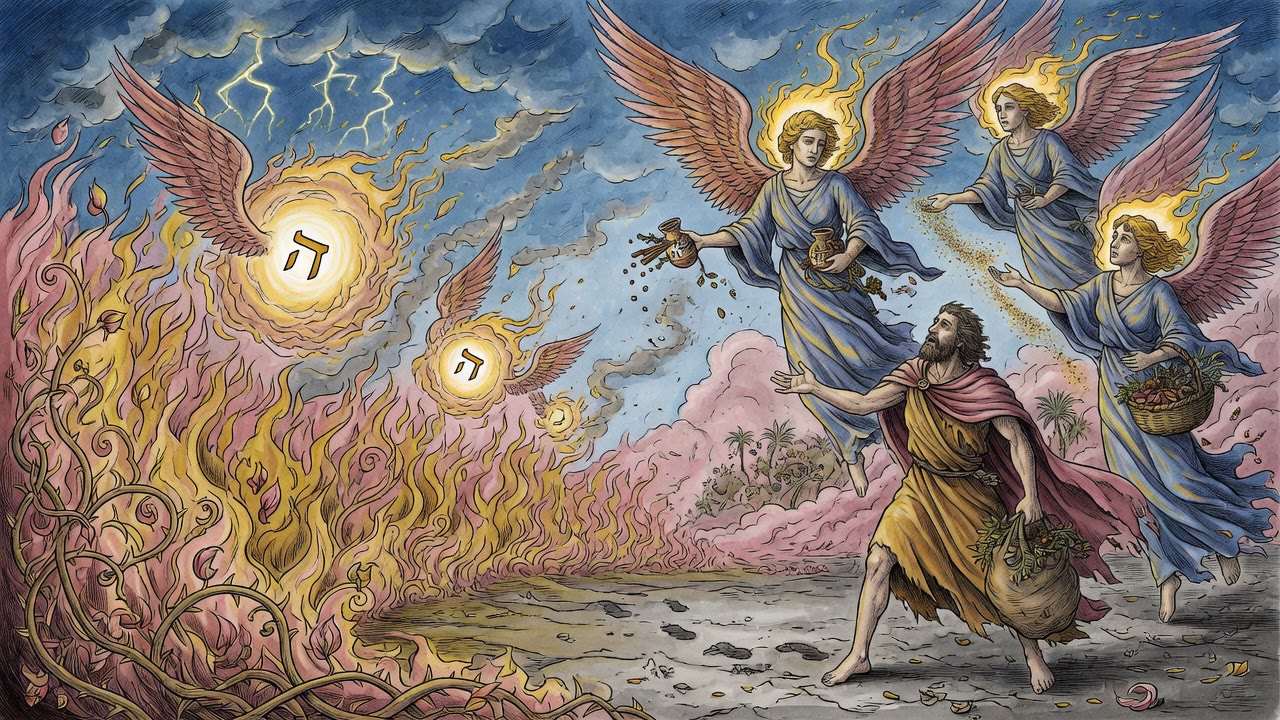
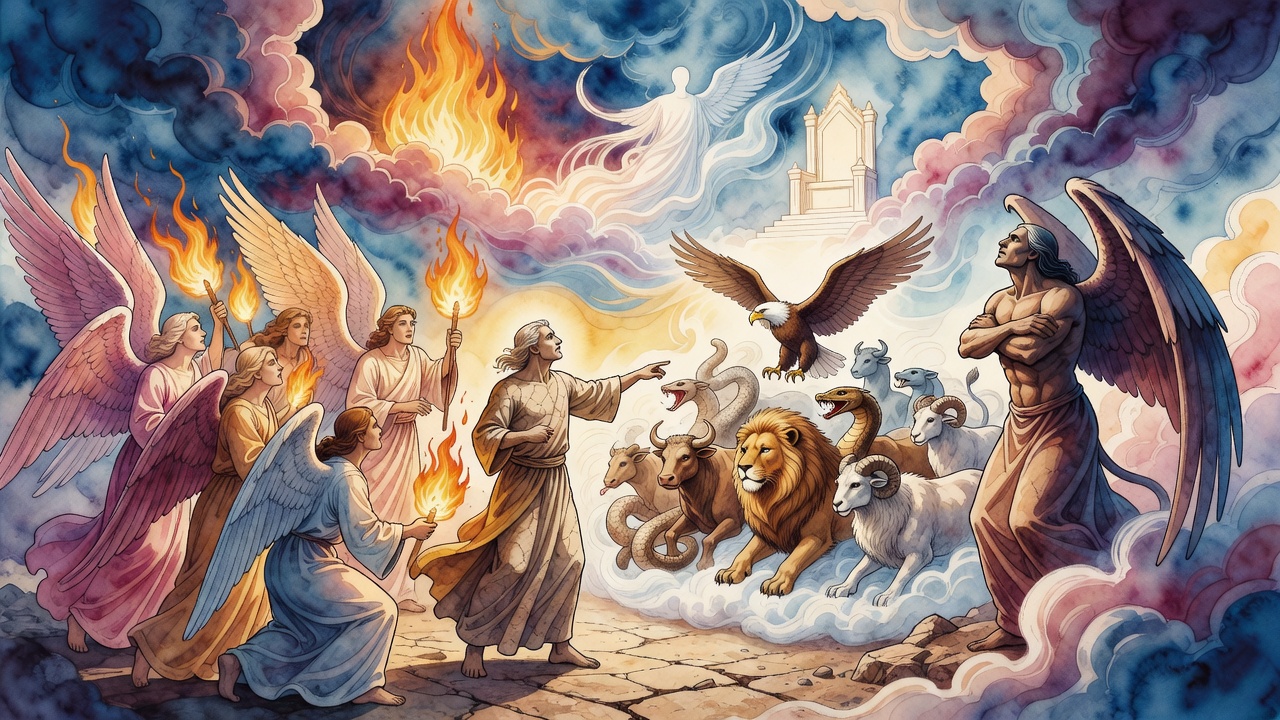
Above, the angels turned their faces toward the Throne and asked the oldest grievance in the heavens. "What is man, that You are mindful of him? Why did You leave the highest heaven and stoop to creatures who set their idols beside You and call them by Your name?" And the Shekhinah (the Divine Presence), the presence that had warmed the gate of Eden through all the years since the expulsion, rose from the cherub and climbed back into heaven, and ten thousand trumpets of countless angels sounded as the light left the earth.
The Form God Saw Before the Quarrel Ever Started
None of this caught God by surprise. Before the first day, before light was divided from dark, He had looked into the time that was not yet and seen this same generation raising this same idol, and the generation of the flood behind it, and He had nearly set the whole work down unmade. "How can I build a world," He said into the emptiness, "when the children of Enosh will rouse My anger, and the children of the flood after them?"
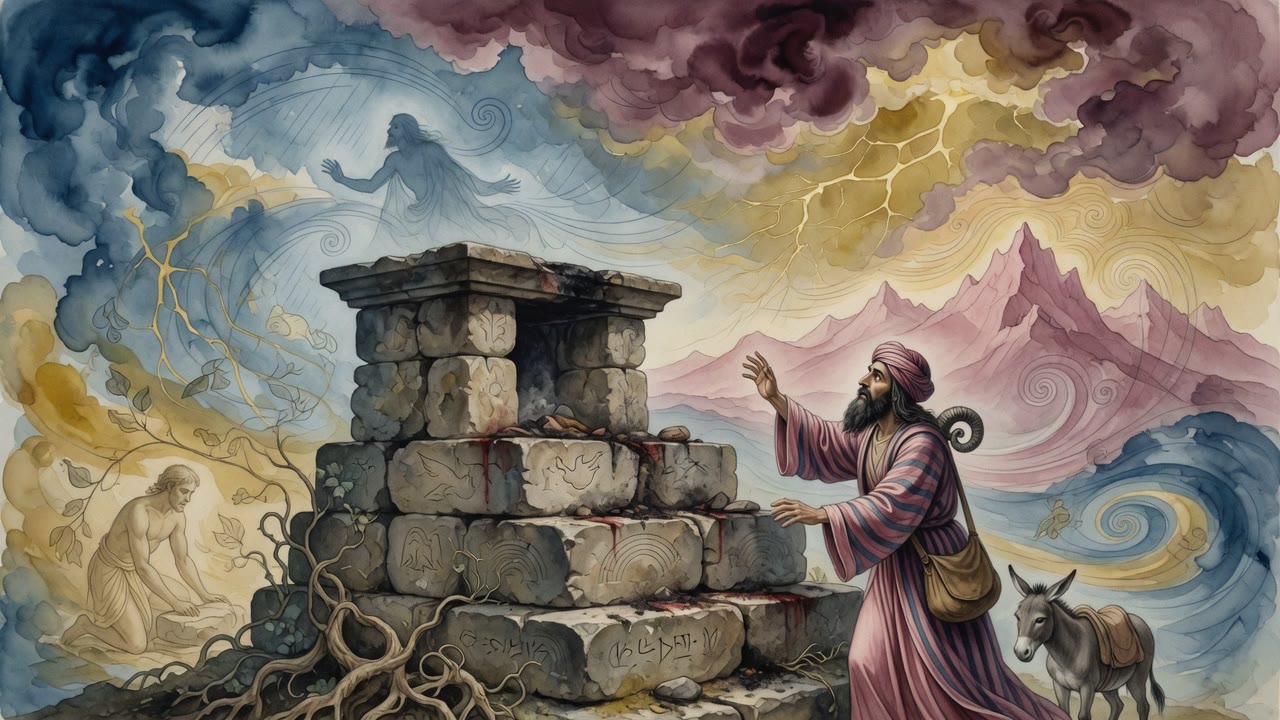
He almost stopped. He stood at the edge of creation with the void in front of Him and the future of idol-makers laid out plain, and the project of the world hung on nothing. Then He saw, far down the same corridor of time, the form of Abraham standing among the wreckage of his father's idols, refusing every one of them. "Now I have a rock to build on," God said. "Now I have a foundation that will hold." And on that one form, against the weight of the generation Enosh had loosed upon the earth, He laid the first stone of the world.
← All myths