Moses Bent His Ear in the Mishkan to Hear If God Was Still Angry
The tablets were already in pieces and God had said the reckoning was not closed. Moses went into the finished tent alone and listened.
Table of Contents
 Click for full size
He Went In Alone to Listen
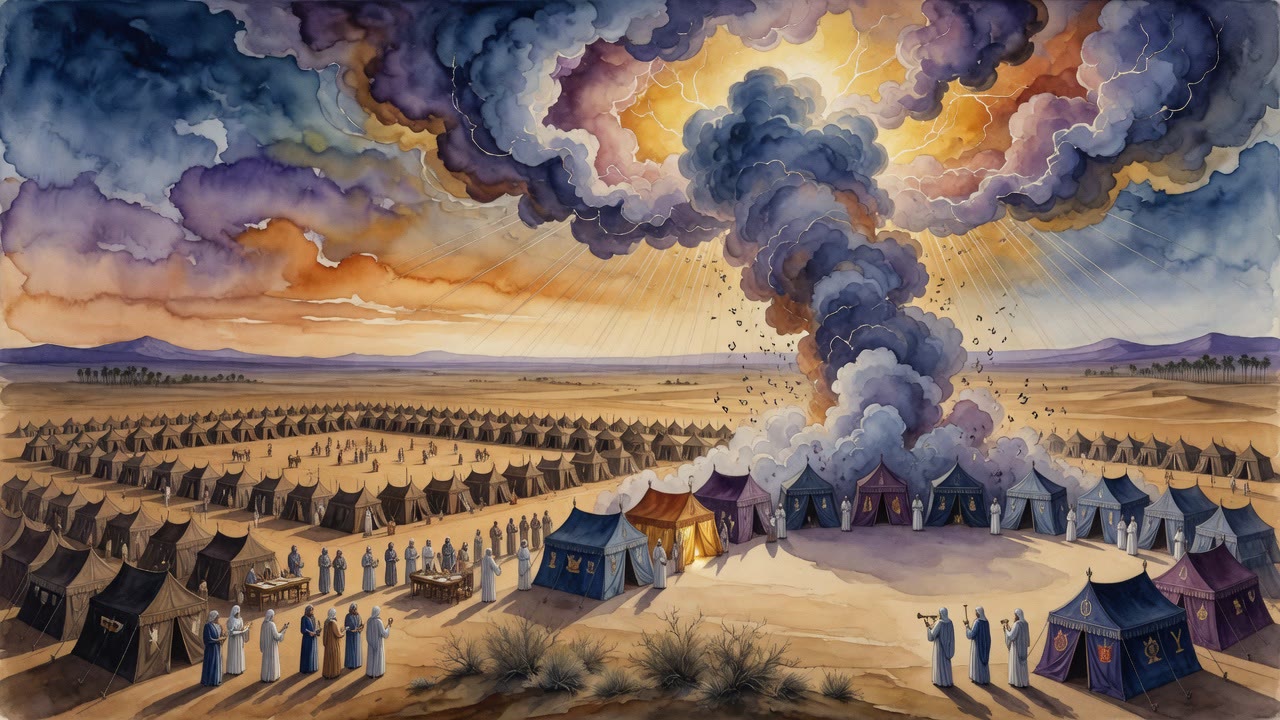
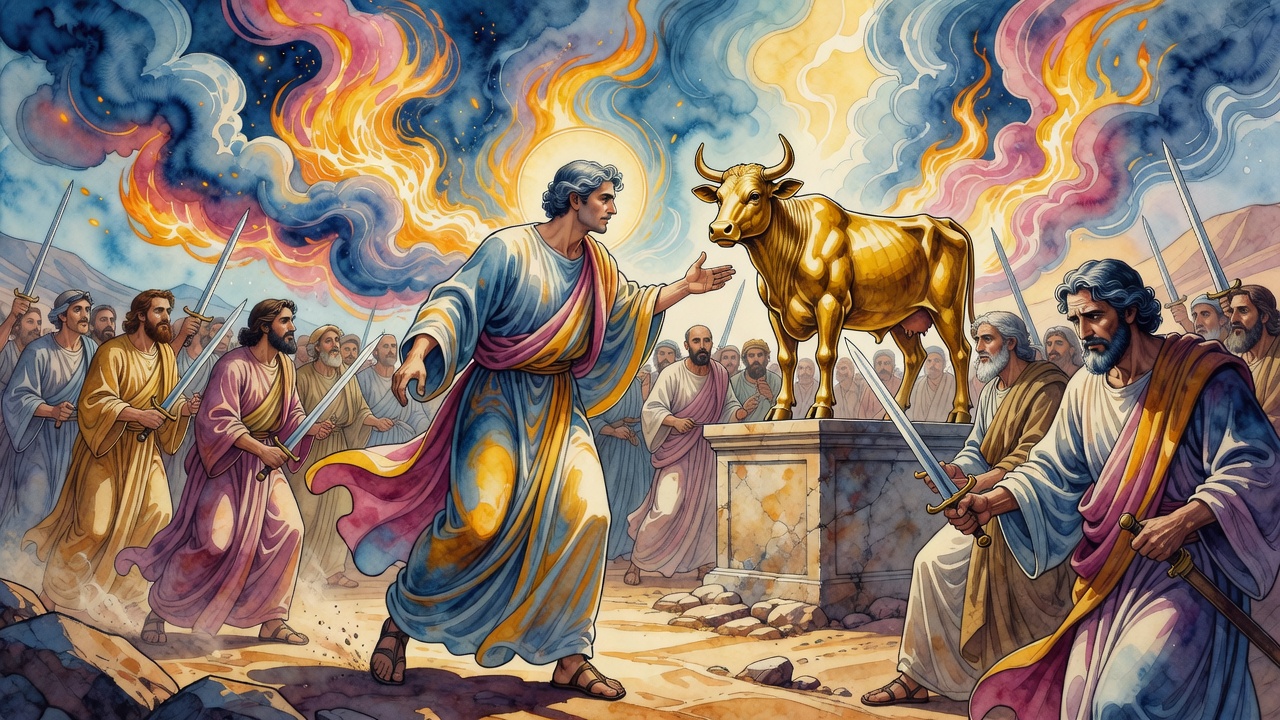
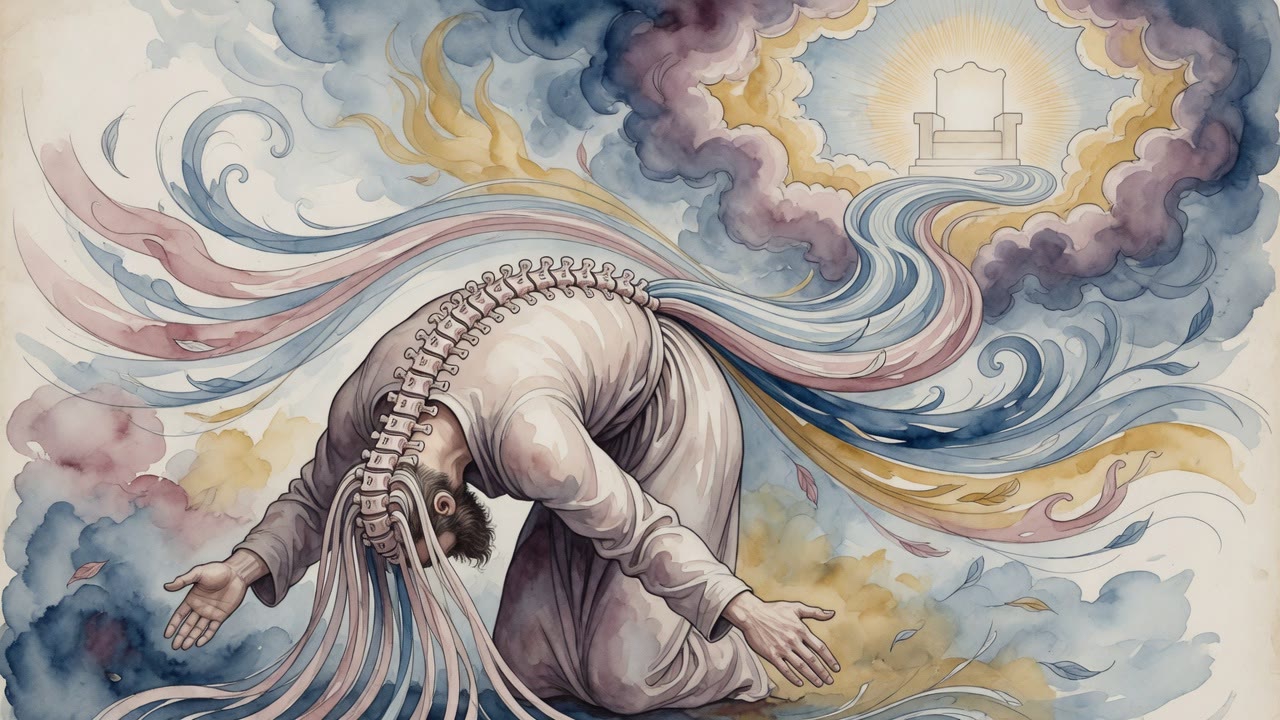
The boards of the Mishkan were standing where the calf had been melted down, the curtains hung, the cloud had come down over the tent, and the whole camp outside was celebrating. Moses went in by himself, bent his head, and put his ear to the place where the voice used to arrive.
He needed one answer. Forty days on the mountain, a calf of gold in the camp below, the tablets broken on the rock, three thousand dead before nightfall. He had begged then, and God had relented then. But afterward God had added a line that Moses could not get out of his ear. On the day of My reckoning, I will reckon their sin upon them.
So he stood there to hear which name would answer him. If the voice came as El, which is a word for strength, the same word used for the mighty men of a conquered land, then God was still angry and the anger was standing in the room with him. If it came as the Lord, which is the name of mercy, it was finished.
The Voice Came Back Changed
Before the sanctuary, speech from God had poured into Moses like a current of water. Nobody else in the camp could catch a syllable of it. They knew it had come only because his face went red, and they would nudge each other and say: it is happening again.
What arrived this time was pleasant. Good to listen to. A voice a person could stand inside.
"He will speak peace to His people."
Then the rest of it, without any hedging. "In the past there was enmity between Me and My children. There was hatred between Me and My children, and quarrelling between Me and My children. Now that the Tabernacle is built there is love between Me and My children, and peace between Me and My children."
And because Moses had been listening for a name, God gave him the name twice over. The Lord, the Lord, merciful and gracious. "Exactly as I dealt with them by mercy before they did that thing, so I deal with them now."
The line Moses heard had a hook on the end of it, and he did not miss the hook. Let them not return to folly.
The Word That Cut Out the Firstborn
Peace did not mean nothing had happened. Somebody paid.
Since the night the destroyer passed over the doorways in Egypt, the firstborn sons of Israel had held the service. That was their standing, older than the priesthood, older than the tent. Then Aaron had lifted his hands in front of the golden calf and the camp had shouted, "These are your gods, O Israel." That word, these, throws out whatever came before it. It threw out the firstborn.
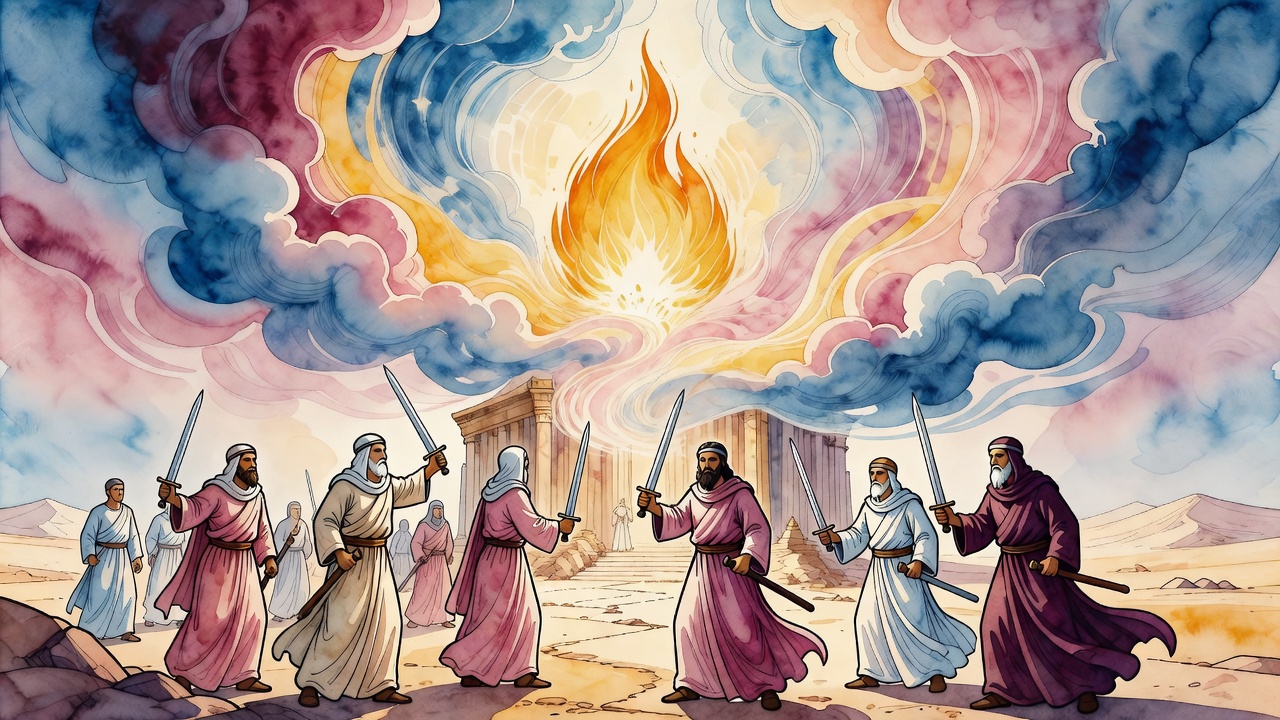
Levi had not bowed. When Moses stood in the gate of the camp and called for whoever was on God's side, the men of that one tribe walked over to him, and then they went through the camp with swords, and what they did was terrible, and they did it.
So when the tribes were numbered, God counted Levi differently. He went through the families one at a time and said the names out loud. Gershon's sons, Livni and Shimi. Kehat's sons, Amram and Yitzhar, Hevron and Uziel. Merari's sons, Mahli and Mushi. He had not done that for anyone else. And after each clan had been totalled on its own, the three totals were added into one number, so that no Levite could rank himself above another. Kehat carried the holy things on his shoulder and Merari carried the boards, and heaven loved them the same.
Moses set eight watches of priests to take the service in turn. Centuries later David broke the eight into twenty-four.
The Blind Man and the Lamp
Then God asked Israel for light.
They pushed back. "Master of the universe, You tell us to kindle lamps in front of You? You are the light of the world. Light lives with You."
The answer came as a story about two men on a road, one sighted and one blind. The sighted man led the blind man the whole way, held his arm at the bad ground, walked him to the door. Then, inside, he said, "Kindle that lamp and give me light."
The blind man turned on him. "You supported me on the road. You walked me the entire way. And now you tell me to light your lamp?"
"So that you will not be in my debt for the road," the sighted man said.
God was the one with eyes. Israel groped along a wall like the blind. He had gone in front of them in a pillar of cloud by day and a pillar of fire by night and lit the desert for them the whole way, and now He wanted seven small flames lifted toward Him in a tent, so the nations would look and say: see how Israel gives light to the One who gives light to the world.
The Song at the Well Left Him Out
Years later, in the wilderness, the princes of the tribes stood over a rock and drew on it with their staffs, and water came up. It ran out between the banners of the camp until a woman who wanted to visit a friend under another banner went across by boat. It ran outside the camp in a wide circle and left green ground behind it and trees where nothing had grown.
Then Israel sang. Rise up, well, that the princes dug.
Moses is not in the song. He had been sentenced by water, at the rock where he struck instead of speaking, and a man does not sing the praises of his executioner.
God is not in the song either. A steward once made a banquet for his king and the king asked at the door, "Is my friend inside?" They told him no. He said, "Then I am not going in."
The well followed them the rest of the way and finally went down into the sea at Tiberias. From the top of the height where Moses would climb to die, a man looking out over the wasteland can still see it down there in the water, round and bright as a full oven.
← All myths