7 min read

A Nazirite Stayed Bound by His Vow After the Altar Was Gone

A man vows nazirship after the altar is gone, thinking the law died with the Temple. Hair, wine, and the dead still bind him with no clean end.

Curated by Arthur · Told by Maggid ·
Table of Contents
  1. The Vow That Would Not Die With the House
  2. Conditions That Still Bound
  3. The Levite's Best Portion
  4. An Ending That Would Not Arrive
  5. Hair as a Living Record

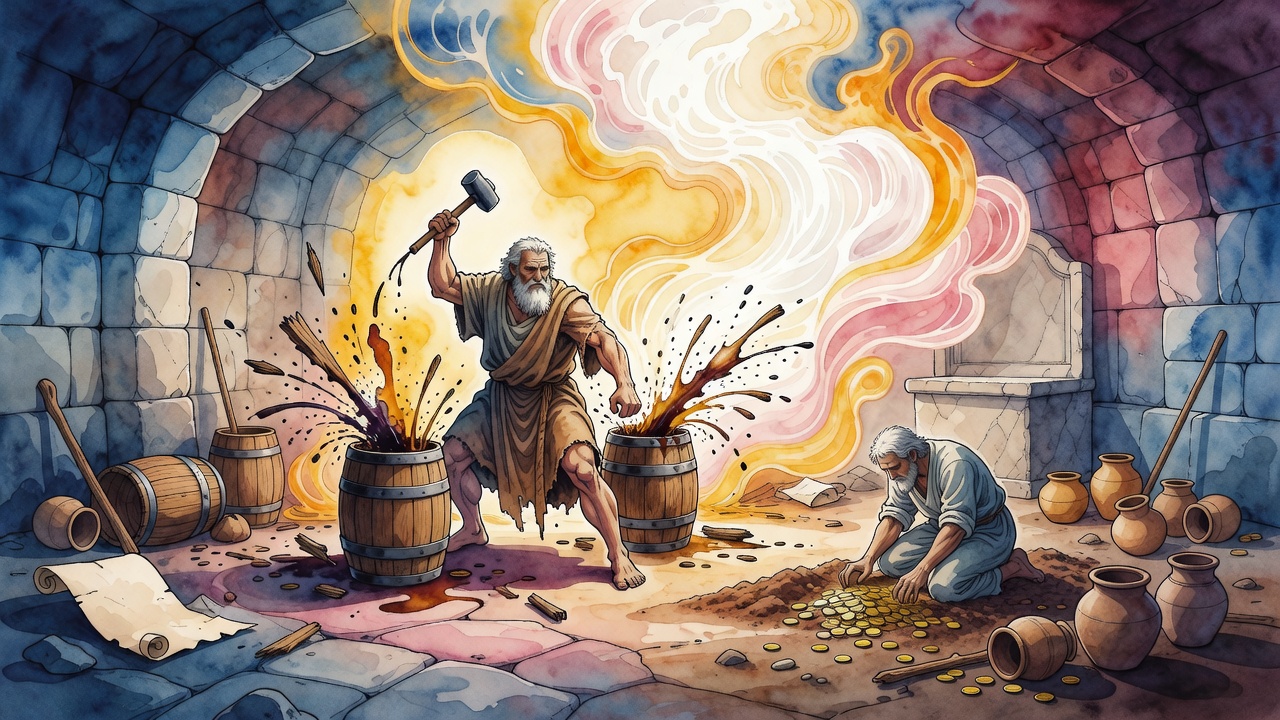
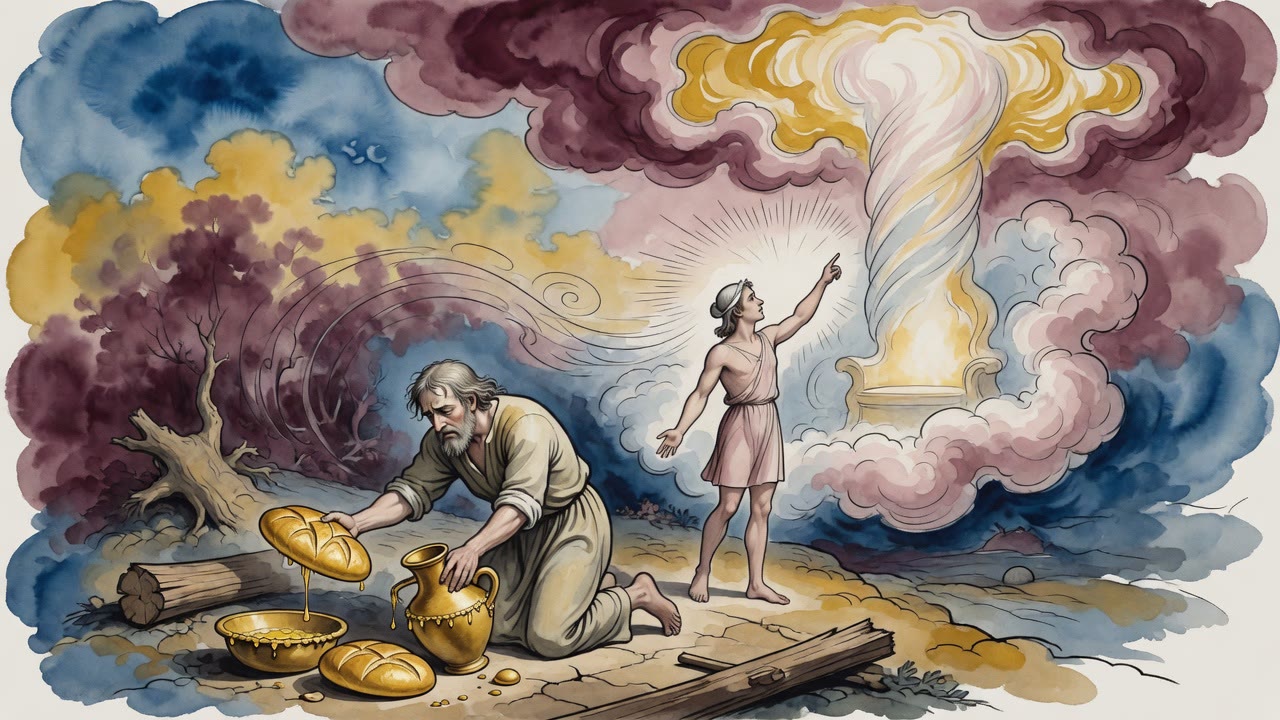
He poured the wine out on the dirt and hated the sound it made.

A Nazirite Stayed Bound by His Vow After the Altar Was Gone Click for full size

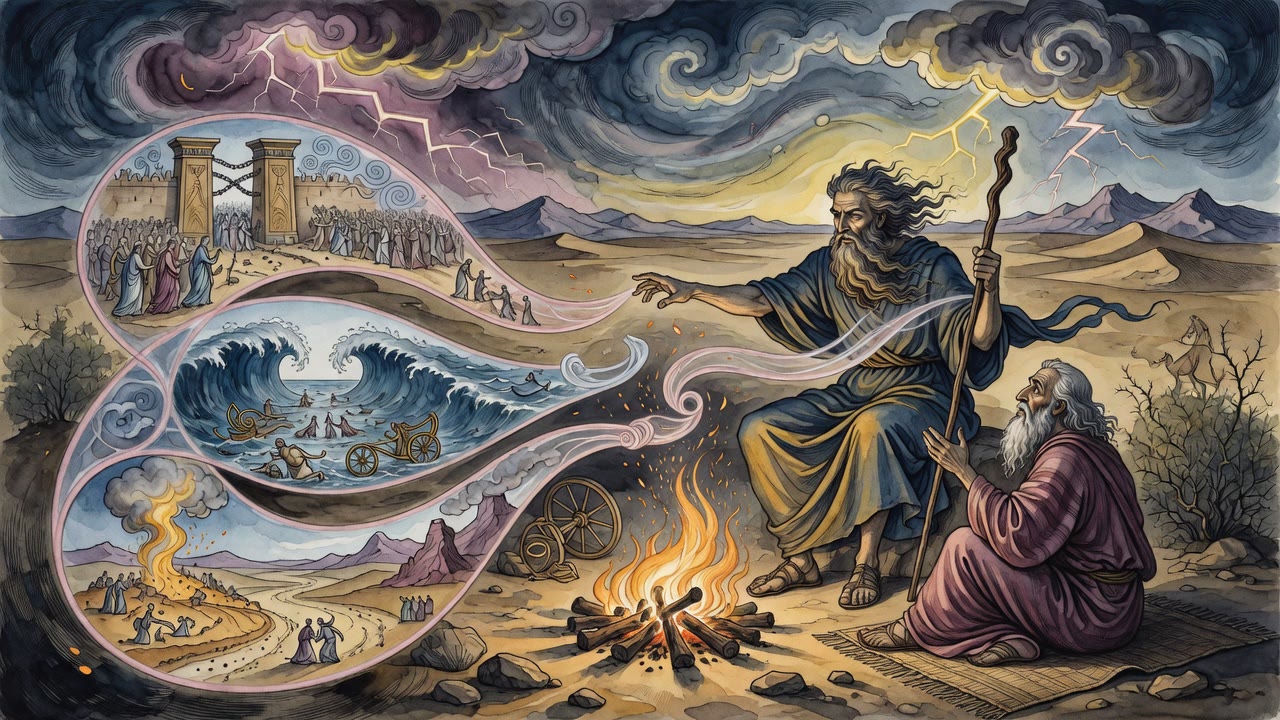
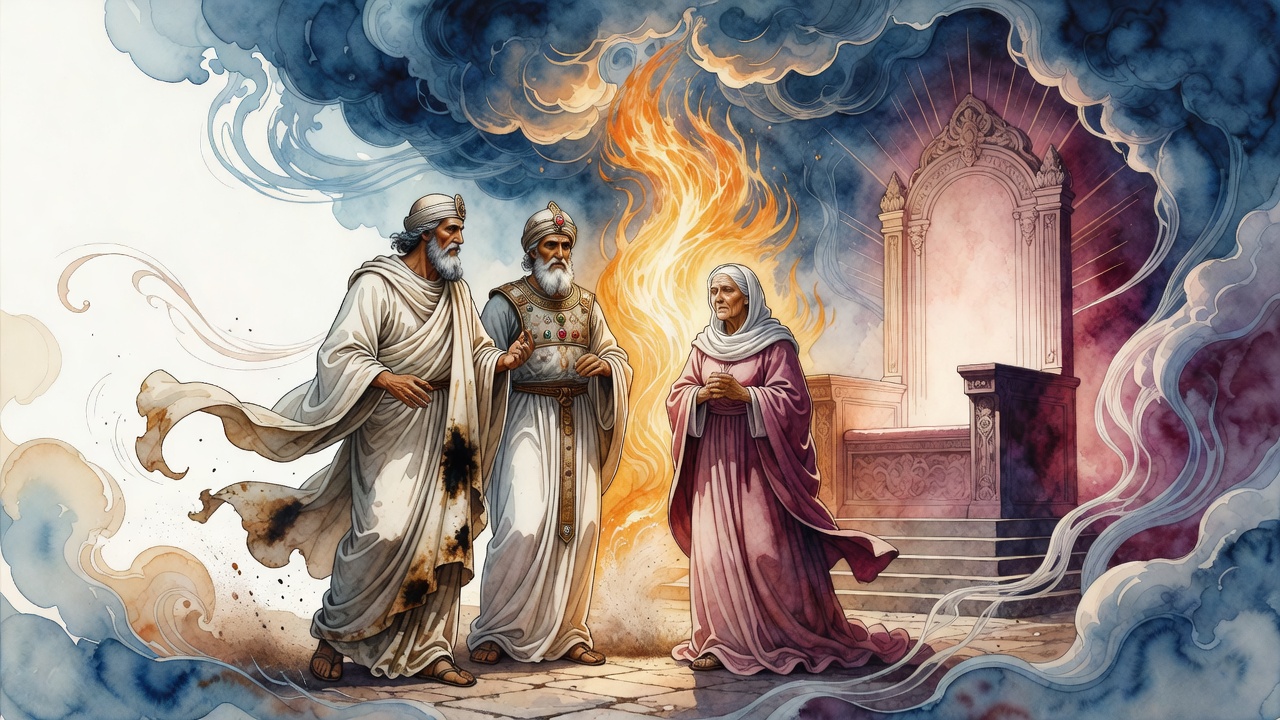
The man had spoken a Nazirite vow in a year when no smoke rose from Jerusalem's altar, certain the old laws had gone soft with the stones. "This is the law of the Nazirite," the Torah still said (Numbers 6:21). He had treated the verse like a plaque on a ruined wall. Then a teacher named R. Yoshiyah put the perpetual word in his path: the laws of the Nazir (נזיר) run in all generations, not only in the age when offerings could close the term cleanly.

His hair grew. The cup stayed empty. A funeral passed his door and he stepped back into shadow as if the dead still owned a claim on his unfinished word.

The Vow That Would Not Die With the House

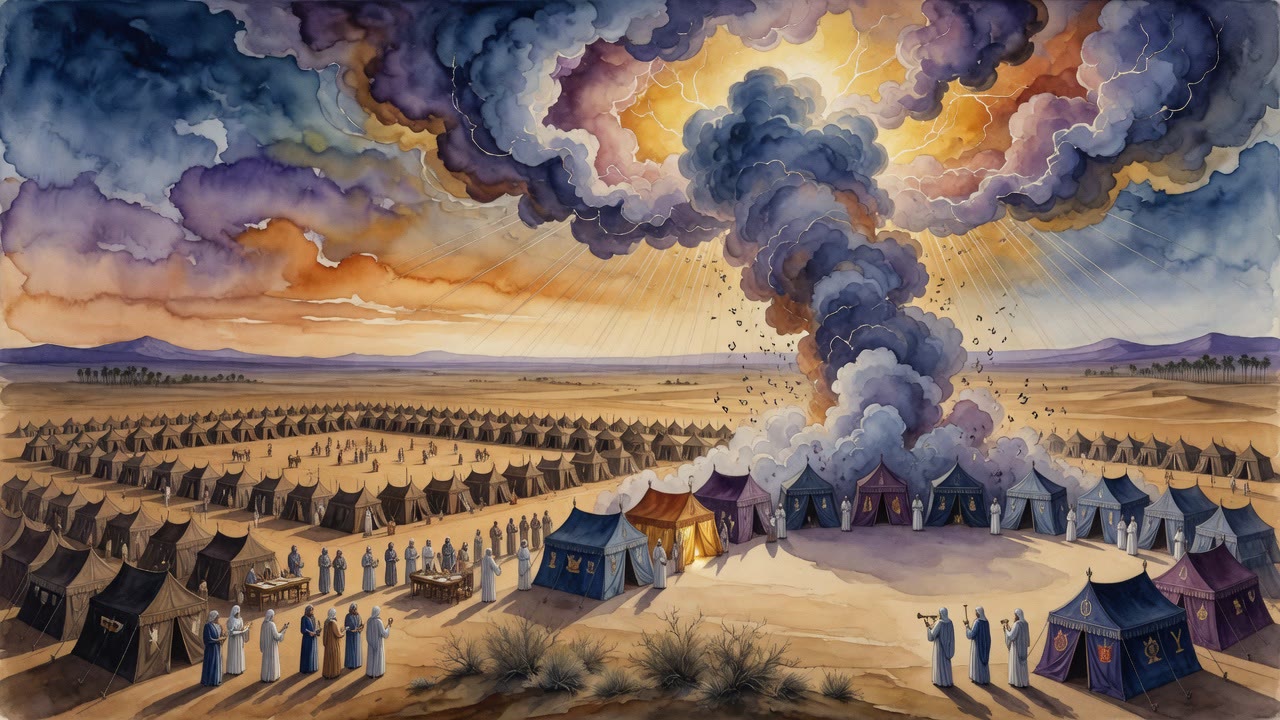
He had wanted a season of separation, a sharp edge against a life that felt too ordinary after ruin. Wine off the table. Razor off the head. Corpse-uncleanness refused. In Temple days the end of such a term came with offerings and a shaving at the door of the Tent. He had counted on that end the way a debtor counts on a date. Without an altar, he told himself, the vow was theater. Heaven, the teaching said, disagreed.

"His offering to the Lord is contingent upon his Naziritism, and his Naziritism is not contingent upon his offering." The vow made the offering necessary. The offering did not invent the vow. He could not cancel the separation by pointing at empty courts. He could not hire a friend to bring beasts in his name and call the debt paid. The obligation sat on the Nazir alone, a weight no proxy could lift.

Nights lengthened. He woke with his own hair in his mouth. Neighbors offered cups at tables and watched him refuse until the refusals became a second name for him.

Conditions That Still Bound

In a harder mood he tried a legal knot. "I am a Nazir on condition that I shave over a hundred burnt-offerings and a hundred peace-offerings," he said once, half joking, half hunting an exit through extravagance. The verse answers such mouths: according to his vow that he vows, thus shall he do. Conditions built of vowed gifts can stand. Sin-offerings and guilt-offerings cannot be stacked as clever props. His knot did not untie him. It only proved he still believed words could bargain with heaven when hair and thirst already owned him.

Five Naziriteships in one breath, one shaving for all, the old debates ran past his ears like market noise. He had taken one vow and could not finish even that. Multiplicity was a scholar's problem. His problem was simpler and worse: a state that began with his mouth and would not end with his convenience.

He walked past a vineyard and did not enter. Grapes hung like a mockery of the cups he had loved. A child asked why his hair hung past his shoulders. He had no short answer that did not sound like a curse on his own tongue.

The Levite's Best Portion

On a road outside town he met a Levite separating grain. The Levite set aside the choicest part of the tithe for the priest, terumat ma'aser, the tithe of the tithe, before the rest could become ordinary food in his own household. Once the best left his hands, what remained was chullin, common, usable, no longer locked in sacred status the way a man might wrongly fear forever.

"You may eat it in every place," the teaching allowed the Levite, even where a priest's terumah could not go, even near a cemetery's edge if the road forced it. The Levite's wife, if she came from Israelite stock, shared the household's permission. Different holiness, different fences. The Nazir watched the Levite's careful hands and felt the contrast like a slap. One man could eat after giving the best away. One man could not drink after giving his word away. Both lived under separations that outlasted moods.

The Levite finished the pile, brushed chaff from his wrists, and walked on with ordinary bread for the road. The Nazir turned back toward a house where no cup waited and no razor hung by the basin.

An Ending That Would Not Arrive

Months became a year. He learned the shape of a life inside a vow that could not complete its classical ending. Some nights he almost cut the hair himself and called the law a ruin among ruins. Each time the old phrase returned: this is the law of the Nazirite, in all generations. Perpetual did not mean comfortable. It meant the word still knew his name when empires had forgotten the altar's smoke.

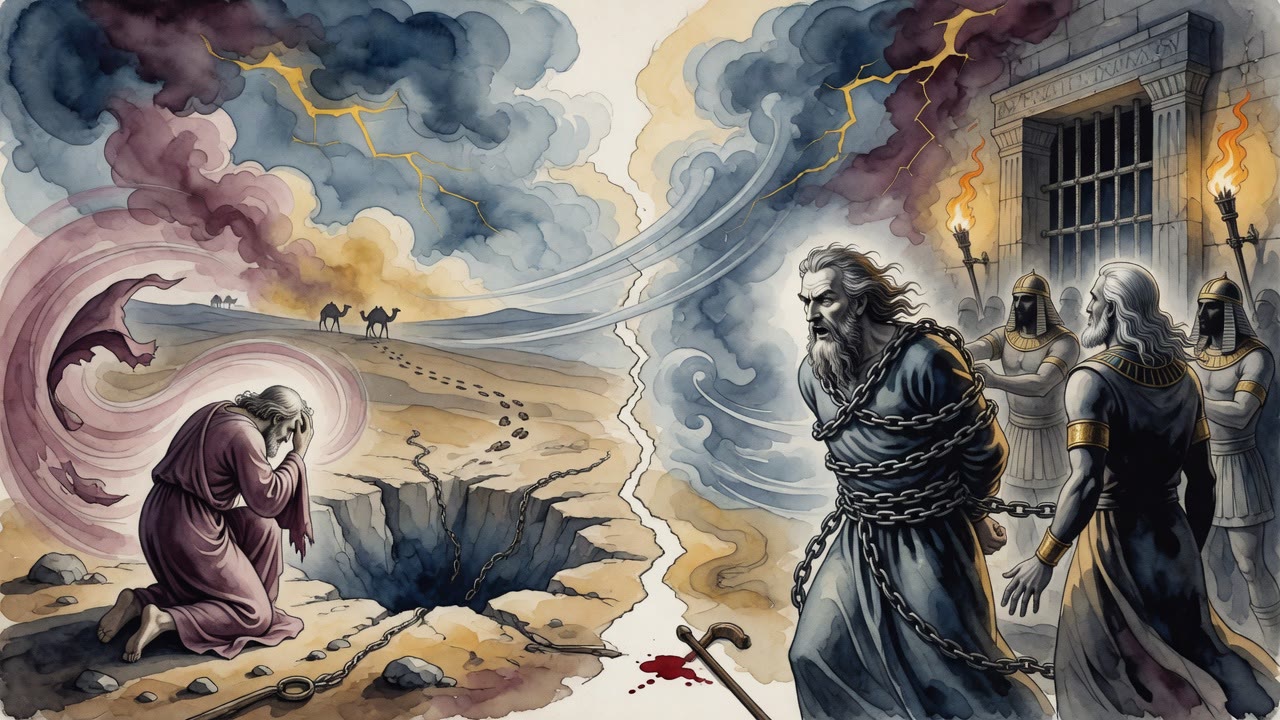
He stood once at a distance from a burial and felt the old pull toward comfort the dead, then stopped. Contact would shatter the term and demand a restart he could not afford in a world without easy offerings. The funeral bells, or the voices that served as bells, moved past. He stayed clean and lonely, two states that wore the same cloak.

A friend offered to sponsor animals "for whenever the House rises." The friend meant kindness. The law still said the Nazir's offering is the Nazir's. Kindness could not stand in his sandals at the door of a Tent that was not there. He thanked the friend and kept his hair.

Hair as a Living Record

In the market, people who had known him clean-shaven slowed when they saw him. The vow had become visible architecture on his skull. He could not hide it under a hat without feeling the lie. Wine merchants stopped calling his name. He bought water and oil and bread and left the grape stalls to others.

The Levite's lesson stayed under his ribs: separate the best, then live on what remains as common. His own best had been the freedom to drink, cut, and mourn with his hands on a coffin. He had given that best to a vow. What remained was a narrower life that was still his, still commanded, still unfinished. The altar's absence did not refund the gift. It only removed the receipt.

At dusk he sat on his step and let the wind lift the ends of his hair. Somewhere a priest of memory still waited for a portion of best grain. Somewhere a Nazir of flesh still waited for a door and a fire that history had closed. Between those waitings he kept the three refusals because his mouth had opened once and heaven had not shrugged. The wine in the dirt had dried to a stain. The stain looked like a map of a choice he could not redraw.


← All myths

From the tradition

Sources

2 sources

The texts behind this telling. Some cards carry a translation of the source; others are our own retelling of it, and each card says which. Every card links out to the original.

Sifrei Bamidbar 38:1Sifrei Bamidbar

Retold in our words. Read the original at the link below.Sifrei by Rabbi Shraga Silverstein · CC-BY

The Torah tells us in Bamidbar (Numbers) 6:21, "This is the law of the Nazirite." Now, the Nazirite, or Nazir (נזיר), is someone who takes a special vow to abstain from wine, cut their hair, and avoid contact with the dead. It's a period of heightened dedication and separation. But what does the phrase "This is the law" really mean?

According to R. Yoshiyah, the phrase teaches that the laws of Nazirites apply not only during the time of the Temple, when offerings could be brought, but "in all generations." This is derived from the seemingly extra word "perpetual" in the verse. R. Yonathan, however, offers a slightly different take, explaining that "This is the law" serves as a summary statement, encapsulating the preceding details about the Nazirite's offerings.

The text then clarifies some important nuances regarding the Nazirite offering. "His offering to the L-rd is contingent upon his Naziritism, and his Naziritism is not contingent upon his offering." In other words, vowing to bring an offering doesn't automatically make you a Nazirite, but becoming a Nazirite necessitates bringing the prescribed offering. The Sifrei continues, "his offering to the L-rd for his Naziritism" means that one cannot fulfill their Nazirite vow by having someone else bring the required offering on their behalf. The obligation rests solely on the Nazirite.

What if someone makes an elaborate condition for their Nazirite vow? What if they say, "I am a Nazirite on condition that I shave over a hundred burnt-offerings and a hundred peace-offerings"? The verse reads, "According to his vow that he vows, thus shall he do." This means the condition is valid, as it involves offerings brought as vows and gifts. However, it excludes sin-offerings and guilt-offerings from being used as conditions.

The text then explores a scenario involving multiple Nazirite vows. Can someone undertake five Naziriteships and then perform only one shaving for all of them? The answer, based on the verse "thus shall he do according to the law of his Naziritism," is no. Each Naziritism requires its own separate shaving.

Now comes the real head-scratcher. R. Eliezer b. Shamua and R. Yochanan Hasandlar pose a complex question to R. Shimon b. Yochai: What if someone is both a clean Nazirite (i.e. not defiled by contact with the dead) and a leper? Can they perform a single shaving to satisfy the requirements of both conditions?

R. Shimon b. Yochai's response is fascinating. He essentially says it's impossible. Why? Because the purposes of the shavings are different. A leper shaves to grow hair (as they must shave again later), while a Nazirite shaves to remove hair at the completion of their vow. The intentions behind the actions are fundamentally opposed.

They then try to refine the question: Can one shaving suffice for the days of confirmation for the leper and the counting period for the Nazirite, where both are shaving to remove hair? Again, R. Shimon b. Yochai says no. The timing is off. The leper's confirmation shaving happens before the sprinkling of blood, while the Nazirite's shaving happens after.

Finally, they propose: What about a leper and an unclean Nazirite (one who has been defiled)? Even then, R. Shimon b. Yochai remains firm. During the leper's counting period, the leper intends to grow hair, while the unclean Nazirite intends to remove it. And during the leper's confirmation, while both intend to remove hair, the leper shaves before the administration of the waters of the red heifer, and the Nazirite shaves after.

The conclusion is clear: a single shaving cannot satisfy both the requirements of leprosy and Naziritism, regardless of the specific circumstances. It all boils down to the intention behind the act, and the precise timing dictated by Jewish law.

This passage from Sifrei Bamidbar isn't just a legalistic debate. It's a window into the meticulousness and profound reasoning that characterize Jewish thought. It forces us to consider the nuances of vows, the importance of intention, and the complexities that arise when different obligations intersect. So, the next time you make a promise, think about the Nazirite and the leper, and make sure your actions align with your true intentions.

Full source
Sifrei Bamidbar 122:1Sifrei Bamidbar

Retold in our words. Read the original at the link below.Sifrei by Rabbi Shraga Silverstein · CC-BY

A passage from Sifrei Bamidbar, specifically focusing on (Numbers 18:30-32), which deals with the Levites and their portion of the tithes.

The verse states, "And you shall say to them (the Levites): When you separate its best part from it, (then it [i.e., what remains]) shall be reckoned to the Levites as produce of the threshing floor and as produce of the winepress." Sifrei Bamidbar interprets this as an instruction for the Levites to only take the choicest part when separating the terumat ma'aser. Now, terumat ma'aser is the tithe of the tithe – a portion of the first tithe that the Levites were required to give to the priests (Kohanim). It's like a tax on a tax!

Why is this repetition even necessary? The text anticipates a possible misunderstanding. The Torah already calls the first tithe "terumah" (a heave offering). One might assume that because it’s called terumah, it retains its sacred status indefinitely. So, the Torah clarifies: just as with regular produce, once the terumah is separated, what remains becomes chullin – unconsecrated, ordinary food. The same applies here. Once the Levites separate the terumat ma'aser, the rest of their tithe becomes chullin and can be used as regular sustenance.

What about where the Levites could eat this tithe? This is where things get interesting. The verse says, "And you may eat it in every place." At first, this seems straightforward. However, the text anticipates a potential problem. Since both the priestly terumah and the Levite's first tithe are called "terumah," one might think they are both subject to the same restrictions. Namely, the priestly terumah can only be eaten in a ritually pure place. So, the Torah explicitly states that the Levites can eat their tithe "in every place," even a cemetery! A rather stark contrast that underlines the different levels of holiness.

The passage continues, "you and your household." This inclusion is significant because it extends the permission to an Israelite woman married to a Levite. She's allowed to deputize someone to take the terumat ma'aser from her husband's tithe. Now, hold on – could this mean she can only eat it? The text argues against this, using a clever qal va-chomer argument – an "if-then" argument from minor to major. If a Kohen (a priest)'s wife can eat the more sacred terumah, then surely a Levite's wife can eat the less sacred tithe! Thus, it must mean that the Israelite woman married to a Levite is permitted to be entrusted to take terumah.

Finally, the passage touches upon the conditions for receiving the Levite portion. "For it is payment to you, in exchange for your service in the tent of meeting." The implication? If a Levite doesn't serve, they don't get paid. This leads to a fascinating ruling: if a Levite undertakes every Levitical service except one, they forfeit their entire portion. It’s all or nothing!

And what happens if the Levites don't separate the best part for the Kohen? "And you shall not bear sin because of it." The text emphasizes that failing to separate the choicest portion results in sin. But this verse refers specifically to terumat ma'aser. What about the original terumah gedolah – the heave offering separated by the Israelite farmer for the Kohen? The text extends the warning, drawing from another verse: "And the holy things of the children of Israel you shall not profane and you shall not die." This acts as an exhortation to both the Levites and the Israelites. Carelessness in these matters carries serious consequences.

It's a reminder that the ancient Israelites lived in a world deeply concerned with ritual purity, proper distribution, and the responsibilities that came with religious office. It highlights the importance of precision and dedication in fulfilling one's duties, and the consequences of failing to do so. Beyond the specific details, it paints a picture of a society striving to live according to a divinely ordained order, where even the smallest act of offering had the potential to bring blessing or incur sin.

Full source