Parshat Vayishlach6 min read

Jacob Forgot the Vow He Swore at Bethel and Paid for It at Shechem

Idols, blood, and his daughter. The three things Jacob asked God to keep him from are the three that broke on him inside one town.

Curated by Arthur · Told by Maggid ·
Table of Contents
  1. He Came Back Whole and Opened Stalls
  2. Say the Vow Back to Me
  3. Dinah Goes Out
  4. The Father With His Hand on His Mouth
  5. A Thistle Sent Word to a Cedar
  6. The Gods Go Into the Ground
Jacob Forgot the Vow He Swore at Bethel and Paid for It at Shechem Click for full size

He Came Back Whole and Opened Stalls

Jacob crossed into the land with everything he had left home without and a great deal more. Two wives, two households, eleven sons, herds moving in front of him in waves, and not one thing missing off the list. He came whole. The Holy One had honored every clause of the bargain struck twenty years earlier at Bethel, when the man was running for his life with a stone under his head.

Jacob arrived outside Shechem, bought a field, and started opening market stalls.

Meat, oil, whatever a large camp with surplus can sell to a walled town that wants it. Good business. He had learned trade from Laban, who taught it the hard way.

He did not go back up to Bethel.

Say the Vow Back to Me

The voice came while the stalls were open.

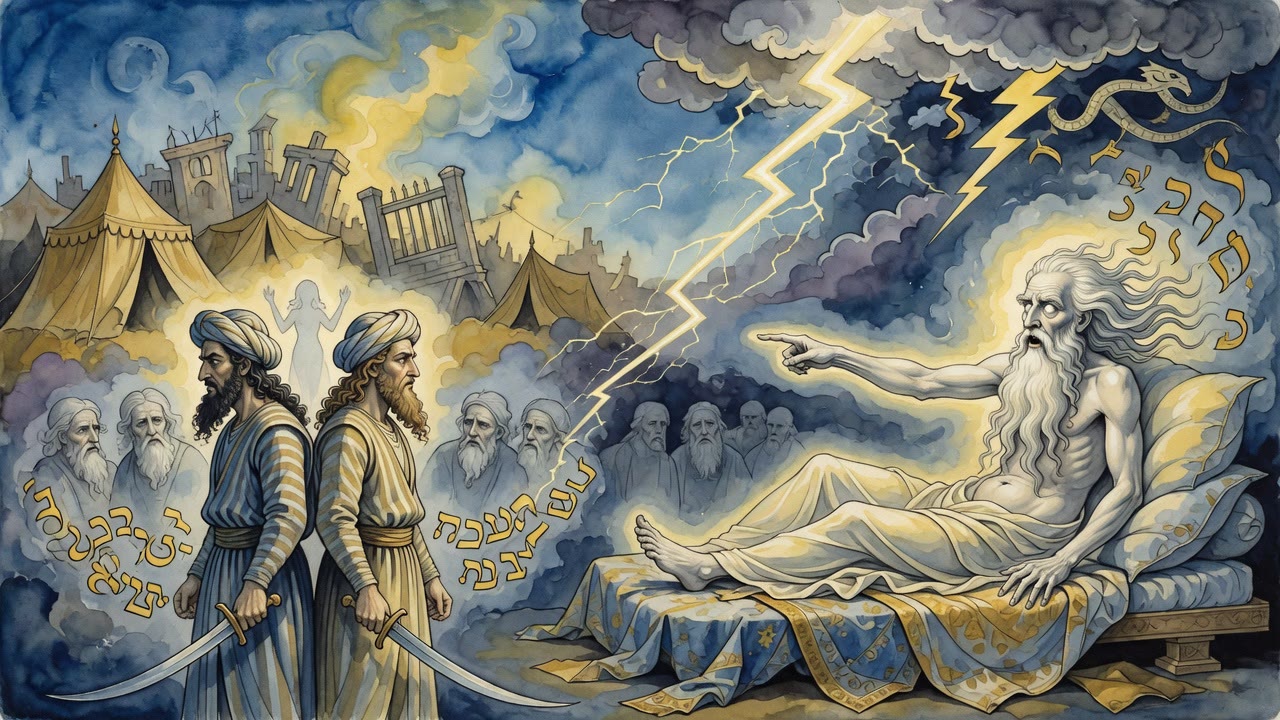
You forgot what you vowed to Me.

Then it read his own words back to him, clause by clause, the way a creditor reads a note aloud. If God will be with me. That one meant keep me from serving other gods. And will keep me. That one meant keep me from bloodshed. On this way. That one meant keep me from the kind of ruin a house does not recover from, the thing done to a daughter. And I will tithe to You everything You give me.

I will keep you in everything you go to, the Holy One had answered him at the stone. And He had.

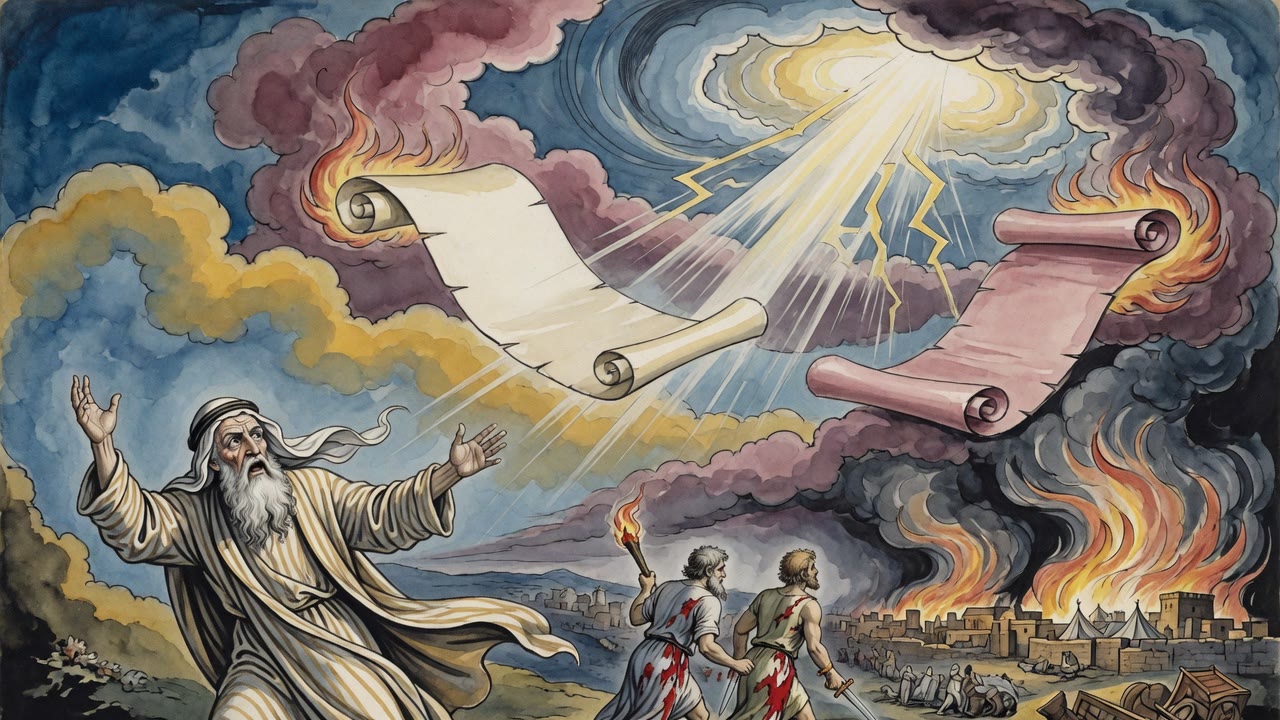
Now the sentence. "By your life. In the very three things you named, in those you will stumble."

It was not a threat thrown at random. It was a list, in order, and the town he had chosen to camp beside was where the whole of it was waiting.

Dinah Goes Out

Dinah went out to see the women of the country. One girl, past the tent ropes, in a town full of strangers her father was selling meat to.

Scripture calls her the daughter of Leah. Everywhere else a girl is listed by her father. Here she is listed by her mother, and the sages read that as a finger pointing back a generation, because the fault started with the mother and the daughter inherited the walking out.

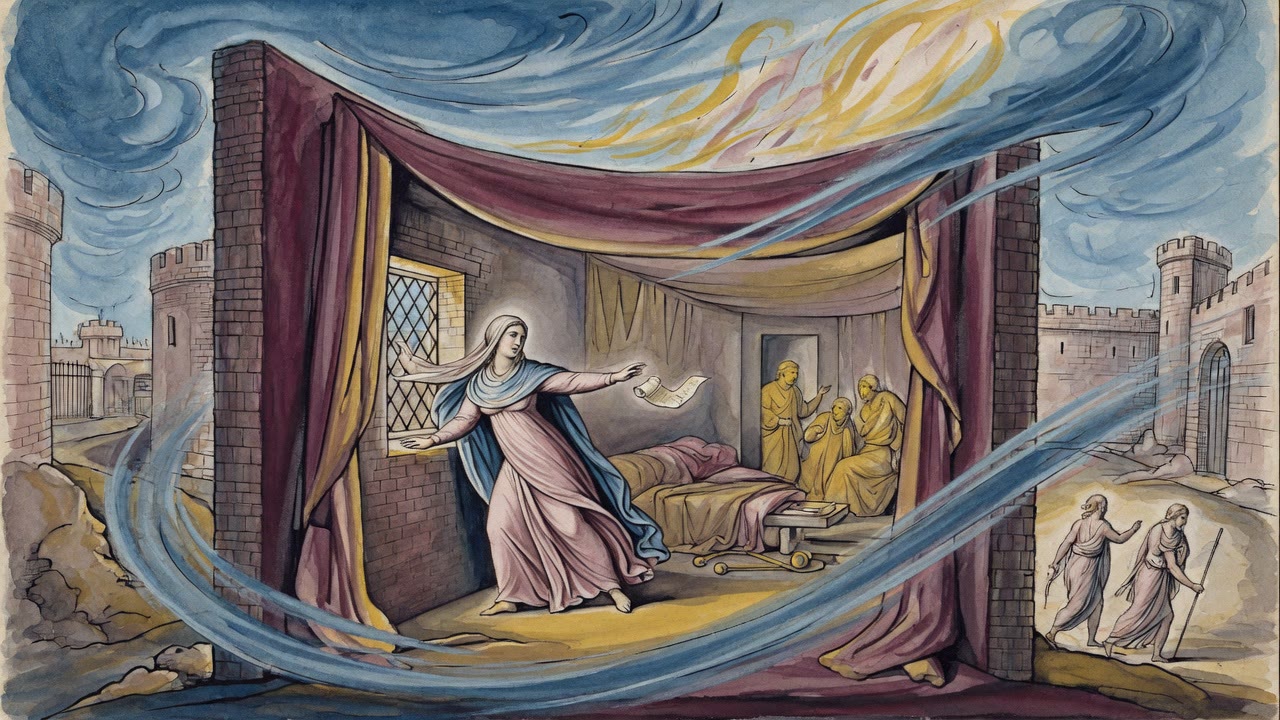
Shechem son of Hamor saw her, took her, and ruined her. Then his soul clung to her, which is its own horror, and he sent his father to the tents to negotiate.

The Father With His Hand on His Mouth

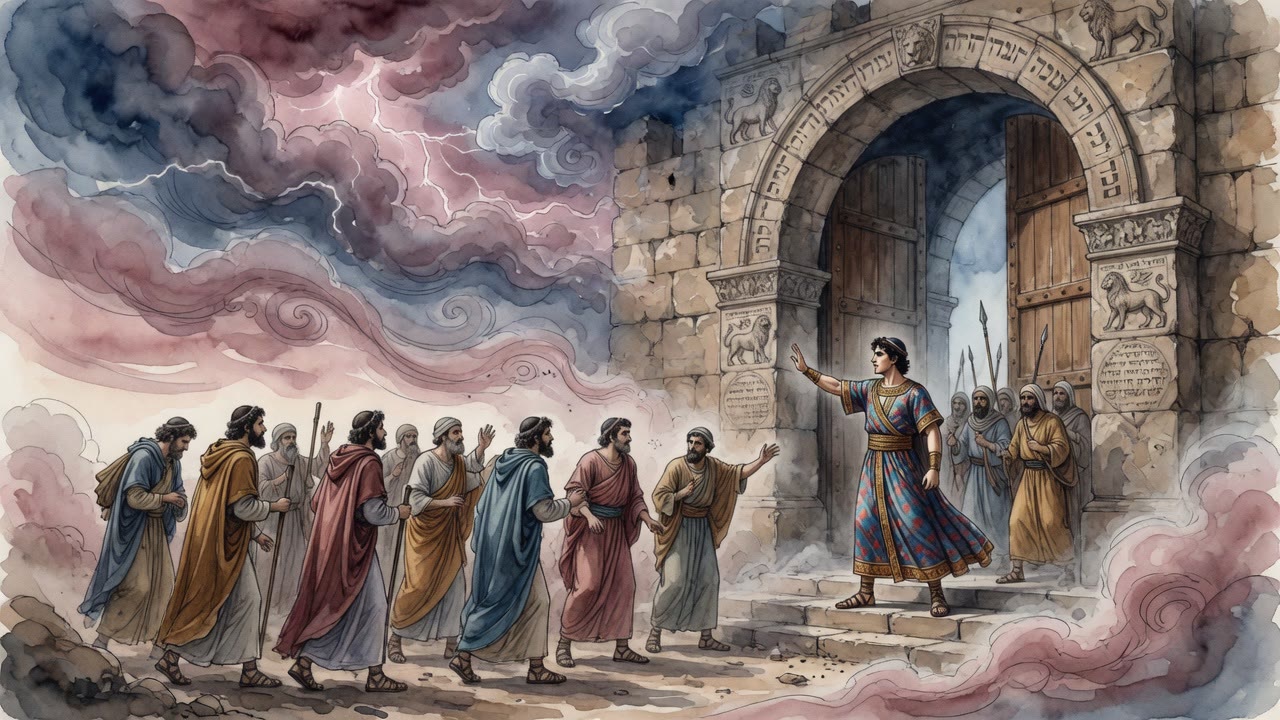
Hamor came to Jacob and talked about the thing as though it were a match between two good families.

"Shechem my son, his soul longs for your daughter. Give her to him, please, for a wife."

Whoever holds his neighbor cheap, Solomon wrote, is a man missing a heart, and Hamor stood in the doorway proving it, still talking, pricing a girl his son had already broken. The second half of the same verse says the man of understanding keeps quiet, and Jacob kept quiet. He heard everything, and he put his hand over his mouth, and he waited, because his sons were out in the field with the cattle and had not come in yet.

The silence was not peace. It was a man doing arithmetic about what walks through his camp at sundown.

A Thistle Sent Word to a Cedar

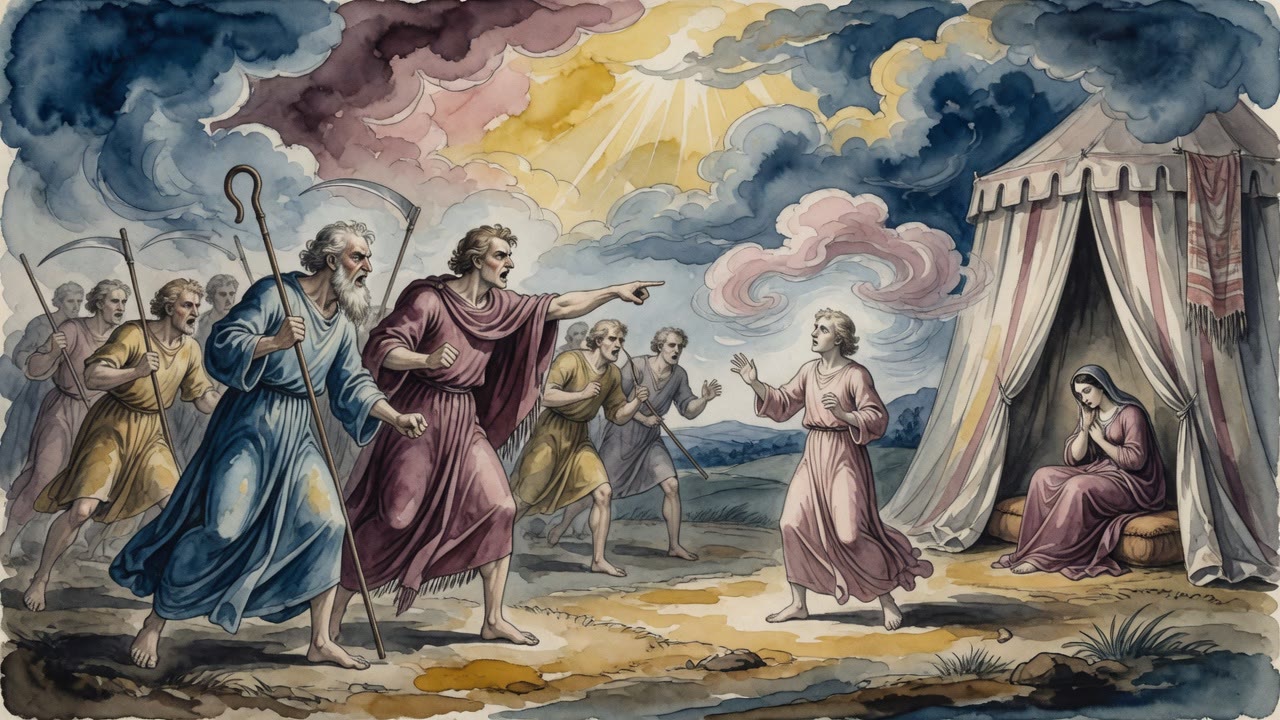
The prophets kept a small vicious fable about exactly this kind of proposal. A thistle growing in Lebanon sent word to a cedar in Lebanon: give your daughter to my son for a wife. And a wild beast of the field passed by and trampled the thistle flat.

Hamor is the thistle. He is low, he is thorny, he is standing in a doorway in Canaan asking a cedar for its daughter.

Jacob is the cedar, the righteous man who grows like a cedar in Lebanon.

And the beasts of the field came in from the pasture at the end of the day. Judah, a lion's whelp. Benjamin, a wolf that tears. Naphtali, a hind let loose. Issachar, an ass with heavy bones. Their father had blessed them with animals for a reason.

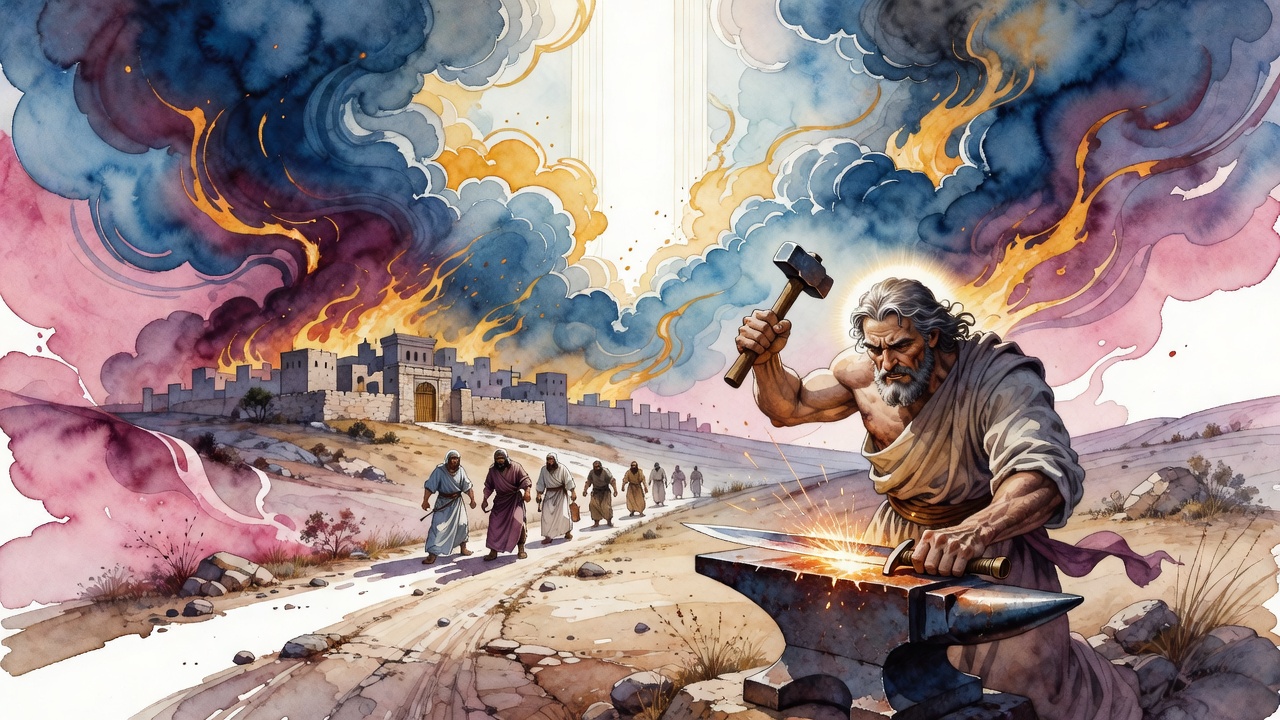
Two of them, Simeon and Levi, went into the town with swords while the men there were still sore from the circumcision they had agreed to, and killed Hamor and Shechem and every male in the place, and took Dinah out of the house.

The thistle did not survive the animals it had tried to bargain with.

The Gods Go Into the Ground

Count the wreckage against the vow.

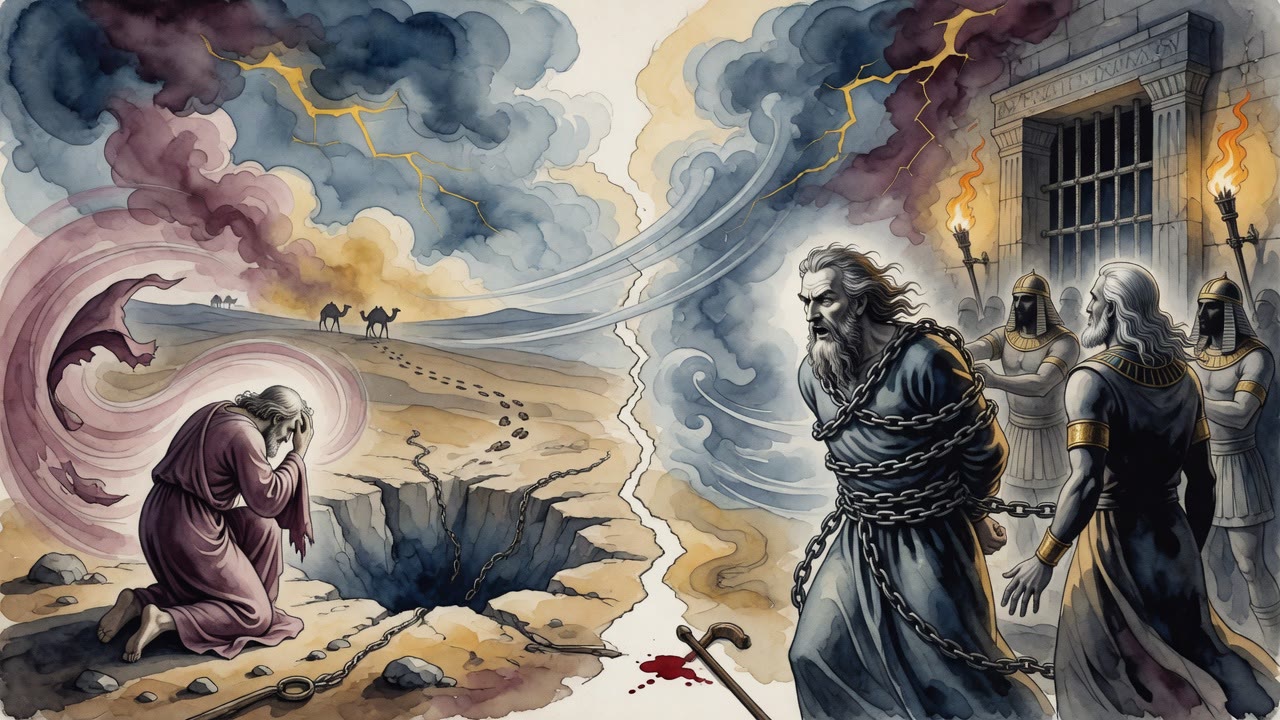
Blood in the streets of Shechem, which is the second clause. Dinah, which is the third. And when the household finally moved on, Jacob stood in front of everyone and told them to hand over the foreign gods they were carrying, all of them, the household idols and the rings out of their ears, and he buried the whole pile in the dirt under the terebinth at Shechem. That is the first clause, paid last, in a hole in the ground.

Then he went up to Bethel and built the altar he had promised, twenty years and one town too late.

The Holy One had kept every word. The stone had been honored. Nothing was missing when Jacob came home. What was missing was on his side of the page, and he did not notice it until he was standing in a field of his own dead neighbors with his daughter beside him and a bag of his family's gods waiting to be covered over.


← All myths
From the tradition

Sources

3 sources

The texts behind this telling. Some cards carry a translation of the source; others are our own retelling of it, and each card says which. Every card links out to the original.

Midrash Tanchuma Buber, Vayishlach 20:1Midrash Tanchuma Buber, Vayishlach

Translation of the source text.Midrash Tanchuma (Buber), Public Domain, on Sefaria · CC-BY-SA

What is written above on this matter? "And Jacob came whole" (Genesis 33:18). He came from Paddan-Aram under the conditions that the Holy One, blessed be He, had stipulated with him; He had not diminished him in anything. What did Jacob do? He began to open up marketplaces. The Holy One, blessed be He, said to him: "That which you vowed before Me you have forgotten. Did you not speak thus, 'If God will be with me' (Genesis 28:20), that I will not serve idolatry; 'and will keep me' (ibid.), from the shedding of blood; 'on this way' (ibid.), from sexual immorality, as it is said, 'Such is the way of an adulteress: she eats and wipes her mouth and says, I have done no wrong' (Proverbs 30:20)." The Holy One, blessed be He, kept him, for thus He says, "And I will keep you in all that you go" (Genesis 28:15). Jacob said: "If You keep me from all these things, of all that You give me I will surely tithe it to You" (Genesis 28:22). When he came to the land he forgot that vow. The Holy One, blessed be He, said: "By your life! By those very things concerning which you said that I should keep you, in them you shall stumble." Idolatry, from where? As it is said, "And they gave to Jacob all the foreign gods that were in their hand," etc. (Genesis 35:4). Shedding of blood, from where? As it is said, "And two of Jacob's sons, Simeon and Levi, Dinah's brothers, took each man his sword," etc. (Genesis 34:25). Sexual immorality, from where? From Dinah, as it is said, "And Shechem son of Hamor saw her, and his soul clung to Dinah daughter of Jacob" (Genesis 34:2-3). Rabbi Abbahu said: We have learned matters from a putrid drop. Pharaoh said to Joseph, "I am Pharaoh" (Genesis 41:44), "I have said that you shall be king." The Holy One, blessed be He, said to Israel: For each and every commandment that they perform, "I am the LORD", I who am destined to pay to each and every one the reward of his recompense. And if flesh and blood who said "I am Pharaoh" raised him up to all greatness, I who have said over each and every commandment "I am the LORD", how much more so! And similarly you say, "Only by the throne will I be greater than you" (Genesis 41:40). The Holy One, blessed be He, said to Israel, "And you shall be only above" (Deuteronomy 28:13). And if the "only" of flesh and blood thus magnified Joseph, the "only" of the Holy One, blessed be He, how much more so!

Full source
Midrash Tanchuma Buber, Vayishlach 13:1Midrash Tanchuma Buber, Vayishlach

Translation of the source text.Midrash Tanchuma (Buber), Public Domain, on Sefaria · CC-BY-SA

(Genesis 34:1:) "AND DINAH THE DAUGHTER OF LEAH WENT OUT." This is what Scripture says (Proverbs 11:12): "ONE WHO DESPISES HIS NEIGHBOR LACKS SENSE." Whoever despises his neighbor is called one who lacks sense. But if that same man who is being despised is a person of knowledge and understanding, he puts his hand over his mouth and keeps silent, as it is said (in the same verse): "BUT A MAN OF UNDERSTANDING KEEPS SILENT."

"ONE WHO DESPISES HIS NEIGHBOR LACKS SENSE" - this is Hamor the father of Shechem, who said (Genesis 34:8): "SHECHEM MY SON, HIS SOUL LONGS FOR YOUR DAUGHTER." "BUT A MAN OF UNDERSTANDING KEEPS SILENT" - this is Jacob, as it is said (Genesis 34:5): "AND JACOB KEPT SILENT UNTIL THEY CAME." On account of what? Through this corruption: (Genesis 34:1) "AND DINAH THE DAUGHTER OF LEAH WENT OUT."

Full source
Midrash Tanchuma Buber, Vayishlach 15:1Midrash Tanchuma Buber, Vayishlach

Translation of the source text.Midrash Tanchuma (Buber), Public Domain, on Sefaria · CC-BY-SA

[AND DINAH WENT OUT.] This is what Scripture says (in II Kings 14:9): "THE THISTLE THAT WAS IN LEBANON." This is Hamor, the father of Shechem. (Ibid.:) "SENT TO THE CEDAR THAT WAS IN LEBANON." This is Jacob, as it is said (in Psalms 92:13): "THE RIGHTEOUS ONE SHALL FLOURISH LIKE THE PALM; LIKE A CEDAR IN LEBANON SHALL HE GROW." (II Kings 14:9, cont.:) "GIVE YOUR DAUGHTER TO MY SON FOR A WIFE," for he says (in Genesis 34:8): "PLEASE GIVE HER TO HIM FOR A WIFE." (II Kings 14:9, cont.:) "BUT A BEAST OF THE FIELD PASSED BY." These are the tribes, who were likened to beasts, as it is said (in Genesis 49:9): "JUDAH IS A LION'S WHELP"; (in vs. 27:) "BENJAMIN IS A RAVENING WOLF"; (in vs. 21:) "NAPHTALI IS A HIND LET LOOSE"; (in vs. 14:) "ISSACHAR IS A STRONG-BONED ASS." (II Kings 14:9, cont.:) "AND TRAMPLED DOWN THE THISTLE." This is Hamor and Shechem his son, whom they killed by the edge of the sword on account of Dinah, as it is said: "AND DINAH THE DAUGHTER OF LEAH WENT OUT." In every place the female child is associated with the males, but here she is associated with her mother, but this is because the corruption began with her mother.

Full source