5 min read

Kimhit Saw Two Sons Serve as High Priest in One Day

A kings spittle spoils Simeon ben Kimhits garments. His brother Judah serves that day. Their mother raised seven high priests.

Curated by Arthur · Told by Maggid ·
Table of Contents
  1. Spittle on Holy Cloth
  2. Seven Sons, One Answer
  3. Who Serves Before Aaron
  4. Overseers of the Faithful
  5. What the Day Left Behind
Kimhit Saw Two Sons Serve as High Priest in One Day Click for full size

Spittle on Holy Cloth

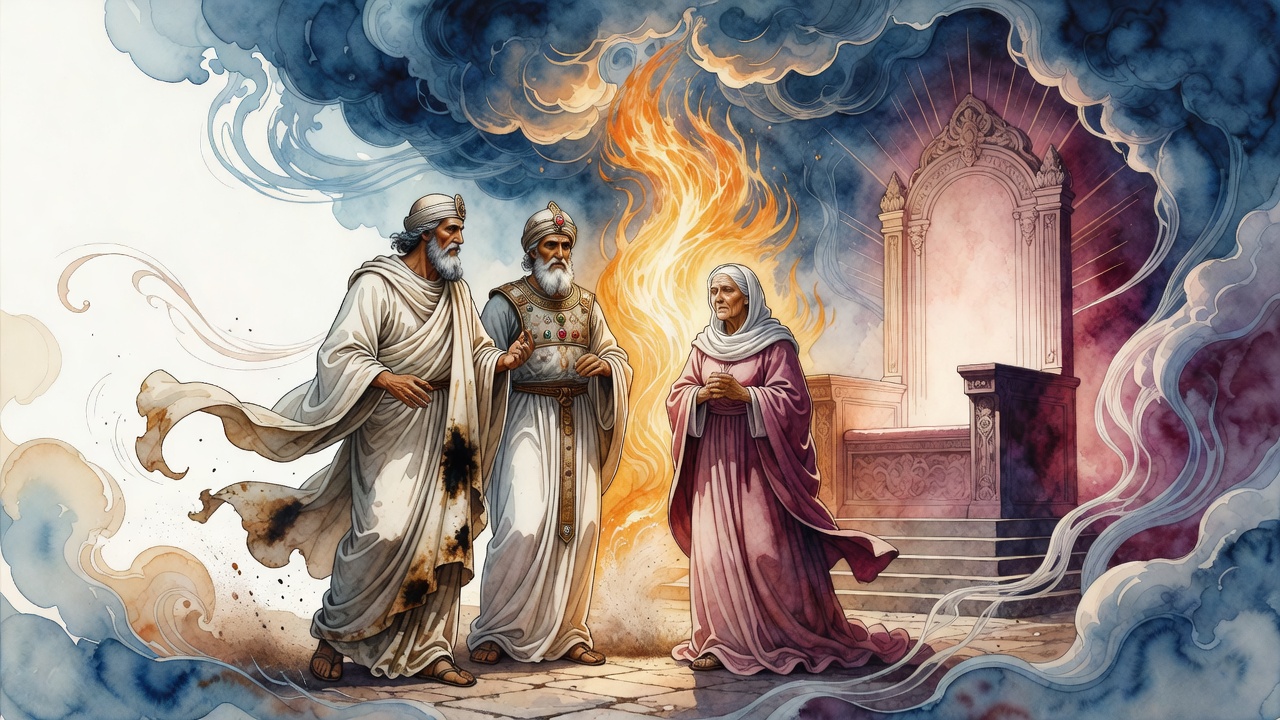
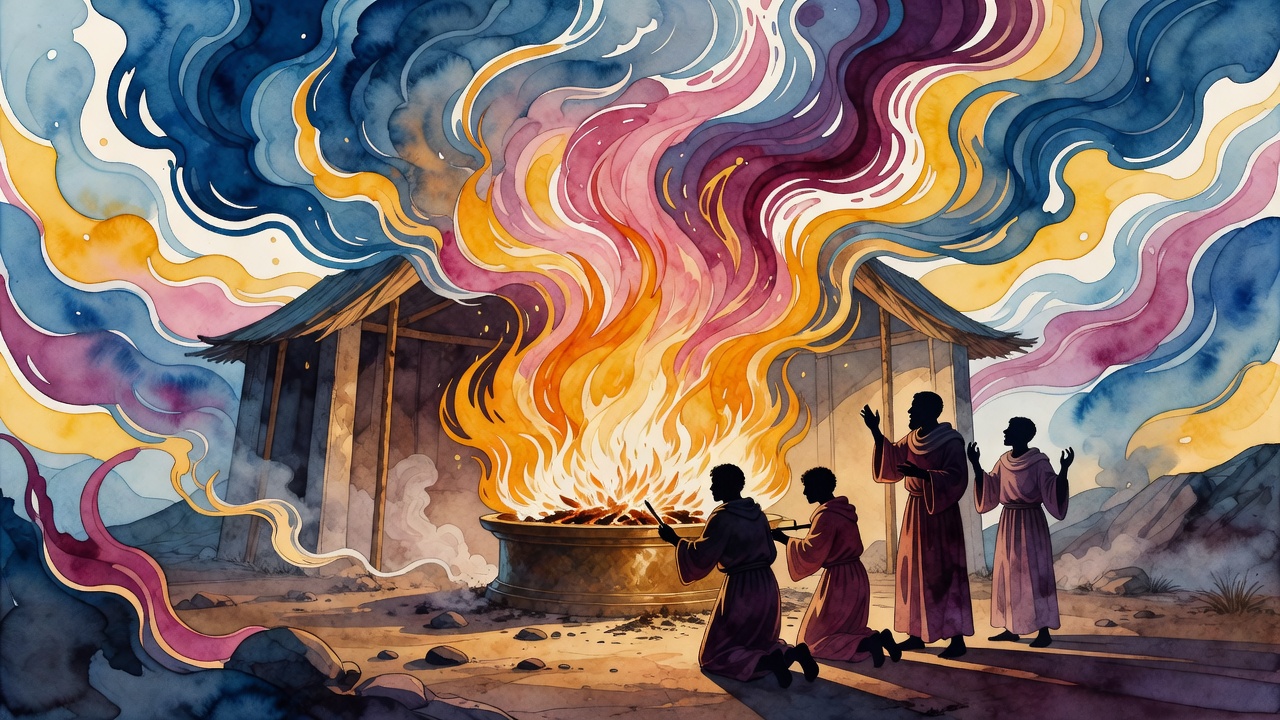
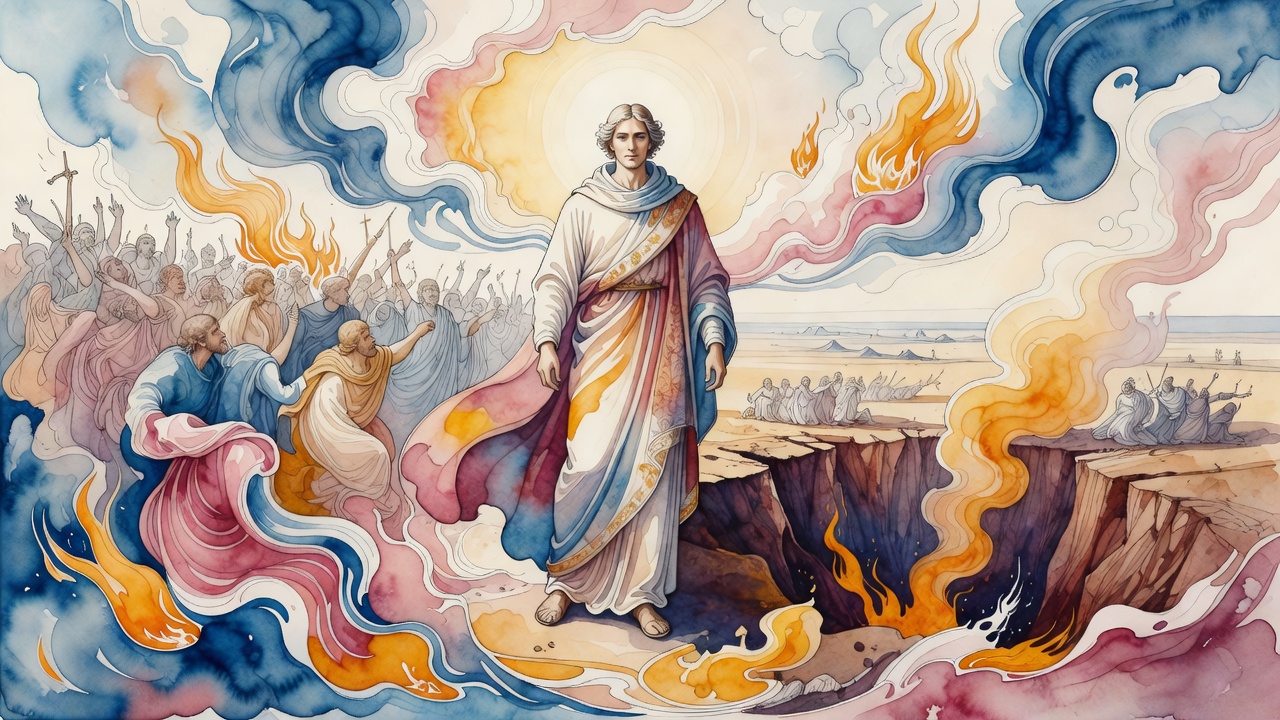
Simeon ben Kimhit went out to speak with an Arab king. Diplomacy pulled the high priest a few steps beyond the comfort of pure rooms. A fleck of spittle left the king's mouth and landed on the sacred garments. Impurity, sudden and small as a spark, made him unfit for the day's service. There was no argument with the law. The cloth had been touched. The altar would not wait for a debate about intention.

His brother Judah stepped in and served in the high priesthood that very day. Their mother saw two of her sons wear the sacred office before sunset. The house of Kimhit did not plan a double coronation. A king's careless spit wrote the schedule. One son removed what he could no longer wear. The other dressed in haste that was still careful, because haste without care is another kind of impurity.

Outside, the king returned to his politics, unaware he had authored a family legend.

Seven Sons, One Answer

Kimhit had seven sons, and every one of them served as high priest. When they asked what merit earned this, she answered simply. The beams of my house never once saw the hair of my head. They blessed her with the verse, "All glorious is the king's daughter within" (Psalms 45:14). Privacy as piety. A domestic boundary that trained sons for the Temple's boundaries. Inner glory before public office.

The midrash does not turn her into a slogan for later arguments. It lets her sentence stand in its strangeness. Merit can look like architecture and cloth, a house that keeps what it keeps, a head covering that never becomes a show for the rafters. Sons raised under such beams learn that holy service begins long before anyone hands them a breastplate.

Seven terms in the high office. One mother's short answer. The math of heaven is not always public.

Who Serves Before Aaron

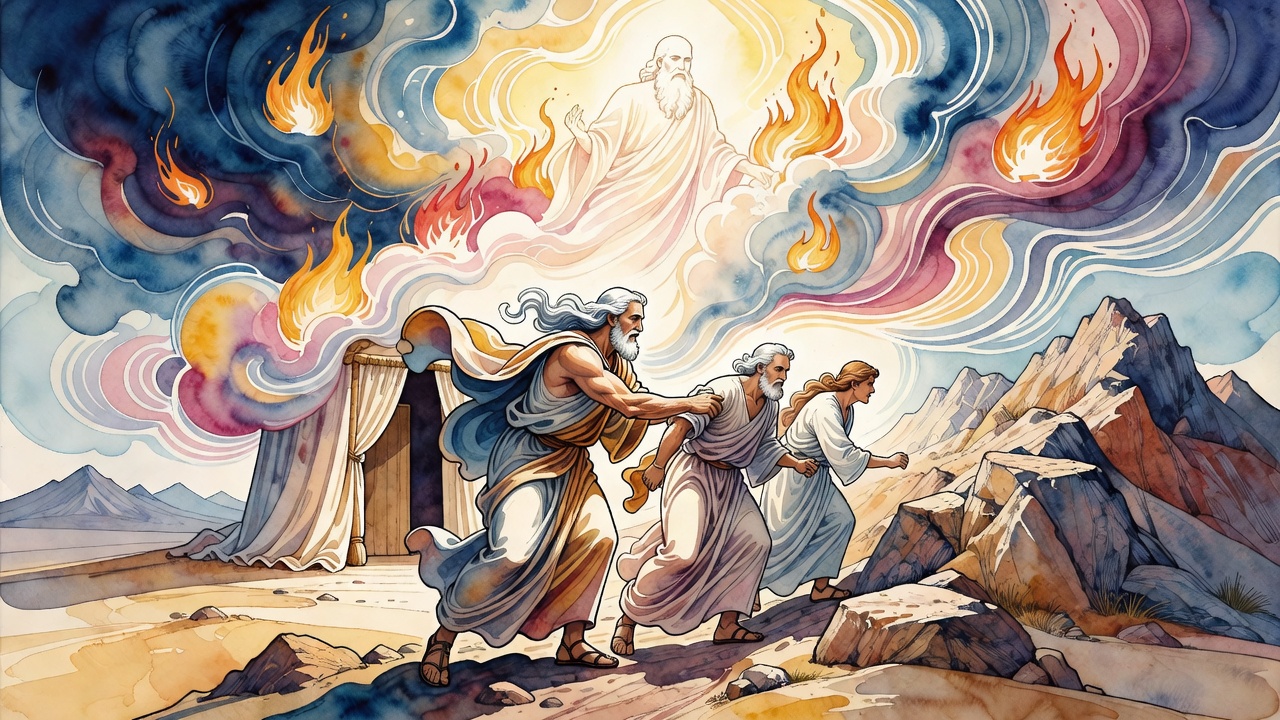
Numbers notes that Nadab and Abihu left no children. Had they had sons, those sons would have inherited the priesthood ahead of Eleazar and Ithamar, for the heir who comes first in inheritance comes first in honor, so long as he walks in the ways of his fathers. Fire took the older line. The younger brothers ministered "in the presence of" Aaron, a phrase small enough to hide a quarrel.

Sages argue whether that phrase means during Aaron's life or after his death. One side hears Haran dying before Terah. The other hears Abraham rising from before his dead. Either way, the priesthood is a relay under pressure. Impurity. Death. Sudden unfitness. A brother ready. When impurity struck Aaron, Eleazar served. When it struck Eleazar, Ithamar served. Kimhit's day of two high priests is the same structure wearing later names. The service does not stop because a garment failed. Another son steps forward with clean cloth and a trained hand.

Continuity is not sentiment. Continuity is a second body already prepared.

Overseers of the Faithful

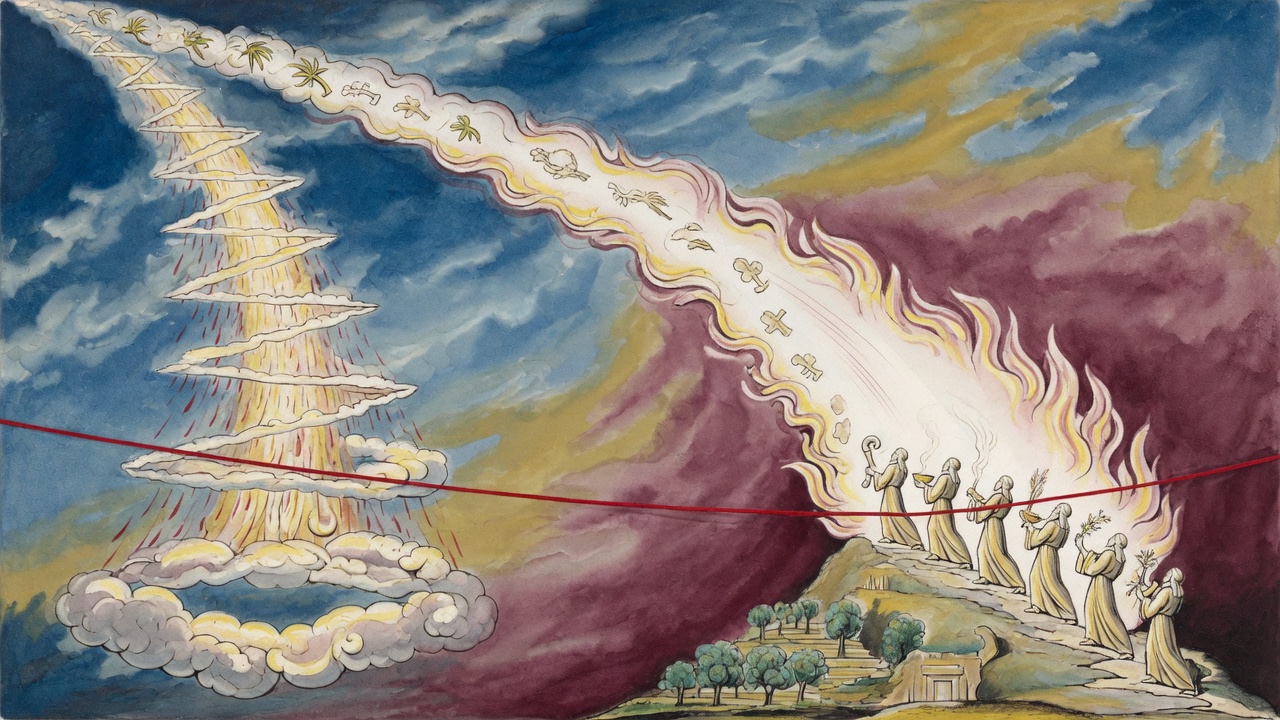
Around the Tent of Meeting, Levites encamp and guard. Bamidbar Rabbah reads their service to Aaron as more than menial labor. Aaron appoints treasurers and overseers from among the faithful. "My eyes are on the faithful of the land; they will dwell with Me" (Psalms 101:6). Integrity is a job qualification. Vessels of the Tent must be carried, loaded, watched through the night when sleep would be easier than vigilance.

A high priest ruined by a king's spit still depends on that ring of faithful watchers. Glory at the center is useless if the camp's edges are careless. Kimhit's private beams and the Levites' public posts are two forms of custody. One over a mother's hair. One over holy tools. Both teach that holiness is maintained by people who take small duties as seriously as large titles.

In the dark a Levite checks a strap on a vessel frame. He does not know Kimhit's name. He practices the same faithfulness that once kept a woman's covering from becoming a spectacle for wood.

What the Day Left Behind

Judah finishes the service Simeon could not. The king returns to his politics and never learns the midrash. Spittle dries into a story told for generations about readiness and modesty and the thin line between fit and unfit. Seven sons pass through the office. A mother keeps her answer short. The Temple's law of readiness outlives any single pure day and any single impure accident.

Years later students will argue the phrase "before Aaron" and remember Kimhit in the same breath. Inheritance, honor, impurity, modesty, and the sudden promotion of a brother share one teaching. The sanctuary runs on people prepared before the emergency arrives. Spit is small. Readiness is large. Between them a mother watches two sons crowned by accident and by training at once, and the training is the part she can still claim.

The beams of her house still hold their silence. The altar still needs a man whose garments are clean. Somewhere a Levite checks a vessel strap in the dark and does not know he is part of the same chain that once ran from a careful household to a day when two brothers wore the same office before the sun went down. The chain holds. That is the whole miracle that looks like administration.


← All myths

From the tradition

Sources

2 sources

The texts behind this telling. Some cards carry a translation of the source; others are our own retelling of it, and each card says which. Every card links out to the original.

Pesikta DeRav Kahana 26:10Pesikta de-Rav Kahana

Translation of the source text.Pesikta de Rav Kahana according to an Oxford manuscript, Dov Mandelbaum ed., N.Y. 1987 · CC-BY

"And they had no children" (Numbers 3:4). Rabbi Jacob bar Abuyei in the name of Rabbi Aha: had they had children, they would have taken precedence over Eleazar and Ithamar, for whoever takes precedence in inheritance takes precedence in honor, provided he follows the way of his fathers.

"And Eleazar and Ithamar ministered in the presence of Aaron their father" (Numbers 3:4). Rabbi Isaac says, in his lifetime; and Rabbi Hiyya bar Abba says, after his death. According to Rabbi Isaac who says in his lifetime: "in the presence of" is said here, and "in the presence of" is said there, "And Haran died in the presence of Terah his father" (Genesis 11:28); just as "in the presence of" said there means in his lifetime, so "in the presence of" said here means in his lifetime. According to Rabbi Hiyya bar Abba who says after his death: "in the presence of" is said here (Numbers 3:4), and "in the presence of" is said there, "And Abraham rose up from before the presence of his dead" (Genesis 23:3); just as "in the presence of" said there means after death, so "in the presence of" said here means after death.

According to Rabbi Isaac who says in his lifetime: if impurity befell Aaron, Eleazar ministered; if impurity befell Eleazar, Ithamar ministered. It once happened that Simeon ben Kimhit went out to speak with the king of the Arabs, and a drop of spittle splashed from his mouth onto his garments and rendered him impure, so his brother Judah entered and ministered in his place in the high priesthood. On that day their mother saw two of her sons as high priests. The sages said, Kimhit had seven sons and all of them ministered in the high priesthood. The sages came to her and said to her, what good deeds are in your hand? She said to them, let the beams of my house bear witness for me that they never saw the hair of my head in all my days. They said, all flours are flour, but the flour of Kimhit is the finest flour, and they applied to her this verse, "All glorious is the king's daughter within" (Psalms 45:14).

And according to Rabbi Hiyya who says after his death: when Aaron died, Eleazar his son ministered; when Eleazar died, Ithamar ministered.

Full source
Bamidbar Rabbah 3:3Bamidbar Rabbah

Retold in our words. Read the original at the link below.The Sefaria Midrash Rabbah, 2022 · CC-BY

"And stand it before Aaron, the priest, and they shall serve him." This seemingly simple instruction reveals a whole world of responsibility. But what does it mean to "serve him"? Bamidbar Rabbah clarifies that this service wasn't about menial tasks. Instead, Aaron would appoint treasurers and overseers from among them, entrusting them with significant roles. The verse even connects their dedication to the words of (Psalm 101:6): "My eyes are on the faithful of the land; they will dwell with Me. He who walks in the path of integrity, it is he who will serve Me…" It's about integrity, trustworthiness, and devotion.

These weren't just nameless servants; they were the backbone of the Tabernacle's operations. "They shall keep his commission… They shall safeguard all the vessels of the Tent of Meeting…" (Numbers 3:7-8). Imagine the scene: these individuals would encamp around the Tent of Meeting, vigilantly guarding its precious contents. They were responsible for carrying and loading the vessels, ensuring everything was in its rightful place.

Here’s a potential point of confusion: if they were serving Aaron, did that mean they were doing his actual priestly work? Thankfully, the text addresses this directly: "You shall give the Levites to Aaron…" (Numbers 3:9). But then comes the crucial clarification: "I have hereby taken [the Levites]…and the Levites [shall be] Mine" (Numbers 3:12). This distinction is vital. As it says, "Given for the Lord" (Numbers 18:6). The Levites were given to the priests, yes, but their service was ultimately for God.

Their roles were distinct. They were gatekeepers, singers, guardians of the vessels. They carried and loaded, but they didn't perform the sacrificial rites. They facilitated the sacred work of the priests, creating the space and conditions for it to happen.

Bamidbar Rabbah emphasizes that both the Levites and the priests were commanded in their service, each playing a crucial role. All of this was orchestrated by Moses, ensuring the proper order and reverence within the Tabernacle.

Then comes a stark reminder: "The commoner who approaches shall be put to death" (Numbers 3:10). This wasn't about cruelty; it was about maintaining the sanctity of the Tabernacle and respecting the divinely ordained roles within it. Access to the most sacred spaces was strictly limited to those who were consecrated for that purpose.

It's a reminder that every role, no matter how seemingly small, is vital. It’s a lesson in the importance of dedication, integrity, and understanding our place within a larger framework. And it highlights the crucial, often unseen, work that makes great endeavors possible. the next time you see someone working behind the scenes – they might just be the unsung hero of the story.

Full source